
How to Overcome Jet Lag

When you’re traveling rapidly between time zones, your sleep and energy levels may be thrown off by jet lag.

This happens because your body’s circadian rhythms are thrown off by the environment, particularly as the sun sets or rises sooner or later than your body is expecting. Jet lag can cause tiredness, insomnia, impaired performance, even digestive issues.

How to Overcome Jet Lag
Jet lag can cause tiredness, insomnia, impaired performance, even digestive issues

Jet lag may make it difficult to enjoy vacations, stay on the top of your game while traveling for business, or simply get back to real life once you’ve made it home. But there is good news: there are helpful strategies for overcoming jet lag, including being well prepared for travel and using light and sleep timing to get adjusted.

How to Overcome Jet Lag
There are several strategies for reducing the impact of jet lag

What You Can do to Get Over Jet Lag
You can reduce jet lag gradually by adjusting your bedtime over the course of a few days. You’ll want to adjust it by one to two hours each day as you shift to the local time zone. For example, if you’re traveling between one to two time zones, you’ll adjust your sleep by one hour each day for up to two days. Or if you’re traveling abroad, you’ll need to adjust your sleep by one hour each day for up to five days.

How to Overcome Jet Lag
Practise good sleep hygiene

There are also strategies for reducing the impact of jet lag. These include:

  • Travel healthy and reduce stress: If possible, avoid flying while you’re sick, tired, or even hung over. Doing so will put you in an already difficult position for sleep and energy levels.
  • Get comfortable and sleep while flying: Wear comfortable clothing for your flight and try to sleep on the plane if you’re traveling when you would normally be sleeping either at home or your destination. Arriving exhausted regardless of the time zone will not help with jet lag.
  • Stay active while traveling: Avoid sitting still too long on your flight. Stretch in your seat and get up to walk the aisles periodically during the flight. If you have a stopover, deplane and stretch your legs in the airport.
  • Don’t go to sleep as soon as you arrive: You may be tired, but unless it’s nighttime in the local time zone at your destination, you shouldn’t try to get a full night’s sleep. Instead, try a short nap so you’ll feel refreshed but will still be tired enough to to go sleep at night according to the local time zone.
  • Expose yourself to light in the morning: Daylight is a powerful cue for sleep. It tells your body when it’s time to be awake, so light exposure can help you reset your internal sleep clock to align with the local time zone at your destination. It’s a good idea to go for a walk in the sun when you wake up. At the very least, open windows to let light into your hotel room. It’s also a good idea to use the hotel’s blackout curtains when it’s time to go to sleep.
  • Get out and be social: If you’re feeling fatigued from jet lag, socializing may be the last thing you want to do. But if you spend time with other people, especially those already adjusted to the local time zone, you’ll acclimate easier, eating meals and participating in activities according to the local time.
  • Practice good sleep hygiene: Wherever and whenever you sleep, it’s always smart to practice good sleep hygiene to maximize the quality of sleep you experience. Make sure your sleeping area is cool, dark, and quiet. Use a white noise machine or app if needed. Limit screen time, caffeine, large meals and alcohol before bed. Sleep on a mattress mattress that’s comfortable and not too hot and ask for a pillow that’s suited to your needs.

While there are no quick fixes for getting over jet lag, you can practice good travel sleep habits to move through jet lag as quickly as you can. Avoid long naps at the wrong time, practice good sleep hygiene, and try to follow the social and sleeping hours practiced in the local time zone when you reach your destination.

How to Pvercome Jet Lag, written by Sara Westgreen

Sara Westgreen is a researcher for the sleep science hub Tuck Sleep. She sleeps on a king size bed in Texas, where she defends her territory against cats all night. A mother of three, she enjoys beer, board games, and getting as much sleep as she can get her hands on.​

Food and Drink in Sweden

Sweden has access to some of the freshest flavors un Europe, farmed in the mellow climate of the south, or hunted in the unspoilt north.

Dishes are generally gentle and unchallenging, but Sweden’s cuisine throws up a few surprises. There are complex notes in its reindeer, boar and grouse, and a love of “wild larder” ingredients like angelica, caraway and tart red lingonberries.

Food and Drink in Sweden
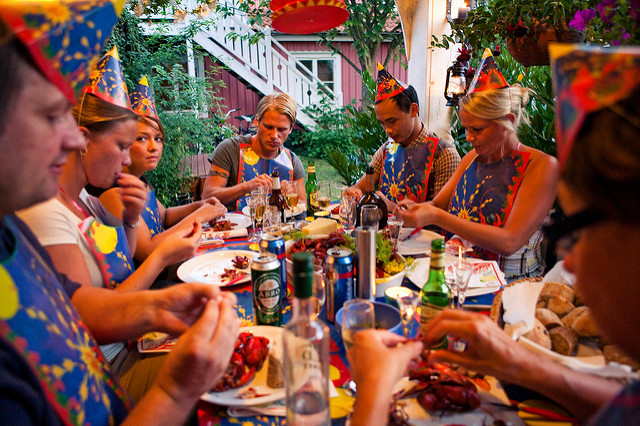
Celebrating the crayfish season in Sweden

Husmannskost
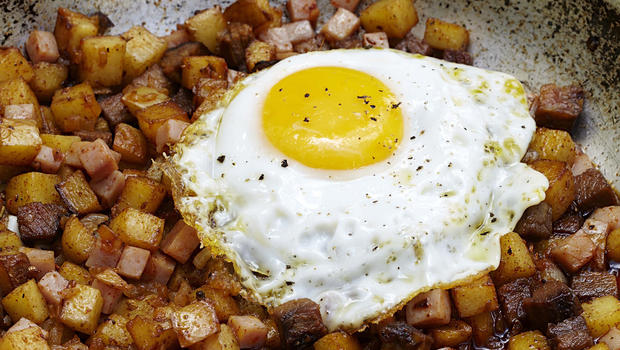
Traditional Swedish dishes (husmannskost) are often updated for modern palates at the country’s best restaurants. Found on the table on Thursdays, ärtsoppa is a hearty pea soup served with pork. Pytt i panna, a hash of fried diced meat, onions and potatoes, is another specialty. Kåldolmar (stuffed cabbage rolls) are said to have been brought back from Turkey by King Karl XII in the 18th century. Alien to foreign tastebuds, sweet gloopy soups such as rosehip or blueberry soup are served hot or cold.

Food and Drink in Sweden
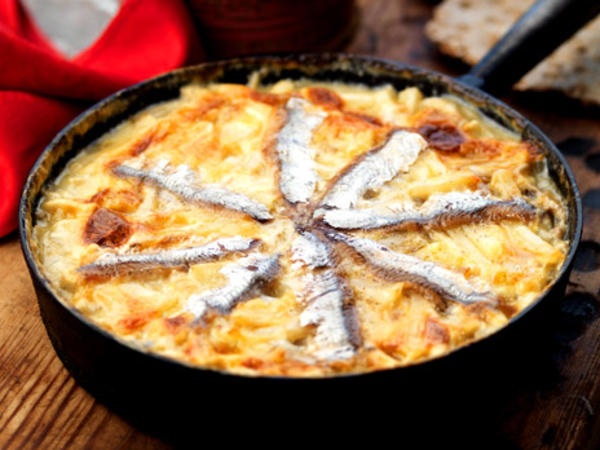
Jansson’s Temptation

Swedes eat little pork links (prinskorv) at a smörgasbord. Another smörgasbord favourite is herring spiced with sandalwood (matjes), frequently eaten with boiled potatoes and sour cream.

Food and Drink in Sweden
Pytt i panna

In Skåne in southern Sweden, look out for spettkaka, a tower-shaped confectionary of sugar, eggs and potato flour baked over an open fire.

Making spettkaka. Photo: Ingrid Frii

Also particular to Sweden is a delicious baked anchovy-potato-cream casserole known as “Jansson’s Temptation”.

Expedia in Sweden has made an interactive map, ‘Tastes of Sweden’, which takes you on a gastronomic tour of Sweden’s more unknown dishes with this interactive map. Explore each region’s food culture by downloading the recipes.

Taste of Sweden by ExpediaSE


An acquired taste
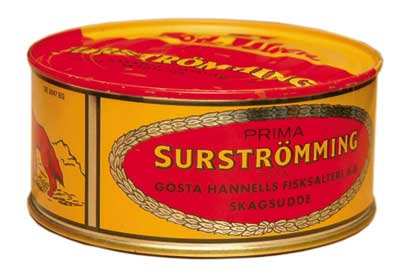
A summertime favorite in northern Sweden is surströmming. Baltic herring that is salted and “soured” or fermented, then canned. The surströmming tin bulges ominously with still-fermenting gases; and when it is opened (always outdoors), the resulting stench often causes yhe uninitiated to run for the hills

Food and Drink in Sweden
Surströmming

Crayfish are eaten widely in Sweden in July and August, when they are boiled, peeled and served at outdoor parties, with plenty of singing and toasting. Guests wear colorful bibs to shield them from crayfish drip.

Written by Tor Kjolberg

New Nordic Kitchen

In 2004, six of Scandinavia’s finest chefs came together to devise the New Nordic Kitchen manifesto, emphasizing slow food, local organic produce and foraged ingredients such as birch juice and Arctic bramble.

New Nordic Kitchen
The New Nordic Cusisine Manifesto

The manifesto consisted of 9 paragraphs:

1) To express the purity, freshness, simplicity and ethics to be associated with the Nordic region.

2) To reflect the changes of the seasons in the meals.

3) To base the cooking on ingredients and produce whose characteristics are particularly in the region’s climates, landscapes and waters.

4) To combine the demand for good taste with modern knowledge of health and well-being.

5) To promote Nordic products and the variety of Nordic producers – and to spread the word about their underlying cultures.

6) To promote animal welfare and a sound production process in the region’s seas, farmland and in the wild.

7) To develop potentially new applications of traditional Nordic food products.

8) To combine the best in Nordic cookery and culinary traditions with impulses from abroad.

9) To combine local self-sufficiency with regional sharing of high-quality products.

Behind the manifesto were six chefs, Claus Meyer, Marhias Dahlgren, Leuf Sørensen, Roger Malmin, Muchael Björklund and Håkon Mår Orvarsson.

New Nordic Kitchen
Creators of the new Nordic cuisine

The Manifesto emphasized in a healthy appreciation of the Arctic region’s long, cool growing season, its abundance of fish and game, and forests and mountainsides full of fungi, wild plants and berries.

New Nordic Kitchen
New Nordic Cuisine

The manifesto was the start of a staggering regional-cuisine resurgence. Stockholm, Oslo, Helsinki and Copenhagen are the focus of exciting new culinary scenes, exemplified by Denmark’s Michelin-starred Noma, which was named the world’s best restaurant in 2010.

New Nordic Kitchen , written by Tor Kjolberg

Sweden’s Museum of Commercial Flops

0

51 commercial failed products will be exhibited at ‘Museum of Failure’ in Helsingborg, Sweden, when it opens 7 June. Collector and innovation researcher at Lund University, Samuel West, is the museum’s curator. Today West is an organizational psychologist.

The museum will showcase failed products like President Trump’s Monopoly-style board game, an electric face lifting mask and Purple Bic for Her. Visitors may also get reacquainted with more familiar names like Betamax and Blockbuster.

Sweden’s Museum of Commercial Flops
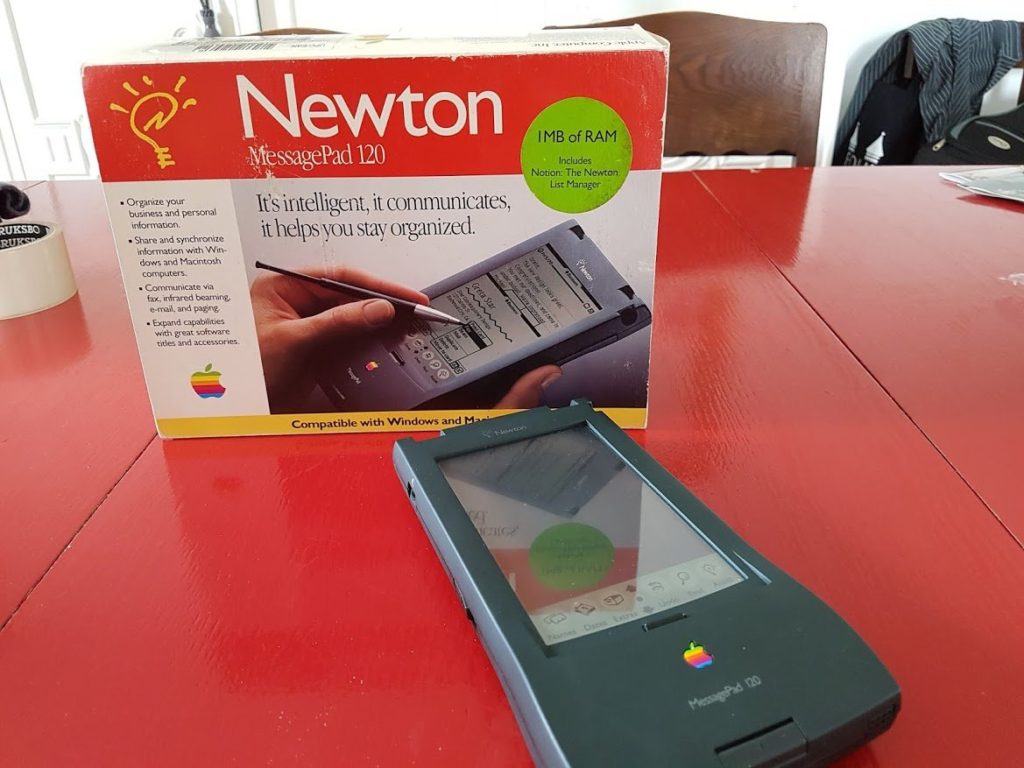
Apple’s Newton

“Everybody in the innovation business knows that 80 to 90 percent of projects fail,” West, told The Washington Post. So where are all these failures? Do you remember that Harley Davidson launched the Hot Road perfume. Or the Crystal Pepsi and MacDonald’s Arch Deluxe?

Sweden’s Museum of Commercial Flops
Electric face lifting mask

West admits that the project has been a labor of love given that the items in his collection all have been discontinued and difficult to secure. He started buying failed products online, at first for his own amusement. However, it quickly turned into an obsession.

Sweden’s Museum of Commercial Flops
Harley Davidson perfume

“Businesses are afraid of failures,” says West and continues: “But innovation requires failure, and I believe that the Museum of Failures sort of helps to show that failures are an important part of success.” Now, his one-of-a-kind collection of flops is getting a permanent home.

Sweden’s Museum of Commercial Flops
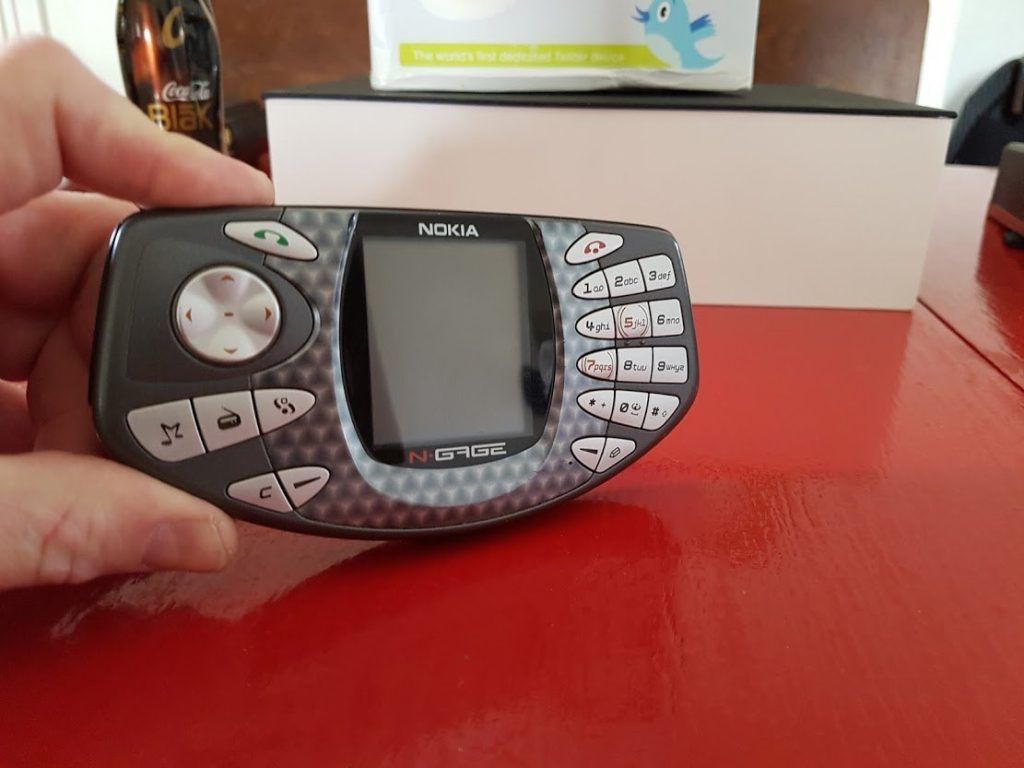
Nokia combined the smartphone and gaming devices on its co-called Nokia N-Gage.

In the coming weeks, West is set to open the Museum of Failures in Helsingborg, Sweden, celebrating some of the corporate world’s most extreme misfires. The goal, he said, is to show that innovation requires failure. Every exhibit offers “unique insight into the risky business of innovation.” In other words, we can all learn a lot from bad ideas, so we should stop pretending they never happened.

Many of the products on display lasted only a few years. Nokia combined for instance the smartphone and gaming devices on its co-called Nokia N-Gage. It was on sale only from 2003 to 2005. It was great technology, but the company misinterpreted the demand from consumers.

Sweden’s Museum of Commercial Flops
Pink Bic – for her

Nokia tried to upgrade with the redesigned N-Gage QD in 2004, but ultimately sold only a few million units before discontinuing the device altogether.

Sweden’s Museum of Commercial Flops
Sony Betamax video cassette player lost the war over videotape formats to its rival, VHS

Further back, before iPhone and iPad, Apple’s Newton ran a bit longer, from 1993 to 1998. Poor handwriting software and high cost contributed to its demise.

Sony Betamax video cassette player lost the war over videotape formats to its rival, VHS. This has become a case study in marketing defeats.

A lesser-known flop is the CueCat, a barcode reader launched in 2000.  The idea was to direct people to a website — via scanning a magazine, for example — rather than typing in the URL. Few consumers found any use for this product.

If it doesn’t fail, the Museum of Failure will open June 7 in Helsingborg.

Sweden’s Museum of Commercial Flops, written by Tor Kjolberg

Scandinavian Mackerel

Scomber scombrus: Mackerel live in the deep seas in winter, but come to the shores in great numbers in May, and again in August. The first season coincides with the wealth of herbs, which all go so well with the fish’s fine, tasty flesh.

Mackerel are not as popular as fresh fish as they deserve to be, but the craving for true Scandinavian food is putting them back on the menu once again.

Scandinavian Mackerel
Scomber scombrus: Mackerel

Appearance and taste
Mackerel is a small tuna fish, with very dark, fatty meat. It’s a beauty when alive, clad in an haute couture dress of graphic black pattern on a silvery blue background. It is not severely threatened at the time of writing, even if it is a very popular fish. The flesh is loose when cooked or smoked.

Scandinavian Mackerel
Delicious Scandinavian mackerel

Buying and storing
Like most oily fish, mackerel will develop very high levels of histamine if not kept properly cool, or if too old. Make sure your mackerel is very fresh and is stored at a low temperature, and eat it straight away. If you need to keep the fish overnight, pre-salt it rather heavily and keep it in the fridge.

Scandinavian Mackerel
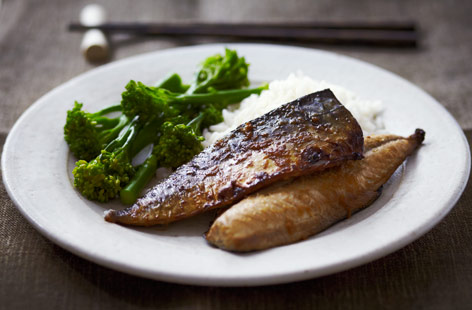
Grilled mackerel

Health benefits
Mackerel is always a wild fish, containing large amounts of omega 3 fatty acids, and vitamin B.

Scandinavian Mackerel
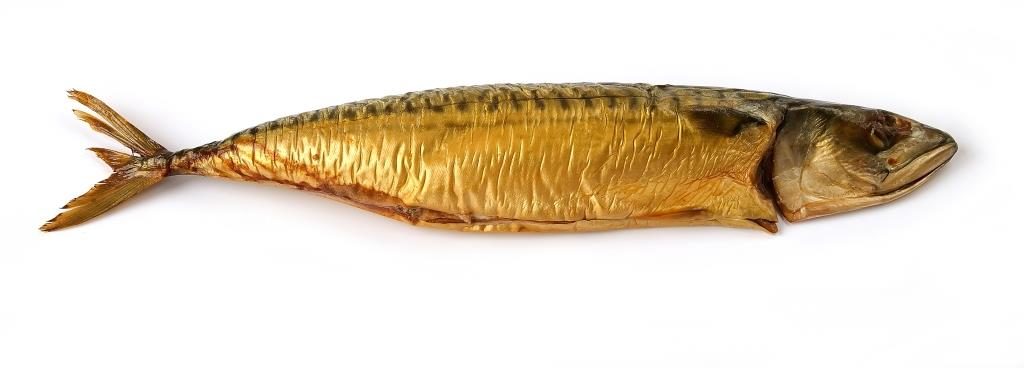
Smoked mackerel

Culinary uses
Mackerel takes wonderfully to spices, curing and smoking as the meaty taste can work through anything. Fresh mackerel is perfect for grilling as some of the excess fat drains away. The combination of mackerel and gooseberry sauce, which takes the edge off the fish’s fattiness, is legendary. But rhubarb compote or horseradish cream work well too.

Scandinavian Mackerel
Elderflower

In the north, mackerel is mostly hot smoked, and tastes delicious eaten on rye bread with raw egg yolks, radishes, chives, raw onion and scrambled eggs. But it is also a perfect and very cheap alternative to gravid lax, or indeed can be soused like herring.

Scandinavian Mackerel
Canned mackerel in tomatoe sauce

Most of the mackerel eaten in Scandinavia is actually canned, in tomato sauce, which makes an extremely popular sandwich filling with mayonnaise, on rye bread.

Scandinavian Mackerel
Gooseberries

Grilled mackerel with gooseberries and elderflowers

(Serves 4)

4 whole mackerel
4 tablespoons coarse sea salt
10 large elderflower heads
Grated zest and juice of 1 lemon
1 red chili, seeds removed, chopped
2 fresh garlic cloves, chopped
1 teaspoon ground black pepper
Butter, for frying
Serve with gooseberry compote with elderflowers

The combination of gooseberries and elderflowers is, of course, a classic. So too is the pairing of mackerel and gooseberries, and not only in Scandinavia. Here we have gone to extremes by combining all three, but the result is pure Scandinavian midsummer bliss. Serve with lemon and new potatoes. Pre-salting (see below) the mackerel makes it firmer and tastier.

Hut the fish, but leave the heads on. Slash each fish three times om both sides with a very sharp knife. Using 3 tablespoons of the coarse sea salt, rub the fish inside and out, then leave to rest for a couple of hours in a cool place. After that time clean off the salt under a cold tap, then dry the fish completely with kitchen paper.
Cut the white flowers from the green stems of the elderflower heads and mix with the remaining salt, plus the lemon, zest, chili, garlic and black pepper. Fill the fish with this heady mixture. Either fry the fish in hot butter until nicely browned – 4 minutes on each side is fine for a small mackerel – or grill them on a barbecue. Turn the fish only once, as they are tender-fleshed. Serve with the compote.

Scandinavian Mackerel, Written by Tor Kjolberg

Hard Core Fishing and Champagne in Norway

Fishing and champagne? Yes, at Vassdalsvik Sea Lodge in Northern Norway you’re invited to enjoy fishing combined with “la dolce vita”.

Helén Lindqvist from Vassdalsvik Sea Lodge and Silje Raymondsdatter from Saltstraumen Hotel collaborate on fulfilling the fisherman’s dream and at the same time, aiming to give the fisherman’s girlfriend an experience to remember,  from the spa in Saltstraumen to yoga at the pier in Vassdalsvik.

Hard Core Fishing and Champagne in Norway
Kayaking at Vassdalsvik

“We welcome guests on a vacation focusing on fishermen and their partners. We wish that those who are left on shore when the fishermen are hunting big fish also have a memorable time. That’s why we have put together a comprehensive offer, including fine dining experiences, two overnight stays at the old fishing village Vassdalsvik and two overnight stays in Saltstraumen, close to the world’s strongest tidal flow,” says Silje and Helén.

“We have selected a bunch of good activities, focusing on adrenaline rush as well as relaxing. With your gear and accessories from Globo Surf, you can for example sea kayak in Arctic waters or snorkel in Saltstraumen and relax and recreate with champagne, combined with midnight sun baths in the sea,” they add.

Hard Core Fishing and Champagne in Norway
From Vassdalsvik

A famous Norwegian proverb says “Dead fish swim with the stream”. “We do the exactly opposite,” says Silje and adds, “We think it’s time for a different quality product in an already large market.”

Hard Core Fishing and Champagne in Norway
Yoga at Vassdalsvik

Whether you want to experience the “Zen by the sea” or an adrenaline-filled adventure, Vassdalsvik Sea Lodge will be the right place. There you’ll find a personal and very comfortable atmosphere between majestic mountains and beautiful fjords and enjoy Helen’s gorgeous homemade food.

Hard Core Fishing and Champagne in Norway
Saltstraumen hotel

Memories are made at Saltstraumen Hotel, far from the hectic city life. There you will find both tranquility and memorable experiences.

Hard Core Fishing and Champagne in Norway
Seagulls at Vassdalsvik

Also the German emperor Wilhelm II was very enthusiastic about Norway and Norwegian nature, and the period before the First World War he traveled every summer to Saltstraumen – right outside the city of Bodø.

Hard Core Fishing and Champagne in Norway, written by Tor Kjolberg

Norway’s Best Cycling City

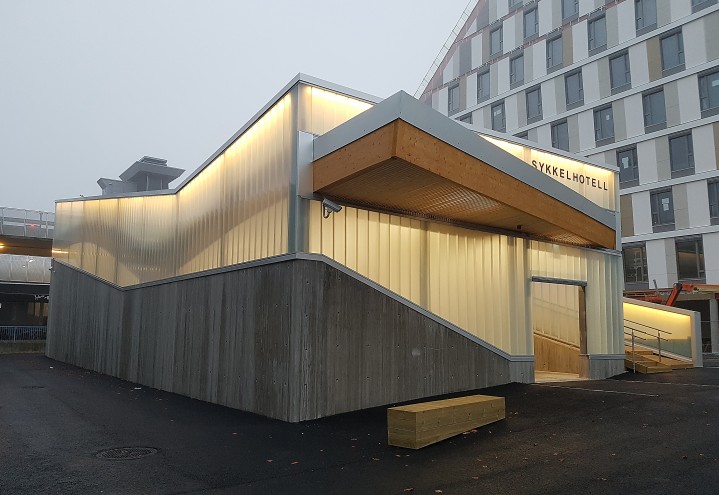
Lillestrom, a ten minutes train ride from Oslo, the capital of Norway, has frequently been voted the Best cycling city in Norway. Last fall Lillestrom Bicycle Hotel, commissioned by ROM Eiendom AS and The Norwegian National Railways, was officially opened.

The Bicycle Hotel (“Sykkelhotellet”) has added a new feature to make rwo-wheeled transport even easier for locals and visitors. The Bicycle Hotel is adjacent to the Lillestrom Railway Station and will give bikes a cozy space to bunk up while riders are off in the city.

Norway’s Best Cycling City
Lillestrom Bicycle Hotel

Norway has set ambitious targets for environmental and sustainable future, and an increasing number of railway stations will promote the use of bicycles by erecting bicycle storage space that is protected from the elements.

The bicycle hotel in Lillestrom is directly connected to the main square of the train station and focuses on making a positive contribution to the surroundings.

Norway’s Best Cycling City
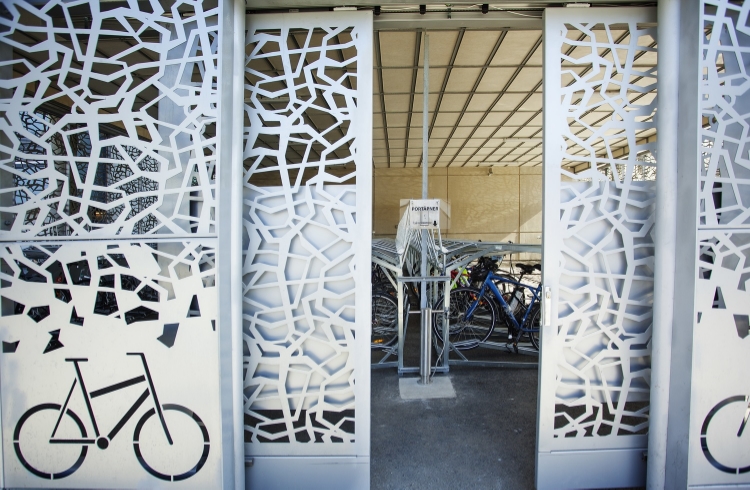
Inside Lillestrpm Bicycle Hotel

The glass box consisting of transparent glass walls allows natural light to filter through during the day and transform the building into a glowing box at night. This way the building has a minimal energy consumption. At day time no lighting is required since the glass walls allow for natural day light. During the night the artificial lighting double functions for the illumination of the interior and provides additional lighting to the surroundings.

The glass walls feature thin gaps between panels, allowing for natural ventilation without complicated venting systems.

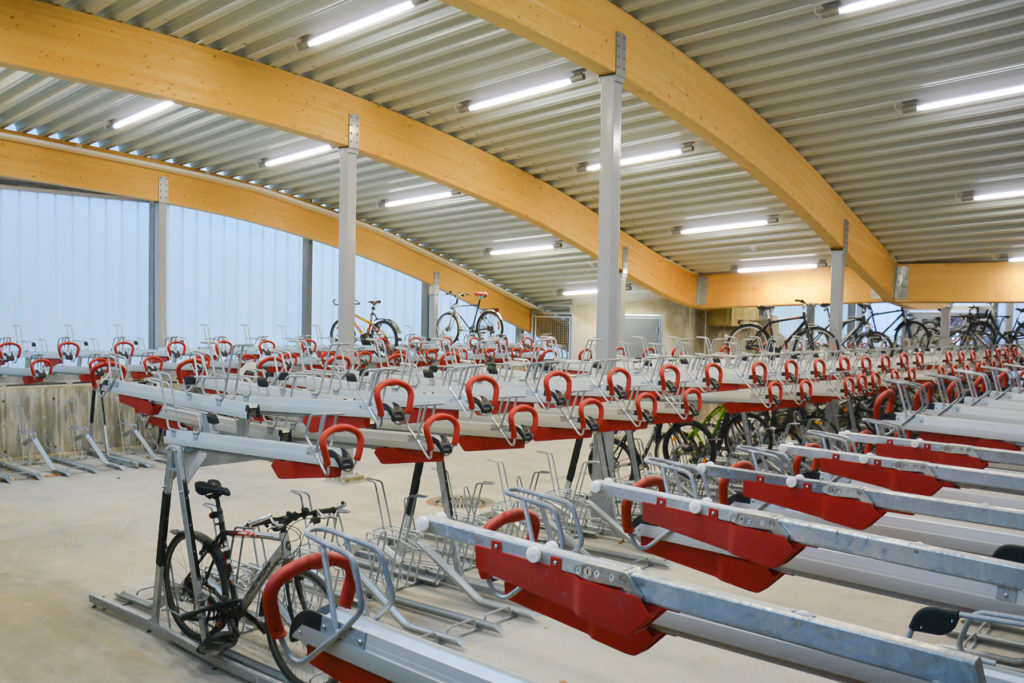
A dynamic wooden roof is resting on the glass box, and a playful concrete base protects the building against the surrounding heavy traffic. This gesture provides an inviting public to the top. In addition to a safe and nominally priced place for bike storage, the Bicycle Hotel offers a public green rooftop with a sloping ramp, stairs, and benches plus a stunning view of the city beyond.
access

Norway’s Best Cycling City
Also in the city of Drammen, halt an hour’s train ride southwards from Oslo, a bicycle hotel is available ,

Together the glass box and the roof create an intimate yet open and accessible public space, while the double story bicycle rack becomes the main element in the space. “Together the glass box and the roof create an intimate yet open and accessible public space,” said the architects in a statement.

Norway’s Best Cycling City
Opening of the bicycle hotel in Sandvika (between Oslo and Drammen)

The seventh bicycle hotel in Norway was officially opened in Sandvika last month.

Norway’s Best Cycling City, Written by Tor Kjolberg

Best Scandinavian Gourmet Restaurants 2017

30 restaurants in several gastronomical price categories was announced during a gala held in Gothenburg on Sweden’s west coast last month, arranged by White Guide.

The Nordic version of White Guide has been published yearly since 2005. Every year around 800 restaurants in the Nordic countries are tested.

Best Scandinavian Gourmet Restaurants 2017
Restaurant Fredrikshøj, Oddersvej, Aarhus, Denmark

At the gala last month, the top 30 Scandinavian restaurants in the uppermost two gastronomic categories were presented, and prizes were awarded in categories such as Merroir, Terroir, Best Restaurant, Worth a Journey, Best Sustainable Gastronomy, Best Wine Experience and many others.

Here are the Scandinavian winners.

  1. Esperanto, Stockholm, Sweden

    Best Scandinavian Gourmet Restaurants 2017
    Esperanto, Stockholm
  2. Fäviken, Magasinet Järpen, Sweden
  3. Maaemo, Oslo, Norway
  4. Geranium, Copenhagen, Denmark
  5. Kadeau Copenhagen, Denmark
  6. Gastrologik, Stockholm, Sweden
  7. Oaxen Krog, Stockholm, Sweden
  8. Restaurant AOC, Copenhagen, Denmark
  9. Daniel Berlin Krog, Skåne Tranås, Sweden

    Best Scandinavian Gourmet Restaurants 2017
    Falsled kro, Denmark
  10. Kong Hans Kælder, Copenhagen, Denmark
  11. Mielcke & Hurtigkarl, Copenhagen, Denmark
  12. Søllerød Kro, Holte, Denmark
  13. Alchemist, Copenhagen, Denmark
  14. PM & Vänner, Växjö, Sweden
  15. Slotskøkkenet / Dragsholm Slot, Hørve, Denmark
  16. Restaurant Koch, Aarhus, Denmark
  17. Faroe Islands
  18. Restaurang Vollmers, Malmö, Sweden

    Best Scandinavian Gourmet Restaurants 2017
    Restaurant Koch, Aarhus, Denmark
  19. Operakällaren, Stockholm, Sweden
  20. Koka, Gothenburg, Sweden
  21. Frederikshøj, Aarhus, Denmark
  22. Studio, Copenhagen, Denmark
  23. Adam/Albin, Stockholm, Sweden
  24. Kadeau Bornholm, Aakirkeby, Denmark
  25. Re-Naa, Stavanger, Norway

    Best Scandinavian Gourmet Restaurants 2017
    Kadeau, Copenhagen Photo: Marie Louise Munkegaard
  26. Falsled Kro, Millinge, Denmark
  27. Omakase Köttslöjd, Stockholm, Sweden
  28. Sabi Omakase, Stavanger, Norway
  29. Finland
  30. Ti Trin Ned, Fredericia, DenmarkBest Scandinavian Gourmet Restaurants 2017 is based on a press release from White Guide.

    Feature image (on top) Restaurant Mielcke Hurtigkarl, Copenhagen

World’s First Ship Tunnel in Norway

According to the Norwegian Coastal Administration (NCA) Norway will build the first shup tunnel on the Western Stad peninsula in Norway. This will facilitate freight and passenger ship navigation in avoiding a dangerous coastal area.

World’s First Ship Tunnel in Norway
Stad Ships tunnel. Map by NCA

Engineers in Norway are now laying plans to allow cargo and passenger ships to sail underneath a snow-capped mountain, near the city of Selje. Norway thereby confirms its reputation for innovation and progressiveness with a first-of-a-kind tunnel that allows large ships to travel under a mountain.

The tunnel will be 1,800 meter long, 37 meter wide and 26.5 meter tall and pass through the narrowest part of the Stad Peninsula, allowing ships to bypass the Stadhavet Sea. According to the Norwegian administration this is the most exposed and dangerous area along the Norwegian coastline.
World’s First Ship Tunnel in Norway
Sketch of Stad ships tunnel

At an estimated cost of $450 million, the Stad tunnel will be the world’s first full-scale ship tunnel, according to NCA.

The project is believed to take 12 years to complete, and while it won’t actually shorten any trips around Norway’s remote Stad Peninsula, it will make voyages much safer. The lives of 33 seamen have been lost in the region since World War II. The tunnel will also strengthen industrial and commercial activities in the region.

World’s First Ship Tunnel in Norway
Photo by Appex/NCA

The engineers will have to blast out eight million tons of rock, which will be used in the neighboring municipalities to establish new landmass and expand existing areas for business purposes.

The Norwegian Parliament has already earmarked $120 million for the project, and construction could begin as early as 2018, and is scheduled to finish in 2029.

World’s First Ship Tunnel in Norway
Stad ships tunnel / Snøhetta/NCA

The completed project will be another example of Norway’s fine tunneling exploits, following the construction of the globe’s longest road tunnel at 25km.

World’s First Ship Tunnel in Norway, written by Tor Kjolberg

Swedish Design Goes Milan

Sweden Design Moves is a four-year program of promoting Swedish architecture, design and fashion around the world. 4 to 9 April this year a very special contingent of designers and companies from Sweden were peppered throughout the city during Milan Design Week 2017.

Swedish Design Goes Milan
Armour mon Armour/Farg & Blanche

Visitors to Milan were able to navigate the city through a specially designed map (digital and printed) featuring dozens of Swedish-related events, including a cluster of design activity in the 5vie district and a dedicated exhibition at the fairground.

Swedish Design Goes Milan
Michael Persson Gripkow

There were also plenty of opportunities to try Swedish food and drink throughout the Swedish trail. Project Manager of Swedish Design Moves, Michael Persson Gripkow, says, “Sweden’s design history is deeply connected to its rural heritage and social ideals but there is much more to Swedish design than the cool contemporary minimalism for which it’s best known. At its core, Swedish design is driven by equality, and creativity guides the solutions.”

Well known for their wanderlust, Swedes work around the world, sharing international references, innovations and contacts. Simultaneously however, there is a strong movement in the Swedish design community back to Swedish heritage and craft skills. Small design-led businesses with unique identities are enjoying a renaissance – telling their own stories and producing their products locally on a small scale all around Sweden.

Swedish Design Goes Milan
Bolon Flooring

Sweden is also one of the few European countries where local production has increased during the past ten years. Recent studies show that Sweden has one of Europe’s most stable furniture industries, with a strong growth compared to other countries in these uncertain times.

Swedish Design Goes Milan
Offect Carry-on stool/Mattias Stenberg

Participants in Milan
The highly anticipated Ikea design and lifestyle festival in Lambrate featured new collaborations, six new collections and a packed-out schedule of events.

Swedish Design Goes Milan
Ikea Fluorisalon festival, Lambrate

Bolon flooring collaborated with Cappellini at FuoriSalone, Hästens, the 165-year old bed manufacturer, known by its blue-and-white check pattern, made a significant brand announcement, and furniture brand Blå Station, lighting brands Zero and Ateljé Lyktan and Kasthall carpets were all launching new designs in Milan showrooms.

Swedish Design Goes Milan
Smaller objects

Offecct launched a permanent showroom in Navigli, where it will be showing new launches including the Phoenix (an excellent example of a fully sustainable product), by adopted Swede Luca Nichetto. Elsewhere in Milan, Nichetto collaborated with fragrance creator and entreprenur Ben Gorham on an installation with 158 year old Murano glass manufacturer Salviati in a 700 sqm space in Ventura Centrale.

Swedish Design Goes MilanThe highly innovative sewing with wood and aluminum installations, Armour mon Amour by Färg & Blanche collaborated with Bolon, at Teatro Arsenale. Beckmans College of Design in Stockholm and other Swedish schools, Including the University of Gothenburg , University of Gävle and Lund University exhibited in Ventura Lambrate, next to their international counterparts.  Also in Ventura Lambrate, industrial designer Anna Gudmundsdottir exhibited a selection of everyday disposable homewares created in collaboration with local manufacturers in southern Sweden.

Swedish Design Goes Milan
Swedish Design Moves

Around Milan were also other internationally renowned designer names, such as Monica Förster, Folkform and Front. Ten years of collaboration between architects Claesson Koivisto Rune and Italian furniture manufacturer Arflex was presented in the Arflex showroom, together with the trio’s own brand, Smaller Objects.

Swedish Design Goes Milan
The “Form Us With Love” team

Form Us With Love, one of Sweden’s most prolific design companies, arranged leading prototyping workshops at Studio Monzini Raboni in 5vie. Collaborators on Prototypa included Clara von Zweigbergk, Beckmans College and Wingårdhs Architects.

The fourth edition of the coveted Summit design interview book by editors Daniel Golling and Gustaf Kjellin was available to visitors at the iconic

Swedish Design Goes Milan, a curated exhibition organized by Business Sweden of 18 designers and companies, by White Architects was exhibited at Milan retail and gallery space, featuring a special ‘mingle lounge’ spanning everything from small-scale craft, design and fashion to large-scale architecture from Sweden.

Architects Sweden’s specially commissioned film Woodland, screened at the Teatro Arsenale.

Swedish Design Goes Milan
Beppe Finessi

Swedish brands, including Karl Andersson & Söner, Bolon, Swedese, Lammhults, Örsjö, String and Blond Belysning, presented their new work at their stands. At Fabbrica del Vapore, to celebrate 20 years of Salone Satellite, curator Beppe Finessi  had pulled together a retrospective of some the best young designers who began their careers at Salone Satellite.

Among the selection were Swedes: Mia Cullin, Daniel Enoksson, Folkform, Färg & Blanche, Louise Hederström, Lucas Hinnerud, and Stefan Holm.

Swedish Design Goes Milan
Volvo Showroom Milan

Later this spring, after Design Week, Volvo will open a new showroom in Milan, designed by Swedish architects Tham & Videgård. Also, the fashion brand Acne Studios will open a new shop in the Brera neighborhood.

Swedish Design Goes Milan
Acne Studios Milan

After Milan, Swedish Design Moves travels on to Paris in September with fashion and architecture as the main focus with a program of events at the Swedish Institute.

Swedish Design Goes Milan, press release from Swedish Design Moves