American Post-War Pop Art is now exhibited at the National Gallery in Oslo. “The Great Graphic Boom” is here defined as the decades following the Second World War. You can experience printmaking from an era concerned about the atomic bomb, movie stars, expressionism, consumerism and pop culture.
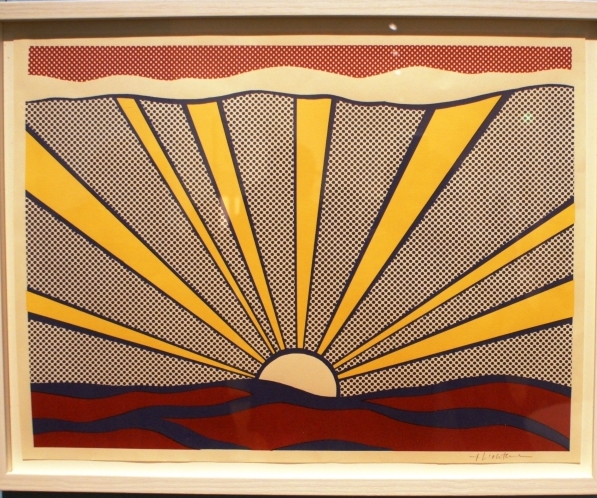
Roy Lichtenstein: Sunrise 1965, lithorgraphy
These decades were highly dramatic ones in the history of the United States, and the exhibition will reveal how pop art often was used as a subversive language of protest – a language that is more relevant today than ever.
Alex Katz: Brisk Day, Woodcut serigraphy aquatint
Vivacious brushstrokes and vibrant color fields dominated the abstract expressionism of the New York school. Pop art is generally considered an Anglo-American phenomenon, a reflection in modern commercial culture, associated with such artists as Andy Warhol and Roy Lichtenstein, both represented in the exhibit.
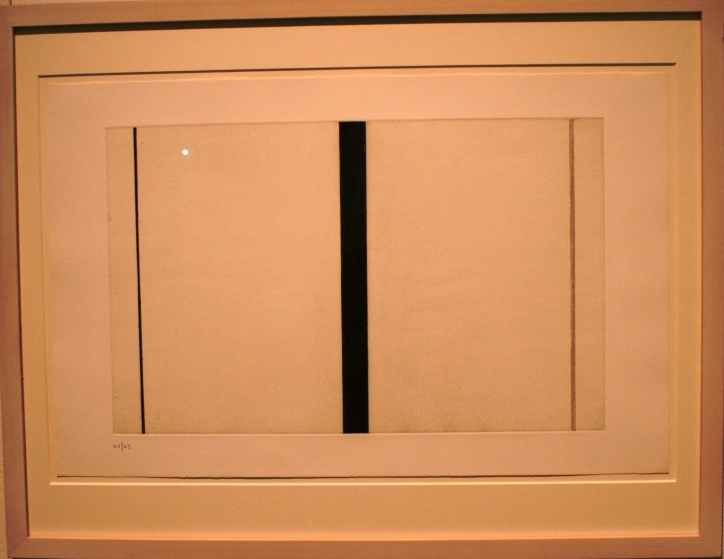
Barnnett Newman: Untitled etching 1969
Around 1960, other modes of expression came into being. Unlike the New York school, many younger artists began to work a good deal on making prints. The exhibition shows many such variations, from Donald Judd’s red and blue printed Parallelogram to Ste Sébastienne by Louise Bourgeois.
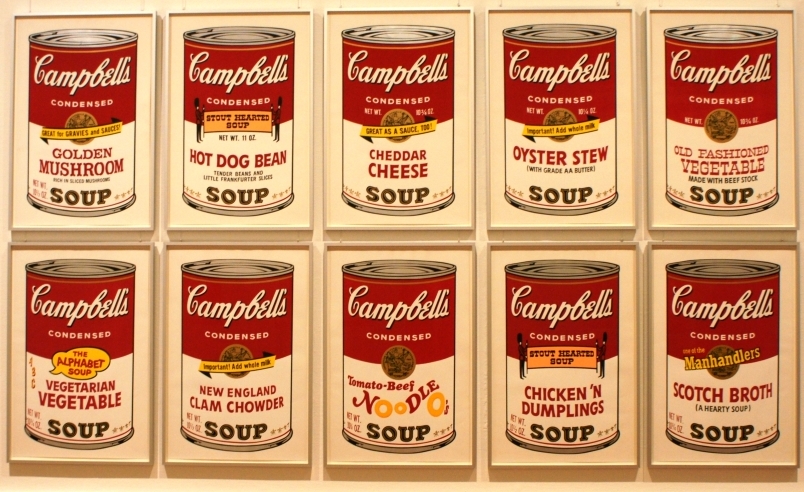
Andy Waehol: Campbell Soup II, ten serigraphies
For some artists, working on prints became a defining part of their careers, while for others it served as a short-term venue for experimentation. No one considered themselves to be “printmakers”, but these artists continue a longstanding tradition of painters-cum-printmakers, following in the footsteps of Rembrandt, Munch and Picasso.
Bruce Neuman: Pay attention, 1973 lithorgraphy
Prints are well-suited to address because the media itself is based on imprints, transfers, and multiplication. Moving on in four halls, you’ll find the language of mass production, the repetition of advertising strategies, the appropriation of icons from popular culture and the subversion of political symbolism that re-educates us on a movement that really reached out to embrace us – and continues to do so.
Louise Burgeouis: Ste Sebastienne 1992
“The Great Graphic Boom” is a collaboration between the Oslo National Museum and the Staatsgalerie Stuttgart in Germany. Curators are Øystein Ustvedt (Oslo) and Corinna Höper (Stuttgart).The exhibition runs through 28 May.
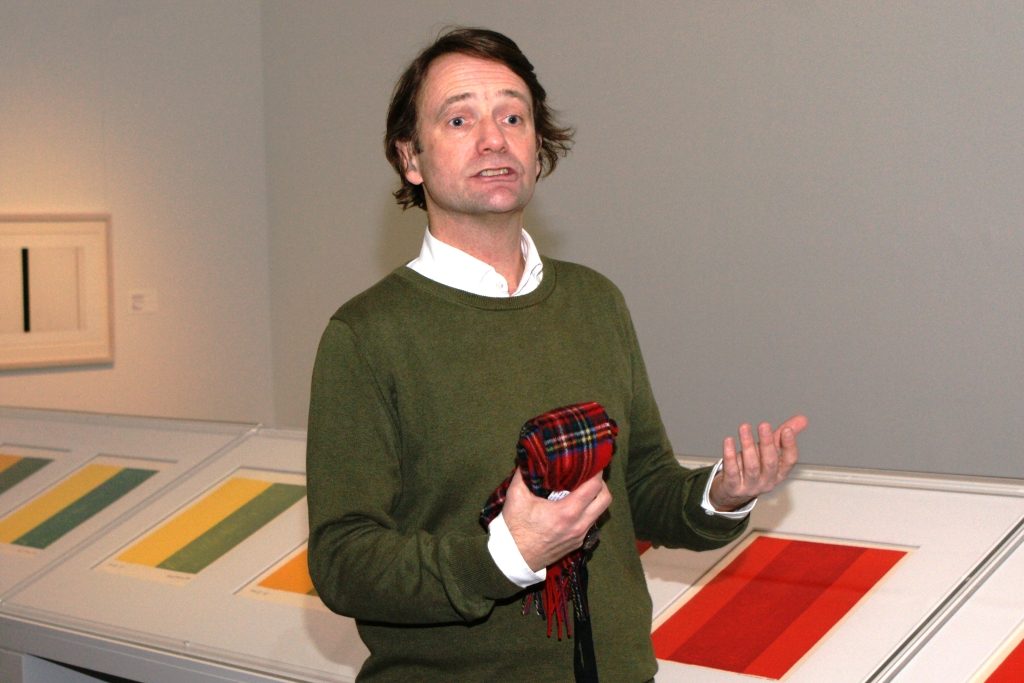
Curator Øystein Ustvedt
Feature image (on top) Roy Lichtenstein, Crying Girl, 1963 – Offset lithography
Climate change is ravaging the $12 billion ski industry. Ski resorts all over the world are increasingly turning to expensive snow-making machines as the climate warms. Norwegian researchers are now developing a better snow machine.
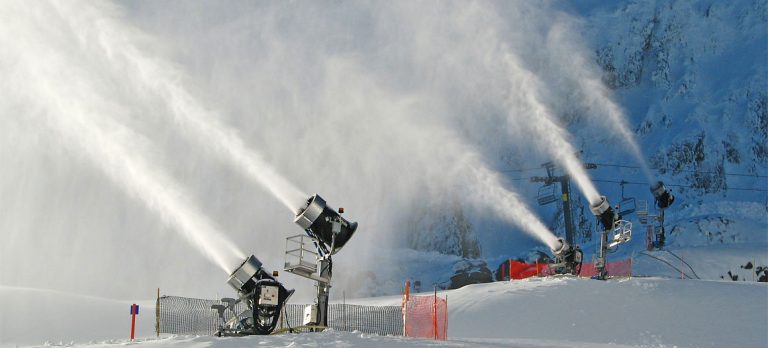
A consortium led by researchers at the Norwegian University of Science and Technology (NTNU)and SINTEF, Scandinavia’s largest independent research institute, are now working on a machine that can produce snow that heats buildings at the same time, even if the temperature is above freezing.
Climate friendly snow-making in Norway
The Norwegian Ministry of Culture has granted NTNU 2.3 million krone to research new ways of producing artificial snow.
“Winter sports are a central part of Norwegian life,” says Trygve M Eikevik, a professor
Professor Trygve M. Eikevik at NTNU
of energy and process engineering at NTNU. “If you make snow machines, they should certainly be environmentally friendly,” he adds.
However, conventional snow-making doesn’t work once the temperatures are above freezing. But Norwegian researchers have now found a way to create snow in warmer temperatures by adapting the heat pump technology found in refrigerators and freezers. And instead of blowing the hot air outside the machine, the researchers aim to achieve 100 percent heat recovery which could be used to heat nearby buildings and facilities.
Research scientist Petter Nekså at SINTEF
“At higher temperatures, you need a refrigeration plant to make snow. The advantage is that this process is independent of air temperatures. One of the main aims of the project will be to find out how we can produce snow regardless of the outdoor temperature, and to develop energy-efficient ways of doing it,” says Petter Nekså, an energy research scientist at SINTEF.
The researchers are also looking for a better way to store snow as a precaution. Sawdust is currently used to help insulate the snow for later use, but it loses its insulating properties over time and requires replacement. Perhaps technology within the fishing industry might prove to be helpful.
“The fishery sector produces around 300,000 tons of ice each year for fish export. This is enough to cover an 8-metre-wide, 150-kilometre-long ski trail with a layer of ice that is half a meter thick. It is, therefore, more than possible to manufacture snow for skiing,” says Eikevik.
ntnu on trondheim is attracting increasing numbers of international students
A prototype is expected ready next year, and the researchers hope they can save Norway’s reputation as a “skiing nation”.
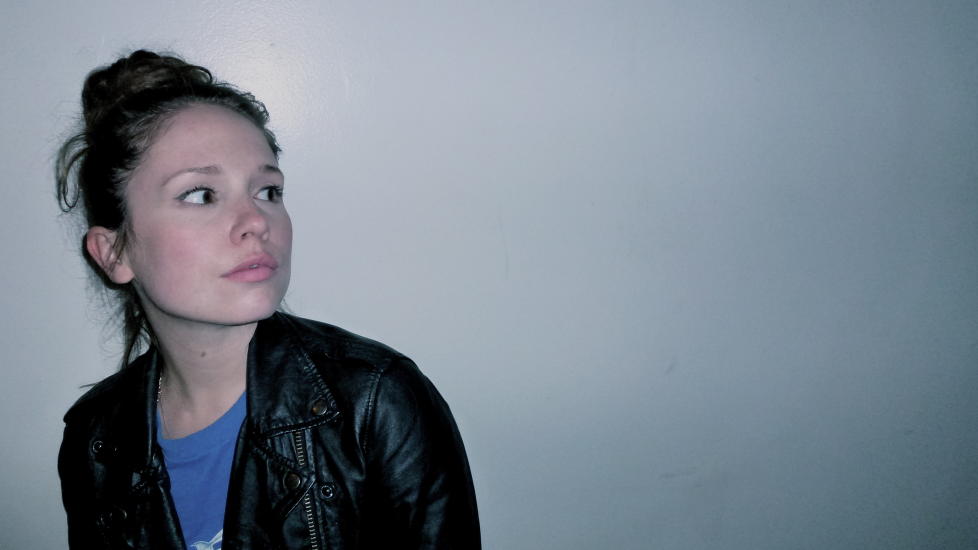
The Norwegian-born, now Los Angeles-based singer, Mr. Little Jeans is in fact not a mister but techno-pop artist Monica Birkenes.
She went from quietly writing synth-pop tunes for herself to seeing her cover of Arcade Fire’s “The Suburbs” get millions of plays on SoundCloud and YouTube in 2011. Her 2014 critically acclaimed debut, Pocketknife, featuring tracks like “Good Mistake” and “Oh Sailor (Feat. The Silverlake Conservatory of Music Youth Chorale).” It garnered immediate buzz, and the popularity has been a lot for the introverted chanteuse to take in.
Monica Birkenes ‘Mr. Little Jeans’
“It can be exhausting,” she says. “But I just read a book on introversion and it said you come out of your shell if it’s really something that you care about and it’s important to you. I feel like that’s the case.”
Birkenes adopted the Mr Little Jeans moniker from a character in an early Wes Anderson film. “I’d just watched Rushmore and somehow that came up, and I just decided to go with it,” she says. “I don’t think I thought about the fact that it might stick.”
Mr. Little Jeans Runaway
Birkenes ended up working with the actor who plays Mr. Little Jeans, Kumar Pallana, and got to know him before he died in 2013 at the age of 94.
Monica Birkenes
In 2014 she released her debut album “Pocketknife”. Since then Monica Birkenes, aka Mr Little Jeans, is getting used to being in the spotlight. Late last year, Nettwerk Records signed Mr Little Jeans to its growing and diverse roster.
“That’s right, Mr Little Jeans is not a dude. She’s a lady. And a very talented one!” says Perez Hilton.
Land of Mine(Under Sandet), the Danish film nominated for best foreign film at the Oscars 2017, follows a Danish sergeant who commands a troop of former German soldiers as they clear mines from the Skallingen Peninsula.
The film is a well-reviewed but controversial box office hit in Scandinavia and Europe that also scored three European Film Awards.
Director Martin Zandvliet and producer Mikael Rieks say the film should be a warning sign of the dangers of European disunion.
Director Martin Zandvliet and producer Mikael Rieks say the film should be a warning sign of the dangers of European disunion. “It kind of scares me because in the beginning, the movie was about the way I saw our nation portraying itself,” Zandvliet says of the response to the film in Europe. “But it also was about the things going on in Europe, about closing down Europe, talking about building a wall around Europe and not letting the Syrian refugees in.”
From the movie ‘Land of Mine’
For the first few years after Denmark was invaded by German forces in April 1940, the Danish government chose to negotiate and cooperate with its German occupiers to avoid further aggression and hardship, and Danish government opposition only began in earnest in 1943 once Germany cracked down on civil unrest and made moves to deport Denmark’s Jews.
“Unfortunately this small, local story feels more global and more relevant than ever,” says Zandvliet.
“It is very, very important to note that the longest period of peace in European history has been the past 70 years, because nations are united. United Nations, United States, United Europe, and now we are afraid this will all go up in smoke and close our borders. That is why I think on a very local scale this movie is very global,” says producer Mikael Rieks.
“Unfortunately this small, local story feels more global and more relevant than ever,” says Zandvliet
When the war ended in 1945, millions of deadly, undetonated mines remained, along with the question of who would clear them—and how.
For every 5,000 defused mines, one soldier was killed
In the film, more than 2,000 former German POWs crawl on their stomachs across the beach, gently prodding the sand to remove over 1.5 million landmines without risking a direct impact. The prisoners depicted by director Martin Zandvliet are not well-trained, well-fed, or well-taken care of, and their hunger makes for shaky hands, their illness for delirium. These prisoners, as the film emphasizes, were not hardened Nazis. In reality, the majority of the POWs made to do this labor were teenage boys or elderly men, who were part of the Volkssturm, the national militia conscripted in the last years of the war to mount an all-out defense against the Allied invasion. For every 5,000 defused mines, one soldier was killed.
Danish Movie – A Warning Sign for Europe, written by Tor Kjolberg
Christian Olsson, who runs the Hidden Wonders of Sweden blog, shares his top-ten places you’ve probably never been to.
1. Devil’s Bible in Stockholm There is a Devil’s Bible (The Codex Gigas) in central Stockholm and it’s around 400 years old and the biggest medieval manuscript ever known. The Codex Gigas means literally “the huge book” and it truly deserves its name, the book is 895×490 mm, 620 pages, and weight is whopping 75 kg.
According to a legend, the Devil’s Bible was handwritten by an imprisoned monk in Böhmen (current Czechia), who got the devil’s help to complete the work in one single night. If that isn’t impressive enough, look for the page with a full-colour portrait of the devil himself!
How to get there: Go to Stureplan in Stockholm and look for the National Library of Sweden (Kungliga biblioteket) in the Humlegården park.
A security guide locking the Devil’s Bible in a vailt. Photo: Björn Larsson
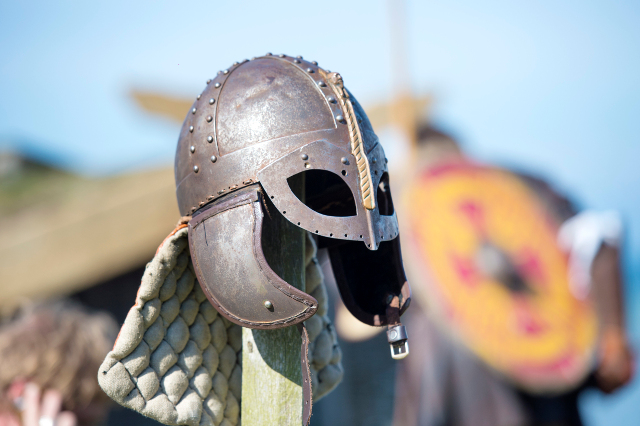
2. A Viking Village in The Middle of Nowhere In the deep forests of Värmland, there is village known as Nysäter where Värmlands Vikingacenter lies. This village has everything from ships to markets. There is also a huge market every year that gathers Viking fans from across all of Scandinavia called Vikingating. Oh, and did you know there is a supermarket called “Vikingahallen” which means “The Hall of Vikings”?
How to get there: Take the E18 road from Karlstad and you’ll reach Nysäter in about 40 minutes or take E45 if you are coming from the south. Check Värmlandstrafik, Swebus or Netbus for bus connections.
File photo of a Viking helmet by Ludvig Thunman-TT
3. Lillkyrkan in Koberg – Sweden’s Smallest Church Sweden’s smallest church is only about 1.5 square meters and was built by a former crafts teacher, Rodney Sjöberg, who wanted to have a new project after retirement. His father was a pastor and where Lillkyrkan stands today was a former Mission Covenant church.
Rodney started to build Lillkyrkan in the year 2000 and finished four years later. The church has been blessed by a bishop and is now available for baptisms and weddings. Don’t forget to write in the guestbook before you leave. Enjoy!
How to get there: From Trollhättan take route 62 and drive towards Vårgårda. When you see a sign saying Upphärad turn left and go another 3km, and you’ll pass a little bridge. Take a left after the bridge, the church is on a hill just next to the road.
Lillkyrkan in Koberg. Photo: Christian Olsson
4. Little Istanbul in Västmanland Few people can brag about having a miniature city in their garden, Jan-Erik Swennberg is an exception; he made his own Little Istanbul in a little town outside of Sala.
Erik went to Istanbul back in 1979 and all it took was three days before he fell in love with the ancient but lively city. After coming back to Sweden he slowly but surely started to build miniature versions of famous buildings such as the Blue Mosque and Topkapı Palace. No something you would expect in rural Sweden, right?
How to get there: Take Europe Route 18 from Stockholm and drive northwest towards Enköping. From there follow route 70 to Sala. Please note that the miniature city is in a private garden and you have to be respectful.
Little Istandbul, Sala. Photo: Atlas Obscura
5. Snow White’s house in Sweden In Alphems Arboretum you’ll get one of the largest collections of trees in Sweden and oddly enough, also Snow White’s original house. The story started with a young Swedish man named Gustav Tenggren who visited the arboretum, and after seeing the park owner’s house he got inspiration. Later Gustav immigrated to the US just as so many Swedes did in the early 20th century. In America, he got a job at Walt Disney as a cartoonist, where he made use of his inspiration from Alphem. Voila! Snow White’s house.
How to get there: From Falköping drive on the road 47 towards Trollhättan, turn towards Floby, and then follow the signs. The entrance fee is 30 kronor and kids under 12 have free admission. There is a great coffee house open during summer time.
Yup! This is Snpw-wgute house. Photo: Christian Olsson
6. Pressbyrån’s Museum – Sweden’s most secret museum A museum dedicated to Swedish convenience store chain Pressbyrån doesn’t sound too exciting, right? You might have to rethink, since Pressbyråns museum has a two-year waiting list, is unknown and still somewhat trendy according to the evening papers. Inside the museum, you can find out more about Pressbyrån’s over 100-year-old history, read headlines from old newspapers, see old tobacco vending machines and find out how Pressbyrån became the most common Swedish convenience store.
How to get there: Take a bus or car to Kungsholmen and look for Strandbergsgatan 61. The museum is open on Wednesday mornings and you may book via phone number +46 (0)8-58749191. On other weekdays you may contact Folke Lundberg directly on +46 (0)70-6623801 or Hans Hallqvist +46 (0)76-8066747.
A boy deliverung newspapers in the 1950s on behalf of Pressbyrån. Pgoto: SvD-TT
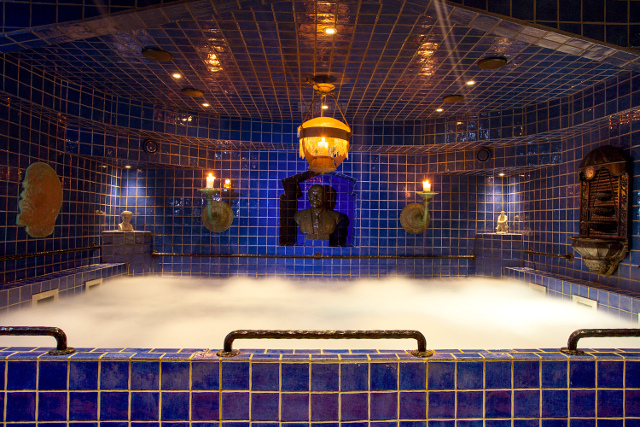
7. Lenin’s Spa Resort Vladimir Lenin was not only a Russian revolutionary communist leader but also a frequent spa visitor, and his favorite bath house was in St Petersburg. Unfortunately, in 1918 his government moved to Kremlin in Moscow. Lenin then simultaneously lost his beloved favorite spot in the back left corner of the bathhouse, which would be later known as “The Lenin Baths”. The bath house was a popular spa destination for party officials until the 1990s when it closed down.
Luckily, the founder of Hotell Gästis in Varberg made a visit to St Petersburg back in 1983 and felt so inspired that he decided to recreate the spa at his own hotel. Apparently, he was not allowed to sit on Lenin’s favorite left spot while at the original bath house. However, at Lenin’s Spa Resort in Varberg, you can sit and relax just like Lenin used to do!
How to get there: Take E6 if you are coming from the south or north, and go to Varberg city centre then look for Hotell Gästis. It’s on Borgmästaregatan.
The spa at Goitewl Gästis. Photo: Hotel Gästis
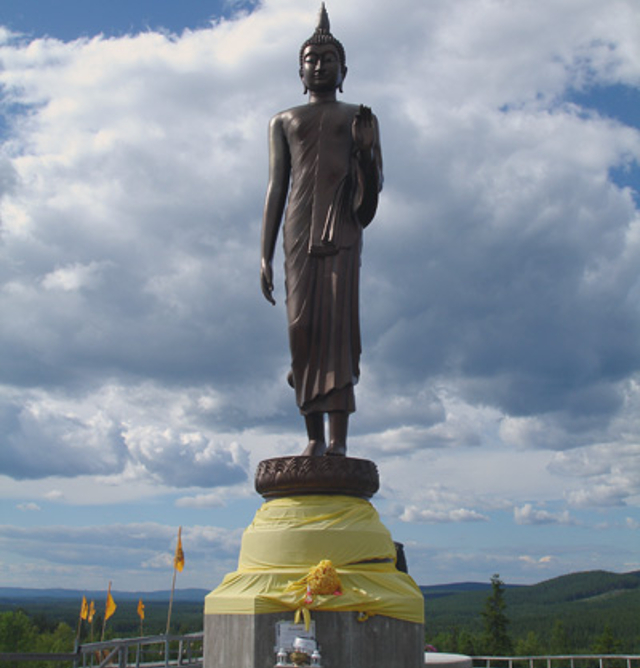
8. A Buddhist Center in Lapland On a cliff in the small town Fredrika in Åsele municipality there is an unexpected sight of an 8.5 metre-tall Buddha statue. Behind the Buddha, there is a statue of a monk, named Long Poo Thuad. There are also two elephant statues; they represent peace, beauty and welcoming the guests. Everything started with a monk, Phramaha Boonthin, who was in Lapland in 2004 and was searching for a quiet place to build a temple at. A contact of his told him about Fredrika in Åsele and soon the plans were in motion.
The plan was to build the big temple, but due to its financing solely through donations, things have been going slowly. Still, the statues are magnificent and the place is well worth a visit.
How to get there: Take route 92 to Fredrika town and you can find the Buddhist center at Holmselevägen 68.
Not something you would expect to find in northern Sweden. Photo: Gudrun Norstedt-Wikimedia
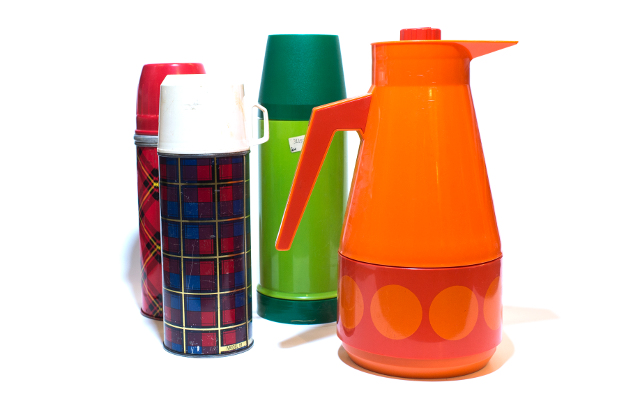
9. Thermos Museum in Delsbo Swedes love coffee and having fika. Especially among the older generation, the thermos plays a huge role in daily life, ensuring it is possible to bring a hot beverage everywhere. Even though the takeaway trend is huge among the younger generation, Swedes still love to bring their thermos for a picnic, road trip or when going hiking. In other words, going to a Thermos museum in Sweden makes perfect sense. The museum has 100-year-old thermoses and it contains a collection of thermoses from different parts of the world. You’ll simply get flasks in all shapes and colors!
How to get there: The town is located in Hudiksvalls municipality and is easily accessible from route 84. Look for a café named “Café 11:an” in central Delsbo and you’ll find the museum from there.
Which one is your favorute? Photo: Staffan Löwstedt-SvD-TT
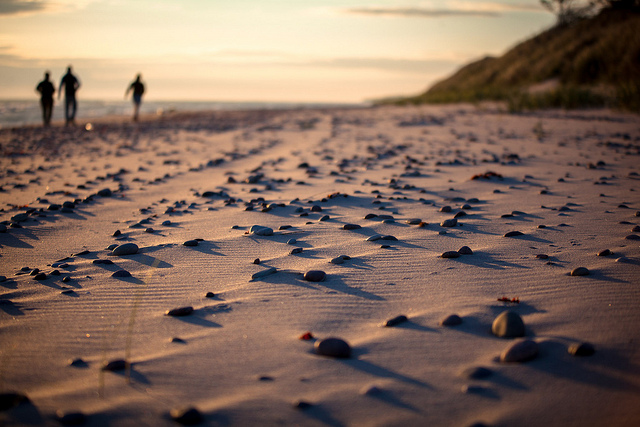
10. Unknown Pirate Island There is an old saying that Gotska Sandön was the last island in the Baltic Sea that was occupied by pirates. Today the island is a national park and the most remote island in Sweden. With its gorgeous empty beaches, pine tree forest and a diverse animal life this is a unique destination for the outdoor lover who also enjoys a bit of adventure. Note that it doesn’t have any facilities like a hospital or stores so you need to be in OK condition and also bring the food you plan to consume during your stay.
How to get there: You can visit Gotska Sandön between 24/5-10/9 2017. Boats operate regularly from Nynäshamn’s harbour and also from Fårösund, Gotland. There are different sleeping arrangements, from renting a cabin to hostels, camping or even renting a tent. Gotska Sandön is a nature reserve and you are only allowed to camp on designated camping sites. To find out more visit: Sandoresor.se
Gotska Sandön
Sweden’s ten quirkiest tourist attractions, written by Christian Olsson, editor ofHidden Wonders of Sweden, has been published by thelocal.se and has been republished with the author’s permission.
Feature image (on top) The Devils Bible being carried into the National Library at the library’s 125th birthday celebrations. Photo: Björn Larsson Ask SCANPIX
The Norwegian architects Snøhetta has done it again! This time the celebrated architects have created a holistic expression for both the Lillehammer Museum of Art and the adjacent cinema.
The Lillehammer Art Museum and Lillehammer Cinema were first established in an Erling Viksjø-designed building in 1964, which is considered today a definite representation of the architectural style of its time. In 1994, Snøhetta completed an extension to the Museum with the construction of an independent building that sought to bridge the architectural language of the original 1960s buildings and contemporary formal expression and to provide further gallery space dedicated to the works of local artist Jakob Weidemann (1923-2001).
Lillehammer Kino by SnøhettaNorwegian painter Jacob Weidemann
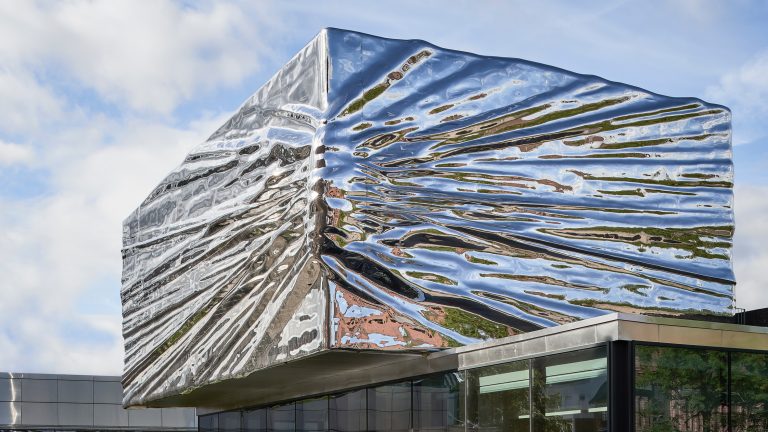
Last year they extended the buildings with a sculptural polished stainless-steel facade designed by the late Norwegian artist Bård Breivik (1948-2016) cantilevering from the roof of a glazed volume hosting a children’s workshop. The steel-façade is conceptually rooted in the sculptural idea of a shooting star, a dramatic symbol of the importance of Weidemann’s contribution to Norwegian painting.
With the addition to the Museum of the new exhibition hall, Weidemannsalen, this second Snøhetta-designed
expansion connects the two existing institutions. The expansion also includes two theaters and an interior renovation to the Lillehammer Cinema.
Lillehammer Art Museum and Cinema expansion
The integration of art, architecture, and landscape is an important feature in both Snøhetta and Erling Viksjø’s work. When Snøhetta designed the museum expansion in 1994, the spaces in between the buildings were transformed into an art garden in the firm’s first collaboration with artist Bård Breivik. For the recent expansion, it has been important to again enhance these connecting spaces, bringing the three volumes together in one complete project.
Lillehammer Art Museum interior
The key concept for the last expansion came from the idea of art hovering above a transparent base and to bring back the foyer as an extension of the plaza in front of the Cinema, creating a stronger connection between the city and the foyer, as Viksjø originally had imagined it. With this, Odd Tandbergs wall art in the foyer is again part of the city. The striking metallic wrapping reflects the surrounding context and changes its appearance with the light.
The expansion of the Lillehammer Art Museum and Lillehammer Cinema was completed throughout spring 2016, with the Museum being completed in January, the Cinema in March, and the return of the art garden being completed in May.
The art garden. Photo by Hilde Fauskerud
The Lillehammer Cinema added two new auditoriums and renovated its existing circulation space. One auditorium is integrated in the existing building structure, and the second is located below the art garden, between the two existing buildings.
“The integration of art, architecture, and landscape is an important feature in both Snøhetta and Erling Viksjø’s work,” said the studio. “For the recent expansion, it has been important to again enhance these connecting spaces, bringing the three volumes together in one complete project.”
Exciting Modern Architecture in Lillehammer, written by Tor Kjolberg
New statistics show that the overall population of Norway was up again at the end of last year.
Norway had an official populati0n of 5,258,317 as of December 31, 2016. That’s up 44,300, or 0.9 percent, from the year before, and the largest increase was among men.
State statistics bureau SSB (Statistics Norway) reports that around two-thirds of the growth is tied to net immigration. Akershus County recorded the largest growth percentage-wise, while the Norwegian capital of Oslo had, as expected the largest population concentration of 667,000. That’s more, reported The Independent Barents Observer, than the population of the entire country north of Trondheim. Oslo has long been among Europe’s fastest-growing capitals.
Norway’s population of foreign citizens has more than doubled since 2008, according to SSB, from 266,000 in 2008 to 559,2018 as of New Year. That coincides with the economic boom that extended from the late 2000s until oil prices collapsed in 2014, at a time when economic times were much worse on the European continent. Many Europeans came to Norway in search of work.
Norwegian immigrantrs
Immigrants and migrant workers now make up about 10.6 percent of the population, up from 5.6 percent in 2008. Citizens of Poland remain the single largest group of expatriates, followed by Swedes and Lithuanians.
Population dynamics in 2017
According to Countrymeters estimations, daily change rates of Norway population in 2017 will be the following:
171 live births average per day (7.12 in a hour)
122 deaths average per day (5.10 in a hour)
136 immigrants average per day (5.66 in a hour)
The population of Norway will be increased by 184 persons daily in 2017.
Norway’s Population Rises, written by Daily Scandinavian team
Swedish illustrator Mats Gustafson replaces the camera to capture the spirit and beauty of Dior.
In the exquisite book, “Dior by Mats Gustafson” the watercolors and collages of Mats Gustafson replaced the camera to capture the spirit and beauty of Dior. it was a return to the elegance of fashion’s earliest mode of expression.
Here, the Dior woman is unabashedly the jazz, particularly the reader’s consideration is drawn to Parisenne comportment and mode.
In the newly released book, the Dior woman is unabashedly the jazz, particularly the reader’s consideration is drawn to Parisenne comportment and mode. The book focuses on the heritage brand of Dior but the real question is whether or not the main attraction is the brand or the brilliant illustrator whose images inhabit the book.
While illustration was an essential element in promoting fashion in the first half of the twentieth century, photography has been the medium of choice since the 1970s. So when Dior approached Swedish illustrator Mats Gustafson in 2012 to portray its collections, it inspired to a long time collaboration.
Gustafson’s watercolor and collages are accompanied by exclusive style depictions crafted by founder Monsieur Christian Dior and riveting commentary by journalist Tim Blanks. With themes of diversity and inclusion eclipsing exclusivity set up by the old guard, Dior provides a new view on fashion in its embrace of modern times.
Mats Gustafson launches Dior illustratrations in a book
The prospective reader should however also be aware that the book is not about Dior in its broadest sense but honed in on a specific time frame: Dior at the hand of Raf Simons.
Illustrator Mats Gustafson
Mats Gustafson’s fashion and portrait illustrations have been included in numerous publications, such as Vogue and Vogue Italia, the New Yorker, and Harper’s Bazaar. His work has been exhibited internationally in solo and group shows. Dior by Swedish Illustrator,written by Tor Kjolberg
President Trump is slandering Sweden in his attempt to find reason for what he wants to do in closing off the United States. His actual knowledge of the issue is probably extremely limited.
However, incidents in Gothenburg, Rinkeby and Malmö might shatter a few illusions about Sweden. And if you take a closer look, you notice the Arabic signs in shop windows, overhear conversations in Kurdish, and see many faces of people of Somali descent.
Trump on Swedish immigrants
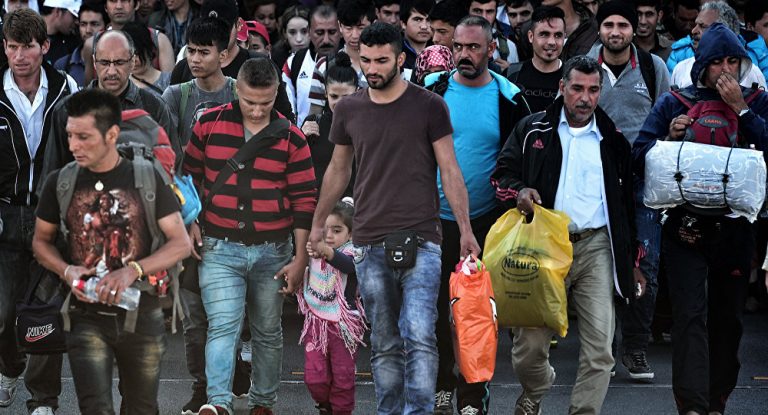
One year in the 1990s brought in about 100,000 refugees to Sweden, women, children and men fleeing the carnage of the Balkans, most of them from Bosnia, and most of them were Muslims. That huge inflow caused increase unemployment and made for a toxic debate, and some even resorted to violence.
Since then Sweden has made its mark on the world not by fighting wars but by offering shelter to wars’ victims. Over the past 15 years, some 650,000 asylum-seekers made their way to Sweden. Of the 163,000 who arrived last year, 32,000 were granted asylum.
incidents in Gothenburg, Rinkeby and Malmö might shatter a few illusions about Sweden
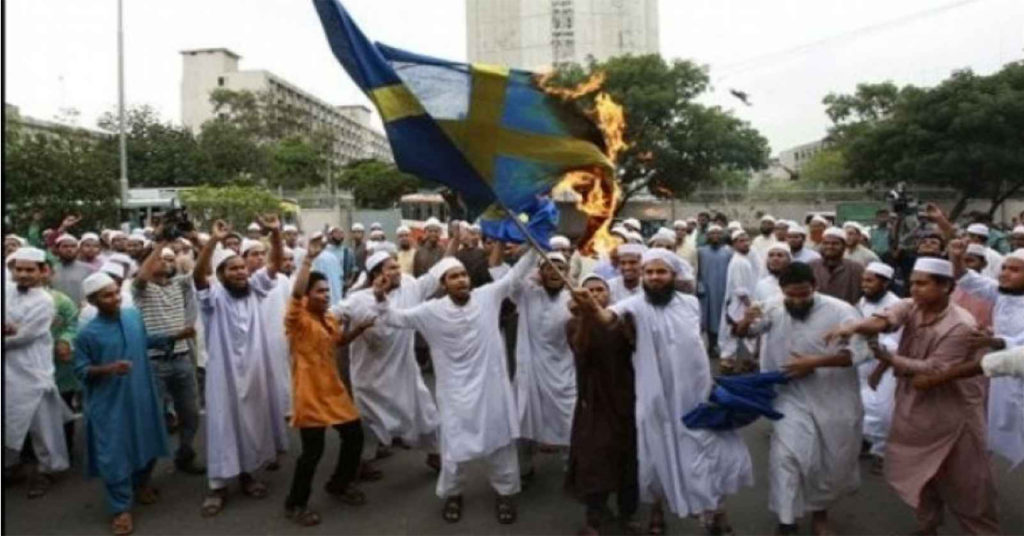
When Donald Trump last month suggested something was going wrong in Sweden, his remarks were first met with confusion, and then with derision. But after the riots broke out in Rinkeby, one local resident told CNN he thought Trump’s comments were “spot on”.
No doubt, the massive influx of refugees from the Balkan wars created difficulties. Years later there were some brutal shootouts in Stockholm between organized crime gangs originating in Balkan, and gang warfare has been a feature of the country for years now. Stockholm has been witness to Dickensian scenes of young pickpockets and thieves playing games of cat-and-mouse with the police, who feel powerless.
Swedish police outside mosque
Today, one in seven voters supports the Sweden Democrats, a populist party until recently reviled in polite Swedish society.
Many second generation immigrants claim that immigration to Sweden has gone too far, and that the situation is out of control.
Race problems in Sweden
Numerous studies, however, show that the Bosnian refugees have integrated well in Swedish society. On average they do as well, or even marginally better, than those born in the country. And they are everywhere: in sports, culture, business and politics. Many Swedes argue that they have given an added flavor to the country and in many ways made Sweden a better country.
On the other hand, Amir Rostami, an authority on Swedish organized crime who teaches at Stockholm University, says, ‘Today, the gang environment is — well, I don’t want to exactly call it the Wild West, but something in that direction.’
Swedish democrats showing homeless people
Others remain absolutely convinced that Sweden’s immigration policy is something to be proud of, and that the story is one of success.
There are of course other groups in Sweden than Bosnians. There are probably more people from Persia than from Bosnia, and no less than 17 percent of the population is from Finland. And although there have been Syrian communities for years now, many from Syria has also come.
Syrian Christians in Sweden
A much more difficult problem than integrating adults into the Swedish society is how to deal with all the unaccompanied children. During the Iraq war, about 400 children arrived without their parents each year — and all of them needed a place to live, social support and proper schooling. In 2014, when the number of children arriving annually hit 7,000, there were serious questions about how Sweden would cope. Last year, just over 35,000 unaccompanied children registered with the authorities.
Sweden has received more refugees per capita than any other European nation. At the peak of the European migrant crisis in 2015, more than 160,000 people arrived in Sweden requesting asylum – a huge surge for a country with a population recently reaching the ten million mark.
During the Iraq war, about 400 children arrived without their parents
“The equivalent in the US would be to take in six to seven million refugees,” said Magnus Ranstorp, a counter-terrorism expert at the Swedish National Defense University.
Some groups have sometimes taken longer time to integrate. And the strict structures of the Swedish welfare society are more geared to protecting insiders than opening up to outsiders. Currently the two biggest groups of immigrants are Afghans and Somalis. Then come Syrians, Ethiopians, Iraqis, Moroccans and Eritreans. Some are fleeing war; many are fleeing poverty and misery. Strikingly, boys outnumber girls by about five to one.
Swedish immigratuon
Unlike other countries, Sweden doesn’t test for age. Whatever age the applicant gives is accepted, unless it’s ‘obviously’ untrue. For this and other reasons, many Swedes remain suspicious. The cost of accommodating child refugees is enormous: $200 per child per day. There are serious concerns about children falling victim to predatory adults who have lied about their age.
Sweden has, however, offered a new future to some of those fleeing the horrors of wars, and it has been a part of the good story of Sweden – also for US President Trump.
Sweden – The Humanitarian Superpower, written by Tor Kjolberg
Brace yourself for a gastronomic treat: fresh seafood, wild berries and succulent game washed down by fiery aquavit is the order of the day.
There’s so much more to Scandinavian food than pickled herring and meatballs. Stretching from the midnight sun of northern Norway to the flat, fertile fields of Denmark, Scandinavian food culture is a lot more varied than you might think.
Scandinvian mussels
Magnificent landscapes, clean air and the Baltic and North Seas have created a natural larder from which Scandinavians have helped themselves for centuries. Every home chef makes full use of local fruit, vegetables, grains, fish, meat and game; and the capitals’ restaurants have won plaudits and Michelin stars galore for their back-to-basics approach to Nordic cuisine.
Denmark, Sweden and Norway have their own food cultures, but share gastronomic ground. Several dishes and ingredients link all the regions together, bringing a uniquely Scandinavian food experience to life. That was created by thousands of years of heritage and shared culture – and a bit of Viking pillaging.
Scandinavian herring
Seafood is king, and herring is the fish most associated with the region. Marinated, spiced, smoked, fried, salted or baked, it is usually eaten cold and washed down with aquavit.
Elk, venison and reindeer are commonly found on menus, and nearly all Scandinavians do a different kind of hunting in autumn – for mushrooms, blueberries and golden cloudberries.
Cloudberrys from Scandinavia
In general we can say that Scandinavian food is simple. We call it husmanskost – farmer’s fare. It’s natural and honest.
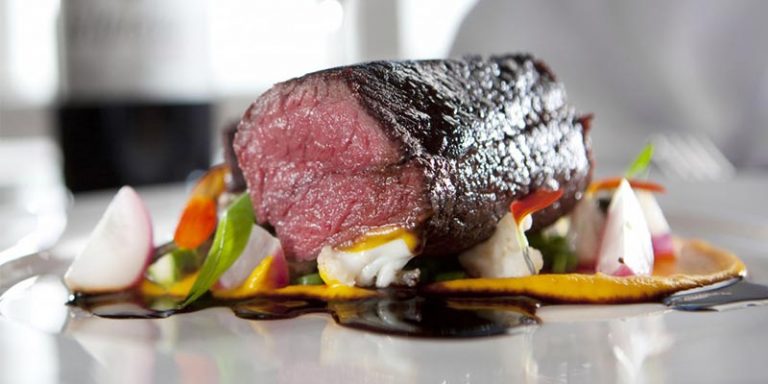
Feature image (on top): Reindeer filet
Scandinavian Food and Drink,written by Tor Kjolberg
















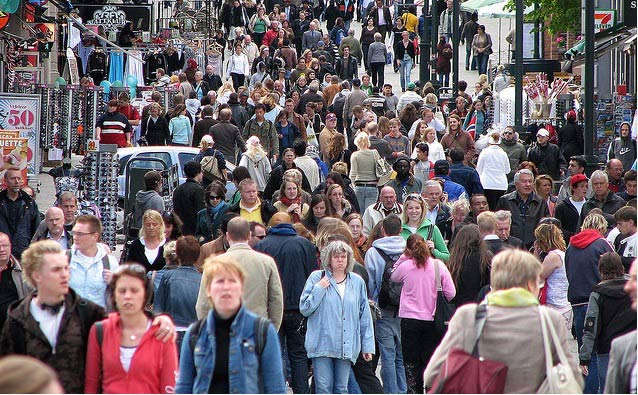

 Norway’s population of foreign citizens has more than doubled since 2008, according to SSB, from 266,000 in 2008 to 559,2018 as of New Year. That coincides with the economic boom that extended from the late 2000s until oil prices collapsed in 2014, at a time when economic times were much worse on the European continent. Many Europeans came to Norway in search of work.
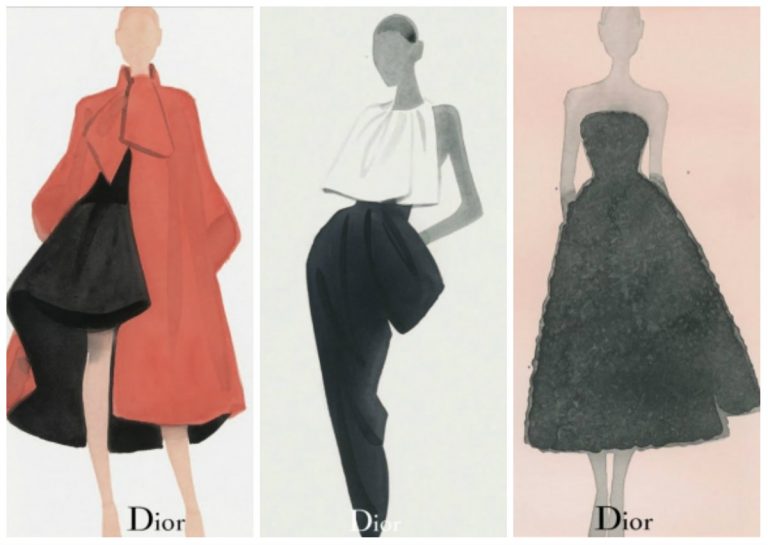
 In the exquisite book, “Dior by Mats Gustafson” the watercolors and collages of Mats Gustafson replaced the camera to capture the spirit and beauty of Dior. it was a return to the elegance of fashion’s earliest mode of expression.
  The book focuses on the heritage brand of Dior but the real question is whether or not the main attraction is the brand or the brilliant illustrator whose images inhabit the book.
 While illustration was an essential element in promoting fashion in the first half of the twentieth century, photography has been the medium of choice since the 1970s. So when Dior approached Swedish illustrator Mats Gustafson in 2012 to portray its collections, it inspired to a long time collaboration.
 Gustafson’s watercolor and collages are accompanied by exclusive style depictions crafted by founder Monsieur Christian Dior and riveting commentary by journalist Tim Blanks. With themes of diversity and inclusion eclipsing exclusivity set up by the old guard, Dior provides a new view on fashion in its embrace of modern times.