


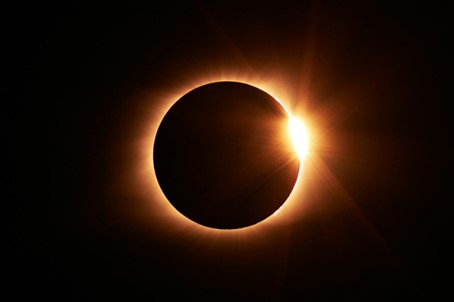
On 12 August 2026, Iceland will see its first and only 21st-century eclipse, with a four-day festival planned to mark the occasion. Experience the eclipse of the century in Iceland.
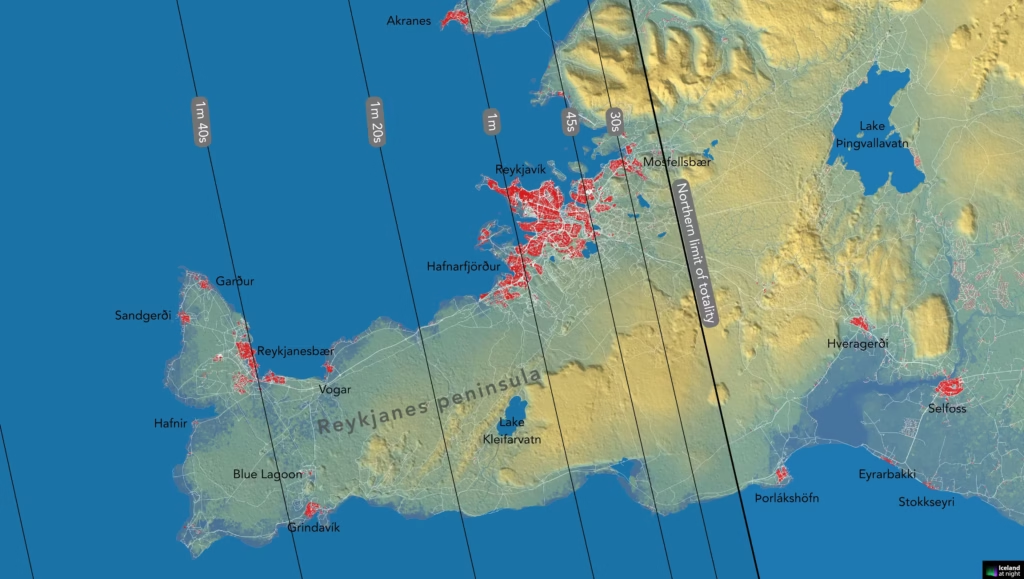
This is a big moment for all of Iceland, but especially for the capital. Partial solar eclipses happen more often. But in Reykjavík? The last time Icelanders saw a total solar eclipse in the city was all the way back in 1433.
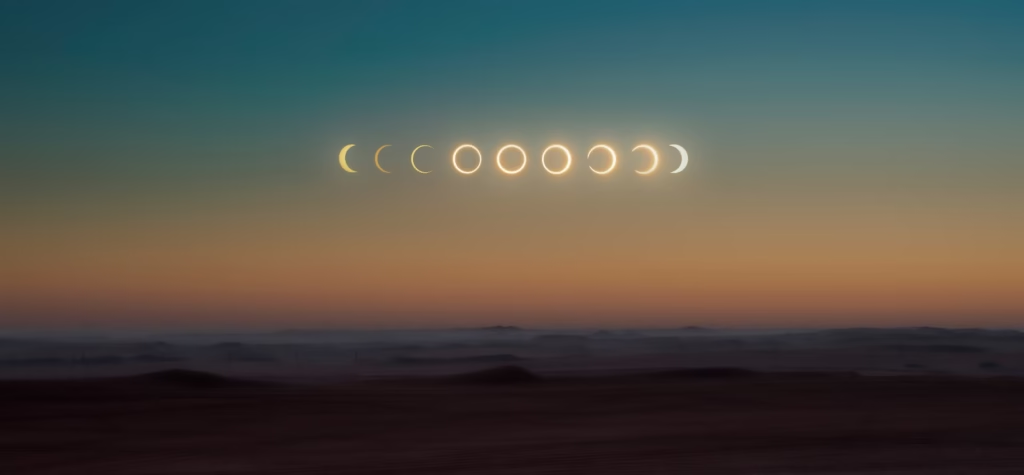
A solar eclipse occurs when the Moon passes between the Earth and the Sun, and totally or partly obscures the view of the Sun for a viewer on Earth. A total solar eclipse occurs when the Moon’s apparent diameter is larger than the Sun’s, blocking all direct sunlight. Totality occurs along a narrow path across Earth’s surface, while a partial solar eclipse is visible over a surrounding region thousands of kilometers wide. Because the eclipse will occur about 2.2 days after perigee (on August 10, 2026, at 12:15 UTC), the Moon’s apparent diameter will be larger.
******************************************************
You might also like to read Iceland’s Extraordinary Women
******************************************************
When Is the Solar Eclipse in Iceland and How Long Will It Last?
The 2026 total solar eclipse will take place in the late afternoon on Wednesday, August 12. The full event lasts about two hours from start to finish, but the “total” darkness is brief.
In Reykjavík, the timing is expected to be:
- Partial phase begins: 16:47 GMT
- Totality begins: 17:48:12 GMT
- Maximum eclipse: 17:48:48 GMT
- Totality ends: 17:49:18 GMT
- Partial phase ends: 18:47 GMT
Eclipse tourism is booming
The 2024 event in the US generated an estimated $1.6 billion in direct revenue and around $6 billion in overall revenue, according to Perryman Group analysts, and the solar totality events in 2026 and 2027 are likewise predicted to be big business.
On 12 August 2026, Iceland will see its first and only 21st-century eclipse, with a four-day festival planned to mark the occasion. Billed as a “global celebration of the solar eclipse with music, art, science, and tech,” the Iceland Eclipse Festival will take place from 12 to 15 August 2026 in Hellissandur on the Snæfellsnes Peninsula in the country’s north-west.
The longest the eclipse will last on land will be at Látrabjarg in Iceland. It is therefore expected that many people will make their way there that day. Plans are underway to ensure safety in the area, but many of the roads leading to Látrabjarg are very narrow and dangerous. There has been talk of closing the area to car traffic and ferrying people by bus. Work has started on repairing parts of the road to Látrabjarg, partly for routine maintenance and partly due to the eclipse.
*********************************************
You might also like to read Re-unification of Iceland and Norway
*********************************************
Why You Can’t Miss the 2026 Total Solar Eclipse in Iceland
This event is incredibly rare. The last time a total solar eclipse was visible anywhere in Iceland was in 1954. In Reykjavík, you have to go back nearly 600 years, to 1433. Miss this one, and the next total solar eclipse here won’t arrive until June 26, 2196.
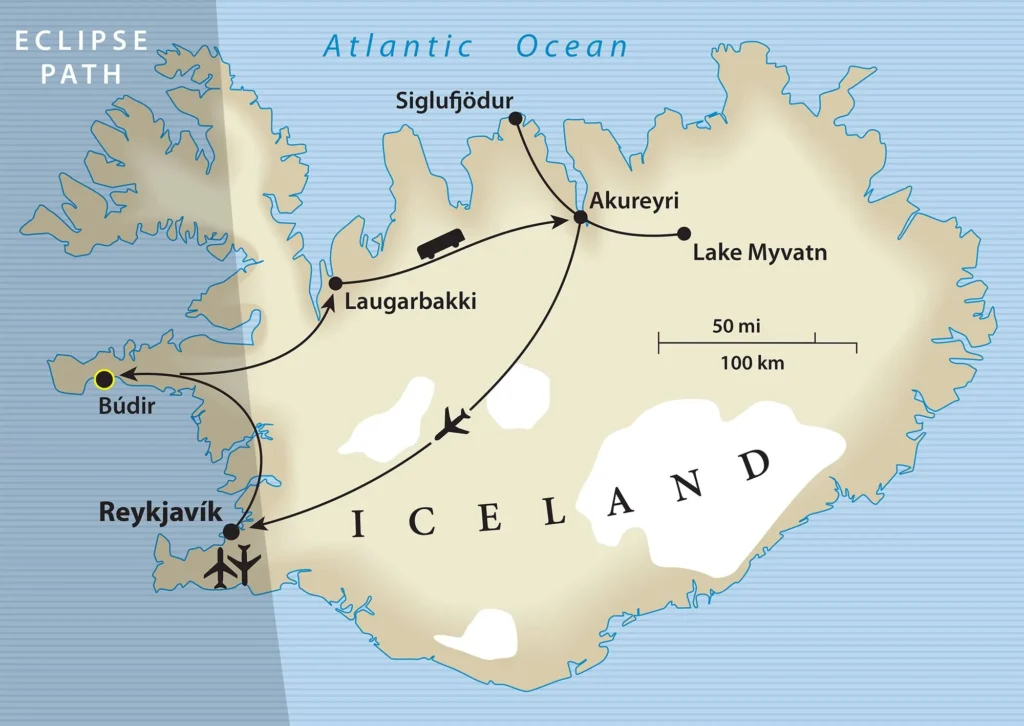
The eclipse path passes over Greenland, touches the western coast of Iceland, and then continues south toward northern Spain and Portugal. Skies may be clearer in southern Europe. However, Iceland offers something different: open horizons, lava fields, sea cliffs, and Atlantic views as the solar corona appears overhead.
The last total eclipse in continental Europe occurred on March 29, 2006, and in the continental part of the European Union, it occurred on August 11, 1999. It will be the first total solar eclipse visible in Iceland since June 30, 1954, and the first in the Solar Saros series 126 (descending node), and the only one to occur in the 21st century. The last total solar eclipse in Spain happened on August 30, 1905, and followed a similar path across the country. The next total eclipse visible in Spain will happen less than a year later on August 2, 2027.
Speaking to Euronews Travel, Dr. Kelly Korreck, a program scientist for eclipses at NASA Headquarters, noted the experiential side of the phenomenon—something that is in lockstep with today’s trends in travel: “It’s hard to explain, especially in this digital world, why it actually is worth going out and experiencing this in real life,” Dr. Korreck said, adding: “The pictures are beautiful, but they don’t do the whole body experience justice.”
What Makes Reykjavík an Ideal Place to See the Solar Eclipse
Reykjavík makes this easy. You don’t need to stand on a remote cliff or drive for hours to witness the 2026 total solar eclipse. The city gives you comfort, access, and wide open views of the sky all at once.
Here’s why Reykjavík works so well:
- Everything you need is close by: Cafés, restaurants, shops, hotels, and services are all within reach. For visitors flying to Reykjavík, Isavia ensures smooth arrivals and departures around eclipse day.
- Easy to get around: Many excellent viewing spots are within walking distance of the city center, or a short ride on Strætó buses.
- A festive atmosphere: Expect watch parties, scientific talks, and community events that turn the eclipse into a week-long celebration.
- A natural starting point: Reykjavík is the main hub for 2026 total solar eclipse tours. If you want to head farther west, most operators, such as Special Tours, depart directly from the city.
- Watch from the water: For those who want a unique experience, some boat tour operators like Elding will take visitors out into Reykjavík’s coast. From the water, you get open horizons, a view of the skyline, and uninterrupted sky as daylight fades. You might even spot a whale while you wait.
Eclipse of the Century in Iceland, Tor Kjolberg reporting.