


A traveler arrives late in the evening. At first glance, the street seems unremarkable—just another row of buildings, another quiet corner of a city they’ve never visited before. But in the morning, they step into a small café and overhear a story—a story that might lead you, as part of a DMO, to rethink how destinations are experienced.
The story the travelers overheard was about the old woman who used to bake there before dawn, about fishermen who once traded secrets over strong coffee, about a winter storm that changed the harbor forever.

By the time the traveler leaves, the street is no longer anonymous. It has become a place. And more importantly, it has become a place worth returning to, and worth talking about.
Destination marketing starts with becoming a better storyteller. The value of storytelling transcends language and culture. Stories still represent the most compelling platform we have for managing our imaginations – and our infinite data.
The difference between information and storytelling is a destination people visit, and a destination people remember.
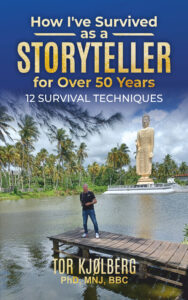
I have acted as a storyteller for brands for most of my professional life. I have written a book, “How I’ve Survived as a STORYTELLER for Over 50 Years: 12 Survival Techniques”.
I offer you a free digital copy of my book. The only thing you have to do is send an email to editor@dailyscandinavian.com with “Storytelling” in the subject line.
Storytelling as Strategy: Shaping Destinations People Choose—and Share
The book is not about Destination marketing, but about incorporating storytelling in marketing in general. In later years, I’ve been fortunate to work in the tourism industry and have seen how many organizations (DMOs, hotels, attractions, travel agencies, transport companies, etc.) could benefit from incorporating storytelling into their marketing campaigns.
If your destination is to stand out—not just be seen, but felt—storytelling is becoming essential. More than any form of communication, the art of telling stories is an integral part of the human experience. Those who master it are often afforded great influence and an enduring legacy.
A destination can have everything
It might have mountains, a coastline, culture, and infrastructure, yet it still struggles to grow demand.
Another place, with fewer obvious advantages, somehow attracts attention, extends stays, and keeps showing up in conversations long after visitors return home.
The difference is rarely the product. It is the story people step into—and the one they carry with them when they leave.
A visitor doesn’t remember “a well-organized destination.” They remember the feeling of discovering something meant for them. They remember meaning. And meaning travels—into recommendations, repeat visits, and measurable demand.
When I discuss this topic with industry leaders, I stress that this is not about adding “nice stories” to marketing. It is about using narrative as a strategic tool for growth.
For DMOs, the key is to frame storytelling as an economic lever: demand generation, seasonality smoothing, and stakeholder alignment.
For DMOs, I’ve created a product called “Tell and Sell”. Turn your destination’s story into measurable demand—through guaranteed high-value media placement.
“Tell and Sell” is a targeted service created for destinations that want more than just visibility— they seek results from the right audiences.
I identify the stories within your destination that have the highest potential to travel—then place them where they influence decision-making.
This is not press release distribution. It is engineered storytelling designed for conversion.

What makes it different
- Guaranteed placement, not just outreach
You don’t pay for attempts—you invest in confirmed visibility in publications that matter to your target audience. - Audience-first media selection
Every placement is chosen for its ability to influence specific traveler segments—not just its prestige. - Narrative aligned with demand goals
Stories are built to support measurable outcomes: increased interest, longer stays, and higher-value visitors.
If you want more details about how this works, I am more than willing to present my ideas to you personally. This can initially be done by mail.
“I don’t just tell your story. I place it where it drives demand.”
Rethink How Destinations Are Experienced, written by Tor Kjolberg
Previous articles on Storytelling:
We Remember a Good Story
What Makes a Story Stick?
10 Best Books on Storytelling for Brands
Why Storytelling in Brand Marketing Is More Important Than Ever—and Why It Can No Longer Belong to Marketing Alone
How Storytelling Can Help Launch Your Product in Scandinavia