


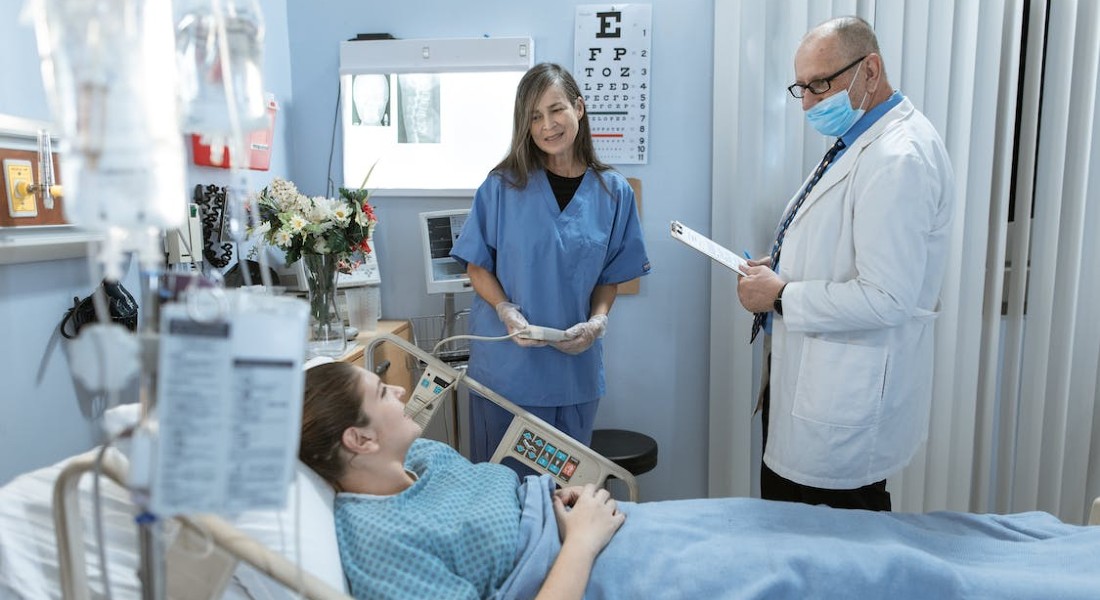
Denmark’s healthcare system is a high-quality, tax-funded, universal system providing free care to all residents, organized across national, regional, and municipal levels, with GPs acting as gatekeepers to specialist and hospital care. However, patients pay for certain services, such as dental care and certain medications. Read on and learn more about healthcare in Denmark.
At the national level, the state oversees the regulation and supervision of health and elderly care services.
The country’s five regions manage hospital care—including emergency services and psychiatry—as well as healthcare provided by general practitioners (GPs) and private specialists.
Your first point of contact is a General Practitioner (GP). They provide basic treatment, preventive care, and referrals to specialists or hospitals.
The regions operate public hospitals that provide specialist consultations, advanced diagnostics (E.g., X-rays), and complex treatments.
GPs act as gatekeepers, controlling access to most secondary care services and ensuring efficient resource use.

Danish government healthcare expenditures amount to approximately 10.4% of the GDP, of which around 84% is funded from regional and municipal taxation redistributed by the central government. Because necessary healthcare is taxpayer-funded, personal expenses are minimal and typically limited to copayments for certain services. Those expenses are usually covered by private health insurance.
Meanwhile, Denmark’s 98 municipalities are responsible for a range of primary health and social services, including elderly care, rehabilitation outside hospitals, home nursing, child dental and nursing services, and physiotherapy. Municipalities also co-finance regional rehabilitation services and training facilities.
*****************************************
Related: Nordic Healthcare: Why Scandinavians Are So Healthy?
*****************************************
Healthcare is mainly free of charge, but you pay for things like:
- Most prescription medicines (though subsidies exist).
- Dental care (for those over 21).
- Physiotherapy, psychology, and some other therapies.
Use of electronic health records is widespread, and efforts are underway to integrate these at the regional level.

For every 1,000 people in Denmark, there are about 3.4 doctors and 2.5 hospital beds. Hospital facilities account for 43% of total health care spending, above the OECD average, despite a considerable decrease in the number of beds. Child vaccination coverage is over 90%. Mortality from heart disease declined through 2015, while life expectancy increased.
**********************************************
Related: Comparing Nordic Healthcare Systems: Similarities and Differences
**********************************************
Performance of Danish healthcare
Life expectancy in Denmark
Denmark has made dramatic advances in reducing heart disease mortality, according to the Euro Health Consumer Index.
Life expectancy in Denmark has increased from 77.9 years in 2005 to 81.3 years in 2019. Danish women have a higher life expectancy (83.2 years in 2019) than Danish men (79.3 years in 2019).
For guidance on health insurance and access to services, the Danish Patient Safety Authority acts as a central resource. As part of the Ministry of Health, it offers general information about the healthcare system and helps patients navigate their options.
Each region also has a patient office, where advisers can provide guidance on available treatments. Both the Danish Patient Safety Authority and regional patient offices serve as National Contact Points for cross-border healthcare in Denmark.
 For International Residents
- You must register in the Civil Registration System (CPR) and get a health insurance card (yellow card) to access full benefits.
- EU/EEA:Your European Health Insurance Card (EHIC) covers necessary care for short stays.
Healthcare in Denmark, compiled by Tor Kjolberg.
Feature image (top): © University of Copenhagen.