



Storytelling has been around for centuries. The earliest humans gathered around the campfire and figured out that effective storytelling was the best way to pass on information vital for survival. Today, storytelling in brand marketing is more important than ever—and it can no longer belong to marketing alone.
Fast-forward 10,000 years or so, and we see that the emergence of the web, mobile accessibility, social media, and artificial intelligence has changed some of the ways we tell stories.
Today, it is essential to help our teams to understand that if we think and act like a publisher, we will create more of the content our customers are looking for.
For years, storytelling in brand marketing was treated as a creative layer—a way to make campaigns more engaging, emotional, and memorable. Today, that framing is obsolete. Storytelling is no longer a surface-level tactic. It is a core strategic capability, and increasingly, a defining factor in whether a brand is trusted, differentiated, and ultimately chosen.
However, there is a critical shift that many organizations have yet to fully internalize: storytelling is no longer something marketing can own in isolation. In a complex, multi-touchpoint world, a brand’s story is only as strong as its ability to be consistently delivered across the entire organization.
In other words, storytelling has become an operational discipline.
 The End of Attention, the Rise of Narrative
We operate in an environment of extreme content saturation. Audiences are exposed to thousands of messages daily, most of which are ignored within seconds. Traditional value propositions—faster, better, cheaper—rarely break through on their own. What does cut through is narrative: something that creates meaning, context, and emotional resonance.
Stories do what isolated messages cannot. They build memory structures. They give customers a reason to care, not just a reason to buy.
At the same time, trust dynamics have shifted. Consumers are more skeptical, more informed, and more sensitive to inconsistencies. A brand can no longer rely on polished campaigns to shape perception if the lived experience tells a different story. Credibility now depends on coherence—on whether what a brand says aligns with what it does.
The Illusion of Marketing-Controlled Storytelling
Many organizations still operate under an outdated model: marketing defines the brand story, and the rest of the business executes independently. This creates a fundamental disconnect.
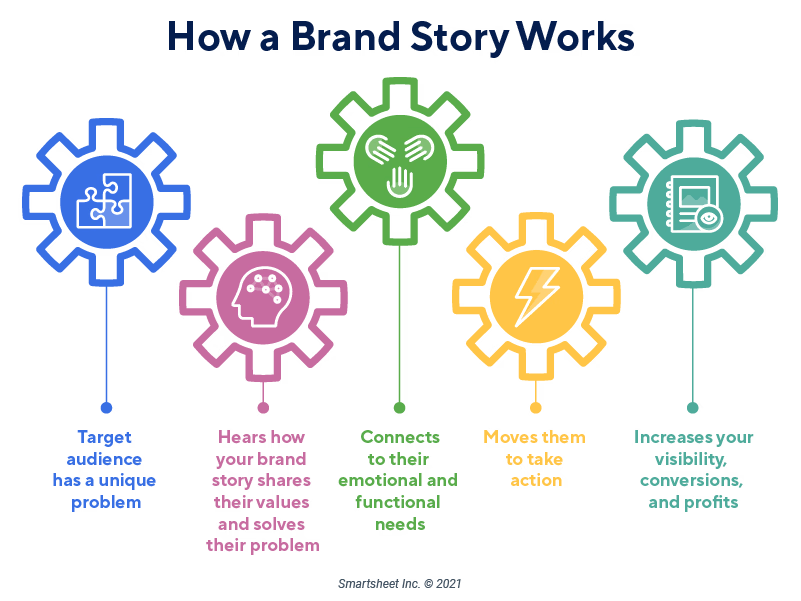
Marketing may articulate a compelling narrative about simplicity, innovation, or customer-centricity. But that narrative is not experienced through ads alone. It is experienced through product interfaces, sales conversations, onboarding flows, and support interactions.
When those touchpoints are misaligned, the story collapses.
A company that claims simplicity but delivers a confusing product experience undermines itself. A brand that promises partnership but pushes aggressive sales tactics erodes trust before the relationship begins. A narrative built externally but unsupported internally quickly reveals itself as fiction.
The consequence is what can be described as a “brand gap”—the distance between what is promised and what is delivered. In today’s environment, that gap is both visible and costly.
 Why Storytelling Must Become Cross-Functional
To close that gap, storytelling must extend beyond marketing and into the core of how the organization operates.
Product teams, for example, are not just building features; they are shaping the most tangible expression of the brand. Every design decision, every workflow, every prioritization either reinforces or contradicts the narrative. A brand story about empowerment must be reflected in intuitive, enabling user experiences—not just in messaging.
Sales teams, meanwhile, are often the first human interface with the brand. They translate the story into dialogue, framing how prospects understand value and intent. If their materials, tone, or incentives diverge from the brand narrative, credibility is lost at the point of entry.
Customer support plays an equally critical role. It is where promises are tested under pressure. Responsiveness, empathy, and clarity are not just service metrics—they are narrative proof points. When support experiences align with the brand story, trust is reinforced. When they do not, even the strongest campaigns cannot compensate.
Internally, the role of HR and leadership is foundational. Employees are not just executors of strategy; they are carriers of the story. If they do not understand it, believe in it, or see it reflected in the culture, it will not scale externally. Employer branding and customer branding are no longer separate domains—they are expressions of the same underlying narrative.
 From Output to Infrastructure
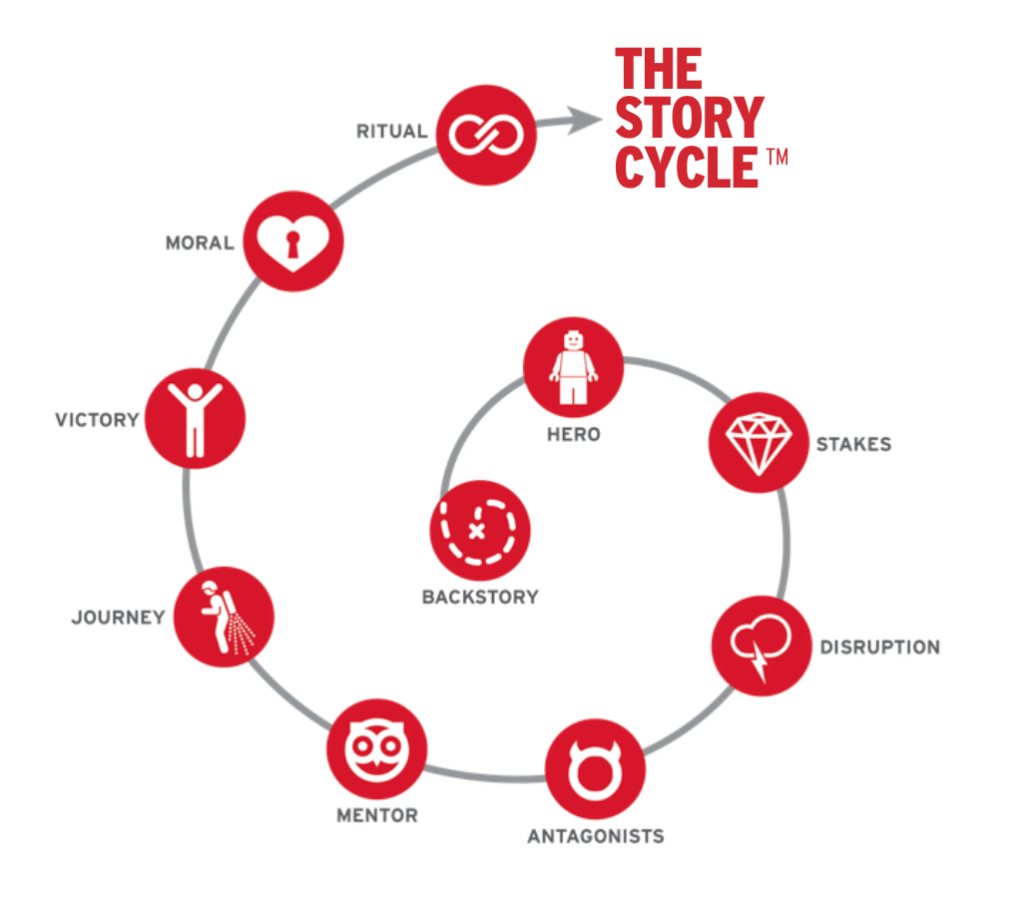
What emerges is a different way of thinking about storytelling—not as content, but as infrastructure.
Organizations that succeed in this environment treat storytelling as a shared system. They define a clear narrative framework—mission, positioning, values, tone—and ensure it is not confined to a brand book, but embedded in how teams operate.
This requires deliberate cross-functional alignment. Teams need to understand not just the story itself, but their role in delivering it. The product must ask how features express the narrative. Sales must align with how they frame conversations. Support must reflect it in every interaction.
It also requires governance. Stories are not static; they evolve with the business and the market. Continuous feedback loops between customer insights, product development, and brand strategy are essential to maintain coherence over time.
Perhaps most importantly, it requires internal storytelling before external amplification. Organizations that fail to align internally often overcompensate externally—producing increasingly polished narratives that the actual experience cannot sustain.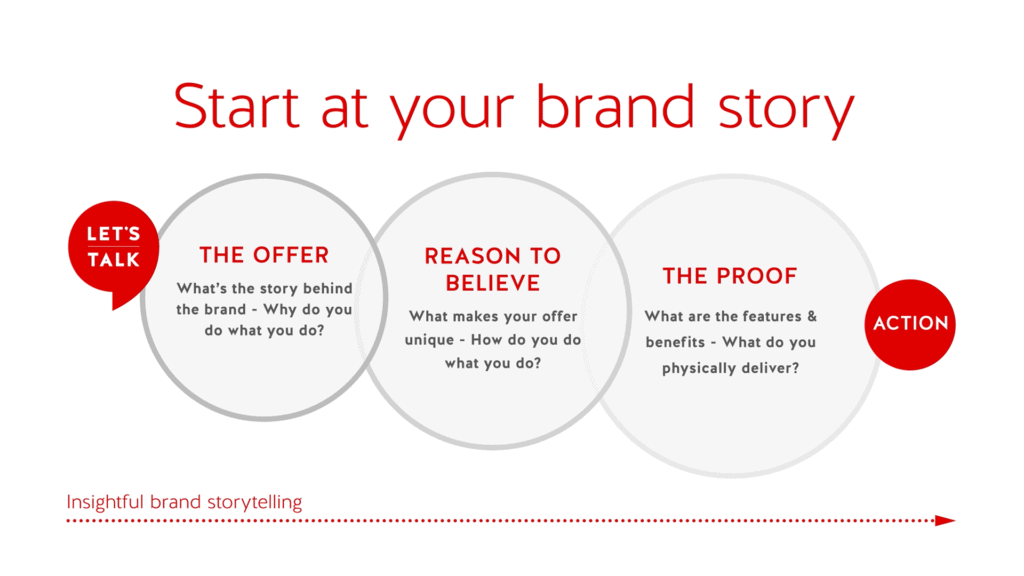 Making It Practical
For leaders, the implications are clear. Storytelling must be operationalized.
This starts by involving multiple functions in creating the brand narrative, not just marketing. It continues by developing usable guidelines—tools that translate abstract positioning into practical decisions across teams.
Cross-functional workshops can be particularly effective, forcing teams to answer a simple but powerful question: how does our function deliver this story in practice?
Regular audits are equally important. Every customer touchpoint should be evaluated not only for performance, but for narrative alignment. Does the experience match the promise?
Finally, incentives matter. If teams are measured solely on functional metrics—conversion rates, ticket resolution times, feature velocity—without regard for consistency of experience, misalignment will persist. Storytelling must be reflected, directly or indirectly, in how success is defined.
 The New Standard
In a world where every brand can publish, differentiation no longer comes from having a story. It comes from living one.
The organizations that will stand out are not those with the most creative campaigns, but those with the highest degree of internal alignment—where narrative and experience are inseparable.
Storytelling, in this context, is not a marketing function. It is an organizational discipline. And for companies willing to treat it as such, it becomes a durable competitive advantage.
Why Storytelling in Brand Marketing Is More Important Than Ever—and Why It Can No Longer Belong to Marketing Alone, written by Tor Kjolberg
My articles on storytelling are published every Monday. Here is the complete list:
The Story of Storytelling in Marketing
We Remember a Good Story
What Makes a Story Stick?
10 Best Books on Storytelling for Brands