



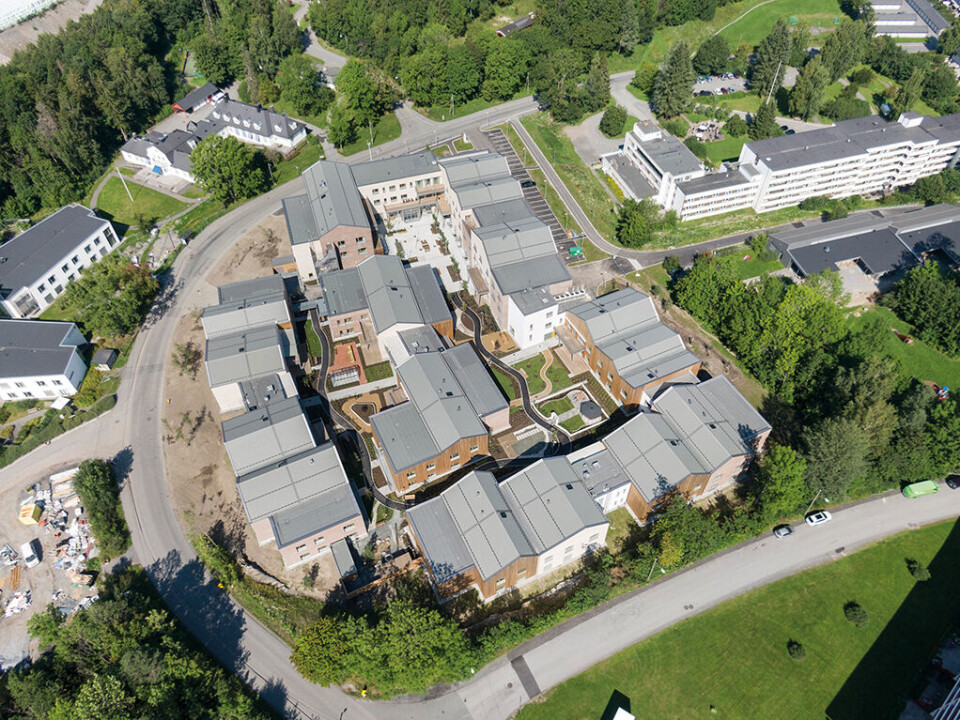
In Bærum, just outside Oslo, the Norwegian capital, there is a new and innovative treatment and housing center for people with dementia, also open to and offering services to the surrounding neighborhood. The facility sets a new standard for socially sustainable care in Norway.
Every participant in Carpe Diem has severe dementia. For decades, dementia care meant locked wards and sedated patients. But this shindig shows another way. The dementia-village concept was born in the Netherlands, when two nurses, dreading institutionalizing their parents, created De Hogeweyk.
An increasingly important issue
An increasingly important issue with the predicted aging population is achieving a better, more efficient care system for elderly people with dementia. Recognized with the DOGA Innovation Award for Inclusive Design and named Health Building of the Year by Bærum Municipality, Carpe Diem sets a new standard for socially sustainable care.
The Norwegian government’s 2015 Dementia Plan sought to integrate people with dementia into wider society. Carpe Diem, the country’s first dementia village, opened in Bærum in 2025.
************************************
Related: Dementia Village in Denmark
************************************
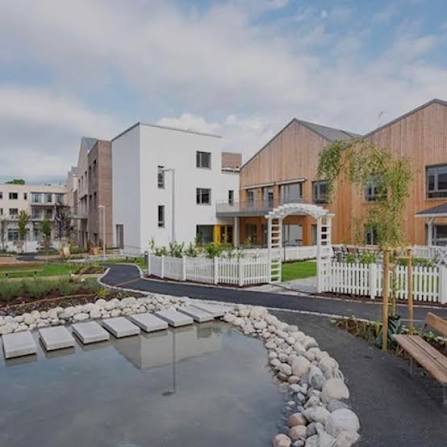
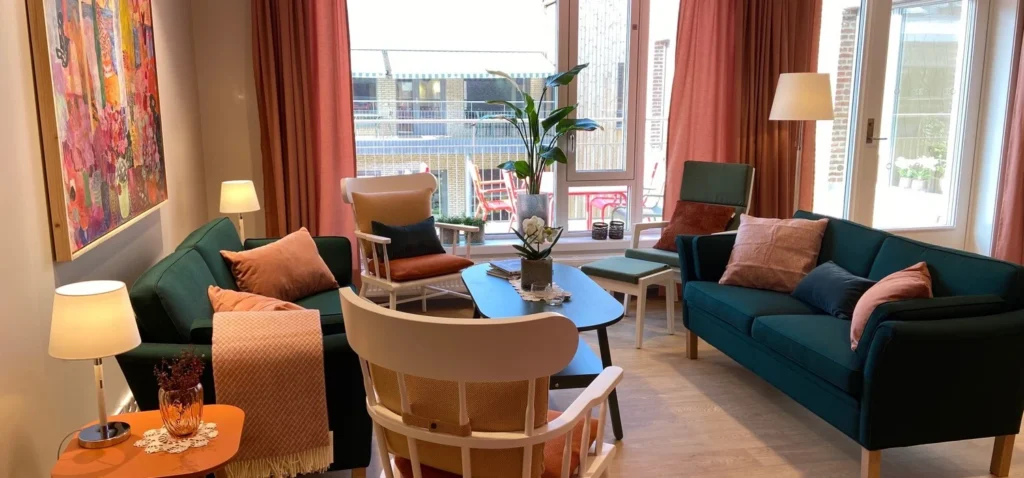
Nordic Office of Architecture has developed a comprehensive architectural and aesthetic concept designed to provide the best possible quality of life for residents with dementia. The buildings and outdoor spaces are designed to encourage activity and help residents master everyday life. Residents can move freely throughout the facility without encountering closed doors. The complex offers two levels of care: 136 communal housing units and 22 high-care dementia units. Residents in the communal living areas enjoy familiar domestic comforts and welcoming common areas, including cafes, a community center, fitness facilities, a carpentry workshop, a beauty salon, an outdoor greenhouse, and other amenities.
This pioneering project redefines care environments by integrating architecture, nature, and community into a vibrant setting where people with dementia can live with freedom and dignity.
A unified village
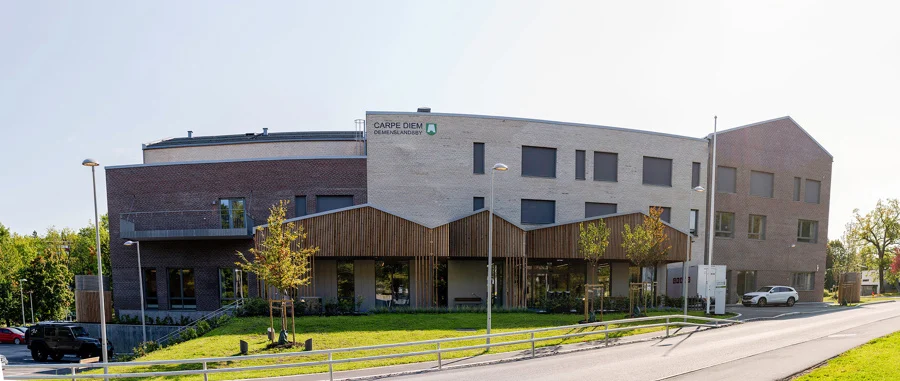
Planned as a unified village, the residences, treatment center, and community center share a natural, blurred border and engage in open dialogue with the surrounding area. The common house and administrative area, together with the main entrance, form a square with an urban expression. The residences were designed to create a homely atmosphere within a typical small-house environment, enhanced by gardens and squares. The two- to three-story buildings are broken into smaller units to create a pleasant village feel.
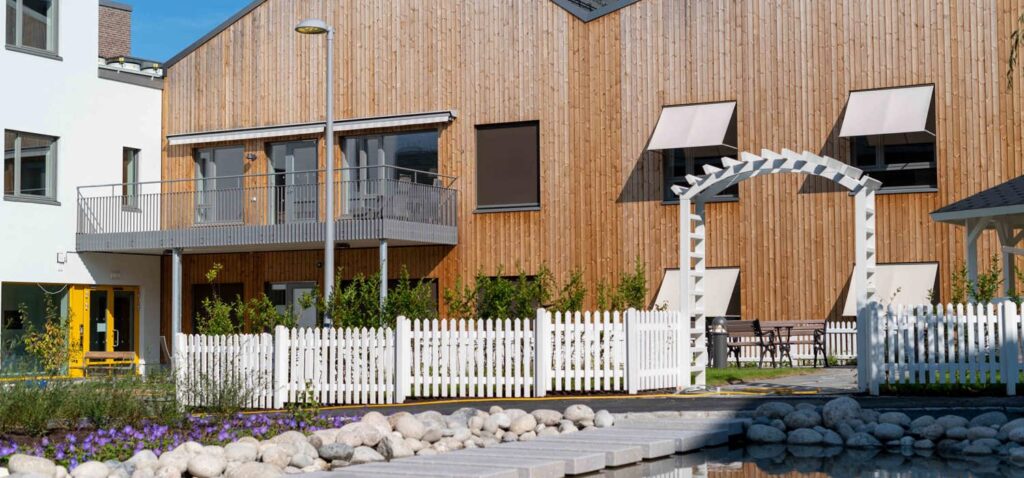
18.000 m² of wooden-clad postmodern Scandi buildings contain 158 bedrooms, split among 17 apartments around a garden square. Residents enter using special wearables.
Located in Dønski, Bærum, Carpe Diem is part of a growing movement to create inclusive environments for vulnerable groups. The area’s green surroundings and proximity to local neighborhoods inspired a design that opens outward rather than closing inward. Rather than isolating residents, the village invites neighbors and families to share its amenities, including a café, shop, fitness room, and cultural spaces. This openness strengthens intergenerational ties and makes the village a natural part of the local community.
***************************************************
Related: Swedish Researchers Diagnose Alzheimer’s at an Early Stage
***************************************************
Feeling like a familiar home
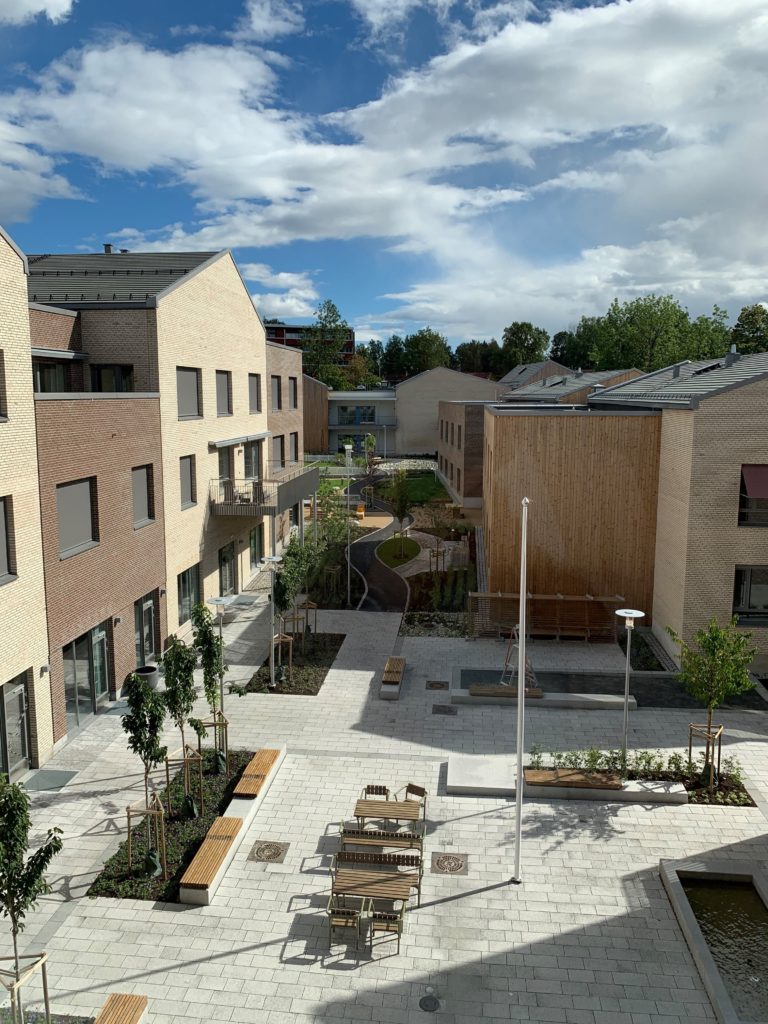
Carpe Diem Dementia Village is designed to feel like a familiar home rather than an institution. People with dementia often have difficulty recognizing their surroundings and orienting themselves. It is therefore crucial that outdoor areas be clearly identifiable. Various markers and easily recognizable elements are placed throughout to ease wayfinding for residents. Outdoor and indoor spaces, as well as all pathways and entrances, have also been designed in accordance with inclusive design principles.
Paving stones support natural, intuitive wayfinding. “Because dementia can affect memory and cognitive orientation, the project was designed with visual, tactile and spatial cues that can be experienced directly,” said Camilla Heier Anglero, head of healthcare design at Nordic Office of Architecture to the prestigeous magazine Monocle. Carpe Diem includes a pub, a hairdresser, a supermarket, a gym and a tiki bar. Residents pay with cards preloaded with funds.

“We wanted to design a place that feels alive, where architecture adapts to people rather than the other way around,” said Senior Architect Robert Ritzmann.
The overall design concept distinguishes between city and country. The square is surrounded by buildings of urban character and homes set within green surroundings. This distinction is emphasized externally through the choice of materials. The main material on all the facades is brick, available in two color shades that create a bright, consistent impression. As secondary materials, untreated wood cladding and wooden slats of ore pine are used to create variety and lend a homely character. Throughout the facility, there is extensive use of long-lasting, maintenance-free, and robust materials.
Longer living patients and less carer burnout
The overall design concept distinguishes between city and country. The square is surrounded by buildings of urban character and homes set within green surroundings. This distinction is emphasized externally through the choice of materials. The main material on all the facades is brick, which comes in two color shades that create a bright, consistent impression. As secondary materials, untreated wood cladding and wooden arrows of ore pine are used to create variety and give a homely character. Throughout the facility, there is extensive use of long-lasting, maintenance-free, and robust materials.
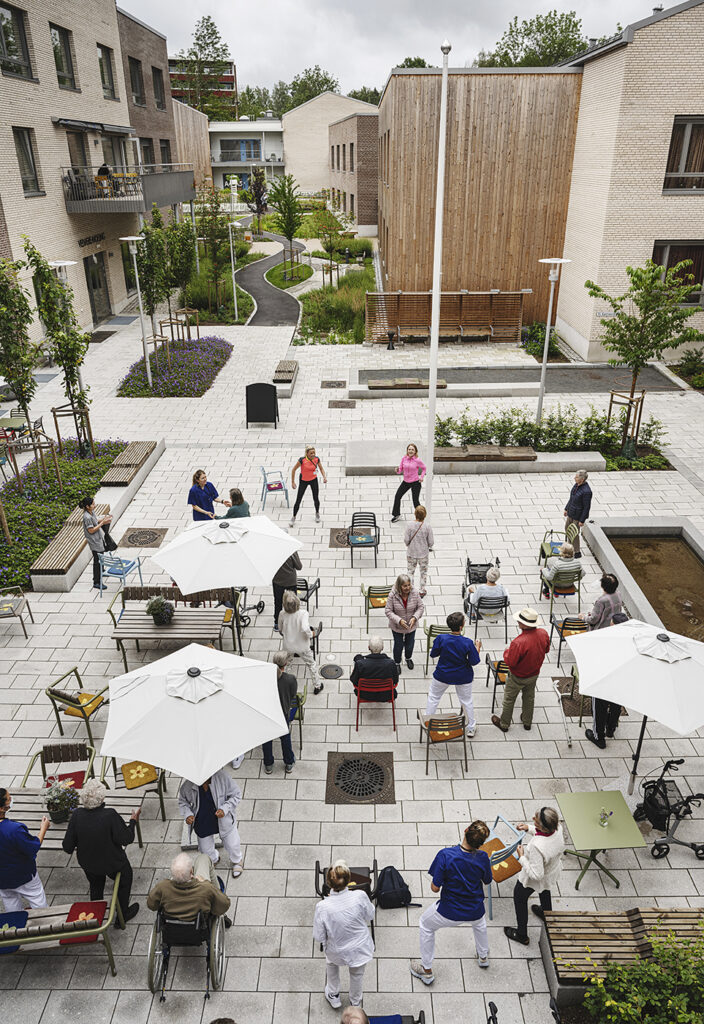
Fees are paid from residents’ state pensions, which usually cover 75 to 85 percent of the bill. While the generosity of Norway’s system might limit the potential for this model to be exported, its obvious benefits – longer-living patients and less carer burnout – have altered the way policymakers think about dementia.
A New Standard for Socially Sustainable Care in Norway, Tor Kjolberg reporting.
All images (c) Nordic Office of Architects.