


. It is also known as the Book of Travels.)
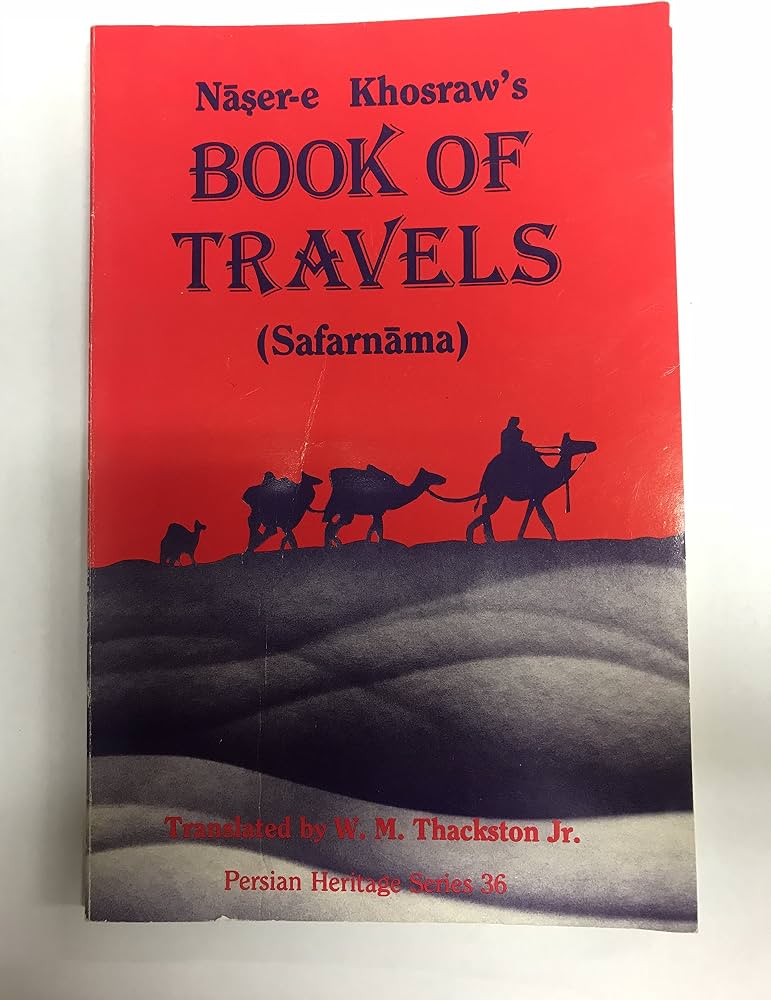
Safarnama is an 11th-century travelogue written by Nasir Khusraw (1003-1077). It is also known as the Book of Travels.
‘Safarnama’ is the Urdu word for travelogue. A safarnama chronicles a traveler’s journey and experiences, detailing the places visited and the experiences along the way.
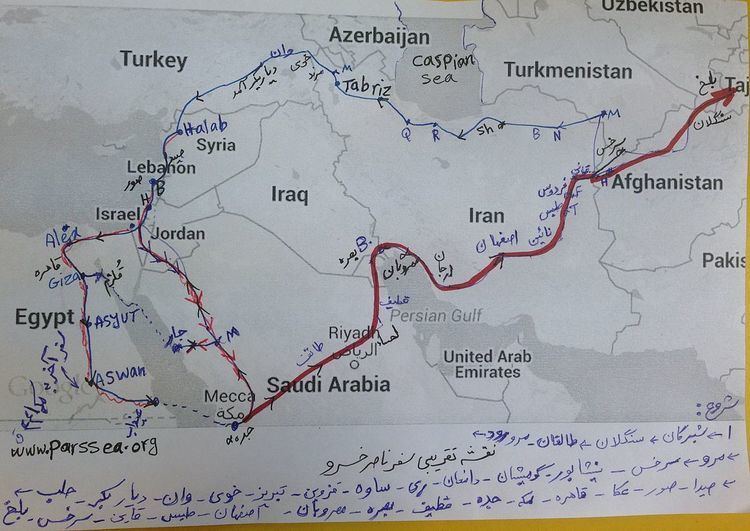
Khusraw was a medieval Persian poet who traveled throughout the Islamic world. Safarnama is an incredibly famous book. It’s still widely read in Iran and beyond. It recounts Khusraw’s seven-year journey through the Islamic world. He initially set out on a Hajj, the obligatory pilgrimage to Mecca. Departing on 5 March 1046, Khusraw took a less direct route, heading north toward the Caspian Sea. Throughout his travels, he kept a minutely detailed journal that clearly describes many facets of life in the Islamic world of the 11th century.
Originally composed in Persian, this work is one of the earliest and most detailed accounts of the medieval Islamic world, offering invaluable insights into the geography, culture, commerce, and daily life across Central Asia, the Middle East, and North Africa.
At the time, there were many small Shia states and some larger ones. It’s the one century when Shiism looked like it was going to become the mainstream of Islam, and it’s sometimes called the Shia century. You had the Fatimids in Cairo, an Ismaili Shia dynasty that ruled much of the Mediterranean and parts of the Middle East. In many parts of the Islamic world, Shia movements were strengthening and consolidating.
Nasir Khusraw compiled the Safarnama in the later years of his life, drawing on notes he had taken during his seven-year journey. His prose is straightforward, resembling a travelogue rather than his more poetic and philosophical Diwan. Khusraw begins his Safarnama with a description of himself, his life, and his monumental decision to travel to Mecca. He recounts an extraordinary dream in which he converses with a man who urges him to seek what is beneficial to the intellect. Before the dream ends, the man allegedly points toward the qibla and says nothing more.
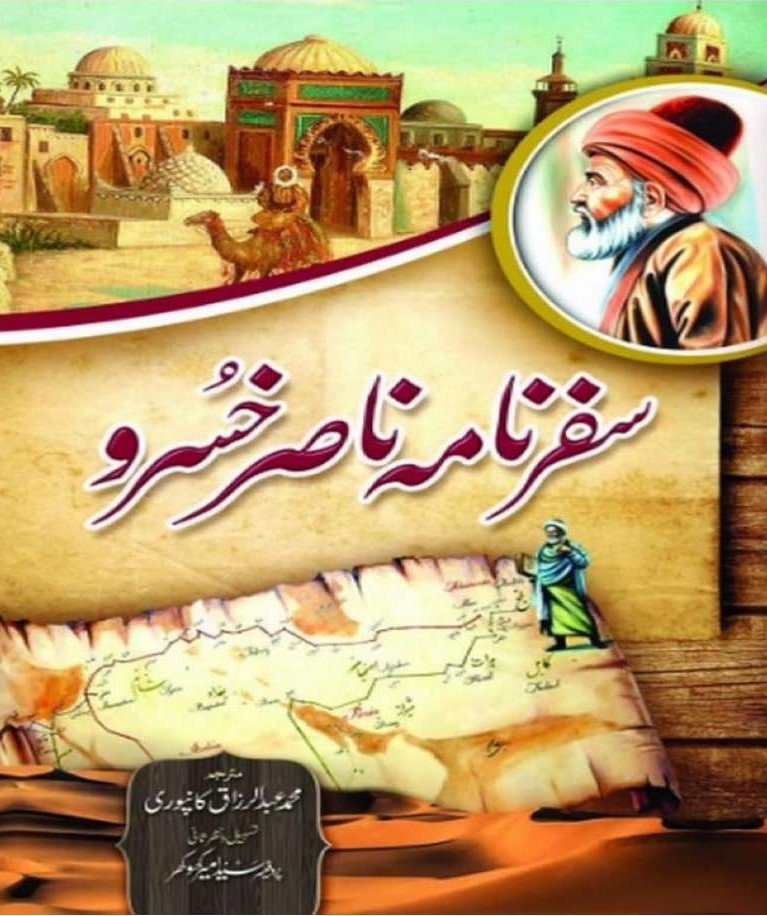
Nasir Khusraw’s observations remain historically significant for scholars of Islamic civilization, medieval geography, and cultural exchange. The text captures not only the physical journey but also the intellectual and spiritual dimensions of travel, reflecting the author’s engagement with diverse communities, religious practices, and intellectual traditions. This Urdu translation makes the classical Persian text accessible to contemporary readers in South Asia, bridging linguistic and cultural divides that have long kept this foundational work from Urdu-speaking audiences.
For my account, an important thing about this book is that it shows how people traveled. Not that many people traveled, but if you wanted to and had the means, you could travel for years. You could cross religious and political boundaries without too many problems, especially if you didn’t proselytize too openly. It’s not as if the Sunni and Shiite states were somehow hermetically sealed off, so you couldn’t move between them.
The work is especially valuable for understanding cross-cultural connections and the cosmopolitan character of medieval Islamic civilization.
Safarnama – the Book of Travels, written by Tor Kjolberg.
Previous articles in our series of historic travel stories:
The World’s Oldest Surviving Travel Story
The World of the Odyssey: A Palimpsest of the Hellenic Art of Living Well
Sinbad the Sailor
Description of Greece