


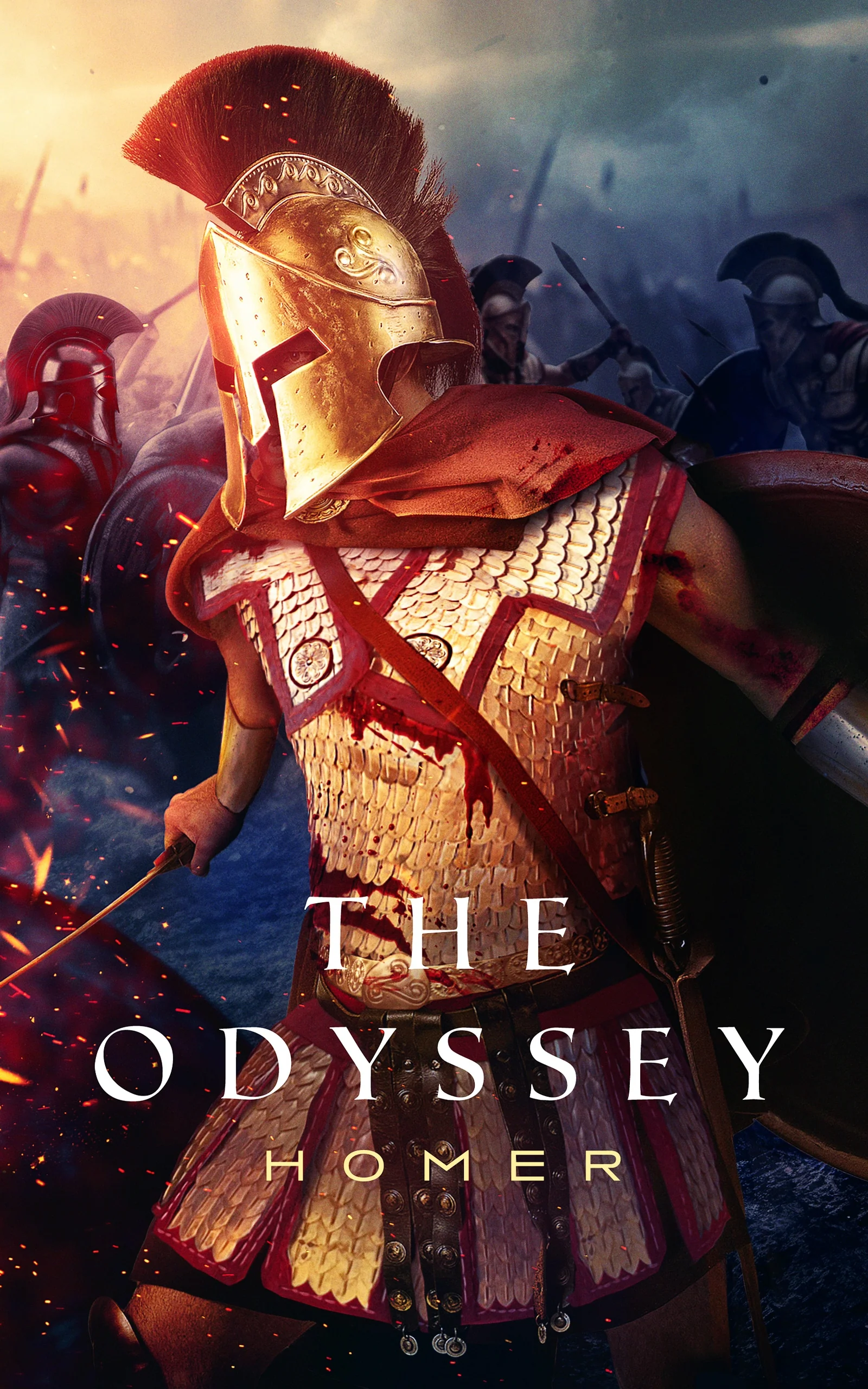
The Odyssey is an epic Greek poem by Homer that recounts King Odysseus’s 10-year struggle to return to Ithaca after the Trojan War. The Odyssey is our third article in the series, “Stories of Travel Stories.” The world of the Odyssey is a palimpsest of the Hellenic art of living well.
While battling monsters and gods, King Odysseus faces a secondary challenge: 108 unruly suitors who have taken over his palace and are pressuring his faithful wife, Penelope, to remarry.
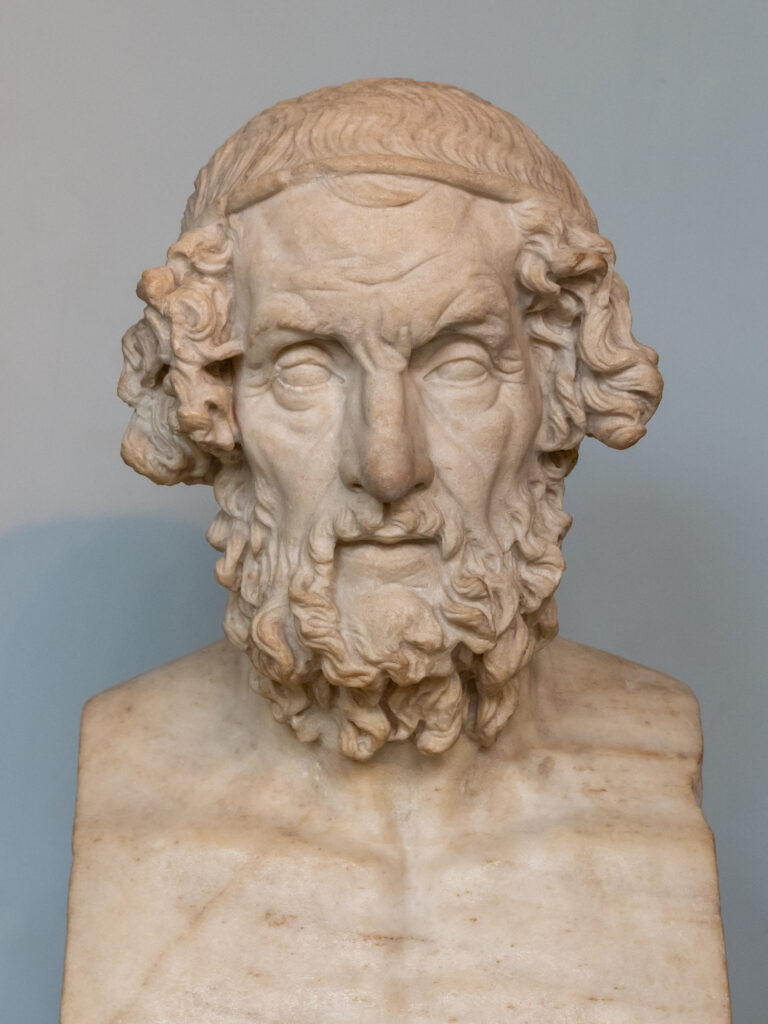
Who was Homer?
There is no unique historical human person called ‘Homer’. Modern scholarly research since about 1700, but especially since the 1930s, has established beyond a shadow of doubt that ‘Homer’ was a tradition – many bards over several centuries, perhaps as many as nine – but a tradition with a difference, namely the genius of two separate individual master poet-editors.
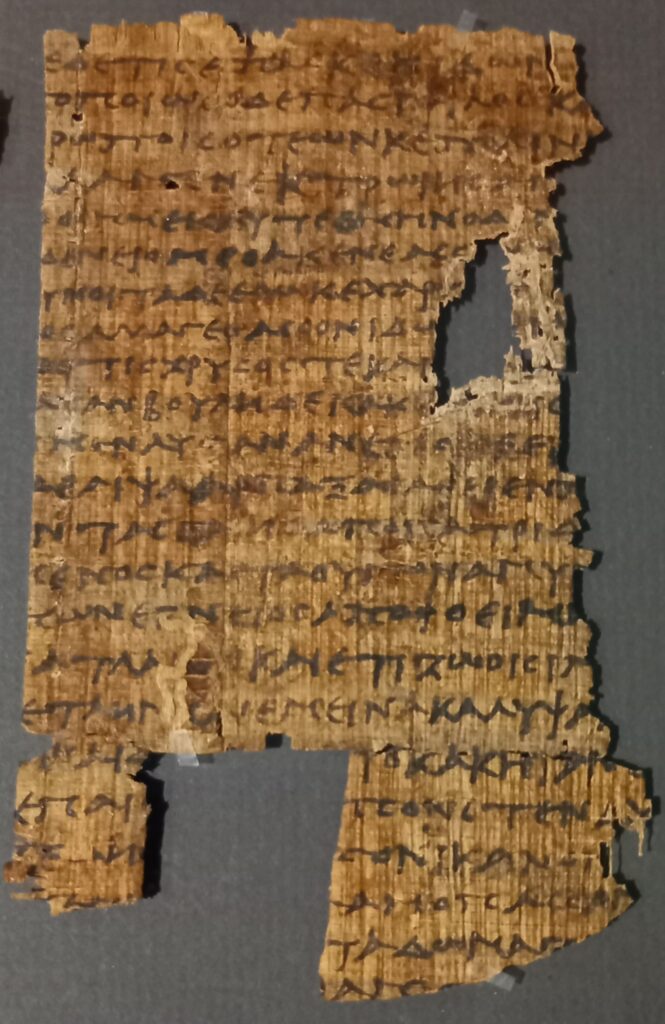
The Odyssey story
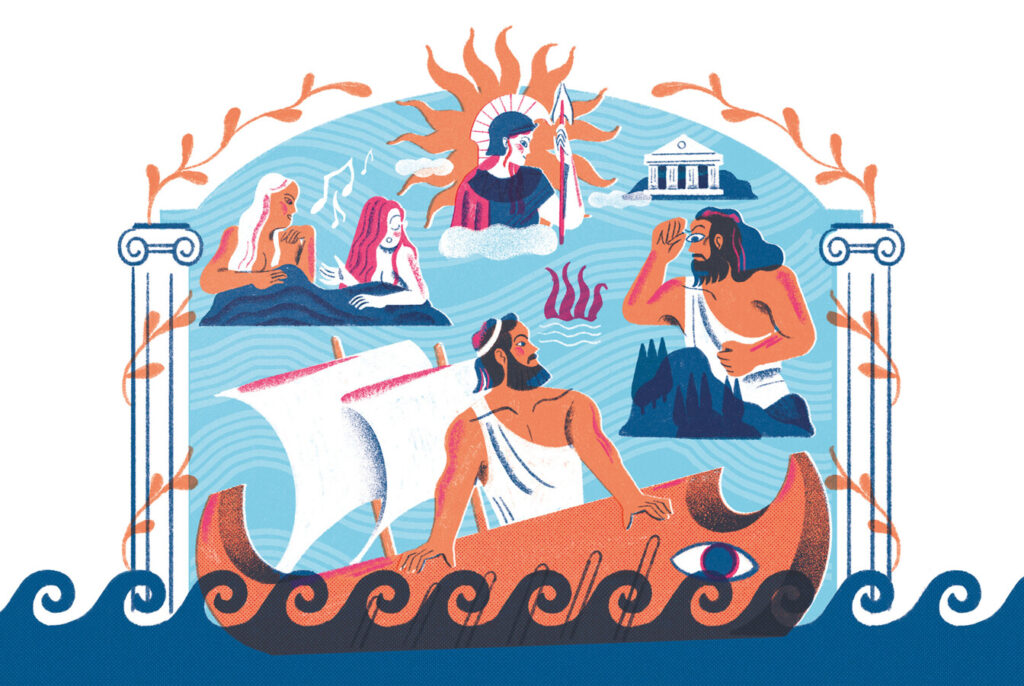
The epic is famous for beginning in medias res (in the middle of the story), with Odysseus trapped on the island of Ogygia by the nymph Calypso, who offers him immortality if he stays. Meanwhile, back in Ithaca, his son Telemachus leaves home to seek news of his father.
Eventually released by the gods, Odysseus is shipwrecked and rescued by the Phaeacians. In their court, he reveals his identity and recounts the harrowing adventures that have delayed him.
 Translations of Homer’s Odysseus
In some sense and at some level of interpretation, ‘knowledge’ of Homer requires the ability to read the original language fluently. But no one today, anywhere, is a ‘native’ reader of Homer, so translation into other modern vernaculars, including Greek, is not just a luxury add-on but a basic necessity. The nature and quality of literary translations matter a great deal. How many people now even read in hard copy? Screens are the thing. Films are another kind of ‘translation’ altogether, and the development of digital technology has transformed the moviemaker’s possibilities for rendering or interpreting the ancient myths.
A 2026 Epic Action Fantasy Film on The Odyssey
Christopher Nolan has adapted Homer’s ancient Greek epic poem into a film starring an ensemble cast including Matt Damon, Tom Holland, Zendaya, and Charlize Theron. In the film, Odysseus (Damon), the Greek king of Ithaca, undertakes a long, perilous journey home after the Trojan War and encounters mythical beings as he tries to reunite with his wife, Penelope (Hathaway).
Nolan began writing the script in March 2024 and secured the project with Universal Pictures by October.
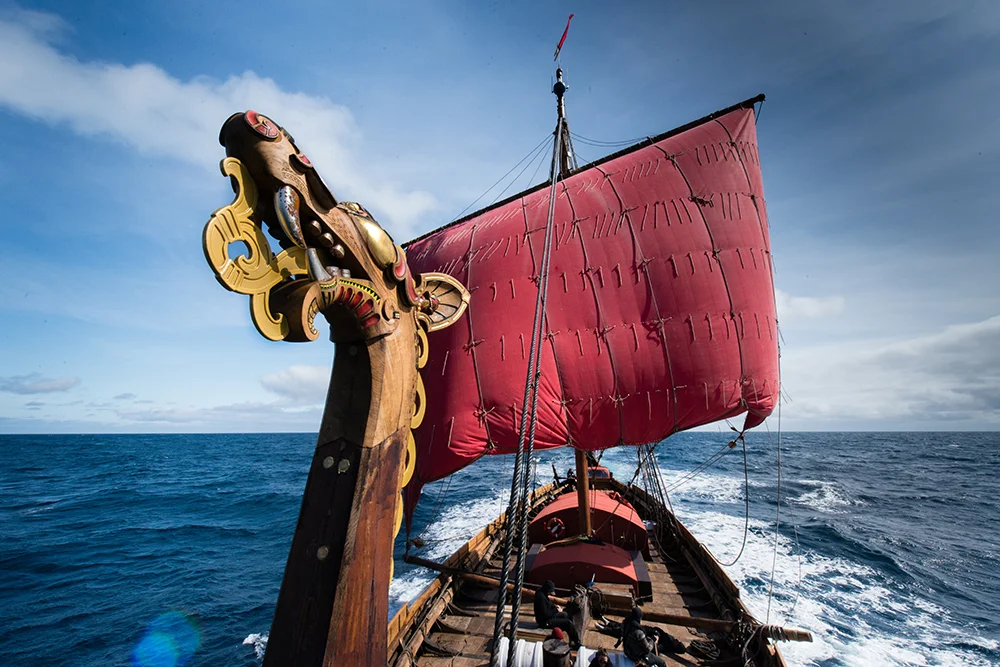
The Viking Ship in ‘The Odyssey’ Is More Than Digital Technology
The Draken Harald Hårfagre is making its big-screen debut in Christopher Nolan’s latest film. The full-scale, seaworthy vessel has been painstakingly built using Viking shipbuilding techniques and the era’s materials, with breathtaking dimensions.
Dragon Harald Fairhair is an 115-foot modern Viking longship built in Haugesund, Norway, between 2010 and 2012. Named after the king who unified Norway, it is the largest Viking ship built in modern times, combining traditional clinker-building techniques with deep-sea ocean exploration capabilities.
To build an authentic ocean-going vessel, boatbuilders drew on archaeological knowledge, Norse sagas, and traditional Norwegian clinker-building techniques (overlapping planks) to recreate a seaworthy warship.

“There is something on board that cannot be easily faked: the weight of the oak, the sound of the rigging, the movement of the sail, and the crew working together in real wind and water,” says Emanuel Persson, Draken’s CEO and expedition director. “When you put a real ship in real conditions, it brings a different kind of truth to the image.”
The World of the Odyssey: A Palimpsest of the Hellenic Art of Living Well, written by Tor Kjolberg.
Previous stories in this series:
The World’s Oldest Surviving Travel Story