

, and I am pleased to share some of them with my readers in a series called the Brand Masters of Storytelling.)
Psychologist Jerome Bruner found that we are 22 times more likely to remember a fact when it is wrapped in a story. Stanford’s Graduate School of Business found that when people listened to pitches, either containing facts and figures or a story, only 5% recalled a statistic, but a whopping 63% remembered the stories. I have analyzed hundreds of the best storytelling campaigns for brands (my opinion only), and I am pleased to share some of them with my readers in a series called the Brand Masters of Storytelling.
Winning Isn’t Comfortable
In my opinion, Nike’s 2024 campaign succeeded by moving beyond romanticized athletic perfection toward a raw, authentic portrayal of the pain and grit of running. By focusing on the shared, uncomfortable reality of training (e.g., sore muscles, early mornings), it created deep emotional resonance with both novice and elite runners, driving a reported 16% increase in sales.
The campaign didn’t just highlight the physical toll of running but also revealed the core of Nike’s marketing genius through a series of emotionally charged short-form videos spotlighting famous athletes.
The campaign launched with a film called Sunshine, created by Wieden+Kennedy in Portland, which portrays the challenges of running in poor conditions. Set to a version of You Are My Sunshine, the 30-second ad featured a variety of runners facing the rain and included a cameo from basketball star Juju Watkins.
Instead of showing perfect, effortless running, the campaign tugged at heartstrings and leveraged influencer marketing and runner stereotypes to deliver its message exclusively on Instagram. Each film tackles a different challenge runners face: early mornings, hitting a wall, and climbing a staircase after a run. This approach created radical relatability and empathy.
The campaign aimed to shift toward an inclusive running culture, appealing to casual joggers while paying homage to devoted marathoners, ensuring the message hit home for all skill levels and reconnecting with runners.
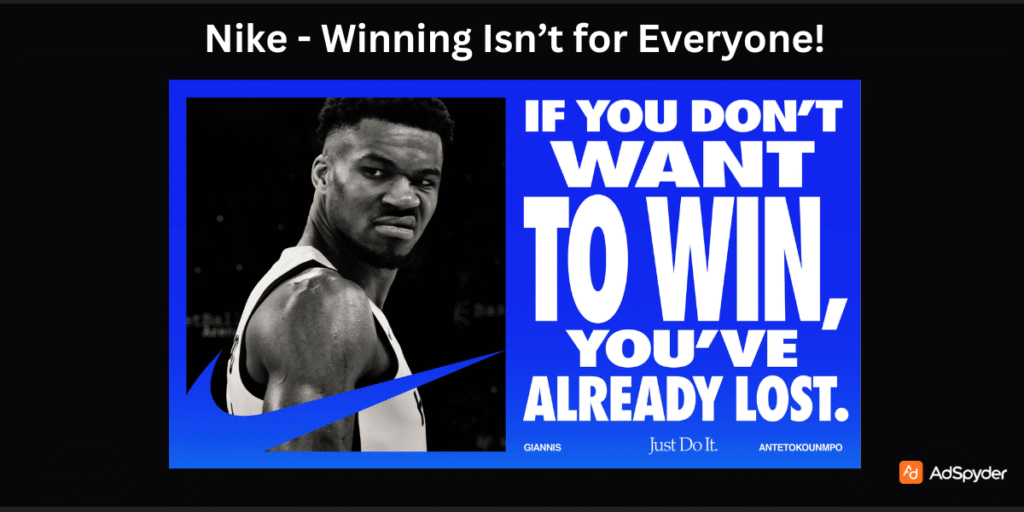
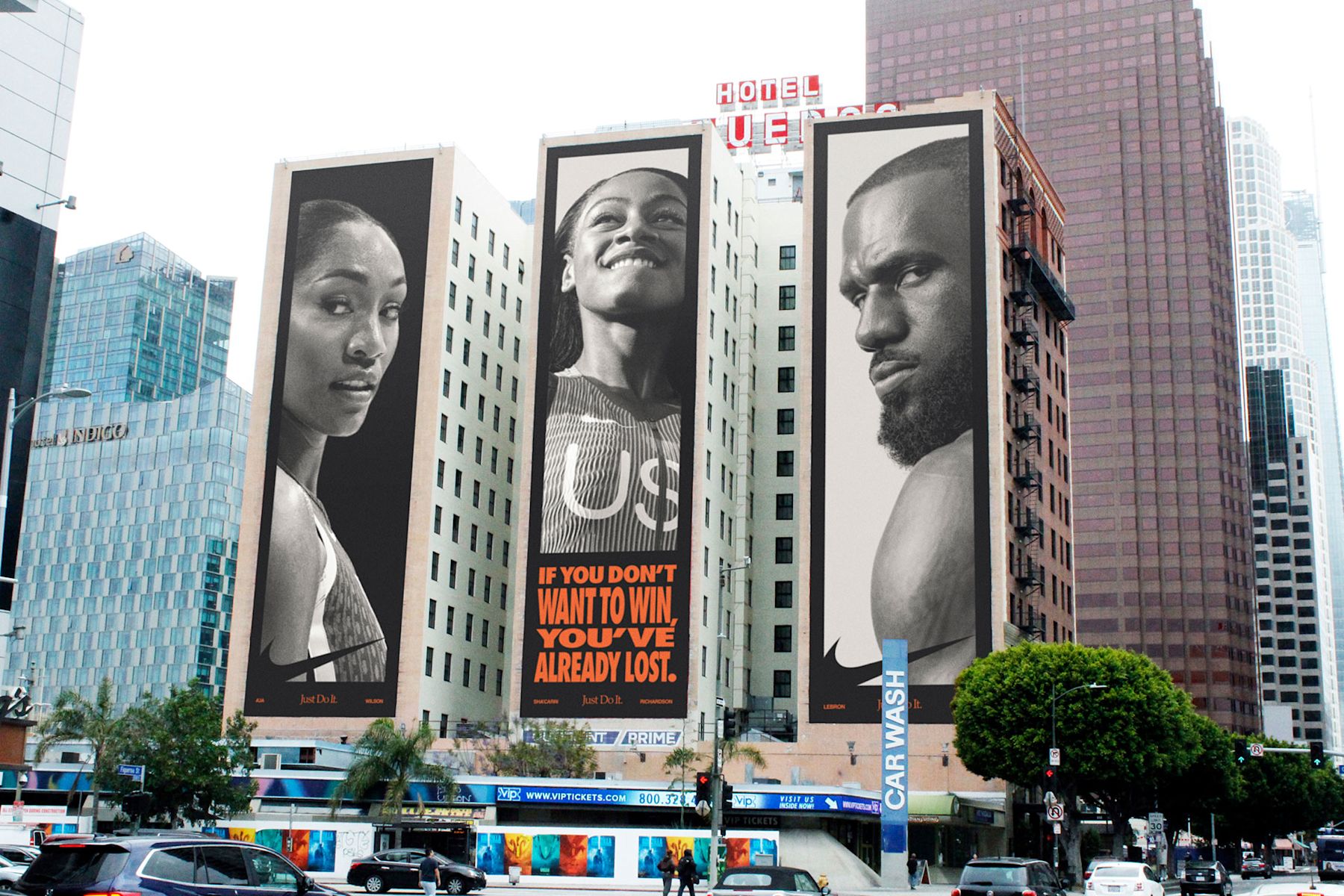
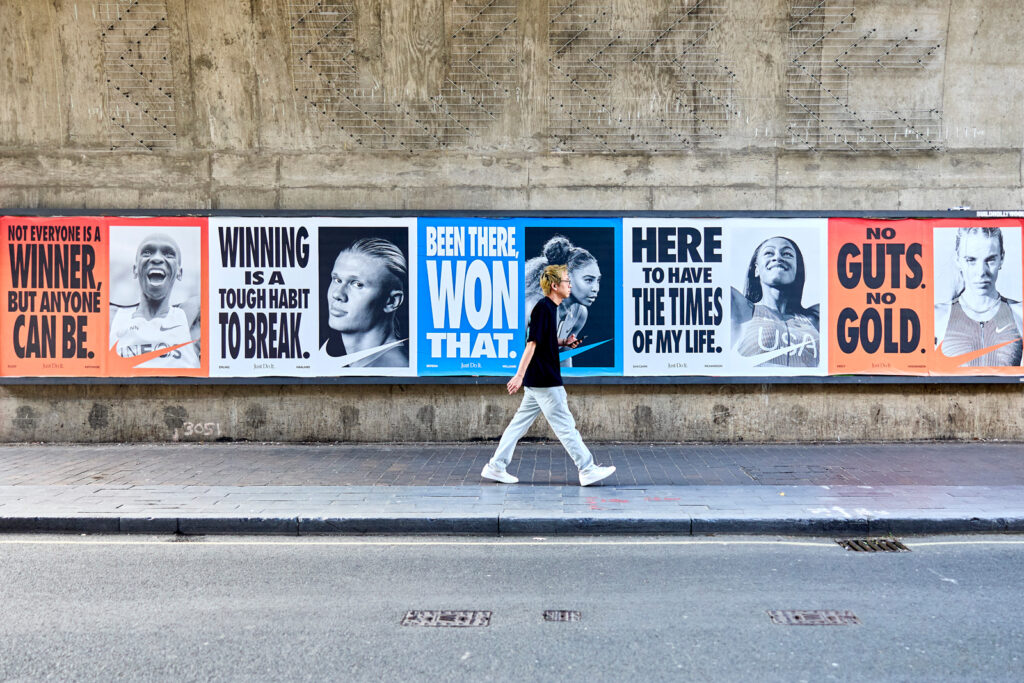
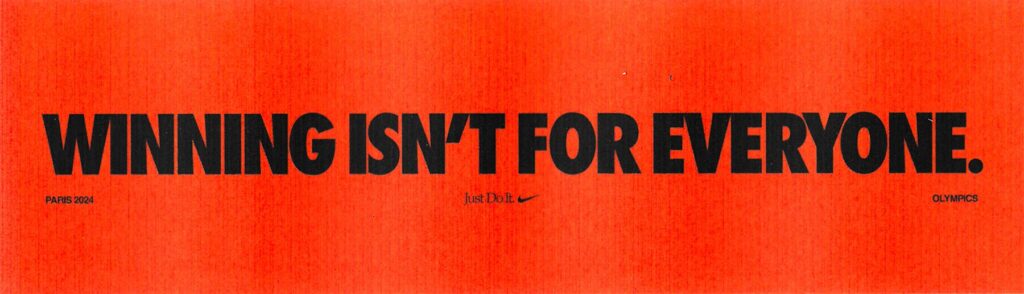
Despite Nike’s campaign being limited to one social network, its marketing efforts were more dialed in than ever. The Winning Isn’t Comfortable campaign followed Winning Isn’t For Everyone, which ran during the Paris Olympics and celebrated the single-mindedness of the world’s highest-achieving athletes. The films will run globally through marathon season, supported by social assets and outdoor ads (with copy such as ‘If you don’t hate running a little, you don’t love running enough’) that mirror the out-of-home billboards for Winning Isn’t For Everyone.
The Winning Isn’t Comfortable campaign follows Winning Isn’t For Everyone, which ran during the Paris Olympics and celebrated the single-mindedness of the world’s highest-achieving athletes. The films ran globally throughout marathon season, supported by social assets and outdoor ads (with copy such as ‘If you don’t hate running a little, you don’t love running enough’) that mirror the style of the out-of-home billboards for Winning Isn’t For Everyone.
The ads used humor (e.g., set to Nazareth’s “Love Hurts”) to portray athletes’ love-hate relationship with pain.
Reframing “discomfort”
Five years ago, running was Nike’s largest category. The brand dominated the sport and led in innovation – its controversial Vaporfly running shoes were worn by the first athlete to run a sub-two-hour marathon, and a prototype was even banned for giving an unfair advantage. But as the popularity of running (and running clubs) has soared since the pandemic, Nike has failed to capitalize on the trend, losing market share to nimbler newcomers such as Hoka and On Running.
In the 2024 campaign, Nike amplified its message. It reframed “discomfort” not as a failure but as a necessary part of progress and triumph, aligning with Nike’s heritage of championing personal achievement.
Nike’s target group was men and women between 12 and 55, a broad range. Some argue that such a broad range would create minimal impact. But let’s say the optimal range within that estimate is 20-45. This range is young enough to remain active without significant health concerns, yet old enough to spend their money on one or several running products from Nike.
An authentic campaign rooted in real insights
Amid a decline in sales and an increasingly fragmented market, Nike was reinvesting in running culture to restore its relevance – with a focus on the ‘everyday running category’, as CEO John Donahoe outlined during an earnings call at the end of 2023. Winning Isn’t For Everyone celebrated the world’s greatest athletes. Winning Isn’t Comfortable portrays regular runners pounding pavements before work, in bad weather, at local park runs, and more. The films felt authentic and rooted in real insights, depicting the everyday experiences ordinary people endure out of sheer determination and a love of running.
The campaign, detailed in a Contagious article, was seen as a bold, disruptive move to fend off competitors and reconnect with its core audience, according to the campaign analysts at Branding in Asia.
Nike marketed this campaign exclusively on Instagram, thereby singling out older generations who prefer Meta (Facebook). Men and women between 18 and 44 are the primary users of Instagram because a majority grew up with it, which is another reason the optimal range for Nike’s campaign is between 20 and 45.
 Appealing to runners’ emotional ties to the sport
In a category cluttered with technical specs and proprietary features, Nike appeals to runners’ emotional ties to the sport. As running has become more inclusive (for example, run clubs used to be elite affairs; nowadays they welcome amateurs), Nike is adapting its communications to reflect the newer, novice runners who started running during the pandemic, while paying homage to established, lifelong runners – both groups that are heavily targeted by category disruptors Hoka, On, and Unlimit.
The campaign avoided the typical “glory” shots to focus on the “grit,” helping distinguish it from other brands, as noted in this case study.
While Nike is a global brand, its primary focus for this campaign was likely the United States for several reasons. The United States is not only one of the largest consumer markets but also home to most runners, races, and sports markets worldwide.
A heritage of campaigns championing realistic, personal achievements
Winning Isn’t Comfortable drew on Nike’s heritage of campaigns championing realistic, personal achievements, such as Find Your Greatness. The 2012 ad series, coinciding with the London Olympics, showcased ordinary people pursuing their own versions of greatness across various sports. It was one of Nike’s most successful campaigns, driving $506m in revenue growth.
Do you have any suggestions for other storytelling campaigns? Please give me a hint: editor@dailyscandinavian.com
Brand Masters of Storytelling, told by Tor Kjolberg.
Previous articles on storytelling:
10 Best Books on Storytelling for Brands
Why Storytelling in Brand Marketing Is More Important Than Ever—and Why It Can No Longer Belong to Marketing Alone
How Storytelling Can Help Launch Your Product in Scandinavia
Rethink How Destinations Are Experienced
My 12 Survival Techniques as a Storyteller