Norwegian Ways

0

When the last ice age finally backed off ten thousand years ago, the human population were more than happy to wave goodbye to snow and ice. But of course there were freaks in the Stone Age, too.

The first Norwegians were the ones who actually followed the glaciers back north. That’s right. These anomalities became ancestors to the modern Norwegians, and the gene for madness is what separates Norwegians from others, even today.

Let’s begin this by explaining a typical Norwegian eating habit.

Matpakke
Do you think it’s barbaric to eat with your fingers? Norwegians too. Unless the food has been wrapped in paper first.

From kindergarten and all the way through school, Norwegian kids are equipped with a matpakke from their parents. The matpakke is also common in public offices (where the cafeteria is a tragedy anyway) on universities and of course; on tur (hiking).

The food is supposed to be wrapped in paper, despite the fact that the matpakke always is squeezed and smashed to pieces by the time you’re supposed to eat it. It doesn’t seem to bother Norwegians much. They will wrap it in paper next time as well.

Essential ingredients:

Brødskive. A matpakke consists of at least one slice of bread, but usually two or three.

????????
Smør. Salted butter is important not only because of the taste, but also to glue slices of cheese, meat, etc. to the bread. Anything but the real McCoy is a no-no.

????????
Pålegg. In theory you can put anything on the bread. But not too fancy stuff. Salami is ok, pastrami is not. It depends on how long Norwegians have been aware of it. As long as it has been in use since the World War two, it’s ok.

????????
Ost. Cheese is almost never wrong. But then again, French brie was never meant for a matpakke. Keep it simple.

????????
Grønt. Most Norwegian stop after the above step. But the bold ones dare to freshen up a little with something green. It’s ok, but it’s a thin line between cucumber and over the top.

????????
Preparations

1. Spread the butter on the slice of bread. Make sure that the butter fills every little hole.

????????
2. Place the slices of salami on the bread, one on the right side, slightly overlapping to cover the whole slice of bread.

????????
3. Place the cucumber on top of the salami.

????????
4. Cover with a protective piece of mellomleggspapir.

????????
5. Wrap it in matpapir – se the instructions below.

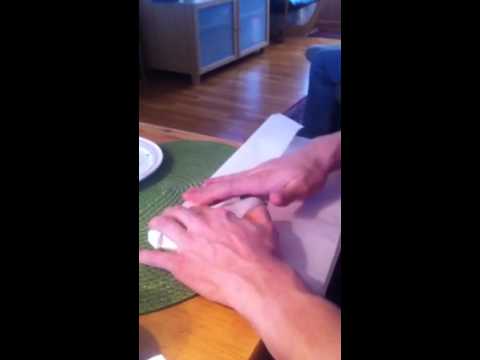
Fig. 1 Precision
Rip off a piece of paper. Place the slices of bread in the centre.

????????
Fig. 2 The roll
Wrap one side of the paper over the slice of bread and continue into a roll, clockwise.

????????
Fig. 3 Completing the roll
Continue rolling until the whole slice is covered in paper.

???????? ????????
Fig 4 The crumble
Crumbe up the paper edges on the right – then repeat on the left.

Fig 5 Voila
Here you go. A perfect matpakke for a perfect lunch.

????????
Norwegian ways consist of many weird customs. More to come!

Text and photos: Tor Kjolberg

Ice-Age Scandinavia

As the ice floss retreated, so the hunter-gatherers moved north, colonizing the Nordic lands and giving rise to the Viking Age.

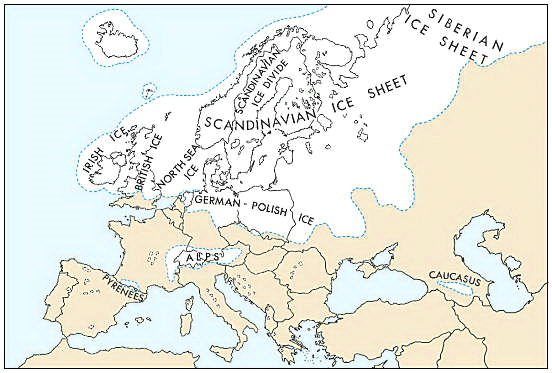
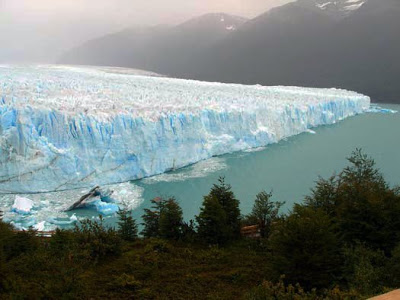
For 1.6 million years, Scandinavian languished under an ice-sheet that oozed out of the Jostedalsbreen in Norway, stretched as far as the British Isles and Moscow, and was 3,000 metres (9,800 ft) thick.

160115_Ice_Age_map
When eventually it melted, nomadic hunters and gatherers went after plants and animals that surfaced in the wake. Some 12,000 years ago, the peninsula celebrated its final liberation from the crushing weight of the icy rising like bread in an oven.

Unleavened Denmark, however, remained barely above the sea level, the largest bridge with Norway and Sweden broken.

OLYMPUS DIGITAL CAMERA
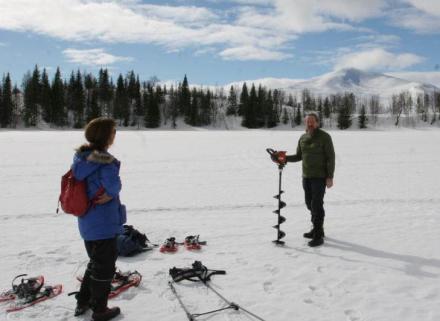
Contrary to the established view, new research shows that conifers grew in northern Scandinavia in the glacial period despite several kilometre thick ice sheets.

Up to now, most scientists have subscribed to the general view that the advancing ice presented all living things with an ultimatum: Go south or die out!

But now an international research team claims that the glaciations has not been total, and that there must have been some retreats with ice-free areas where trees could survive tens of thousands of years of glaciation.

“This means that we need to rethink how life reacts to global climate changes and that life on Earth is a lot more robust than we think,” says Professor Eske Willerslev, of the Centre for Geogenetics at the University of Copenhagen, who headed the research.

160115_Trees_surtvived_Ice_Age_in_Scandinavia
Generally accepted that the trees disappeared
Willerslev and his colleagues used the latest DNA technology to gain a fresh view on a controversial issue about the origin of the Scandinavian forests.

It has long been generally accepted that all trees in Scandinavia disappeared completely during the last Ice-Age in Scandinavia, which started some 115,000 years ago.

This view states that it wasn’t until after the ice melted away some 9,000 years ago that the trees started to reappear at an impressive speed from the south and the east.

Unidentified Objects

Artist Sara Vajira Lindstöm is displaying the small, paradoxical moments that can change our world at Soft Gallery in Oslo

The Soft Gallery in Raadgusgaten, Oslo, is the first gallery in Norway to present Sarah Vajira Lindström and her project “Unidentified Objects”.  The starting point for this project is her own obsession with collecting things from nature, then taking those findings home to be rearranged – a romantic’s longing to organize our nature.

150115-Sarah-Vajira-Lindström-Unidentified-Objects-2
On a white painted table in the gallery we observe plastic cans and glass containers with seaweed – or are they anemones and corals? They may also be moss or fungi, even bacterial cultures or tissue samples from the human body. The objects are located in an indefinable room between nature and our own inner being, and are all twisted together in astonishment for us to see.

Sarah Vajira Lindström wants to investigate what relationship we humans have to the nature around us and the contradiction between wild and  cultivated nature.  Lindström has selected, for the exhibition at SOFT gallery, a collection of small, unidentifiable objects,  a collection which apparently resembles what she may have found in the woods, but all of which are manufactured by the artist herself. The objects are natural recreations of fictitious, nonexistent organisms and it may look as if the artist, through the creation of each object, has captured a moment and frozen a growth process,  taking care of it in its own natural historical archive.

150115-Sarah-Vajira-Lindström-Unidentified-Objects-3
This is neither nature nor body, but a work of art by Sara Vajira Lindstrøm. The hybrid objects are partly made of plastic and silk. What does she want to show us? Why this ambiguity?

150115-Sarah-Vajira-Lindström-Unidentified-Objects-4
The exhibited works are the artist’s own collection of experiments with different techniques and materials. Lindström has explored knotting techniques, heat spraying, embroidery, and melting and burning of materials in textiles, plastics and rubber. She has worked with layers of transparency and opacity. The objects are small and varied and the viewer must be very close to discover all the details. The experience may remind us of a discovery in nature where one studies the details of a leaf or a seed capsule.

Sarah Vajira Lindström (1981) is a Swedish artist who lives and works in Oslo. She has a Masters degree in textile art from the Royal College of Art in London and a Bachelor of Arts degree from Central Saint Martins in London. She has participated in several group exhibitions at the Nordic Centre, Helsingborg, Talente 2014 in Munich, 2009 in Eindhoven, Konstslöjds, the Architecture Museum in Stockholm and Fablernas Värld (The World of Fairy Tales) at Konsthantverkarna in Stockholm. She will exhibit at Liljevalchs Vårsalong Stockholm until spring 2015.

????????
The exhibition Unidentified Object at Soft Galley runs through February 8.

www.sarahlindstrom.com

Text: Tor Kjolberg
All photos: Øystein Thorvaldsen, except exterior image of Soft Gallery, Oslo by Tor Kjolberg.

Cabin at Western Swedish Coast

0

A cabin has far more meaning than just a building when both its owners and the designer have deep connections to its location.

Stockholm architect Mat Fahlander and his client are lifelong friends, and they played together as children on this parcel of land, which has been in the client’s family since the 1940s. That kind of intimacy with a place also gives a unique perspective on how to fit a structure into it.

140115-Cabin_Kaggeboda_Sweden_2
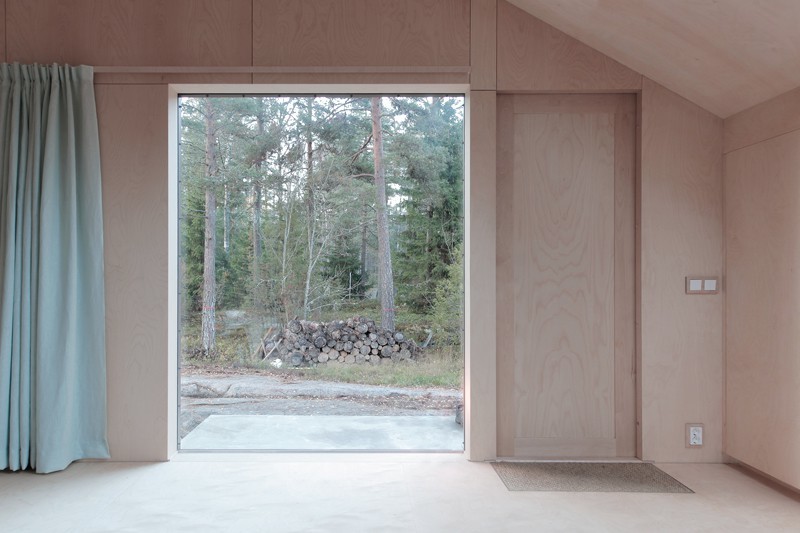
Fahlander chose a simple box shape for both the main summer house and its guest satellite, floating them above the granite shortline of this rugged stretch of western Swedish coast, in order to retain a strong sense of the natural environment. This is enhanced by a huge glass facade, which includes a 16-foot sliding door and reminds that the sea is your front yard.

140115_Cabin_Kaggeboda_Sweden_3
Mindful of the storms that batter this coast, Fahlander wrapped the shelter in corrugated cement boards and topped it with corrugated tin, curved as a reflection of the many boulders that stud the shore. This cabin at Western Swedish coast is about 900 square feet, half that in the large communal area that faces the Skagerak Straight, half in three small bedrooms in the back.

All Photos by Åke E:son Lindman/Otto

Other articles that may be of interest:
Cardboard Cabin in Gothenburg
Norwegian Ski Holidays
Where is this?

One of the World’s Best Ghost Towns

0

The British paper the Guardian ranked The Pyramid on Svalbard one of the top ten ghost towns in the world, when it looked for destinations for Halloween last year. But it’s worth a visit for many other reasons as well.

“If you’re looking for the world’s most northerly grand piano, then a trip to Pyramiden in the Svalbard archipelago is in order,” wrote the Guardian. 

130115-boat-trip-to-pyramiden-svalbard
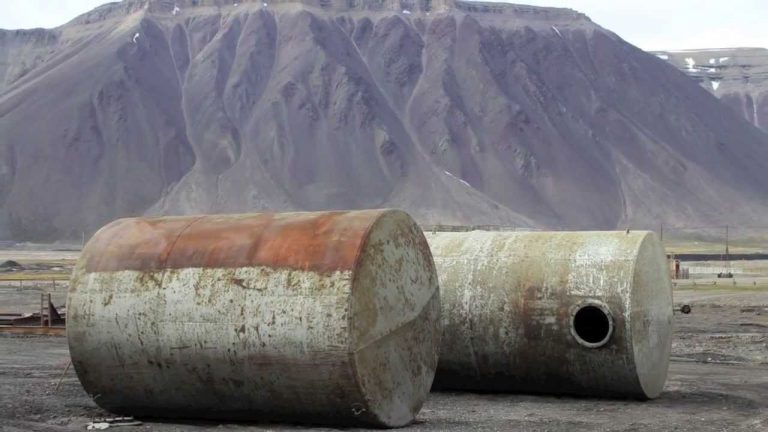
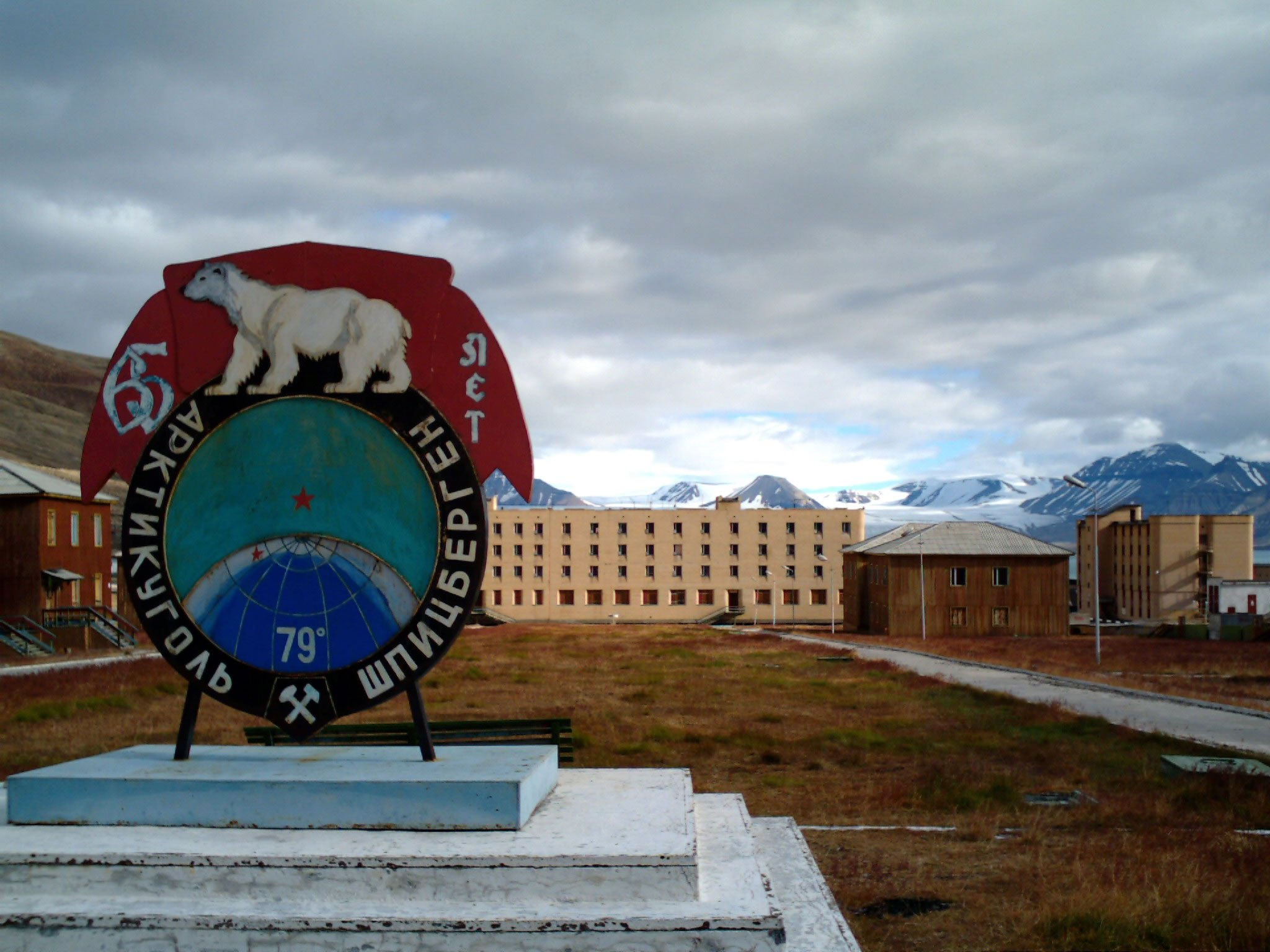
130115-pyramiden-welcome-signOne of the world’s best ghost towns, Pyramiden, is a deserted Russian settlement, once owned by the Russian company Trust Artikugol. Pyramid is, however, not Russian since it is situated on the Arctic island of Svalbard, belonging to Norway. No one has lived permanently here since 1998, when the Pyramid embodied a Soviet dream – a system without money, but where everyone’s needs were provided for.

Back in the 80s, it was the shrieks and laughter of children that split the air around an apartment block specially built to house young families.  While the adults were out working, the kids were left to their own devices, running down hallways and banging doors. Local residents usually referred to this building as “the crazy house.”

Pyramiden is situated in Billefjorden and the name is derived from the pyramid shaped mountain close by. Exploration of the coal deposits here started in the summer of 1910 with a Swedish expedition. The experimental operation soon showed to be promising as the coal seam was discovered in several places along the south face of the mountain. The area was annexed by the Swedes and a few prospects were opened. The geologic conditions in Pyramiden proved to be difficult. After a few years of prospecting the Swedes decided to concentrate their efforts on Svea.

130115-pyramid-svalbard-norway-2
Pyramiden represents a unique historical site. The settlement witnesses both mining and daily life. The wooden houses are generally from the nineteen-forties and the fifties while the brick buildings are from the seventies and later. The brick blocks and the remains of the mining installations are characteristic of Pyramiden today. The architectural and artistic qualities are clearly Soviet. It is one of the most beautiful settlements in Svalbard, not least because of its location.

130115-Spitsbergen-Pyramiden-PE-Skramstad
Take a boat trip to this ghost town in the high north with polar bears in the streets with Spitsbergen travel.

A Passion for Travel Writing and Photography

0

Coming from a family of travelers spread out on several continents, Stockholm based Lola Akinmade Åkerstroem took her first trip abroad before she turned one year old. Since then, and after more than twelve years of working professionally with  integrating Geographic Information Systems (GIS), she has been living her dream, exploring six continents as a travel photographer and writer.
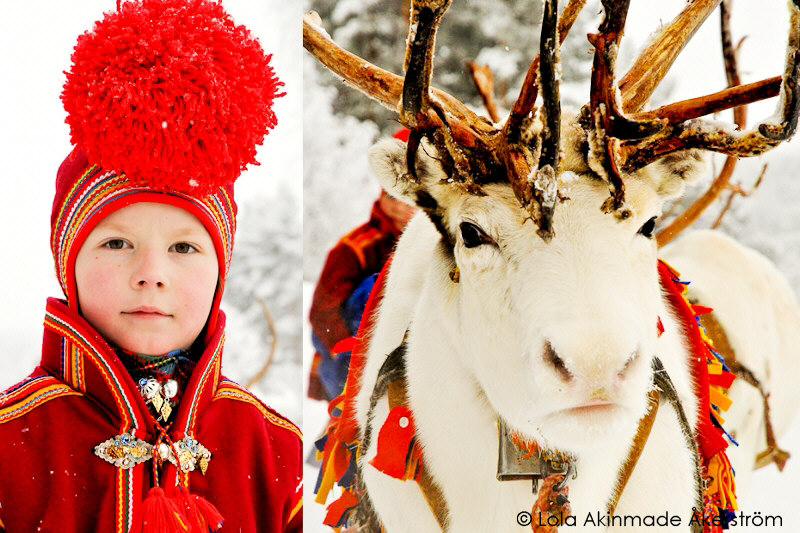
120115-Photography_By_Lola-Akinmade
To Daily Scandinavian Lola tells that she’s always written stories, mostly fiction, but it wasn’t until 2002, when she was working with an expedition in Fiji, that she truly realized she could combine her love for going around with travel writing and photography. She was writing travel narratives about the culture, the places, the very expedition and the teams, and it seemed to come naturally to share her experiences with the world.

Since that time in Fiji, and in particular since 2007, Lola has contributed to several high profile publications and now work as a travel writer and photographer fulltime – http://www.akinmade.com/articles

Monteliusvägen
One day while researching round-the-world trips, she stumbled across a budding online community called Matador Travel. They published my work and over time, I became one of their editors and also taught their travel photography classes. Today, Matador Network is one of the largest interactive travel magazines and coolest communities on earth.

120115-Garlic-in-Stockholm
After collecting enough online clips including creating a website for showcasing work, Lola felt confident enough to start pitching to various print outlets with links to online samples.

When embarking on your journey into travel writing and photography, don’t forget to unleash your creativity by learning how to create a collage, weaving together moments and memories captured through your lens into a stunning visual narrative.

120115-old-town-stockholm
In terms of photography, Lola’s work started to gain some traction after one of her photos was published in Vogue (UK) and on National Geographic’s sites.

Söderhallarna at Medborgarplatsen
Today, her photography is represented by National Geographic Creative and she was featured in a 1-minute vignette in collaboration with National Geographic Channel and South Africa Tourism called Through the Lens.

A traveler and a story gatherer’s biggest challenges
“To me the biggest challenge is time and having to leave my very young family behind for extended periods of time. I’m also very fortunate to have a job where, sometimes, I can bring them along. My daughter has racked up quite a couple of stamps in her two years on earth, and my two month old son will get his first soon.”

120115-stockholm-lifestyle
The challenge in terms of research is trusting whatever information I find online and being able to parse out what truly and accurately reflects a place. So I usually tend to travel with minimal research on must-sees and so I can organically soak up a place and travel through it slowly.

In terms of production, I’m often backlogged editing all those thousands of photographs I have so I think I need to hire another intern soon,”  Lola says smiling.
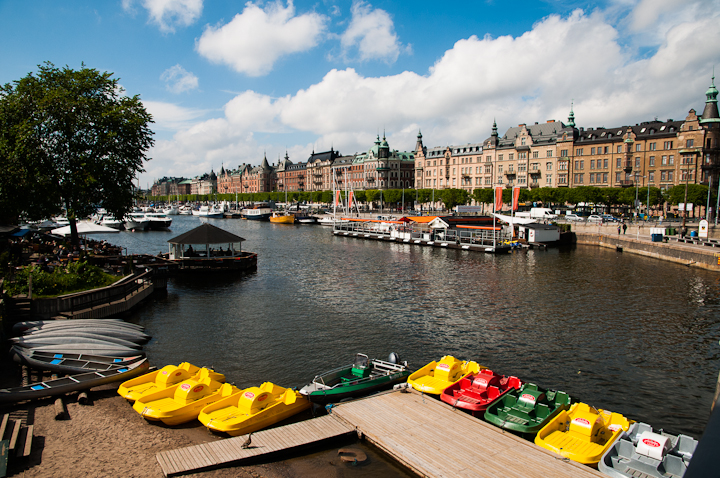
View of Östermalm
A changing industry

According to Lola the industry is rapidly changing and it is important to adapt and grow with it too. “Today people are giving away high quality photos for free so trying to make money on just selling photos can be tricky if you don’t have a strong business model.

The biggest challenge most photographers have is building a sustainable model that perseveres through these industry changes. Many people are afraid of marketing themselves, and I’m gratefully that I am able to bring my experience as a consultant and system architect into this field with me.

120115-view-to-standvagen-stockholm
That’s also one of the reasons why I’m slowly building my image bank with thousands of images online.”

In fact Lola Akinmade Åkerstroem has a company called Geotraveler Media which is an umbrella company for all her creative work. She personally don’t believe in doing just one thing, especially when someone is a naturally creative person. She doesn’t believe in putting all her eggs in one basket so to speak. So as a freelancer, she shift from skill to skill based on natural ebbs and flows.

What do you find most interesting when writing about Scandinavia or other places?

“I often say that expats are keen observers, mostly because they inhabit that space between mere tourist visiting a place and a born-and-bred local. So expats are good at observing the nuances locals often take for granted. This directly translates into my writing and photography. Because of my innate curiosity, I’m always observing, always listening, and always isolating subjects.”

Once Lola had a phone interview with a Swedish client for some freelancing work. He had found her by googling about Sweden and reading some of her articles. He liked her tone and style but after a while he couldn’t hide his curiosity.

“So…why do you write so much about Sweden?”  he asked.

“You know, because I am African,” Lola replied.

“I read between his lines and chuckled,” she continues. “I proceeded to tell him I write about places. Wherever I find myself for extended periods of time, I don’t just exist. I need to get beneath it, understand how it flows culturally, and learn from it. I don’t just quietly exist in Sweden. I explore it deeply.”

What travel authors or books might you recommend and/or have influenced you?

“There are so many books and authors I enjoy and too many to list. From authors like Chimamanda Adichie to DH Lawrence. One of the books I really enjoyed was “An African in Greenland” by Tété-Michel Kpomassie. I would love to retrace his steps and maybe travel alongside him back. I would love to pen a book someday about my own travels and explorations.”

What is your biggest reward of life as a travel writer?

“The most rewarding is being invited into people’s lives and given the privilege to share their everyday stories through words and photography with others in a respectful way.

If you should entertain friends coming from abroad to Stockholm for the first time what would you like to do?

“I’m a huge fan of Stromma’s brunch cruise because it encapsulates so much of the best of Stockholm in just three hours – viewing the beautiful city and its islands from the water while tucking into traditional Swedish food and sailing through the archipelago in a laid back fashion.

I’m a big foodie so I’d take them to sample Swedish pancakes and pea soup on Thursdays, explore my favorite saluhalls, as well as try various cafes in town to fika like a local.

For business people who might have only one day to explore Stockholm, and should recommend only one museum worth visiting (though there are several), I would say the Vasa museum which houses the 16th century warship of the same name. You get a grand sense of Swedish history by just glancing at the impressive ship.

You can also grab lunch around Medborgarplatsen so you can get a quick snapshot and slice of the diversity of people that call Stockholm home as they mill around this popular square on the island of Södermalm.”

Lola Akinmade Åkerström
As a Stockholm-based writer and photographer, Lola Akinmade Åkerström’s work has appeared in National Geographic Traveler, BBC, CNN, The Guardian, Travel + Leisure, Slate, Lonely Planet, Fodor’s, several in-flight magazines, and many more – http://www.akinmade.com/articles.

Her photography is represented by National Geographic Creative. She was also in South Africa on a photography assignment for National Geographic Channel shooting a vignette called “Through The Lens” which airs on Nat Geo channel across the globe.

She is the editor-in-chief of Slow Travel Stockholm which is dedicated to exploring Stockholm slowly.

Social Media Links


All photos (except image photo on top): Lola Akinmade Åkerstroem

Can You Name the World’s Largest Island?

0

People love island vacations. Picture it… You’re relaxing on the beach, sipping a fruity cocktail with an umbrella, and listening to the turquoise warm waters lap against the shore. But not all islands are created equal.

Let’s take a look at the world’s largest island by land mass…

Greenland is 840,003 square miles (2,175,600 sq km) and is really three large islands sealed together by a gigantic ice sheet extending way into the Arctic Circle spanning the equivalent distance of Scotland to the Sahara.

090115-Greenland-1
Photo:  Niels Elgaard Larsen, Nuuk (Wikipedia)

Greenlanders number around 57,500 and are a mix of native Inuit (Eskimo) and Europeans, principally of Danish descent. 90% live in scattered settlements along the west coast from the stunning Disko Bay area to the rural communities, such as Narsarsuaq, in the south. In contrast, the east is virtually uninhabited outside of the Ammassalik area. Traditionally a small-scale hunting and fishing society, East Greenland in particular still retains its old-world charm, barely touched by western influences.

During the fleeting summer, the pack ice breaks up and giant icebergs drift through the fjords, migratory birds arrive to breed and hardy Arctic flora bloom. Summer also brings 24-hour daylight and north of the Arctic Circle, the midnight sun.

090115-Whale-safari-at-Greenland

Air Greenland flies you safely to the world’s largest island.

Read more about Greenland on Wikitravel.

Feature image (on top) Anders Peter Photography /Shutterstock

But what about Australia?

Australia isn’t an island.  It’s a continent at 2,941,299 square miles (7,617,930 sq km).


Facts about Greenland
 

Local name

Kalaallit Nunaat

Capital

Nuuk, Godthåb (Good Hope)

Principal Languages

Greenlandic and Danish


Principal Religion

Evangelical Lutheran


Government

Self-governing Danish territory


Best time to visit

Greenland has two basic seasons: summer and winter. During the winter months you can experience the natural scenery normally associated with the country, but Greenland is also interesting during the summer – when you can go hiking in the mountains and sailing along the coast.

Literature

Lonely Planet Iceland, Greenland & the Faroe Islands

Weight and Measures

Length: metre
Weight: kilogram
Temperature: centigrade
Volume: litre

Photography

It is prohibited to photograph in churches during sermons. It is always polite to ask the Greenlanders’ permission, before photographing them.

Drinking water

The tap water is safe to drink in all of Greenland, and you can also drink the water in rivers and lakes.


Electricity

220V/50 Hz.


Behaviour

Common good behaviour is expected in Greenland.


Business Hours

Shops are open 9.00 to 17.30 (Monday to Thursday), 9.00 to 19.00 (Friday) and 9.00 to 13.00 (Saturday).
Banks are open 10.00 to 16.00 (Monday to Friday).
Offices are open 10.00 to 16.00 (Monday to Friday).


Food and drink

Traditional Greenlandic cuisine consists of freshly killed fish, seals and walruses. Traditionally the newly slaughtered animals more tender parts – such as heart, kidney and eyes – were held in reserve for the hunter at the top of the hierarchy. If you do not enjoy warm intestines, but prefer your dead creatures burned, then you can have cooked fish such as salmon, codfish, Greenland halibut, seal, whale and many others. There are not many fruits and vegetables, and those you can get in the supermarkets are rarely very fresh because of the long distances they travel.


Disabled travellers

Greenland isn’t the best place to go if you are disabled, as the rough landscape demands a good physique if you really want to experience the country at close range.


Holidays

New Year’s Day, 1 January
Twelfth Night, 6 January
The Worker’s International Day (half a holiday), 1 May
Constitution Day, 5 June
Greenland’s National Day, 21 June
Christmas, 24 December
Christmas Day, 25 december
Boxing Day, 26 december
New Year’s Eve, 31 december
Easter, March or April
Whitsun
Ascension Day
General Prayer Day

Chasing Dreams

0

Irina Lakicevic (25), born in Pristina, Kosovo, works as a dentist in the rainy Norwegian town of Bergen. During international fashion weeks, however, Irina becomes the favorite model for the world’s most prestigious fashion bloggers.

080115-Irina-lakicevic-4The Lacicevic-family came to the refugee reception center in Sandnessjøen in 2003. In Pristina Irina’s mother was a psychiatrist, leading a neurosurgical department at one of the largest hospitals there. Her father was the manager of a shopping mall.

Moving to a refugee reception center with bunk beds in pine, in a village of barely 600 inhabitants, was a shock.

Lacicevic family left a middle-class home, a city apartment and Irina’s mother’s silver dress in satin (Irina’s first memory of fashion). They left a whole life in turmoil when Albanians began to expel the 7,000 Serbs who lived in the city. Today her mother is working as an enrolled nurse in Sandnessjøen. Her father works in a nursery.

“I have always had my own style and a tendency to combine things in a different way to the people around me. Living for fashion magazines and photography just made an extra step towards blogging quite natural,” Irina explains. “A regular day for me means getting up at about 6am, going to work as a dentist, coming home around 5-6 pm to continue work on blog related things. Answering interviews, editing photos, going through trends, garments designers and plotting what to do next.”

“To be a blogger is not as easy as before,” she admits. “The market is mature you may fall in the trap to blog about yesterday’s news,” she continues. “But I admire famous women like Carine Roitfeld and Taylor Tomasi Hill, who not only is my favorite designers, but business women as well.

080115-Irinia-lacicevic-2“OK, so while we had the Biblical flood over here last fall (you know, rain for 40 days and nights is normal summer on the west-coast) and I was dealing with re-arranging my apartment, and didn’t this turn out to be a decently photogenic corner?” asked Irina on her blog Portable package  last November. You may read more of her fashion ideas there.

“And a good opportunity to show you couple of outfits that usually don’t make it to the blog as it is getting colder and colder to shoot outside. Basically obsessed with this striped shirt and high-waist jeans.”

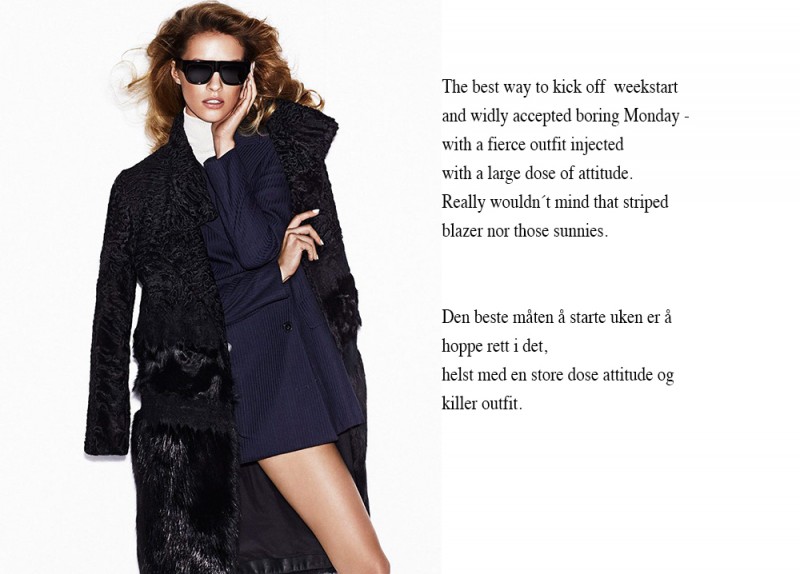
What really drives Lakicevic is her passion for fashion and her possibility to chasing dreams. While for some, our clothing serves as a mere practicality, for the Bergen blogger, it speaks volumes about the wearer, “I think whether we like it or not, how we look is the first thing people notice when they meet you, and immediately make an impression. So, it is a type of non-verbal communication, giving us means to visually express ourselves. It is also very, very fun,” she says.

What makes Irina, a professional dentist, to dedicate so much of her time to fashion and blogging?

“My dream was always to work with fashion,” she says. “I wanted to study design at Central Saint Martins in London, but I never dared.” To be an editor, a photographer and a stylist is a perfect situation for me.”

Any advice to people interested in fashion?

“Don’t have too many of the same things in the wardrobe, I am always trying to fill the gaps in my closet. I also swear by clothing tailored to your body type, and knowing what suits you, disregarding trends. When it comes to getting ready, it shouldn’t take longer than 30 minutes, after that you are just going to screw it up, or overdo it, or at least I am,” she concludes.

080115-irina-lakicevic-1

War and Peace in Viking-Age Scandinavia

0

From the end of the Viking Age to the dawn of the 20th century, kings battled for supremacy, land changed hands and unions were made and broken.

As the Viking-Age Scandinavia drew to a close in the 11th century, the kings of Norway, Sweden and Denmark – “all handsome and big men, of noble looks and well spoken” – met at Konghelle in the Gota River in 1098 to acknowledge one another’s legitimacy and to adopt a common policy on robbery and theft, ever the crimes of greatest concern.

070115-Magnus-Barelegs
To seal the pact, King Magnus of Norway – known as “Barelegs” since returning from Scotland sporting a kilt – married Inge of Sweden’s daughter Margaret, hence “The Peace Maiden”.

Five years later, however, Magnus fulfilled one of his own favorite sayings – “a king stands for his country’s honor and glory, not for a long life” – by being killed in action during the battle at Ulster in 1103 when he tried to conquer Ireland. He went west in 1102 and had his residence for quite some time in Dublin.

070115-Magnus_Barfots_saga-heimskringla

Norway was carved up among his three young sons, undoing the single Norwegian kingdom hammered together by Harald Fairhair, and the prospect of smooth Scandinavian coexistence.

070115-Harald_FairhairAccording to Icelandic sagas, the first king of Norway was Harald Halvdansson Fairhair. In the 9th century, at the climax of the Viking Age, Norway was divided into many small kingdoms, or fylkes. Harald was originally king of Vestfold, west of the Oslo Fjord. By 900 he had conquered all of Norway, and that is what this scenario (picture above) is about.

Read more about Norway’s kings and queens here.

Feature image (on top): Authentic restored Viking helmet under the high midday sun. Photo: Luis Abrantes/Shutterstock

The «Kon-Tiki» Movie Hailed By British Media

0

The Norwegian movie about the Norwegian adventurer and scientist Thor Heyerdahl is finally getting UK release. The critics are overwhelmingly positive.

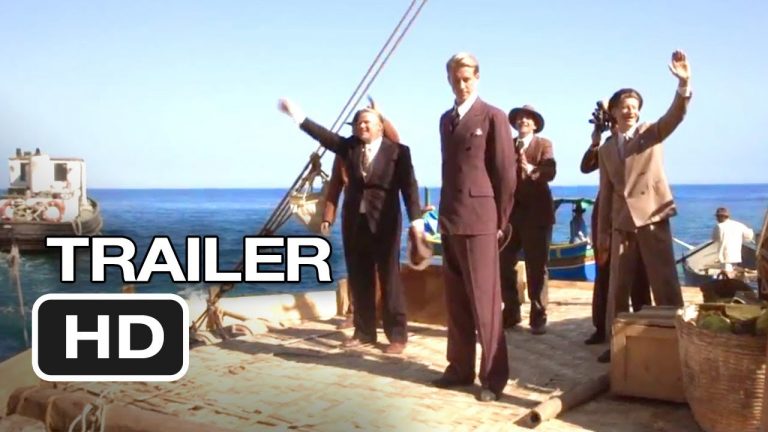
Two years after it first debuted, Oscar-nominated Kon-Tiki will finally be seen by UK cinemagoers. This is a visually stunning film about the real-life adventurer Thor Heyerdahl. Like Lindbergh’s transatlantic solo flight or John Glenn’s maiden orbit in space, Heyerdahl’s maritime journey captured the public’s insatiable need for heroes who succeed against the odds.

The “Kon-Tiki” movie was critically acclaimed around the world and nominated for an Oscar, Golden Globe and European Film Award. It won four Norwegian Academy Awards including the People’s Choice Award for the two directors, Joachim Rønning and Espen Sandberg.

060115-Kon-Tiki-the-movie
Kon-Tiki received its world premiere at the Norwegian International Film Festival in August 2012 before going on a festival run that included Toronto, Berlin and London.

“Brilliantly shot in a rugged National Geographic-like way by the cinematographer Geir Hartly Andreassen, it captures the sailors’ feelings of both awe and terror about their self-inflicted predicament . Some of the best moments in the film, however,  are those away from the raft – the scenes of Thor and his wife in the South Pacific early in their marriage or the New York-set scenes in which publishers pour scorn on the would-be explorer’s ideas,” according to the British paper The Independent.

060115-Kon-Tiki-trhe-movie-3
The paper The Telegraph calls the movie “heroically mad”. What comes across best is an awe of the elements, and the near-hallucinatory sensory experience of spending this much time at sea, with the sun blazing down, and the beards growing as thick and gingery as roof-thatch,” writes Tim Robey.