


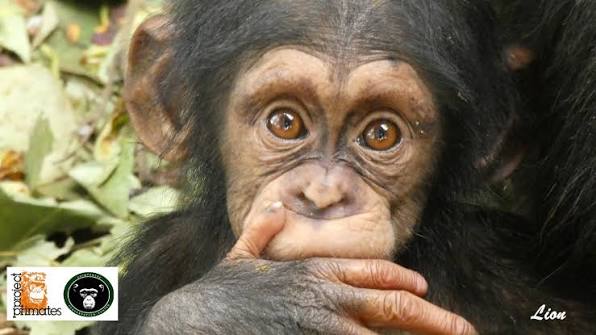
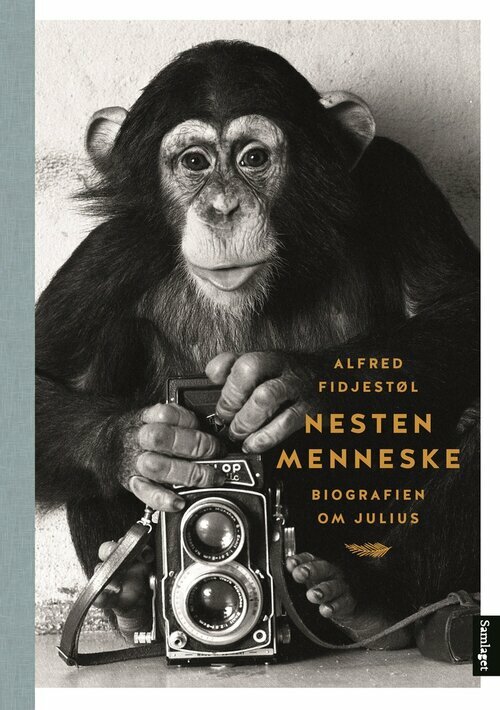
“Staring into those eyes is a pretty harrowing feeling. You notice that there is something there, in a completely different way than with other animals,” says Alfred Fidjestøl, the author of the book “Almost Human,” a biography of Julius, the popular Norwegian chimpanzee who has lived among humans his entire life.
Julius was born on Boxing Day in 1979 at the Kristiansand Zoo and Amusement Park (Dyreparken). Every Norwegian, young and old, loves this almost human chimpanzee. Rejected by his mother as an infant, he was raised by the zoo director’s family and became a national celebrity after a hit children’s television documentary. He inspired books, his own hit song, and merchandise.
Early Fame
After his mother abandoned him, he lived with a human family for a year, a period that was documented by the Norwegian Broadcasting Corporation (NRK). Returning him to his own species proved difficult. He spent years trying to escape and faced isolation before successfully rejoining the zoo’s chimpanzee troop and eventually becoming its alpha leader.
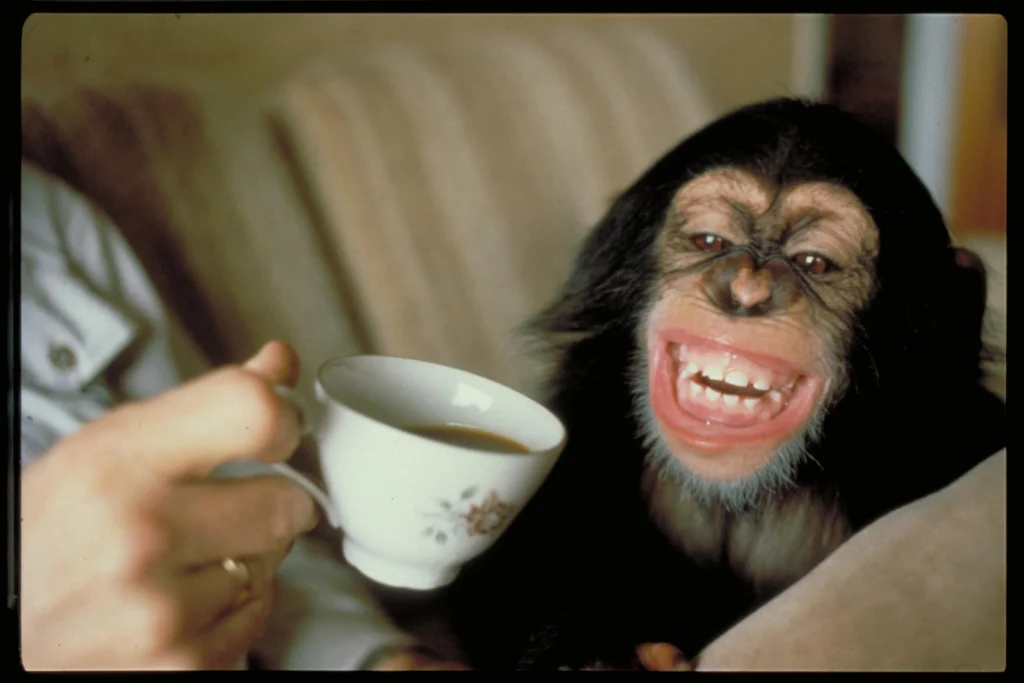
Julius, the escape artist
Julius escaped from his holding pens and island habitat a staggering five times during his turbulent adolescence and early adulthood. Because he was raised in human homes, Julius entirely lacked the natural fear of water and open spaces that usually keeps chimpanzees contained, making him an exceptionally clever and dangerous escape artist.
His notable escape methods and the crises they caused include wading through the moat. In his early escapes, Julius routinely bypassed the zoo’s primary defense—a surrounding water moat. While wild chimps avoid deep water due to their heavy bone density and inability to swim, Julius simply waded straight through the waterway to reach the public areas.
He also bypassed live electric fences. During another escape, Julius scaled and crossed a barrier despite it being fully charged with live electrical wiring.
His fifth and final escape on June 7, 1992, was the most violent. Julius had grown deeply irritated by the loud noise from the zoo’s garbage collector, Oddvar Ivarson, which he interpreted as a direct challenge to his authority. Julius sneaked off Chimp Island, hid behind a souvenir kiosk, and ambushed the garbage truck as it moved. He swung through the open driver’s-side window and severely bit the driver before he could be subdued.
These incidents forced Kristiansand Zoo to officially declare Julius too dangerous to free-roam. This led directly to his decade-long isolation in a heavily reinforced solitary cage. He finally matured enough to successfully take over and lead the main chimp troop in 2005.
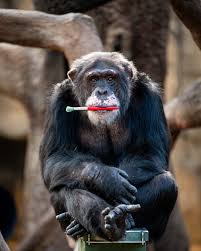
The 18th Birthday and the Symbolic Driver’s License
In December 1997, when Julius turned 18, he reached legal adulthood by human standards. Because of his immense celebrity, the milestone was treated as a major national event in Norway, culminating in a highly publicized and bizarre birthday celebration. Representatives from the Norwegian Public Roads Administration (Statens vegvesen) visited the zoo and officially presented Julius with a custom-made, oversized symbolic driver’s license.
The gesture was a humorous nod to Julius’s ongoing identity crisis and his obsession with human vehicles. As a young chimp living with humans, he had developed a deep love of riding in cars and tractors. Even after being returned to the zoo, he was notorious for trying to steal keys from keepers and for attempting to drive or interact with maintenance vehicles, including his infamous garbage truck attack.
Along with the license, he received a cake and various human treats. While it was a lighthearted PR stunt for the public, it highlighted the strange, bittersweet reality documented in Fidjestøl’s biography: Julius was legally recognized as an adult human, yet he remained locked in a cage, trying to figure out how to be a chimpanzee.
The Iconic Julius Song
In the spring of 1983, the renowned Norwegian singer-songwriter Terje Formoe pitched the idea of a zoo-themed music cassette to Kristiansand Zoo director Edvard Moseid. Moseid declined the album but famously told Formoe, “You can write a song about Julius.”
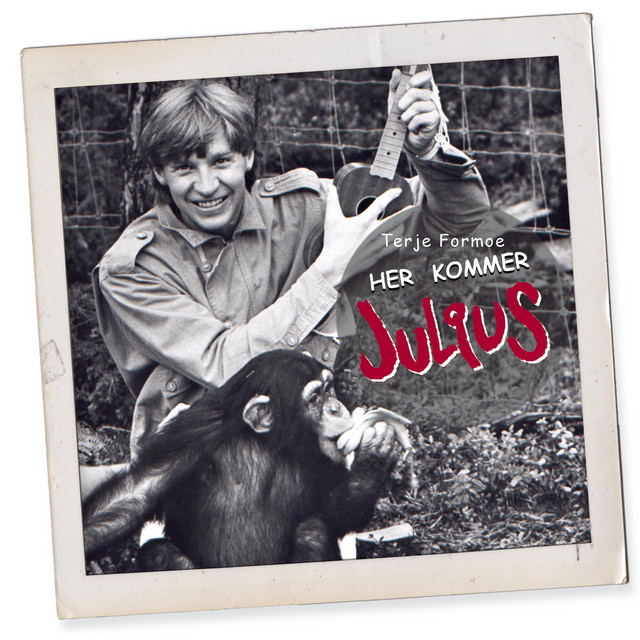
Formoe, the composer of the fictional pirate Captain Sabertooth (Kaptein Sabeltann), wrote the lyrics and melody in just two hours. “Her kommer Julius” (“Here Comes Julius”) was rushed into production as the theme song for the fourth and final episode of NRK’s massive television documentary series about Julius. The upbeat, catchy track became an instant national hit, topping the Norsktoppen radio charts and turning Julius into a pop-culture phenomenon. Decades later, it remains an essential childhood anthem across Norway.
Children’s Books about Julius
The Original Hit (1983) was written by Trygve Klingsheim and Arild Jakobsen, the first children’s book documenting Julius’s early years living in human homes. Accompanied by full-color photographs, it sold over 50,000 copies, turning the chimp into an official merchandise powerhouse.
Som ein bror (Like a Brother, 2019) was written by Alfred Fidjestøl and is an illustrated non-fiction book tailored for older children and young adults. It handles his complex life with nuance, showing how his human foster siblings still view Julius as a brother while exploring the history of captive chimpanzees and scientific research.
He survived a severe, intentional poisoning in 2019 when a visitor threw a bottle of liquid narcotics into his enclosure. Now well into his 40s—an advanced age for a chimpanzee—Julius still lives at the Kristiansand Zoo and Amusement Park, where he remains the park’s main attraction.
Alfred Fidjestøl’s Critically Acclaimed Biography
In 2017, award-winning journalist and biographer Alfred Fidjestøl took a revolutionary literary approach by publishing Almost Human: A Biography of Julius the Chimpanzee. It marked the first time in Norwegian history that an animal was granted a full-scale, rigorous biography, held to the same scholarly, archival, and journalistic standards as a prominent human figure.
The book serves as a historical mirror reflecting how our collective morality has shifted. It documents the transformation of the Kristiansand Zoo from a small, 1970s animal-behind-bars attraction into a modern institution grappling with complex animal-rights and wildlife-preservation standards.
The book has been translated into English by Becky L. Crook for international publication via Greystone Books.
The final chapters
Julius survived a severe poisoning incident in 2019 and enjoys his later years as a respected patriarch with an expanded family. Today, he continues to live out his later years as a key figure in conservation and the main attraction at his home facility.
Julius – the Popular Norwegian Chimpanzee, written by Tor Kjolberg