




Pas Normal means “not normal” and is the name of the acclaimed company founded by Danish designer Karl-Oskar Olsen. In this interview, he explains why he creates cycling wear that looks good even when you’re just a blur, hitting 45km/h on a steep descent. Meet the Danish cycling wear designer.
Copenhagen is a special place for a cyclist, especially for someone coming from a country where cycling in all its forms is, at best, an outlier and, at worst, outlawed. To say the Danish capital has an affinity for bicycles is an understatement. For an outsider, seeing the 8:00 AM commute on Nørrebrogade is astonishing. Thousands of people from diverse backgrounds ride bikes, filtering into the city’s central business district. In Denmark, bicycles – and bicycling – are oddly normal, an amusing juxtaposition to Pas Normal Studios’ moniker.
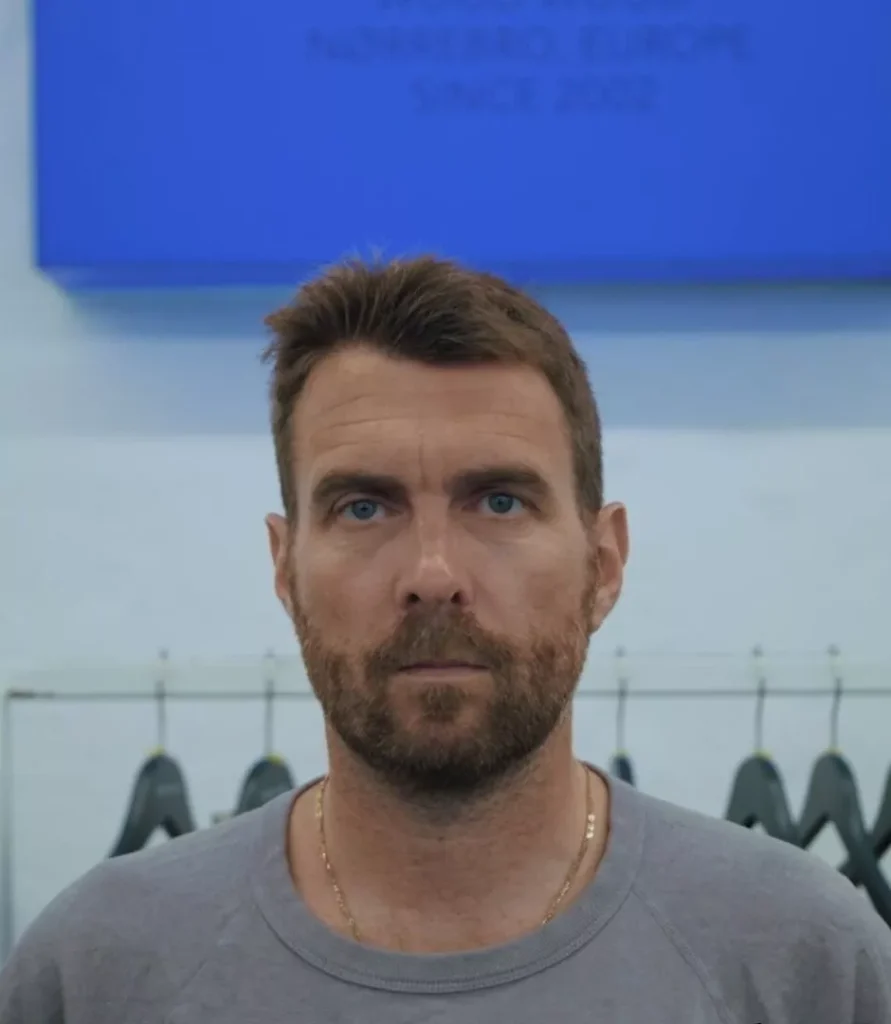
Interview with Karl-Oskar Olsen
This interview is from Pas Normal Studios’ website, and AC is an “anonymous copywriter”.
AC: Starting with the basics. Where’s your favorite place to ride?
KOO: Lucca, Italy, around Tuscany.
AC: What inspired you to start as a designer?
KOO: In my youth, I was drawn to subcultures like skateboarding and graffiti, and like many other independent lifestyle cultures, they have their own dress codes. Back then, streetwear was in its early days; everyone was very creative in achieving a cool look. You couldn’t just buy into a look; you had to create it yourself. It was all very analog. I wanted to work with this concept at a higher level, so naturally I pursued it. In 2002, I completed my MAA at the Royal Danish Academy of Fine Arts.
AC: What’s the origin of Pas Normal? How did the brand start, and why the name?
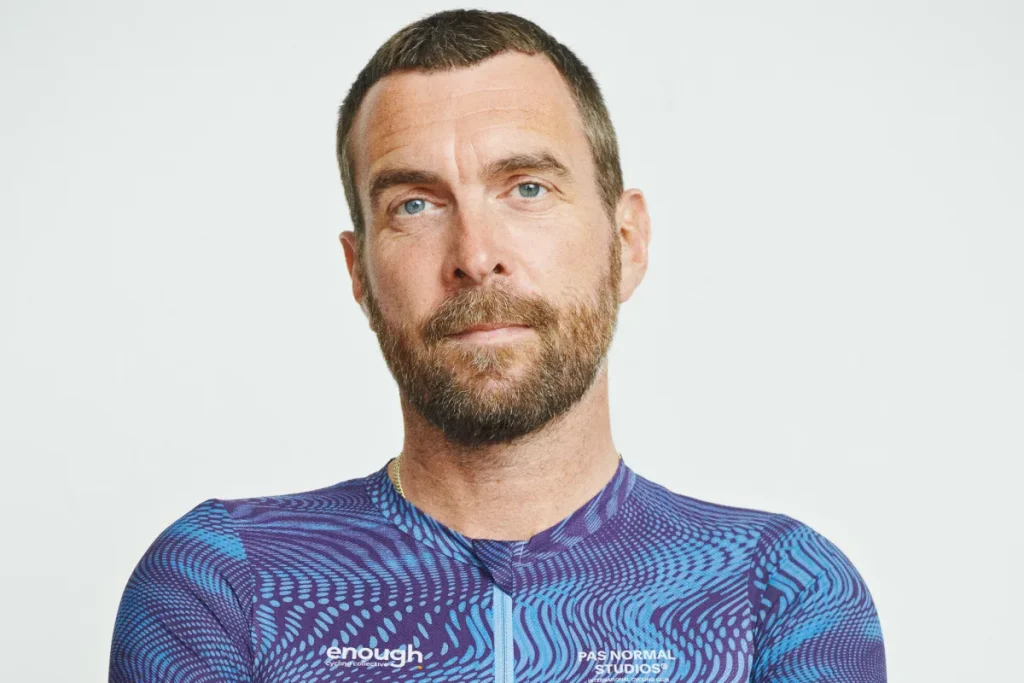
KOO: I used it as a graphic on a t-shirt for my other label, Wood Wood, back in 2014, referencing Lance Armstrong. We had a couple of other cycling references in that collection, like an “Hors Catégorie” t-shirt. One year later, I co-founded PNS with Peter Madsen, Tommy Pedersen, and Brian Nygaard, and I suggested the name Pas Normal Studios. Pas Normal was no longer a reference to Lance; it described how we see ourselves in the cycling industry. Not Normal, less ordinary. I thought it really made sense. The “Studios” part adds an extra layer of creativity and a contemporary, modern take on what we reflect throughout all we create. It visualizes something new and fresh within the cycling industry. I believe it speaks very directly to our consumers.
_________________________________________
Related: Bicycling in Copenhagen and Oslo
_________________________________________
AC: Who are the biggest aesthetic influences in your design work? Are there any particular pieces that jolted an epiphany for you?
KOO: I think we have a very classically Scandinavian way of thinking about design. It’s subtle and simple, yet it has distinct detail or a concept. That said, my personal sources of inspiration come from Bauhaus, particularly Le Corbusier and Mies van der Rohe. It can’t be too stiff or overly conceptual; it needs a certain balance. I see my style as a hybrid between something very classically “less is more” and a more contemporary, innovative style. Above all, I try to reflect the time and society we live in and make things I’d wear myself.
AC: How does music impact your vision and work? Any styles that tend to dominate your process?
KOO: Music and certain musicians significantly impact my design process and are an endless source of inspiration. When I design, I listen to music most of the time, and it takes me to places I couldn’t otherwise explore. I use it as a tool in my creative process, and occasionally I incorporate specific references into the apparel, like Road to Nowhere, an homage to Talking Heads.
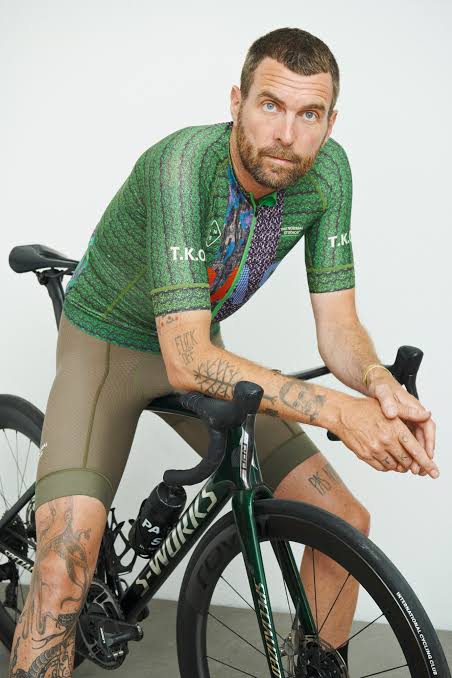
AC: How do you translate fashion and real-world design to something like cycling wear? What kind of obstacles do you run into?
KOO: Part of the big idea behind Pas Normal Studios is to bring something modern and contemporary to cycling wear and to reflect fashion-world trends that make sense to bring over. When we started out, I felt there were only two alternatives if you were looking for a new kit: either a retro look or a sports-performance look, and neither spoke to me. It felt like running apparel was onto something cool, using high-fashion colors and details to create a hybrid look. As an eager cyclist myself, and as creative director and designer at Wood Wood, I wanted to make cycling clothes that felt like a tailored suit, felt special, and reflected today’s and tomorrow’s color palette. Pas Normal Studios is still young, but it is evolving faster than we imagined. The range will deepen over the coming seasons, and as we grow, new opportunities will surely arise. We strive to make the best possible product, balancing function and style, and we aim to be a leading player in the industry.
AC: What have been some of your biggest failures as a designer?
KOO: When I listen to the sales department more than to my own intuition, it happens from time to time.
AC: Does Danish cycling culture – specifically, the city biking in Copenhagen – have a lot to do with what you make? Do you think you’d be doing the same thing if you were born in the United States?
KOO: Hmm, good question. I think yes, I would have done the same thing. Being born in Copenhagen, Denmark, has definitely shaped my expression, but that might have been the only difference if I’d been born in the US. I could have done it in the US or even in Asia.
AC: Are there any other cycling-specific companies you particularly admire or look up to?
KOO: Most big cycling companies have produced good gear over the years. When I was young, I was hooked on Castelli. Now, honestly, I don’t really follow other cycling brands. People who know me can attest to this; I’m not into bikes either. I just ride them. When I design, I look more toward architecture, art, music, and fashion, and I get my sports apparel fix from functional outerwear brands for running and football.
AC: When you were 17 years old, what did you want to do with your life?
KOO: I wanted to become an architect or an artist, creating sculptural works and classical paintings.
AC: Finally, where’s your least favorite place to ride?
KOO: In a spinning room.
Meet the Danish Cycling Wear Designer: Based on an interview published on the company’s website. AC is an anonymous copywriter.