


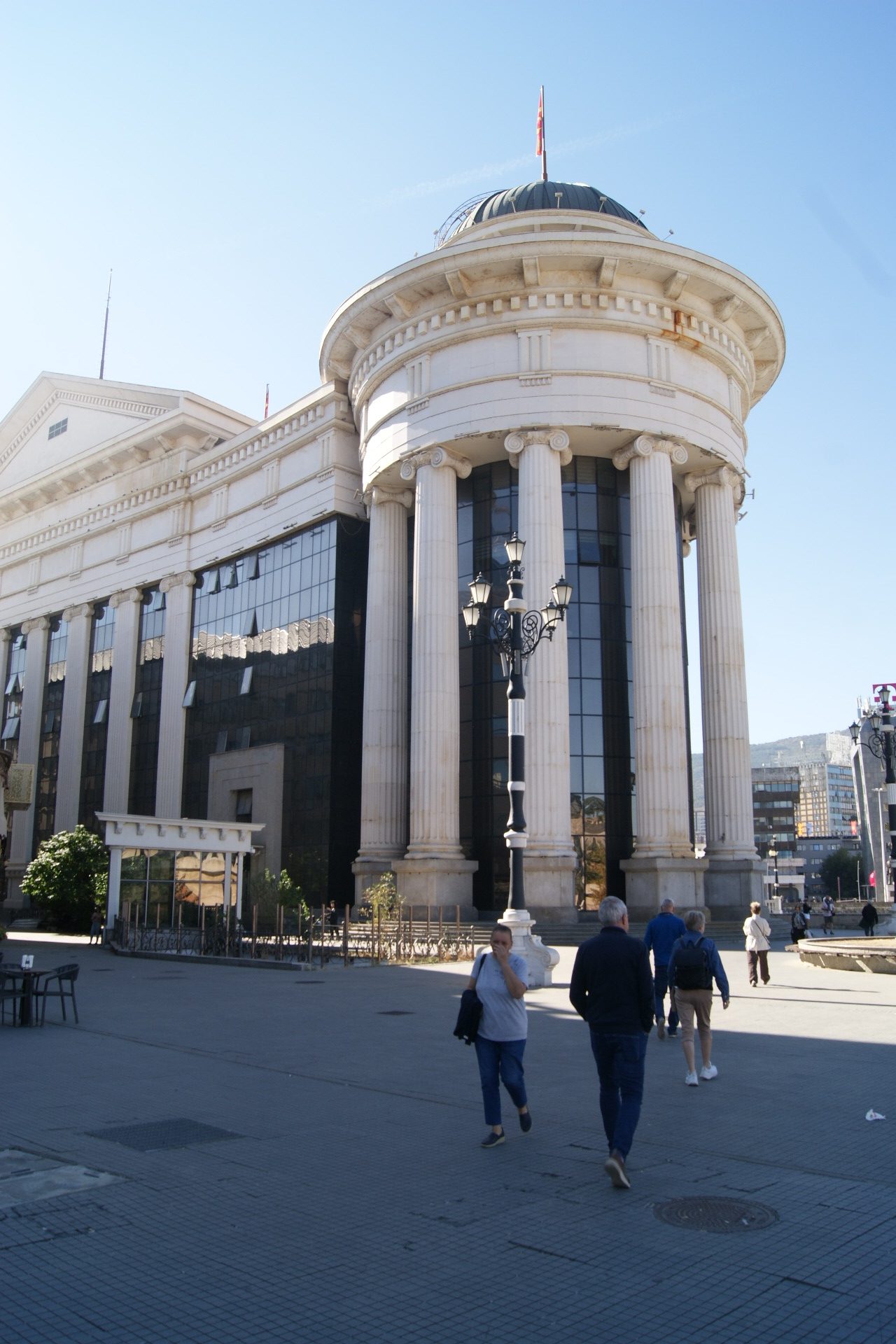
In 1963, Skopje, North Macedonia, was struck by a massive earthquake that killed more than 1,000 people and injured nearly 4,000. More than 200,000 people were left homeless, and about 80 percent of the city was destroyed. Around 90 countries rushed to provide aid, earning Skopje the nickname “City of International Solidarity”.
United States President John F. Kennedy ordered the Department of Defense and the Agency for International Development (USAID) to provide disaster assistance in Skopje by sending personnel, prefabricated houses, tent cities, and other forms of relief. The Soviet Union also sent substantial relief. Its leader, Nikita Khrushchev, visited Skopje in person. Because SFR Yugoslavia was a member of the Non-Aligned Movement during the Cold War, American and Soviet troops stationed in Skopje could shake hands for the first time since their encounter on the Elbe in 1945.

Following the earthquake, Skopje was rebuilt as a masterpiece of modernism and Brutalism, and politicians from the VMRO-DPMNE party sought to foster a new national identity by burying this unique socialist-era modernist history.
__________________________________________________
Other fascinating cities: Colombo – an underrated capital
__________________________________________________
Norway, along with countries such as Sweden, the UK, Finland, Italy, Czechoslovakia, and Poland, donated prefabricated homes to quickly house the displaced population. Entire streets in the newly built residential areas were named after these countries and cities—including Oslo Street, London Street, and Stockholm Street—to preserve the history of this global relief effort.
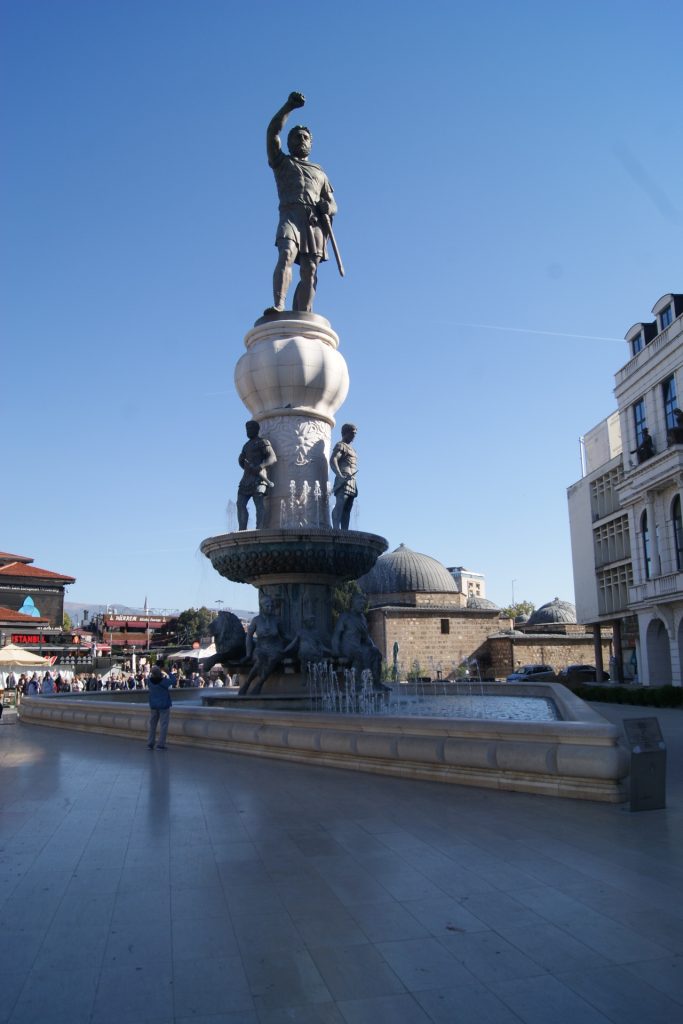
However, instead of preserving the original post-earthquake or historical structures, the government spent hundreds of millions of euros to forcibly construct faux-neoclassical and baroque facades, massive monuments, and new bridges.
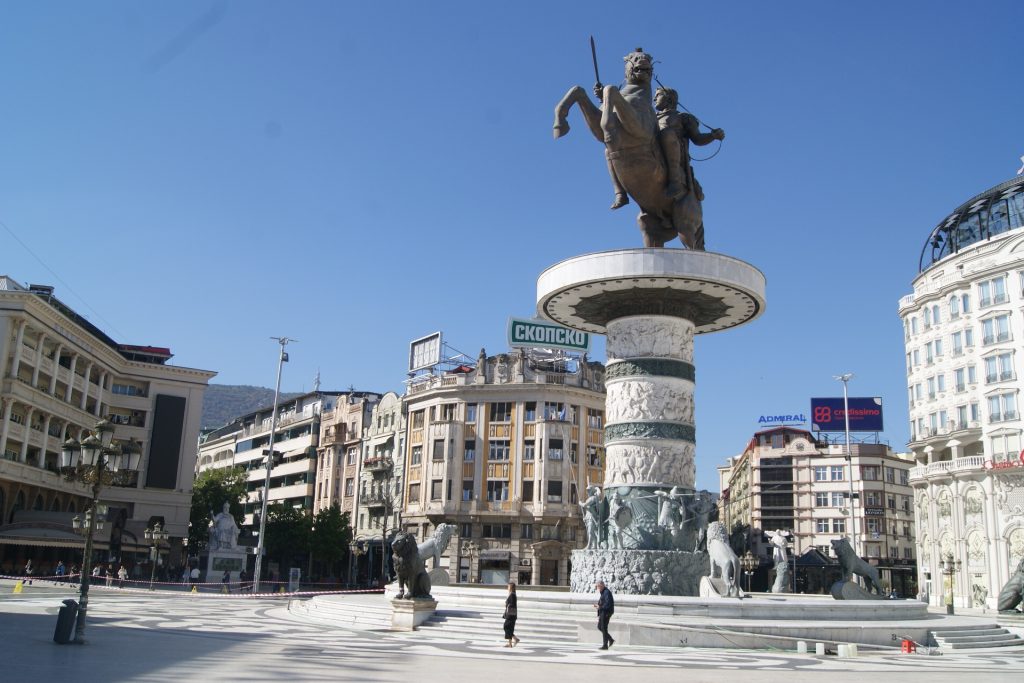
This sparked a major historical and architectural controversy in Skopje. Many prominent architects, urban planners, and art historians have vehemently blamed politicians—specifically the nationalist government led by former Prime Minister Nikola Gruevski—for what they described as the “architectural genocide” and “kitschification” of the city.
__________________________________________________
Related: Copenhagen – the World Capital of Architecture for 2023
__________________________________________________
The Core of the Conflict
The ‘Skopje 2014’ project was an urban redevelopment and nation-building initiative launched in 2010 by the government of the Republic of Macedonia (led by the nationalist party VMRO-DPMNE).
Architects were especially furious about how the project treated bridges and existing buildings along the Vardar River. Rather than building simple, functional crossings that complemented Kenzo Tange’s open riverfront concept, politicians commissioned brand-new, ornate pedestrian bridges lined with dozens of heavy bronze statues of historical figures.
Prominent architects, including Trajko Dimitrov, publicly called the state’s actions “a deliberate attempt to “humiliate all living and deceased creators who left their mark on the city.’”
Beyond the aesthetics, an expert working group later revealed that 90% of the project’s features violated zoning, budgeting, and heritage laws.
The present government is caught in an expensive logistical and political gridlock over the “Skopje 2014” project, responding to the controversial architecture with a mix of exhaustion, partial damage control, and forced finalization.
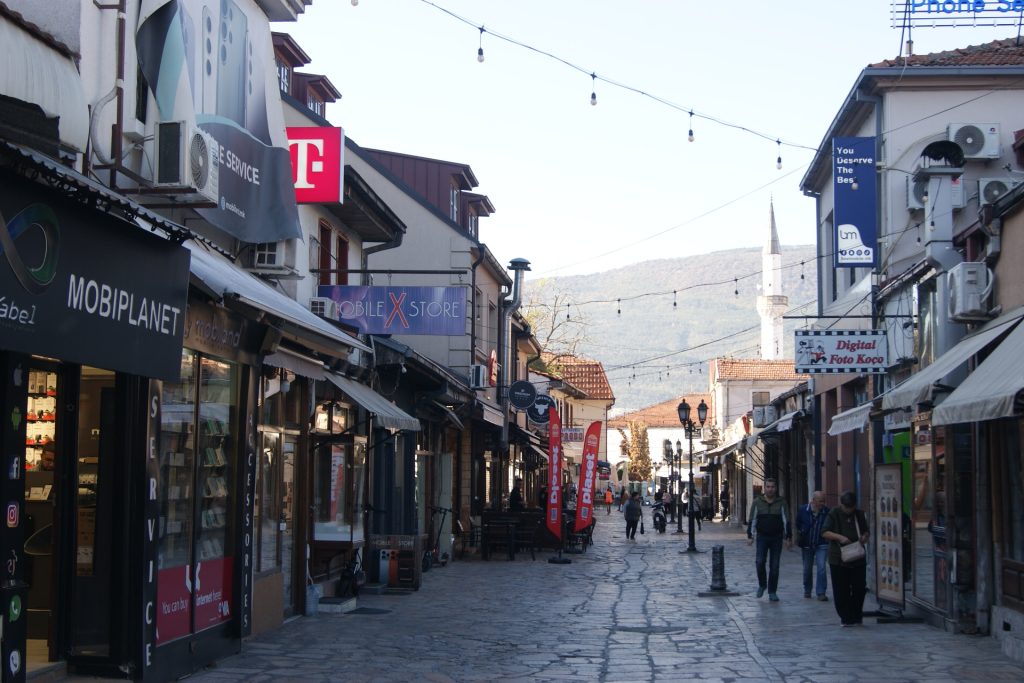
Skopje is absolutely worth a visit
Despite the city center’s political and architectural identity crisis, Skopje has blossomed into one of Europe’s most fascinating, surreal, and deeply rewarding off-the-beaten-path destinations. It is a city where entirely different centuries and cultures collide across a single river.
Skopje offers an architectural narrative you cannot find anywhere else in the world. By crossing the iconic Stone Bridge, you walk through three distinct eras:
The Ottoman Era
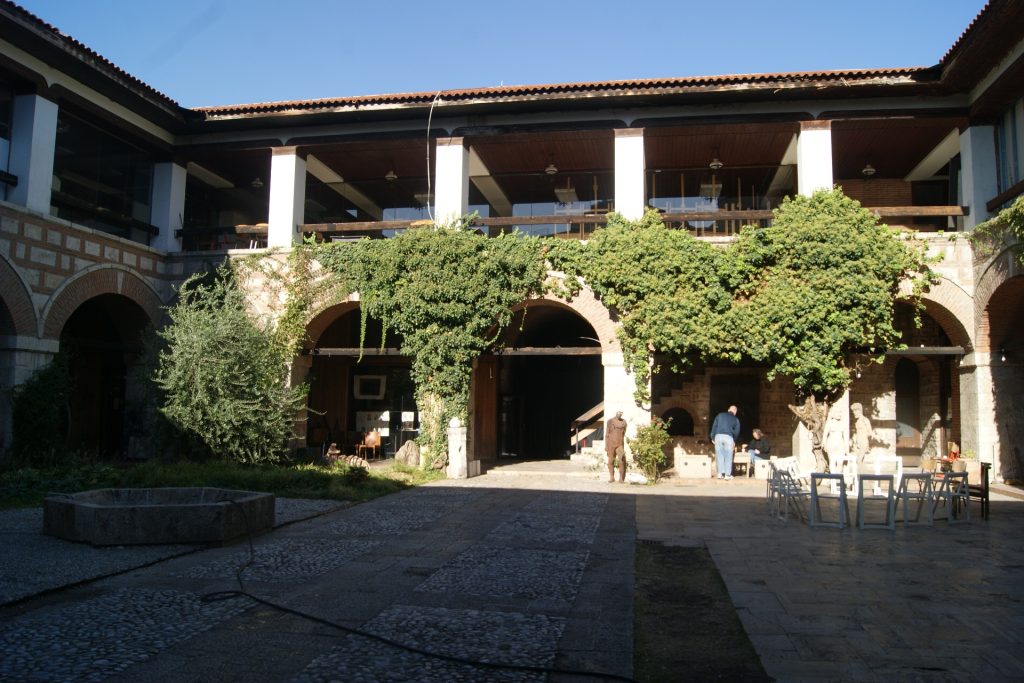
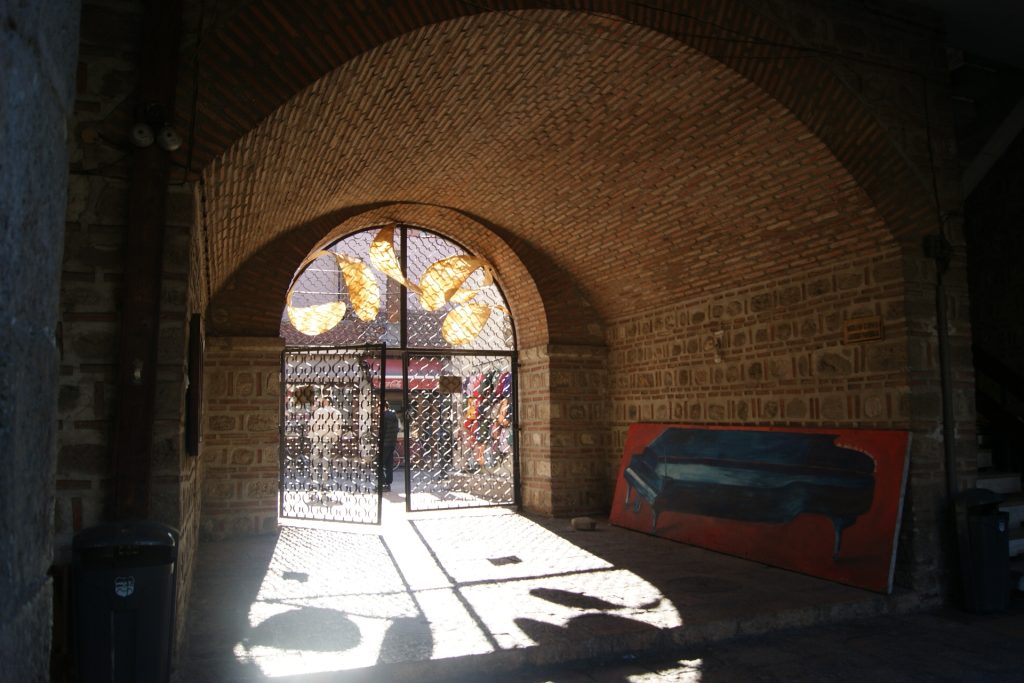
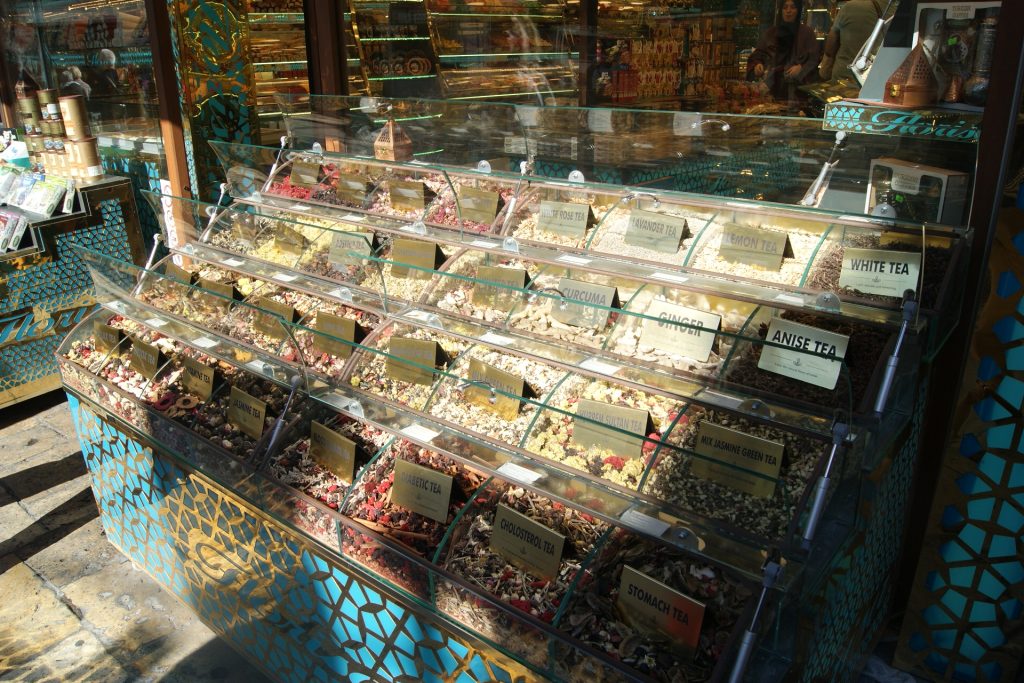
On the north bank lies the Old Bazaar (Čaršija), the second-largest Ottoman-era marketplace in the Balkans after Istanbul. It is a labyrinth of winding cobblestone streets, authentic mosques, old hammams (bathhouses), and hans (inns) serving strong Turkish coffee and local pastries.
The Brutalist Era
For architecture enthusiasts, the surviving concrete masterpieces by Kenzo Tange and his contemporaries—such as the massive Telecommunication Center and the Goce Delčev student dormitory—remain legendary pillars of late-20th-century utopian modernism.
The Kitsch Vegas Era
Love it or hate it, standing in Macedonia Square beneath the absurdly massive, 22-meter-tall Warrior on a Horse fountain (see image above), surrounded by hundreds of random statues, is a jaw-dropping sight. It is weird, wonderful, and utterly unique.
Breathtaking Natural Escapes
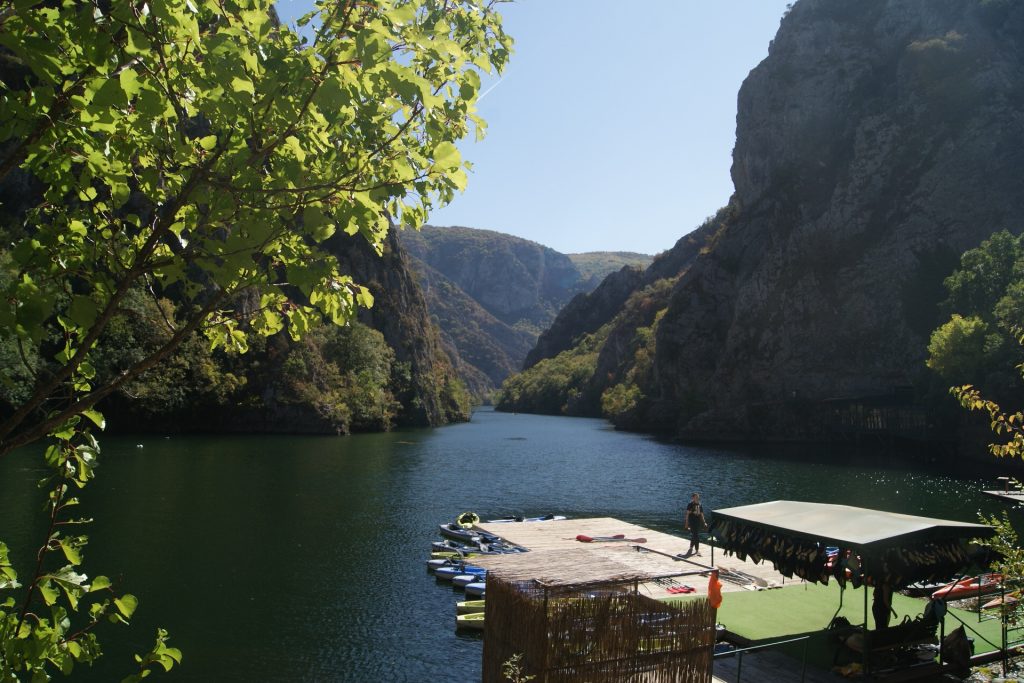
You do not have to travel far to escape the concrete. Right on the city’s edge lies Matka Canyon, a stunning gorge where you can rent kayaks or take boat rides through steep cliffs to explore hidden underground caves. You can also take a cable car up Vodno Mountain to stand beneath the Millennium Cross for a panoramic view of the entire Skopje valley.
Incredible Value and Balkan Hospitality
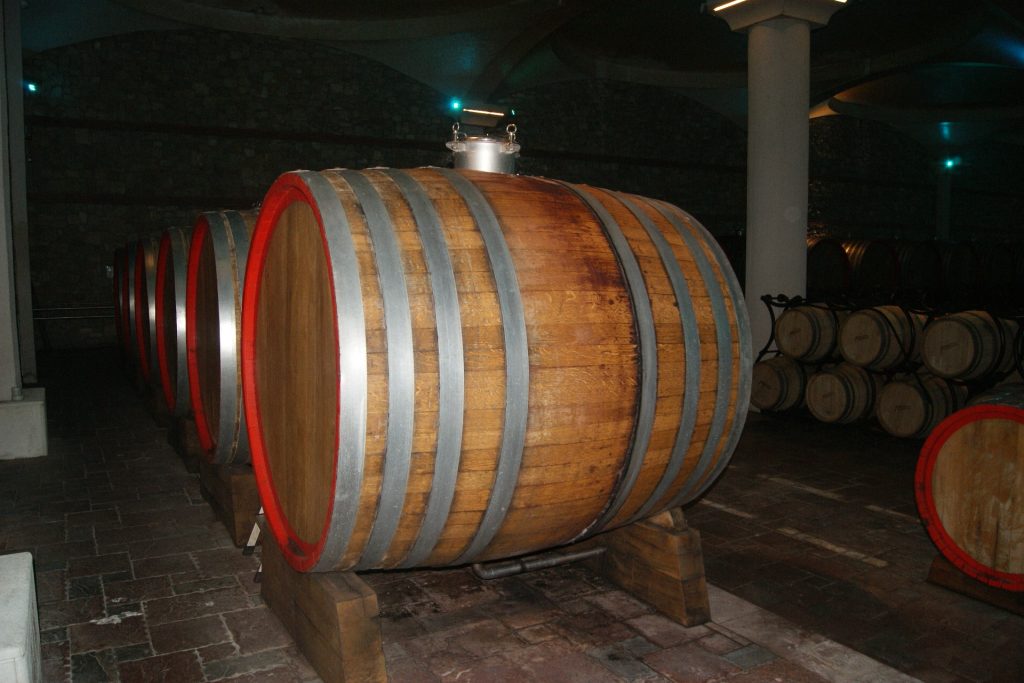
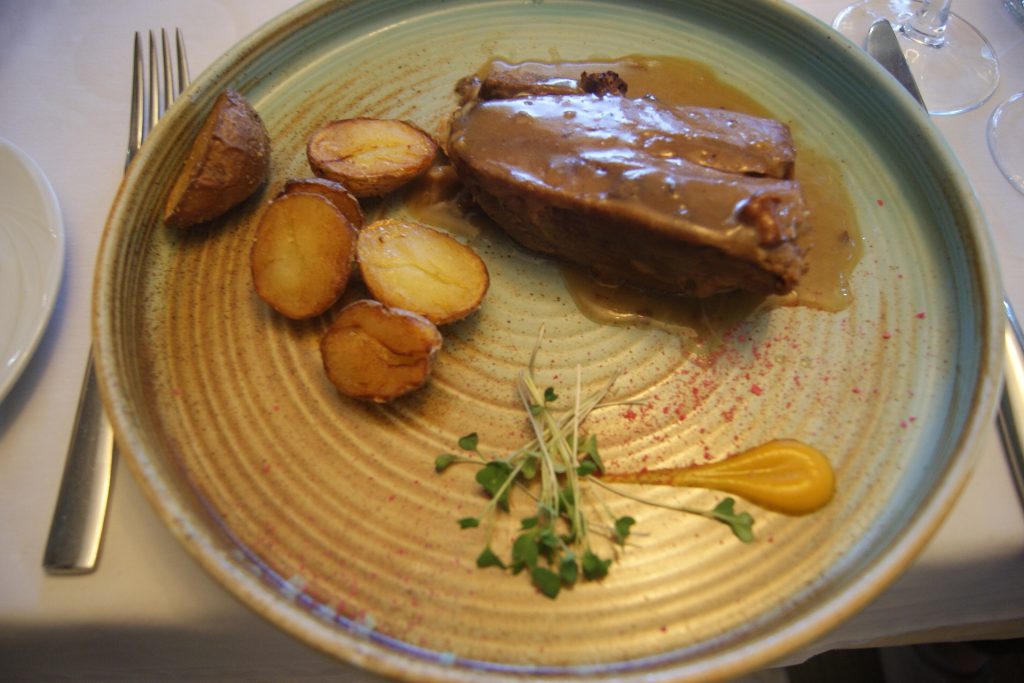
Skopje remains incredibly affordable compared to Western Europe. You can enjoy world-class Macedonian wines at local wineries, feast on massive plates of kebapi (grilled minced meat) and tavče gravče (traditional baked beans), and stay in highly rated accommodations for a fraction of the cost elsewhere in the region.
The City of International Solidarity, written by Tor Kjolberg.
All images (if not otherwise stated) © Tor Kjolberg/Daily Scandinavian.