


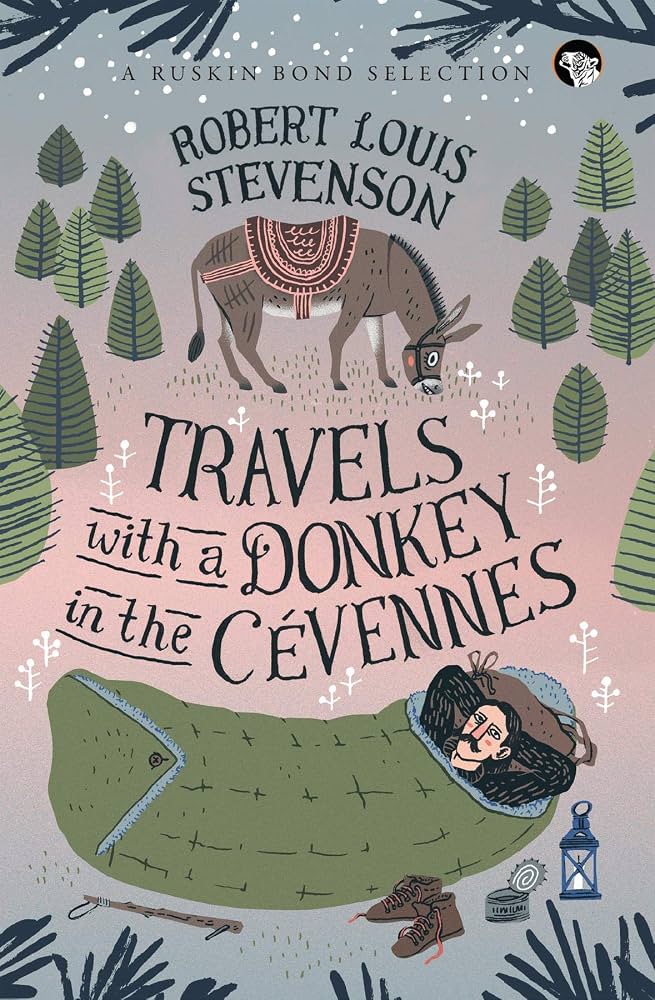
Travels with a Donkey in the Cévennes, written in 1879 by Robert Louis Stevenson, is considered a pioneering classic of outdoor literature. It is among the first popular books to present hiking and camping as recreational activities, and tells of commissioning one of the first sleeping bags. This is the seventh part in our series of Historical Travel Stories.
Stevenson was in his late 20s and still dependent on his parents for support. His journey was designed to provide material for publication while allowing him to distance himself from a love affair with an American woman of which his friends and family did not approve and who had returned to her husband in California.
The book describes Stevenson’s hiking trip in the Cevennes, in South-Central France.
 The narrative largely focuses on Stevenson’s humorous descriptions of his wilful travel companion, Modestine the donkey. Stevenson bought Modestine to carry his belongings for the journey. However, Modestine walks so slowly that Stevenson is “kept [. . . ] hanging on each foot for an incredible length of time; in five minutes it exhausted the spirit and set up a fever in all the muscles of the leg. And yet I had to keep close at hand and measure my advance exactly upon hers; for if I dropped a few yards into the rear, or went a few yards ahead, Modestine came instantly to a halt and began to browse.”
Stevenson’s travel writing, a small part of his nonfiction output, is as outstanding and influential as his fiction. What’s less often acknowledged is the fact that it was Stevenson’s poor health that drove him to travel abroad: he was always in search of relief for his chronic bronchial condition (possibly tuberculosis) and the frequent haemorrhages that dogged his short life.
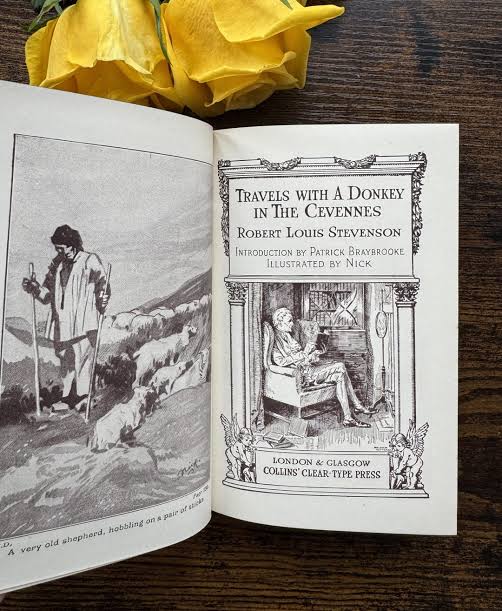
Travels recounts Stevenson’s 12-day, 200-kilometre (120 mi) solo hiking journey through the sparsely populated and impoverished areas of the Cévennes mountains in south-central France in 1878.[1] The terrain, with its barren rocky heather-filled hillsides, he often compared to parts of Scotland.
In his travels, Stevenson visits the monastery Lady of the Snows where a country parish priest and an old soldier are horrified to find that Stevenson is a heretic. He also observes French life, religion, and politics throughout the work.
Stevenson is a master of technique; he knows instinctively how to animate the most mundane moments, as in this passage when he finds himself hopelessly lost in “a random woodside nook in Gevaudan”:
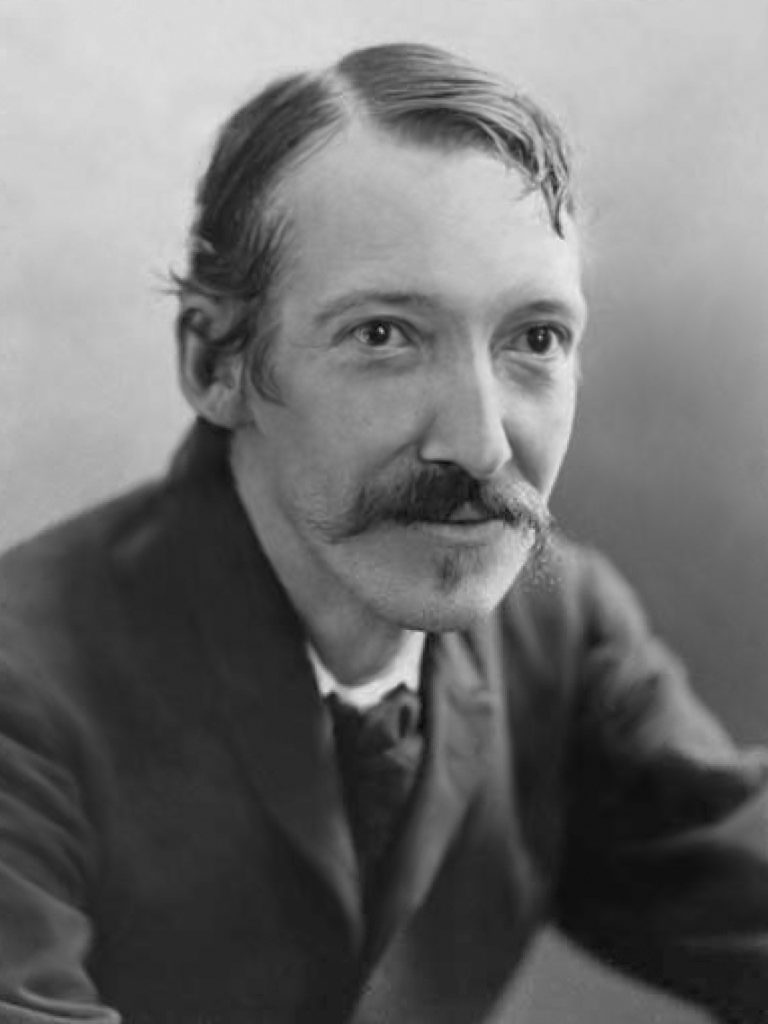
“I have been after an adventure all my life, a pure dispassionate adventure, such as befell early and heroic voyagers; and thus to be found by morning not knowing north from south, as strange to my surroundings as the first man upon the earth was to find a fraction of my day-dreams realised.”
As in his other booj An Inland Voyage, Stevenson is mistaken several times for a pedlar. During his travels he often sleeps under the stars, in a special sleeping-sack made for him in Le Puy.
Travels remains Stevenson’s masterpiece, a “little book” that describes a wayward, inconsequential journey and a strange love affair (with the donkey) in which, as in all the best journeys, the author finds himself renewed, refreshed and, returning from his travels, once more ready for the fray.
The book is dedicated to his friend Sidney Colvin, an art historian and critic who had befriended him when he was unpublished and seeking to develop a career as a writer.
Historical Travel Stories: Travels with a Donkey in the Cévennes, compiled by Tor Kjolberg.
Previous articles in our series of historic travel stories:
Description of Greece
Safarnama – the Book of Travels
Journey Through Wales
The Customs of Cambodia
Gulliver’s Travels