


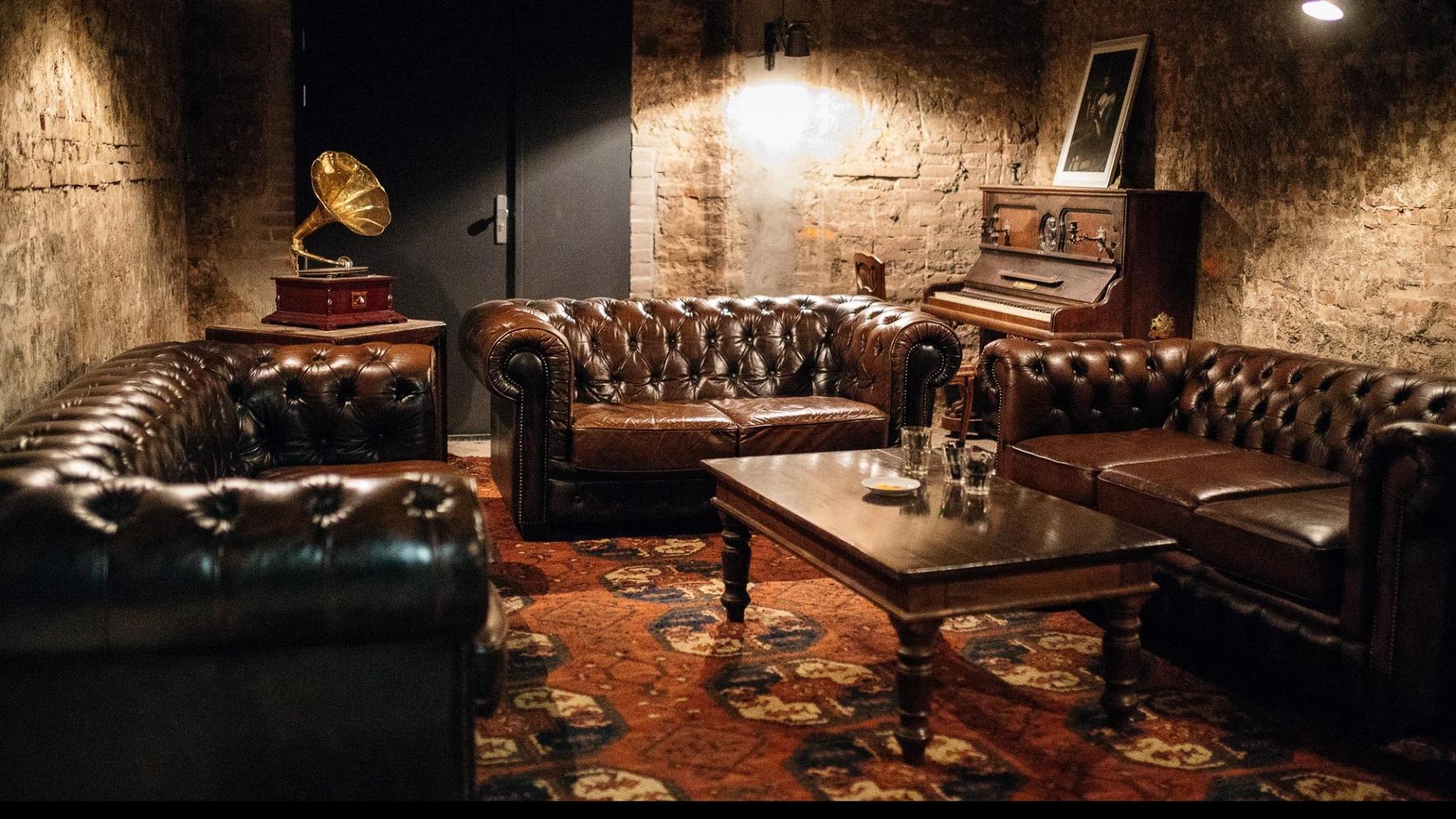
Roald Dahl looked for the unexpected in ordinary situations. The hotel detective looks for the unexpected in ordinary destinations. Dahl’s tales of the unexpected often begin with something familiar. Then the reader discovers something beneath the obvious surface. That is exactly the hotel detective’s aim when he is on the case looking for undiscovered or untold stories.
A hotel may look like a beautiful building, a place to sleep, a restaurant, a spa, or a historic property. But the detective asks: “What’s the story nobody is telling?”
Perhaps the architect had an extraordinary reason for the building’s strange shape. Perhaps the founder made an improbable decision that changed the hotel forever. Perhaps an employee has been there for 40 years and knows something no brochure mentions. Perhaps a particular room has a remarkable history, like Karen Blixen, who stayed several months in room 116 at Brondums Hotel in Skagen, where she wrote part of her book Out of Africa.
 Or Ernest Hemingway, who stayed in room 511 on the top fifth floor of Hotel Ambos Mundos in Havana. The room has been preserved as it was when he lived there roughly from 1932 to 1939—complete with his typewriter and personal items—and functions as a small museum open to visitors.
Roald Dahl had a remarkable talent for taking an ordinary situation and turning it into something unexpected. Dahl grew up in England with Norwegian parents. I have no intention of pretending that I write like Roald Dahl. Frankly, that would be a rather ambitious claim. But I have borrowed one idea from him.
 Look for the unexpected.
Dahl found it in people and situations. I look for it in hotels and destinations. In fact, Roald Dahl visited Strand Hotel Fevik in Norway several summers with his Oscar-winning actress wife Patricia Neal.
A hotel brochure tells you what the visitor can see. The detective asks why it is there.
For example, it may say that the hotel has a magnificent 19th-century staircase. I, the hotel detective, will ask: “Why was that staircase built? Who used it? What happened on it? Why does it look the way it does?”
One characteristic of Dahl’s storytelling is the reversal or surprise. Destination storytelling doesn’t necessarily need a dramatic twist. But it benefits enormously from a revelation. You may be staying in a hotel and realize it was once a hospital or a prison. The Langholmen Hotel in Stockholm once housed some of Sweden’s most notorious criminals.
What Can Roald Dahl Teach a Hotel Detective?
If I stay in a hotel, and I read “Our restaurant serves traditional local cuisine”, it prompts me to ask the following questions: “Who taught the chef? Which dish has a story? Why is that particular recipe still alive?”

The brochure states: “Our hotel overlooks the old harbor.” My brain is constructed to ask myself: “What happened in that harbor? Who built it? Who worked there? What disappeared? What remains?”
This is an excellent Dahl connection. I call it the “Dahl Moment” because every destination has the potential for a “Dahl moment” – the moment when something familiar suddenly becomes fascinating. The key is that the reader suddenly thinks: “I didn’t know that.”
A story doesn’t need to be sensational. In fact, small unexpected truths may be more believable and memorable than manufactured “big stories.” And there’s an important journalistic principle underneath my idea: The detective doesn’t invent the mystery. He investigates it.
Roald Dahl had his Tales of the Unexpected. Hotels and destinations have theirs. They just need someone to investigate them. That’s where the hotel detective comes in.
The Hotel Detective Concept
Every hotel (or destination) has a story. But most hotels tell the same stories.
Beautiful rooms. Excellent service. Wonderful location. Fine dining. Spectacular views. The problem is that your competitors can say exactly the same things.
I work differently. I can become your Hotel Detective.
I investigate your hotel and its surroundings to uncover the stories that have been overlooked, forgotten—or simply never told.
Who built the hotel, and why? What unusual event happened here? Why was the building designed this way? Who are the remarkable people connected with the hotel?
What local legend, secret, tradition, or historical coincidence is waiting to be discovered? What do your employees know that never appears in your marketing?
And, most importantly:
What can your guests experience here that they will still be talking about when they return home? Every hotel has a mystery. Every destination has an untold story. The detective’s job is to find it.
Let me uncover and tell the most intriguing story from your resort.
Tales of the Unexpected: The Hotel Detective Is on the Case, written by Tor Kjolberg.
Feature image (top): Dr. Watson’s escape room.
 Take-away
If you learned something from this article, I believe you’ll also enjoy my recent book, “How I’ve Survived as a Storyteller for Over 50 Years: 12 Survival Techniques.” Get your FREE e-book copy by sending me your name and e-mail address, and including “Storytelling” in the subject line. Thank you for reading!
More articles on Storytelling by Tor Kjolberg you may like:
Stop Selling Postcards
The DMC 7 Steps Untold Story Finder
Brand Storytelling for Nonbelievers
Stop Selling Perfect Destinations
Destination Storytelling: The Questionnaire Is Your Map – Not Your Prison