

. Chinese travel literature from this period took many forms, including narratives, prose, essays, and diaries. Zhou Daguan's account of Cambodian customs in the thirteenth century is a major source for the city of Angkor at its peak. Daguan’s travels are the only surviving written record of Cambodian customs.)
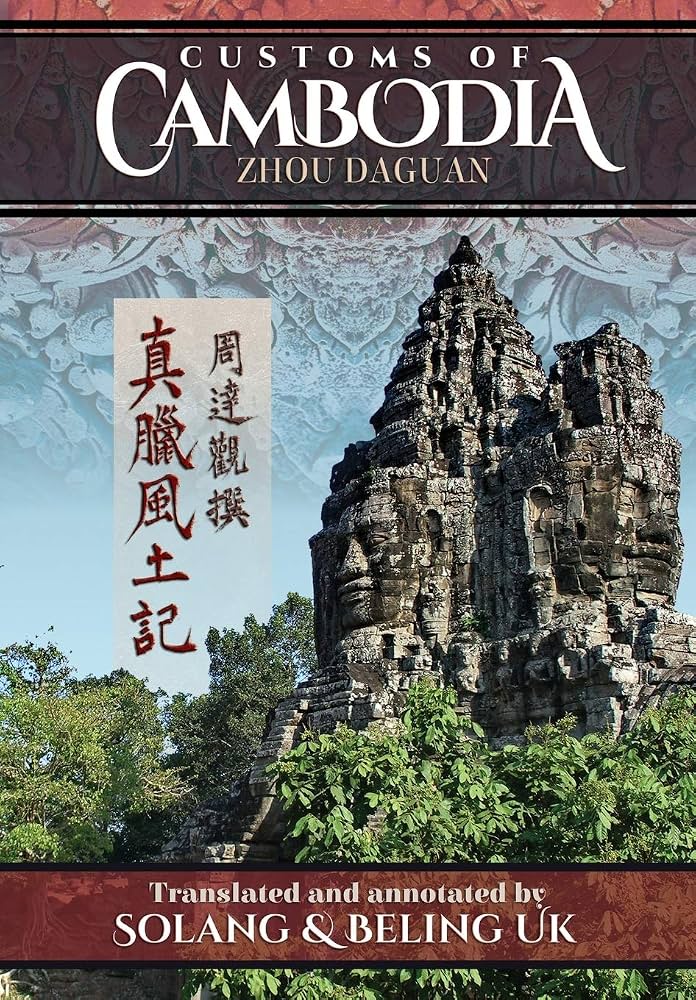
In China, ‘travel record literature’ became popular during the Song dynasty (960–1279). Chinese travel literature from this period took many forms, including narratives, prose, essays, and diaries. Zhou Daguan’s account of Cambodian customs in the thirteenth century is a major source for Angkor at its peak. Daguan’s travels are the only surviving written record of Cambodian customs.
In AD 1296, Zhou Daguan, a member of a Chinese diplomatic mission from the Mongolian emperor Timur Khan to Cambodia, spent nearly a year in the capital, now known as Angkor. He recorded in detail the country’s landscape, flora, fauna, and the social life of its people. This is the only surviving written record that offers us a glimpse into life in Cambodia at the end of the 13th century.
What was life like for ordinary people in the Khmer Empire? Despite its monumental temples and grand cities, much of everyday life remains a mystery. We rely on carvings and foreign accounts — especially those of Chinese diplomat Zhou Daguan — to piece together what life may have been like.
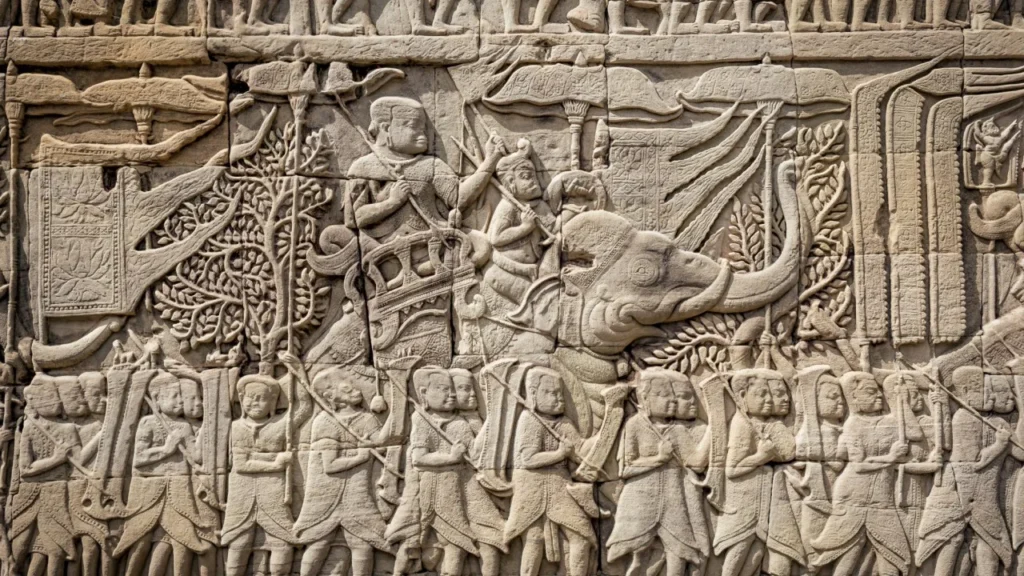
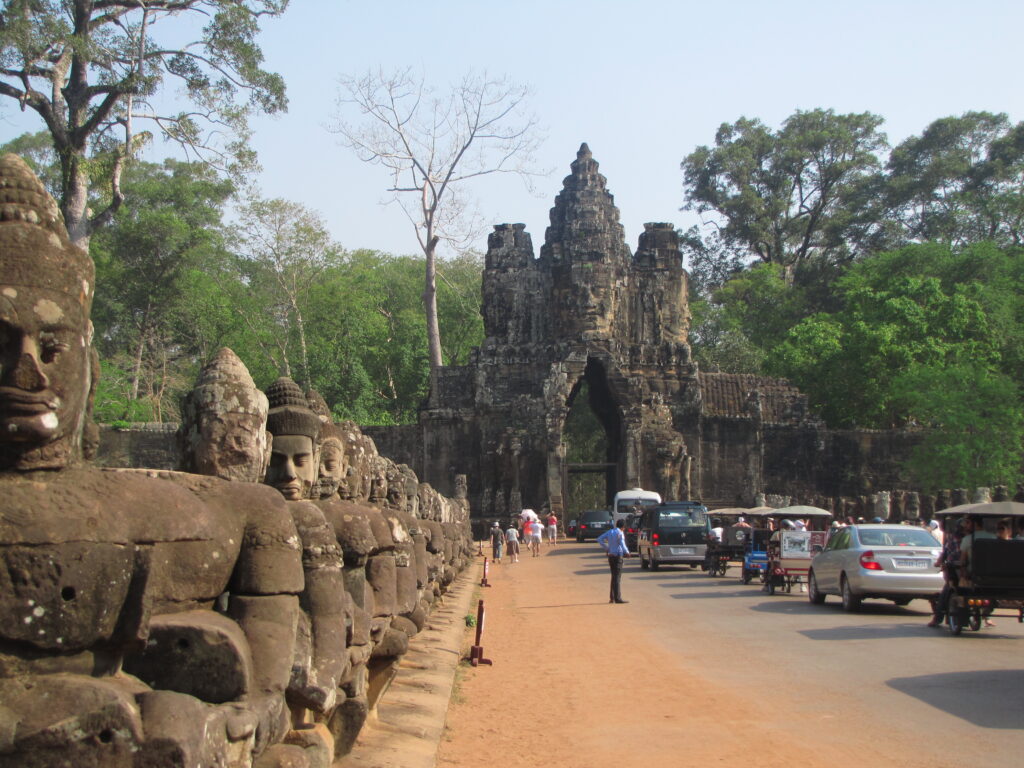
Daguan arrived at Angkor in August 1296. His account is today one of the most important sources for understanding of historical Angkor and the Khmer Empire. Alongside descriptions of several great Buddhist temples, such as the Bayon, the Baphuon, Angkor Wat, and others, the text also offers valuable information on the everyday life and habits of Angkor’s inhabitants.
The English publication is a direct translation of one of the original ancient Chinese editions of Zhou’s record, done by a Cambodian and a Chinese scholar with deep knowledge of the culture and geography of both Cambodia and China. The book helps clarify many previously unidentified places, dignitary titles, plant and animal names, and related terms that have remained unresolved for so long.
During the Khmer Empire, records were kept on paper made from leaf fibers, rice paper, or vellum. Cambodia’s climate is tropical, with hot, humid summers and winters that are only slightly less humid.
Without proper preservation and storage, fibrous materials such as wood, leaves, and paper are susceptible to decay in these conditions. As a result, the Angkor Empire’s paper-based administrative records no longer exist. This leaves large gaps in our knowledge of daily life in the empire.
Zhou was a native of Yongjia, a name often used in his time for modern Wenzhou, Zhejiang. Other historical records also refer to him as Zhou Jianguan and Zhou Dake. In his later life, he used the assumed name Thatched Courtyard Recluse (Cao ting yimin).
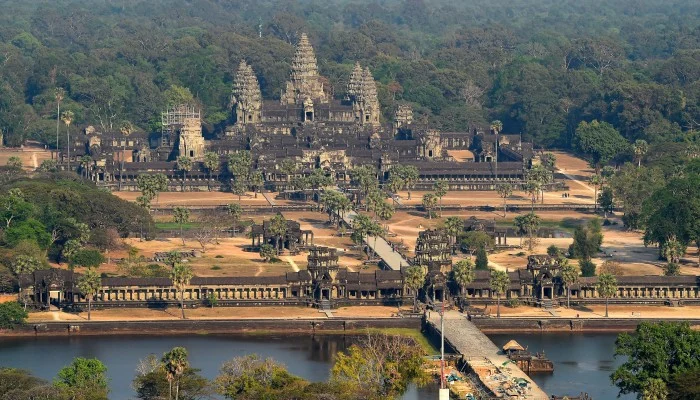
Reading this book is like traveling through time from Wenzhou (China) across the South China Sea, up the Mekong River into Cambodia, through the Tonle Sap River and Tonle Sap Lake into the great walled city of Angkor Thom, where life in the ancient city comes alive in vivid detail. With this book, visitors interested in Angkor can identify different ancient structures related to the various aspects of social life Zhou describes, as well as the many bas-relief carvings on monuments still visible today.
Historic Travel Stories: The Customs of Cambodia, compiled by Tor Kjolberg.
Previous articles in our series of historic travel stories:
The World of the Odyssey: A Palimpsest of the Hellenic Art of Living Well
Sinbad the Sailor
Description of Greece
Safarnama – the Book of Travels
Journey Through Wales