

 is a social satire that imitates this form)
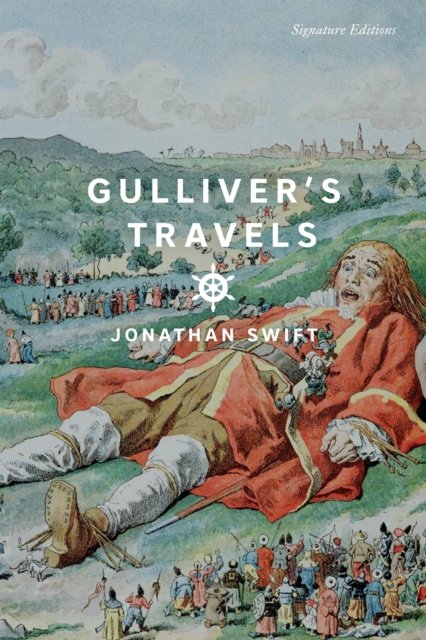
In 18th-century Britain, travel literature was highly popular, and almost every famous writer wrote in the travel-literature form. Gulliver’s Travels (1726) is a social satire that imitates this form, and it’s this week’s historical travel story.
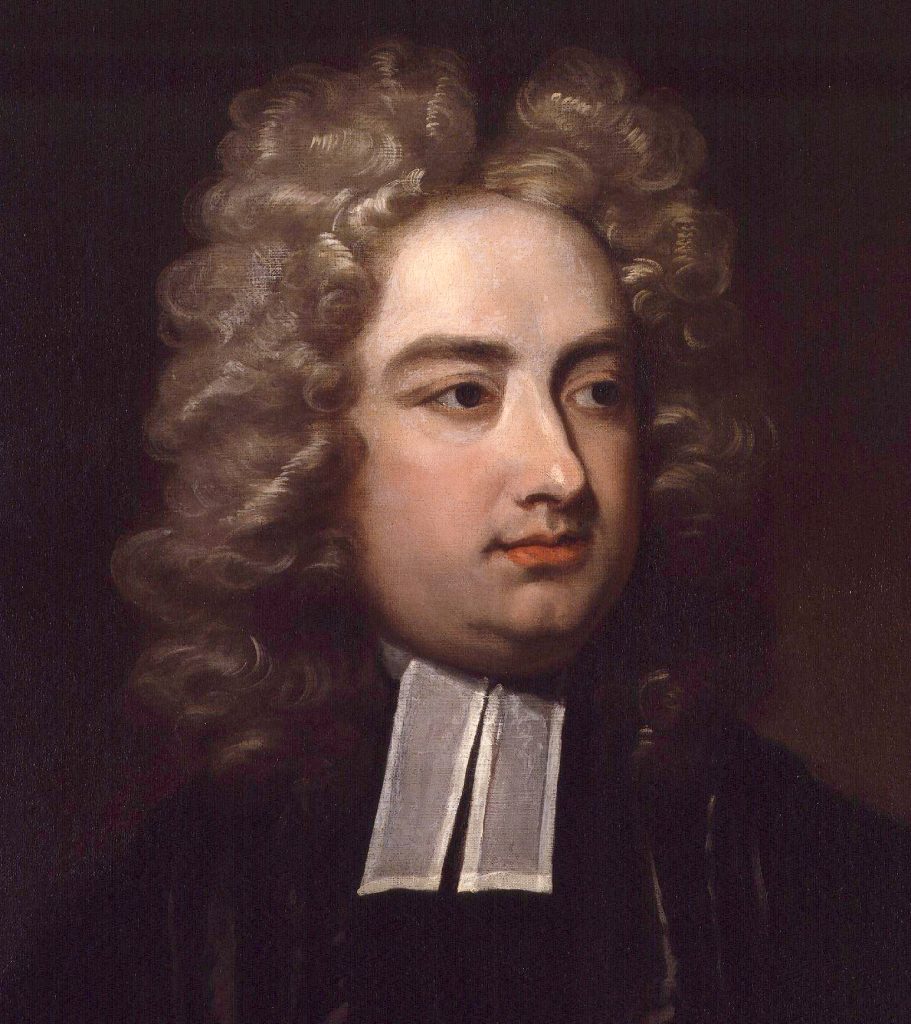
Gulliver’s Travels, originally titled Travels into Several Remote Nations of the World, is a four-part story written by Anglo-Irish writer and clergyman Jonathan Swift. It recounts the story of Lemuel Gulliver, a practical-minded Englishman trained as a surgeon who takes to the seas when his business fails. In a deadpan first-person narrative that rarely shows self-reflection or deep emotional response, Gulliver recounts the adventures he endures on these travels.
The story has become a keystone of English literature and helped shape the novel as a literary form. A parody of the then-popular travel narrative, Gulliver’s Travels combines adventure with savage satire, mocking English customs and the politics of the day.
It is one of the most famous works in both English and world literature and popularized the fictional island of Lilliput. The poet John Gay remarked of the work, “It is universally read, from the cabinet council to the nursery.” The novel satirizes human nature and the imaginary “travelers’ tales” literary subgenre, and it has been adapted for theater, film, television, and radio over the centuries.
The beginning
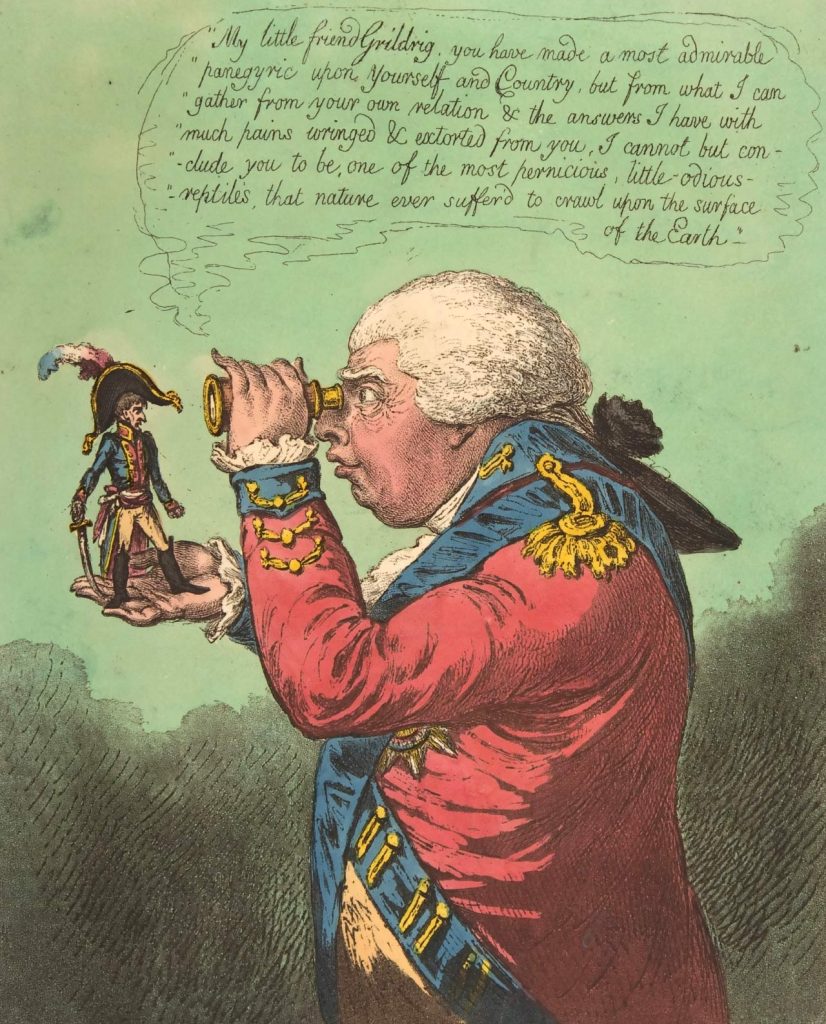
Gulliver’s adventure in Lilliput begins when he wakes after his shipwreck to find himself bound by countless tiny threads and addressed by tiny captors who are in awe of him yet fiercely protective of their kingdom. They are not afraid to use violence against Gulliver, though their arrows are little more than pinpricks.
Overall, they are hospitable, risking famine by feeding Gulliver, who consumes more food than a thousand Lilliputians combined. Gulliver is taken to the capital city in a vast wagon the Lilliputians have specially built. He is presented to the emperor, who is entertained by Gulliver, just as Gulliver is flattered by the attention of royalty.

Eventually, Gulliver becomes a national resource, used by the army in its war against the people of Blefuscu, whom the Lilliputians hate for doctrinal differences over how to crack eggs. But things change when Gulliver is convicted of treason for putting out a fire in the royal palace with his urine and is condemned to be shot in the eyes and starved to death. Gulliver escapes to Blefuscu, where he repairs a boat he finds and sets sail for England.
The second voyage
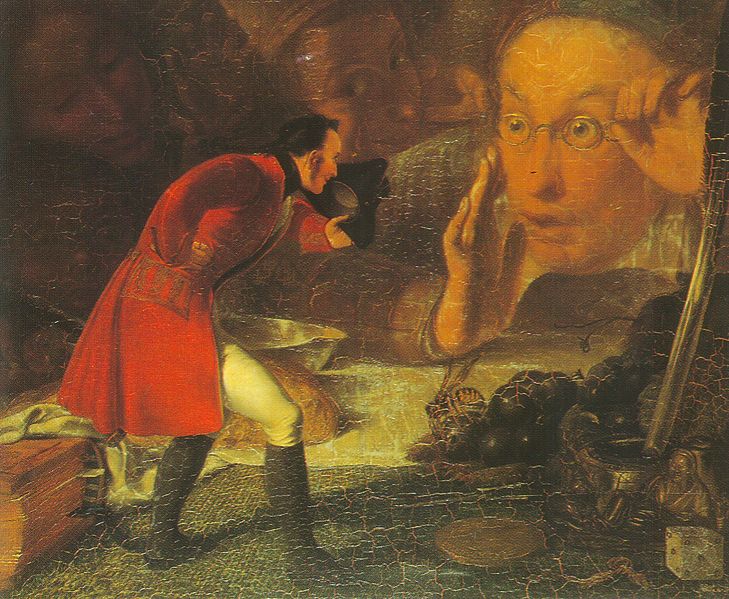
Gulliver’s second voyage takes him to Brobdingnag, a land inhabited by giants. A farm worker finds Gulliver and delivers him to the farm owner. The farmer begins exhibiting Gulliver for money, and the farmer’s young daughter, Glumdalclitch, takes care of him. One day, the queen orders the farmer to bring Gulliver to her, and she purchases him.
He becomes a favorite at court, though the king reacts with contempt when Gulliver recounts the splendid achievements of his own civilization. The king responds to Gulliver’s description of England’s government and history by concluding that the English must be a race of “odious vermin.” Gulliver offers to make gunpowder and cannon for the king, but the king is horrified by the thought of such weaponry. Eventually, an eagle picks Gulliver up, and people his size rescue him at sea.
 The third voyage
Setting out again, Gulliver’s ship is attacked by pirates, and he is marooned near a desolate, rocky island off the coast of India. He is rescued by the flying island of Laputa, a kingdom devoted to the arts of music, mathematics, and astronomy but unable to apply them to practical ends. Rather than using armies, Laputa has a custom of dropping rocks on rebellious cities below.
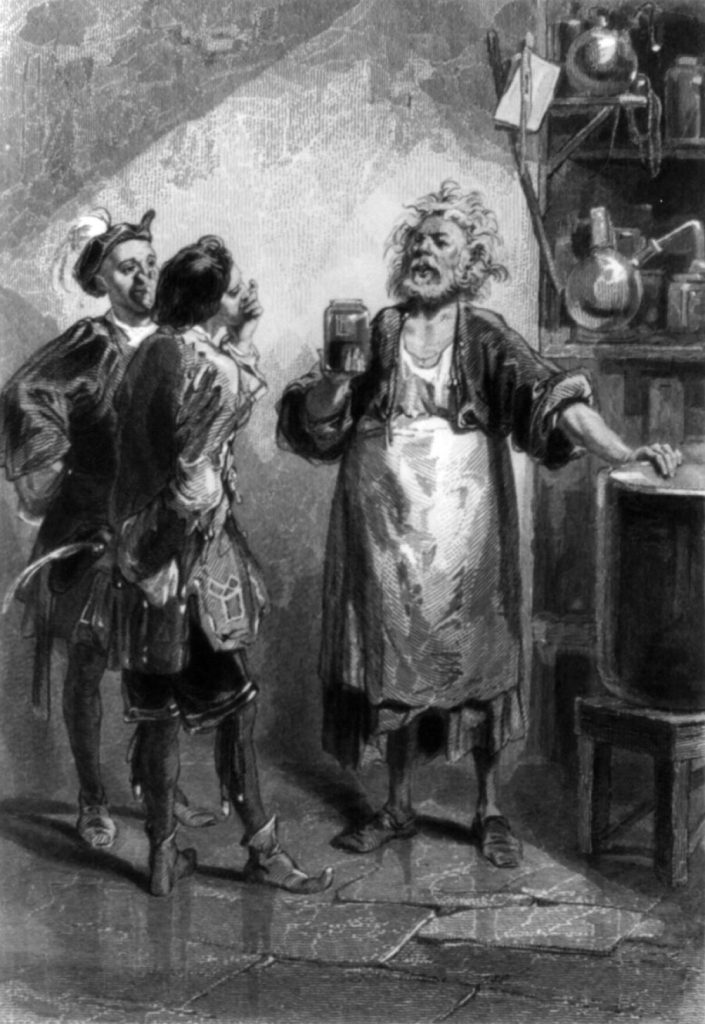
Gulliver tours Balnibarbi, the kingdom ruled from Laputa, as the guest of a low-ranking courtier, and witnesses the ruin caused by the blind pursuit of science without practical results, a satire on bureaucracy and the Royal Society and its experiments. At the Grand Academy of Lagado in Balnibarbi, great resources and manpower are devoted to researching preposterous schemes such as extracting sunbeams from cucumbers, softening marble for use in pillows, learning to mix paint by smell, and uncovering political conspiracies by examining the excrement of suspicious persons. Gulliver briefly mentions his visit to Tribnia (that is, Britain), called by some Langden (that is, England), where the main occupations are plotting and informing. Gulliver is then taken to Maldonada, the main port of Balnibarbi, to wait for a trader who can take him to Japan.
The fourth voyage
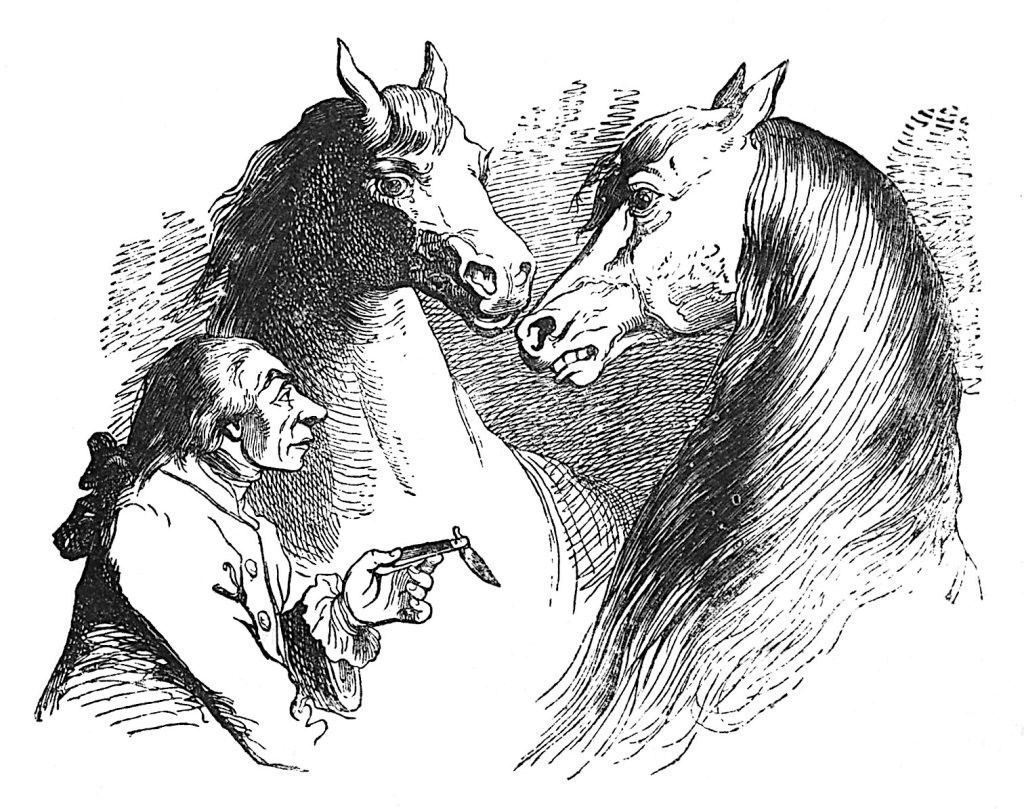
Finally, on his fourth journey, Gulliver sets out as captain of a ship, but after his crew mutinies and he is confined to his cabin for a long time, he arrives in an unknown land. This land is populated by Houyhnhnms, rational-thinking horses who rule, and by Yahoos, brutish humanlike creatures who serve the Houyhnhnms. Gulliver sets about learning their language, and when he can speak, he tells them about his voyages and explains England’s constitution.
Gulliver concludes his narrative by claiming that the lands he has visited belong by right to England as her colonies, even though he questions colonialism.

Reprints and adaptations
Gulliver’s Travels proved so popular upon its publication that several reprints, each with minor textual changes, were issued within a few months. Though there has been debate and controversy over the objects of Swift’s satire and the book’s allegorical meaning, particularly in the latter two adventures, the work’s popularity has never been in doubt.
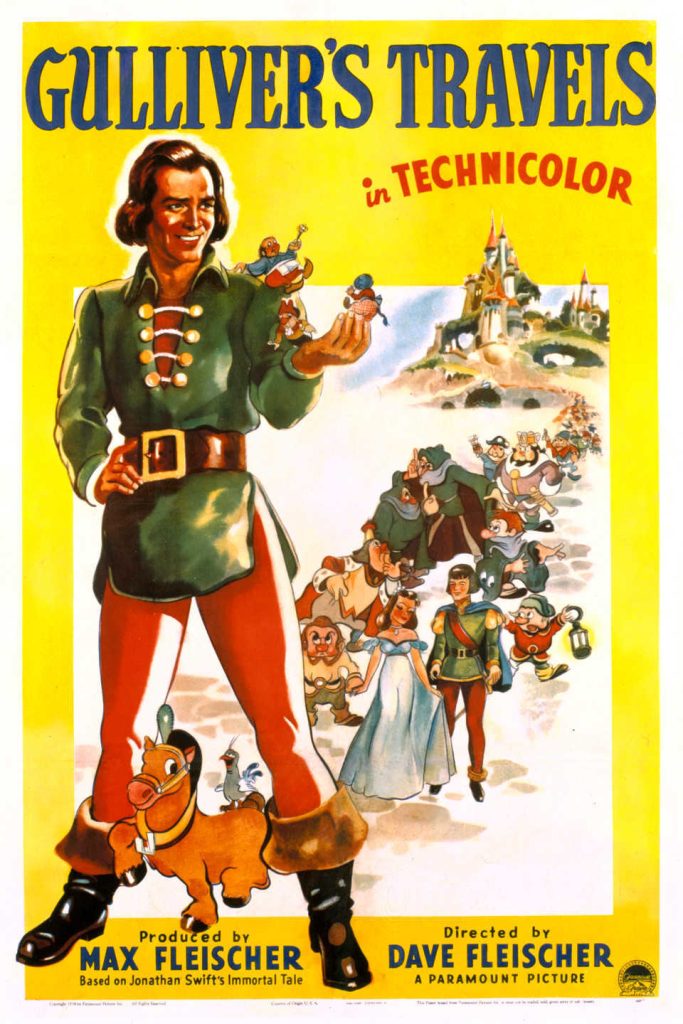
Film adaptations of Gulliver’s Travels have tended to focus on the first two stories. These include an animated film (1939) produced by the Fleischer brothers, a 1977 partially animated musical version starring Richard Harris as Gulliver, and a 2010 family comedy featuring Jack Black in the lead role. A two-part television movie starring Ted Danson was also released in 1996.
Historical Travel Stories: Gulliver’s Travels, compiled by Tor Kjolberg.
Previous articles in our series of historic travel stories:
Sinbad the Sailor
Description of Greece
Safarnama – the Book of Travels
Journey Through Wales
The Customs of Cambodia