


 is often cited as the earliest surviving travelogue.)
A travelogue is a narrative account of a journey, combining personal experiences, cultural observations, and vivid descriptions of the places visited. It can take the form of a book, a film, a blog post, or a spoken lecture, moving beyond a standard guidebook to offer the soul and meaning of a trip. Story of Sinuhe (c. 1875 BCE) is often cited as the earliest surviving travelogue.
This ancient Egyptian text follows a court official who flees into exile in the Levant (modern-day Lebanon/Syria) after the assassination of the Pharaoh, detailing his years of wandering and eventual return home.
The Story of Sinuhe provides an incredibly detailed, realistic look at the geopolitics of the Ancient Near East around 1900 BCE. It acts as an ancient intelligence report, highlighting the vast differences between Egyptian civilization and the tribal regions of the Levant.
***********************************************
Related: The World’s Oldest Surviving Travel Story
***********************************************
The Flight Route and Border Security
Sinuhe’s escape route reveals how strictly Egypt guarded its borders during the Middle Kingdom.
Sinuhe must sneak past the Walls of the Ruler, a massive string of desert fortresses built to keep out Asian migrants (Asiatics).
He hides in the bushes of the Bitter Lakes (near modern-day Suez) to avoid the frontier guards, nearly dying of thirst before being rescued by nomadic Bedouins.
Egyptian Supremacy vs. Levantine Tribes
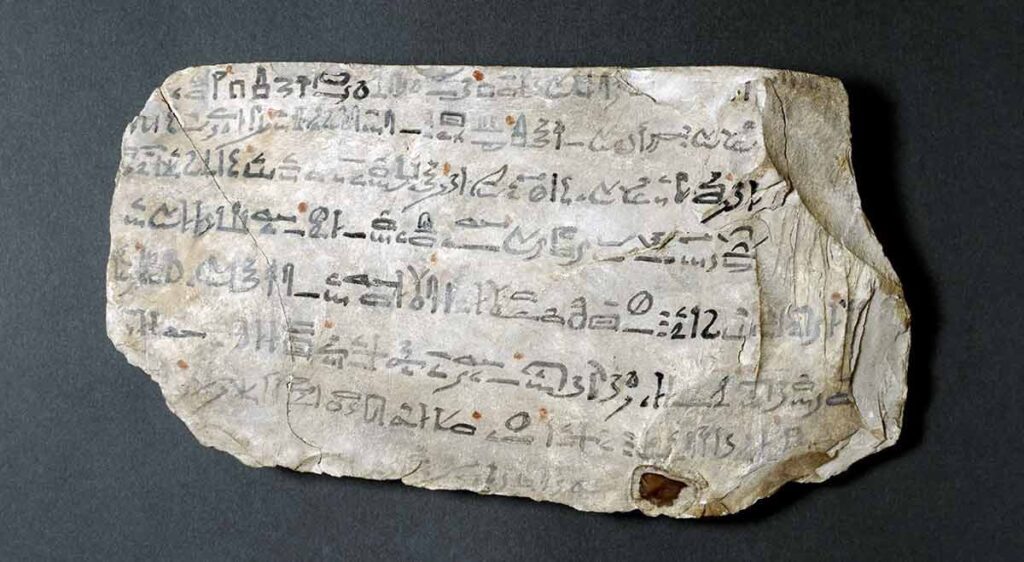
The text contrasts Egypt’s centralized, urban government with the decentralized tribal systems of Retjenu (modern-day Syria and Lebanon).
Sinuhe is taken in by this local ruler of Upper Retjenu, Amunenshi, who recognizes Sinuhe’s high-ranking status in Egypt.
Sinuhe is given the ruler’s eldest daughter in marriage, showing how foreign chieftains used high-status Egyptian defectors to elevate their own political standing.
Sinuhe is granted a rich, fertile borderland called Yaa, packed with figs, grapes, olives, and barley—a strategic move to place an Egyptian general in charge of protecting the tribe’s frontiers.
**************************************
Related: The Story of Storytelling in Marketing
**************************************
Warfare and Border Diplomacy
The narrative shifts into a military chronicle that mirrors Bronze Age geopolitics. Sinuhe commands Amunenshi’s army against invading desert tribes, showcasing how foreign rulers relied on Egyptian military tactics.
Sinuhe fights a local champion in a formal, one-on-one combat to settle a tribal dispute. He wins by shooting the giant through the neck with an arrow, capturing the rival tribe’s cattle and goods.
Pharaoh’s Soft Power and Amnesty
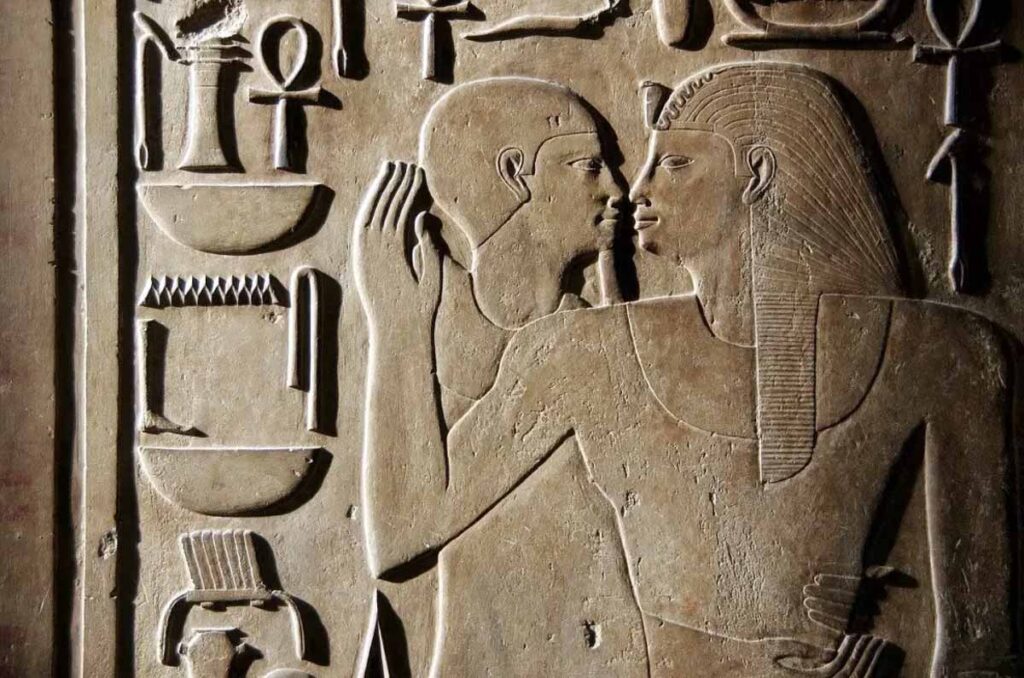
The story concludes with a display of Egyptian political reach. Even while living in exile, Sinuhe cannot escape the influence of the Pharaoh (Senwosret I).
The Pharaoh sends a formal letter offering total amnesty. The decree explicitly warns Sinuhe not to die in a foreign land, as “Asiatics” do not wrap bodies in linen or build proper tombs.
Sinuhe surrenders all his foreign property to his children and returns to Egypt, illustrating that for an Egyptian, political exile in a wealthy foreign land was still considered a fate worse than death.
The World’s Earliest Surviving Travelogue, written by Tor Kjolberg