

Denmark holds good title to the island of Greenland, along with the right to self-determination of the local population. But why is Greenland Danish?
While Denmark technically does not own Greenland, the world’s largest island is still part of the Kingdom of Denmark. It was a Danish colony until 1953, when it was made a part of Denmark. Greenland was finally granted home rule in 1979. The self-government act referendum in 2008 further extended its autonomy, allowing Greenland to govern its own affairs and have its own parliament, prime minister, anthem and flag.
The Danish government still controls areas such as citizenship, monetary policy, the military and foreign affairs. While Greenland has its own local Government, Greenlandic representatives are present in the Danish parliament.
Julianehaab (Qaqortoq) was founded in 1775 by the Norwegian farmer Anders Olesen and soon became an important center for trade. Today Qaqortoq is the central town in south Greenland.
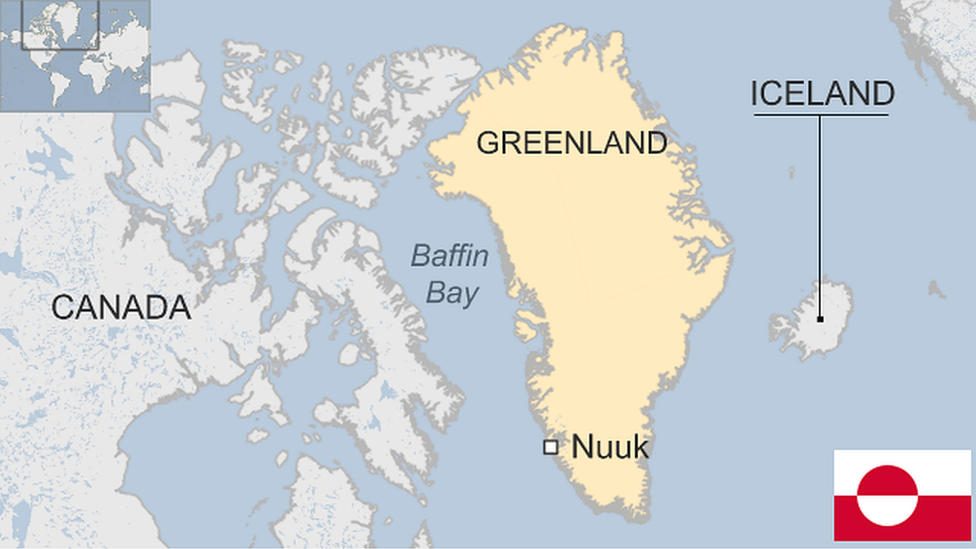
The first Nordic presence in Greenland dates back to Erik the Red, a Norse Viking banished from Iceland for manslaughter, who sought a new future in Greenland around the end of the 10th century. The name “Greenland” referred to the vegetation around Southern Greenland’s fjords, but the name was likely also given in an attempt to lure more Norse settlers to Erik’s settlement in Southeast Greenland. The Norse settlements in Greenland became part of a North Atlantic empire ruled from Norway.
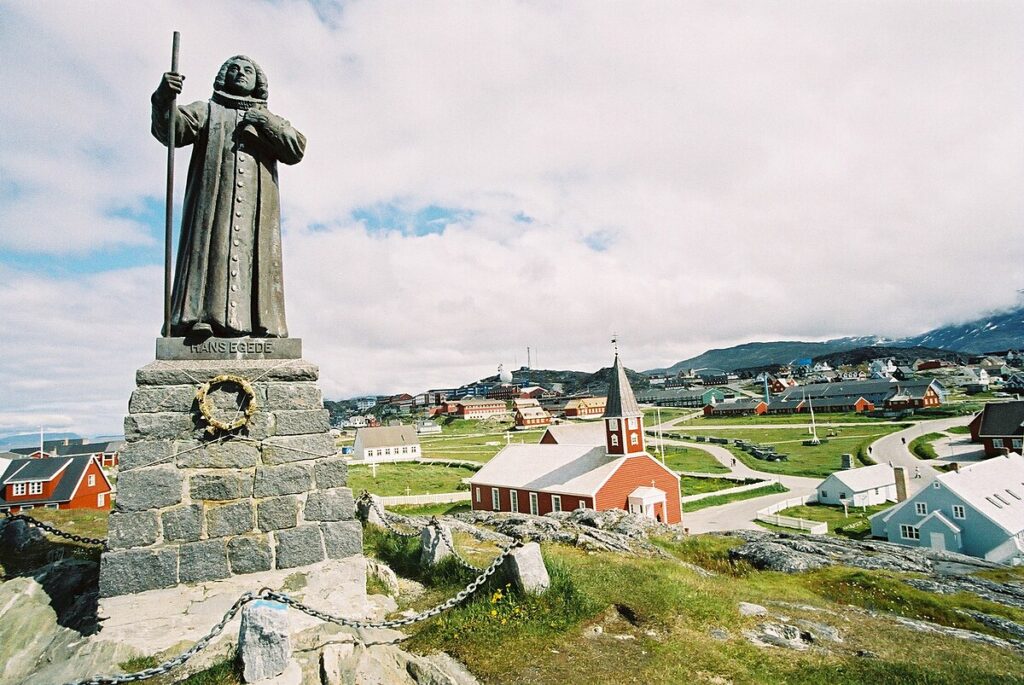
Denmark can point to the arrival of missionary Hans Egede on the island in 1721. It claims to have administered the islands ever since. International law accepts that evidence of the actual effective occupation can be light where the territory is remote and inhospitable.
In view of the complicated relationship between Denmark and Norway at the time, and some Norwegian activity in Eastern Greenland later on, Oslo challenged the Danish claim early in the 20th century.
The Norwegian-Danish influence in Greenland had to compete with other foreign powers, notably the Dutch. In a process that spanned generations, the Inuit were converted to Christianity, and Greenland was both politically and economically tied to Denmark-Norway in a colonial relationship.
When the monarchy of Denmark and Norway broke apart in 1814, Denmark kept Greenland. Danish-Greenlandic colonial relations in the 19th and early 20th centuries were characterized by a Danish paternalistic policy for cautious development, ensuring that Greenland would be a profitable colony. In 1916, Denmark’s rights to Greenland were confirmed by the United States, as part of a deal that facilitated the American purchase of the Danish West Indies. Norway’s Foreign Minister Nils Claus Ihlen had given up any claim to Greenland. He had declared in 1919 that the Danish claim ‘would be met with no difficulties on the part of Norway’.
A controversy concerning a Norwegian claim to parts of Greenland ended in 1933, when the Permanent Court of International Justice, founded by the League of Nations, ruled against Norway.
During World War II, Greenland fell under United States military protection during Denmark’s occupation by Germany when Danish ambassador Henrik Kauffmann signed a defense agreement in 1941 at his own initiative (but in the name of the king). This was also strategically important for the United States due to the proximity of Greenland to the North American continent. Denmark joined NATO in 1949, which opened further opportunities for the United States to place bases in Greenland. The United States holds a military base in Quaanaaq (northern Greenland) to this day.
After World War II, the United Nations pushed for decolonization in Greenland. In 1953, the former colony was incorporated into Denmark and granted two seats in the Danish Parliament. In 1979, Greenland achieved Home Rule, which included the formation of the Greenlandic Parliament, and it gained self-rule in 2009 through the passage of a law that included a ‘blueprint’ for seeking independence. The 2009 law firmly established that the decision to go for independence from Denmark would now rest with the Greenlandic people.
The UN General Assembly determined in Resolution 849 (IX) that ‘Greenland freely decided on its integration within the Kingdom of Denmark on an equal constitutional and administrative basis with the other parts of Denmark.’
This result has been universally accepted. However, since then, campaigners have argued that the indigenous population of Greenland did not approve this move in a referendum.
There is no doubt that the majority of Greenlanders want to use this option eventually. Polls show this. Independence has been accepted in Denmark as well. However, polls also consistently show that Greenlanders do not want independence if the price is the collapse of the Greenlandic welfare state.
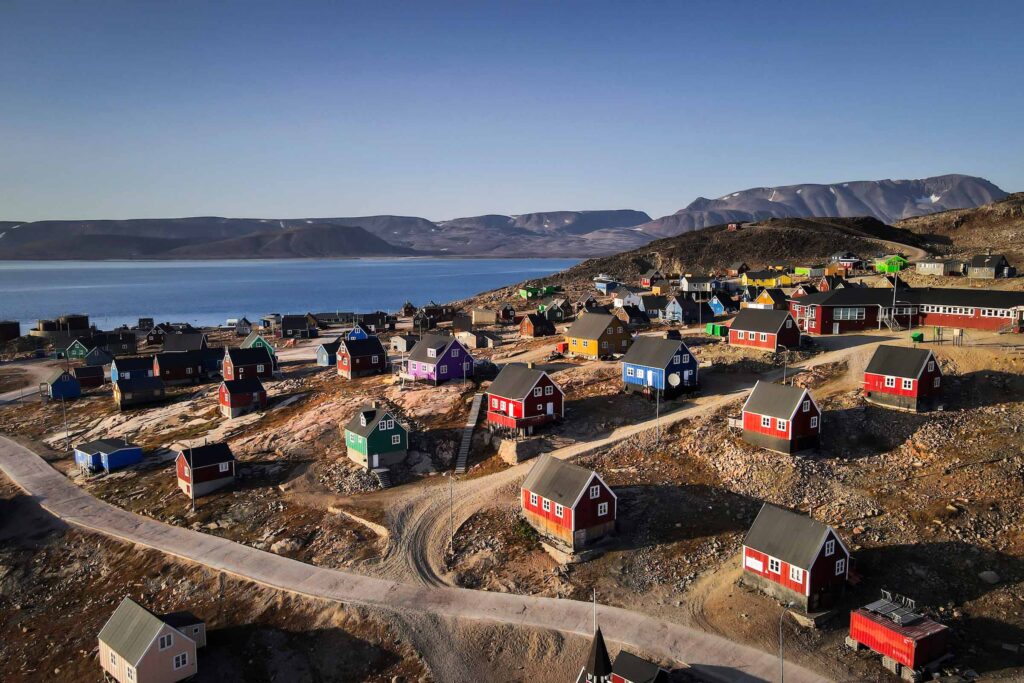
Herein lies the challenge. Greenland is vast, stretching over more than 800,000 square miles, but its population is tiny, consisting of only 56,000 people. Furthermore, the climate remains harsh for most of the year, especially in the North. For these reasons, among others, the Greenlandic government remains dependent on a yearly block grant from Denmark of roughly $600 million, as well as on the Danish state supporting services in areas such as defense, coast guard, and law enforcement.
Greenlandic independence, therefore, depends on substantial continued Danish assistance after independence, something the Greenlandic government has yet to convince Denmark to accept.
Since 2009, the Greenlandic language has been the sole official language of Greenland.
Greenland is not for sale, Mr. Trump
The US has attempted to buy Greenland on repeated occasions over the past centuries, most notably in 1946, when President Truman offered $100 million in gold – a colossal sum at the time. Then as now, Denmark refused.
The extreme Arctic climate, incredible ice sheet, mesmerizing northern lights, vibrant Inuit cultures and modern capital city – there is no limit to what you can discover on this amazing island called Greenland.
Why is Greenland Danish? Tor Kjolberg reporting.
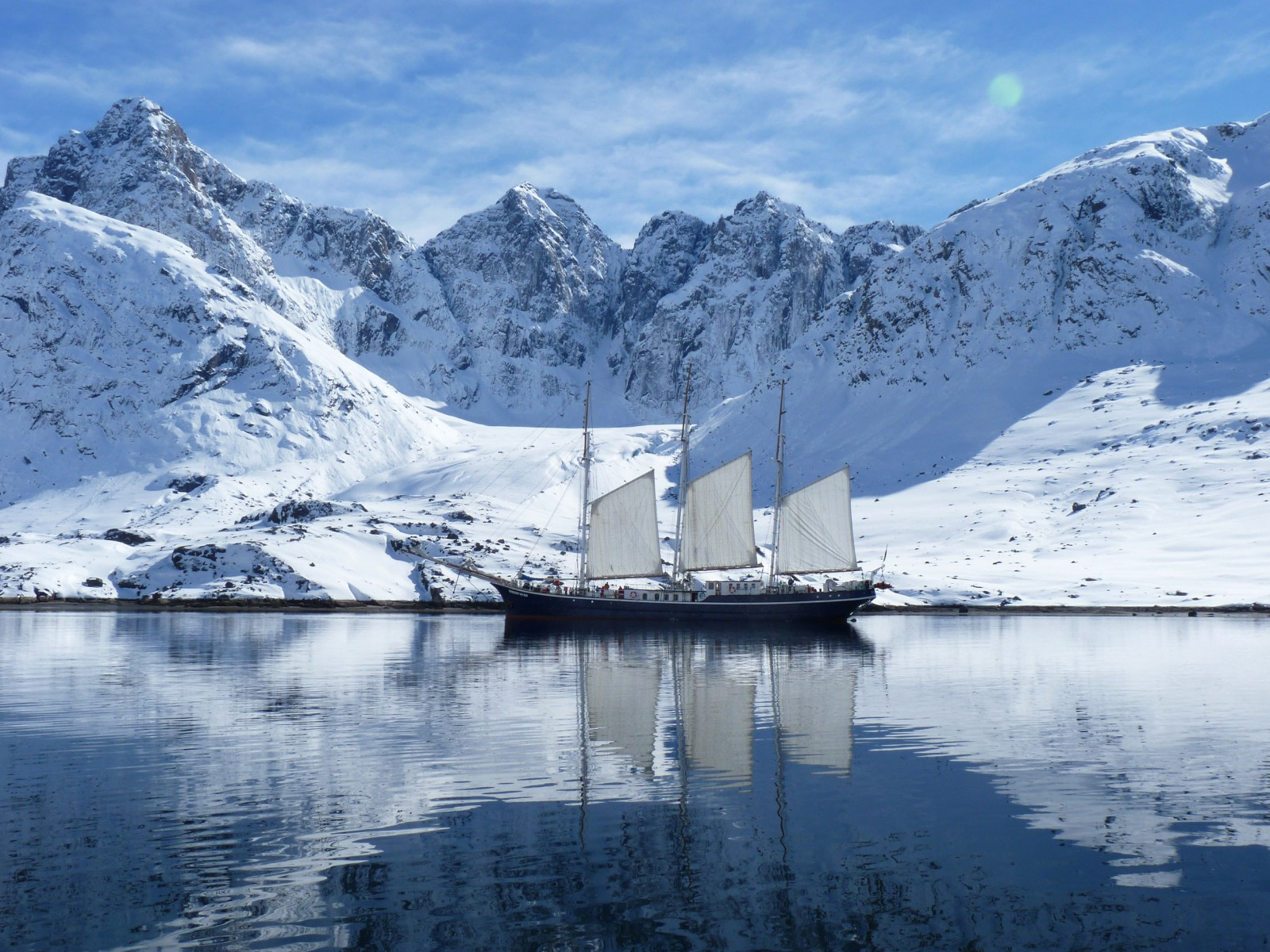
Feature image (top) © Oceanwide Expeditions.