Avoiding Digital Pitfalls While Traveling Through the Nordic Countries

Stay digitally safe while exploring the Nordics. Learn expert tips to protect your data, avoid scams, and browse securely while traveling. Avoiding digital pitfalls while traveling through the Nordic countries.

Introduction

Planning a trip to the Nordics? Between the stunning fjords of Norway, Copenhagen’s sleek cityscape, and Iceland’s dramatic terrain, it’s easy to focus on your itinerary and overlook your digital safety.

But while you’re exploring, cybercriminals may be tracking your every click—especially when you rely on public Wi-Fi, unfamiliar booking apps, or unsecured devices.

In this post, we’ll break down:

  • The most common digital threats in the Nordic countries
  • Easy, expert-recommended strategies to protect your information
  • Tools and habits to keep your trip stress-free and secure

Avoiding Digital Pitfalls While Traveling Through the Nordic Countries, article continues below photo.

Avoiding Digital Pitfalls While Traveling Through the Nordic Countries
Public Wi-Fi is fast but not always secure. Photo: Aussie broadband

Why Travelers Are at Risk—Even in the Nordics

Despite their reputation for safety and innovation, Nordic countries aren’t immune to digital threats.

Here’s why travelers are vulnerable:

  • Public Wi-Fi is fast but not always secure. Hackers can intercept unencrypted data in airports, hotels, and cafés.
  • Fake booking sites and travel apps are on the rise. Cybercriminals mimic trusted platforms to steal payment information.
  • Auto-connect features can backfire. Devices that auto-join networks may latch onto rogue connections set up to harvest data.

6 Smart Ways to Stay Digitally Safe While Traveling

Protecting your digital life abroad isn’t difficult—it just takes a few smart adjustments.

1. Always Use a VPN

A Virtual Private Network encrypts your connection, even on public Wi-Fi.

  • Choose a reliable service like NordVPN, CyberGhost, or ExpressVPN
  • Connect to servers near your location to keep speeds high
  • Set it to auto-connect when using unknown networks

2. Turn Off Auto-Connect

Disable auto-connect to Wi-Fi and Bluetooth before your trip. This:

  • Prevents connections to malicious “honeypot” networks
  • Stops your device from leaking identifying info in the background

Avoiding Digital Pitfalls While Traveling Through the Nordic Countries3. Enable Two-Factor Authentication (2FA)

Secure all key accounts with 2FA, especially:

  • Email
  • Online banking
  • Booking platforms (e.g., Airbnb, Booking.com)

Use app-based authenticators like Google Authenticator or Authy—they’re safer than SMS.

4. Use Trusted Booking Platforms

Stick with well-known, GDPR-compliant services like:

  • Airbnb
  • com
  • Scandinavian Airlines’ official website

Look for HTTPS in the browser and avoid links from unsolicited emails.

5. Pay with Encrypted Methods

Digital wallets like Apple Pay or Google Wallet generate unique transaction codes. These:

  • Add a layer of encryption
  • Prevent your real card number from being shared
  • Are widely accepted across the Nordics

6. Be Selective with What You Share

Avoid real-time posts about your location. Instead:

  • Post updates after you’ve left
  • Keep account settings private
  • Use temporary emails for newsletter signups or bookings

Avoiding Digital Pitfalls While Traveling Through the Nordic Countries, article continues below photo.

Avoiding Digital Pitfalls While Traveling Through the Nordic Countries
Advanced network infrastructure

Choosing Safe Accommodations

The hotel or Airbnb you choose can impact your digital safety.

Ask these questions before booking:

  • Is the Wi-Fi network encrypted and password-protected?
  • Do they use separate networks for guests and staff?
  • Are booking systems compliant with GDPR or PCI-DSS standards?
  • Do they offer digital key access with secure mobile apps?

If you’re particularly concerned about how robust the property’s setup is, look into whether they’ve invested in advanced network infrastructure. Solutions like these improve performance and help prevent traffic interception and lateral attacks, giving travelers an added layer of digital peace of mind.

Tip: Some travelers carry portable VPN routers to create personal encrypted hotspots, even inside hotel rooms.

Staying Digitally Secure While in Transit

Whether you’re flying between capital cities or taking a scenic rail journey through fjords and forests, transit time presents unique digital risks.

Airport and Train Station Wi-Fi: Use With Caution

Free Wi-Fi is widely available in Nordic transit hubs—but it’s not always safe.

  • Avoid logging into sensitive accounts (like banking or email) on these networks
  • Double-check the network name with official signage or staff to avoid impostor hotspots
  • Use your VPN every time you connect, even for brief browsing sessions

While most travelers focus on device-level security, it’s also worth understanding how broader digital infrastructure efforts across the Nordics are evolving. These countries are increasingly integrating long-term cyber resilience strategies to protect public and private sectors, which can indirectly affect traveler safety. For those interested in how such regional efforts shape a safer environment, you can check this to learn more about how systemic protections are being implemented at scale.

Watch Out for USB Charging Stations

USB ports at airports or train stations can expose your device to malware through a tactic called juice jacking.”
 Instead:

  • Use your own charger and plug into a wall outlet
  • Carry a portable power bank for reliable, safe charging on the go

Keep Devices Physically Secure

Travel days often mean distractions and tired moments. That’s when thieves strike.

  • Always keep your phone, laptop, and tablet in sight or secured
  • Use device-tracking tools like Find My iPhone or Google’s Find My Device
  • Consider locking apps with biometrics or passcodes for an extra layer of defense

Use Offline Options Whenever Possible

Before departure:

  • Download boarding passes, maps, and travel guides to your device
  • Save hotel confirmations and train tickets to a secure, offline app or file folder
  • The less you need to connect on the move, the less exposed your data will be
Avoiding Digital Pitfalls While Traveling Through the Nordic Countries
Backup critical files

Pre-Trip Prep: What to Do Before You Board

A bit of preparation can prevent major headaches.

Backup Critical Files:

  • Scan and upload copies of your passport, visas, itinerary, and emergency contacts
  • Store them on encrypted cloud platforms like Dropbox (with 2FA enabled)

Create a “Burner” Email:

  • Use it for bookings and travel-related apps
  • Deactivate it after your trip to reduce exposure

Lock Down Your Devices:

  • Disable Bluetooth and file sharing
  • Set up fingerprint or face unlock
  • Install anti-malware software, even on your phone

Before boarding, it’s also helpful to understand how your personal information is handled in your destination. As an expat or traveler in countries like Norway, Sweden, or Denmark, being aware of local privacy regulations and how they support personal data protection can give you peace of mind. These laws aren’t just formalities — they impact how your booking sites, mobile apps, and even Airbnb hosts handle your data.

Wrap-Up: Explore Freely, Travel Safely

Digital safety isn’t just for tech experts – it’s part of smart travel. Whether you’re navigating the icy streets of Reykjavik or hopping between Stockholm’s islands, staying secure lets you enjoy every moment without worrying about stolen data or compromised accounts.

Here’s what matters most:

  • Use protection tools like VPNs and 2FA
  • Avoid risky behaviors like open Wi-Fi or oversharing
  • Stick to trusted platforms and secure payment methods

With these habits, you’ll explore the Nordics confidently, knowing your digital trail is safe, no matter where your journey takes you.

Avoiding Digital Pitfalls While Traveling Through the Nordic Countries
Lucille Adams

Avoiding Digital Pitfalls While Traveling Through the Nordic Countries, written dedicatedly for Daily Scandinavian by Lucille Adams. Lucille is a researcher and writer in the area of personal and business financial management. Her core focus covers sound, conservative cash flow and investing strategies that unlock long-term value for small business owners, entrepreneurs, families, and retirees.

Feature image (top) © Dan Nelson/Pexels

See the World by Bus

Buses are a cost-effective option, but I rarely use them. They often take more than twice the time to get where you want to go. However, there are highly comfortable buses around, so it might be an option to see the world by bus.

Sometimes it needs a little more organization, sometimes it takes much more time. But in the end, it’s a comfortable way to get you where you want to go.

This is not to say I have never used a bus, but be sure to research the time and danger level at each location before deciding. I have taken my fair share of horrible bus rides, complete with cockroaches, chickens, unpleasant odors, and mechanical breakdowns.

In Cuba, for instance, the long-distance buses are generally well-maintained. I’m referring to the touristy, expensive Viazul buses imported from China. The country of origin is the reason why they are not really comfortable. Obviously, they have been constructed for much shorter passengers, such as the Chinese. But still well maintained.

Just like the train system, make sure you are familiar with the stops, so you know which stop to take for your hotel or other intended destination.

Long-distance buses are likely the primary mode of transportation you’ll use. Some bus trips will likely become what some call a trip from hell, while others will be simply amazing, featuring beds and individual TVs. While most bus trips within the country are easy to book, some websites can help you get started, depending on your location.

Remember to take a screenshot of the bus stop map on your phone so you know if you’re going in the right direction or not. This can save you valuable time, especially if you are checking out a city on a layover.

See the World by Bus
Buses are a comfortable way to get you where you want to go. Photo: busworldeurope.org

Here are some Websites and Apps for Booking Bus Travel:

Eurolines is a long-distance coach company that operates a transnational network with connections spanning the entire continent of Europe and Morocco.

Rome2rio is great for finding multiple land travel options, including buses and trains.

Busbud is an app that helps you find, compare, and book buses worldwide.

See the world by bus
Long-distance buses are likely the primary mode of transportation you’ll use. Photo: BusBud.

12Go Asia is dedicated to serving customers with high-quality, safe, secure, and efficient transportation across a good portion of Southeast Asia.

Wanderu makes it easy to find different bus routes and bus companies, showing you the price and itinerary.

Megabus is a popular coach service throughout the U.S, Canada, and Great Britain. Over 100 cities in North America alone are served, and the luxury single and double-deckers offer free Wi-Fi, in-seat electrical plug-ins, and panoramic windows.

Hop-on-hop-off bus tours offer more than 400 city tours.

See the World by Bus, written by Tor Kjolberg

Feature image (top) © Samsung C&T newsroom.

The Norwegian Greenhouse Home

Norwegian architect Margit-Kristine Solibakke Klev has designed an extraordinary glasshouse situated amidst trees and pasture in the Kongsberg area. Welcome to the Norwegian greenhouse home!

By placing her bespoke building inside a vast glass barn, which was delivered as a kit from Denmark and erected on site in just two weeks, Klev has created a house on an idea originated from the principle of a “house within a house.”

The external skin forms a greenhouse with an area of almost 360 m². Situated within this is a two-storey house made of red pine, with approximately 250 m² of living space. The space between the wooden and the glass house is used by the four-person family as an extended living room from spring to late autumn. It is a place that bridges the gap between inside and outside, noticeably mitigating the raw Norwegian climate during the cooler months. In the summer, the greenhouse then becomes a meeting place for friends and family. Only in the darkest winter does life retreat completely back to the wooden core.

******************************************
Related: Norwegian Interplay Between Architecture, Landscape and Art
******************************************

The Norwegian Greenhouse Home
The largest space is occupied by the kitchen

At the end of a long road that winds through a dense spruce forest, just north of the small town of Kongsberg, sits an enormous greenhouse by a stream. Inside, an abundance of fruit trees—figs, grapes, citrus, cherries, and plums—as well as a variety of vegetables, grow in stark contrast to the surrounding snowy landscape.

Klev grew up on a farm, situated in a rural area to the west of Drammen and Oslo. Now, her mother and father, as well as her brother and sister, all live nearby. She initially studied ecology before switching her attention to architecture at the University of Trondheim, followed by a year in Stockholm. She worked with two practices in Oslo before co-founding her own business, known as Outline, based in Drammen. The Greenhouse Home was one of her first independent projects, and also one of the most personal, shared with her husband, physicist and hydrogen specialist Arnstein Norheim, and their two young children.

The Norwegian Greenhouse Home
The external skin forms a greenhouse with an area of almost 360 m².

The largest space is occupied by the kitchen, which is connected to the greenhouse via a wide glass frontage. In the summer, it can be opened completely, allowing the inside and outside to merge. And Klev has planned another kitchen: it is situated on the roof of the inserted wooden house. It is where the architect likes to host large family gatherings and other celebrations.

****************************************
Related: Spectacular Architecture in the Norwegian Ocean Gap
****************************************

The Norwegian Greenhouse Home
The individual building is rounded off with a succinct and fresh color concept.

This individual building, completely tailored to the architect’s and her family’s requirements, is rounded off with a succinct and fresh color concept. It was developed in collaboration with the color consultant Dagny Thurmann-Moe from Koi Colour Studio. One highlight, among others, is the pink clay floor on the ground floor, which feels soft and warm beneath your feet. Additionally, the furniture fronts, covering materials, curtains, wall colors, tiles, and wallpapers in the bedrooms and bathrooms on the first floor are tailored to the personalities of the family members. Among others, fresh blue, red, and pink tones were chosen, as well as tonalities that lean more towards black. They complete the romantically contemporary interior of this unusual, architect-designed house.

The Norwegian Greenhouse Home, written by Tor Kjolberg based on descriptions from the architects.

All images © Jung-group.com

Finnish Showcase of Brick-Based Construction

Helsinki-based studio Avarrus Architects is helping bricks to make a comeback. Helsingin Muurarimestari is a Finnish showcase of brick-based construction.

”Inspired by Helsinki’s architectural heritage, our goal was to build something that could stand for at least a hundred years, much like the historic brick buildings that continue to grace our city,” says founding partner Pauli Siponen of Avarrus Architects. ”Modern materials and construction methods have certainly brought efficiency and lower costs, but they often come at the expense of durability and repairability.”

Finnish Showcase of Brick-Based Construction
”Inspired by Helsinki’s architectural heritage, our goal was to build something that could stand for at least a hundred years,” says founding partner Pauli Siponen of Avarrus Architects.

Founding partners Pauli Siponen and Niilo Ikonen had a common vision when they created housing that would last for generations and set new standards in sustainability and resilience.

With the advent of concrete-dominated modernism and standardized homebuilding, bricks – once the staple of house construction – gave way to prefabricated elements in the late 20th century, largely because they were cheaper and faster to work with.

*****************************************
Related: The Finnish UFO Houses
*****************************************

Finnish Showcase of Brick-Based Construction
Founding partners Pauli Siponen and Niilo Ikonen had a common vision when they created housing that would last for generations .

Since the late 1950s, the Finnish building industry has mainly used insulated precast elements. While this innovation has accelerated construction and reduced costs, it has also resulted in structures that are more susceptible to moisture damage and more challenging to maintain. In contrast, brick buildings from the early 1900s have demonstrated low maintenance needs and remarkable energy efficiency, as a solid brick structure stores heat in the summer and retains cold in the winter. The solid brick walls of Helsingin Muurarimestari are 60 to 75 cm thick, just as they were a hundred years ago.

”Helsingin Muurarimestari is more than just a building; it is a statement. We are proving that traditional masonry can meet modern standards of sustainability and energy efficiency. This project is about preserving the craftsmanship of the past while embracing the environmental responsibilities of the present.” Niilo Ikonen adds.

Finnish Showcase of Brick-Based Construction
Each of the 29 apartments has been carefully designed to consider natural ventilation, with every unit opening in at least two directions to facilitate better airflow.

The building’s distinct bricks were manufactured by a 60-year-old Finnish family-run atelier Tiileri. Every one of the 300,000 bricks was laid by hand. “Many of the houses built since the 1960s, using precast insulated elements, have been torn down due to moisture damage and extensive repair costs, whereas brick houses built more than a century ago still stand,” says Aaltonen.

Each of the 29 apartments has been carefully designed to consider natural ventilation, with every unit opening in at least two directions to facilitate better airflow. The building’s design not only respects historical methods but also incorporates sustainable features. Natural ventilation reduces the need for mechanical systems, thus lowering energy consumption and promoting a healthier indoor climate. Additionally, the use of breathable materials and the avoidance of plastic or glue in kitchens and cabinets ensure both healthier living spaces and greater longevity of the construction.

Finnish Showcase of Brick-Based Construction
The use of breathable materials and the avoidance of plastic or glue in kitchens and cabinets ensure both healthier living spaces and greater longevity of the construction.

******************************************
Related: Cool Scandinavian Looks
******************************************

Avarrus and Kestävät Kodit Ltd. invite architecture enthusiasts, industry professionals, and the media to explore Helsingin Muurarimestari and witness the blend of traditional building methods and modern innovation. This project marks a significant step forward in the sustainable architecture movement, offering a new perspective on how we can honor the past while building for the future.

Finnish Showcase of Brick-Based Construction
Using bricks is also a stylistic statement.

Using bricks is also a stylistic statement, lending buildings a more bespoke look that, in this case, has become an architectural landmark.

Finnish Showcase of Brick-Based Construction, based on text description provided by the architects. Founding partners Pauli Siponen and Niilo Ikonen of Avarrus Architects had a common vision to create housing that would last for generations and set new standards in sustainability and resilience.

All images © Tuomas Uusheimo

Oslo’s Multicultural Neighborhood

When Nikita Khrushchev visited a resident of Tøyen in Oslo in 1964, he said, “It’s good here, but where do you actually live?” Read on and learn more about Oslo’s multicultural neighborhood.

Tøyen is a residential area located in the central part of Oslo, within the borough of Old Oslo. It’s a vibrant and diverse neighborhood in Oslo, boasting several hidden gems, including street art, delicious food, and local culture.

The densely populated residential area of ​​Tøyen is clustered around the Tøyensenteret, now appropriately renamed Tøyen torg. Over the years, Tøyen has been referred to as Problem-Tøyen, Immigrant-Tøyen, and Trendy-Tøyen.

Oslo’s Multicultural Neighborhood
Tøyen is a residential area located in the central part of Oslo.

North of the subway station, a park features botanical gardens, as well as paleontological, geological, and zoological museums.

However, there’s much more to be discovered in this lesser-known suburb of Oslo, a multicultural haven renowned for its parks and thriving culinary scene. The district is home to the Øya Festival and the X Games; it has its own Tøyen-cola, gourmet restaurant, cocktail bar, and sports club. Tøyen is also home to Norway’s first dedicated youth library and the entrepreneurial initiative Tøyen Startup Village.

Oslo’s Multicultural Neighborhood
Sørligata, Tøyen in the 1950s. Photo: Digital museum.

Tøyen has been associated with social problems, such as poverty, due to the high number of immigrants residing in the area. Indeed, the area is a melting pot of cultures. They have, however, brought with them a diverse range of culinary delights. From spicy Pakistani curries to comforting Ethiopian stews, this neighborhood is a foodie’s dream. But beyond the delicious eats lie a host of hidden treasures – walk down any of Tøyen’s side streets and you’ll discover eccentric cafes, community gardens, and quirky shops.

The turnaround in Tøyen in the late 1990s is somewhat reminiscent of Grünerløkka and later Youngstorget in the city center. Researchers have called for a social housing policy, while the elderly complain that developers are primarily concerned with building cocktail bars and nightlife venues.

Oslo’s Multicultural Neighborhood
Tøyen torg. Photo: Lisbeth Meidell, Oslo kommune.

Tøyen may be a small neighborhood, but it packs a significant cultural punch. In addition to the Hovedøya Abbey Museum and the Intercultural Museum, there is also the Natural History Museum, where you can learn about everything from the Northern Lights to prehistoric mammals. And, of course, no visit to Tøyen would be complete without a stroll through the Botanical Gardens, which boasts more than 7,500 plant species spread over 40 acres.

Oslo’s Multicultural Neighborhood
The Tøyen Park. Photo: Oslo kommune.

Since the 1970s, the authorities have intermittently attempted to attract more affluent households to Tøyen, with the goal of creating greater population diversity and reducing the social disparities between Oslo’s east and west sides. One of the best-known public initiatives is the Tøyen Area Development Program, initiated in 2013. Business actors also seem to have renewed interest in Tøyen as an investment location. In recent years, Tøyen’s attractiveness has increased, and the area has seen an influx of young middle-class residents. However, the housing stability of this group appears to be low, and previous studies indicate that the high rate of moving to Tøyen is primarily due to many majority Norwegian families with children relocating.

Oslo’s Multicultural Neighborhood
Street art at Tøyen. Photo: Facebook.

The area is named after Tøyen Manor (Tøyen hovedgaard), one of the former large estates in Oslo. Tøyen was originally a property owned by the Nonneseter Abbey. The current Manor House was built in 1679 and is one of Oslo’s oldest timber buildings. Norway’s Chancellor Jens Bjelke acquired the property around 1620. When the Chancellor died in 1659, his youngest son, Jørgen Bjelke, inherited the estate. City magistrate Johan Lausen Bull sold the farm to King Frederik VI in 1812, after which the king donated the farm to the University of Christiania. In 1814, work began on the University Botanical Garden. (Wikipedia).

Today, Tøyen is a neighborhood that truly has something for everyone, from multicultural food scene to its offbeat museums and attractions.  Visit Tøyen and experience the vibrant and diverse suburb for yourself, and you’ll likely consider adding it to your Oslo itinerary the next time you’re in town.

Oslo’s Multicultural Neighborhood, written by Tor Kjolberg

Feature image (on top) © Wikipedia

Norwegians’ Top Five Travel Destinations for Easter 2025

Easter is a great opportunity to explore new places. In many of Europe’s major cities, the weather is warmer at this time of year, making it a perfect time for relaxation, sightseeing, and exciting experiences. Here are the Norwegians’ top five travel destinations for Easter 2025.

London, followed by Alicante, Malaga, Berlin, and Krakow, are Norwegians’ top five travel destinations for the upcoming Easter holiday.

London continues to entice those seeking city experiences. In the English capital, you can welcome spring in the many beautiful parks, and on sightseeing trips to, among others, Big Ben, Tower Bridge and Windsor Palace. The classics, Madame Tussauds and the West End musical area, are also on the agenda for most people.

Norwegians' Top Five Travel Destinations for Easter 2025
London continues to entice those seeking city experiences. Photo: Study in London

Off to new adventures – Vienna, Seville, Granada, Bologna, and Paris

For those undecided about their trip, Bologna, Paris, Vienna, Seville, and Granada offer a mix of speed and excitement, along with castles, shopping, and magnificent traditional Easter celebrations.

******************************************
Related: One Million Norwegians on Holiday Abroad Surfing More Than Ever
******************************************

Norwegians' Top Five Travel Destinations for Easter 2025
Ostermarkt Schloss Schoenbrunn. Photo: Vienna.info

Easter markets in Vienna

Vienna is a fantastic city to explore on foot, where you can experience a great deal and get to know the city’s beautiful and historic buildings. When you are in Vienna, be sure to visit castles and palaces, and enjoy a classical concert. The Easter markets are colorful and cozy – the largest are located in front of Schönbrunn Palace and Freyung. In the old town, Europe’s tallest tower is built every year from around 40,000 painted Easter eggs.

Norwegians' Top Five Travel Destinations for Easter 2025
In Spain, Easter is a religious folk festival celebrated with processions, rituals, music, food, family time, and parties. Photo: Seville Traveler.

Spanish Easter processions in Granada and Seville

In Spain, Easter is a religious folk festival celebrated with processions, rituals, music, food, family time, and parties. Seville is perhaps home to the most famous of the many Easter processions. Over 50,000 people participate here, and the procession can last up to 14 hours. The large, beautiful floats are carried by the brotherhoods, who walk in silence and often barefoot. In Granada, Semana Santa, also known as Holy Week, is celebrated. Here too, the city’s brotherhoods lead the way with floats decorated with religious icons, often decorated with fresh flowers, silver, and gold. The temperature in Seville and Granada is now more reminiscent of summer than spring.

********************************************
Read also: Why I don’t Use Airbnb
*********************************************

Norwegians' Top Five Travel Destinations for Easter 2025
From the Lamborghini Museum in Bologna.

Car and motorcycle enthusiasts find happiness in Bologna

The university city of Bologna is renowned for its charming and tranquil atmosphere, particularly when compared to some of the region’s larger cities. For enthusiasts of Italian sports cars, the Emilia-Romagna region offers a unique experience, featuring visits to the Ferrari Museum, the Lamborghini Museum, and the Maserati showroom, as well as the opportunity to witness the factory assembly line in action. Test drives and a racing car simulator are also available. For those who prefer two wheels, a visit to the Ducati Museum and Factory may be right up your alley. Additionally, the region offers visits to vineyards and lakes, which are also well worth experiencing.

Norwegians' Top Five Travel Destinations for Easter 2025
Photo: Seine Bridges Walking Tours.

“Walks along the Seine”. Magical Paris!

Notre Dame Cathedral, Montmartre, the Louvre Museum, the Eiffel Tower, the Arc de Triomphe, the Champs-Élysées, the Luxembourg Gardens, and strolls along the Seine. Shopping, restaurants, and sidewalk cafes – Paris has something for everyone. It is magical to explore the city, taking in all its beautiful buildings and simply enjoying every minute of the sounds, smells, and atmosphere.

Norwegians’ Top Five Travel Destinations for Easter 2025, a press release from Mynewsdesk.

Feature image (on top) © Leonard Cotte DR/Unsplash

New Museum of Modern & Contemporary Art Opened in Trondheim

The former post office in Trondheim, Norway, has been renovated to host a new museum of modern and contemporary Art, Pomo. New Museum of Modern & Contemporary Art Opened in Trondheim.

The old Art-Nouveau building, designed by the Norwegian architect Karl Norum, and finished in 1911, once connected the city of Trondheim to the wider world, and will now connect the city with the world once again by showcasing world-class art.

The new PoMo Museum (Named PoMo – short for ‘Posten Moderne’ (meaning ‘Post Office Modern’)  features colorful interiors by India Mahdavi.  “It’s a spectacular building and the perfect frame for a brand-new museum,” says director Marit Album Kvernmo. The building was once the proud emblem of Norway’s new identity after the dissolution of its union with Sweden in 1905.

New Museum of Modern & Contemporary Art Opened in Trondheim
The old Art-Nouveau building, designed by the Norwegian architect Karl Norum and finished in 1911.

Monica and Ole Robert Reitan have been passionate about visual art for many years. This passion led to their dream of creating a world-class museum in their hometown, Trondheim. They also wanted to make international modern and contemporary art accessible to everyone.

New Museum of Modern & Contemporary Art Opened in Trondheim
“It’s a spectacular building and the perfect frame for a brand-new museum,” says director Marit Album Kvernmo.

“It’s loaded with symbols of national pride thanks to the local materials and traditional handcraft,” says Album Kvernmo. “It was a community space where people got their news and socialized.”

At PoMo you will also find a varied program of events that delve deeper into the world of art, also offering tailored activities for kids designed to inspire learning and reflection. The museum is also dedicated to creating the most outstanding museum shop in Norway, making it a must-visit attraction by itself!

New Museum of Modern & Contemporary Art Opened in Trondheim
PoMo Stairways. Photo: Stokkan lys as.

The new 4,000 sq m museum was reimagined by French-Iranian architect and designer India Mahdavi, in collaboration with Norwegian architect Erik Langdalen. Although the post office closed in 2012, the inhabitants of Trondheim are still fond of it. “There’s no single day when people are not approaching me and telling me that they are looking forward to the building reopening,” said Album Kvernmo. Promo opened its doors on 15 February 2025.

According to the museum, the PoMo collection will be developed into a collection that is relevant, original, and of high international quality.  The collection will represent a broad diversity of artists across gender and origin. “With this foundation, we are building a collection for eternity,” it claims.

New Museum of Modern & Contemporary Art Opened in Trondheim
According to the museum, the PoMo collection will be developed into a collection that is relevant, original, and of high international quality.

********************************************
Related: New Ways of Experiencing Art in Kristiansand
********************************************

‘We wanted to make this an inclusive, joyful space,’ says Mahdavi, who with PoMo marks her first museum project. Alongside this ambition lay the responsibility and desire to honor the heritage of the Grade I-listed building. The four-story building is clad in rusticated granite and mint-green-painted plaster with a crowning corner turret.

New Museum of Modern & Contemporary Art Opened in Trondheim
The new 4,000 sq m museum was reimagined by French-Iranian architect and designer India Mahdavi, in collaboration with Norwegian architect Erik Langdalen.

India Mahdavi and Erik Langdalen have kept as many original features as they could and refreshed the building’s interiors with bright pops of colors – orange for the main staircase and pink for the museum shop.

The permanent collection is complemented by two annual exhibitions featuring major international loans, with several works being shown in Norway for the very first time. The permanent collection will dedicate 60 percent of its budget to female artists. The opening exhibition, titled “Postcards from the Future,” will bring together works held by PoMo with international loans in order to explore how postcards, like artworks, facilitate storytelling.

New Museum of Modern & Contemporary Art Opened in Trondheim
The permanent collection is complemented by two annual exhibitions featuring major international loans, with several works being shown in Norway for the very first time.

PoMo’s opening coincides with the launch of an adjacent theatre, designed by Skibnes Arkitekter. Both buildings, owned by Trondheim resident entrepreneurs Monica and Ole Robert Reitan, aim to activate this city block into a buzzing cultural quarter.

New Museum of Modern & Contemporary Art Opened in Trondheim, Tor Kjolberg reporting.

From Urban Hustle to Tranquil Fjords: A Guide to Moving to Rural Norway

0

The land of Odin and Thor is calling you back. Picture living close to nature, surrounded by lush green fields and the stunning beauty of the Norwegian fjords. It’s time to reconnect with the essence of life in rural Norway, where your backyard offers sweeping views of forests and mountains. This article, From Urban Hustle to Tranquil Fjords is a guide to moving to rural Norway.

Imagine walking the same lands, exploring Nordic folklore in a quiet retreat where family bonds are strengthened, and daily life slows to the rhythm of nature. Moving to rural Norway offers a return to simplicity and peace, far from the hustle of city life.

Why Move to Rural Norway?

Norway’s rural areas offer a peaceful, serene lifestyle that many seek in order to escape the noise and chaos of the cities. The vast landscapes of mountains, forests, and fjords provide an ideal environment for those who cherish nature, silence, and a slower pace of living. Living in rural areas allows you to enjoy activities like hiking, fishing, and exploring nature right in your backyard. Here are some other benefits of moving to rural Norway:

  • Close connection with nature
  • Tranquil environment for family life
  • Access to endless outdoor activities
  • Smaller, tight-knit communities
  • Opportunities to grow your own food and enjoy a sustainable lifestyle

Although rural Norway offers all these benefits, it’s important to remember that living in the countryside can be quite different from urban life. There are fewer services and amenities, and the pace of life is slower. However, the quiet and calm it brings are well worth the adjustments.

Moving to Your New Country Home

The light of Valkyries will not show you the way from a different country.  When relocating to a new country, especially one as unique as Norway, it’s essential to have the guidance of international moving experts who can streamline the process. They can assist with everything from packing and transporting furniture to ensuring your personal items arrive safely and on time. Their support can make the transition to Norway much easier.

an old home in rural Norway
When moving to rural Norway, you can choose from a variety of real estate locations for buying, renting, or building. Photo: Ketut Subiyanto/Pexels
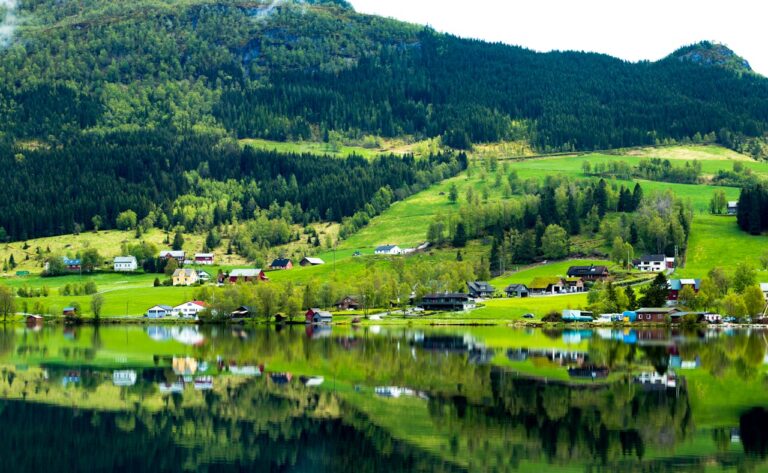
Choosing Your Home in Rural Norway

One of the first tasks upon moving will be finding a place to live. Norway’s rural areas offer a variety of housing options, from charming cabins to modern homes. The availability of larger properties with beautiful views makes rural living especially appealing. Websites like Finn.no and Homestra offer a range of listings, from renting to buying, and you’ll likely find more affordable options than in the bigger cities.

Adjusting to the Seasons

One of the most unique aspects of rural Norway is the drastic change between seasons. Winters can be harsh, with snow covering the land for months, but this is when the country is at its most magical. Imagine living in a winter wonderland, with opportunities for skiing, snowshoeing, and experiencing the Northern Lights.

On the flip side, summer in rural Norway offers long days of sunshine, with the sun barely setting in the far north. The endless daylight provides the perfect chance to enjoy outdoor adventures, hiking, and exploring the stunning landscapes. Be prepared to adjust your routine to fit the changing seasons, and remember that each one brings its own special beauty to the landscape.

An old home in rural Norway
Adjusting to seasons might be a little bit harder, but it is all beautiful nature. Photo: Ikloeppel/Pexels

Coastal vs. Continental Rural Norway

Coastal rural Norway and continental rural Norway offer distinct living experiences. The sea areas are known for stunning fjords, islands, and access to the sea. These coastal regions are perfect for those who enjoy maritime landscapes and activities. The weather is milder, thanks to the Gulf Stream, which brings less harsh winters. Cities like Bodø and Ålesund offer beautiful views and a vibrant maritime culture.

In contrast, continental rural Norway is characterized by rugged terrain and colder winters. The temperatures are lower, and snowfall is heavier. Cities like Røros, a UNESCO World Heritage site, and Lillehammer, known for winter sports, offer a traditional atmosphere. Whether you prefer the peaceful coast or the mountainous interior, both regions provide an idyllic rural lifestyle, perfect for connecting with nature.

Sunrise in rural Norway during winter
Coastal rural Norway offers maritime landscapes and milder weather, while continental rural Norway provides rugged terrain, colder winters, and traditional charm. Photo: Roland Juhasz/Pexels

Moving to Rural Norway: Embrace a Simpler Life in Rural Norway

Moving to rural Norway offers the chance to reconnect with nature, live in a peaceful community, and enjoy a slower pace of life. While the transition may take some adjustment, the rewards are well worth the effort. From breathtaking landscapes to close-knit communities, rural Norway has much to offer those seeking a simpler, more fulfilling life. If you’re ready to embrace the beauty of the outdoors and step away from the city’s hustle and bustle, rural Norway could be the perfect place for you to call home.

Moving to rural Norway
Maria Cross

From Urban Hustle to Tranquil Fjords: A Guide to Moving to Rural Norway, written dedicatedly for Daily Scandinavian by Maria Cross. Maria is a professional content writer and a moving consultant at A2B Moving and Storage DC, with a passion for different cultures and mythologies. Through her writing, she shares practical moving and lifestyle advice to help people relocate and adjust to new settings. In her free time, Maria studies Nordic myths and writes poetry.

Feature image (on top) © Nextvoyage/Pexels

Smart City Sweden

Smart City Sweden is a state-founded export platform that initiates cooperation between Sweden and other countries within smart and sustainable city solutions.

Stockholm is the capital of Sweden and the country’s largest city. Built on 14 islands and connected by over 50 bridges, the city boasts a beautiful old town as well as very modern buildings. In 2016, the city, with almost one million inhabitants, topped the Ericsson smart city index. Today, it has dropped by a few positions, but it still features in the top 30 of the world’s smartest cities. Here are the Top 10 (2024):

Smart City Sweden
Smart Cities are urban areas that leverage technology and data-driven solutions to improve efficiency, sustainability, and the overall quality of life for their residents.
Rank City                              Change in rank Change in Rank
1 Zurich                                           0 0
2 Oslo                                              0 0
3 Canberra                                       0 0
4 Geneva                                        +5 +5
5 Singapore                                    +2 +2
6 Copenhagen                                 -2 -2
7 Lausanne                                    -2 -2
8 London                                        -2 -2
9 Helsinki                                       -1 -1
10 Abu Dhabi                                  +3 +3

**********************************************
Related: Danish Architect on What a “Real City” should look like
**********************************************

Smart City Sweden
Despite losing some momentum during the pandemic, Stockholm is again on a journey to becoming the world’s smartest city by 2040.

Smart Cities are urban areas that leverage technology and data-driven solutions to improve efficiency, sustainability, and the overall quality of life for their residents. These cities integrate various systems, such as transportation, energy, infrastructure, and public services, to create a more connected and intelligent urban environment.

Six regional offices around Sweden welcome international delegations on the decision-making level with an interest in implementing Swedish solutions in their local context.

Despite losing some momentum during the pandemic, Stockholm is again on a journey to becoming the world’s smartest city by 2040. This is the city government’s self-declared goal. It goes hand in hand with becoming carbon-neutral by 2040. Digital infrastructure will be key to “facilitating the services of the future”, ranging from IoT to 5G and data centers for edge processing and edge computing.

Sweden and the U.S. are actively involved in research and innovation related to smart cities, recognizing their potential to address urban challenges and support the green transition. Both Sweden and the U.S. recognize the importance of collaboration and knowledge sharing in the smart city domain. They actively participate in international networks, engage in partnerships, and share best practices to foster global advancements in smart city technologies and strategies. By investing in research and innovation, the aim is to create sustainable, inclusive, and resilient cities that enhance the well-being of their residents while minimizing environmental impact.

Smart City Sweden
Sweden and the U.S. actively participate in international networks, engage in partnerships, and share best practices to foster global advancements in smart city technologies and strategies.

Smart City Sweden gathers best practices from Sweden within six areas: EnergyClimate & EnvironmentMobilityDigitalizationUrban planning and Social sustainability. The organization tailors its visit programs depending on the needs of the visitors.

******************************************
Related: The Danish 15-Minute Concept
******************************************

Stockholm’s smart city strategy places great importance on sustainability, stating that a smart city is a sustainable city. Connectivity, publicly accessible data, smart IT platforms, sensors, and innovation are the pillars of the Swedish city’s plans for its urban future. Together with the employees, residents, businesses, and academia, a strategy for a smart and connected city was developed and approved by the City Council of Stockholm in 2017.

Sweden has been at the forefront of smart city initiatives, with a strong emphasis on sustainable urban development. Swedish cities prioritize research and innovation in areas such as renewable energy, energy-efficient buildings, intelligent transportation systems, and digital infrastructure. The country invests in research institutions, startups, and collaborative platforms to develop and test cutting-edge technologies, including advanced sensors, data analytics, and Internet of Things (IoT) solutions. Swedish smart city projects often focus on optimizing resource usage, reducing emissions, improving mobility, and enhancing citizen engagement through technology-driven solutions.

Smart City Sweden’s headquarters are located in Stockholm, but there is a lot to discover in all parts of Sweden. On its website, or by visiting one of the six regional offices, you can explore smart and sustainable city solutions from all over the country.

The City of Stockholm regards data as a community resource. The government works with open data wherever possible, hoping that more actors will use the city’s data to develop new and smart services. Providing this data in a standardized way is important for external developers to freely use it. Currently, open data from the city’s businesses and administrations are available on dataportalen.stockholm.se.

The U.S. also places significant importance on smart city research and innovation. Many U.S. cities are actively pursuing smart city strategies to address urban challenges and enhance sustainability. Research efforts in the U.S. focus on areas such as smart grids, energy management, intelligent transportation, urban mobility, and digital governance. Collaborations between academic institutions, technology companies, and local governments drive innovation, leading to the development of scalable and replicable smart city solutions. The U.S. government supports research and development initiatives through funding programs and grants, encouraging the adoption of emerging technologies and data-driven approaches in urban planning.

Smart City Sweden, reported by Tor Kjolberg

Norway Buys Submarines from Germany

0

Germany and Norway shelled out 5.5bn euros for six 212CD submarines between them in 2021: two for Germany, four for Norway. A new order for half a dozen more will even those numbers to six boats each. Read on and learn more about why Norway buys submarines from Germany.

Germany announced the submarine contract extension as part of €21 billion in defense spending approved by the Bundestag, the country’s parliament. Other approvals including the go-ahead for the F127 anti-air warfare frigate, Elbit Systems’ PULS rocket artillery, missiles for the Patriot air-defense system, reactive armor for the Puma infantry fighting vehicle and the development of sea-to-air missiles.

************************************
Related: Swedish Gripen Jets Joined NATO
************************************

Norway Buys Submarines from Germany
“The turning point in history is finally arriving in the maritime sector,” says Oliver Burkhard, CEO of ThyssenKrupp.

ThyssenKrupp Marine Systems is thus receiving with this comprehensive order expansion in the current 212CD program one of the largest orders in the recent history of the company. The President of the Bundeswehr Procurement Agency, Annette Lehnigk-Emden, and CEO Oliver Burkhard officially signed the contract in Koblenz on the basis of the parliamentary approval. An order of this size will involve advance payments that will have a positive impact on cash flow in the current financial year and will be used accordingly for the milestones of the order.

The 212CD is a hefty craft. At 74 meters long it is significantly larger than the 212A currently operated by the German Navy or the Ula-class of the Royal Norwegian Navy. “The cooperation with our Norwegian partner will provide our two armed forces with new opportunities for deployment in the context of national and alliance defense, particularly on NATO’s northern flank,” Lehnigk-Emden said in the statement.

Oliver Burkhard, CEO of ThyssenKrupp, emphasized the importance of the German contract extension: “The turning point in history is finally arriving in the maritime sector. We are delighted at the trust that the German government has once again placed in us with the additional order for the world’s most modern conventional submarine. We are making a decisive contribution to the changing times and strengthening the defense capabilities with this strategically important project between Germany and Norway.”

Norway Buys Submarines from Germany
212CD compared to 212A

This doubling of the 212CD fleet by the two Nato partners reflects obvious concerns about Russian machinations in the Baltic and further north. In Germany in particular, perhaps the acquisition will renew debate about the degree to which the country really wants to get over itself and finally grow into a military power commensurate with its economic and diplomatic stature.

************************************
Related: The World’s Largest Airship Fleet – In Finland
************************************

Norway Buys Submarines from Germany
“The cooperation with our Norwegian partner will provide our two armed forces with new opportunities,” says President of the Bundeswehr Procurement Agency, Annette Lehnigk-Emden.

“With the expansion of the 212CD order, other countries could join this project in the near future. Our strong position has now become even stronger. We are well on the way to achieving our goal of independence,” says Oliver Burkhard.

Norway Buys Submarines from Germany, reported by Tor Kjolberg