If you’re looking for «wonderful wonderful Copenhagen» you’re guaranteed to find it in the capital’s gabled Tivoli Gardens.
No one enjoys this classic amusement park more than the Danes themselves; since the day it opened I 1843, a visit here has been a much-loved summertime tradition. More than 100,000 twinkling white Christmas lights and 400,000 flowers set the fun-filled (and in the evening, romantic) scene.
The park’s 20 leafy acres feature carnival games, marching bands, and amusement rides (the creaky 1914 roller coaster is the same vintage as the merry-go-round of tiny Viking ships).
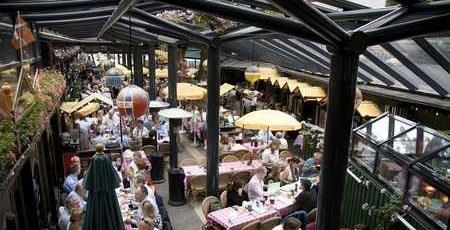
Dance halls, beer gardens, and a full schedule of mostly free open-air stage performances keep young and old entertained and coming back. There are dozens of restaurants and food pavilions – some of them very elegant but pricey. Traditional Tivoli fare of pølser (hot dogs with fried onions) is usually heaven enough for most.
Divan 2 was the most renowned restaurant in the gardens, in operation since they were first built in an area well outside the city center by King Christian VIII. It was Tivoli’s most refined (read: expensive) dining venue with an impeccable French menu, but declared unfortunately bancruptcy before Tivoli opened its doors for the 2011 summer season.
However the Nimb Terrace is an excellent alternative. Serving seasonal cuisine with a focus on local harvest, flavour and eye pleasing presentation, the restaurant invites diners to explore the creative menu and enjoy the same-sized dishes in any preferred order.
131-year old Grøften, ‘The Ditch’, is one of Tivoli’s oldest and most venerable establishments. Part of the restaurant stands more os less as when it opened. Since then, the restaurant has branched out covering quite a large outdoor seating area, parts of which bear names such as Granny’s Garden or The Schnapps Gallery.
Grøften specializes in traditional Danish fare prepared as Granny herself would do. Home made rolled pork sausage, roast pork and fried fillet of plaice are among the age-old favourites. This restaurant is very well-known in Denmark since it is frequented by real as well as wannabe celebrities, who convene here to see and be seen. If you are lucky enough to rub elbows with someone famous, you can wash down the experience with a nice glass of schnapps – there are more than 12 kinds to choose from.
Tivoli, said to have inspired Walt Disney to create Disneyland, is light years removed from the archetypical American amusement park. Now wonder we’ve named Copenhagen Scandinavia’s fun capital.
Tivoli Gardens will be open from April 10 this year.
Didn’t win a Nobel prize last year? Sorry to hear that… but don’t worry you can still visit Stockholm this winter. Our Daily Scandinavian team introduces the Swedish capital and its hotspots.
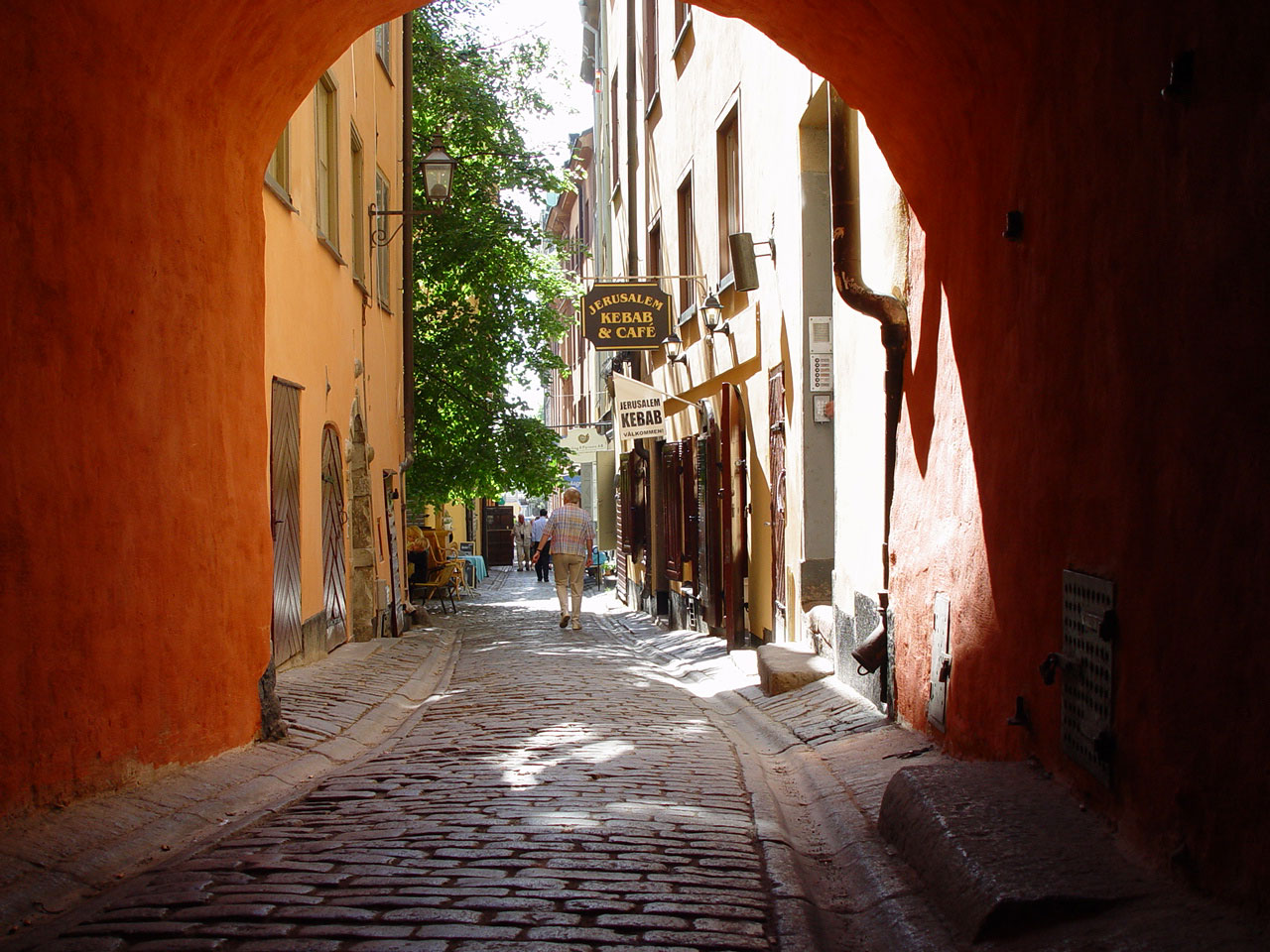
When this year’s Nobel laureates will be announced later this year, the Nobel Banquet will be arranged in Stockholm as usually in the second week of December where the winners will honored. But, perhaps a trip to Sweden’s capital should also be your next Scandinavian travel destination. Stockholm is an eclectic blend of old and new, the traditional and ultra-modern. By day, the cobbled streets of the medieval Gamla Stan and the beauty of the City Hall, Royal Palace and Stockholm Cathedral await.
By night, some of Europe’s best nightlife is at your feet. Stockholm is a metropolis built on fourteen islands, the most central of which, Gamla Stan, is the oldest settlement in the city. Dating back more than three quarters of a millennium, it hosts beautiful, winding, cobbled streets, lined with small cafes, art galleries and shops filled with handicrafts and antiques. One can get lost among the maze of alleys, medieval churches and quaint squares. Gamla Stan also plays host to two of Stockholm’s greatest attractions, the Royal Palace and Stockholm Cathedral.
Food and drink is a big part of any city’s culture and Stockholm is definitely no exception. Relax while getting your fix of fika – a Swedish colloquialism for sharing a coffee and a chat at leisure. The Swedes are marathon coffee drinkers, on average drinking 4.5 cups each a day, and indulging in something sweet with a cup of your favourite brew has become something stereotypically Swedish.
Swedish cuisine is also a must try while in the city and favourite establishment of Stockholm locals is the Pelikan, located on Sodermalm. With hearty helpings of traditional home-cooked food at a reasonable price and a beer hall on site, one can see why the restaurant attracts so many locals.
Being a city sprawled across many islands, the water is an integral part of the beauty of the capital and having a drink or a meal on one of the many converted boats is a unique attraction.
Having now secured its name as one of Europe’s trendiest and most fashionable cities, Stockholm has the nightlife to match and with endless beautifully designed bars and clubs, there is something for everyone. One sight not to be missed is the Icebar, kept at a chilly -5 degrees celsius, you are guaranteed a cool experience in every way. Everything inside the Icebar is made from ice except the beverages contained within the ice glasses but don’t worry about catching a cold, every guest is provided with a warm cape and gloves to ensure comfort.
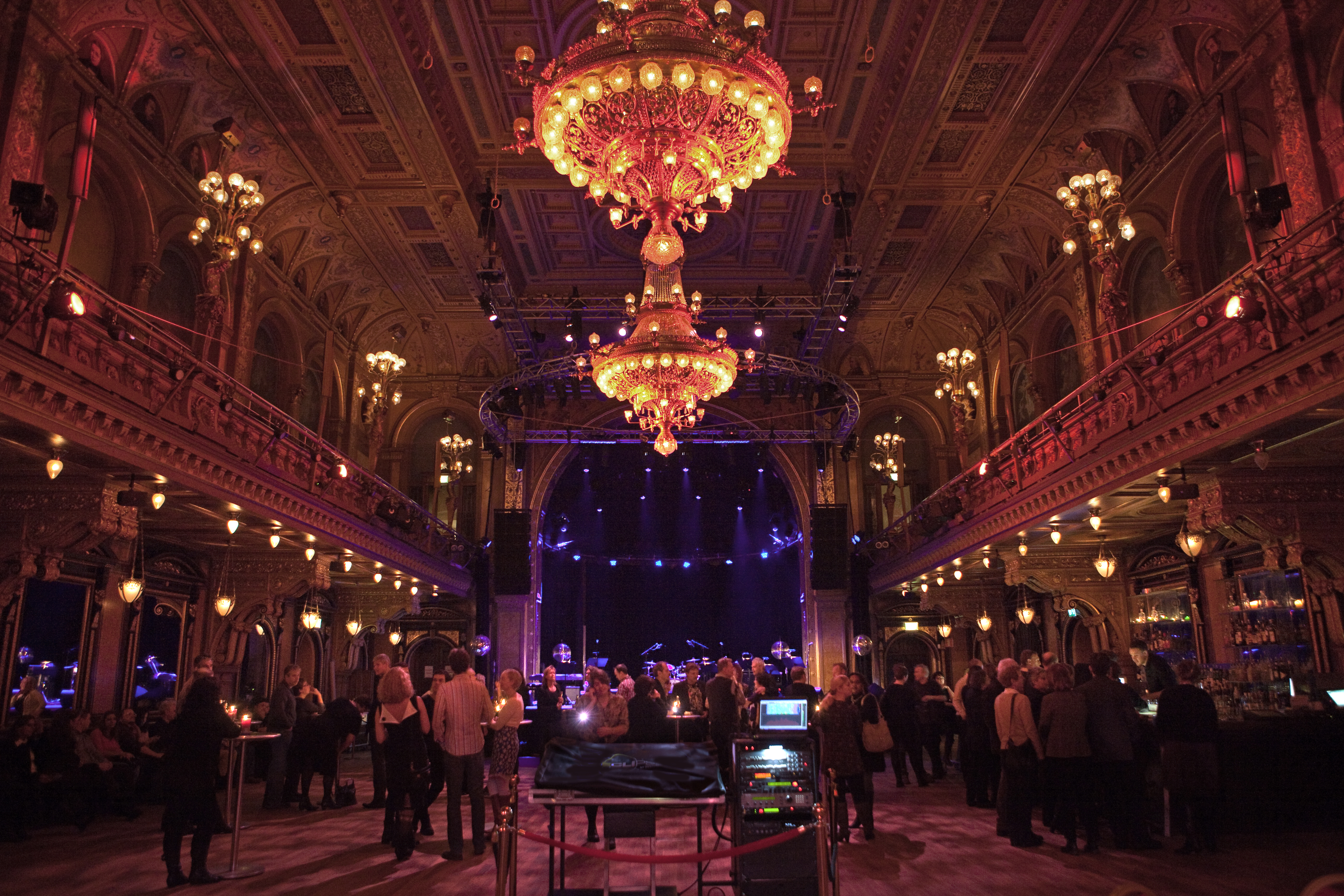
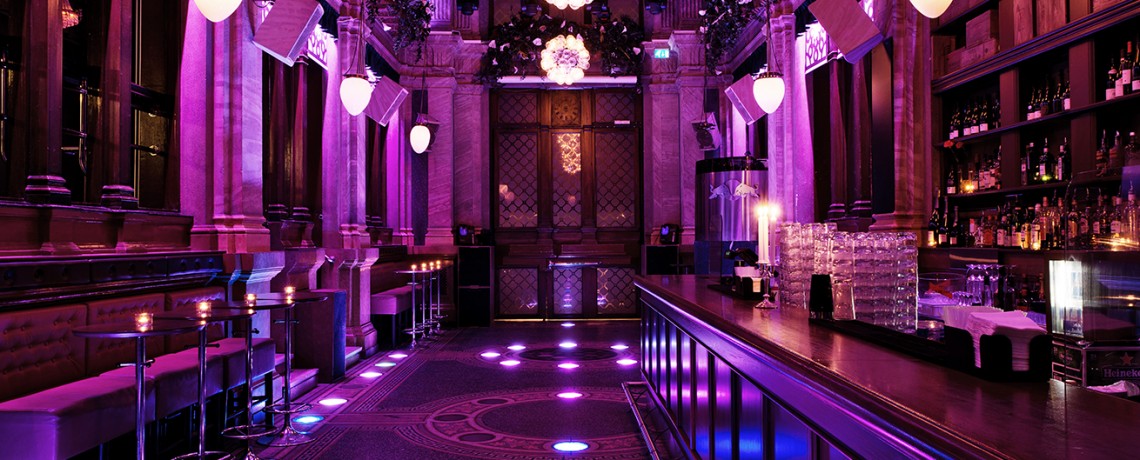
If you want to catch some live jazz in exquisite surroundings, the sleek and cool Berns Club is the place. Decked out in beautiful art nouveau style, with many bars and cafes inside and internationally renowned artists year round, Berns is possibly the coolest place in the city of style – Stockholm.
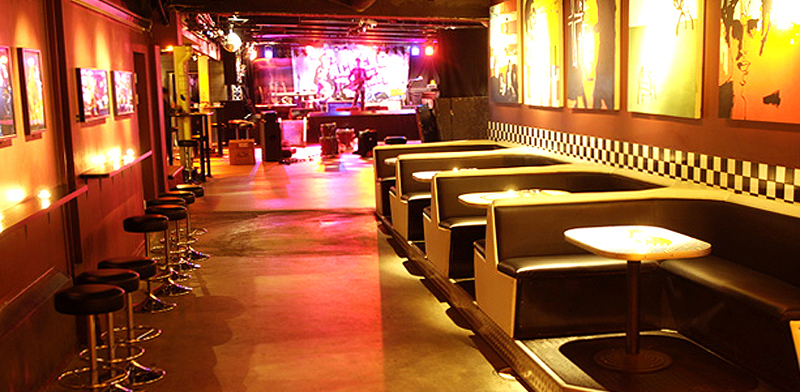
For the rockers among us, Debaser Slussen and Debaser Medis are the places to be, boasting impressive indoor and outdoor areas and the widest variety of alternative music in the city, from pop-rock to hardcore.
For the classic nightclub feel, Sturecompagniet, the biggest club in Stockholm, with its beautifully converted interior, huge dance-floor and many bars is the place to be seen for the young, hip and trendy on a Saturday night in Stockholm.
Grammy nominated electro-pop duo “The Green Children” with Milla Sunde (from Norway and Marlow Bevan (from UK) ‘s video release takes you on a journey into a “Norwegian Dream”of Norway’s mystique and breathtaking scenery.
The video envisions Milla Sundes love for her country’s stunning nature with a refreshing remake of Jan Hammer’s “Crockett’s theme”.
The Green Children are a Europea musical duo who writes and self-produces atmospheric electro-pop music. Milla Sunde (born 17 December 1983), from Norway, and Marlow Bevan (born 4 October 1984), from England, also established The Green Children Foundation, to support microcredit, education and healthcare. In 2005, they traveled to Bangladesh and visited Grameen Bank, known as ‘the bank for the poor’. It was here they met Professor Muhammad Yunus, who is the father of the ‘microcredit’ movement.
After meeting so many empowered poor women, they were inspired to get more involved. The Green Children Foundation is designed to help shine a light on the positive people and solutions that are making a real difference in the world.
To this date, the foundation has supported a new eye care hospital in Bangladesh, student scholarships, new microfinance projects, orphaned children and animals in need.
Las summer they released their first Green Children tune to feature vocals in Sunde’s native Norwegian tongue, titled “Norwegian Dream”. The song is a derivative work of instrumental hit “Crocket’s Theme” (and that is the Miami Vice theme song, yes).
“Norwegian Theme” is off the Green Children’s sophomore release Connection.
Credits for “Norwegian Dream”
Music: Jan Hammer
Lyrics: The Green Children
Published by: Universal Music Publishing (ASCAP)
“A most beautiful voyage along the Norwegian coast”
Northern lights Harstad
At least that is what is claimed in the advertising, so we boarded MS Finnmarken in Bergen and sailed to Tromsø to test the statement. The passengers on our voyage were mainly tourists from Britain and Germany, many of whom said that they wanted to experience the northern lights.
The history of Hurtigruten:
On the 18th of May 1893 the Norwegian government and the shipping company Vesteraalens Dampskibsselskab signed a four year agreement scheduling weekly summer trips between Trondheim and Hammerfest and weekly winter trips between Trondheim and Tromsø. Thus the people and businesses along the coast were offered a completely new way of keeping in touch.
Prior to this time arrangement, Captain Richard Widt and his pilots had taken accurate notes about courses, speed and times along the route. In July 1883, at 3:30 a.m. DV Vesteraalen anchored at the bay of Tromsø half an hour before schedule, therefore the name Hurtigruten (The Express Route).
In the more than 100 years since that July, several owners and more than 70 vessels have been part of the Hurtigruten operation, and it has become the foundation for tourism, freight and mail delivery as well as a means of travel for the inhabitants of the coastal cities.
Today 11 ships sail from round trip from Bergen to Hammerfest, a voyage lasting for 11 days. Every day a Hurtigruten ship arrives at one of the 34 ports along the route.
MS Finnmarken:
MS Finnmarken, completed in 2002, 138.5 meters long and 21.5 meters wide, is one of the company’s largest ships.
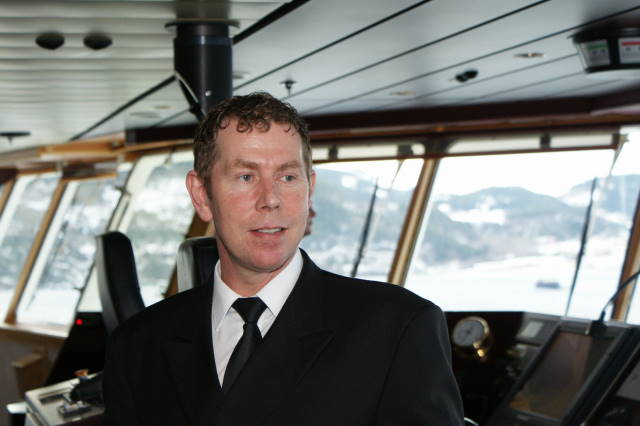
Captain Kai Albrigtsen
Captain Kai Albrigtsen, an officer with Hurtigruten for 31 years, became captain of MS Finnmarken for the second time after sailing it to Australia in 2011, where it was then used as hotel ship for the oil industry. He had also served as Captain on the ship’s maiden voyage after its 2001 christening.
MS Funnmarken
In past years, there were few passengers on the ship during winter, but lately, winter bookings have greatly increased. “I find it more exciting to sail during the winter, not only enjoying the northern lights, but the light of the north as well”, says Captain Albrightsen.
Flexibility:
Many passengers choose to stay on a ship the full 11 day round trip from Bergen, joining one or more of the excursions offered during the cruise. Excursions are steadily increasing in number, as the number of travelers in winter has also increased. Voyages are scheduled so that the ports visited during evening hours on the northern route are visited during daylight hours when returning south. In this way passengers are able to enjoy the whole specter of the beautiful Norwegian coastline on the very same voyage.
Tourists who prefer to disembark at ports of call along the route at are able to do so. You may, for example, board the ship in Bergen and stay four nights enroute to Tromsø, as we did. If you decide to bring your car, you may debark or embark the ship anywhere along its route. It is also possible to leave the same ship in one port and join it again, or join another of the 11 other ships at another port. We took a bus from Stamsund to join a Viking celebration, and joined the ship again in Svolvær. (See excursions below).
Satisfied passengers
Passengers who have sailed with Hurtigruten applaud the beautiful coastline as well as the light and comfortable atmosphere on board.
A fisherman, living on the coast near Harstad, was so pleased with Hurtigruten that he has traveled on 100 round trip voyages. On one occasion, having missed the bus at Harstad after an 11 days’ round trip, the fisherman decided to take another 11 day round trip, hoping that the bus would be on the pier. He even had his own Christmas tree in his cabin, which the crew cheerfully decorated before his arrival for the holidays.
Many people dream about a cruise with Hurtigruten. An elderly couple from the northern Norway saved money for many years, until the day that they were able to purchase tickets. The first thing the husband did after entering their cabin was to stretch out on the bed while his wife set out to explore the ship, walking from stem to stern, and deck to deck. On her tour she met the captain and told him how they had saved money for many years to be able to afford the cruise. The captain was so impressed by the story that he invited the couple to dine with him at the captain’s table.
Filled with joy the wife ran down to her husband in the cabin and told him about the dinner invitation.
“No”, said the husband, “We are not accepting the invitation. We have saved money for so many years, and we shall damned not eat with the crew.”
Searching for the northern light:
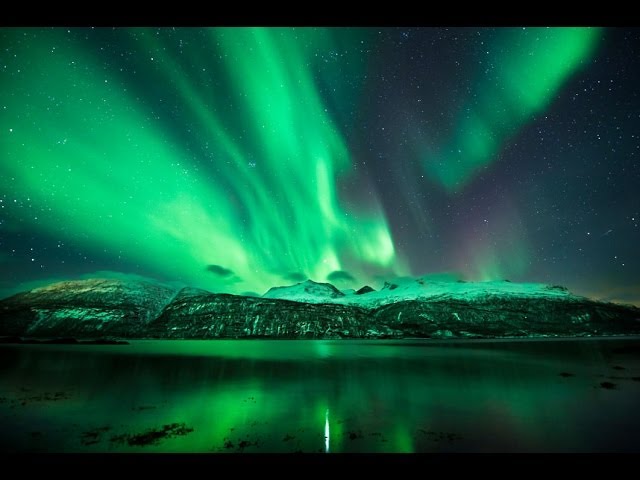
Many tourists that we met on our cruise looked forward most of all to see the northern lights. As we cruised north from Trondheim the weather became cloudy and rainy, resulting in slowly diminishing hopes of seeing the lights in the northern sky. Exultation became evident when the bridge reported that northern lights luminated the sky as we passed Raftsundstredet, and the mouth of the Trollfjord. In the summer the ship enters the fjord and turns out again, but in winter the risk of ice falling from the mountain is imminent, so the only thing to do is to sail as close to the mouth as possible. The combination of the Trollfjord and the northern lights created laughter and joy.
Northern lights, Ersfjord, Tropmsoe
A tasteful voyage:
Norwegian cuisine is, like the nature along the long stretched coastal line, distinctive and made from fresh raw materials. Hurtigruten offers its passengers a set dinner menu for each day with fresh foods related to the particular coastal areas. There is also a good choice of superior quality wines imported from Portugal.
From the MS Finnmarken restaurant
Day 1 Bergen is the town where Norwegian raw materials meet the culinary delicatessen of the continent. The voyage from Bergen begins with a dinner buffet consisting of the best Norwegian and international cuisine.
Internatuonal cuisine
Day 2 On the stretch from Ålesund to Molde we were served codbolinhos with a tasty ruccolo salad for starters. In the split cod capital of Ålesund we were served cod originally dried on rocks, the Norwegian name being “klippfisk”, or rockfish.
Delicious dessserts
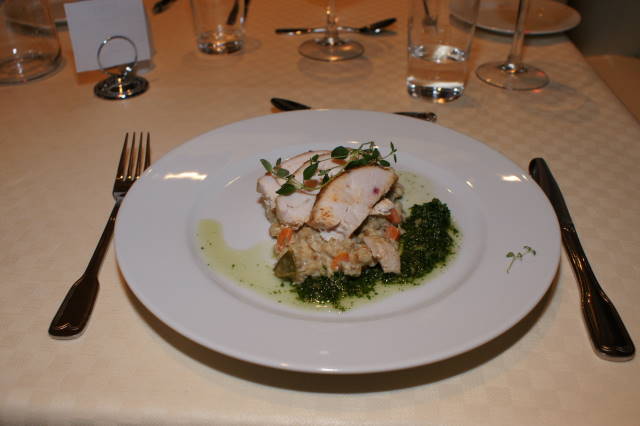
The main dish was farmer chicken served with barley groats sotto, and the evening dessert was chocolate fondant with pear sorbet.
…and salmon, of course!
Day 3 We’re on our way from Trondheim to Rørvik. Today’s dinner menu consists of cauliflower soup with strips of smoked ham for starters and baked filet of trout served with celery root as the main dish.
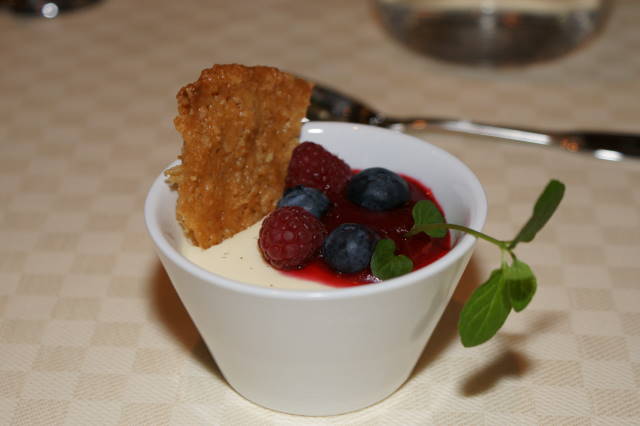
Panacotta
Dessert was panacotta made from Norwegian curdled milk, called ‘tykkmelk’. The name ‘thick’ or ‘tykk’ originates from the copious consistency which was enhanced with the use of butterwort. Leaves from the butterwort plant are placed in small wooden bowls before lukewarm fresh milk is added. I remember we called it ‘melkering’ or ‘a ring of milk’ when I was a boy.
Spy plane exhibuted at the Bodø Aviation Museum
Day 4 We have arrived at the port of Bodø and are heading for Svolvær. The starter on today’s dinner menu was Selbu Blue on salad leaves, served with cloudberry syrup. The Norwegian blue cheese was created over a period of 100 years. As opposed to Roquefort, which is made from sheep’s milk, cow milk is used in the Norwegian blue.
The main dish was grilled brisket of beef, and dessert was a Norwegian speciality “Vailed farmer girls”, apples in cream and bread crumbs.
Day 5 We have arrived at Tromsø where we left the ship.
Tromsoe
In the event that you should be interested in the remaining days’ menus, here they are:
Today’s starter is green pea soup followed by grilled dried cod with potato purée, porto salsa and bacon. Drying food is the oldest known preserving method, and dried fish may last for years. The grilled dried cod which is being served today has been softened in water for a week, and it is a treat to taste how an ancient method of preserving still produces gourmet food.
Dessert was cheese cake.
Day 6 This is the day of arrival at the North Cape, and what then is more suitable than a Cape North buffet?
“The king crab is better than lobster, and the best ever comes from Russia,” said Bent Stiansen, a Norwegian world champion chef. If you agree or not, it’s time to test the statement.
Day 7 Welcome to Kirkenes! Today’s dinner consists of Barents salad, deer medallions and raspberries under sour cream. The dish emphasizes the potatoes, vegetables and herbs from this part of the country, which is said to have a richer taste and aroma due to cool climate, slow growth and a lot of light, which bring out the best of the produce.
Day 8 The ship leaves Hammerfest, the world’s most northern town. Today’s menu is aquavit brinc-cured round steak from reindeer with herb salad as a starter. Main dish is Arctic charr served with asparagus, Roswald potatoes and hollandaise sauce.
For a long period of time Arctic charr was a culinary secret reserved for the lucky chosen few. A small and quality conscious fish farming industry has however made it available for more people, also passengers on the Hurtigruten.
For dessert, Norwegian blueberry parfait.
Day 9 The ship sails in Vesterålen, and todays dinner menu is a tempting potatoe- and leek soup for a starter. Main dish is roasted roulade from haddock with sautéed vegetables, sourish gravy from tomatoes and baked almond potatoes.
“She is vain, beautiful, exciting and shining white, simply delicious. And she arrives readily among royalties” The haddock is described this way. The haddock pours among other places in Vesterålen and is therefore a natural choice for today’s menu.
The desert is rhubarb- and strawberry soup with pastry and sour cream.
Day 10 The ship is southbound for the coast of Helgeland, and today’s dinner consists of «Viking wraps» marinated, seasoned and light smoked salmon with sour cream and salad for starter.
Norway is the world’s leading producer of salmon, so it would be a mistake not to let the passengers have a taste of this delicatessen.
Main dish is classical pepper beef, and the ship’s ice bomb served for dessert.
Day 11 The ship is sailing from Trondheim to Bergen, and is back where the voyage began. It is therefore quite logical to serve Hurtigruten’s classical fish soup.
In the soup you’ll find tasty pieces of what was once called “the love fish”.
Excursions:
Hurtigruten has 34 calls during a voyage lasting for 11 days. Some of these are short without time for excursions, unless passengers decide to leave the ship and take another vessel or reach the ship again in another port.
Calls during night time on the way up north are being done at daytime when the ship is southbound. This way it is possible to experience all of the coastline on an 11 days’ voyage. In summertime, when it’s bright light all night long, it’s rather a question about how much sleep you need.
On our voyage from Bergen to Tromsø we took part in four excursions.
Ålesund, the art nouveautown of Norway:
In our opinion, Ålesund is the most beautiful city in Norway. A disastrous fire swept through the central parts of Ålesund in 1904, and reduced the town to ashes. The reconstruction created one of Europe’s most characteristic building surroundings in so called Jugend style or art nouveau. The town also has its own art nouveau centre, worth a visit.
From Aalesund
The drugstore, which was owned by the pharmacist J. A. Øwre, forms the entrance to the centre. On the first floor you find pharmacist Øwre’s stately dining room, restored with a gentle touch and laid out for celebration. The multimedia program “The new art” is a valuable introduction to the international art nouveau style’s background, art, design and architecture.
Maritim store dealer Ar
The items you may experience in the exhibition “The Beautiful Art Nouveau Style” contains items made by leading Norwegian and European art nouveau artists such as Gallé, Mackintosh, Toulouse-Lautrec, Hoffmann, Munthe Bull, van de Velde and Knox.
Ovre’s dining room in Aalesund
During our stay we also had time to experience the spectacular view from the lookout restaurant Aksla.
Nidaros Dome, Trondheim
Going out in Trondheim:
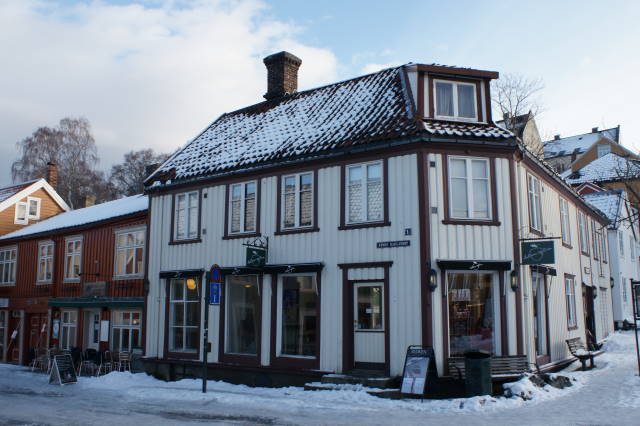
In the primordial capital of Norway we walked from the quay through the original viking settlements and the town centre to the Nidaros dome, and returned to the ship through Bakklandet. Bakklandet consists of charming wooden houses, and has been preserved thanks to the citizens who protested loudly when the authorities wanted to tear down the buildings and restore this part of the town.
Trondheim Town BridgeBakklandet, Trondheim
It was wintertime with icy streets and pavements in Trondheim, so we were not impressed by the level of street maintenance. The most poorly cleared areas were around the Nidaros dome, making safe passage difficult for both inhabitants and tourists alike.
The aviation museum in Bodø:
The museum is constructed like a huge aircraft propeller and contains a lot of aerial experiences. The exhibition, which includes military and civil aviation history, is spread out on about 10.000 square meters, and is the largest aviation exhibition in the Nordic region. At present a whole hangar is planned to display items connected to the cold war.
The Viking museum in Lofoten:
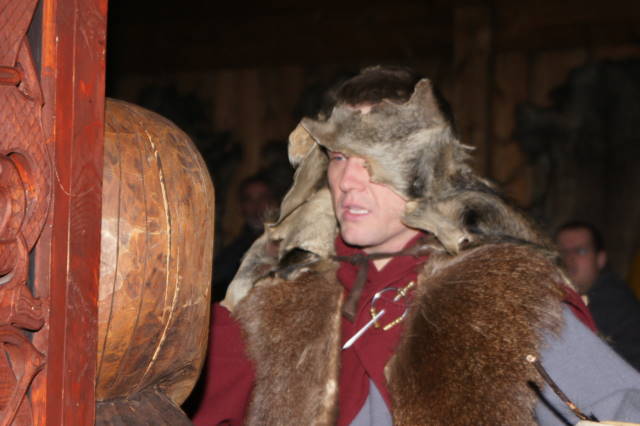
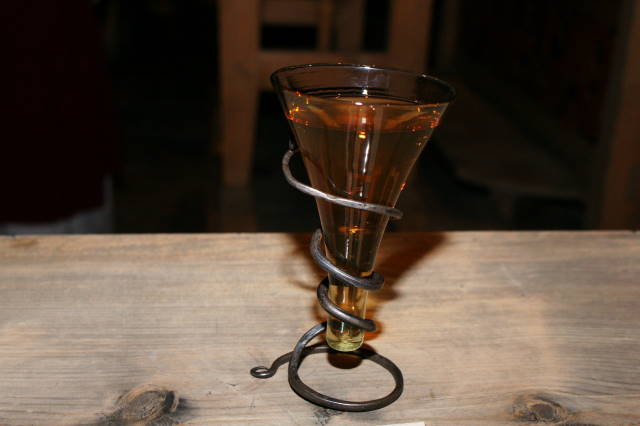
We arrived at Stamsund and drove by bus to Lofoten Viking Museum, which contains the largest known house from the viking age. The chieftain’s house is recreated in real size, and we took part in a rite ceremony, wishing that the sun would return to avoid Armageddon. We were served real mead and meat of sheep, which is eaten by spoon and sheath knife – perhaps a little too much touristic, but it was a nice evening, nonetheless. We caught up with the ship in Svolvær.
Viking museum rite festivalFestival food at the Viking MuseumBeer at the Viking Museum
Expedition to Antarctica:
In 2007 a completely new, modern expedition ship was added to the Hurtigruten fleet. This fast ship, the Fram, is classified as ice class 1B and is equipped for research in cold arctic seas. In the summer MV Fram heads for Greenland and Svalbard, and during the winter it sails for Antarctica. MV Fram also sails in Antarctic and Arctic areas and on exciting cruises all over the world. In conformity with other Hurtigruten ships, the focus is on exciting nature experiences. The voyages are conducted with experienced expedition crews, with passengers learning about flora, fauna, history and culture at every destination through lectures presented by experts on the subjects.
If Denmark is in your sights as a travel destination, consider a visit to one of the islands to see Danish life at a slower pace while you enjoy fresh air, natural beauty and plenty of options for exercise.
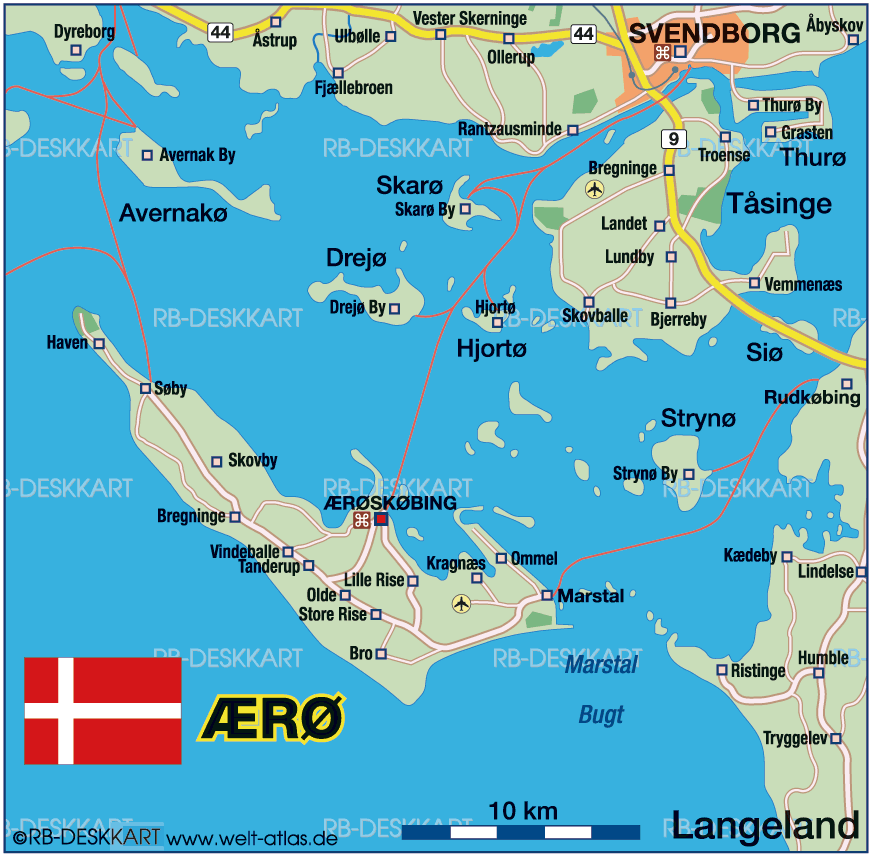
In June last year we spent two days on Aero, one of the islands in the South of Funen Archipelago. The climate is mild and sunnier than many other Danish places, prompting Danes to call it the South Sea Islands. Plants from more temperate climes can be found on Aero including wild orchids that bloom in late May.
With its three towns—Aeroskobing, Marstal and Soby—this dynamic island balances tourist amenities with commercial life: farming, shipping, ship repair, and sustainable energy. We were a few days late for the accordion festival and too early for the summer classical music season held at Sobygaard, a restored manor with moat and drawbridge built by Duke Hans the Younger in 1580. Early June is in advance of the high tourist season so we experienced the island with fewer people but with glorious weather.
We took a ferry from Svendborg and arrived 75 minutes later at Aeroskobing, population 6,800. “Kobing” means trading town and refers to the city’s role in the Middle Ages as a commercial and maritime center. Ferries also run from Faaborg to Soby on the northern tip of Aero island, Denmark.
As the ferry eases into the dock, visitors are treated to views of the low hills, the red terra cotta rooftops of the town and a colorful pop-bead string of small bathing huts on Vesterstrand, a long, narrow spit of land. We were told that these huts are treasured family heirlooms passed down within families.
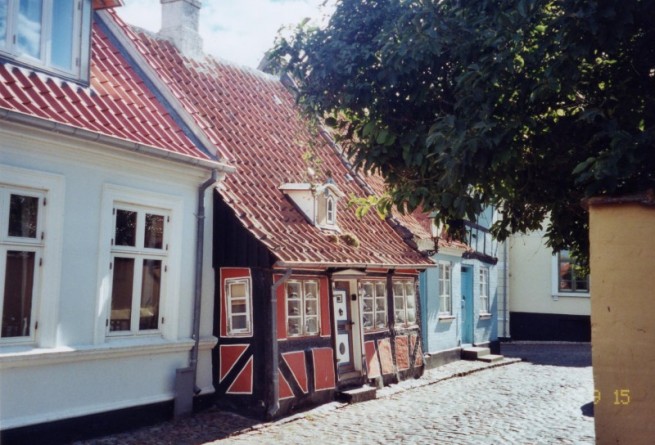
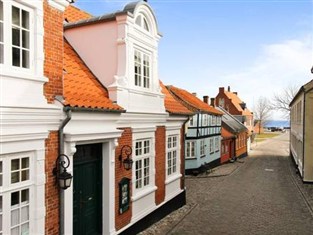
We rattled our luggage up the cobbled streets to our lodging, passing fairy-tale houses ganged together in long rows on either side of the narrow streets. Near the town’s main square, we arrive at a beautifully remodeled wash house in the courtyard of an 18th century manor.
Booked through Aero Bed and Breakfast, our convenient base included a kitchen for meal preparation. We drew from the island’s bounty of fruits, vegetables and fish for our first evening. Although there are plenty of eateries on the island, we purchased smoked halibut and herring from Aeroskobing Rogeri, a fish shop facing the harbor and prepared a “diner en plein air” in our own garden with new potatoes and fresh strawberries (jordbaer) bought from roadside stands.
We enjoyed the serenity of the wash house, located on an interior courtyard, and—best of all—Collette, our host with a deep knowledge of the history and culture of the island.
An organic local foods movement is emerging with an emphasis on ecology—the locals use “okologisk” to mean organic. Already in production are chocolates, honey, ice cream, jam, salt, herbal soaps and lotions and traditionally-raised beef. Unstaffed roadside stands sell produce, payment on the honor system. Rise Brewery, has started producing beer of a quality to rival the best of the new wave microbrews. We tried the India Pale Ale and the Walnut beer and both were outstanding.
In 2002, Aeroskobing won the coveted Europa Nostra Prize for Cultural Heritage. In one guide for the island, Aeroskobing is described as “a perfect idyll.” Others call it a fairy tale town. Travel writer Rick Steves refers to Aero as “Denmark’s ship-in-a-bottle island.” These descriptions of Aero capture the distilled historic interest of the place. Churches dating from the 12th and 13th centuries can be found at Bregninge, Tranderup and Rise and there are several Neolithic graves (burial mounds, passage graves and dolmens) on the island, their traces still evident in massive stone arrangements on high ground.
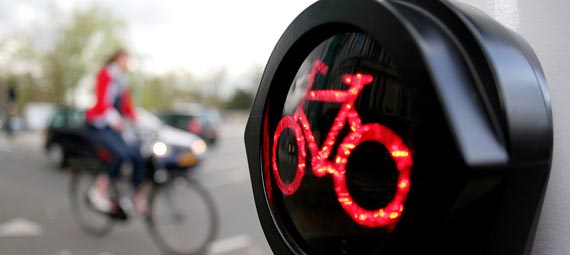
Bicycling is a marvelous way to see the island although buses connecting the entire island are free and frequent. The topography requires three gears at most and drivers are very cautious when passing bikes on the road. We travelled the extensive network of paths on rented bikes to reach cultural attractions around the island. Country lanes lined with lilac, spirea, wild rose and white flowering buckthorn led us past thatched homesteads with tidy gardens and, as often as not, a flagpole flying a Danish flag pennant. Birdsong provided the soundtrack.
One destination was Marstal, home of a navigation school and a maritime museum that is worth a visit, especially if you don’t know your jagts from your topsail schooners, brigantines and barentine brigs. You’ll emerge the wiser and with a greater appreciation for life at sea.
The world’s largest solar collection plant is also located at Marstal and, from the air, looks like a large blue patchwork lake. The island also has six wind turbines that generate more electricity than Aero’s total annual consumption. Needless to say, Aero is one of the leading renewable-energy islands in the world and has received awards and international recognition for its goals.
We had just enough time left in Marstal to enjoy one of the island’s specialties, waffles and coffee, at outdoor café Vaffelbageriet on Kirkestraede, before heading back to Aeroskobing. Shops generally fold up by 6:00pm and the bicycle rental was no exception.
If cycling isn’t your thing, other activities include golfing at a course surrounded by the sea on three sides, fishing, rowing, sailing, swimming and bird- or people-watching.
Finally, a suggestion: if you decide to visit Aero, figure how many days you’d like to spend. Then add one more. There’s no point in rushing paradise. Also, if you want to double your fairy-tale fun, swing by Odense, on the mainland just a short drive north of Svendborg, and visit the home of Hans Christian Andersen.
Today, on 15 January, Royal Copenhagen officially opens its new head office in Glostrup, near Copenhagen. The event is to be celebrated with the attendance of H.R.H. The Crown Princess of Denmark, who will present H.H. Bruun’s Endowment for the Promotion of Art. She will be shown around the new centre, which will be the setting for the manufacture of the exclusive Flora Danica, as well as the continued development of world-class porcelain products and design.
Royal Copenhagen is a company with deep roots in Copenhagen and close historic relations to the Danish monarchy; the Royal Porcelain Factory was actually established in 1775 with the support of the Queen Dowager, Juliane Marie.
“We are thus – our roots and history considered – very honoured to be able to welcome H.R.H. The Crown Princess to the opening of our new Danish head office and skills centre,” says Lotte Wamberg, Managing Director, Royal Copenhagen.
In conjunction with the opening ceremony, H.R.H. The Crown Princess will present H.H. Brunn’s Endowment for the Promotion of Art.
The recipients – Cathrine Raben Davidsen, Allan Otte and Louise Campbell – have all left deep personal and enduring marks in Royal Copenhagen’s design and product portfolio. Each of them will receive an endowment of DKK 125,000.
Danish skills centre ensures the continuation of design traditions and craftsmanship
Prior to the arrangement, the Crown Princess will be given a tour of Royal Copenhagen’s new skills centre, which includes a modelling room and painting studio, where the exclusive Flora Danica dinnerware series will continue to be hand-painted according to a tradition that can be traced right back to the founding of the Royal Porcelain Factory.
The skills centre in Glostrup will also come to form the setting for the continued development of world-class porcelain products and design.
“It is with great pride that we guide our design traditions onwards into a modern setting. I look forward to providing Her Royal Highness with an insight into how we at Royal Copenhagen continue to maintain our craftsmanship skills and Danish design heritage,” adds Ms. Wamberg.
The ceremony takes place today on Wednesday at 10:15am–11:30am.
Louise Campbell (born 1970)graduated from the London College of Furniture in 1992 and from Denmark’s Design School in 1996, where she specialised in Industrial Design. Louise Campbell is best known for her fanciful and experimental approach to her design tasks – as well as her design of the familiar Elements dinnerware, which makes strong references to Royal Copenhagen’s most famous signature series. Louise Campbell has received a number of design awards, including the Finn Juhl Prize (2004) and the Thorvald Bindesbøll Medal in 2007. Louise Campbell will receive the prize in absentia.
Allan Otte (born 1978)graduated from the Royal Danish Academy of Fine Arts in 2007. Allan Otte has made a name for himself in recent years with his original and technically skilled renewal of landscape painting, to which he always adds a note of the modern and industrial. His work for Royal Copenhagen includes the University of Copenhagen’s Teaching Award, ‘Årets Harald’ (‘Harald of the Year’), in 2012. Allan Otte has been awarded the endowment for his particular interest in porcelain as a material, and for his mastery of the airbrush technique, which corresponds to Royal Copenhagen’s familiar ‘plate technique’.
Cathrine Raben Davidsen (born 1972)graduated from the Royal Danish Academy of Fine Arts in 2003 and has studied art in Holland and Italy. In simple, refined lines, Cathrine Raben Davidsen attempts to carve her works into the memory of the observer, where mythology, narratives, art history and references from literature play an important role. In 2009, she created both the Årets Harald (‘the Harald of the Year’) and the Malko Prize for young conductors for Royal Copenhagen. Most recently, she has turned her artistic expression from painting to huge, metre-high vases, where form and glaze work in partnership to provide the audience with a new and very different experience of Royal Copenhagen’s traditional craftsmanship.
Those who think a sandwich by any other name is still a sandwich should make a quick stop at the Copenhagen institution Restaurant Ida Davidsen.
The restaurant is a showcase of the national open sandwich called smørrebrød. Ida Davidsen, the smørrebrød queen of Copenhagen, runs the fifth-generation family restaurant, now more than a century old. The menu of 178 variations, said to be the largest in Scandinavia, is the size of the Copenhagen telephone directory. The sandwiches are displayed in a glass case, and like everything in this aesthetically sensitive country, each is carefully and artfully prepared.
Quantity is important, but quality and freshness are paramount. The choices are delectable, if somewhat improbable: tongue with fried egg, pigeon with mushrooms, and pureed smoked salmon head the more imaginative offerings.
More pedestrian palates will pick up at the choice of shrimp, liver pate, roast beef, and chicken.
Even the Queen of Denmark has her hankerings for the occasional takeout and has had royal occasions catered by Ida Davidsen at her residence, serving real Danish artistic sandwiches.
Several international architectural projects prove that Norwegian architects are much-coveted worldwide.
Goedstrup Hosputal
Denmark’s new super hospital
In 2011 Curavita (Nordic, AART and Arkitema architects) won the competition for the new hospital in Gødstrup, one of Denmark’s six new “super-hospitals”.
The new hospital will be located on a new ground between Herning and Holstebro and covers the region west of the Mid-Jutland. It is planned with a total of 135 000m², 80.000m² of which will be built in phase 1.
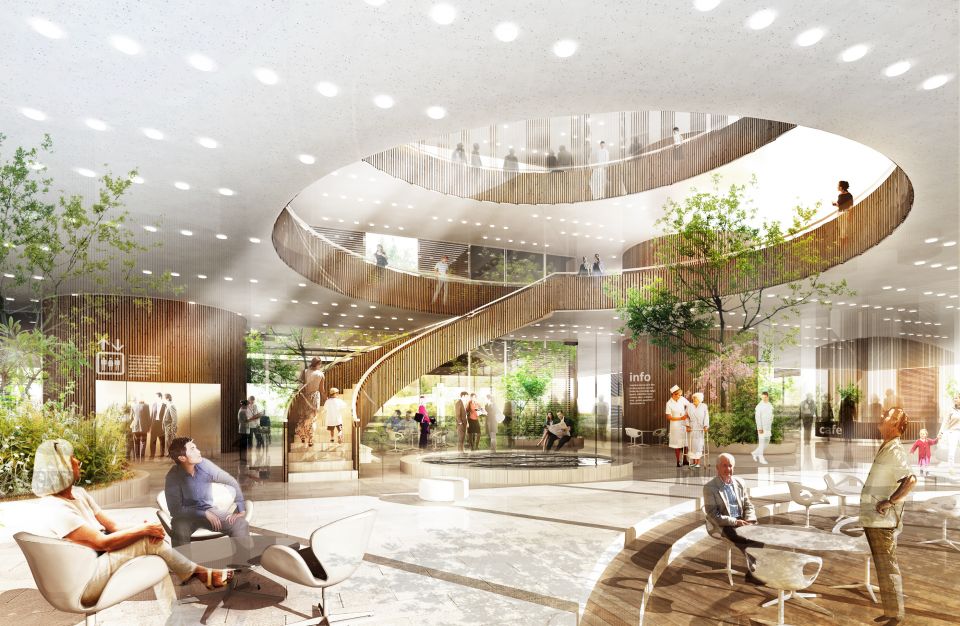
Gødstrup hospital will contain all emergency functions, surgery, diagnostic imaging and laboratory, as well as outpatient clinics and general wards. In the project proposal, we have focused on effective solutions as well as the well-being of patients and staff.
The hospital staff has their own hub with office and meeting areas along the transport ring. Areas of the hospital with high patient flow such as outpatient clinics and diagnostic imaging, are placed near the entrance and vestibule, while the more “private” units such as wards and operation is placed in the upper floors. The facility is designed around several inner courtyards which stretch out onto the landscape. In this way it is very good contact with nature and green spaces and good daylight conditions in all parts of the plant.
Goedstrup Hospital – Foyer circle
From the waiting area there is access to the courtyards and gardens, all wards have large terraces and stunning views of the countryside of Jutland.
The hospital is scheduled to open in 2017.
China Eastern Airways main office, Shanghai
China Eastern Airlines Main Office
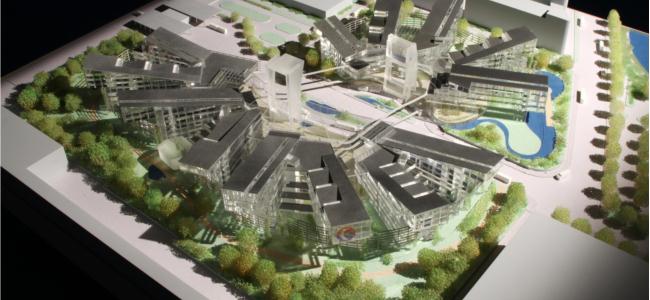
Niels Torp Architects were successful in its bid for the new head office, hotel and operation center for 12,000 employees in China Eastern Airlines, China’s second largest airline.
The building will in total encompass 13 buildings linked together over an area of 245 000 m2. The building is to be completed in 2015.
“Seen from the air, the buildings resemble a flower,” says Niels Torp, adding that the company was very pleased to be successful in its bid in this international competition.
“We have made a concept that is quite different. Although a vast building, it is a “soft” building with green spaces in between the buildings and framed in by a green park”.
Niels Torp Architects has previously designed similar projects, amongst others when they made the Head Office for British Airways in London (see below). There you will also find lush green areas between the buildings and a surrounding park.
“This building looks very different than the one in London, but will be constructed on the same principals. The design is atypical for Shanghai. The buildings are from 6 to 9 floors high with two towers of 9 floors”
The projects architectural side is being managed by responsible designer Niels Torp and project manager Øyvind Neslein.
Rajiv Gandhi International Airport, Hyderabad
Rajiv Gandhi International Airport, Hyderabad, India The new Passenger Terminal Building in Hyderabad is the first airport being developed entirely by a private enterprise in India. The 105,000m2 terminal is designed to handle 12 million passengers per annum with 12 contact stands. The project completes, from concept design to construction, in a record 30 months.
The airport was designed by Nordic Office of Architecture in Oslo, Norway, and opened in 2008.
Alexandria library, Omar
Library of Alexandria, Egypt
The decision to rebuild Bibliotheca Alexandrina, the most famous library of all time, was announced in 1989 with the Norwegian architects Snøhetta winning the open international competition for its design.
Alexandria, founded in 332BC, was one of the greatest cities of the classical world and remained the capital of Egypt until 969AD.
The new library, built roughly on the site of the original Bibliotheca Alexandrina, is designed as a simple circle, 160 meters in diameter, going from 15.8 meters underground to 37 meters above ground. Seen from above it proposes the image of the sun (Egyptian hieroglyphs show the sun generally as a simple disk).
The partly glazed slanting roof of the main library has been designed to angle sunlight, at optimum levels throughout the year, down to the desks and shelves set on tiers of galleried floors beneath it.
The library opened in 2001
Photo (above): Ibrahim Nafie, courtesy Bibliotheca Alexandrina
British Airways main office
British Airways Main Office, Waterside, England
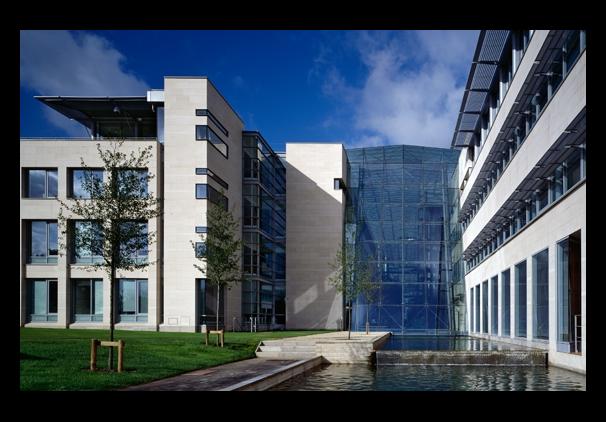
When British Airways briefed architectural practice Niels Torp to design a headquarters building close to Heathrow Airport that would bring together 2,500 people from 14 locations into one workplace for the first time, the aim was to create a community based on openness and team working − and to reflect the airline’s new inclusive ‘citizen of the world’ corporate identity.
The result is a group of six buildings or ‘houses’, known collectively as Waterside. Each ‘house’ has a different theme from world geography and sits along a central street 175 metres long. The covered street, a development of Torp’s famous 1988 SAS building in Stockholm, is not just the focus for the whole building but an active work environment towards which people gravitate to collaborate, meet and eat. From the underground car park, staff is directed to emerge into the ‘street’, which forms a central thoroughfare as well as providing a stimulating atmosphere.
The construction of the main offices was completed in 1998.
Royal Jordanian Airlines main office, Amman
Royal Jordanian Airways main offices, Amman, Jordan
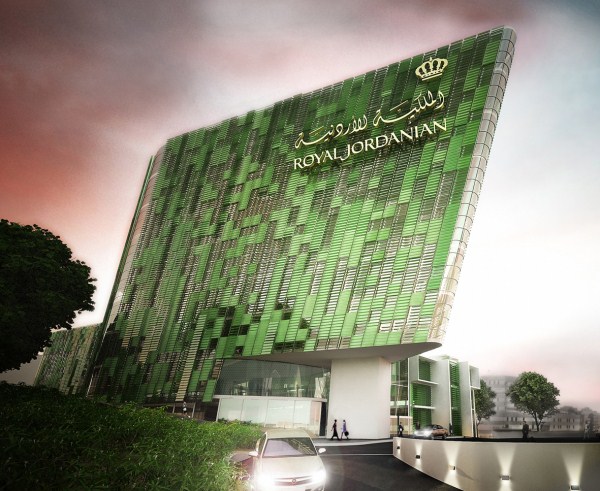
The new corporate headquarters for Royal Jordanian Airlines, Jordan’s national carrier, followed on in 2012 from Niels Torp’s pioneering airline offices for SAS in Stockholm and British Airways at Heathrow (see above). Torp’s forte is architectural de-institutionalization: breaking down large organizations into manageable, humanly-scaled elements linked by a network of internal streets to encourage casual interaction.
Though this latest project finds him on familiar territory programmatically, it transplants the cool-headed, social idealism of Scandinavia to the very different culture, context and climate of Amman. But the Torp signature is still clearly identifiable. Two separate blocks, one conventionally orthogonal and the other cranked into an aerodynamic prow, are linked and penetrated by internal bridges and routes that break up the floor plates into a series of corporate communities. Their external treatment is very different, with the orthogonal block more massive and imperforate, and the serpentine prow clad in a layered, lightweight skin of glass and louvers. The static, linear block anchors the building and forms a bulwark against future development to the north, while its more fluid south counterpart has license to be an expressive urban and corporate landmark.
King Abdulaziz Center for World Culture
The King Abdulaziz Center for World Culture is a monumental undertaking by Saudi Aramco, the world’s leading oil company, to inspire, nurture and promote creativity, learning and cross-cultural engagement throughout Saudi Arabia.
The Cultural Center is designed by the Norwegian architects Snøhetta to be a beacon of social development and cultural progress. It will give visitors the opportunity to experience and enjoy the culture of Saudi Arabia, and help them to understand how the Kingdom’s past links to the present and can propel Saudis to a creative and prosperous future.
Constructed on the site of Saudi Arabia’s very first oil well, the Cultural Center commemorates the Kingdom’s discovery of oil while pointing to a future fueled by ideas, creativity and innovation.
Construction is scheduled for completion in early 2015.
Istanbul New Airport
The six-runway hub will be constructed on 77 million square meters of land near Istanbul, and will have a capacity of 150 million passengers a year – 60 million more than Hartsfield-Jackson Atlanta International Airport, currently the busiest in the world.
The airport will be built in four stages. The first will be completed in 2017, after which it will be operational with an annual capacity of 90 million, according to Turkey’s transport minister, Binali Yildirim.
Binali Yildrim
“It is obvious a new airport is needed,” he said, adding that the plans would help boost the country’s bid for the 2020 Olympics.
Currently Istanbul has two airports, Ataturk, which handles around 45 million passengers a year, and Sabiha, which handles 15 million.
Architects are Nordic Office of Architecture in Oslo, Norway.
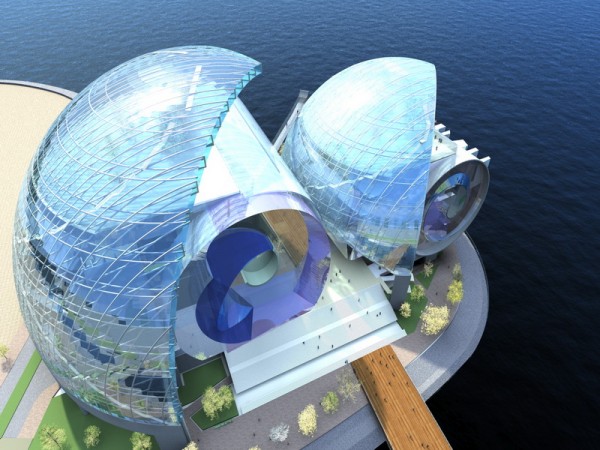
Busan Opera House – competition proposal
Busan Opera, South Korea
The spirit of Opera can be developed only by architecture which joins in a whole some of the common points of human existence. In contemporary life, a need for humanity has developed to the limits to, at least for a moment, go back to places which in his/her entire memory represent places of peace and rest. Relaxing after everyday efforts, by which the body and the soul are exposed, gains the sense of myth of healing in modern life.
The location of Opera in many views represents a place which should, for Busan, take the role of a mediator between a human and the joy provided by resting and relaxing. The ability of locating natural resources for intimacy and differentiating the place of an individual in a great plan of existence is a means of moving around in that area.
The structure of the complex is experienced as a wave. It reminds on overlapping and dancing of waves so that Opera blends in with the environment. The opera is designed by the Norwegian architects Snøhetta, who also designed the much acclaimed operas house in Oslo.
Norwegian Architects Conquer the World, compiled and edited by Tor Kjolberg
During the second week of December, the Grand Hotel in Stockholm hosts the Nobel Prize winners and their entourages, but everyone can enjoy the same elite hospitality year-round at Sweden’s best hotel, standing proudly on the waterfront and in the very center of town.
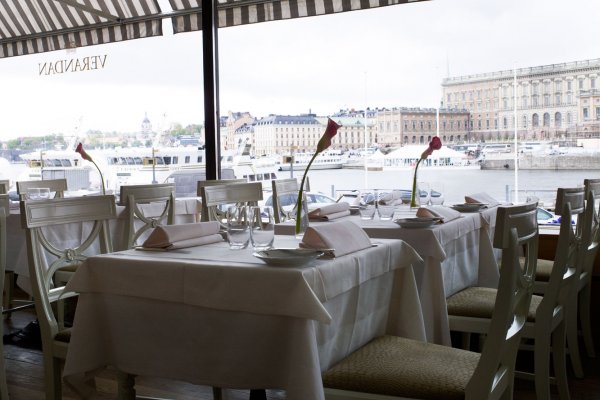
Nonguests too should stop at this 1874 landmark of old-world ambience, if only for a meal in the glassed-in Grand Veranda overlooking the harbor (known for its legendary smørgåsbord and homemade pastries) or a tipple at the classic Cadier Bar.
The Grand is privately owned – a fact that seems underlined by the personable ambience and the management’s sacrosanct credo that each arrival be treated as a “holy guest” and is equal to the hospitality for Nobel winners.
Some of Europe’s most demanding plates return regularly to the hotel’s refined Franska Matsalen (French Dining Room), whose candelabra-lit setting is pure magic.
Magnificent nighttime views across the water to the illuminated Royal Palace accompany an over-the-top dinner and Sweden’s most impressive wine cellar. If you still have any kroner left, ask for a room with a waterside view, then book your next meal at the nearby Operakällaren.
Unabashedly luxurious on its location within the Royal Opera House, right across from the Royal Palace, the Operakällaren is one of Scaninavia’s most famous restaurants, a landmark since it opened in 1787 by decree of King Gustav III (whose 1722 assasination in the Opera House during a fancy dress ball was the inspiration for Verdi’d Un Ballo on Maschera). It has since evolved into a complex of many restaurants that vary in formality and price, but the main Belle Epoque dining room is the draw, overseen by co-owner Stefan Catenacci, culinary advisor to the king and queen of Sweden.
This is the city’s most theatrical venue for an evening’s repast, featuring plush Oriental rugs, carved oak wall and ceiling panels, once-risqué murals, extravagant crystal chandeliers, and service as impeccably polished as the silverware.
A fillet of tender young reindeer and seasonal game dishes highlight the Swedish and international cuisine. The wine list is excellent, but consider toasting the long summer days with Stenborgare, the restaurant’s own schnapps.
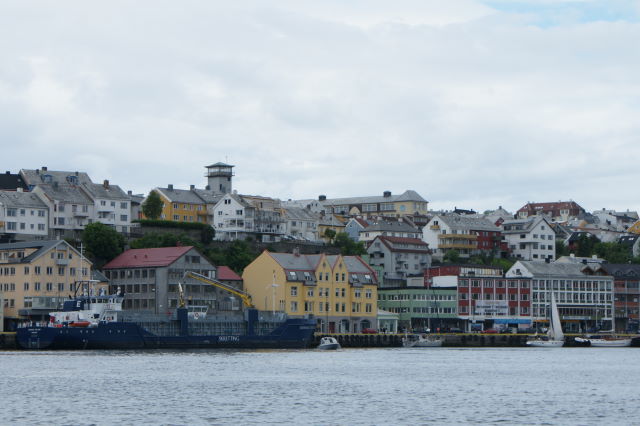
About Kristiansund The town municipality Kristiansund is situated at Nordmøre in Møre and Romsdal. With its 23 903 inhabitants the town centre is spread out on four islands: Nordlandet (The North Land), Innlandet (The Inland), Kirkelandet (The Churchland) and Gomalandet. The town received status as town in 1742 and was then named Christianssund. The town’s name was disputed, since many wanted the old Norwegian name Fosna instead of the name it got when Norway was in union with Denmark. The name struggle ended in 1929 when half of the town’s citizens marched through the streets, but the stride ended by referendum. More than 91 % voted against a name change, and the only difference is the modern spelling and that the letter N after the name (standing for North) was deleted when zip codes in Norway were established. The N was important to distinguish mail to Kristiansund from mail to Kristiansand on the south coast of Norway, which had S (South) behind its name.
The Tahiti Festival The first Tahiti Festival was arranged in 2000. That year 500 visitors gathered at Dødeladen Café with a tent outside. Since then the festival has been extended both in duration and number of visitors. The past few years the festival has lasted for one week and has been visited by around 20.000 people.
– When we started the planning of this madness at the end of the nineties we couldn’t even dream about that the festival should become so big. I did not dream about being a festival manager either. But it is fun, and every year I am looking forward to it. Nothing pleases me more than to see people enjoying themselves together with old and new friends in the historical surroundings at Tahiti. The festival is framed by Norwegian coastal history, and is therefore something special, says the founder and spiritual leader of the Tahiti festival, Frode Alnæs.
-In addition to preserve the unique buildings on the site, my goal has been to recreate the atmosphere of the old town, called Tahiti. By culture work, voluntary communal work and enthusiasm we managed to refresh this demolish threatened district.
The Inland district, with its largest remaining compressed wooden buildings in all of Møre and Romsdal, is now almost completely renovated. The establishment of Dødeladen and the Tahiti Festival have given favorable conditions to new establishments like Thon Hotel Kristiansund, Barcarole Bar, Arnulf Øverland Gallery, Kjønnøy Quai and the newcomer, The Football Pub on the Tahiti Quai. All this has happened during a very short period of time. This is a good reason to visit Kristiansund during the Tahiti Festival.
– Kristiansund has always been a town looking outwards to the world and taken the world back home. No one knows for sure how the name Tahiti originated. It is only those who feel confident about their own identity, their own background and their own belonging, who dare open themselves to external impulses. To know your own history and feeling confident about own anchoring is a necessity to open up and letting in new impressions and influences. When traditions meet new impulses, an exciting culture arises. New things are created. Dynamics are trigged off. That is Tahiti, says an enthusiastic Alnæs.
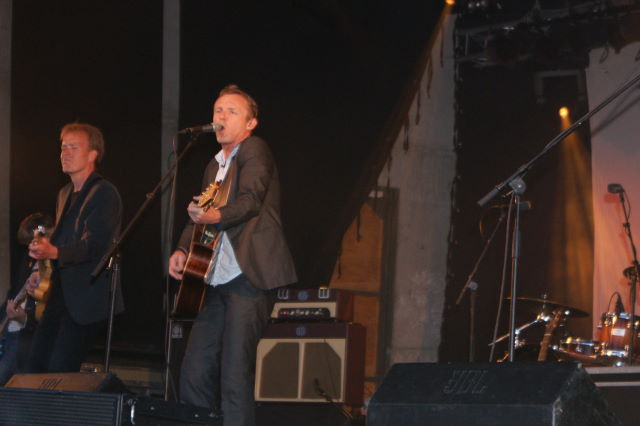
The Tahiti Festival is arranged annually by the end of June/ beginning of July. We visited the Festival from 27th June to 1st of July, and there were several attractions, among them the singers Jan Eggum from Bergen and Halfdan Sivertsen from Bodø, Kaizers Orchestra, the pop group Di Derre and Jarle Bernhoft. By the way, did you know that the founder and lead singer in the band Di Derre is the famous international bestselling thriller author Jo Nesbø?
The festical included night rock, a matinee and a children’s festival. This year there were concerts by Henning Kvitnes and Hilde Louise Asbjørnsen in addition to quiz with the TV personality Dan Børge Akerø.
The whole town is influenced by the Tahiti festival during this period, and should you have the opportunity to visit the town by the end of June, you will be granted a festive audience and high level music.
We attended the Di Derre concert, and it was fun to experience Jo Nesbø and the band. They gave everything. The audience applauded enthusiastic, not least when the group performed their hit “Jenter som kommer, og jenter som går” (“Girls who are coming, and girls who are leaving”).
With the Sund ferries you easily get to and from the four islands.
The fishing village Grip
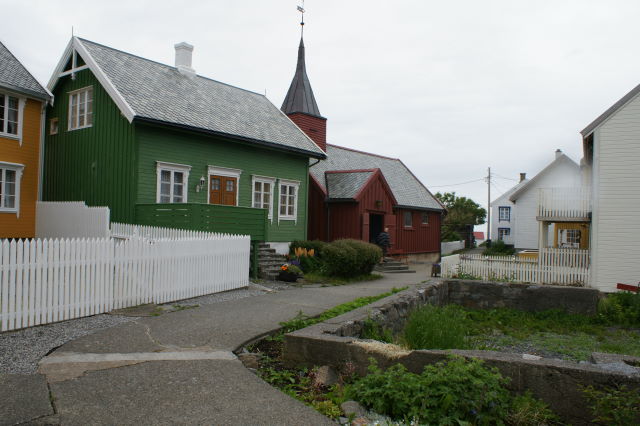
The very small island Grip, which once was the smallest municipality in Norway, hosts Norway’s smallest stave church and the world’s smallest fire engine.
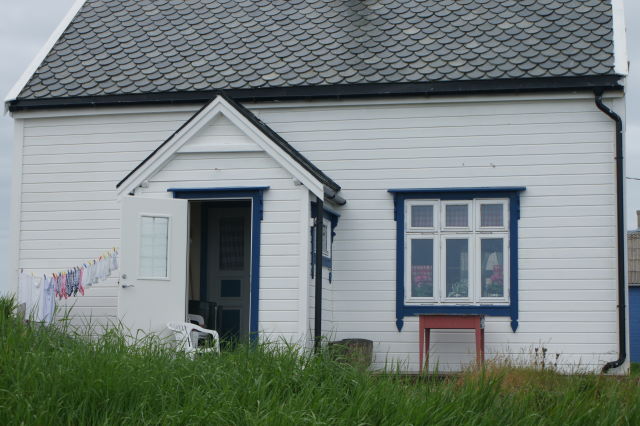
The island group was until 1964 an independent municipality with 115 grooved and weather-beaten inhabitants. Today its charming and well-kept buildings are summer residences for the people who once lived here or their descendants.
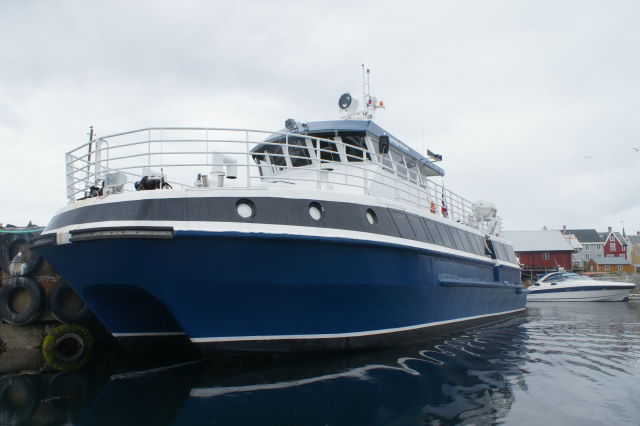
Today Grip is the smallest district in Kristiansund, situated 22 miles out in the ocean, surrounded by 200 islets and rocks, about 40 minutes by the Grip Express ferry from the capital of Nordmøre. The island’s last inhabitant threw in the towel and left the place, his rubber boots and sou’wester just before Christmas 1974. Most of the residents packed their suitcases in the mid 60s.
The island is less than a square mile, but its lighthouse is large. The Grip Lighthouse on Bratthårskollen islet is more than 154 feet tall and Norway’s tallest.
The Grip Express
From end of May to end of August the Grip Express has daily departures to the island with its yellow and red houses, small, charming streets, soccer field, an inn and the village’s own power station by the open sea, west of Smøla and Tustna.
A visit to Grip is like entering straight into the idyllic skerries from the popular Swedish TV production «Vi på Saltkråkan» (“De Kinderen van de Zoutkreek” in Dutch). The time seems to have stood still for quite a long time in this caustic fishing village.
Fire engine Last year the island outside Kristiansund got a new attraction, the World’s smallest fire engine. A particular designed vessel with water pump and four hoses, the size of a pedal car, was constructed by the Kristiansund Fire Brigade, and suited for turn-out in the narrow streets and sharp house corners on Grip. With the “fire engine” in place by the island’s own fire house, everyone on Grip may have a good night’s sleep all through the summer.
In the middle of the island, protected by the buildings and at the island’s highest point, you will find the little red stave church, built around 1300. It has been a place for gatherings in sorrow and happiness. The altar closet is a gift of gratitude from the Dutch princess Elisabeth, who in 1515 was saved by Norwegian seamen during a violent storm. The wall paintings are from about 1620.
The Atlantic Road The Atlantic Road (Mainroad 64) runs zig zag above eight low bridges by the open sea, and connects the islands between Molde and Kristiansund. Hustadvika is a notorious coastal line and is dramatic when it storms. In lard weather one might observe seals and whales.
The road is about 13 miles long and was opened in 1989, after a construction period of six years.
The Atlantic road is about half an hour’s drive through the Atlantic Tunnel from Kristiansund. The Atlantic Tunnel is about 12 miles long and 800 feet deep. Coming out of the tunnel you may drive through exciting Averøy with Kvernes stave church, and after that out on the wild and scenic coastal stretch towards Hustadvika.
The Atlantic road with its unbelievable coastal line and price awarded architecture, is a part of the national tourist road between Bud and Karvåg.
There are four organized picnic areas with hiking roads and viewpoints. These have brave architectural forms, and some of them are popular among sports fishers.
We recommend a stop and buffet lunch at Bjartmars Favorittkro with a fantastic view to the ocean and the islets. You will be served tasteful traditional Norwegian food emphasizing Norwegian ingredients.
Stay in Kristiansund The newest hotel in Kristiansund is the Thon hotel, but there are also Grand and Rica hotels.
Dining in Kristiansund If you ask the locals where they would go for a pleasant meal, they immediately say Smia or Brasseriet. Barcarole Tapaskjeller on the Inland is also popular with extraordinarily good food. The Grip Express has a stop there.





















 “We are thus – our roots and history considered – very honoured to be able to welcome H.R.H. The Crown Princess to the opening of our new Danish head office and skills centre,” says Lotte Wamberg, Managing Director, Royal Copenhagen.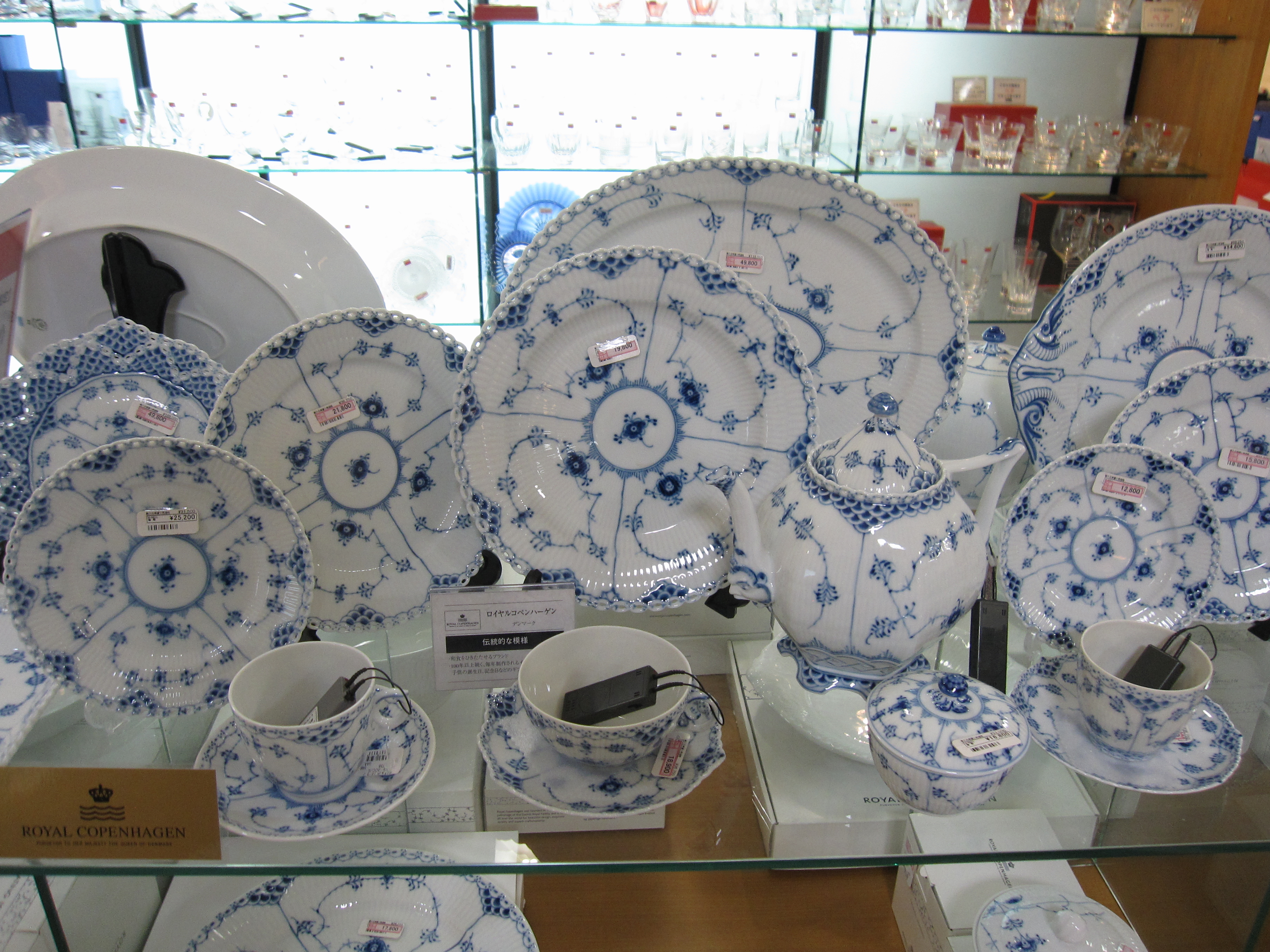
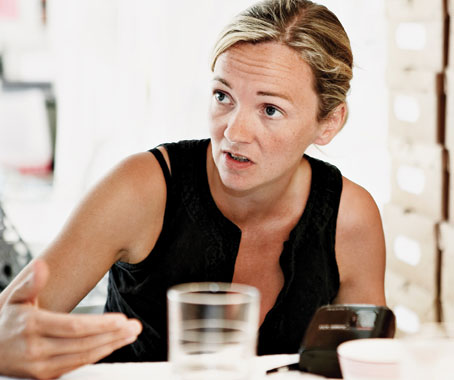 Design School in 1996, where she specialised in Industrial Design. Louise Campbell is best known for her fanciful and experimental approach to her design tasks – as well as her design of the familiar Elements dinnerware, which makes strong references to Royal Copenhagen’s most famous signature series. Louise Campbell has received a number of design awards, including the Finn Juhl Prize (2004) and the Thorvald Bindesbøll Medal in 2007. Louise Campbell will receive the prize in absentia.
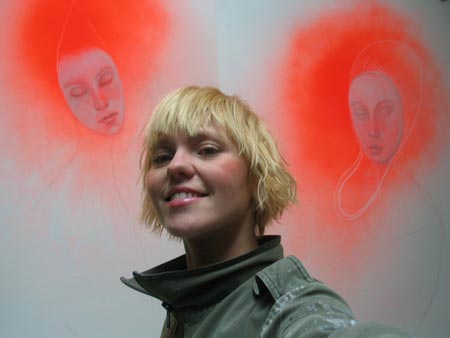 Cathrine Raben Davidsen (born 1972) graduated from the Royal Danish Academy of Fine Arts in 2003 and has studied art in Holland and Italy. In simple, refined lines, Cathrine Raben Davidsen attempts to carve her works into the memory of the observer, where mythology, narratives, art history and references from literature play an important role. In 2009, she created both the Årets Harald (‘the Harald of the Year’) and the Malko Prize for young conductors for Royal Copenhagen. Most recently, she has turned her artistic expression from painting to huge, metre-high vases, where form and glaze work in partnership to provide the audience with a new and very different experience of Royal Copenhagen’s traditional craftsmanship.