Those who think a sandwich by any other name is still a sandwich should make a quick stop at the Copenhagen institution Restaurant Ida Davidsen.
The restaurant is a showcase of the national open sandwich called smørrebrød. Ida Davidsen, the smørrebrød queen of Copenhagen, runs the fifth-generation family restaurant, now more than a century old. The menu of 178 variations, said to be the largest in Scandinavia, is the size of the Copenhagen telephone directory. The sandwiches are displayed in a glass case, and like everything in this aesthetically sensitive country, each is carefully and artfully prepared.
Quantity is important, but quality and freshness are paramount. The choices are delectable, if somewhat improbable: tongue with fried egg, pigeon with mushrooms, and pureed smoked salmon head the more imaginative offerings.
More pedestrian palates will pick up at the choice of shrimp, liver pate, roast beef, and chicken.
Even the Queen of Denmark has her hankerings for the occasional takeout and has had royal occasions catered by Ida Davidsen at her residence, serving real Danish artistic sandwiches.
Several international architectural projects prove that Norwegian architects are much-coveted worldwide.
Goedstrup Hosputal
Denmark’s new super hospital
In 2011 Curavita (Nordic, AART and Arkitema architects) won the competition for the new hospital in Gødstrup, one of Denmark’s six new “super-hospitals”.
The new hospital will be located on a new ground between Herning and Holstebro and covers the region west of the Mid-Jutland. It is planned with a total of 135 000m², 80.000m² of which will be built in phase 1.
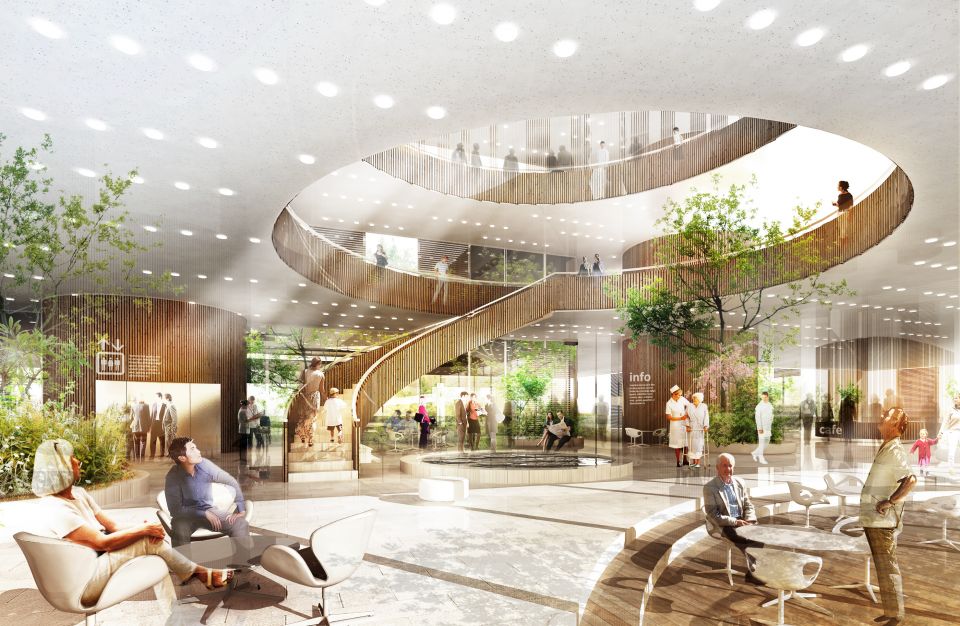
Gødstrup hospital will contain all emergency functions, surgery, diagnostic imaging and laboratory, as well as outpatient clinics and general wards. In the project proposal, we have focused on effective solutions as well as the well-being of patients and staff.
The hospital staff has their own hub with office and meeting areas along the transport ring. Areas of the hospital with high patient flow such as outpatient clinics and diagnostic imaging, are placed near the entrance and vestibule, while the more “private” units such as wards and operation is placed in the upper floors. The facility is designed around several inner courtyards which stretch out onto the landscape. In this way it is very good contact with nature and green spaces and good daylight conditions in all parts of the plant.
Goedstrup Hospital – Foyer circle
From the waiting area there is access to the courtyards and gardens, all wards have large terraces and stunning views of the countryside of Jutland.
The hospital is scheduled to open in 2017.
China Eastern Airways main office, Shanghai
China Eastern Airlines Main Office
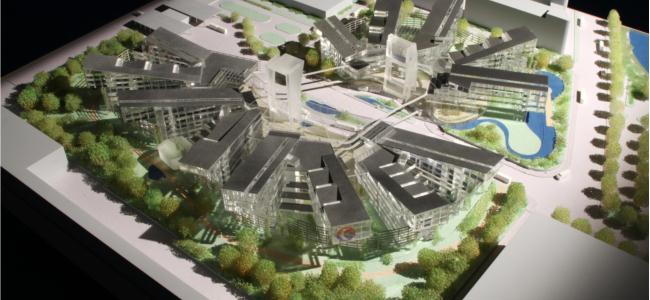
Niels Torp Architects were successful in its bid for the new head office, hotel and operation center for 12,000 employees in China Eastern Airlines, China’s second largest airline.
The building will in total encompass 13 buildings linked together over an area of 245 000 m2. The building is to be completed in 2015.
“Seen from the air, the buildings resemble a flower,” says Niels Torp, adding that the company was very pleased to be successful in its bid in this international competition.
“We have made a concept that is quite different. Although a vast building, it is a “soft” building with green spaces in between the buildings and framed in by a green park”.
Niels Torp Architects has previously designed similar projects, amongst others when they made the Head Office for British Airways in London (see below). There you will also find lush green areas between the buildings and a surrounding park.
“This building looks very different than the one in London, but will be constructed on the same principals. The design is atypical for Shanghai. The buildings are from 6 to 9 floors high with two towers of 9 floors”
The projects architectural side is being managed by responsible designer Niels Torp and project manager Øyvind Neslein.
Rajiv Gandhi International Airport, Hyderabad
Rajiv Gandhi International Airport, Hyderabad, India The new Passenger Terminal Building in Hyderabad is the first airport being developed entirely by a private enterprise in India. The 105,000m2 terminal is designed to handle 12 million passengers per annum with 12 contact stands. The project completes, from concept design to construction, in a record 30 months.
The airport was designed by Nordic Office of Architecture in Oslo, Norway, and opened in 2008.
Alexandria library, Omar
Library of Alexandria, Egypt
The decision to rebuild Bibliotheca Alexandrina, the most famous library of all time, was announced in 1989 with the Norwegian architects Snøhetta winning the open international competition for its design.
Alexandria, founded in 332BC, was one of the greatest cities of the classical world and remained the capital of Egypt until 969AD.
The new library, built roughly on the site of the original Bibliotheca Alexandrina, is designed as a simple circle, 160 meters in diameter, going from 15.8 meters underground to 37 meters above ground. Seen from above it proposes the image of the sun (Egyptian hieroglyphs show the sun generally as a simple disk).
The partly glazed slanting roof of the main library has been designed to angle sunlight, at optimum levels throughout the year, down to the desks and shelves set on tiers of galleried floors beneath it.
The library opened in 2001
Photo (above): Ibrahim Nafie, courtesy Bibliotheca Alexandrina
British Airways main office
British Airways Main Office, Waterside, England
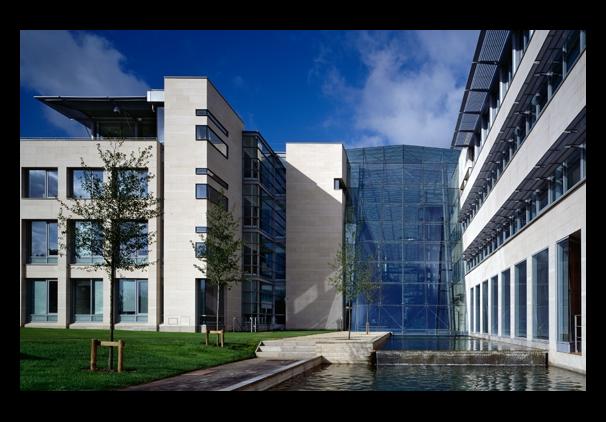
When British Airways briefed architectural practice Niels Torp to design a headquarters building close to Heathrow Airport that would bring together 2,500 people from 14 locations into one workplace for the first time, the aim was to create a community based on openness and team working − and to reflect the airline’s new inclusive ‘citizen of the world’ corporate identity.
The result is a group of six buildings or ‘houses’, known collectively as Waterside. Each ‘house’ has a different theme from world geography and sits along a central street 175 metres long. The covered street, a development of Torp’s famous 1988 SAS building in Stockholm, is not just the focus for the whole building but an active work environment towards which people gravitate to collaborate, meet and eat. From the underground car park, staff is directed to emerge into the ‘street’, which forms a central thoroughfare as well as providing a stimulating atmosphere.
The construction of the main offices was completed in 1998.
Royal Jordanian Airlines main office, Amman
Royal Jordanian Airways main offices, Amman, Jordan
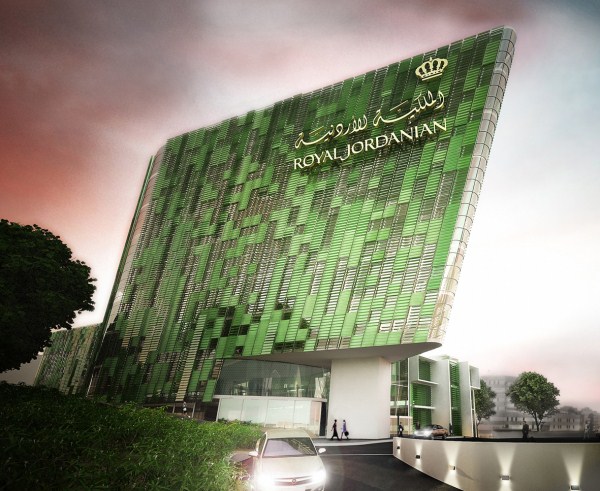
The new corporate headquarters for Royal Jordanian Airlines, Jordan’s national carrier, followed on in 2012 from Niels Torp’s pioneering airline offices for SAS in Stockholm and British Airways at Heathrow (see above). Torp’s forte is architectural de-institutionalization: breaking down large organizations into manageable, humanly-scaled elements linked by a network of internal streets to encourage casual interaction.
Though this latest project finds him on familiar territory programmatically, it transplants the cool-headed, social idealism of Scandinavia to the very different culture, context and climate of Amman. But the Torp signature is still clearly identifiable. Two separate blocks, one conventionally orthogonal and the other cranked into an aerodynamic prow, are linked and penetrated by internal bridges and routes that break up the floor plates into a series of corporate communities. Their external treatment is very different, with the orthogonal block more massive and imperforate, and the serpentine prow clad in a layered, lightweight skin of glass and louvers. The static, linear block anchors the building and forms a bulwark against future development to the north, while its more fluid south counterpart has license to be an expressive urban and corporate landmark.
King Abdulaziz Center for World Culture
The King Abdulaziz Center for World Culture is a monumental undertaking by Saudi Aramco, the world’s leading oil company, to inspire, nurture and promote creativity, learning and cross-cultural engagement throughout Saudi Arabia.
The Cultural Center is designed by the Norwegian architects Snøhetta to be a beacon of social development and cultural progress. It will give visitors the opportunity to experience and enjoy the culture of Saudi Arabia, and help them to understand how the Kingdom’s past links to the present and can propel Saudis to a creative and prosperous future.
Constructed on the site of Saudi Arabia’s very first oil well, the Cultural Center commemorates the Kingdom’s discovery of oil while pointing to a future fueled by ideas, creativity and innovation.
Construction is scheduled for completion in early 2015.
Istanbul New Airport
The six-runway hub will be constructed on 77 million square meters of land near Istanbul, and will have a capacity of 150 million passengers a year – 60 million more than Hartsfield-Jackson Atlanta International Airport, currently the busiest in the world.
The airport will be built in four stages. The first will be completed in 2017, after which it will be operational with an annual capacity of 90 million, according to Turkey’s transport minister, Binali Yildirim.
Binali Yildrim
“It is obvious a new airport is needed,” he said, adding that the plans would help boost the country’s bid for the 2020 Olympics.
Currently Istanbul has two airports, Ataturk, which handles around 45 million passengers a year, and Sabiha, which handles 15 million.
Architects are Nordic Office of Architecture in Oslo, Norway.
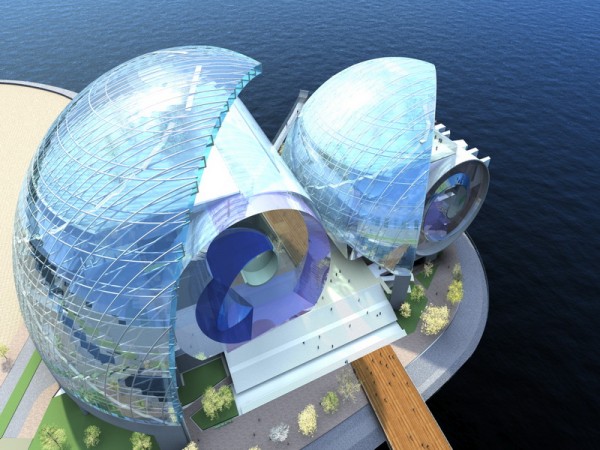
Busan Opera House – competition proposal
Busan Opera, South Korea
The spirit of Opera can be developed only by architecture which joins in a whole some of the common points of human existence. In contemporary life, a need for humanity has developed to the limits to, at least for a moment, go back to places which in his/her entire memory represent places of peace and rest. Relaxing after everyday efforts, by which the body and the soul are exposed, gains the sense of myth of healing in modern life.
The location of Opera in many views represents a place which should, for Busan, take the role of a mediator between a human and the joy provided by resting and relaxing. The ability of locating natural resources for intimacy and differentiating the place of an individual in a great plan of existence is a means of moving around in that area.
The structure of the complex is experienced as a wave. It reminds on overlapping and dancing of waves so that Opera blends in with the environment. The opera is designed by the Norwegian architects Snøhetta, who also designed the much acclaimed operas house in Oslo.
Norwegian Architects Conquer the World, compiled and edited by Tor Kjolberg
During the second week of December, the Grand Hotel in Stockholm hosts the Nobel Prize winners and their entourages, but everyone can enjoy the same elite hospitality year-round at Sweden’s best hotel, standing proudly on the waterfront and in the very center of town.
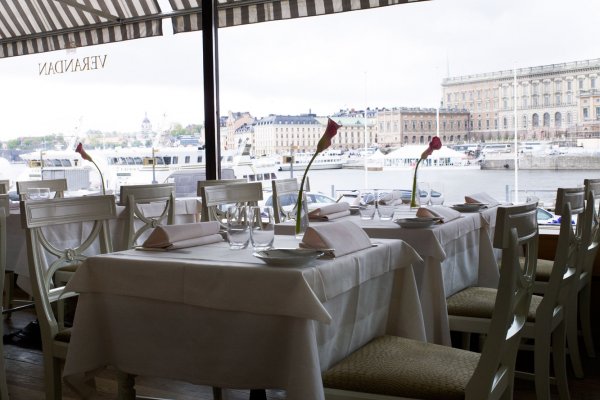
Nonguests too should stop at this 1874 landmark of old-world ambience, if only for a meal in the glassed-in Grand Veranda overlooking the harbor (known for its legendary smørgåsbord and homemade pastries) or a tipple at the classic Cadier Bar.
The Grand is privately owned – a fact that seems underlined by the personable ambience and the management’s sacrosanct credo that each arrival be treated as a “holy guest” and is equal to the hospitality for Nobel winners.
Some of Europe’s most demanding plates return regularly to the hotel’s refined Franska Matsalen (French Dining Room), whose candelabra-lit setting is pure magic.
Magnificent nighttime views across the water to the illuminated Royal Palace accompany an over-the-top dinner and Sweden’s most impressive wine cellar. If you still have any kroner left, ask for a room with a waterside view, then book your next meal at the nearby Operakällaren.
Unabashedly luxurious on its location within the Royal Opera House, right across from the Royal Palace, the Operakällaren is one of Scaninavia’s most famous restaurants, a landmark since it opened in 1787 by decree of King Gustav III (whose 1722 assasination in the Opera House during a fancy dress ball was the inspiration for Verdi’d Un Ballo on Maschera). It has since evolved into a complex of many restaurants that vary in formality and price, but the main Belle Epoque dining room is the draw, overseen by co-owner Stefan Catenacci, culinary advisor to the king and queen of Sweden.
This is the city’s most theatrical venue for an evening’s repast, featuring plush Oriental rugs, carved oak wall and ceiling panels, once-risqué murals, extravagant crystal chandeliers, and service as impeccably polished as the silverware.
A fillet of tender young reindeer and seasonal game dishes highlight the Swedish and international cuisine. The wine list is excellent, but consider toasting the long summer days with Stenborgare, the restaurant’s own schnapps.
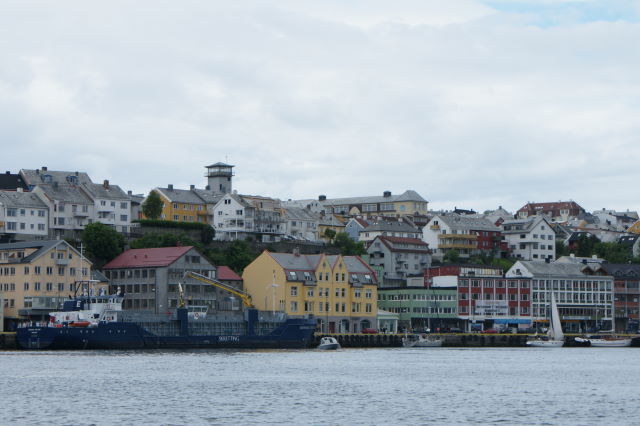
About Kristiansund The town municipality Kristiansund is situated at Nordmøre in Møre and Romsdal. With its 23 903 inhabitants the town centre is spread out on four islands: Nordlandet (The North Land), Innlandet (The Inland), Kirkelandet (The Churchland) and Gomalandet. The town received status as town in 1742 and was then named Christianssund. The town’s name was disputed, since many wanted the old Norwegian name Fosna instead of the name it got when Norway was in union with Denmark. The name struggle ended in 1929 when half of the town’s citizens marched through the streets, but the stride ended by referendum. More than 91 % voted against a name change, and the only difference is the modern spelling and that the letter N after the name (standing for North) was deleted when zip codes in Norway were established. The N was important to distinguish mail to Kristiansund from mail to Kristiansand on the south coast of Norway, which had S (South) behind its name.
The Tahiti Festival The first Tahiti Festival was arranged in 2000. That year 500 visitors gathered at Dødeladen Café with a tent outside. Since then the festival has been extended both in duration and number of visitors. The past few years the festival has lasted for one week and has been visited by around 20.000 people.
– When we started the planning of this madness at the end of the nineties we couldn’t even dream about that the festival should become so big. I did not dream about being a festival manager either. But it is fun, and every year I am looking forward to it. Nothing pleases me more than to see people enjoying themselves together with old and new friends in the historical surroundings at Tahiti. The festival is framed by Norwegian coastal history, and is therefore something special, says the founder and spiritual leader of the Tahiti festival, Frode Alnæs.
-In addition to preserve the unique buildings on the site, my goal has been to recreate the atmosphere of the old town, called Tahiti. By culture work, voluntary communal work and enthusiasm we managed to refresh this demolish threatened district.
The Inland district, with its largest remaining compressed wooden buildings in all of Møre and Romsdal, is now almost completely renovated. The establishment of Dødeladen and the Tahiti Festival have given favorable conditions to new establishments like Thon Hotel Kristiansund, Barcarole Bar, Arnulf Øverland Gallery, Kjønnøy Quai and the newcomer, The Football Pub on the Tahiti Quai. All this has happened during a very short period of time. This is a good reason to visit Kristiansund during the Tahiti Festival.
– Kristiansund has always been a town looking outwards to the world and taken the world back home. No one knows for sure how the name Tahiti originated. It is only those who feel confident about their own identity, their own background and their own belonging, who dare open themselves to external impulses. To know your own history and feeling confident about own anchoring is a necessity to open up and letting in new impressions and influences. When traditions meet new impulses, an exciting culture arises. New things are created. Dynamics are trigged off. That is Tahiti, says an enthusiastic Alnæs.
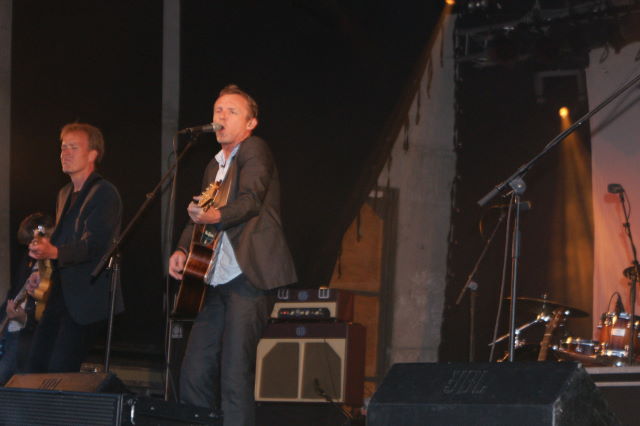
The Tahiti Festival is arranged annually by the end of June/ beginning of July. We visited the Festival from 27th June to 1st of July, and there were several attractions, among them the singers Jan Eggum from Bergen and Halfdan Sivertsen from Bodø, Kaizers Orchestra, the pop group Di Derre and Jarle Bernhoft. By the way, did you know that the founder and lead singer in the band Di Derre is the famous international bestselling thriller author Jo Nesbø?
The festical included night rock, a matinee and a children’s festival. This year there were concerts by Henning Kvitnes and Hilde Louise Asbjørnsen in addition to quiz with the TV personality Dan Børge Akerø.
The whole town is influenced by the Tahiti festival during this period, and should you have the opportunity to visit the town by the end of June, you will be granted a festive audience and high level music.
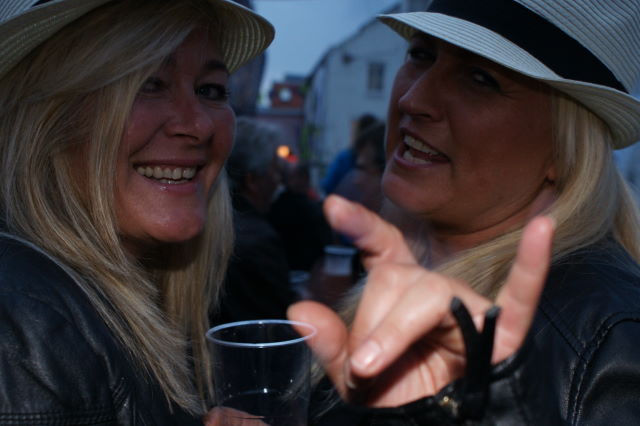
We attended the Di Derre concert, and it was fun to experience Jo Nesbø and the band. They gave everything. The audience applauded enthusiastic, not least when the group performed their hit “Jenter som kommer, og jenter som går” (“Girls who are coming, and girls who are leaving”).
With the Sund ferries you easily get to and from the four islands.
The fishing village Grip
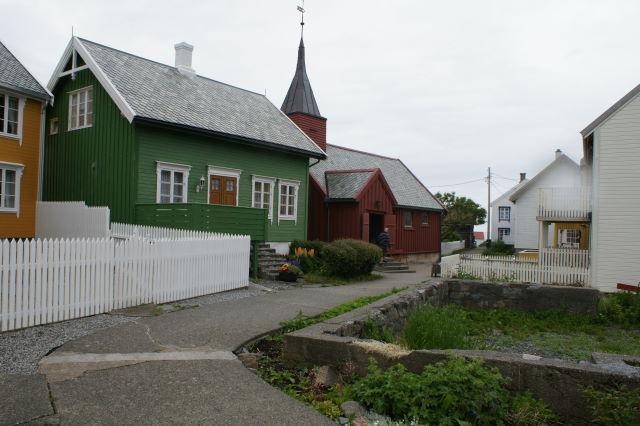
The very small island Grip, which once was the smallest municipality in Norway, hosts Norway’s smallest stave church and the world’s smallest fire engine.
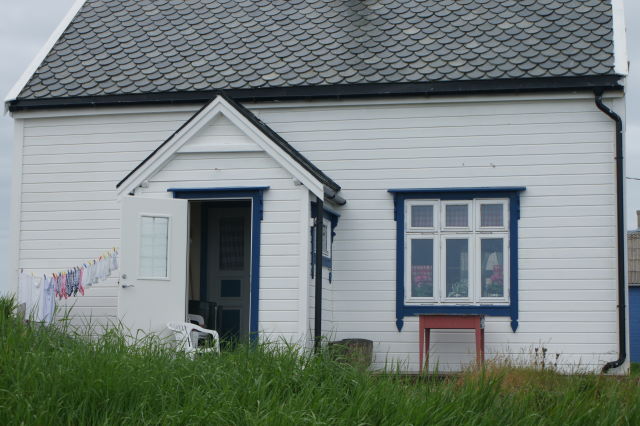
The island group was until 1964 an independent municipality with 115 grooved and weather-beaten inhabitants. Today its charming and well-kept buildings are summer residences for the people who once lived here or their descendants.
Today Grip is the smallest district in Kristiansund, situated 22 miles out in the ocean, surrounded by 200 islets and rocks, about 40 minutes by the Grip Express ferry from the capital of Nordmøre. The island’s last inhabitant threw in the towel and left the place, his rubber boots and sou’wester just before Christmas 1974. Most of the residents packed their suitcases in the mid 60s.
The island is less than a square mile, but its lighthouse is large. The Grip Lighthouse on Bratthårskollen islet is more than 154 feet tall and Norway’s tallest.
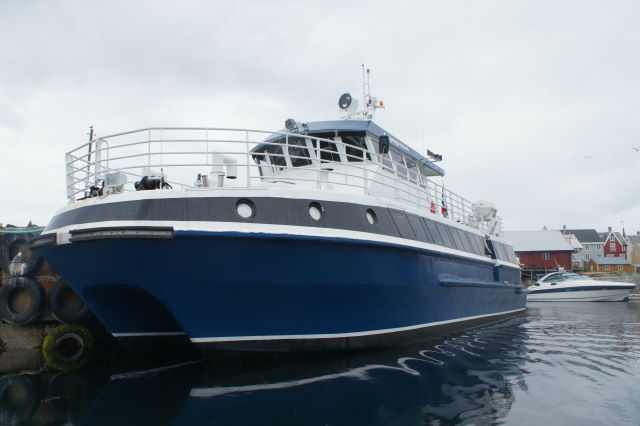
The Grip Express
From end of May to end of August the Grip Express has daily departures to the island with its yellow and red houses, small, charming streets, soccer field, an inn and the village’s own power station by the open sea, west of Smøla and Tustna.
A visit to Grip is like entering straight into the idyllic skerries from the popular Swedish TV production «Vi på Saltkråkan» (“De Kinderen van de Zoutkreek” in Dutch). The time seems to have stood still for quite a long time in this caustic fishing village.
Fire engine Last year the island outside Kristiansund got a new attraction, the World’s smallest fire engine. A particular designed vessel with water pump and four hoses, the size of a pedal car, was constructed by the Kristiansund Fire Brigade, and suited for turn-out in the narrow streets and sharp house corners on Grip. With the “fire engine” in place by the island’s own fire house, everyone on Grip may have a good night’s sleep all through the summer.
In the middle of the island, protected by the buildings and at the island’s highest point, you will find the little red stave church, built around 1300. It has been a place for gatherings in sorrow and happiness. The altar closet is a gift of gratitude from the Dutch princess Elisabeth, who in 1515 was saved by Norwegian seamen during a violent storm. The wall paintings are from about 1620.
The Atlantic Road The Atlantic Road (Mainroad 64) runs zig zag above eight low bridges by the open sea, and connects the islands between Molde and Kristiansund. Hustadvika is a notorious coastal line and is dramatic when it storms. In lard weather one might observe seals and whales.
The road is about 13 miles long and was opened in 1989, after a construction period of six years.
The Atlantic road is about half an hour’s drive through the Atlantic Tunnel from Kristiansund. The Atlantic Tunnel is about 12 miles long and 800 feet deep. Coming out of the tunnel you may drive through exciting Averøy with Kvernes stave church, and after that out on the wild and scenic coastal stretch towards Hustadvika.
The Atlantic road with its unbelievable coastal line and price awarded architecture, is a part of the national tourist road between Bud and Karvåg.
There are four organized picnic areas with hiking roads and viewpoints. These have brave architectural forms, and some of them are popular among sports fishers.
We recommend a stop and buffet lunch at Bjartmars Favorittkro with a fantastic view to the ocean and the islets. You will be served tasteful traditional Norwegian food emphasizing Norwegian ingredients.
Stay in Kristiansund The newest hotel in Kristiansund is the Thon hotel, but there are also Grand and Rica hotels.
Dining in Kristiansund If you ask the locals where they would go for a pleasant meal, they immediately say Smia or Brasseriet. Barcarole Tapaskjeller on the Inland is also popular with extraordinarily good food. The Grip Express has a stop there.
When it comes to superb snow quality, perfect groomed runs and very reliable snow you can’t beat Norway, it’s a beginner and intermediates paradise, with resorts like Geilo and Hemsedal having some great runs for the more advanced skier too. Looking for Norwegian ski holidays? You’ve come to the right place!
Whichever resort you chose expect quiet slopes, friendly people (who can speak English perfectly), great food and incredible winter activities – from dog sledding in the wilderness to treetop activities.
Norway Cabins: for a great value option with lots of Scandy charm holiday in a log cabin. Supermarket prices are not much more than what you pay in the UK and all the cabins have kitchens or kitchenettes. Our favourites are the Forest Cabins in Geilo but Crystal Ski got cabins in Beitostolen and Hemsedal too, perfect for Norwegian ski holidays.
Beitostolen Perfect for families and first-timers – this cosy resort is incredibly charming with perfect slopes for those new to the sport, and it’s exceptional value
Snow Range 900-1,107m
Geilo Superb snow, empty slopes and lovely people. The best resort in the world for beginners, intermediates and families? Can’t be far off.
Snow Range 800 – 1173
Hemsedal Norway’s great all-rounder – Hemsedal has great runs for any ability, some good off-piste and on the weekends the après ski and nightlife are superb. It’s also got some stunning hotels and great value self-catering options.
Combine winter activities with shopping, dancing, dining and culture! Oslo has more than 50 museums, and beautiful outdoor attractions such as the Akershus Fortress and Vigeland Sculpture Park. In the evening, enjoy the nightlife, the restaurants and the exceptional music scene.
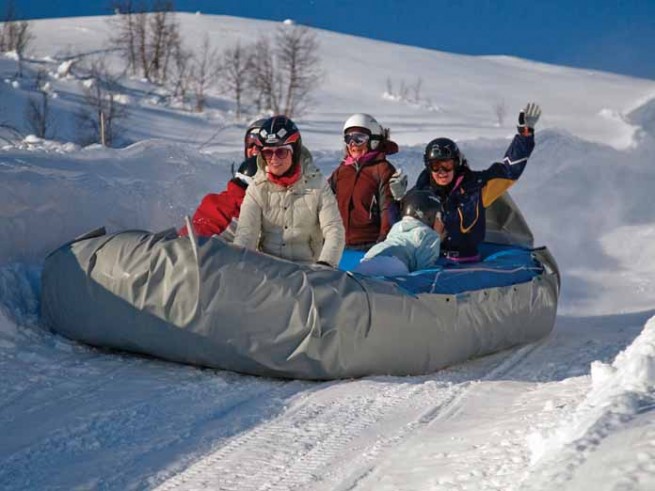
Sledding in Korketrekkeren
Take the local metro to the top of the sled run, and feel the adrenalin rush going down at great speed. When you get to the bottom, you just get back on the metro to reach the top. So winter in Oslo is worth a trip.
The 2-kilometer sled run Korketrekkeren (the corkscrew) is located next to the original bobsleigh run built for the 1952 Olympics. It is lit up in the evening, and don’t be surprised to find that the adults are just as eager as the children!
More than 2,600 km (1,600 miles) of prepared cross-country ski trails run deep into the forests of Oslo. 90 km are lit for the special atmosphere of evening tours. Skiers can stop at 44 picturesque cabins, where some are only open for overnight visitors while others are open for refreshments and home made pastries.
Whether you seek a relaxing experience to enjoy the magic of silence and snow-capped pine trees, or you prefer to get a real workout, the trails await you.
Alpine skiing
The largest ski centre in Oslo is Oslo Winter Park Tryvann with 14 slopes, 6 lifts and one of the largest tarrain parks in Norway. Oslo Winter Park’s snow cannons can cover one of the slopes with artificial snow in only 24 hours when the temperatures are low enough.
Ice skating
If you like ice skating, visit the skating rink “Spikersuppa” (The Nail Soup) in the city centre, close to the National theatre. The rink has music, and offers skate rental. There is also a larger skating rink with music and skate rental at Frogner Stadium, right next to Vigeland Park. Both rinks are open in the evening.
If the waters and lakes freeze over, it is also possible to go skating in the Oslo forests. Make sure the ice is safe: It should be at least 10 cm (4 inches) thick. Popular waters for skating are Sognsvann, Bogstadvannet, Nøklevann, Østensjøvannet and Maridalsvannet.
It was a grey, damp morning whenSteve Warren arrived in the Swedish capital Stockholm but the weather didn’t dampen his enthusiasm for the city.
I had few preconceptions about Stockholm. To put it simply, I hadn’t done my homework very well.
I knew very little other than it was a city of water, islands and ludicrously priced alcohol. I knew it as home to the strange heroine of Stieg Larsson’s Millennium novels, Lisbeth Salander. And that was about it.
I never did spot Lisbeth and her journalist ‘friend’ Mikael Blomkvist but I couldn’t miss the water and took a sharp intake of breath or two in the bars on receiving the bill.
After spending a few days, though, I left rating Stockholm highly. It was a city that seemed to offer a bit of everything, not preserved in aspic, embracing the future as much as its past. It was lively enough to keep me up into the early hours, with a surprisingly good foodie scene, a safe and friendly vibe and plenty of things to see and do.
I was based in Gamla Stan on the island of Stadsholmen, the historic heart of the city, surrounded by water. But venturing out for a walk in the drizzle of a Friday morning, I was also struck by the grand, imperial buildings lining the waterways. This was a city and a people that, in the past at least, celebrated its power with buildings on a monumental scale.
Gamla Stan (pictured) is a place of narrow medieval alleys and quiet back streets – when you manage to avoid the main tourist drag of Västerlånggatan and its key arteries. Hidden down the streets away from the worst of the crowds are delightful cafes and bakeries, stylish houses and apartments, stately churches and little boutiques for shopping enthusiasts. Unlike some other European cities, there’s little litter and graffiti.
But as well as being a quiet backwater when it wants to be, the district is also the seat of power, rich in history.
The main square in Gamla Stan, Stortorget, is dominated by delightful old merchants’ homes. Notoriously, it was the site of the Stockholm Bloodbath, an early 16th century massacre of Swedish noblemen by the Danish King Christian II. This in turn brought about a revolt and civil war.
Things are a bit more peaceful these days.
Elsewhere in Gamla Stan is the Stockholm Cathedral, the Nobel Museum and the vast and rather austere Kungliga slottet, the Royal Palace. From the size of it, and it really is massive, the building must have hundreds of rooms but around a dozen or so of the state apartments are open to the public. They’re typically grand, with some impressive chandeliers, fine art and furnishings but little different from any other royal palace.
In case you didn’t know, Sweden is one of the few European countries left that hasn’t kicked out, beheaded or exiled their royals. And the king and his family tend to spend most of their time a few miles out of town, away from the rabble in the attractive Drottningholm’s Palace, which you can reach either by taking a boat trip from the city or by a combination of train and bus.
Set in glorious grounds and right by the water, the entrance is an extravagant pile of marble and the rooms an odd mixture of the exceptionally grand and the humble.
Back to the city I went and, with blue skies, I headed out again on to the water, using the city’s excellent ferry service to get to the island of Djurgården. I was keen to explore the open-air Skansen museum and zoo in the sunshine.
No doubt with a family in tow, this oddly old-fashioned attraction would be a real winner but for an old cynic like me it was a weird place that couldn’t quite work out what it wanted to be. Zoo? Fairground? History lesson? The best bits were the historic buildings – homes, churches, windmills and the like – that have been rescued from destruction and rebuilt on the site to give an idea of what village life would’ve been like in the four corners of Sweden in centuries past.
A short distance away from Skansen, and hidden away in a monstrously unattractive building, is what I reckon to be the finest attraction in the city. The extraordinary Vasa.
This huge wooden naval ship (pictured) was launched way back in 1628 but sank soon after, disappearing into the mud until it was recovered in remarkably good condition back in the 1960s. Now preserved in this hulk of a building, nothing can prepare you for the sight as you walk into the Vasa Museum. It’s one of those occasions that the word ‘breathtaking’ was invented for.
In galleries around the ship itself, the story of its construction, ill-fated crew, the sinking and the vessel’s restoration is told in compelling style. Once you’ve toured them, take time to sit and take it all in. You won’t be disappointed.
I needed a couple of (expensive) beers and a plate of Swedish meatballs in the excellent cafe to recover my senses.
That set me up nicely for a beer and some tasty Swedish home cooking at Restaurant Pelikan, a glorious old beer hall not far from the Skanstull metro station. The pork knuckle was particularly tasty.
I spent the next day experiencing the old and the new of Stockholm. On the one hand, the City Hall – a magnificent red-brick (eight million of them in all) building in the national romantic style that hosts the annual Nobel Prize ceremonies. I took a guided tour and discovered a building of extraordinary variety, rooms that offer anything from Rennaisance touches to art deco. The Golden Hall was the highlight – a masterpiece of mosaic and gold with Gaudiesque touches.
A short hop on the metro and I found myself at the Fotografiska Museet, which opened as a centre for contemporary photography in 2010 in a stylish (and also red brick) industrial art nouveau building in 2010. The exhibitions will not appeal to all but it’s got a cafe with some impressive views of the city beyond and a well-stocked shop.
I spent my final evening in Sodermalm, a busy, lively district with some good eateries and bars (from the noisy and drunken to the cosmopolitan). I lodged myself in the Urban Deli – a cross between up-market food shop, restaurant and bar. Highly recommended and friendly. It was a highlight during my city break in Stockholm.
But guess what. The beers still cost an arm and a leg.
Top tip:If you’re staying for a few days, get the Stockholm Card from the tourist office to cut costs.
Best time to visit: Winter is bleak and gloomy and can be very cold. Spring and summer are the best times to go, with the temperature dropping off again in autumn. We visited in April and had a mixture of everything – rain, snow and sunshine.
Creating a truly unique aural experience, the world’s only Ice Music Festival returns for a trailblazing 9th year from the 16 – 19 January 2014.
Located in the idyllic mountain home of Geilo in Norway, under the watchful eye of the mighty Hallingskarvet Plateau – the Ice Music Festival’s aesthetics, music and nature, melt together under the first full moon of the year.
Constructed and formed exclusively from naturally harvested ice and snow, the Festival is a tribute to art, the environment and one’s of the world’s most vital resources – water. Frozen water.
Conceived and developed in 2006 by ice music pioneer Terje Isungset and Pål K Medhus, the Ice Music Festival is an annual celebration of collaborative music and expression performed by specially invited artists, curated by Terje.
Our Program sees another world first – an ice music orchestra – playing specially commissioned music composed by Terje with fantastic support from Arts Council Norway. Also, one of the jazz world’s greatest improvisers – Arve Henriksen – makes a return after delivering a blistering performance in 2011.
So seek out your warmest clothing, pack your bags and join us in Geilo for 3 nights of wondrous music. All the information you need to arrange your trip to Geilo is found on our Info page. If you have any additional questions or enquires, please do not hesitate to contact us: info@icemusicfestival.no
Stay tuned for news and updates via our Twitter, Facebook and News feeds and be sure to look through the Program. And finally, a quick tip, make sure you book the train to and from Geilo during daylight hours. The views are staggeringly beautiful!
The tourist website for Norway captures the spirit and history of Bergen with its description of this city as “a spectacular amphitheatre clambering up the mountainsides.”
We were there at midsummer’s eve, a time of celebration with bonfires in the three hours when it’s actually dark. Okay, let’s say dusky. In addition to the topographical clamber, Bergen also clamors in summer.
Second in size after Oslo, Bergen is home to Norway’s biggest annual cultural event, the Bergen International Festival: music, ballet, theater, opera, dance, exhibitions and more. Last year in its 61st year, the festival featured Benjamin Britten’s 200-voice “War Requiem,” Tan Dun’s opera “Marco Polo,” Canada’s contemporary circus company Cirque Eloize, YouTube sensations Igudesman & Joo, the work of choreographer Sang Jijia, an anatomical take on Stringberg’s “Miss Julie” and much more.
Bergenfest, a three-day music festival of rock/country, blues, world, folk and more draws over 20,000 people annually, in June. We missed the Ukelele Orchestra of Great Britain by a matter of days. However, Beth Hart & Joe Bonamassa performed outdoors together at Bergenhus Fortress and that was hard to miss. With elements dating from 1240, King Hakon’s Hall, the Rosenkrantz Tower and a large grassy field to accommodate huge crowds on long summer evenings, Bergenhus is just a stone’s throw from the Hotel Havnekontoret, home base for our Bergen visit. We were able to eavesdrop by strolling along the ancient wall.
“Kontor” is a term dating from the 14th century Hanseatic League and means trading post and “havne” is harbor. This hotel has a distinguished address at Castle Road 1 (Slottsgaten 1) and is of greater architectural and historic interest than is typical of a hotel. It’s pedigree as the headquarters for shipping magnate Thorvald Halvorsen and later of the Port of Bergen are on display in the ornate stone stairwells which also serve as a quick guide to the cultural history of Bergen with photos of writer Amalie Skram and of the statue of Snorre Sturluson who wrote the ancient sagas. If you stay there, be sure to ask the staff for the key to the tower for a view of the city and harbor.
The hotel is perfectly situated for access to Bergen’s cultural life. And with its amazing hospitality—ample breakfast and dinner buffets included in the room price as well as afternoon pancakes with lingonberry jam and coffee—we didn’t need to spend time trolling for eateries. The hotel is in the heart of town, a short saunter to the famous fish market where you can try nibbles of whale meat and other marine tidbits.
Henrik Ibsen, author of the plays “The Doll’s House,” “Hedda Gabbler,” and more, spent several years in Bergen and served as dramatist and stage director at the Norwegian Theatre in Bergen. An arresting statue of Ibsen by Nils Raa stands in front of Bergen’s main theatre Den Nationale Scene.
For classical music enthusiasts, a central component of Bergen’s summer cultural life is the music of native son Edvard Grieg (1843-1907) whose haunting “Solveig’s Song” from the Peer Gynt Suites seems a natural sound track for the surrounding scenery. Sometimes referred to as “the Chopin of the North,” Grieg was associated with the German romantic period. Later, he drew increasingly upon traditional Norwegian motifs in a desire to further a national identity.
We arrived just in time for the 2013 season start of Musica Nord, a summer-long series of performances held in the Church of the Cross or Korskirken in the heart of Bergen. A sanctuary from the tourist clamor outside, this cool and calm space was ideal for a program of Handel, Grieg, Svendsen, Brahms and an encore piece entitled “Saeterjentens Sondag” (“The Dairymaid’s Sunday” or possibly “Herding Girl’s Sunday”) composed by Bergen native son Ole Bull (sounding, to my ear, like “ooleh bool”).
How, you might wonder, could anyone called “ooleh bool” be taken seriously? I wondered that myself until I heard the plaintive and evocative “Dairymaid’s Sunday” and had a chance to admire a statue in a central pedestrian zone of Mr. Bull in his very tight pants, with wild romantic hair. The ladies of the day are reported to have swooned in his mere presence and he remains today a revered icon of Norwegian culture. And without Mr. Bull, we might never have had Grieg. He encouraged Grieg’s parents to send the lad to Leipzig Conservatory for further musical studies and the rest is history.
Grieg’s home, Troldhaugen (Troll Hill), is about five miles outside the city. Now a museum, visitors can see his villa, the hut where he composed and his gravesite. Troldhaugen is where Grieg was inspired to write some of the 19th century’s catchiest musical works. In addition, a beautiful concert hall there offers performances every day throughout the summer at noon and evening and a bus transports ticket-holders from downtown to Troldhaugen at no extra charge for Sunday evening performances. If you’d like to have the time to stroll about and visit the museum, you’d better go earlier in the day.
Grieg was a very slight man, physically. And his wife Nina was even smaller. When her equally small sister would come to visit, the three of them would go for walks nearby and the neighbors are reported to have commented, “Here come the trolls.” It’s fun to imagine “In the Hall of the Mountain King” as the incidental music for these treks.
We attended opening night of Troldhaugen’s summer series with a program of Tveitt, Bartok, Rivertz, Grieg, Gershwin and Gulda performed by solo pianist Rune Alver. The concert hall setting is simple and breathtaking: an open stage with a single grand piano backed by a large picture window. While listening to the performance audience members can admire the lush hillside and lake that must have formed part of Grieg’s inspiration.
Speaking of lush, Bergen is famously rainy. One standing joke is of a tourist who asked a young boy, “Does it ever stop raining?” to which the boy replied, “I don’t know. I’m only eight.”
Perhaps this emerald city surrounded by fjord and sea fed the artistic imaginations of its inhabitants the more abundantly as a result. Visual artists thrived here, and so did those engaged in textiles and crafts. No self-respecting practitioner of needlework today would be without a supply of the evenweave cotton fabric used for cross-stitch work known as hardanger cloth, after the Hardanger Fjord nearby. What’s more, the hardanger fiddle with its second set of sympathetic strings, is Norway’s national instrument and its playing style is alive and well not just in Norway but among fiddlers from Northumberland to the New World.
For a short visit to Bergen, it’s best to choose a few strategic targets rather than run yourself ragged trying to do it all although, goodness knows, the tour operators try. This philosophy guided my choice to visit just two of the four buildings that comprise the KODE Art Museums of Bergen, all nestled along the charming Lille Lungegardsvann Lake in the town center.
I went for the Norwegian artists in the Rasmus Meyer Collection and the West Norway Museum of Decorative Art. The Rasmus Meyer underwent renovations this past year but has just reopened and includes works from the Golden Age of Norwegian art. It holds a significant collection of work by Edvard Munch but as I had already Munched out in Oslo at an exhibit celebrating the artist’s 150th birthday, I decided to view the works of the Bergen-born father of Norwegian painting, Johan Christian Dahl, and others.
Dahl’s work reflects the Romantic aesthetic for untamed nature and includes many landscapes with dramatic rock faces, river rapids and dark forests. The later influence of realism, naturalism and impressionism can be seen in the works of Christian Krohg and Hans Heyerdahl. Harriet Backer, Nikolai Astrup and several other fine Norwegian artists are also part of the collection. A number of Backer’s lovely pieces appeared to have gone walkabout when I was there, perhaps on loan to other museums.
Johan Christian Dahl: View from Stalheim
The Museum of Decorative Art is also worth a ramble especially if you are a designer, craftsman, or just like to see beautiful items for the home. There is an impressive collection of Norwegian silverware, beautiful costumes, furniture, and Ole Bull’s violin, dating to the 16th century. I would have liked to see more examples of the rich needlework tradition with its widespread influence and regional distinctiveness.
Of prime architectural interest is Bryggen, a wharf-side row of 18th and 19th century merchants’ trading houses with wooden gables. A few timber buildings from the 18th century still remain elsewhere in the city and they season a visitor’s stroll with their rich architectural history. But its Bryggen’s row of listing buildings–a chorus line of drunken sailors—that’s the big draw.
Bryggen was a major outpost of the Hanseatic League, a German cabal of the Middle Ages fueled mainly by cod. The vast supply of fish, dried and sometimes salted, was exported worldwide from the port at Bergen and traded for goods that were, in turn, brought to market in major European ports. The closed German community held enormous authority and wealth and established disciplined systems of accounting, trade, and legal order upon the high seas. It’s a fascinating history and one the city trades upon to this day.
Beautiful Bergen can be very noisy during tourist season. The fish market, the historic tugs with their shrill whistles, the open-air concerts, the tour buses, motorcycles and car horns all bring a certain amount of sound to the surroundings. If, on top of that, you’ve got an overly ambitious schedule, you may not enjoy the city as it deserves to be enjoyed. Pick a few things that interest you and do them. Grab a few meaningful memories for yourself and avoid the bunions, headaches, and bad moods that result from trying to do too much.
Always carry an umbrella
If you’re planning a longer stay in Bergen, you might stray further afield and visit the Fantoft Stave Church (Fantoft stavkirke) in the Fana borough. Originally built around the year 1150, it was moved, then it burned, then it was rebuilt. Stave churches have a post and lintel construction with the load carried on the posts (called staves) and intricate carving. As Norway’s oldest buildings, they are a treasured part of the architectural heritage and only a handful remain.
If I had had another day in Bergen, a guarantee of good weather and an easy means to get there, I would have visited the Ole Bull Museum on the island of Lysoen, about 15 miles south of Bergen. Many of Bergen’s wealthy families built luxurious countryside retreats such as this. The unique architecture of his villa and the extensive network of white sand pathways seem like the perfect respite for schedule-weary visitors.
Ulriksdals Wärdshus is famous throughout Sweden for its unrivaled smorgasbord, the country’s great culinary art form. So there could be no lovelier setting than this country inn within its own royal park, built in 1868 upon request of the Swedish Crown.
Most other restaurants serve smörgårdsbords only during summer months and again at Christmas (when it’s called a Yule Table or Julebord), but guests come to Ulriksdals Värdshus at all times of the year. The present day king and queen has been known to appear to tuck into the groaning table of more than seventy-five different offerings.
According to the unofficial smörgårdsbord etiquette, one visits the food-laden table five times, the first for herring (there are twenty variations), the last for desserts. In between are a panoply of Scandinavian specialities such as smoked eel, sweet Baltic shrimp, reindeer, those famous Swedish meatballs, pork chops with the ubiquitous lingonberry sauce, and the much-loved national speciality Jansson Temptation – a delectable quiche of anchovies, potatoes, onions and heavy cream – that no self-respecting smorgasbord or Swede goes without. The typical drink to accompany such indulgence is Swedish aquavit with a beer chaser or schnapps.
But the inn also has one of the finest wine cellars in the country, and all except the most expensive are available by the glass. If you are still lucid at sunset (which is not until 9 p. m. in July), the country’s blue and yellow flag is ceremonially lowered out of the lawn, and everyone stands to sing the national anthem, one of the inn’s more delightful traditions. This is real art in Sweden.
Ulriksdals Royal Park is 5 miles/8 km north of Stockholm.






















 Perhaps this emerald city surrounded by fjord and sea fed the artistic imaginations of its inhabitants the more abundantly as a result. Visual artists thrived here, and so did those engaged in textiles and crafts. No self-respecting practitioner of needlework today would be without a supply of the evenweave cotton fabric used for cross-stitch work known as hardanger cloth, after the Hardanger Fjord nearby. What’s more, the hardanger fiddle with its second set of sympathetic strings, is Norway’s national instrument and its playing style is alive and well not just in Norway but among fiddlers from Northumberland to the New World.


