Experience the Market Town bike route Lolland-Falster.
On the lovely islands of Lolland and Falster lay no less than 7 Market Towns, which all still oozes of historical charm, but which also have a lot of modern facilities and cultural experiences to offer. The towns are situated not far apart, which makes them an obvious choice for a cycling route. We have put together this 4-day tour, which is suited for summer as well as winter. The tour starts in Stubbekøbing in the northwest corner of Falster close to the train station in Nørre Alslev. It ends in Nykøbing Faster and is therefore easily accessible by public transport where you can bring your bike.
Day 1 – 45 km
Nørre Alslev – Stubbekøbing – Nykøbing F.
The tour starts at the train station in Nørre Alslev in north Falster. You should pay a visit to Nørre Alslev Church where you can see The Dance of Death, one of the fresco masterpieces of the unknown artist called “the Elmelunde Master”. Take the regional bike route 40 for about 10 km to Stubbekøbing. Here you will find plenty of peace and harmony in the old twisted streets and among the fishermen in the harbour. Next stop is Nykøbing Falster, the largest town on the island and the unofficial capital of Falster. It’s also a must to visit the Medieval Centre.
Attractions in Stubbekøbing:
• The town square with Falsters oldest church and old town hall which is known for it’s precocious words on the facade.
From Falster’s main city Nykøbing the trip continues to the romantic village of Nysted with the authentic medieval castle and the cottage of the Danish poet Emil Aarestrup. Moving on, the next stop could be in Tågerup where you can visit “Polakkasernen” a museum showing the history and the conditions for the many Polish girls, that came to Lolland to work in the turnip fields. Continue on to Rødby, which was formerly a busy port until the fjord sanded up. The last stretch this day is along the dike towards the Baltic Sea to Nakskov in West Lolland – the city by the fjord with the most islands in Denmark.
You start out from Nakskov and go straight east towards the beautifully located Maribo with the large abbey church facing the lakes. From Maribo there’s only a short distance to Saxkøbing – the last stop of the day. Enjoy a gourmet-dinner at the cozy little Saxkjøbing Hotel as a perfect end to a lovely holiday.
It not far from Saxkøbing to Nykøbing which give you more time to enjoy the city’s many activities or do some shopping – you choose. When it’s time, the train will bring you back home – maybe a little more sore legged, but richer on experiences.
Hailing from what is considered the largest and most sustainable managed stocks of codfish in the world, the Norwegian Arctic Cod lives in the Barents Sea north of the Arctic Circle. When the adult cod reach maturity, millions undertake a long winter migration back to their spawning grounds of coastal northern Norway to breed. These fish are dubbed the “Skrei” – ancient Norse for “walk” or “stride forward”.
Skrei has been chosen to be the Flavour Of The Month at Harrods in London.
Try one or more of the company’s recommended receipts:
CROSTINI OF LIGHTLY SALTED SKREI BRANDADE WITH BABY ROCKET LEAVES
Serves 4
Note: This recipe requires two days’ advance preparation
For the brandade
700g Skrei, skin removed and cut into large pieces
250g sea salt flakes
1 litre of milk
1 bay leaf
2 sprigs of thyme
450g King Edward potatoes, peeled and cut into 2cm chunks
50ml extra virgin olive oil
2 cloves garlic, peeled and finely chopped
1 red chilli, finely chopped
To serve
1 ciabatta or any rustic loaf, sliced
2 tbsp extra-virgin olive oil, plus extra for drizzling
50g coriander
1 Lay the Skrei in a deep non-metallic dish and sprinkle with the sea salt. Cover with clingfilm and refrigerate overnight. The next morning, remove the fillets and rinse under water. Put the fillets into a clean non-metallic dish, cover with water and refrigerate again overnight.
2 In a saucepan, bring the milk, bay leaf and thyme to the boil. Simmer for 5 minutes then remove from the heat and leave
for 30 minutes. Place it back on the heat, add the Skrei and poach for 5-6 minutes, depending on the thickness. Do not let it boil. Remove the fish and reserve the cooking liquid.
3 Simmer the potatoes in a pan of water until tender. Drain and keep warm in the pan. Heat a large frying pan, add the olive oil and cook the garlic and chilli over a low heat for 3-5 minutes until brown. Remove from the pan and set aside. Flake the poached Skrei and put in the pan with the potato. Mash together with the fried garlic andn chilli. Add the olive oil and a little of the Skrei’s poaching liquid and beat until it reaches a soft consistency. Add a little ground black pepper but no salt.
4 To serve, rub the slices of bread with the olive oil and cook on a griddle pan. Spoon the salted Skrei on top, then drizzle with olive oil. Top with the coriander and season before serving.
MOROCCAN-STYLE FISHCAKES WITH RED PEPPER AND ROSE HARISSA SAUCE
Makes approx. 12 fishcakes
For the harissa sauce
2 tbsp olive oil
2 red peppers, cut into small chunks
1 onion, peeled and finely diced
2 cloves garlic, finely chopped
2 tbsp rose harissa paste
For the fishcakes
700g skinned Skrei
3 tsp ground ras el hanout spice mixture
½ tsp dried chilli flakes
3 garlic cloves, chopped
½ preserved lemon, chopped
1 egg, lightly beaten
2 tbsp chopped coriander
2 tbsp mint
Plain flour, to dust
750ml groundnut oil
A squeeze of lemon juice
For the salad
20g flat leaf parsley
½ preserved lemon,
finely chopped
1 tsp nigella seeds (optional)
A squeeze of lemon juice
1 To make the harissa sauce, heat the oil in a large frying pan and add the onion, garlic and red peppers. Cook for 10-15 minutes until soft. Add the rose harissa paste and cook for a further 5 minutes. Set aside to cool, then purée in a food blender until smooth and set aside.
2 To make the fishcakes, use a food blender to mix together all of the ingredients except for the flour and oil. The mixture should be coarse, not puréed. Season well and pan fry a little of the mixture so you can taste it for seasoning. Dust your hands with flour, then take 1 tbsp of the mixture
and roll it into a ball. Repeat for the other fishcakes.
3 Pour approximately 5cm of the groundnut oil into a deep-sided frying pan. Heat the oil then fry the fishcakes, five at a time, for about 2 minutes, then turn over and fry for a further 2 minutes until golden.
4 Place the cooked fishcakes onto absorbent paper and sprinkle with salt and a squeeze of lemon juice.
5 Mix together the parsley, preserved lemon and nigella seeds and a squeeze of lemon juice. Serve with the fishcakes and red pepper and rose harissa sauce.
SKREI WITH CLAMS AND CANNELLINI BEANS
Serves 4
For the lemon aioli
4 tbsp mayonnaise
Zest and juice of one lemon
2 cloves garlic, finely chopped
For the clam and bean sauce
2 tbsp olive oil
3 cloves of garlic, finely chopped
1 onion, peeled and finely chopped
4 fennel, thinly sliced lengthways
2 x 400g cans cannellini beans, drained
Zest of one lemon
4 tbsp flat leaf parsley, finely chopped
125g white wine
125g fish stock
500g fresh clams, cleaned
2 To make the aioli, whisk together all of the ingredients, cover and set aside.
3 To make the sauce, gently heat the olive oil in a sauté pan, then add the garlic, onion and fennel and cook for 10 minutes. Add the cannellini beans, lemon zest and half the parsley. Simmer for 10 minutes, stirring occasionally.
4 Put the wine and stock into a separate pan and bring to the boil. Add the clams, cover and cook for 2-3 minutes or until the clams open. Drain the clams and discard any that have not opened. Reserve the cooking liquid and add this to the bean mixture. Continue to cook the bean mixture for 15 minutes, then add the clams and cook over a low heat for 1 minute.
5 Meanwhile, cook the Skrei. Rub the fish with the olive oil and heat a large non-stick frying pan. Add the Skrei skinside down and cook for 2 minutes. Gently turn the Skrei over and place into the pre-heated oven for a further 3-5 minutes, depending on the thickness of the fish. It is cooked when the fish is firm and white.
6 Divide the bean and clam mixture between 4 plates, top with a piece of Skrei and then scatter with the remaining parsley and the rocket. Serve with the aioli on the side. Then you have real skrei from Norway.
There’s a certain symmetry in traveling to one of the world’s most visited places. My trip to the Norwegian fjords last summer allowed me to do just that while at the same time providing a great deal of historical insight and spectacular landscapes.
Getting started
The core of my trip, “Norway’s Fjords” was organized by Chicago travel agents Thomas P. Gohagan & Company for the benefit of several alumni organizations. Although not a graduate of Northwestern, I insinuated myself into their alumni association, converting temporarily from a Minnesota Gopher to a Wildcat.
Our ship, MS Le Diamant, operated by Compagnie du Ponant (www.ponant.com), was scheduled to depart from Bergen, Norway. I decided to go to Bergen three days early and elected to stay at Thon Hotel Rosenkrantz (Rosenkrantzgate 7). At NOK1,695 ($298) per night for a single room, it was a slightly cheaper option than the SAS Royal Hotel, recommended by Gohagan.
The Thon Hotel lies one street off the Bryggen, the town’s historic wharf, and was easily reachable from the airport by means of the Flybussen, the airport bus (85 kroner, or $15). A caution in booking a hotel — July is the height of the White Nights of the north, when it never gets fully dark, meaning that the locals and tourists stay up until all hours.
Because my room faced the street — and because I had to keep the window open to grab the few available puffs of cool air at night (there is little air-conditioning in Norway) — I was kept awake until 3 or 4 a.m. by partygoers staggering home from the bars along the Bryggen. I would recommend that anyone in any hotel in the area ask for a room facing away from the street.
When I complained about the noise, the receptionist assured me that there was nothing to be done, but she did suddenly produce a significant “weekend special” package that reduced my room rate by almost $100 a night for the last two days.
Bergen sights
The Bryggen represented Bergen’s trading power when the Hanseatic League, of which the town was a member, established a trading office on Vågen (the bay). The rows of wooden buildings, placed on UNESCO’s World Heritage List in 1979, were once houses and dormitories for the Hansa’s representatives, who oversaw the reciprocal trade in commodities like dried fish and grain between Norway and the rest of Europe.
Once considered an eyesore and a fire hazard, the leaning buildings of the Bryggen were often threatened with demolition, but today they house shops, restaurants and museums, all well worth a visit.
One of the most important, from a historical point of view, is the Hanseatic Museum (Finnegaardsgaten 1a), which re-creates the offices of the Hansa from 1360 until 1754.
The building includes the journeyman’s room and the lowly apprentices’ room, where boys slept two to a bed in an unheated room and where food was served cold to prevent fire.
Admission to the museum (50 kroner, or $9) includes entry to an associated building several blocks away, the Schøtstuene, or assembly hall, which would have belonged to all the merchants of one or more trade houses.
The Hansa ships, along with an entire parade of Norwegian seafaring craft, can be seen at the Sjøfartsmuseet, or Maritime Museum, located on the campus of the University of Bergen (Haakon Sheteligsplass 15). The museum (entry, 30 kroner) is a capsule of a very significant part of the history of a country that has over 15,000 miles of coastline.
Artistic outings
Norway’s favorite musical son is Edvard Grieg, so finding his music there is not difficult. I elected to attend an evening concert (NOK199, or $35) at the Korskirken, where a violin/piano duo played sonatas by Grieg plus one by Brahms. In such a small and charming setting, the music was very intimate.
There are concerts all the time in Bergen, and tickets for these and other events can be bought at the tourist office, Bergen Turlag (Tverrgaten 4).
It’s also possible to visit Grieg’s home (admission, 60 kroner, or $10), Troldhaugen, located just south of Bergen on Nordåsvannet Lake.
The Bergen Art Museum (Rasmus Meyers allé 3), located right beside the lake Lille Lungegårdsvann, is known for its collection of works by 18th- and 19th-century artists such as Munch, Klee and Picasso. In such a small city, it is a fine collection (entry, 50 kroner).
My next day featured a trip to Gamle Bergen, the open-air Old Bergen museum (Nyhavnsveien 4; phone 47 55 39 43 00), a short, two-mile bus trip away from town (take virtually any bus line going north to Sandviken for about 24 kroner).
The museum includes 35 buildings from the 18th and 19th centuries, including residences, shops and commercial buildings, all connected by rambling walkways and dotted with green areas. Only two houses and the grounds are open at no cost, but hourly guided tours (70 kroner) give a much more in-depth introduction to the lives of Norway’s coastal citizens during the recent past.
High costs
A caution — everything in Bergen (and in Norway, in general) is very expensive. Thanks to North Sea oil, Norway has gone from being one of the poorer countries in Europe to one of its richest, and this wealth is reflected in the cost of living. A large beer, for example, costs $16-$18, and food is commensurately expensive.
There are no bargain fast-food options (McDonald’s is just as expensive), so one way of keeping daily costs down is to take advantage of the filling breakfast at your hotel, making it your main meal. Another alternative is to take a package tour, with meals included, if you’re trying to travel on a budget.
To the ship!
On July 4, our group met for the transfer to Le Diamant. For those who prefer small ships, the Diamant is a find. All of its 113 cabins and suites are outside-facing, with large windows or balconies that let passengers enjoy the scenery. Each cabin has two twin beds that can convert to one queen-sized bed, plus private facilities with a shower or bath, a TV/DVD, a mini-bar and thick terrycloth robes.
As the ship is French-owned, the food is important. Breakfast and lunch were splendid buffets, but dinner was a two-hour or more sit-down affair, with wine included. The larger restaurant, Îles de France, offered open seating, while the smaller, more intimate L’Escapade required reservations.
If, God forbid, you need more food, an early-bird Continental breakfast, afternoon tea and room service complement the three regular meals.
The very imaginative and varied offerings should suit anyone, and for those with a special diet (I am a vegetarian), the chef will create special dishes. And I have never seen such an elaborate dessert table!
The ship also has three lounges, where nightly entertainment included a cabaret and live music. For quieter time, a small, unstaffed library with computers offers a chance to read or contact folks back home.
The onboard staff includes a physician, and each deck can be accessed by stairs or elevator.
The service was extraordinary; I hardly needed to think of something before it was offered.
There were three semiformal evenings (jacket and tie for men), and the rest of the time people tended to dress to a level above ordinary street dress.
From my point of view, one of the benefits of a small ship is its maneuverability. Especially in Norway’s picturesque fjords and among the many White Sea islands, the chance to see things up close and personal was a great advantage over a larger ship. The ship has an open-bridge policy, which helped when trying to spot beluga whales or Arctic terns.
Setting sail
We arrived the next day in Geirangerfjord, a deep, S-shaped inlet cut into high cliffs that is now a UNESCO World Heritage Site. The tiny town of Geiranger (population, 250) gets around 600,000 visitors a year, mainly by ship. The famous Seven Sisters and other waterfalls line the fjord walls on the approach to town.
We disembarked by tender, then went by bus up the many switchbacks to Dalsnibba, a peak situated 4,800 feet above sea level, for an amazing view of the fjord and the surrounding area.
As was typical for the entire trip, we had little time to wander Geiranger, instead heading back to the ship to sail on to our next destination. Afternoons aboard featured lectures by leaders of the various groups on board, on subjects ranging from Arctic flora and fauna to Viking exploration. All in all, the days were pretty full.
All of our guided excursions were included, so there was no need to pay admission or worry about transportation to and from the ship.
A day at sea followed, then we arrived at Svolvær on Austvågøy, the northernmost of the Lofoten Islands. Crossing the bridge to Vestvågøy, we visited a replica of the largest Viking longhouse ever discovered, at Borg, a 270-foot-long wooden building that would have housed about 80 people.
Svolvær was only about two miles from the dock, so most of those going ashore in the afternoon decided to walk in order to work off some of our fine dinners.
I wanted to get a jar of cloudberry jam and browse for gifts to bring home, so, because of our limited time ashore, I missed one of the main attractions of the town, the Lofoten War Museum (Fiskergata 12; phone 73 03 28). My fellow passengers pronounced it wonderful — chock-full of memorabilia, photos, uniforms and everything needed to tell the story of Norway’s involvement in World War II.
A pleasant surprise
When we were underway again, the captain announced the first of several “surprises,” asking everyone to come on deck. He directed the ship into the Trollfjord, a particularly scenic, needle-narrow fjord whose walls sliced straight down into the water. It seemed that we were going to touch the sides.
Once we reached the end, the captain turned the ship on its axis slowly and we maneuvered back out. It was an impressive surprise, both from the standpoint of scenery and seamanship.
We next sailed to Tromsø to be impressed again, this time by the importance of the Gulf Stream and the westerly winds that keep the Norwegian coast ice-free. Our first stop was the delightful botanical garden associated with Tromsø University, Botanisk Hage (Breivika). Among a wide range of flora from the northern regions, we admired fluorescent blue poppies that none of us had seen before.
We also made it to the Tromsø University Museum (Lars Thøringsveg 10), with its displays on Arctic animals and the culture of the Sami, or Lapps, a native group best known for reindeer herding. Spread through four countries (Norway, Sweden, Finland and Russia), the group is one of the best organized and most vocal of all indigenous peoples, working toward recognition of their culture and language.
The North Cape
Although we passed the Arctic Circle marker on our way north, the “high” point of the Norwegian part of our trip had to be the North Cape — at 71˚10’21” the northernmost point in Europe. According to our humorous captain, there are two North Capes: the actual northernmost point, which is a low-lying, rather uninteresting hunk of rock with a small white flag, and the “tourists’” North Cape, which is a massive cliff that plunges dramatically down into the water.
Our captain called us on deck for another surprise as we passed the Cape: champagne and onion soup, accompanied by the beautiful singing of one of the staff entertainers. We saluted the Cape, and each other, as we sailed by, watching the sun once again refuse to go below the horizon.
Next we went to the North Cape Plateau to enjoy the view over the Barents Sea and take the inevitable pictures at the North Cape monument. The visitors’ center there featured dioramas of historical events, plus a Thai temple and a 20-minute panoramic film showing the northern landscape.
We were unusually lucky with the weather throughout our trip; every day was sunny — and this day was no exception. Neither rain nor fog blocked our view, for which we thanked our lucky stars.
Contrary to the bridge between Malmoe in Sweden and the Danish Capital Copenhagen, this bridge is actually not a physical bridge but luxurious cruise ships leaving nightly from Copenhagen for Oslo, and from Oslo for Copenhagen.
The 16-hour sailings leave at 5 pm and arrive at 9:30 am the next day. So you can spend seven hours in Norway’s capital and then return to Copenhagen, or take this cruise from Oslo and do Copenhagen as a day trip…or just go one-way in either direction.
Cabins vary dramatically in price depending on the day and season (most expensive on weekends and late June–mid Aug; cheapest on weekdays and Oct–April). All cabins have private bathrooms.
DFDS Seaways operates two ships on this route — the M.S. Pearl Seaways and the M.S. Crown Seaways. Both offer all the cruise-ship luxuries: big buffets for breakfast and dinner. We sailed with Pearl Seaways.
The three restaurants Blue Ribban & Marco Polo in addition to an Italian restaurant have a capacity of 395 persons. We enjoyed a delicious steak in the Explorer’s Steakhouse.
There is a kids’ playroom, super for travelers with children, an indoor and outdoor pool, sauna, nightclubs, bars, including a piano bar, Baresso Coffe and a Red and White bar where we tested five different beers from the mini brewery Skands in Copenhagen. Try it!
First we had a Humlefryd, which is a classic lager beer with a deep golden color and a rounded hop flavor. Then a New Stout which is dark ans slightly sweet with a fresh bitterness. Our third beer was Emegade IPA (India Pale Ale) brewed with English Maris Otter malt and caramel malt. Fourth was Blue Chimpanzee, which is a Belgian inspired beer with pronounced malt sweetness and a sweet fruity scent. Last but not least we enjoyed the Esrum’ Kloster, an interpretation of an abbey. There is used herbs from the monastry’s own herb garden, including juniper, lemon balm, lavender which the monks used as flavor enhances. The beers had an alcohol content from 5,5% to 7,7%.
On board you have access to Pay Wi-Fi and satellite phone. There are no ATMs on board. Cash advances are however available at the shipboard exchange desk. The tax free shops and restaurants accept credit cards as well as euros, dollars, and Danish, Swedish, and Norwegian currency.
If you want to arrange a conference on board there is a separate conference department with lots of possibilities from small to big groups. Attendees may enter the ship long before departure and enjoy all the facilities on board during the evening(s).
Reservations are smart in summer and on weekends. Advance bookings get the best prices.
If you’re taking an overnight trip, keep these tips in mind:
Travel off-season. Prices drop significantly if you cruise outside of July and August. Any time of year, avoid traveling on a Friday night, when boat fares are highest and business-class hotel prices are lowest.
Consider taking successive trips. Sometimes you pay less for a round-trip ticket if you sail out one night and return the next. It’s actually an pleasant break from the hectic city life.
Book ahead. You can reserve not only your berth but also your window-side dinner table and your sauna time.
Savor your smörgåsbord. Board the ship hungry. Resist the urge to pile everything on your plate at once, as many Americans do. Instead, take small portions and dine in stages. Why rush? There’s plenty of time.
Eat like a king. Promenade the decks like a queen. Look at the colorful paintings by Per Hillo. And if you’re a gambler there’s even a Casino on board.
Even if you’re just common folk, you can afford royal treatment on the DFDS seaways’ salings between several Scandinavian cities, not only the bridge between Copenhagen and Oslo.
If you’re looking for «wonderful wonderful Copenhagen» you’re guaranteed to find it in the capital’s gabled Tivoli Gardens.
No one enjoys this classic amusement park more than the Danes themselves; since the day it opened I 1843, a visit here has been a much-loved summertime tradition. More than 100,000 twinkling white Christmas lights and 400,000 flowers set the fun-filled (and in the evening, romantic) scene.
The park’s 20 leafy acres feature carnival games, marching bands, and amusement rides (the creaky 1914 roller coaster is the same vintage as the merry-go-round of tiny Viking ships).
Dance halls, beer gardens, and a full schedule of mostly free open-air stage performances keep young and old entertained and coming back. There are dozens of restaurants and food pavilions – some of them very elegant but pricey. Traditional Tivoli fare of pølser (hot dogs with fried onions) is usually heaven enough for most.
Divan 2 was the most renowned restaurant in the gardens, in operation since they were first built in an area well outside the city center by King Christian VIII. It was Tivoli’s most refined (read: expensive) dining venue with an impeccable French menu, but declared unfortunately bancruptcy before Tivoli opened its doors for the 2011 summer season.
However the Nimb Terrace is an excellent alternative. Serving seasonal cuisine with a focus on local harvest, flavour and eye pleasing presentation, the restaurant invites diners to explore the creative menu and enjoy the same-sized dishes in any preferred order.
131-year old Grøften, ‘The Ditch’, is one of Tivoli’s oldest and most venerable establishments. Part of the restaurant stands more os less as when it opened. Since then, the restaurant has branched out covering quite a large outdoor seating area, parts of which bear names such as Granny’s Garden or The Schnapps Gallery.
Grøften specializes in traditional Danish fare prepared as Granny herself would do. Home made rolled pork sausage, roast pork and fried fillet of plaice are among the age-old favourites. This restaurant is very well-known in Denmark since it is frequented by real as well as wannabe celebrities, who convene here to see and be seen. If you are lucky enough to rub elbows with someone famous, you can wash down the experience with a nice glass of schnapps – there are more than 12 kinds to choose from.
Tivoli, said to have inspired Walt Disney to create Disneyland, is light years removed from the archetypical American amusement park. Now wonder we’ve named Copenhagen Scandinavia’s fun capital.
Tivoli Gardens will be open from April 10 this year.
Didn’t win a Nobel prize last year? Sorry to hear that… but don’t worry you can still visit Stockholm this winter. Our Daily Scandinavian team introduces the Swedish capital and its hotspots.
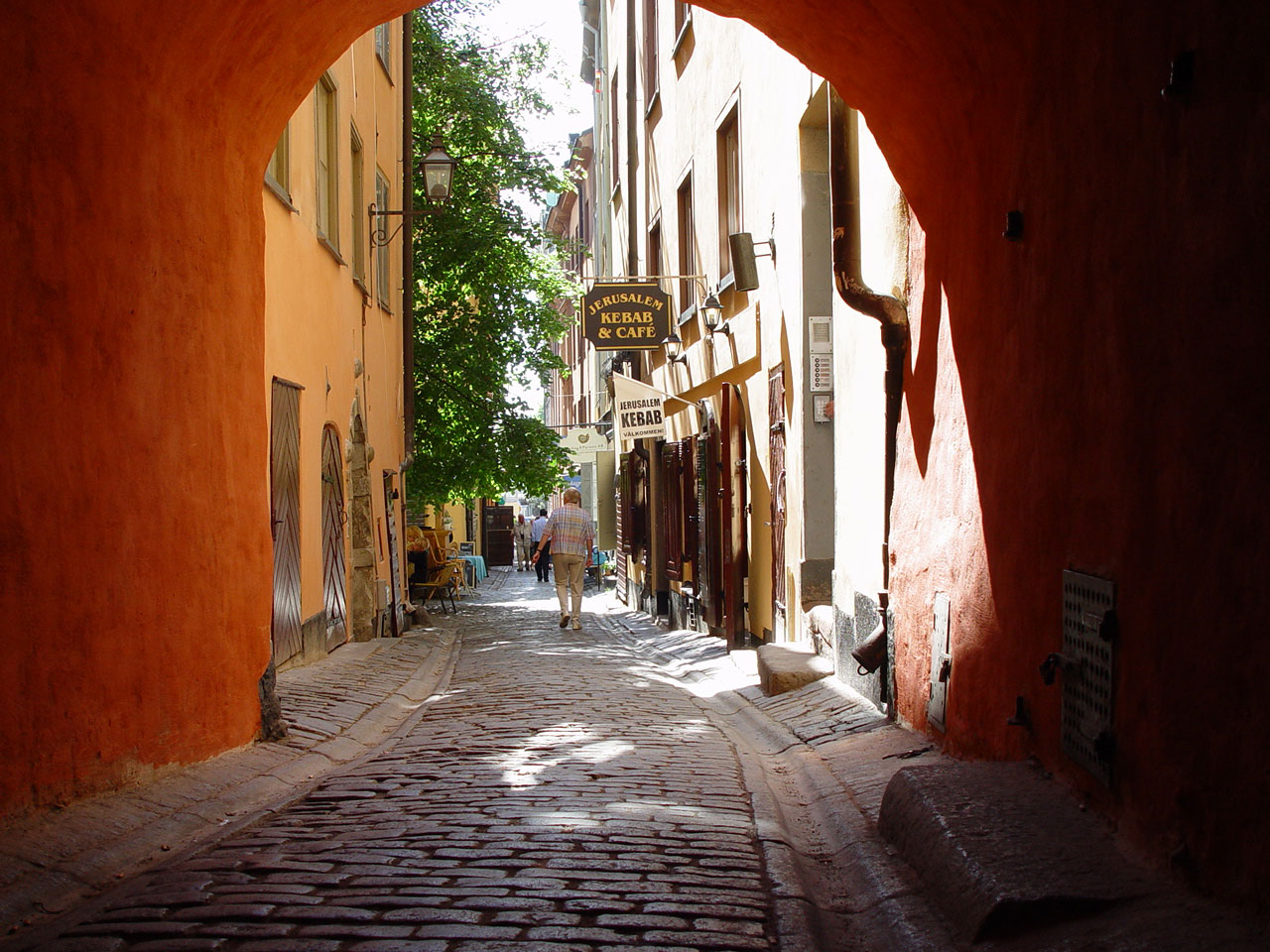
When this year’s Nobel laureates will be announced later this year, the Nobel Banquet will be arranged in Stockholm as usually in the second week of December where the winners will honored. But, perhaps a trip to Sweden’s capital should also be your next Scandinavian travel destination. Stockholm is an eclectic blend of old and new, the traditional and ultra-modern. By day, the cobbled streets of the medieval Gamla Stan and the beauty of the City Hall, Royal Palace and Stockholm Cathedral await.
By night, some of Europe’s best nightlife is at your feet. Stockholm is a metropolis built on fourteen islands, the most central of which, Gamla Stan, is the oldest settlement in the city. Dating back more than three quarters of a millennium, it hosts beautiful, winding, cobbled streets, lined with small cafes, art galleries and shops filled with handicrafts and antiques. One can get lost among the maze of alleys, medieval churches and quaint squares. Gamla Stan also plays host to two of Stockholm’s greatest attractions, the Royal Palace and Stockholm Cathedral.
Food and drink is a big part of any city’s culture and Stockholm is definitely no exception. Relax while getting your fix of fika – a Swedish colloquialism for sharing a coffee and a chat at leisure. The Swedes are marathon coffee drinkers, on average drinking 4.5 cups each a day, and indulging in something sweet with a cup of your favourite brew has become something stereotypically Swedish.
Swedish cuisine is also a must try while in the city and favourite establishment of Stockholm locals is the Pelikan, located on Sodermalm. With hearty helpings of traditional home-cooked food at a reasonable price and a beer hall on site, one can see why the restaurant attracts so many locals.
Being a city sprawled across many islands, the water is an integral part of the beauty of the capital and having a drink or a meal on one of the many converted boats is a unique attraction.
Having now secured its name as one of Europe’s trendiest and most fashionable cities, Stockholm has the nightlife to match and with endless beautifully designed bars and clubs, there is something for everyone. One sight not to be missed is the Icebar, kept at a chilly -5 degrees celsius, you are guaranteed a cool experience in every way. Everything inside the Icebar is made from ice except the beverages contained within the ice glasses but don’t worry about catching a cold, every guest is provided with a warm cape and gloves to ensure comfort.
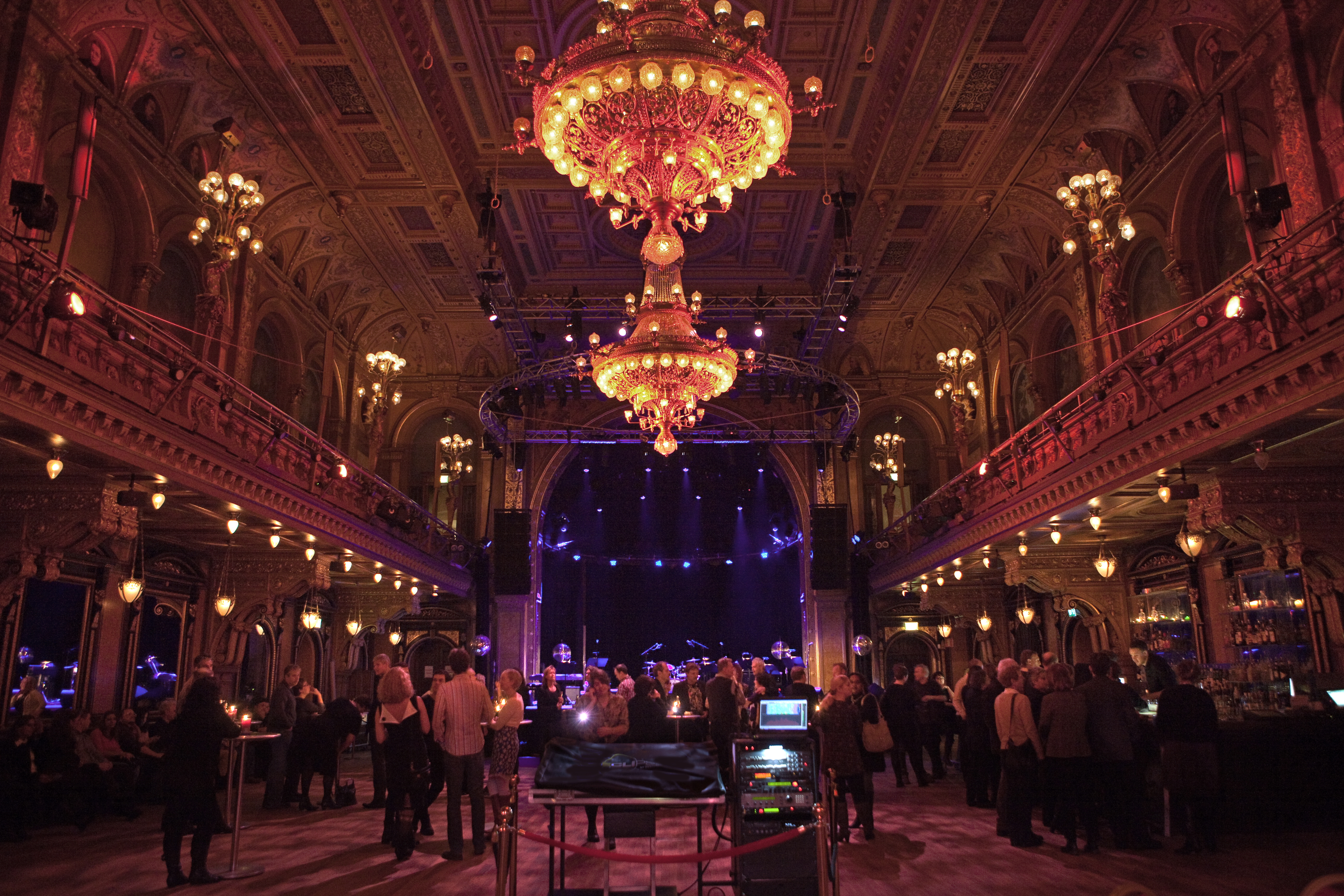
If you want to catch some live jazz in exquisite surroundings, the sleek and cool Berns Club is the place. Decked out in beautiful art nouveau style, with many bars and cafes inside and internationally renowned artists year round, Berns is possibly the coolest place in the city of style – Stockholm.
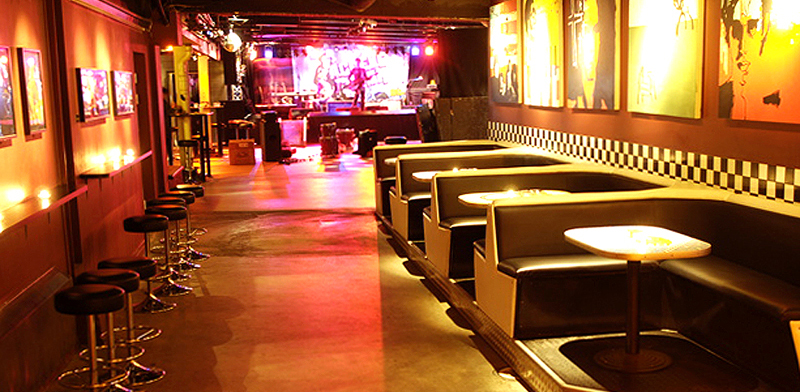
For the rockers among us, Debaser Slussen and Debaser Medis are the places to be, boasting impressive indoor and outdoor areas and the widest variety of alternative music in the city, from pop-rock to hardcore.
For the classic nightclub feel, Sturecompagniet, the biggest club in Stockholm, with its beautifully converted interior, huge dance-floor and many bars is the place to be seen for the young, hip and trendy on a Saturday night in Stockholm.
Grammy nominated electro-pop duo “The Green Children” with Milla Sunde (from Norway and Marlow Bevan (from UK) ‘s video release takes you on a journey into a “Norwegian Dream”of Norway’s mystique and breathtaking scenery.
The video envisions Milla Sundes love for her country’s stunning nature with a refreshing remake of Jan Hammer’s “Crockett’s theme”.
The Green Children are a Europea musical duo who writes and self-produces atmospheric electro-pop music. Milla Sunde (born 17 December 1983), from Norway, and Marlow Bevan (born 4 October 1984), from England, also established The Green Children Foundation, to support microcredit, education and healthcare. In 2005, they traveled to Bangladesh and visited Grameen Bank, known as ‘the bank for the poor’. It was here they met Professor Muhammad Yunus, who is the father of the ‘microcredit’ movement.
After meeting so many empowered poor women, they were inspired to get more involved. The Green Children Foundation is designed to help shine a light on the positive people and solutions that are making a real difference in the world.
To this date, the foundation has supported a new eye care hospital in Bangladesh, student scholarships, new microfinance projects, orphaned children and animals in need.
Las summer they released their first Green Children tune to feature vocals in Sunde’s native Norwegian tongue, titled “Norwegian Dream”. The song is a derivative work of instrumental hit “Crocket’s Theme” (and that is the Miami Vice theme song, yes).
“Norwegian Theme” is off the Green Children’s sophomore release Connection.
Credits for “Norwegian Dream”
Music: Jan Hammer
Lyrics: The Green Children
Published by: Universal Music Publishing (ASCAP)
“A most beautiful voyage along the Norwegian coast”
Northern lights Harstad
At least that is what is claimed in the advertising, so we boarded MS Finnmarken in Bergen and sailed to Tromsø to test the statement. The passengers on our voyage were mainly tourists from Britain and Germany, many of whom said that they wanted to experience the northern lights.
The history of Hurtigruten:
On the 18th of May 1893 the Norwegian government and the shipping company Vesteraalens Dampskibsselskab signed a four year agreement scheduling weekly summer trips between Trondheim and Hammerfest and weekly winter trips between Trondheim and Tromsø. Thus the people and businesses along the coast were offered a completely new way of keeping in touch.
Prior to this time arrangement, Captain Richard Widt and his pilots had taken accurate notes about courses, speed and times along the route. In July 1883, at 3:30 a.m. DV Vesteraalen anchored at the bay of Tromsø half an hour before schedule, therefore the name Hurtigruten (The Express Route).
In the more than 100 years since that July, several owners and more than 70 vessels have been part of the Hurtigruten operation, and it has become the foundation for tourism, freight and mail delivery as well as a means of travel for the inhabitants of the coastal cities.
Today 11 ships sail from round trip from Bergen to Hammerfest, a voyage lasting for 11 days. Every day a Hurtigruten ship arrives at one of the 34 ports along the route.
MS Finnmarken:
MS Finnmarken, completed in 2002, 138.5 meters long and 21.5 meters wide, is one of the company’s largest ships.
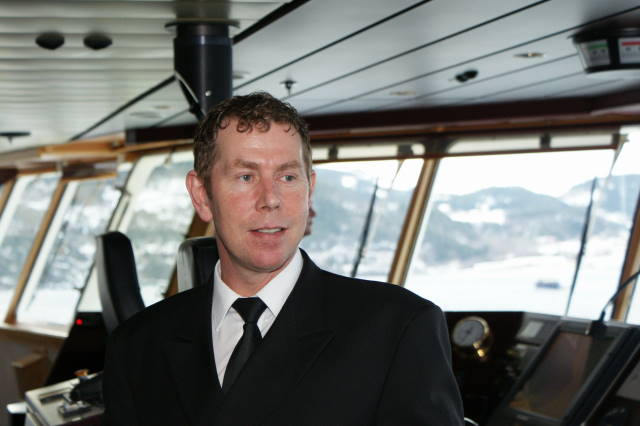
Captain Kai Albrigtsen
Captain Kai Albrigtsen, an officer with Hurtigruten for 31 years, became captain of MS Finnmarken for the second time after sailing it to Australia in 2011, where it was then used as hotel ship for the oil industry. He had also served as Captain on the ship’s maiden voyage after its 2001 christening.
MS Funnmarken
In past years, there were few passengers on the ship during winter, but lately, winter bookings have greatly increased. “I find it more exciting to sail during the winter, not only enjoying the northern lights, but the light of the north as well”, says Captain Albrightsen.
Flexibility:
Many passengers choose to stay on a ship the full 11 day round trip from Bergen, joining one or more of the excursions offered during the cruise. Excursions are steadily increasing in number, as the number of travelers in winter has also increased. Voyages are scheduled so that the ports visited during evening hours on the northern route are visited during daylight hours when returning south. In this way passengers are able to enjoy the whole specter of the beautiful Norwegian coastline on the very same voyage.
Tourists who prefer to disembark at ports of call along the route at are able to do so. You may, for example, board the ship in Bergen and stay four nights enroute to Tromsø, as we did. If you decide to bring your car, you may debark or embark the ship anywhere along its route. It is also possible to leave the same ship in one port and join it again, or join another of the 11 other ships at another port. We took a bus from Stamsund to join a Viking celebration, and joined the ship again in Svolvær. (See excursions below).
Satisfied passengers
Passengers who have sailed with Hurtigruten applaud the beautiful coastline as well as the light and comfortable atmosphere on board.
A fisherman, living on the coast near Harstad, was so pleased with Hurtigruten that he has traveled on 100 round trip voyages. On one occasion, having missed the bus at Harstad after an 11 days’ round trip, the fisherman decided to take another 11 day round trip, hoping that the bus would be on the pier. He even had his own Christmas tree in his cabin, which the crew cheerfully decorated before his arrival for the holidays.
Many people dream about a cruise with Hurtigruten. An elderly couple from the northern Norway saved money for many years, until the day that they were able to purchase tickets. The first thing the husband did after entering their cabin was to stretch out on the bed while his wife set out to explore the ship, walking from stem to stern, and deck to deck. On her tour she met the captain and told him how they had saved money for many years to be able to afford the cruise. The captain was so impressed by the story that he invited the couple to dine with him at the captain’s table.
Filled with joy the wife ran down to her husband in the cabin and told him about the dinner invitation.
“No”, said the husband, “We are not accepting the invitation. We have saved money for so many years, and we shall damned not eat with the crew.”
Searching for the northern light:
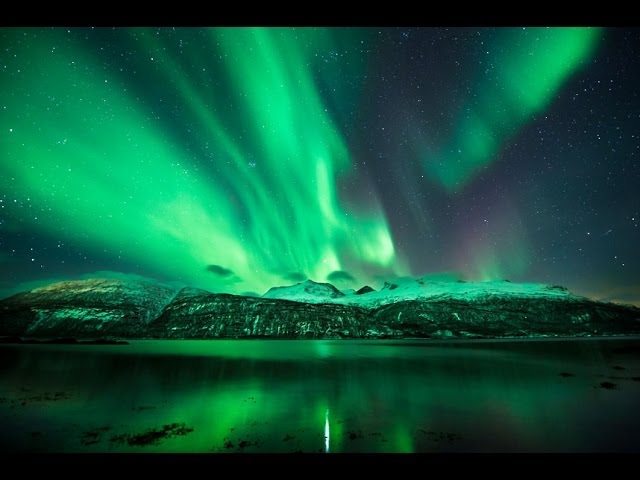
Many tourists that we met on our cruise looked forward most of all to see the northern lights. As we cruised north from Trondheim the weather became cloudy and rainy, resulting in slowly diminishing hopes of seeing the lights in the northern sky. Exultation became evident when the bridge reported that northern lights luminated the sky as we passed Raftsundstredet, and the mouth of the Trollfjord. In the summer the ship enters the fjord and turns out again, but in winter the risk of ice falling from the mountain is imminent, so the only thing to do is to sail as close to the mouth as possible. The combination of the Trollfjord and the northern lights created laughter and joy.
Northern lights, Ersfjord, Tropmsoe
A tasteful voyage:
Norwegian cuisine is, like the nature along the long stretched coastal line, distinctive and made from fresh raw materials. Hurtigruten offers its passengers a set dinner menu for each day with fresh foods related to the particular coastal areas. There is also a good choice of superior quality wines imported from Portugal.
From the MS Finnmarken restaurant
Day 1 Bergen is the town where Norwegian raw materials meet the culinary delicatessen of the continent. The voyage from Bergen begins with a dinner buffet consisting of the best Norwegian and international cuisine.
Internatuonal cuisine
Day 2 On the stretch from Ålesund to Molde we were served codbolinhos with a tasty ruccolo salad for starters. In the split cod capital of Ålesund we were served cod originally dried on rocks, the Norwegian name being “klippfisk”, or rockfish.
Delicious dessserts
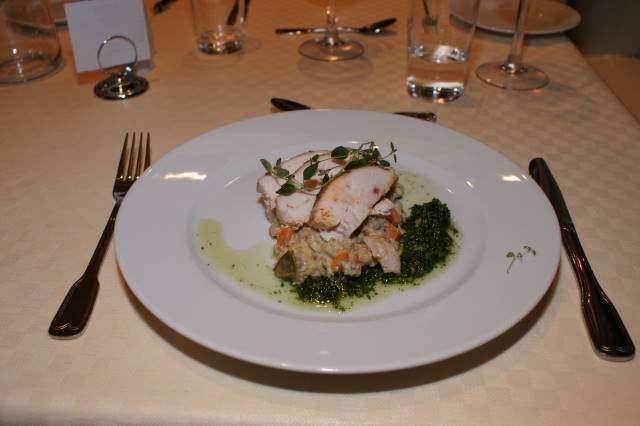
The main dish was farmer chicken served with barley groats sotto, and the evening dessert was chocolate fondant with pear sorbet.
…and salmon, of course!
Day 3 We’re on our way from Trondheim to Rørvik. Today’s dinner menu consists of cauliflower soup with strips of smoked ham for starters and baked filet of trout served with celery root as the main dish.
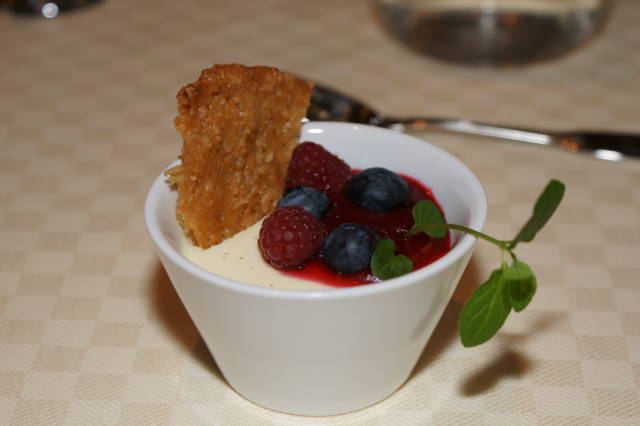
Panacotta
Dessert was panacotta made from Norwegian curdled milk, called ‘tykkmelk’. The name ‘thick’ or ‘tykk’ originates from the copious consistency which was enhanced with the use of butterwort. Leaves from the butterwort plant are placed in small wooden bowls before lukewarm fresh milk is added. I remember we called it ‘melkering’ or ‘a ring of milk’ when I was a boy.
Spy plane exhibuted at the Bodø Aviation Museum
Day 4 We have arrived at the port of Bodø and are heading for Svolvær. The starter on today’s dinner menu was Selbu Blue on salad leaves, served with cloudberry syrup. The Norwegian blue cheese was created over a period of 100 years. As opposed to Roquefort, which is made from sheep’s milk, cow milk is used in the Norwegian blue.
The main dish was grilled brisket of beef, and dessert was a Norwegian speciality “Vailed farmer girls”, apples in cream and bread crumbs.
Day 5 We have arrived at Tromsø where we left the ship.
Tromsoe
In the event that you should be interested in the remaining days’ menus, here they are:
Today’s starter is green pea soup followed by grilled dried cod with potato purée, porto salsa and bacon. Drying food is the oldest known preserving method, and dried fish may last for years. The grilled dried cod which is being served today has been softened in water for a week, and it is a treat to taste how an ancient method of preserving still produces gourmet food.
Dessert was cheese cake.
Day 6 This is the day of arrival at the North Cape, and what then is more suitable than a Cape North buffet?
“The king crab is better than lobster, and the best ever comes from Russia,” said Bent Stiansen, a Norwegian world champion chef. If you agree or not, it’s time to test the statement.
Day 7 Welcome to Kirkenes! Today’s dinner consists of Barents salad, deer medallions and raspberries under sour cream. The dish emphasizes the potatoes, vegetables and herbs from this part of the country, which is said to have a richer taste and aroma due to cool climate, slow growth and a lot of light, which bring out the best of the produce.
Day 8 The ship leaves Hammerfest, the world’s most northern town. Today’s menu is aquavit brinc-cured round steak from reindeer with herb salad as a starter. Main dish is Arctic charr served with asparagus, Roswald potatoes and hollandaise sauce.
For a long period of time Arctic charr was a culinary secret reserved for the lucky chosen few. A small and quality conscious fish farming industry has however made it available for more people, also passengers on the Hurtigruten.
For dessert, Norwegian blueberry parfait.
Day 9 The ship sails in Vesterålen, and todays dinner menu is a tempting potatoe- and leek soup for a starter. Main dish is roasted roulade from haddock with sautéed vegetables, sourish gravy from tomatoes and baked almond potatoes.
“She is vain, beautiful, exciting and shining white, simply delicious. And she arrives readily among royalties” The haddock is described this way. The haddock pours among other places in Vesterålen and is therefore a natural choice for today’s menu.
The desert is rhubarb- and strawberry soup with pastry and sour cream.
Day 10 The ship is southbound for the coast of Helgeland, and today’s dinner consists of «Viking wraps» marinated, seasoned and light smoked salmon with sour cream and salad for starter.
Norway is the world’s leading producer of salmon, so it would be a mistake not to let the passengers have a taste of this delicatessen.
Main dish is classical pepper beef, and the ship’s ice bomb served for dessert.
Day 11 The ship is sailing from Trondheim to Bergen, and is back where the voyage began. It is therefore quite logical to serve Hurtigruten’s classical fish soup.
In the soup you’ll find tasty pieces of what was once called “the love fish”.
Excursions:
Hurtigruten has 34 calls during a voyage lasting for 11 days. Some of these are short without time for excursions, unless passengers decide to leave the ship and take another vessel or reach the ship again in another port.
Calls during night time on the way up north are being done at daytime when the ship is southbound. This way it is possible to experience all of the coastline on an 11 days’ voyage. In summertime, when it’s bright light all night long, it’s rather a question about how much sleep you need.
On our voyage from Bergen to Tromsø we took part in four excursions.
Ålesund, the art nouveautown of Norway:
In our opinion, Ålesund is the most beautiful city in Norway. A disastrous fire swept through the central parts of Ålesund in 1904, and reduced the town to ashes. The reconstruction created one of Europe’s most characteristic building surroundings in so called Jugend style or art nouveau. The town also has its own art nouveau centre, worth a visit.
From Aalesund
The drugstore, which was owned by the pharmacist J. A. Øwre, forms the entrance to the centre. On the first floor you find pharmacist Øwre’s stately dining room, restored with a gentle touch and laid out for celebration. The multimedia program “The new art” is a valuable introduction to the international art nouveau style’s background, art, design and architecture.
Maritim store dealer Ar
The items you may experience in the exhibition “The Beautiful Art Nouveau Style” contains items made by leading Norwegian and European art nouveau artists such as Gallé, Mackintosh, Toulouse-Lautrec, Hoffmann, Munthe Bull, van de Velde and Knox.
Ovre’s dining room in Aalesund
During our stay we also had time to experience the spectacular view from the lookout restaurant Aksla.
Nidaros Dome, Trondheim
Going out in Trondheim:
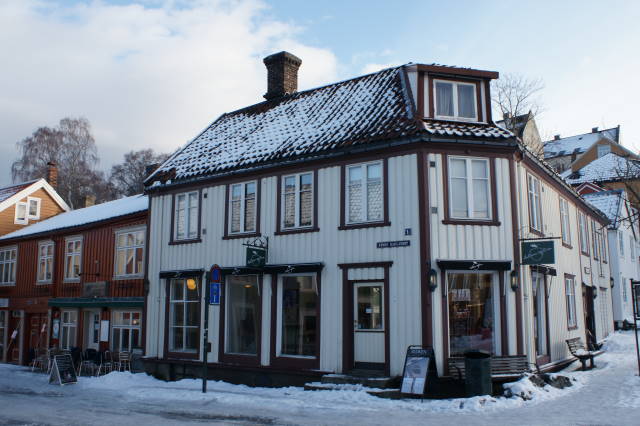
In the primordial capital of Norway we walked from the quay through the original viking settlements and the town centre to the Nidaros dome, and returned to the ship through Bakklandet. Bakklandet consists of charming wooden houses, and has been preserved thanks to the citizens who protested loudly when the authorities wanted to tear down the buildings and restore this part of the town.
Trondheim Town BridgeBakklandet, Trondheim
It was wintertime with icy streets and pavements in Trondheim, so we were not impressed by the level of street maintenance. The most poorly cleared areas were around the Nidaros dome, making safe passage difficult for both inhabitants and tourists alike.
The aviation museum in Bodø:
The museum is constructed like a huge aircraft propeller and contains a lot of aerial experiences. The exhibition, which includes military and civil aviation history, is spread out on about 10.000 square meters, and is the largest aviation exhibition in the Nordic region. At present a whole hangar is planned to display items connected to the cold war.
The Viking museum in Lofoten:
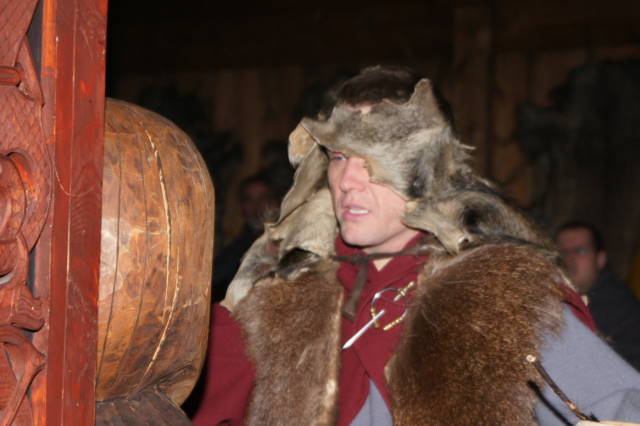
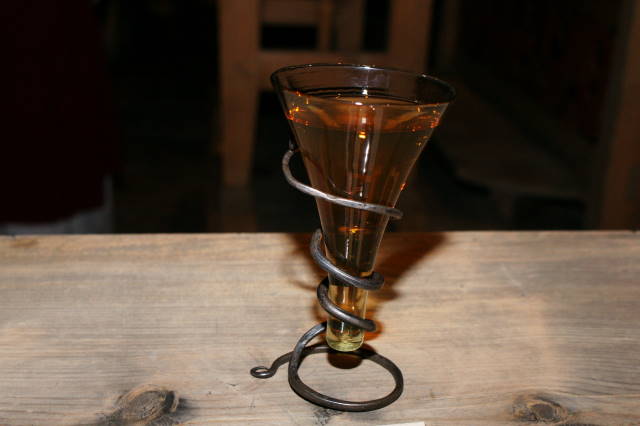
We arrived at Stamsund and drove by bus to Lofoten Viking Museum, which contains the largest known house from the viking age. The chieftain’s house is recreated in real size, and we took part in a rite ceremony, wishing that the sun would return to avoid Armageddon. We were served real mead and meat of sheep, which is eaten by spoon and sheath knife – perhaps a little too much touristic, but it was a nice evening, nonetheless. We caught up with the ship in Svolvær.
Viking museum rite festivalFestival food at the Viking MuseumBeer at the Viking Museum
Expedition to Antarctica:
In 2007 a completely new, modern expedition ship was added to the Hurtigruten fleet. This fast ship, the Fram, is classified as ice class 1B and is equipped for research in cold arctic seas. In the summer MV Fram heads for Greenland and Svalbard, and during the winter it sails for Antarctica. MV Fram also sails in Antarctic and Arctic areas and on exciting cruises all over the world. In conformity with other Hurtigruten ships, the focus is on exciting nature experiences. The voyages are conducted with experienced expedition crews, with passengers learning about flora, fauna, history and culture at every destination through lectures presented by experts on the subjects.
If Denmark is in your sights as a travel destination, consider a visit to one of the islands to see Danish life at a slower pace while you enjoy fresh air, natural beauty and plenty of options for exercise.
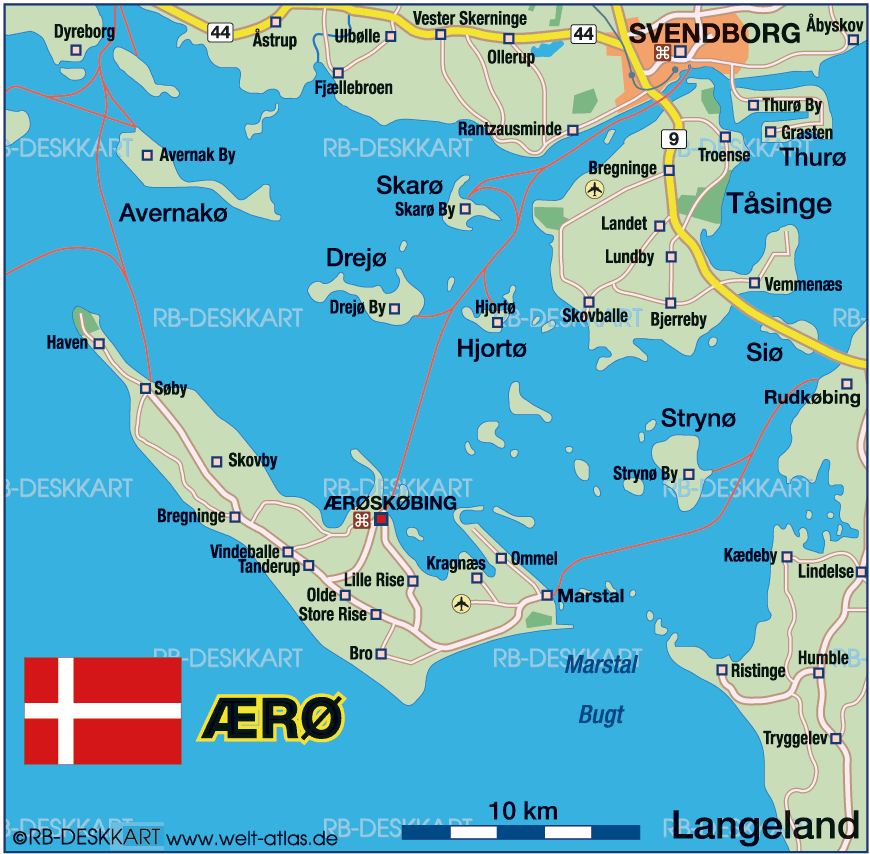
In June last year we spent two days on Aero, one of the islands in the South of Funen Archipelago. The climate is mild and sunnier than many other Danish places, prompting Danes to call it the South Sea Islands. Plants from more temperate climes can be found on Aero including wild orchids that bloom in late May.
With its three towns—Aeroskobing, Marstal and Soby—this dynamic island balances tourist amenities with commercial life: farming, shipping, ship repair, and sustainable energy. We were a few days late for the accordion festival and too early for the summer classical music season held at Sobygaard, a restored manor with moat and drawbridge built by Duke Hans the Younger in 1580. Early June is in advance of the high tourist season so we experienced the island with fewer people but with glorious weather.
We took a ferry from Svendborg and arrived 75 minutes later at Aeroskobing, population 6,800. “Kobing” means trading town and refers to the city’s role in the Middle Ages as a commercial and maritime center. Ferries also run from Faaborg to Soby on the northern tip of Aero island, Denmark.
As the ferry eases into the dock, visitors are treated to views of the low hills, the red terra cotta rooftops of the town and a colorful pop-bead string of small bathing huts on Vesterstrand, a long, narrow spit of land. We were told that these huts are treasured family heirlooms passed down within families.
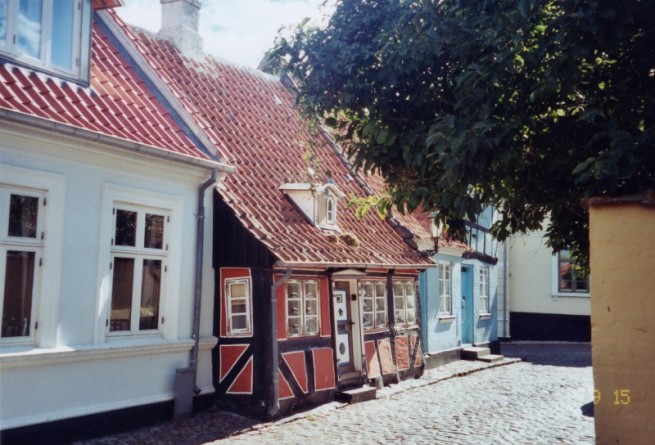
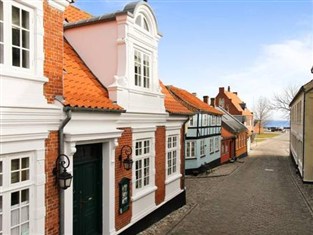
We rattled our luggage up the cobbled streets to our lodging, passing fairy-tale houses ganged together in long rows on either side of the narrow streets. Near the town’s main square, we arrive at a beautifully remodeled wash house in the courtyard of an 18th century manor.
Booked through Aero Bed and Breakfast, our convenient base included a kitchen for meal preparation. We drew from the island’s bounty of fruits, vegetables and fish for our first evening. Although there are plenty of eateries on the island, we purchased smoked halibut and herring from Aeroskobing Rogeri, a fish shop facing the harbor and prepared a “diner en plein air” in our own garden with new potatoes and fresh strawberries (jordbaer) bought from roadside stands.
We enjoyed the serenity of the wash house, located on an interior courtyard, and—best of all—Collette, our host with a deep knowledge of the history and culture of the island.
An organic local foods movement is emerging with an emphasis on ecology—the locals use “okologisk” to mean organic. Already in production are chocolates, honey, ice cream, jam, salt, herbal soaps and lotions and traditionally-raised beef. Unstaffed roadside stands sell produce, payment on the honor system. Rise Brewery, has started producing beer of a quality to rival the best of the new wave microbrews. We tried the India Pale Ale and the Walnut beer and both were outstanding.
In 2002, Aeroskobing won the coveted Europa Nostra Prize for Cultural Heritage. In one guide for the island, Aeroskobing is described as “a perfect idyll.” Others call it a fairy tale town. Travel writer Rick Steves refers to Aero as “Denmark’s ship-in-a-bottle island.” These descriptions of Aero capture the distilled historic interest of the place. Churches dating from the 12th and 13th centuries can be found at Bregninge, Tranderup and Rise and there are several Neolithic graves (burial mounds, passage graves and dolmens) on the island, their traces still evident in massive stone arrangements on high ground.
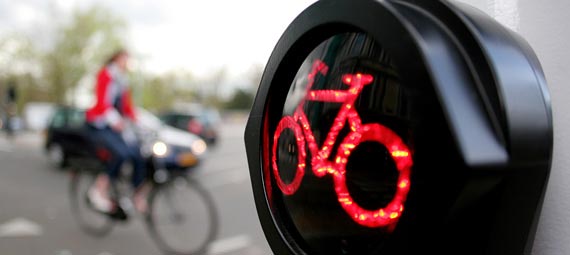
Bicycling is a marvelous way to see the island although buses connecting the entire island are free and frequent. The topography requires three gears at most and drivers are very cautious when passing bikes on the road. We travelled the extensive network of paths on rented bikes to reach cultural attractions around the island. Country lanes lined with lilac, spirea, wild rose and white flowering buckthorn led us past thatched homesteads with tidy gardens and, as often as not, a flagpole flying a Danish flag pennant. Birdsong provided the soundtrack.
One destination was Marstal, home of a navigation school and a maritime museum that is worth a visit, especially if you don’t know your jagts from your topsail schooners, brigantines and barentine brigs. You’ll emerge the wiser and with a greater appreciation for life at sea.
The world’s largest solar collection plant is also located at Marstal and, from the air, looks like a large blue patchwork lake. The island also has six wind turbines that generate more electricity than Aero’s total annual consumption. Needless to say, Aero is one of the leading renewable-energy islands in the world and has received awards and international recognition for its goals.
We had just enough time left in Marstal to enjoy one of the island’s specialties, waffles and coffee, at outdoor café Vaffelbageriet on Kirkestraede, before heading back to Aeroskobing. Shops generally fold up by 6:00pm and the bicycle rental was no exception.
If cycling isn’t your thing, other activities include golfing at a course surrounded by the sea on three sides, fishing, rowing, sailing, swimming and bird- or people-watching.
Finally, a suggestion: if you decide to visit Aero, figure how many days you’d like to spend. Then add one more. There’s no point in rushing paradise. Also, if you want to double your fairy-tale fun, swing by Odense, on the mainland just a short drive north of Svendborg, and visit the home of Hans Christian Andersen.
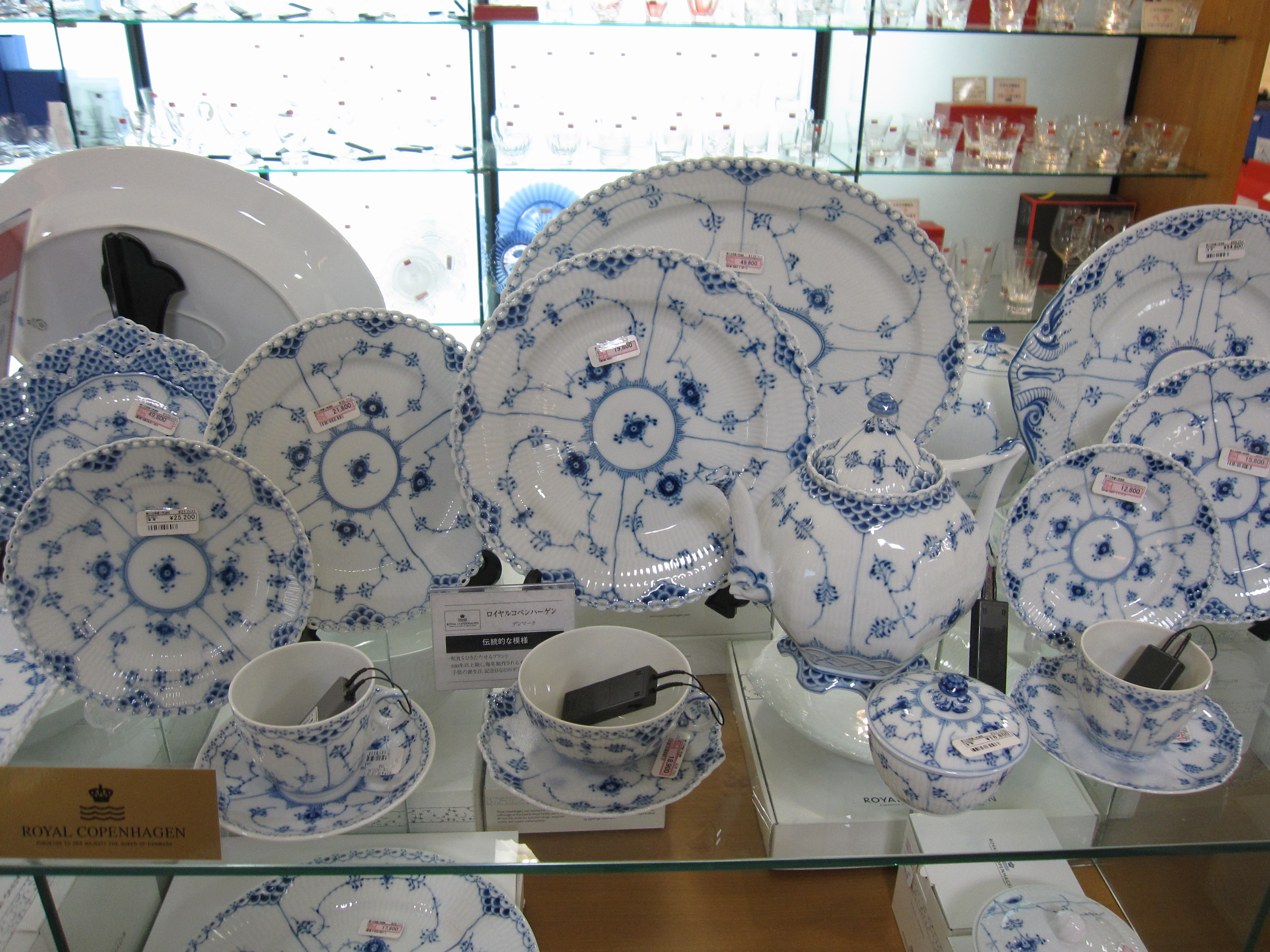
Today, on 15 January, Royal Copenhagen officially opens its new head office in Glostrup, near Copenhagen. The event is to be celebrated with the attendance of H.R.H. The Crown Princess of Denmark, who will present H.H. Bruun’s Endowment for the Promotion of Art. She will be shown around the new centre, which will be the setting for the manufacture of the exclusive Flora Danica, as well as the continued development of world-class porcelain products and design.
Royal Copenhagen is a company with deep roots in Copenhagen and close historic relations to the Danish monarchy; the Royal Porcelain Factory was actually established in 1775 with the support of the Queen Dowager, Juliane Marie.
“We are thus – our roots and history considered – very honoured to be able to welcome H.R.H. The Crown Princess to the opening of our new Danish head office and skills centre,” says Lotte Wamberg, Managing Director, Royal Copenhagen.
In conjunction with the opening ceremony, H.R.H. The Crown Princess will present H.H. Brunn’s Endowment for the Promotion of Art.
The recipients – Cathrine Raben Davidsen, Allan Otte and Louise Campbell – have all left deep personal and enduring marks in Royal Copenhagen’s design and product portfolio. Each of them will receive an endowment of DKK 125,000.
Danish skills centre ensures the continuation of design traditions and craftsmanship
Prior to the arrangement, the Crown Princess will be given a tour of Royal Copenhagen’s new skills centre, which includes a modelling room and painting studio, where the exclusive Flora Danica dinnerware series will continue to be hand-painted according to a tradition that can be traced right back to the founding of the Royal Porcelain Factory.
The skills centre in Glostrup will also come to form the setting for the continued development of world-class porcelain products and design.
“It is with great pride that we guide our design traditions onwards into a modern setting. I look forward to providing Her Royal Highness with an insight into how we at Royal Copenhagen continue to maintain our craftsmanship skills and Danish design heritage,” adds Ms. Wamberg.
The ceremony takes place today on Wednesday at 10:15am–11:30am.
Louise Campbell (born 1970)graduated from the London College of Furniture in 1992 and from Denmark’s Design School in 1996, where she specialised in Industrial Design. Louise Campbell is best known for her fanciful and experimental approach to her design tasks – as well as her design of the familiar Elements dinnerware, which makes strong references to Royal Copenhagen’s most famous signature series. Louise Campbell has received a number of design awards, including the Finn Juhl Prize (2004) and the Thorvald Bindesbøll Medal in 2007. Louise Campbell will receive the prize in absentia.
Allan Otte (born 1978)graduated from the Royal Danish Academy of Fine Arts in 2007. Allan Otte has made a name for himself in recent years with his original and technically skilled renewal of landscape painting, to which he always adds a note of the modern and industrial. His work for Royal Copenhagen includes the University of Copenhagen’s Teaching Award, ‘Årets Harald’ (‘Harald of the Year’), in 2012. Allan Otte has been awarded the endowment for his particular interest in porcelain as a material, and for his mastery of the airbrush technique, which corresponds to Royal Copenhagen’s familiar ‘plate technique’.
Cathrine Raben Davidsen (born 1972)graduated from the Royal Danish Academy of Fine Arts in 2003 and has studied art in Holland and Italy. In simple, refined lines, Cathrine Raben Davidsen attempts to carve her works into the memory of the observer, where mythology, narratives, art history and references from literature play an important role. In 2009, she created both the Årets Harald (‘the Harald of the Year’) and the Malko Prize for young conductors for Royal Copenhagen. Most recently, she has turned her artistic expression from painting to huge, metre-high vases, where form and glaze work in partnership to provide the audience with a new and very different experience of Royal Copenhagen’s traditional craftsmanship.





 The 16-hour sailings leave at 5 pm and arrive at 9:30 am the next day. So you can spend seven hours in Norway’s capital and then return to Copenhagen, or take this cruise from Oslo and do Copenhagen as a day trip…or just go one-way in either direction.



















 “We are thus – our roots and history considered – very honoured to be able to welcome H.R.H. The Crown Princess to the opening of our new Danish head office and skills centre,” says Lotte Wamberg, Managing Director, Royal Copenhagen.
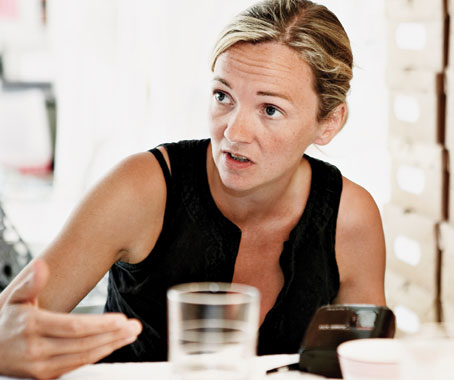 Design School in 1996, where she specialised in Industrial Design. Louise Campbell is best known for her fanciful and experimental approach to her design tasks – as well as her design of the familiar Elements dinnerware, which makes strong references to Royal Copenhagen’s most famous signature series. Louise Campbell has received a number of design awards, including the Finn Juhl Prize (2004) and the Thorvald Bindesbøll Medal in 2007. Louise Campbell will receive the prize in absentia.
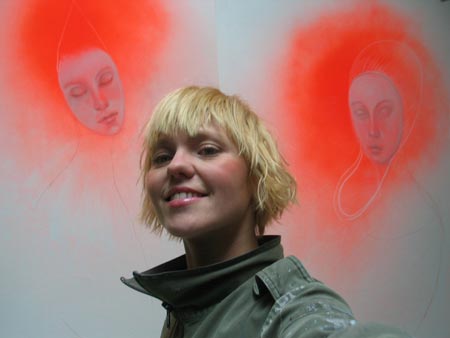 Cathrine Raben Davidsen (born 1972) graduated from the Royal Danish Academy of Fine Arts in 2003 and has studied art in Holland and Italy. In simple, refined lines, Cathrine Raben Davidsen attempts to carve her works into the memory of the observer, where mythology, narratives, art history and references from literature play an important role. In 2009, she created both the Årets Harald (‘the Harald of the Year’) and the Malko Prize for young conductors for Royal Copenhagen. Most recently, she has turned her artistic expression from painting to huge, metre-high vases, where form and glaze work in partnership to provide the audience with a new and very different experience of Royal Copenhagen’s traditional craftsmanship.