Stockholm’s allotment garden

The 100 or more allotment gardens at Tanto are dotted with perfectly cute red, yellow and green cottages and dapper sheds above Årstaviken bay on Södermalm. And very natty gardens with multi-coloured sprays of flowers, blossoms, blooms and trees. 

110214_Tanto_Stockholm

Had I stepped into a storybook? Cute-as-a-button little cottages painted in shades of red, yellow, white and green nestled behind white picket fences and clipped hedges, each surrounded by an array of flowers, abundant beds of vegetables, and fruit trees summer-heavy with fruit.

You’ll find all types of gardens here: designer gardens, kitchen gardens, countryside gardens, vegetable gardens etc. Look out for original cottages from the 1920s, 30s and 40s.

A good time to visit is end August when the allotment holders put on a harvest festival. The gardens are part of Tantolunden park.

There are frequent buses to Tanto allotments, Stockholm’s allotment garden, and the nearest underground station is Zinkensdamm (red line).

The Tanto allotment gardens are part of a ‘secret’ Stockholm that not many visitors experience. Visit them for free and experience a different side of Stockholm. 110214_Tanto_Allotment_Park_Stockholm_Sweden
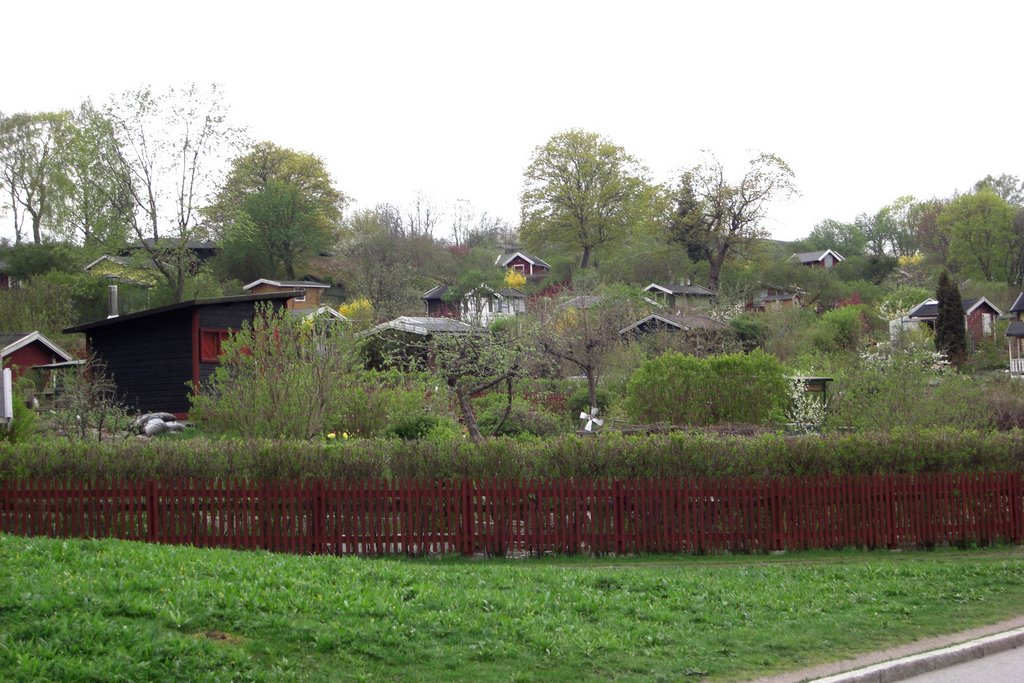
The path I followed took me deeper into the collection of little houses and gardens clinging to the hillside that descended to the edge of Sweden’s Årstaviken Bay.

“Yoo-hoo!” Lisbeth Ulfstedt awaited me at a junction in the path ahead, reassuring with a wave of her arm and her attention-getting greeting that, yes, I’d followed directions correctly into storybook-land Stockholm: Tanto Södra koloniträdgårdsförening, an allotment garden of 111 spaces.

Tanto, as it is called, is located south of Gamla stan (Old Town) on Södermalm, one of the 14 islands that make up central Stockholm.

Tanto’s picturesque collection of miniature cottages surrounded by vegetables and flowers is among the oldest of 150 allotment gardens scattered throughout Stockholm. Together, they create some 10,000 spaces available to city dwellers yearning to dig in with trowel and spade.

110214_Sweden_Stockholm_Tanto

Stockholm’s first gardens were laid out in 1895, with the Stockholm Allotment Society established to oversee the various areas in 1906. The gardens all were out in the countryside — the city grown around them since — put in place so that Stockholm’s impoverished might have a place to grow food, with the added benefit of being able to do so in fresh country air.

Tanto’s allotments were laid out in 1915, one of several new garden areas to provide potato-growing land to feed the city’s near-starving population during World War I.

A more unlikely spot could not have been chosen, its base amounting to a gigantic boulder. Soil was laboriously transported into nooks and crannies and, soon, vegetables, berries, fruits and herbs enhanced the planting of potatoes. Flowers began to bloom.

Sheds to house gardening equipment began to emerge. To form a common policy, the Allotment Society specified what they called “gazebos” to be modeled on supplied drawings and built of wood, then painted red, white, yellow or dark green.

Despite the specified uniformity, individuality emerged as gardeners embroidered the basic with ornamentation and surrounded their “gazebos” with gardens of their choosing. Regulations were relaxed in the 1960s to allow larger and individually designed cottages.

In the 1970s the areas received electricity and telephone lines — a move decreed by purists as a modernization inconsistent with the image of life in the allotment.

Lisbeth and I were on our way to allotment number 41, where she and her husband, Bo Belin, garden. Bo Belin, following in the green thumbprints of his grandfather and father, is a third-generation Tanto participant.

“Are visitors welcome to wander about Tanto?” I asked Lisbeth as we followed a path to number 41.

“Yes, indeed,” she answered. “We encourage walkers, joggers and bicyclists,” adding that Sweden’s policy of right to public access makes that a given. “We clip our hedges so that passersby can easily see into the gardens. But don’t step in,” she advised, “unless invited by the garden holder to do so.”

Reaching number 41 and Lisbeth’s pocket-sized cottage, she asked if I’d like to peek inside.

A shipshape interior flooded with light from ample windows was outfitted with a rudimentary kitchen with tiny appliances, table and chairs, a heater, and daybeds for sleeping. Water, cold, came to the allotment via a hose. Bathroom facilities, communal, were located not far away.

“In spring we’re here every weekend,” Lisbeth told me as we returned to the adjacent terrace affording additional space. “By June, we more or less live here. We start seeds in April and harvest until frost closes the gardens for the winter.”

Stockholm, largely a city of apartment dwellers, has no shortage of would-be gardeners awaiting allotments. Precious patches they are. Tanto’s waiting list contains over 350 names.

“Waiting time can take up to 20 years,” Lisbeth told me. In addition, prospective space holders face an exhaustive interview process as to their intended use of the space and their interest in gardening. To eliminate the possibility of parents’ signing up their kindergarteners for placement down the road, no one younger than 18 can apply. Payment of a small yearly charge keeps one’s name on the list.

Once a plot is snagged, the privilege of gardening does not come cheap. An annual fee of 14,000 kronor (close to $2,000) is charged, making the ownership of a Tanto space out of reach of those for whom they were originally intended: Stockholm’s poor.

Lisbeth and I left her terrace so that I might see what others were up to in their gardens. We leaned over fences to talk, accepting invitations to step inside precious patches to admire the size of a just-dug onion here, the fragrance of a crushed handful of rosemary and basil there.

“The garden is a close neighborhood,” Lisbeth commented. “We see each other often, at organized events, chatting over a cup of coffee, discussing our gardens over the fence or,” she added with a laugh, “doing what my husband is doing right now, enjoying a late-afternoon beer on a neighbor’s terrace with his cronies. That’ll keep him busy for the next couple of hours!”

Staying near Tanto allotment garden

I visited Stockholm and Tanto allotment garden in August ’09 as a guest of the Stockholm Visitors Board (Drottninggatan 33, 10325 Stockholm, Sweden; phone 08 508 285 08,www.visitstockholm.com). I stayed at the Hilton Stockholm Slussen (chosen for its proximity to both Old Town and other Stockholm areas of special attraction and to Södermalm, where Tanto allotment garden is located.
Double rooms at the Hilton average $325, including a full buffet breakfast. The excellent Stockholm city museum with its exhibits emphasizing the city’s history is just across the street.

Written by guest contributor

Living on a Star in Oslo

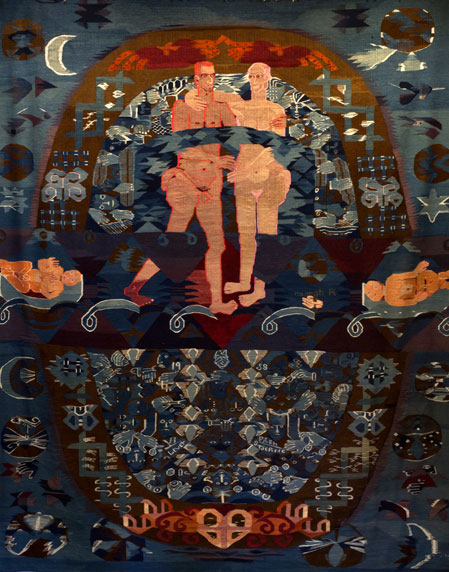
We are Living on a Star is the main contemporary exhibition at Henie Onstad Kunstsenter (HOK) this year.

The Hannah Ryggen tapestry We are living on a star is the leitmotif for the main contemporary exhibition at HOK this year. The tapestry hung in the government building which was bombed July 22, 2011. This exhibition intends to investigate the wound after July 22, with the concept of normality as its point of departure.

Performance programme:
Marthe Ramm Fortun, I samme rom:  Februray 2nd &16th. March 2nd, 16th & 30th. April 13th & 27th at 2PM.

Julian Blaue, Scenefilososfisk fakultet for kunstbasert terrorforskning: March 16th 11 AM -5 PM (in Norwegian).

Artists:
Burak Arikan, Doug Ashford, Julian Blaue, Martin Braathen med Marius Engh, Even Smith Wergeland og Superunion Architects, Marthe Ramm Fortun, Hanne Friis, Else Marie Hagen, Silje Linge Haaland, Per-Oskar Leu, Lotte Konow Lund, Jumana Manna, Eline McGeorge, Eva Rothschild, Hannah Ryggen, Ahlam Shibli and Javier Téllez.

Hannah Ryggen, Vi lever på en stjerne (1958). Photo: Steffen Wesselvold Holden/Nordenfjeldske Kunstindustrimuseum.

Curators:
Tone Hansen and Marit Paasche

Henie Onstad Kunstsenter (HOK) was established in 1968 as a donation of the collectors Sonja Henie and Niels Onstad. The choice of “Kunstsenter,” rather than “museum,” was deliberate, signaling that HOK was to be not only a keeper of a strong modern European core collection, but also a producer of contemporary, experimental art.

100214_Henie_Onstad_Museum_of_Contemporary_Art_Oslo

Today HOK is one of Norway’s leading venues for Norwegian and International contemporary and 20th century art. The Kunstsenter is an active arena for debate and social critique, with a broad commitment to the arts and its audience. Its expertise, collections and historical identity lie in the interdisciplinary field, with special emphasis on the relationship between art, music, performance and the historical avant-garde.

The HOK collection consists of more than 4000 objects, ranging from its core collection of high modernist work—with a focus on the French School with Pierre Soulages, Maurice Estève, Hans Hartung, Picasso, Matisse, Juan Gris et al to special collections of the Fluxus and Cobra movements, as well as a permanent sculpture garden.

HOK is a major supporter of artists in the production of new art and new expressions, and works actively to create new knowledge that is communicated through papers, catalogs and anthologies, published internationally. HOK collaborates actively with other art and educational institutions internationally to co-produce exhibitions, seminars and publications. Prisma records (a HOK label) continues its singular tradition of releasing unique, commissioned, new and historic works by experimental and electronic sound artists, many of which accompany exhibitions at HOK.

HOK is located on the Oslo Fjord peninsula, approximately 10 km south of Oslo. The art center is a popular destination and its scenic location and distinctive building bring together unique qualities of Norway. The Director since August 2011 is Tone Hansen.

Watch Living on a Star, in Oslo at the HOK.

Nordic Light International Festival of Photography

0

Nordic Light International Festival of Photography is a one week international gathering that celebrates photography as an art. The festival’s philosophy is to bring photography out to the people, to define what is a good photography, but also to give the photography strength as a mean of communication. 

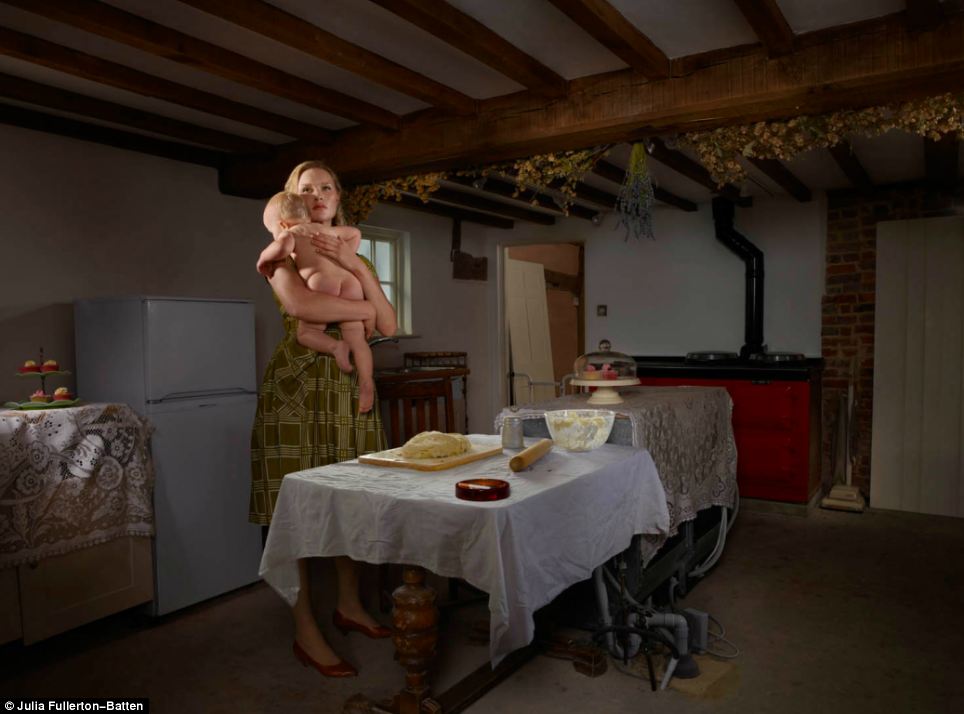
Mother and Cild, Photo Julia Fullerton
Mother and Child, Photo Julia Fullerton

Other arts have always been a source of inspiration and knowledge for photography and in combination with world events, philosophy and cultural expressions, photography has become what it is today.

Nordic Light International Festival of Photography is a one week international gathering that celebrates photography as an art. festival the locals, international photographers, students, amateurs and pupils gather in what has become a melting point of photographic and cultural events. For those interested in photography, professional photographers are available for portfolio reviewing.

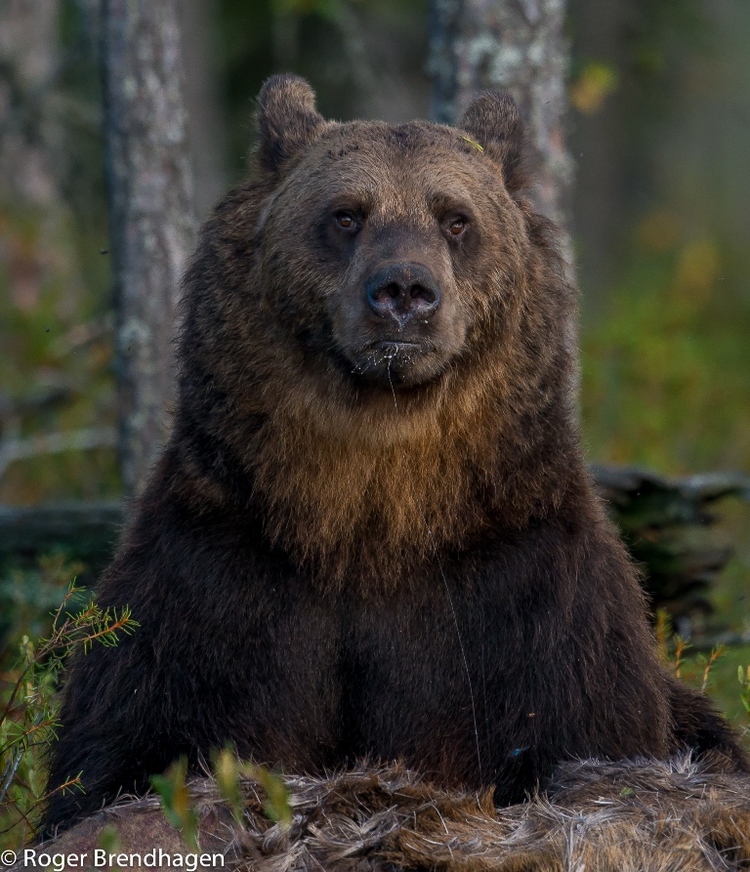
Photo: Roger Brendhagen

What they all have in common is the desire to explore the moment. In this act different types of photographers may increase their knowledge and understanding of photography as art. In addition cultural impulses as exhibitions, workshops, presentations, portfolio reading, breakfast cinema, Face to Face, literature and music are important cultural contributions to the photographers development.

The main goal of the Nordic Light International Festival of Photography’s is to create the most important meeting place for photography in Europe. A second aim is to contribute to a stronger engagement and higher understanding of a good photography. Nordic Light wants to be a spokesman of the photography’s purpose as a positive and creative activity. This may be avaible by continuously arranging workshops, conferences, exhibitions and seminars the whole year through.

Nordic Light  wants to take advantage of the competence, experience and knowledge obtained during its existence to become better and better. The organization is financed by national, municipal and local subsidies as well as private investors who all want to contribute to a vital cultural life with great variety.

Nordic Light International Festival of Photography – A photographic springtime sensation

Since its beginnings in 2006, Nordic Light has achieved incredible success. The unique visits increased from 12,000 in 2006 to a staggering 70,000 in 2012. The main reason for this is the festival’s collection of top ranking photographers; the unique possibility to meet the stars of the photographic world face-to-face at exhibitions, lectures or even down the pub. However, we also have to pay homage to this amazing location. Kristiansund is beautifully situated on the north-west coast of Norway where fjord meets open sea. The town is built on four islands and is surrounded by majestic mountains and the mighty Atlantic Ocean. The salty tang of the air hits you the moment you arrive here. Add to this the generous, no-nonsense, cheerful nature of Kristiansund’s people and you have an unbeatable combination.

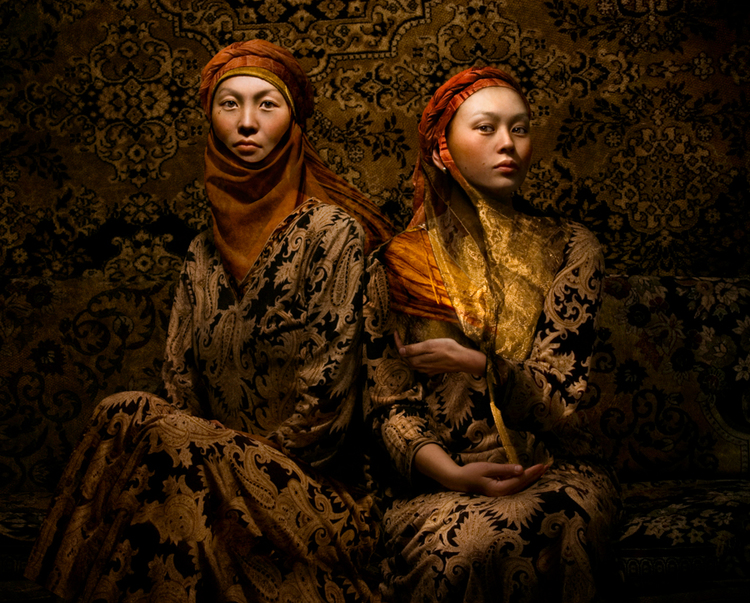
Photo: Sarah Cooper
Photo: Sarah Cooper

Through the years the Festival has had the pleasure of welcoming a star speckled gallery of national and international artists. The festival has become a magnet for anyone interested in photography and anyone interested in seeing the world though others’ eyes.

From festival to centre

The festival has become a popular gathering for photographers and anyone interested in photography, and an arena for showing the diversity of photographic expression.

Nordic Light took a new step in the summer of 2010, and has now established what aims to be Northern Europe’s centre of excellence for photography, Nordic Light International Centre of Photography (NLICP). Through several workshops and exhibitions during the year, Nordic Light is making Kristiansund and Nordmøre into a photographic arena.

This year’s festival: May 6 – 10

Island-Hopping in Stockholm’s Front Yard

0

There are a number of ways to see Sweden’s archipelago, a latticework of some 24,000 islands and smooth glacier-polished outcroppings that dot a 150-mile stretch off its eastern coast. 

060214-The-Stockholm-Archipelago
You can travel by ferry, vintage steamer, three-mast schooner, private sailboat, or yacht. But the most important thing is not to miss them: they are one of the country’s most important natural attractions and its wild frontier. Only 6,000 people live on 1,000 islands; the rest is uninhabited. In other words, ideal for island-hopping in Stockholm’s front yard.

060214_Storskar_Stockholm
Sweden’s summer is brief but glorious and this is the place to celebrate it – kayaking, picknicking, biking and walking unpaved island roads.

Take a thirty-minute ferryboat ride from Stockholm out to the well-known restaurant Fjaderholmarnas Krog, accessible only by boat, for a leisurely lunch of just-caught fish, perfectly prepared. Fjaderholmarna means Feather Islands.

060214_Fjaderholmarna_Stockholm
Alternatively stay on board one of the steamers for the scenery: skerries (skärgarden, the Swedish word for archipelago, means “garden of skerries”), islets, flower-bedecked fishing cottages, landing stages, meadows, farms, beaches and a late evening sky of changing pastels.

Writers and artists have traditionally been drawn to Vaxholm, while the boating crowd firmly favors Sandhamn, hub for the prestigious annual Royal Regatta.

060214_Royal_Regatta_Stockholm
The archipelago has two environments – the wooded, protected inner part and the barren, wild outer archipelago, the latter home to seabirds, seals, and a few very hardy fishermen. Take a leisurely, blissful sail and you’ll understand a lot more about Stockholm, built on fourteen of the archipelago’s islands, and its connection to the sea.

Extreme Sports Week, Norway

0

Extreme Sports Week (Ekstremsportveko) is the biggest sport and music festival of its kind, and is hosted every year in Voss, Western Norway. It hosts competitions in kayaking, rafting, mtb-bmx, kiting, skydiving, paragliding, hang gliding, multisport, freeride, big air, climbing, BASE and long boarding.

050214_slopestyle-and-bmx-at-ekstremsportveko
For one whole week national and international athletes compete and challenge themselves in the elements. While sports are often the main focus, during the last three days of the festival well-known musicians both from Norway and abroad set the stage on fire. If you want to see some absolutely hair-raising crazy stunts then you’ve gotta make your way to Norway this summer.

050214_Ekstremsportveko_Norway_Voss
BASE, mountain and bmx, kiting, para and hanggliding, multisport, big air, longboarding, kayaking, rafting and skydiving were just some of the Ekstremsportveko (Extreme Sports Week, Norway) events this June in Voss, Western Norway. It’s the biggest extreme sport and music festival of its kind in the world and it’s independent, non-profit and non-affiliated so the chances of it going ‘luxury tour’ are pretty slim. You missed it this year but Ekstremsportveko is almost completely run by volunteers and in 2014 it needs 3-400 willing bodies to help out – work just 3 shifts and get a Free Week Pass to the entire festival.

Norway got Kaizers Orchestra, Sweden got Hoffmaestro. If it does not ring a bell when you hear the name, the band might give you a big surprise in June this year! The comparisons with Kaizers might have been used too many times, but Hoffmaestro gives the same energy, amusement and musical creativity as our Norwegian friends.

050214_swedish-hoffmaestro

With the mix of ska, punk, funk, electronica and bluegrass, the band differs greatly into what would otherwise dominate the current sound, not least from what Swedish music is best known of today; Swedish House Mafia and Avicii. When Hoffmaestro enters the stage at Ekstremsportveko with its 11 band members you can expect a LIVE show, as a live show should be. The organizers promise that you will be taken by their energy that will last the whole night through!

“Few other bands can match Hoffmaestro when it comes to enthusiasm, energy on stage and not least the ability to get the audiences blood pumping. If you are only going to one concert this year, this is definitely the ONE”, booking manager Gaute Haaversen–Westhassel adds.

This will be the first time Hoffmaestro performs in Voss, but they have previously sold out gigs in several Norwegian cities.

Nordic Cookery

0

TV series on BBC filmed these days on location at Radisson Blu Resort, Trysil, Norway

040214_Tareq_Taylor

The international TV series “Nordic Cookery!” with renowned Chef Tareq Taylor is on scene filming an episode of Season 2 at the Radisson Blu Resort Trysil. Trysil, well known for their gastronomic specialties and locally produced ingredients, is this episodes theme on BBC Lifestyle, RTL & Good Food.

Chef Tareq focuses on the local specialties, and highlights local Nordic culinary traditions to an international audience. The TV series reaches 35 million households in Europe and 45 million households in Asia. TV series Nordic Cookery producer, Rick Jacobs, said that the team has long had a strong desire to play an episode in season 2 of the series in Trysil:

– The team is highly interested in Trysil and Eastern Norway’s gastronomy and unique places. It involves everything from skiing, to local food producers and enthusiasts who are passionate about local food traditions. The fact that we are finally on location, feels like an amazing starting point for one of the 12 Nordic episodes of the series.

In the week of filming, the film crew met with Radisson Blu Trysil Chef Michael “Bobo” Johansson to get a taste of the hotel’s specialties. In addition, they will learn the basics of Radisson Blu’s food concept “Brain Food” and outdoor culinary film production on one of the hotel’s suite terraces.

– We have an incredibly fast paced week together, and are grateful that they just chose us as the destination, concludes the hotel’s marketing and communications manager, Maria Belin.


World Famous Knitwear From Dale of Norway

0

Dale of Norway has since 1879 produced knitwear of 100 % wool with traditional Norwegian patterns, and is today world known for its premium quality and beautiful designs.

030214_Dale_of_Norway

Dale of Norway has also been an official supplier of winter Olympic and World Championship sweaters since 1954. Because of its long history, Dale of Norway is considered a part of the Norwegian culture. The company does all the designs and knitting at Dale, a small village by the west coast of Norway, located between beautiful steep mountains, waterfalls and fjords.

030214_Dale_Norway

Dale of Norway has developed many innovative yarns and knitting techniques over the past 130 years. This has enabled the company to create garments of pure wool with more comfortable, long lasting and even weatherproof qualities. Dale of Norway has recently introduced a wide range of high quality garments within sport and fashion for the modern consumer in 100% light, soft wool, still with Norwegian design elements, famous as knitwear from Dale of Norway.030214_Dale_if_Norway_mens

Last year an interesting cooperation was established between Dale of Norway and the international fashion school Esmod. The Dale of Norway designs has been used as inspiration for Esmod students all over the world for new fashion designs.

The Oslo Package

Experience Oslo with the Oslo Pass! Choose between several hotels with breakfast and Oslo Pass for the whole stay, and up to two children may stay free of charge in the same room as their parents. Travelling with the Oslo Pass is the easy way to discover Oslo, and it will give you free access to most of Oslo’s attractions! 

310114_Sightseeing_Oslo


The Oslo Pass, or Oslo Package, provides free travel on all public transport within Oslo, free admission to most museums and sights, free parking in all Oslo municipal car parks, discounts on sightseeing, car hire etc.

310114_public_transport_oslo

The Oslo Pass lets you devote your entire trip to activities without the hassle of booking and buying.

The Oslo Pass gives you free entry to more than 30 museums and attractions, free travel on all public transport within zone four, free parking in all Oslo municipal car parks, free entry to outdoor swimming pools, free guided walking tours, discounts on sightseeing, car hire, Tusenfryd Amusement Park, ice skate and ski rental, and special offers in restaurants, shops, entertainment and leisure venues.

310114_Kon-Tiki_Museum_Oslo

You will receive your Oslo Passes upon arrival at your hotel.

Experience Oslo at its best!

Book here.

The 96 hour Oslo Pass cannot be purchased separately and does not cover the Mini Cruise with Båtservice Sightseeing.

Cancellations/alterations are accepted until 48 hours prior to arrival. A fee of 60 NOK will be charged for cancellation. Please note that alterations are regarded as cancellations, and that accommodation prices may be different at the time of change. In the case of cancellation less than 48 hours prior to arrival or if you fail to show up at the hotel, the first night will be charged.

A Star at Copenhagen Fashion Week

The Copenhagen-based Norwegian designer Veronica B. Vallenes has established a distinct signature expression, situated somewhere between classic Nordic simplicity and glossy Parisian elegance. Her effortlessly sexy women’s wear is fast gaining the eye of international press and costumers.

300114_veronica-b-vallenes

She recently won the biggest fashion award in Scandinavia worth € 100,000.

The “DHL Get Global” award will help the highly talented Veronica to increase her international awareness and sales network.

With the “DHL Get Global” award, Veronica can now focus on creating more beautiful collections, increase her power to show her work, and expand her sales around the world.

The “DHL Get Global” award includes the following:

Free use of DHL Express global transportation services for two years.

A full catwalk show at “the Old Stock Exchange” in Copenhagen. The show took place yesterday.

A Stand at Gallery International Fashion Fair in Copenhagen from 29th – 31st of January.

Free use of HOST buyers office: 11 experienced people with 12 languages and direct contact to more than 10,000 shops around the world.

€ 15,000 budget to invite international buyers to Copenhagen Fashion Week.

300114_Veronica_B_Vallenes

Stands at the world’s two biggest tradeshows, Cotterie in NYC and Who’s Next in Paris.

The jury behind was Christian Gregersen, founder/owner Gallery and Susanne Kristensen, Manager DHL Express.


>

Walpurgis Night in Sweden

Proof that Sweden’s Viking past isn’t too far below the surface, the ancient Walpurgis Night festival, like Midsommar, involves lighting huge bonfires and enjoying the mother of all parties. Originally held as a means of keeping evil spirits at bay, the festival is now held to celebrate the onset of spring and is a national public holiday.

280114_walpurgis-night-in-sweden
Walpurgis Night in Sweden is a very special event and a great way to experience Sweden’s traditions. Walpurgis (Swedish: “Valborg”) on April 30 is a widely celebrated event in Scandinavia, most of all in Sweden.

Walpurgis Night precedes Labour Day in Scandinavia on May 1 and many Walpurgis events continue over night from April 30 into that holiday.

280114_Walpurgis_Choir

The forms of celebration in Sweden vary in different parts of the country and between different cities. One of the main traditions in Sweden is to light large bonfires, a custom which began during the 18th century. Lighting the popular bonfires began with the purpose of keeping away evil spirits, especially demons and witches.

280114_Walpuris_Day_SwedenNowadays, Walpurgis Night is usually seen as a celebration of springtime. The Skansen Open Air Museum, for example, hosts Stockholm’s largest historical Walpurgis celebration.

Many Swedes now celebrate the end of long, dreary winters by singing Spring songs. These songs were spread by the students’ spring festivities and Walpurgis Night celebrations are especially common in university towns like Uppsala – the nightlife in Uppsala is especially active then.

Walpurgis (Valborg) being celebrated on April 30 creates a double national holiday in Sweden. On this day, King Carl XVI Gustaf celebrates his birthday. So you’ll see Swedish flags all around the country to salute the King and show him respect.

May Day/Labor Day (May 1st) follows Walpurgis Night celebrations with a wide choice of events, parades and festivities.

Compiled by Daily Scandinavian team