Trip planning is often portrayed as exciting, but for many travelers, it begins with uncertainty. The destination is unknown, information is overwhelming, and every decision feels like it could lead to disappointment or wasted money. When you’re planning your next journey, remember that it does not begin at the airport. Following these five ways to plan your next trip is just the start.
People rarely fear booking a flight. They fear making the wrong choice.Travel planning is not a logistics problem. It is a confidence problem.
The most common hassles are:
Too much information. Hundreds of articles, videos, reviews, and social media posts can lead to decision paralysis.
Fear of missing out. Travelers worry they will choose the wrong hotel, miss the “must-see” attraction, or overlook a hidden gem.
Uncertainty about cost. They fear unexpected expenses and blowing their budget.
Conflicting advice. One review calls a destination magical; another calls it overrated.
Safety concerns. Health, crime, transportation, language barriers, and unfamiliar customs can create anxiety.
Planning for different personalities. Families, couples, or groups often want different experiences.
Time pressure. Limited vacation days make every choice feel more important.
Fear of disappointment. The destination has lived in their imagination for months or years. Reality may not match expectations.
**********************************************
Related: Conversational AI Lets Travelers Search and Compare Travel Options
**********************************************
Illustration: NPR
You may have other concerns, but when I plan my next journey, I follow a very simple narrative structure.
Start with the dream
Do not start with flights or hotel rates. Start with one question: “What story do you want to tell when you come home?” People remember stories, not itineraries. They remember:
“We watched elephants at sunrise.”
“We met a fisherman who invited us for tea.”
“Three generations traveled together.”
The desired memory becomes the compass for every later decision.
Define your travel character
Every traveler is a character in a story. One may be an explorer; another, a learner. Maybe you are a luxury seeker or a family memory-maker? Some just want to relax; others are adventurers.
When travelers understand who they are, many decisions fall into place.
Identify the villains
Every story has obstacles. The villains of travel planning include information overload, unrealistic expectations, trying to see everything, comparing your trip to someone else’s, and waiting for the perfect plan.
Naming the obstacles reduces much of their power and makes your planning easier.
Build around three moments
Instead of planning every hour, choose one unforgettable experience, one meaningful local encounter, or one unplanned day.
This creates structure without eliminating spontaneity.
Accept imperfection
Great travel stories often come from mistakes. If everything goes smoothly, that’s fine. But the stories to tell family and friends come from the missed train, the wrong turn, the unexpected conversation, or the rainy day that changed everything.
A perfect trip is memorable. An imperfect trip is often unforgettable.
*****************************************************
Related: Airbnb Introduces New Private Car Pickup Service From Airports Across Europe, Asia, and Latin America
*****************************************************
Your Next Journey Does Not Begin at the Airport – Conclusion
If you follow the five steps above, your planning shifts from a stressful checklist to an adventure that starts long before departure.
“The journey does not begin at the airport. It begins the moment curiosity overcomes uncertainty. Planning is not paperwork; it is the first chapter of the story.”
Your Next Journey Does Not Begin at the Airport: Five Ways to Plan Your Next Trip, written by Tor Kjolberg.
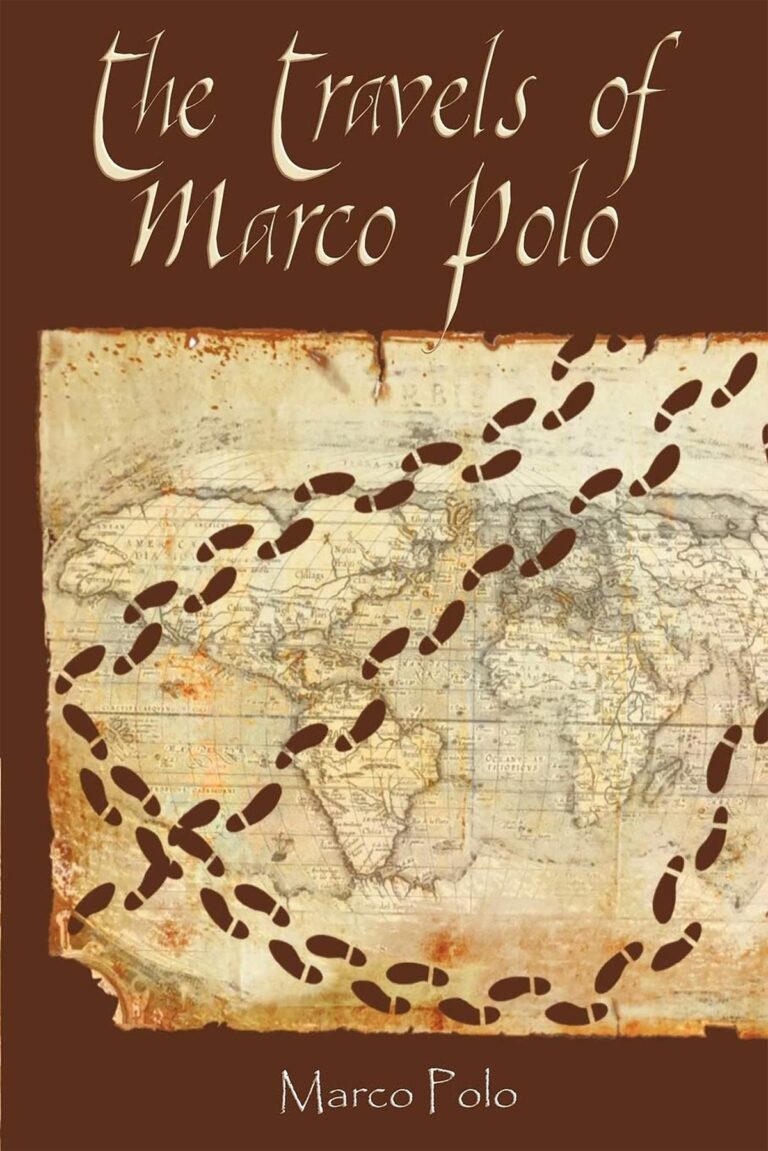
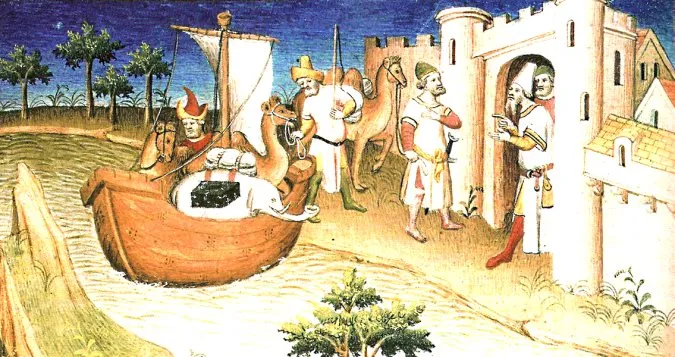
The Travels of Marco Polo is a 13th-century travelogue written by Rustichello da Pisa based on stories told by the Venetian explorer Marco Polo. It describes Polo’s travels through Asia between 1271 and 1295, and his experiences at the court of Kublai Khan.
Filled with wonders, Marco Polo’s tales are the first European account of the Silk Road. But 700 years after the famed Venetian merchant and explorer’s death, can they be trusted?
Marco Polo’s 24-year journey revolutionized East-West relations by introducing medieval Europe to the East’s wealth and advanced civilization. His co-authored book, The Travels, replaced mythical stereotypes with concrete geographic and commercial knowledge, directly inspiring Christopher Columbus and sparking the Age of Exploration.
From the beginning, there has been skepticism about Polo’s sometimes fabulous stories
From the beginning, there has been skepticism about Polo’s sometimes fabulous stories, as well as a scholarly debate in recent times. Some have questioned whether Marco had actually traveled to China or was merely repeating stories he had heard from other travelers. Economic historian Mark Elvin concludes that recent work “demonstrates by specific example the ultimately overwhelming probability of the broad authenticity” of Polo’s account, and that the book is, “in essence, authentic, and, when used with care, in broad terms to be trusted as a serious though obviously not always final, witness”.
Venetian Marco PoloBreaking the European Bubble
Before Marco Polo’s account, Europe’s understanding of the East was heavily clouded by folklore, religious superstition, and hearsay. Marco Polo’s detailed observations of Kublai Khan’s court in modern-day Beijing, as well as in regions such as India and Japan, gave Europeans their first real glimpse of massive cities, sophisticated paper currency, and advanced infrastructure.
The intelligence his family brought back gave the Republic of Venice a major strategic and economic advantage in controlling East-West commerce.Driving Global Trade
By documenting the vast resources and trade networks along the Silk Road—such as spices, silk, and precious gems—Polo’s journeys significantly stimulated Europe’s appetite for Asian commodities. The intelligence his family brought back gave the Republic of Venice a major strategic and economic advantage in controlling East-West commerce.
The origin of the title Il Milione is debated. One view holds that it derives from the Polo family’s use of the name Emilione to distinguish themselves from the numerous other Venetian families bearing the name Polo. A more common view holds that the name refers to the medieval reception of the travelog, namely that it was full of “a million” lies.
Did Marco actually travel to China?
Can a man who claimed to have seen a unicorn on the Indonesian island of Sumatra be trusted? This and other similar valid questions have cast doubt on Marco Polo’s truthfulness since the 14th Century, when his book The Travels of Marco Polo became a bestseller, was translated into dozens of languages, hand-copied in countless manuscripts, and was available at any lavish court in Europe.
Polo was among the first Westerners to provide eyewitness accounts of places that were blank spots on European maps.Mapping the Unknown
Polo was among the first Westerners to provide eyewitness accounts of places that were blank spots on European maps. His accounts of sea routes, monsoons, and diverse cultures across the Indian Ocean and Africa formed the foundational geographic intelligence European cartographers would rely on for centuries.
The Travels of Marco Polo, compiled by Tor Kjolberg
Previous articles in our series of historic travel stories:
The World’s Oldest Surviving Travel StoryThe World of the Odyssey: A Palimpsest of the Hellenic Art of Living WellSinbad the Sailor
Travel platform Skyscanner has introduced ‘Explore with AI’ and ‘Road Trip Planner’, two new beta AI tools to help customers plan their next trip. The aim is to provide travelers with an intuitive, personalized experience. Continue reading to learn more about Skyscanner’s new AI travel planning tools.
AI is everywhere, and the travel industry is no exception. AI tools are increasingly popular for trip planning, with many travelers asking ChatGPT for personalized holiday recommendations.
The Skyscanner AI provides curated destination recommendations, trip duration, weather, and AI-generated insights.1. Explore with AI
Instead of entering strict parameters such as fixed dates or airports, you can use conversational prompts (e.g., “help me find cheap flights to Japan in December” or “a warm holiday with beaches and family trips”).
Personalized suggestions: The AI provides curated destination recommendations, trip duration, weather, and AI-generated insights (e.g., “September is typically 24% cheaper than December”).
Available in the desktop beta, this tool generates tailored driving itineraries based on your route preferences.
Route styles: You can select themes such as scenic, cultural, adventure, or relaxed.
Recommendations: The AI builds your route with suggested stops and points of interest, and pairs it with suitable car rental options for the journey.
“For more than 20 years, innovation has been at the heart of Skyscanner’s mission to be the world’s leading travel ally. As travelers navigate an increasingly complex travel landscape, we’re focused on building tools that help them plan and book with confidence. We’re experimenting with how AI can make every stage of the journey simpler and more intuitive, from discovering new destinations to planning road trips,” said Bryan Batista, CEO of Skyscanner.
********************************************
Related: Planning a Holiday Online: Where to Book What – and What to Watch Out For
********************************************
“For more than 20 years, innovation has been at the heart of Skyscanner’s mission to be the world’s leading travel ally,” says Bryan Batista, CEO of Skyscanner.
Additional AI-Driven Features
Expanded DROPS: Skyscanner’s price drop feature analyzes 100 billion daily prices to surface flights that have dropped by at least 20% over the past seven days, triggering more frequent fare alerts.
Enhanced Flight Tracker: Upgraded to provide real-time gate numbers, terminal details, and baggage belt information for millions of flights worldwide.
The tool is currently available across all English-speaking markets and on all devices, including desktops and mobile applications. Early testing showed strong engagement, with 60% of users viewing Explore with AI flight search results.
New AI Travel Planning Tools From Skyscanner, Tor Kjolberg reporting.
“Staring into those eyes is a pretty harrowing feeling. You notice that there is something there, in a completely different way than with other animals,” says Alfred Fidjestøl, the author of the book “Almost Human,” a biography of Julius, the popular Norwegian chimpanzee who has lived among humans his entire life.
Julius was born on Boxing Day in 1979 at the Kristiansand Zoo and Amusement Park (Dyreparken). Every Norwegian, young and old, loves this almost human chimpanzee. Rejected by his mother as an infant, he was raised by the zoo director’s family and became a national celebrity after a hit children’s television documentary. He inspired books, his own hit song, and merchandise.
Early Fame
After his mother abandoned him, he lived with a human family for a year, a period that was documented by the Norwegian Broadcasting Corporation (NRK). Returning him to his own species proved difficult. He spent years trying to escape and faced isolation before successfully rejoining the zoo’s chimpanzee troop and eventually becoming its alpha leader.
Every Norwegian, young and old, loves this almost human chimpanzee. Photo: Dyreparken.Julius, the escape artist
Julius escaped from his holding pens and island habitat a staggering five times during his turbulent adolescence and early adulthood. Because he was raised in human homes, Julius entirely lacked the natural fear of water and open spaces that usually keeps chimpanzees contained, making him an exceptionally clever and dangerous escape artist.
His notable escape methods and the crises they caused include wading through the moat. In his early escapes, Julius routinely bypassed the zoo’s primary defense—a surrounding water moat. While wild chimps avoid deep water due to their heavy bone density and inability to swim, Julius simply waded straight through the waterway to reach the public areas.
He also bypassed live electric fences. During another escape, Julius scaled and crossed a barrier despite it being fully charged with live electrical wiring.
His fifth and final escape on June 7, 1992, was the most violent. Julius had grown deeply irritated by the loud noise from the zoo’s garbage collector, Oddvar Ivarson, which he interpreted as a direct challenge to his authority. Julius sneaked off Chimp Island, hid behind a souvenir kiosk, and ambushed the garbage truck as it moved. He swung through the open driver’s-side window and severely bit the driver before he could be subdued.
These incidents forced Kristiansand Zoo to officially declare Julius too dangerous to free-roam. This led directly to his decade-long isolation in a heavily reinforced solitary cage. He finally matured enough to successfully take over and lead the main chimp troop in 2005.
In December 1997, when Julius turned 18, he reached legal adulthood by human standards.The 18th Birthday and the Symbolic Driver’s License
In December 1997, when Julius turned 18, he reached legal adulthood by human standards. Because of his immense celebrity, the milestone was treated as a major national event in Norway, culminating in a highly publicized and bizarre birthday celebration. Representatives from the Norwegian Public Roads Administration (Statens vegvesen) visited the zoo and officially presented Julius with a custom-made, oversized symbolic driver’s license.
The gesture was a humorous nod to Julius’s ongoing identity crisis and his obsession with human vehicles. As a young chimp living with humans, he had developed a deep love of riding in cars and tractors. Even after being returned to the zoo, he was notorious for trying to steal keys from keepers and for attempting to drive or interact with maintenance vehicles, including his infamous garbage truck attack.
Along with the license, he received a cake and various human treats. While it was a lighthearted PR stunt for the public, it highlighted the strange, bittersweet reality documented in Fidjestøl’s biography: Julius was legally recognized as an adult human, yet he remained locked in a cage, trying to figure out how to be a chimpanzee.
The Iconic Julius Song
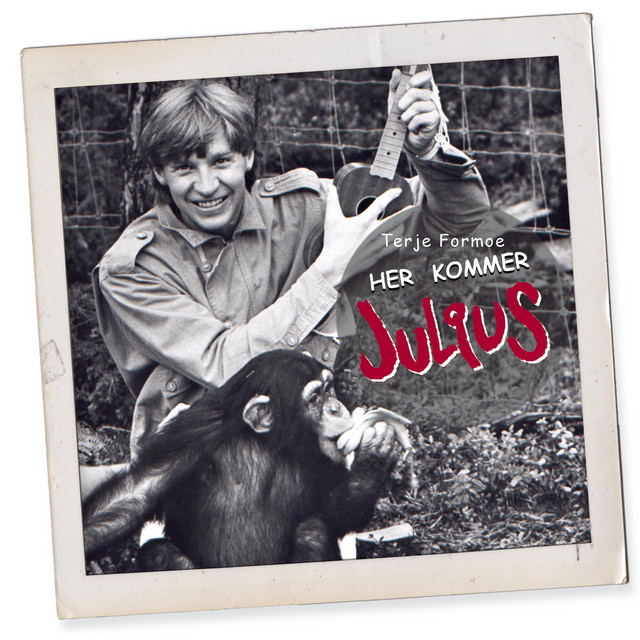
In the spring of 1983, the renowned Norwegian singer-songwriter Terje Formoe pitched the idea of a zoo-themed music cassette to Kristiansand Zoo director Edvard Moseid. Moseid declined the album but famously told Formoe, “You can write a song about Julius.”
The upbeat, catchy song “Her kommer Julius” became an instant national hit, topping the Norsktoppen radio charts and turning Julius into a pop-culture phenomenon.
Formoe, the composer of the fictional pirate Captain Sabertooth (Kaptein Sabeltann), wrote the lyrics and melody in just two hours. “Her kommer Julius” (“Here Comes Julius”) was rushed into production as the theme song for the fourth and final episode of NRK’s massive television documentary series about Julius. The upbeat, catchy track became an instant national hit, topping the Norsktoppen radio charts and turning Julius into a pop-culture phenomenon. Decades later, it remains an essential childhood anthem across Norway.Children’s Books about Julius
The Original Hit (1983) was written by Trygve Klingsheim and Arild Jakobsen, the first children’s book documenting Julius’s early years living in human homes. Accompanied by full-color photographs, it sold over 50,000 copies, turning the chimp into an official merchandise powerhouse.
Som ein bror (Like a Brother, 2019) was written by Alfred Fidjestøl and is an illustrated non-fiction book tailored for older children and young adults. It handles his complex life with nuance, showing how his human foster siblings still view Julius as a brother while exploring the history of captive chimpanzees and scientific research.
He survived a severe, intentional poisoning in 2019 when a visitor threw a bottle of liquid narcotics into his enclosure. Now well into his 40s—an advanced age for a chimpanzee—Julius still lives at the Kristiansand Zoo and Amusement Park, where he remains the park’s main attraction.
The book “Almost Human” serves as a historical mirror reflecting how our collective morality has shifted.Alfred Fidjestøl’s Critically Acclaimed Biography
In 2017, award-winning journalist and biographer Alfred Fidjestøl took a revolutionary literary approach by publishing Almost Human: A Biography of Julius the Chimpanzee. It marked the first time in Norwegian history that an animal was granted a full-scale, rigorous biography, held to the same scholarly, archival, and journalistic standards as a prominent human figure.
The book serves as a historical mirror reflecting how our collective morality has shifted. It documents the transformation of the Kristiansand Zoo from a small, 1970s animal-behind-bars attraction into a modern institution grappling with complex animal-rights and wildlife-preservation standards.
The book has been translated into English by Becky L. Crook for international publication via Greystone Books.
Julius survived a severe poisoning incident in 2019 and enjoys his later years as a respected patriarch with an expanded family. Photo: IFLScience.The final chapters
Julius survived a severe poisoning incident in 2019 and enjoys his later years as a respected patriarch with an expanded family. Today, he continues to live out his later years as a key figure in conservation and the main attraction at his home facility.
Julius – the Popular Norwegian Chimpanzee, written by Tor Kjolberg
The Svalbard Global Seed Vault, the backup facility on the Norwegian archipelago, has a noisy new neighbor with a similar objective: the Global Music Vault.
The Global Music Vault is an Arctic doomsday vault located 1,000 feet inside a mountain on the Svalbard archipelago in Norway. Managed in partnership with the International Music Council (IMC), it is designed to preserve human musical heritage—from Indigenous tracks to global pop hits—for more than 1,000 years.
Location and Physical Security
Located near the famous Global Seed Vault, the facility takes advantage of Svalbard’s remote, demilitarized, and politically neutral status. The vault is nestled deep within a decommissioned coal mine, where natural permafrost maintains optimal cool, dry storage conditions. This setup guarantees the preservation of the vault’s contents even in the event of severe natural disasters or man-made catastrophes, such as electromagnetic pulses (EMPs).
Musical data is converted into high-density QR codes and analog binary code. Photo: Cool Hunting.Storage Technology
Rather than relying on modern hard drives or cloud servers that can degrade or be hacked, the vault uses an innovative storage medium developed by the Norwegian company Piql. Musical data is converted into high-density QR codes and analog binary code, then etched onto ultra-durable, multi-layered polyester film. The film requires no ongoing power or active maintenance to survive and is designed to last at least a millennium.
What is Stored?
The vault’s mission is to serve as a comprehensive and inclusive time capsule rather than a collection limited to Western classical or popular music. It includes:
Traditional and Indigenous folk songs from various regions
Master tracks by contemporary and legendary artists
Historically and culturally significant recordings championed by individual nations
Artists and countries submit their music to the Global Music Vault via a decentralized, community-driven curation process coordinated by the International Music Council (IMC). Rather than functioning as a traditional music label, the vault relies on global networks and national selection systems to build its digital time capsules.
The vault gathers its collection in staggered batches through global campaigns, such as Project ARV. Photo: Singularity Hub.The Role of the International Music Council (IMC)
The vault’s managing entity, Elire Management Group, partners directly with the IMC—a UNESCO-founded body representing 600 million members across 1,000 organizations in 150 countries.
Global Network Access: The IMC serves as the official operational arm for handling submission callouts.
Local Representation: Countries participate through their respective National Music Councils or regional organizations associated with the IMC.
Country-Led National Curation
The vault does not rely on a single centralized jury to judge artistic merit. Instead, it asks individual nations and regions to determine which music best shapes and represents their culture.
Localized Voting: In many cases, nations are encouraged to let the local public vote directly on which tracks and cultural recordings should make the final cut.
Global Committee Supervision: A global committee oversees the final collection to ensure balance and representation across all historical human eras and genres.
Open Callouts and “Project ARV”
The vault gathers its collection in staggered batches through global campaigns, such as Project ARV.
Open Sourcing: During active callout phases, organizers allow anyone, anywhere to submit ideas and digital files for consideration.
Phased Rollouts: Submission priority began with Indigenous and traditional folk music to ensure endangered cultural expressions were safeguarded first. Subsequent phases encompass global pop hits, classical tracks, and contemporary commercial music.
The Discovery Portal. Photo: Cool Hunting.Copyright and Submission Requirements
Clearance: For commercial music and pop hits, music can be accepted and etched into the vault only if rights holders provide direct clearance.
No Loss of Rights: Artists retain 100% ownership and copyright of their work; archiving a track does not transfer any royalties or publishing rights to the vault.
Funding Model: While initial cultural and Indigenous preservation is subsidized, the business model includes charging commercial entities, music labels, and major institutions fees for depositing and archiving their masters.
Every brand wants attention. Yet every day, thousands of companies invest millions in marketing that is nearly impossible to notice. A storyteller’s job is to make the audience clearly “see” ideas. If ideas stand out, they’ll be noticed. So don’t blend in; don’t keep your brand invisible.
You can learn what attracts attention by examining its opposite: camouflage. Most marketing literature asks, “How do we get attention?” Very little asks, “Why do so many brands become invisible?”
Studying camouflage can reveal the mechanisms of attention. Nature, military strategy, psychology, and branding all teach the same lesson: what makes something hard to notice often reveals what makes it impossible to ignore.
What if we paused our study of attention for a moment—and instead studied camouflage?
Nature has spent hundreds of millions of years perfecting camouflage.
Nature’s Greatest Storytellers
Nature has spent hundreds of millions of years perfecting camouflage. Consider how the stick insect survives by looking exactly like a twig, how a snow leopard disappears against mountain rocks, and how the octopus changes both its color and texture.
Likewise, the leaf-tailed gecko becomes almost impossible to distinguish from dead leaves.
These animals survive because they match expectations. Brands disappear for exactly the same reason.
The Brain Doesn’t Notice the Expected
Our brains are prediction machines. Every second, they ignore enormous amounts of information because processing it all would be exhausting. Attention is drawn to surprise, contrast, novelty, movement, emotion, conflict, and unanswered questions.
Everything else fades into the background. This explains why so many advertisements fail. They look like every other advertisement.
Camouflage isn’t created by poor quality. It is created by similarity.
Corporate Camouflage
Corporate camouflage appears whenever companies use language like “innovative solutions,” “customer-centric excellence,” “trusted quality,” or “industry-leading expertise.”
Nothing is wrong with these phrases. The problem is that thousands of competitors use the same vocabulary. Camouflage isn’t created by poor quality. It is created by similarity.
The Psychology of Contrast
Attention depends on contrast. A whisper draws attention in a noisy room. A bright flower draws insects in a green forest. A handwritten note stands out among printed letters. An honest admission draws attention in a world full of perfection.
Contrast draws attention because the brain immediately detects deviation.
Storytelling Is the Opposite of Camouflage
Stories naturally create contrast. Instead of saying, “We deliver excellent customer service”, tell the story of the employee who drove three hours after work to return a forgotten wedding ring.
Instead of saying, “We are innovative”, tell the story of the engineer who spent six months solving one tiny problem that nobody else believed mattered.
Specificity defeats camouflage.
Five Types of Brand Camouflage
Camouflage
Result
Storytelling Solution
Generic language
Invisible message
Specific details
Generic images
Ignored visuals
Authentic moments
Predictable headlines
No curiosity
Unexpected questions
Talking about the company
Low engagement
Talk about customers
Listing features
No emotion
Tell transformation stories
Military camouflage breaks up recognizable patterns. Photo: Serket USA.
Lessons from Military Camouflage
Military camouflage doesn’t simply hide objects. It breaks up recognizable patterns. Sometimes the goal isn’t invisibility. It’s confusion.
Many brands accidentally create confusion by trying to appeal to everyone, communicating too many messages, constantly changing their identity, or copying competitors.
Ironically, attempting to fit in often makes a brand impossible to remember.
The Camouflage Test
If you are responsible for approving a campaign, ask yourself the following questions:
Would a competitor be comfortable publishing this exact sentence?
Could you remove your logo without anyone noticing?
Are your photographs distinguishable from stock photography?
Does your story contain a surprise?
Would a journalist find anything genuinely interesting?
Would a customer retell this story to a friend?
If the answer is “yes” to the first two—or “no” to the last four—the brand may be camouflaged.
Attention depends on contrast.
A Formula
Camouflage = Similarity + Predictability + Familiarity
Attention = Contrast + Curiosity + Meaning
Storytelling is one of the most effective ways to create contrast because it introduces people, conflict, choices, stakes, and change—elements the brain is naturally attuned to notice.
Evolution rewarded animals that mastered camouflage because staying unnoticed meant survival.The Invisible Brand – Conclusion
Evolution rewarded animals that mastered camouflage because staying unnoticed meant survival. Brands face the opposite challenge. Their survival depends on being remembered. The danger is no longer being seen by predators—it is being overlooked by customers. Every story you tell should answer one simple question: Are we blending into the background, or giving people a reason to stop, look, and remember?
However, camouflage is not always a mistake. In nature, it is a strategy. Brands can also choose camouflage deliberately—for example, when a luxury brand relies on understated design, when a company seeks to communicate humility rather than flashiness, or when a product is meant to integrate seamlessly into customers’ lives. The strategic question is not whether to stand out all the time, but when visibility creates value and when restraint does.
Take-away
If you learned something from this article, I believe you’ll also enjoy my recent book, “How I’ve Survived as a Storyteller for Over 50 Years: 12 Survival Techniques.” Get your FREE e-book copy by sending me your name and e-mail address, and including “Storytelling” in the subject line. Thank you for reading!
Seven Strategies for Increasing Customer Participation in Brand Stories, written by Tor Kjolberg.
More articles on Storytelling by Tor Kjolberg you may like:
Brand Masters of Storytelling 3Stop Chasing Case Studies: Build a Living Library of Customer StoriesThe Anatomy of a Brand Story for DestinationsBrand Stories Are BoringTravel Stories Designed for the Adult Part of Our Population
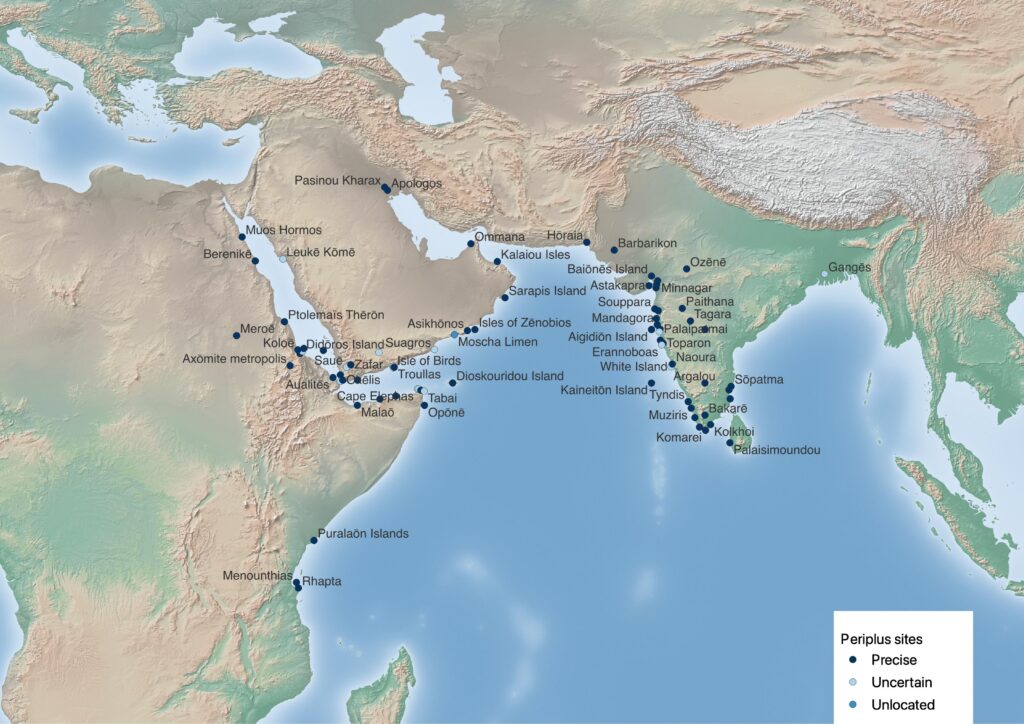
The Periplus of the Erythraean Sea is an essential manuscript from around 60 AD that helps us understand how international trade developed. It is one of those human documents, like the journals of Marco Polo, Columbus, and Vespucci, that express not only individual enterprise but also the awakening of a whole race toward new fields of geographical discovery and commercial achievement. Read on to learn more about the first record of organized trade with the nations of the East.
The text has been dated to various times between the first and third centuries, but classical scholar Wilfred Harvey Schoff and historian Dionisius Agius both date it to around 60 CE. It was first translated by Schoff in 1912.
According to orientalist writer William Mac Guckin Slane, the Periplus was likely written by an Egyptian Greek sailor familiar with the region and is nearly unique in offering accurate insights into what the ancient Hellenic world knew about the lands around the Indian Ocean. Schoff notes that the author could not have been “a highly educated man,” as “is evident from his frequent confusion of Greek and Latin words and his clumsy and sometimes ungrammatical constructions.” Because of “the absence of any account of the journey up the Nile and across the desert from Coptos,” Schoff prefers to pinpoint the author’s residence as “Berenice rather than Alexandria.”
Navigating the Periplus of the Erythrean Sea.
The Erythraean (Red Sea) was an ancient geographical designation that always included the Gulf of Aden between Arabia Felix and the Horn of Africa and was often extended (as in this periplus) to encompass the present-day Red Sea, Persian Gulf, and Indian Ocean as a single maritime area.
It is the first record of organized trade with the nations of the East, conducted in vessels built and commanded by subjects of the Western World. It marks the turning of a tide of commerce that had flowed in one direction without interruption since the dawn of history.
The work consists of 66 sections, most of which are roughly the length of a long paragraph. In many cases, the descriptions of places are sufficiently accurate to identify their present locations; for others, there is considerable debate. For instance, “Rhapta” is described as the farthest market along the African coast of “Azania,” yet at least five locations match the description, ranging from Tanga to south of the Rufiji River delta. The description of the Indian coast clearly mentions the Ganges River, but afterward it becomes ambiguous, describing China as a “great inland city Thina” that is a source of raw silk.
As culture spread in both directions, Egypt and the nations of Ancient India came into being, and a commercial system was developed to exchange products within those limits, with its center of exchange near the head of the Persian Gulf.
Heidelberg’s University Library
The Periplus was originally known only through a single manuscript dating from the 14th or 15th century, now held by the British Library. This manuscript proved to be a corrupt, error-ridden copy of a 10th-century Byzantine manuscript written in minuscule. The Byzantine manuscript was taken from Heidelberg to Rome during the Thirty Years’ War (1618–1648), then to Paris under Napoleon after his army’s conquest of the Papal States in the late 1790s, and finally returned to Heidelberg’s University Library in 1816, where it remains.
The First Record of Organized Trading with the Nations of the East, compiled by Tor Kjolberg.
Previous articles in our series of historic travel stories:
The World’s Oldest Surviving Travel StoryThe World of the Odyssey: A Palimpsest of the Hellenic Art of Living WellSinbad the Sailor
Crafting a Nordic-inspired garden space for ultimate relaxation at home can be one of the most rewarding experiences for you, your family, and your guests. The unique features of such a design lend themselves well to enhancing mood and relaxation, and uplifting your overall well-being.
But what features do you need to combine to make your space Nordic-inspired? From using plenty of natural wood to water features, here are some of the most common suggestions.
Keep Garden Lines Clean
Nordic design is known for its clean lines and neat outcomes. In the garden, this can be a bit of a challenge when you factor in nature, but nature can be managed with the right attitude, tools, and enthusiasm. You can use a robotic lawn mower to keep the bulk of the lawn neat and tidy. However, you might have to trim edges manually. When you do, make sure you design straight, simple pathways and neat geometric bed layouts without unnecessary ornaments.
One of the best materials for Nordic style is natural wood. Photo: Timbering Landscaping.Use Natural Wood for a Nordic-Inspired Garden Space
In countries such as the UK and the US, around 68% of homeowners with garden space place furniture specifically for relaxation. As such, you will want to keep the materials in mind when placing furniture, and one of the best materials for Nordic style is natural wood:
Wood is a key bridge element between nature and domestic spaces.
Light-colored woods, such as pine and beech, reflect sunlight and brighten a space.
Locally harvested, sustainable wood aligns with modern Nordic ecological values.
Go With a Neutral Color Palette
Scandi and Nordic styles are well known for being more muted than others. In fact, the more neutral you can make your palette, the better. Neutral colors promote wellness through serenity without bombarding your senses with strong, intense tones. When designing your space, be sure to include plenty of soft, light grays, whites, and creams, as well as deep charcoal, to help keep the garden space as peaceful and serene as possible.
Add Tons of Soft Ambient Lighting
Most design philosophies incorporate ambient light in some way, and Nordic/Scandi is no exception. Soft ambient lighting works similarly to neutral tones, enhancing a space’s serenity without relying on vibrancy to stimulate wellness. When adding ambient light to your outdoor space’s design, consider hanging simple string lights or placing candlelit lanterns along seating paths for a warm evening glow.
Any Nordic-inspired garden space must give careful consideration to textures, textiles, and fabrics. Photo: The Modern Dane.Craft a Nordic-Inspired Garden Space with Textiles
Any Nordic-inspired garden space must give careful consideration to textures, textiles, and fabrics. For instance, you can decorate with Swedish textiles to create a warm, cozy feeling that aligns with hygge, but there are some things you must always consider in your backyard.
Selecting natural fibers
A backyard textile selection needs to be more durable than typical indoor materials. In this case, choose durable bast fibers such as linen, hemp, and cotton for a blend that feels honest and raw.
Weather-proofing the space
Of course, your backyard fabrics are exposed to the weather, so they need a bit of extra care. You can treat your textiles with weatherproofing sprays and then store them properly.
The principles of hygge aim to maximize comfort and coziness. Photo: GenRoom.Layering according to hygge rules
Nordic decor often follows the principles of hygge, which aim to maximize comfort and coziness. Drape chunky knit blankets, sherpa throws, and faux fur over chairs to enhance the feeling.
To craft a Nordic-inspired outdoor space with textiles, focus on tactile, natural fabrics. It also helps to layer weather-treated cushions, jute rugs, and soft throws. To keep with tradition, ensure the colors are somewhat muted, using an earthy palette to enhance hygge.
Install Hardy Green PlantsThere are some iconic plants associated with Nordic traditions that will elevate your Nordic-inspired design to a new level of authenticity and relaxation. Hardy plants such as ferns, ornamental grasses, and small pines are just a few examples. Not only do these look stunning, adding vibrancy and silhouette, but they are also almost zero-maintenance. So, you can just add them in and forget about them as you relax!
How About a Fire Feature?
Fire features are popular in most countries these days. From the gray summers of the UK to the sunny gardens across Australia, features such as fire pits and outdoor fireplaces add something special to garden design. They are also popular within Nordic tradition, especially given the weather! Add features such as a low metal bowl or a modern stone fireplace as a warm focal point that aligns with Nordic design philosophy.
Adding water can be a major enhancement to the feeling of serenity in your garden. Photo: One Kindesign.And Water in Your Nordic-Inspired Garden Space?
Water features, such as fountains, can elevate a space, but they aren’t as popular as you might think due to water use. Of course, most use a closed loop to minimize water usage, but adding one can be a major enhancement to the feeling of serenity in your garden:
Enhanced well-being through soothing sounds, noise reduction, and reduced stress.
Improved aesthetics through visual focal points, softened edges, and added dimension.
Practical improvements with wildlife attraction, cooling effects, and fresher air.
Keep Clutter to a Minimum
Just as Nordic and Scandi design traditions keep indoor decor simple, clean and tidy, the same philosophy can be applied to the outdoors. Clutter in a garden not only looks terrible but can also be dangerous, especially around stone steps, fire features, and other hard surfaces. However, using the KonMari method to declutter the garden can be an excellent start if your garden has become a little overgrown. Now all you have to do is keep it up, and you should be fine.
Crafting a Nordic-Inspired Garden Space for Ultimate Relaxation – Summary
Keeping lines clean, tidy, and neat is a good starting point when designing a Nordic-inspired garden space for yourself, your family, and friends. Of course, it also helps to think about your texture selection, as you need fibers that can withstand the weather. And just to be safe, consider how you can begin decluttering the garden space and maintain the area with minimal effort.
Crafting a Nordic-Inspired Garden Space for Ultimate Relaxation, written for Daily Scandinavian by a guest contributor.
Feature image (top): Licensed Image courtesy of Magnific.



 Travel planning is not a logistics problem. It is a confidence problem.
The most common hassles are:
Travel planning is not a logistics problem. It is a confidence problem.
The most common hassles are:



















 The Brain Doesn’t Notice the Expected
Our brains are prediction machines. Every second, they ignore enormous amounts of information because processing it all would be exhausting. Attention is drawn to surprise, contrast, novelty, movement, emotion, conflict, and unanswered questions.
Everything else fades into the background. This explains why so many advertisements fail. They look like every other advertisement.
The Brain Doesn’t Notice the Expected
Our brains are prediction machines. Every second, they ignore enormous amounts of information because processing it all would be exhausting. Attention is drawn to surprise, contrast, novelty, movement, emotion, conflict, and unanswered questions.
Everything else fades into the background. This explains why so many advertisements fail. They look like every other advertisement.




 Take-away
If you learned something from this article, I believe you’ll also enjoy my recent book, “How I’ve Survived as a Storyteller for Over 50 Years: 12 Survival Techniques.” Get your FREE e-book copy by
Take-away
If you learned something from this article, I believe you’ll also enjoy my recent book, “How I’ve Survived as a Storyteller for Over 50 Years: 12 Survival Techniques.” Get your FREE e-book copy by