



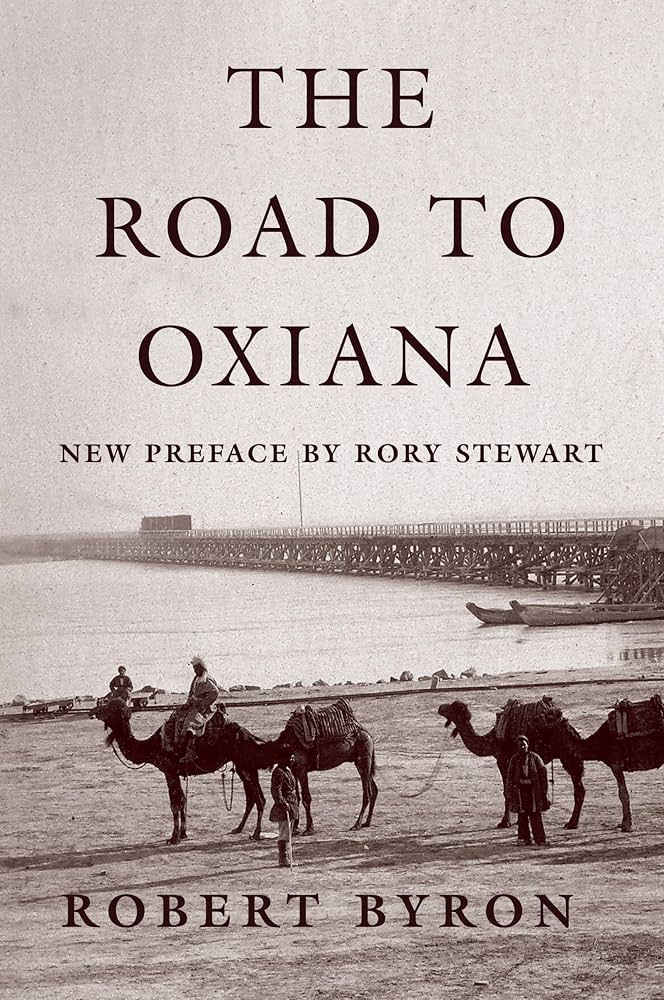
Historical Travel Books #10: The Road to Oxiana by explorer Robert Byron. Published in 1937, this travelogue chronicles Byron’s journeys through Persia and Afghanistan and is considered one of the most influential travel books of the 1930s.
Authors such as Graham Greene and Evelyn Waugh greatly admired his dazzling, timeless account of the journey.
In 1933, the delightfully eccentric Robert Byron set out on a journey through the Middle East, via Beirut, Jerusalem, Baghdad, and Teheran, to Oxiana, the country of the Oxus, the ancient name for the Amu Darya River, which forms part of the border between Afghanistan and the Soviet Union. His arrival at his destination, the legendary tower of Qabus, although a wonder in itself, is not nearly as amazing as the thoroughly captivating, at times zany, record of his adventures.
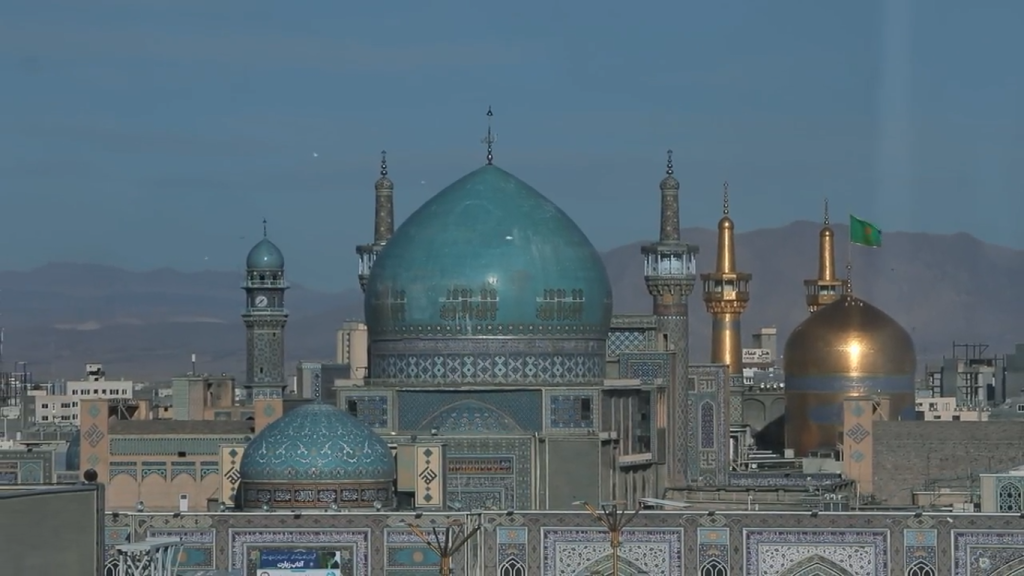
The journey’s primary purpose was to visit the region’s architectural treasures, about which Byron knew a great deal, as evidenced by his observations along the way. For example, he describes the Mosque of Sheik Lutfullah, which is now listed as a UNESCO World Heritage Site.
Byron wrote The Station at age 22, after a mule trip to Mount Athos. This was followed by The Byzantine Achievement (1929) and The Birth of Western Painting (1930). In 1933, the publication of First Russia, Then Tibet confirmed Byron’s reputation as a traveler and connoisseur. That same year, accompanied by his friend Christopher Sykes and tormented by his unrequited love for Desmond Parsons, Byron set out for Persia and Afghanistan. After many vicissitudes, The Road to Oxiana (the remote northern borderland of Afghanistan) became a record of his 11-month journey, a fabulous, intoxicating weave of surreal vignettes, journal entries, and odd playlets.
When Paul Fussell “rediscovered” The Road to Oxiana in his recent book Abroad, he whetted the appetite of a whole new generation of readers. In his new introduction, written especially for this volume, Fussell writes: “Reading the book is like stumbling into a modern museum of literary kinds, presided over by a benign, if eccentric, curator.”
Byron interacted with locals and arranged transportation, including motor vehicles, horses, and donkeys, for his journey. He endured heat, cold, hunger, and thirst, and was plagued by bugs, fleas, lice, and illness.
On these gorgeous pages, poetry, gossip, and scholarship braid into an exotic tapestry that dazzles as much today as it did at publication. As many critics have noted, unlike his contemporaries, including Peter Fleming and Norman Douglas, Byron has not dated.
Peter Fussell writes that “armchair travelers will find newspaper clippings, public signs and notices, official forms, letters, diary entries, essays on current politics, lyric passages, historical and archaeological dissertations, brief travel narratives (usually comic-awful delays and disasters), and–the triumph of the book–at least twenty superb comic dialogues, some of them virtually playlets, complete with stage directions and musical scoring.”
In his introduction, the travel writer Bruce Chatwin described it as “a sacred text, beyond criticism” and has carried his copy since he was fifteen, “spineless and floodstained” after four journeys through Central Asia.
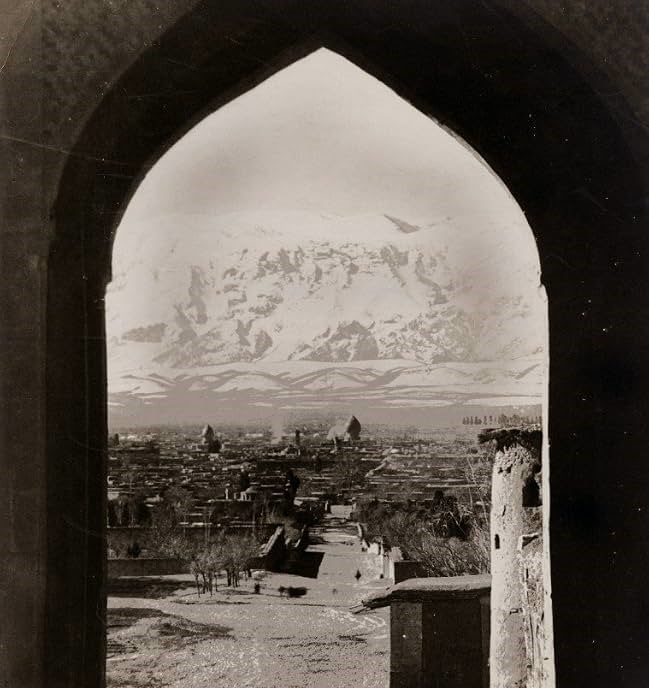
Byron was often as daring as he was witty. To enter the forbidden Goharshad mosque, he disguised himself by blackening his face with charcoal. From Herat to Mazar-i-Sharif, he and his travel companion and close friend, Christopher Sykes, were the first Englishmen to take what was, and remains, a highly dangerous route.
Many modern travel writers consider Byron’s The Road to Oxiana the first great work of travel writing. Byron had previously traveled to widely different places: Mount Athos, India, the Soviet Union, and Tibet. However, in Persia and Afghanistan he found the subject around which he forged his modern travel-writing style, and he later wrote up his account in Peking, his temporary home.
One of the Most Influential Travel Books of the 1930s, compiled by Tor Kjolberg.
Previous articles in our series of historic travel stories:
The Customs of Cambodia
Gulliver’s Travels
Travels with a Donkey in the Cévennes
Frigate “Pallada” – A Tour Around the World
Historical Travel Books #9: Journey Without Maps