



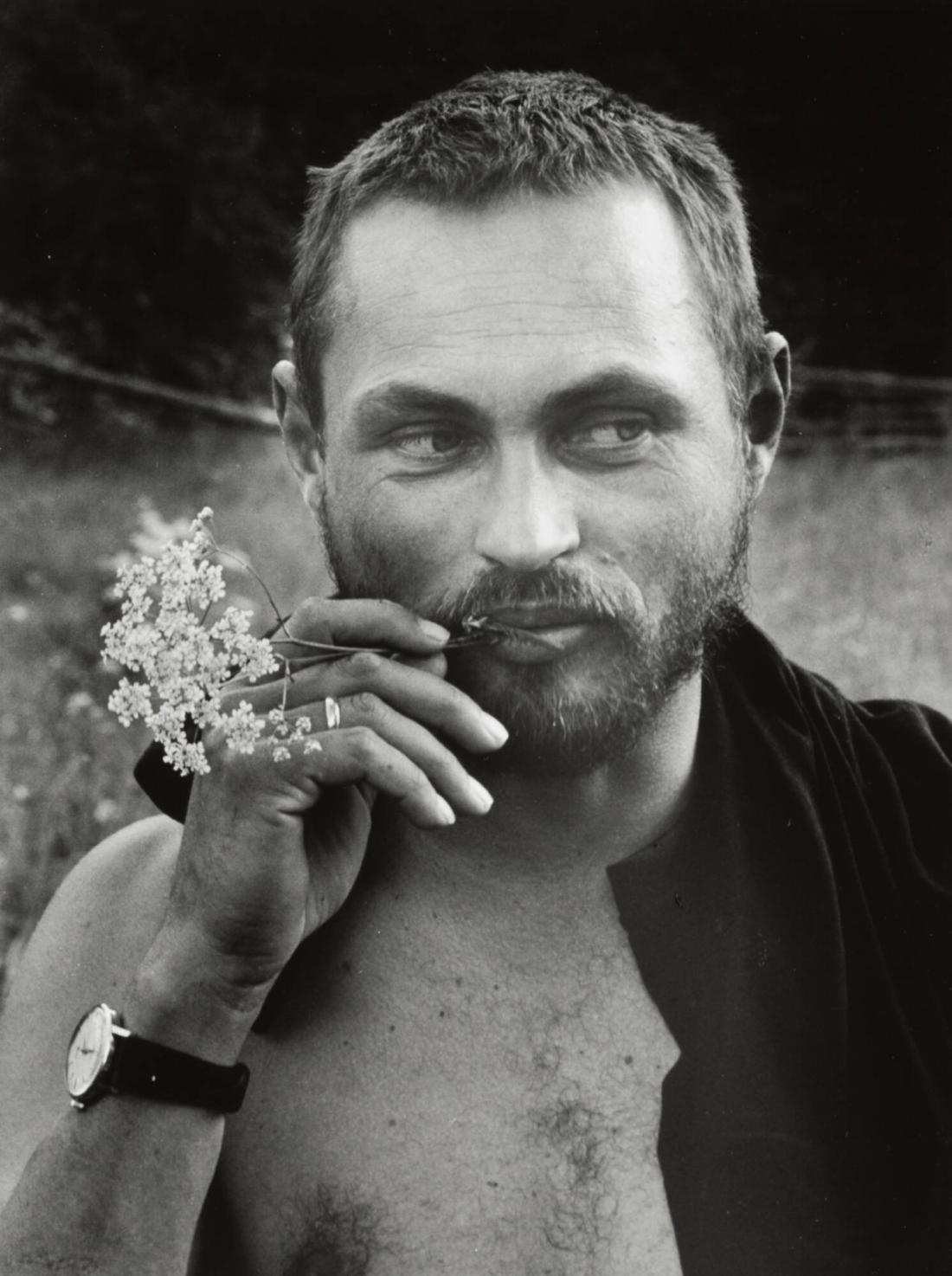
In this interview, Japanese design curator Yasunari Yoshida describes his first encounter with Scandinavian modernism.
You have organized exhibitions dedicated to Erik Höglund since 2009. His work doesn’t always align with the cleaner, more restrained image commonly associated with Scandinavian modernism. What first led you to recognize its importance, and what has this long engagement taught you about how design reputations are constructed?
I first encountered Erik Höglund’s work around 2003, as far as I remember. My immediate reaction was simply, “What is this? This is really interesting.” As I researched him and saw more of his work, I became increasingly drawn to its contradictory quality: primitive yet modern, clearly distinct from the Nordic modern design mainstream at the time. It completely captured me. I trusted that initial intuition, and when I started ELEPHANT, I made Höglund one of my main designers.
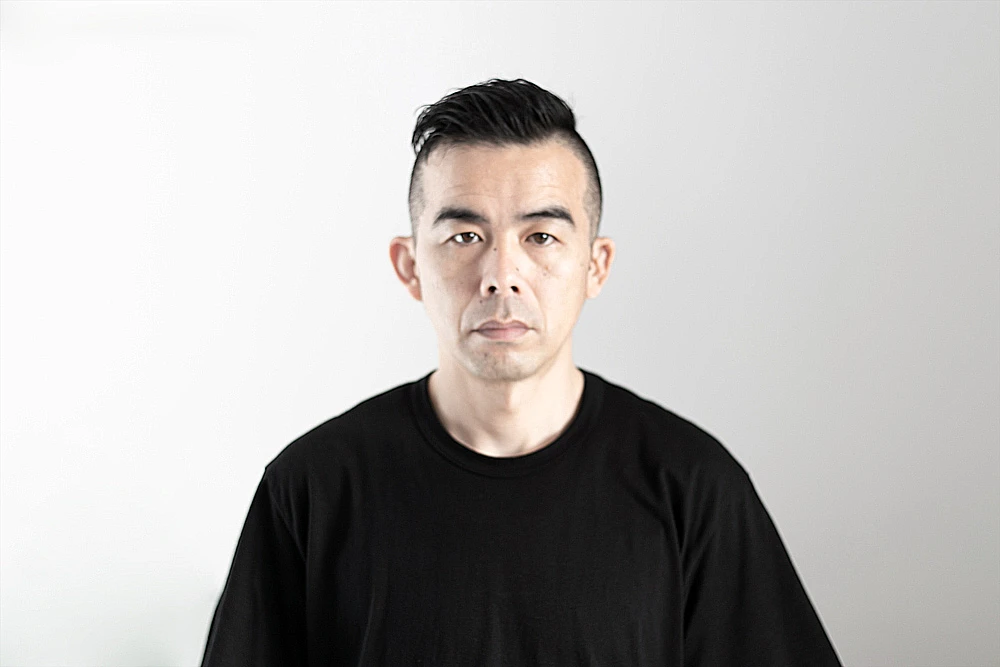
At the same time, as I researched him, I noticed a discrepancy between how strongly I was drawn to his work and how he was treated around me. For example, in Taschen’s Scandinavian Design, Erik Höglund didn’t receive an individual entry as a designer and was mentioned only briefly on the Kosta Boda page. In Swedish shops at the time, I also didn’t get the impression that he was treated as a particularly important designer.
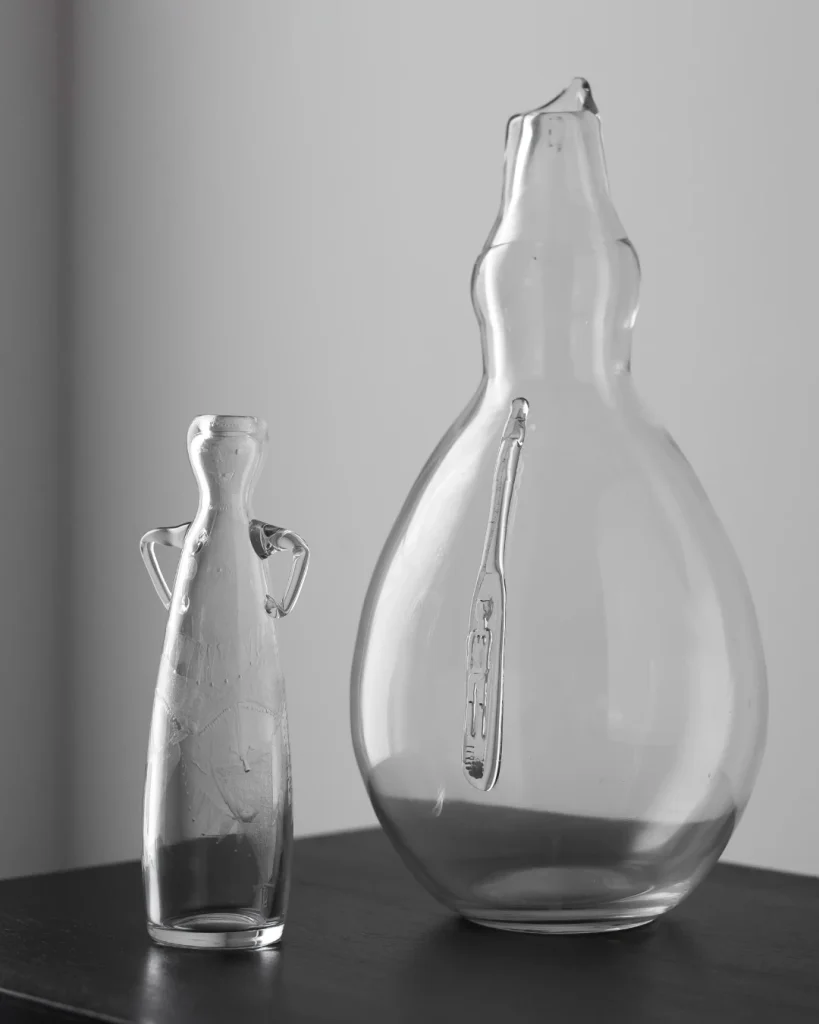
A pair of sculptural glass vessels by Erik Höglund, reflecting the expressive, irregular forms that set his work apart from more restrained Scandinavian modernism.
I found myself wondering why. I was so deeply drawn to his work, yet its broader recognition didn’t seem to match that.
In Japan, too, relatively few shops handled his work. Even when they did, they carried only a small selection, and almost no shops presented his work seriously and consistently. In 2009, I organized the first exhibition devoted entirely to Erik Höglund. I have held an exhibition every year since then, and for several years I also held them in Kyoto.
However, Erik Höglund was not an unrecognized designer. In the 1950s, he was widely recognized as a maverick in Nordic modern design. His receipt of the Lunning Prize in 1957 is one indication of that. He later became a leading designer at Boda, where he worked until 1973, and then worked mainly as an artist.
I have also read accounts suggesting that, during the 1960s, almost every household in Sweden owned some form of Erik Höglund piece. During his Boda period alone, he produced more than 2,500 designs, and even today, if you’re not particularly selective, much of his work remains on the market.
Unique pieces, works made specifically for exhibitions, and commissioned works, however, rarely appear on the market. In some cases, these works are hardly known. As a result, the Erik Höglund most people encounter represents only a very small part of his overall body of work.
This is only my own speculation, but when a designer becomes extremely popular, and their work is widely distributed, it can eventually become so familiar that people grow tired of it, and its value becomes harder to see. I think this may be one reason Höglund’s reputation has remained unsettled even in Sweden, and why I still feel his work isn’t fully appreciated today.
In Japan, too, much more of his work has appeared in recent years, and he has become increasingly familiar. But much of what is seen consists of objects produced in relatively large numbers at the time and still fairly easy to find today. I was concerned that if the same kinds of works kept being shown repeatedly, people would eventually feel they had “seen them before” and would begin to tire of them.
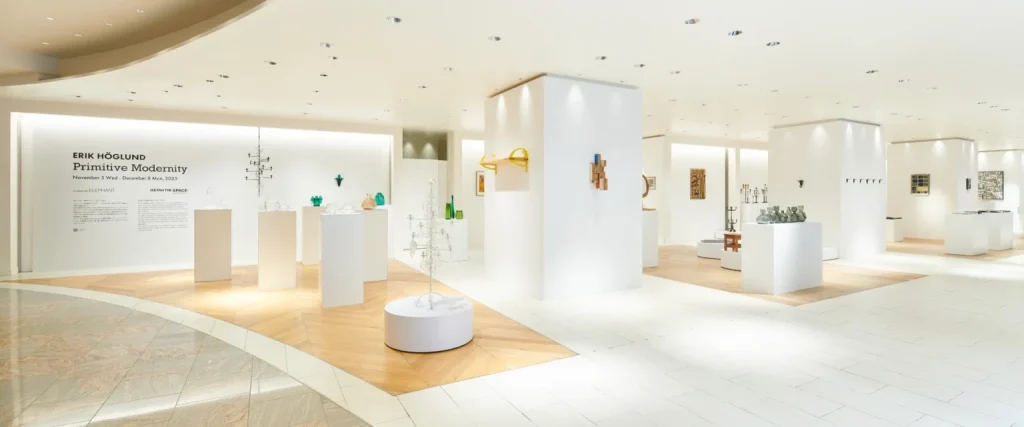
That was one reason I organized the largest Erik Höglund exhibition we had ever held last year. It featured many unique pieces I had collected over the years, as well as works whose existence was little known. I did not want Höglund to be judged solely by the works that commonly circulate on the market. I wanted to show that many extraordinary works remain largely unknown. Even so, we presented only a fragment of his enormous body of work.
Another problem concerns Erik Höglund: compared with many other designers, an unusually large number of works by other designers and manufacturers are presented as his. Because he was such a popular designer at the time, others also produced similar objects. Later generations have sometimes mistakenly sold those objects as Erik Höglund works, and some are outright imitations.
The same problem exists in Japan, and at one point ELEPHANT began issuing certificates of authenticity for Erik Höglund’s works. Of course, those certificates have meaning only within our own shop; in that sense, they are nothing more than pieces of paper. But we began issuing them to draw attention to the problem and to encourage greater awareness and caution around attribution.
To address this issue properly, I believe a catalog raisonné is ultimately necessary. But in Höglund’s case, the sheer number of works makes compiling such a record extremely difficult. For several years, I have heard of efforts in Sweden to produce a book covering his Boda period, and I have high hopes for it. I believe such a publication could lead to a more accurate understanding of his work and, in turn, a broader reassessment.
Having looked at so much of Höglund’s work over many years, I see such a reassessment as a natural development, and I very much hope it happens.
For my part, I think it is important to continue sharing information about the works I have seen and the research I have done, along with my own interpretation of them.
Learning to Distrust Certainty

After twenty years of working so closely with objects, do you believe less strongly now than when you began?
I never formally studied design, so when I started, I didn’t have a clearly defined theory or set of ideas. For that reason, when it comes to design itself, I can’t think of anything I strongly believed then that I no longer believe now.
But in how I engage with objects, I have come to feel very strongly over the past twenty years that it’s important to develop my own view of an object.
For example, even if a book on a particular designer is published, that does not necessarily mean every piece of information in it is correct. The fact that a well-known collector owns or presents a particular object does not automatically make the attribution correct either. Famous shops and respected dealers can also make mistakes.
Through experiences like these, I have come to feel that, in the end, it is extremely important to do my own research, think for myself, and form my own view.
Because I did not live through the periods I am researching, I may not always be able to arrive at a definitive answer, no matter how much I investigate. At the same time, some things aren’t preserved in books or archival materials but become apparent only when you carefully examine the object itself.
Of course, I don’t believe my own interpretation is always correct, and that interpretation isn’t fixed. I think I update it constantly as my experience and knowledge accumulate.
Rather than accepting someone else’s words or existing information at face value, I think it is extremely important to investigate for yourself, look closely at the actual object, keep thinking, and keep updating your understanding as new experience and knowledge accumulate.
What Stays After Expertise
Perhaps the interesting thing about RELEPHANT is that it does not reject the knowledge accumulated through ELEPHANT. It simply creates a space where knowledge does not always have to speak first.
After twenty years spent identifying, researching, and contextualizing objects, returning to intuition is not quite returning to the beginning. The eye doing the looking has changed. As he acknowledges, intuition and knowledge may no longer be separable.
What remains is the willingness to keep looking and to let an object complicate what you thought you knew.
Credits & Sources
Interview with Yasunari Yoshida, founder of ELEPHANT. Project information on ELEPHANT, RELEPHANT, and Erik Höglund based on Yoshida’s responses and material published by ELEPHANT. Additional background on the shop and its history comes from publicly available archival references.
Feature image (top): Erik Höglund.