
Stop Selling Postcards: The Real Definitions of Travel Brand Storytelling

For DMOs and DMCs, the traditional marketing playbook is broken. For decades, selling a destination meant showcasing pristine beaches, modern convention centers, and curated itineraries. Stop Selling Postcards: The Real Definitions of Travel Brand Storytelling.

In a hyper-commoditized global market, landscapes look identical, and amenities are easily replicated.

Tourism isn’t a commodity; it is a complex, high-stakes derivative. Long before a leisure traveler buys a flight or an incentive planner signs a million-dollar DMC contract, they must buy a feeling, blind to the outcome. They are investing heavily in a promise of transformation, seamless logistics, and unforgettable human connection.

This is where brand storytelling moves from a creative buzzword to a critical business architecture. In the travel industry, brand storytelling is not merely writing catchy brochures; it is the strategic process of transforming geographic terrain into an emotional sandbox. To master this asset, however, we must first unpack how its definition shifts with your audience, your stakeholders, and your ultimate goals.
Stop Selling Postcards: The Real Definitions of Travel Brand Storytelling
Brand storytelling uses narrative techniques—plot, characters, and conflict—to communicate a brand’s identity, values, and purpose.

Brand storytelling uses narrative techniques—plot, characters, and conflict—to communicate a brand’s identity, values, and purpose. Rather than relying on overt sales pitches, it builds emotional connections with consumers by positioning the brand as a relatable and trustworthy entity.

For the travel industry, brand storytelling is not just content marketing; it is a co-creation asset that turns geographic terrain into an emotional sandbox. In tourism, stories drive bookings because travel products are purchased on faith before they are consumed.

Because the term brand storytelling is used across marketing, public relations, and creative agencies, it takes on slightly different meanings depending on who holds the brief. Here is a collection of core definitions and perspectives from leading authorities.
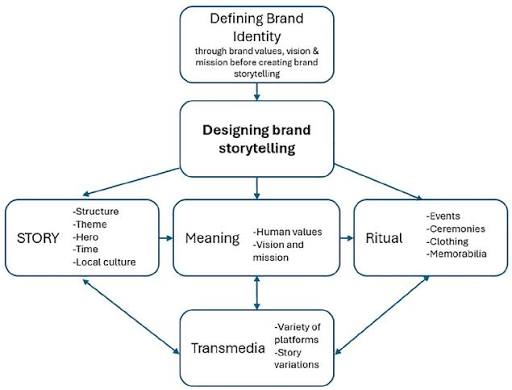
Stop Selling Postcards: The Real Definitions of Travel Brand Storytelling
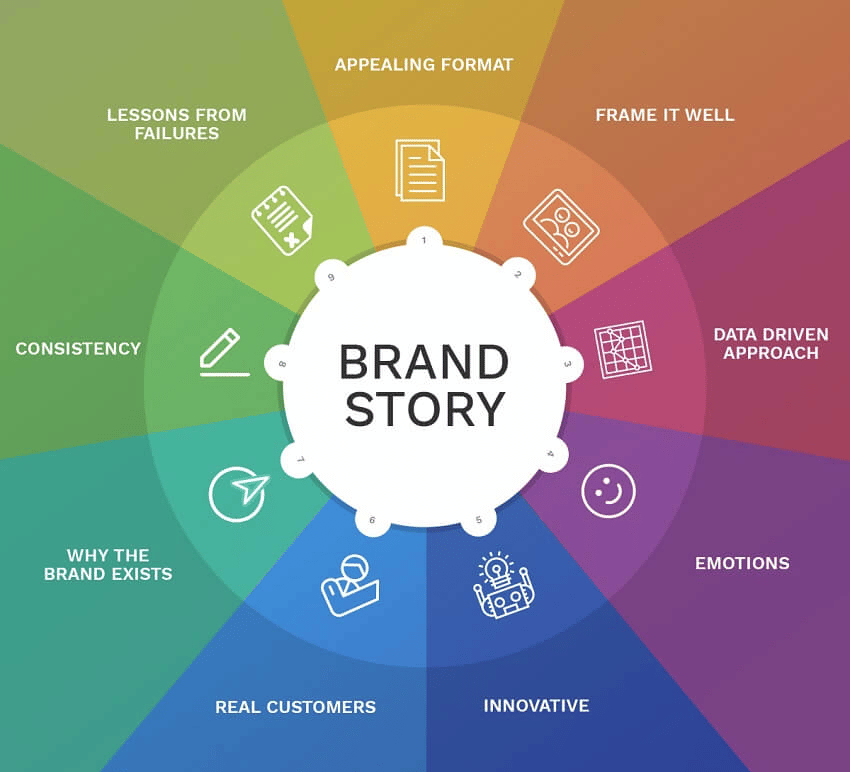
Four dimensions of brand storytelling.

1. The Corporate & Academic View

Harvard Business School: Defines brand storytelling as the use of narratives to communicate a brand’s identity, message, and values in an emotionally resonant way that empowers consumers.

2. The Customer-Centric Framework (StoryBrand)

The StoryBrand System: Popularized by Donald Miller, this framework frames brand storytelling as a narrative in which the customer is the hero and your brand is the guide. The brand provides the solution to the hero’s problem, enabling a positive transformation.

3. The Digital & Transmedia Approach

Transmedia Perspectives: Scholars and digital marketers define it as a process in which elements of a brand story are systematically dispersed across multiple media to create a unified, coordinated consumer experience. Each platform (e.g., video, social media, podcast) contributes uniquely to the unfolding narrative.

4. The Creative & Practical Purpose

Creative Agency Glossaries: From a practical standpoint, brand storytelling is how a brand moves from “intent to output.” It dictates how a campaign, product, or customer service interaction should feel, bridging the gap between cold business logic and human experience.

Travel-Specific Definitions of Brand Storytelling

The Co-Creation Definition: Tourism researchers frame digital destination storytelling as a continuous co-creation process. It is the intersection of a DMO’s official branding and the organic, unfiltered User-Generated Content (UGC) shared by travelers and locals.

The Anthropological View: Rather than showcasing landscapes, effective tourism storytelling focuses on the people who live there and their local cultural identity. It shifts the focus from passive observation to an active, human-centered connection.

The Destination Guide Framework: Adapting the StoryBrand Framework, the destination is never the hero; the traveler or MICE planner is the. The DMO or DMC serves as the expert local guide, providing the map, tools, and access to resolve friction points.

The DMC vs. DMO Storytelling Matrix

DMOs and DMCs operate in different spheres. A great article will break down how storytelling definitions shift between B2C (leisure travel) and B2B (meetings & incentives):

Lens Main Target Definition of the “Conflict” The Storytelling Vehicle
DMO (B2C) Leisure Travelers Overwhelming choices, fatigue, or a desire for transformative personal discovery. Emotional video ads, local lifestyle profiles, and immersive social content.
DMC (B2B) Incentive Planners / Corporates Operational risk, logistical unknowns, and the pressure to execute an unforgettable corporate event. Detailed case studies, behind-the-scenes problem-solving, and hyper-local logistics narratives.


Stop Selling Postcards: The Real Definitions of Travel Brand Storytelling
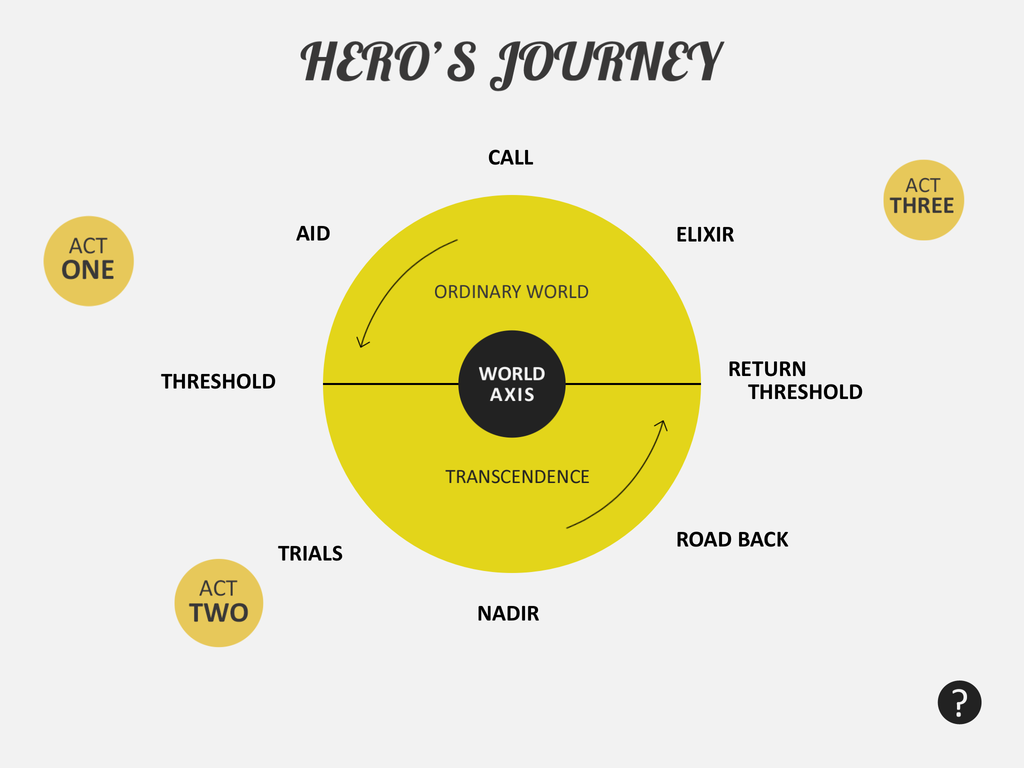
The Hero’s Journey: Used by DMOs to depict an ordinary tourist overcoming travel fatigue, trying off-the-beaten-path activities, and returning home transformed.

Industry Narrative Structures to Include

Your article can highlight specialized narrative structures used in destination marketing according to Tourism Research Frameworks:

The Hero’s Journey: Used by DMOs to depict an ordinary tourist overcoming travel fatigue, trying off-the-beaten-path activities, and returning home transformed.

The Mountain: A linear narrative structure that builds intense emotional anticipation before revealing a destination’s major highlight.

The Nested Loop: A complex narrative structure ideal for layering stories. It allows DMOs to highlight multiple local stakeholder narratives (e.g., an artisan, a chef, a hotelier) within a single overarching destination campaign.

Stop Selling Postcards: The Real Definitions of Travel Brand Storytelling
Green Spain / Costa Rica defined their branding not around geographical lists but around emotional concepts like “Pura Vida”.

Real-World Case Studies for Context

Ground your definitions in recent, high-level travel campaigns:

Destination Canada shifted to a hyper-segmented narrative strategy in 2026, targeting specific travel personas such as “Refined Globetrotters” in the UK and “Outdoor Explorers” in Germany with tailored content streams.

Green Spain / Costa Rica defined their branding not around geographical lists but around emotional concepts like “Pura Vida” and immersive ecotourism corridors to inspire rather than inform.
Stop Selling Postcards: The Real Definitions of Travel Brand Storytelling
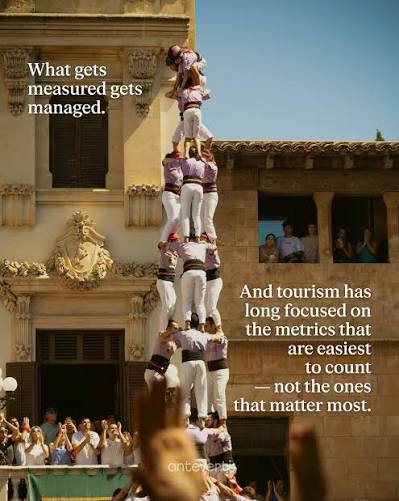
Because storytelling operates at multiple stages of the funnel, its ROI must be measured with a multi-tiered framework.

Measuring the ROI of Travel Storytelling

Storytelling is often dismissed as “soft marketing.” To demonstrate its economic value to board members, stakeholders, or city councils, DMOs and DMCs must translate narrative impact into concrete business metrics. Because storytelling operates at multiple stages of the funnel, its ROI must be measured with a multi-tiered framework.


  1. Is the story capturing attention and shifting perception?

Key Metrics: Cost Per Completed Video View (CPCV), average scroll depth on destination landing pages, and earned media value (EMV) from shared user-generated content.

The Travel ROI Connection: Higher engagement and longer time-on-site are directly correlated with increased organic search volume for the destination weeks later.

  1. Are inspired users transitioning from passive dreamers into active planners?

Key Metrics: Clicks on the “Book Now” or “Find a Partner” buttons, downloads of digital visitor guides, and click-through rates (CTR) to local partner websites (hotels, restaurants, attractions).

The Travel ROI Connection: DMOs can attribute economic value by calculating referral traffic to local hospitality stakeholders, demonstrating direct community impact.

  1. Did the story directly secure the revenue or the booking?

Key Metrics (DMO): Adara/Arrivalist integration data (tracking digital ad exposure directly to actual flight bookings and hotel check-ins via location data).

Key Metrics (DMC): RFP win rates for custom-narrative pitches versus standard boilerplate bids.

The Travel ROI Connection: DMCs that build a cohesive story around a corporate incentive trip see shorter sales cycles and higher average contract value because clients are buying an exclusive experience rather than line-item logistics.

  1. The ability to charge higher rates based on narrative value rather than market discounting.

Key Metrics: Growth in Average Daily Rate (ADR) and Revenue Per Available Room (RevPAR) relative to regional competitors.

The Travel ROI Connection: Powerful storytelling builds brand equity, enabling a destination to attract high-yield travelers who stay longer and spend more, thereby decoupling the destination from destructive price wars.

Stop Selling Postcards: The Real Definitions of Travel Brand Storytelling
Avoid costly narrative traps to ensure your campaigns drive bookings rather than merely gathering passive.

Five Fatal Storytelling Mistakes in Tourism Marketing

Avoid these costly narrative traps to ensure your campaigns drive bookings rather than merely gathering passive likes:

  1. Making the Destination the Hero

The Mistake: Center-staging your city, scenery, or hotel room as the main character.

The Reality: The consumer or MICE planner is always the hero; your brand is the guide.

The Fix: Frame the destination as the magical arena or tool that helps the traveler overcome fatigue, stress, or creative block.

  1. Selling “What” Instead of “Why”

The Mistake: Relying on a sterile list of logistics, including room capacities, square footage, and flight frequencies.

The Reality: Logistics are prerequisites, not narratives; they validate a decision but rarely inspire it.

The Fix: Lead with the transformative impact of the event or trip, then use the logistics to prove you can deliver it.

  1. Erasing the “Conflict” from the Narrative

The Mistake: Presenting a flawless, friction-free paradise where nothing ever goes wrong.

The Reality: Stories need tension to feel believable; flawless perfection feels manufactured and breeds consumer skepticism.

The Fix: Embrace authentic tension, such as stepping out of a comfort zone, navigating language barriers, or resolving a major DMC event-day logistical crisis.

  1. Homogenizing the Voice

The Mistake: Using generic, interchangeable tourism adjectives like stunning, hidden gem, breathtaking, or world-class.

The Reality: When everyone is a “hidden gem,” no one stands out, and your destination becomes commoditized.

The Fix: Define a hyper-specific, localized tone of voice that reflects the unique cultural identity of your people.

  1. Ignoring the Local Ecosystem

The Mistake: Crafting an isolated corporate narrative that overlooks the actual residents and local business owners.

The Reality: Modern travelers crave deep authenticity and can easily spot a disconnect between marketing and reality.

The Fix: Co-create your narrative by spotlighting local artisans, chefs, and characters who bring the destination to life.

Stop Selling Postcards: The Real Definitions of Travel Brand StorytellingStop Selling Postcards: The Real Definitions of Travel Brand Storytelling: Conclusion

Every definition of brand storytelling ultimately converges on a single, undeniable truth: travel products are inherently unique because they cannot be sampled before purchase. A traveler cannot test-drive a sunset, and an incentive planner cannot preview the electricity of a live event. They must buy a promise, wrapped in emotion.

For DMOs and DMCs, mastering storytelling definitions and frameworks is not an academic exercise. It is the core architecture of your economic survival. When you move beyond generic adjectives and sterile lists of room capacities, you stop competing on price and start competing on resonance.

Your destination is more than a set of coordinates, hotel rooms, and airport gates. It is a canvas for human transformation. By choosing the right narrative framework, avoiding the trap of self-centered marketing, and anchoring your metrics to true business value, you do far more than fill hotel beds or conference halls. You build the stage, guide the hero, and invite the world to become part of a living story.
Stop Selling Postcards: The Real Definitions of Travel Brand StorytellingTake-away

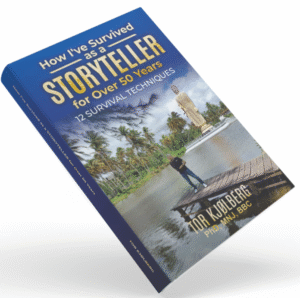
If you learned something from this article, I believe you’ll also enjoy my recent book, “How I’ve Survived as a Storyteller for Over 50 Years: 12 Survival Techniques.” Get your FREE e-book copy by sending me your name and e-mail address, and including “Storytelling” in the subject line. Thank you for reading!

Stop Selling Postcards: The Real Definitions of Travel Brand Storytelling, written by Tor Kjolberg.

More articles on Storytelling by Tor Kjolberg you may like:
Stop Chasing Case Studies: Build a Living Library of Customer Stories
The Anatomy of a Brand Story for Destinations
Brand Stories Are Boring
Travel Stories Designed for the Adult Part of Our Population
Seven Strategies for Increasing Customer Participation in Brand Stories

Sinbad the Sailor

Sinbad the Sailor is a beloved legend you can read for free online, following two men whose lives collide by chance on a Baghdad street. Sinbad the Porter, exhausted and resentful of the wealthy, stops outside a grand house — only to be invited inside by its owner, a seafarer who shares his name. Sinbad the Sailor is our third article in the Historic Travel Stories series.

Over seven evenings, Sinbad the Sailor recounts the breathtaking voyages that built his fortune, each tale more astonishing than the last. As the porter listens, his bitterness slowly gives way to something unexpected.

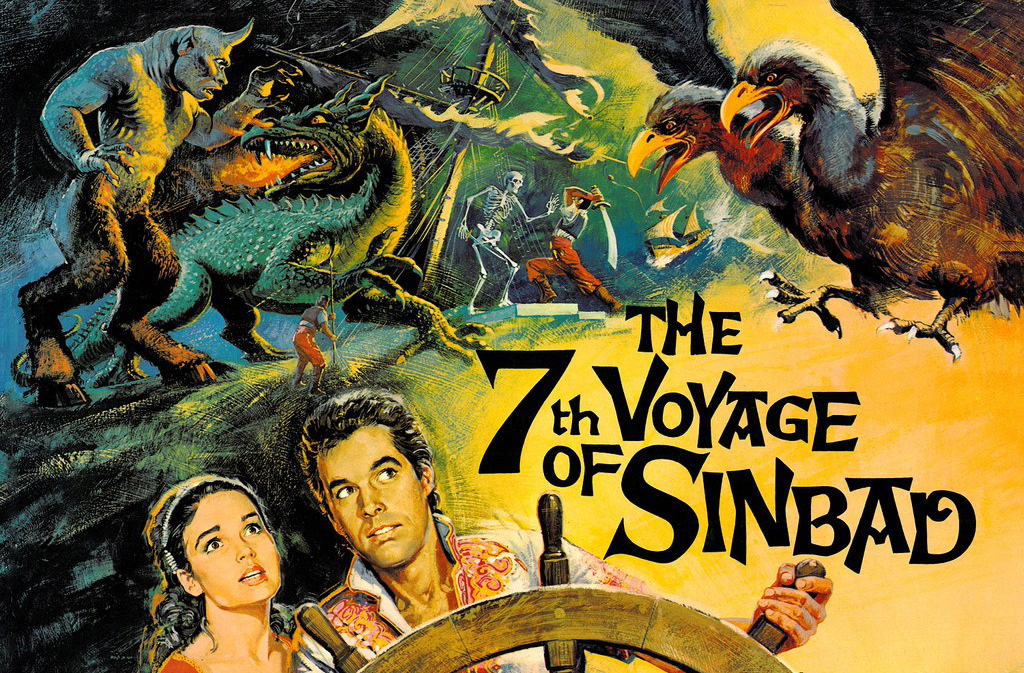
Among the tales of “The Arabian Nights,” or the “Thousand and One Nights,” those of the seven voyages of Sindbad the Sailor are perhaps the most familiar to people around the world. There have been numerous films about Sindbad. There are many animated cartoons about Sindbad’s travels: as early as 1936, Paramount Pictures released “Popeye the Sailor meets Sindbad the Sailor,” and as late as 2003, “Sinbad: Legend of the Seven Seas” was produced by DreamWorks Animation. There are also TV series, video games, comic books, and many other items that feature Sindbad.

The stories were told to the ruler Shahryar by Scheherezade. The seven stories of Sinbad the Sailor describe his journeys. They are similar yet distinct.

On all of his journeys, Sinbad was convinced he’d die, but his faith in Allah kept him alive. He always said that every journey was his last, yet he never settled down. He wanted to travel and see the world.

All the stories share the same beginning. The journey is calm and pleasant, but then something happens. Sinbad was always saved by Allah, and his faith in Allah grew with each voyage.

After Sinbad the Sailor told Sinbad the Carrier his stories, he gave him 700 goldfinches. He told the stories so that Sinbad the Carrier would appreciate his life more and have greater faith in Allah. After that, Sinbad the Carrier repented for his sins and asked Allah for forgiveness.

The beginning

A long, long time ago, in Baghdad, there lived a man. Sinbad the Porter worked hard every day for his money, yet he still didn’t have much of it. One day, Sinbad took a break and stopped at the house of a rich merchant. Sinbad smelled the most delicious aromas coming from the house and heard the most beautiful music. “It’s so unfair that some people can enjoy the finer things in life without working hard, and I work hard every day and still can’t enjoy them!” Sinbad complained.

At that moment, a boy came out of the house and walked up to Sinbad. He took the porter by the hand and led him inside. Sinbad was mesmerized by the house’s beauty. “This must be the house of a King or Sultan,” he thought. In a grand hall, Sinbad saw an impressive man with a long gray beard. The host pointed to a chair and asked for his name. “My name is Sinbad the Porter,” Sinbad replied. “What a coincidence! My name is also Sinbad. Sinbad the Sailor,” said the host.Sinbad the SailorThe first journey

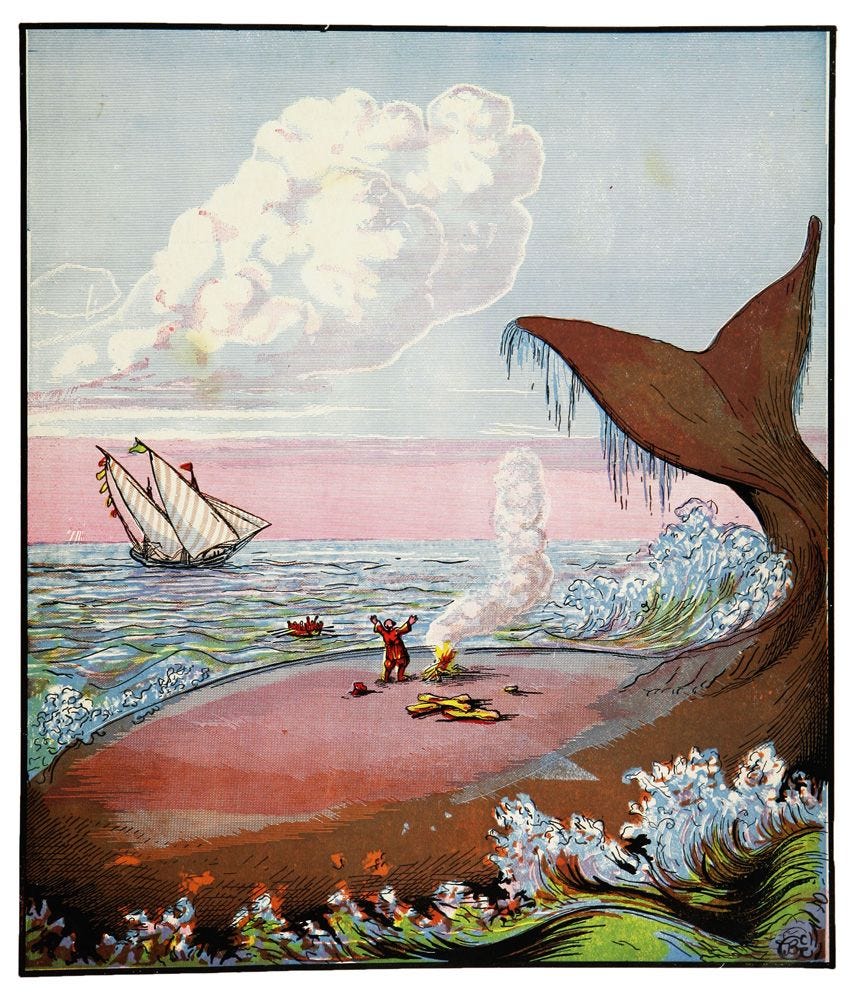
Sindbad’s seven voyages should be understood as tales of derring-do in pursuit of fame and fortune. On his first voyage, Sindbad sails to what he thinks is an island, but it is actually a huge whale that dives deep into the sea when he and his sailors light a fire to cook. He is eventually rescued by a passing boat and ends up on an island ruled by a king whose horse he saves, earning rich gifts that he sells for a huge profit. Eventually, he returns to Baghdad a rich man.

The second journey

Sinbad the Sailor decided to travel again. On his second journey, he came to an island that looked like Paradise.

Sinbad was tired, so he fell asleep on the island. When he woke up, he was all alone. His crew had left without him. Since he was alone, he had to do something to survive.

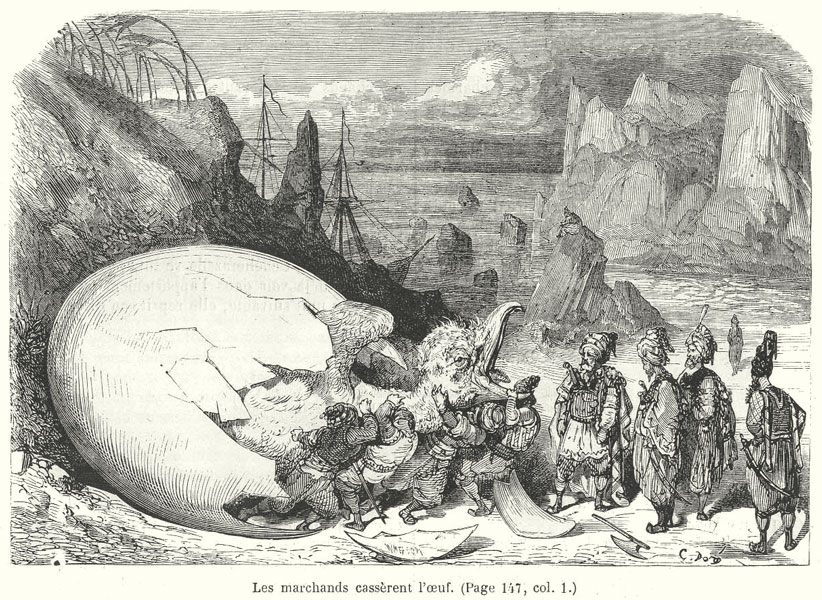
He saw a giant bird and decided to tie himself to her legs, hoping she would carry him to an inhabited island.

The bird carried him high to a mountain, and beneath it lay a valley. He went to the end of the valley and saw something strange. A piece of meat fell from the sky. He tied himself to the meat, and then an eagle came and carried him to the top of the mountain.

He met a group of merchants and traveled with them back to Baghdad. He lived a carefree life, but soon he wanted to go on a new adventure.

Sinbad the SailorThe third journey

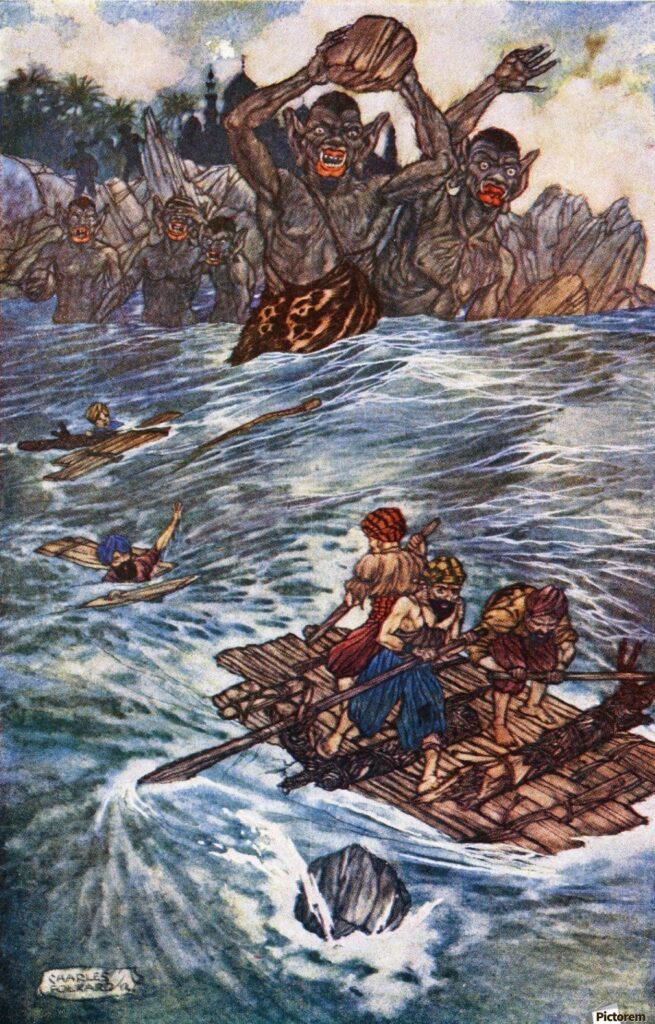
They traveled to another sea when the wind caught them and blew them to the mountain of monkeys. Nobody came out alive from that mountain. The monkeys surrounded the boat and threw them onto the island, where they saw a castle.

They entered the castle, and it was empty, so they decided to spend the night there. In the morning, a big monster woke them, grabbed their captain, and threw him to the ground. After that, he stepped on his neck, demanded that a fire be lit, and then baked and ate the captain.

The same situation repeated the next day when the sailors tried to outsmart the monster and kill him. Before nightfall, another of them was dead. After that slaughter, the monster decided to sleep.

The sailors grabbed spears and shoved them into his eyes. They managed to beat him that way.

They built a boat and went back to Baghdad. Sinbad the Sailor lived happily, but his inner voice made him travel again.

Sinbad the SailorThe fourth journey

Yearning to return to the sea, Sindbad sets off on his fourth journey, landing with his shipmates on an island populated by cannibals who feed and drug the crew. Realizing the danger, Sindbad refuses to eat and escapes. An itinerant group of “pepper-gatherers” carries him to their king, who befriends him and gives him a beautiful woman in marriage. When the woman dies, he realizes that the customs of that island require that he be entombed with her. He eventually escapes after robbing the grave and returns to Baghdad.

Sinbad the SailorThe fifth journey

A while later, having “forgotten all,” Sindbad decides to buy a new ship in Basrah and, once again, sail the seas. He fills the boat with goods to trade, hires a captain and a crew, and sets off on his fifth voyage. His boat is sunk by roc birds. He is enslaved by the Old Man of the Sea, who rides on his back for weeks, and he ends up in the City of the Apes. There he learns to deal with the apes and gets them to pluck fruit and coconuts, which he sells, building another fortune before returning home to Baghdad.

Sinbad the SailorThe sixth journey

Sinbad traveled with a group of merchants. They had a happy journey, but the captain ended it. He realized they had strayed from their route and had unloaded on an island.

All of the merchants soon died, and Sinbad was left alone. Sinbad had to survive, so he wandered until he found an emperor who lived a happy life. With his help, he finally managed to get back to Bagdad.

Sinbad the SailorThe seventh journey

The last voyage is no different from the others: he is shipwrecked on an island, but this time he discovers a beautiful city and another kindly king who takes him under his wing. He eventually tells Sindbad that, as he is growing old and has only one daughter, he would like him to marry her and become his legitimate successor.

Sindbad agrees and marries a very beautiful and wealthy woman, and when the King dies, he inherits the throne. The city has one peculiarity, though: once a month, some of the people turn into birds and fly out of the city. One day, he decides to go with them to find out where they fly. Riding on one of the birds, he rises high in the sky and hears angels glorifying God. So he too praises God when fire descends from heaven and destroys almost all the birds. He eventually learns that these birds are evil spirits who will turn against him, so he decides to return to Baghdad with his wife and much of his wealth.

Sinbad remembered that whenever he was in trouble, he would pray to Allah, who would save him, only to find himself in trouble again. He swore to Allah that if he survived this time, he would never sail again or seek trouble. Allah saved him, and Sinbad never traveled again.

Sinbad the Sailor, compiled by Tor Kjolberg

Previous articles in our series of historic travel stories:
The World’s Oldest Surviving Travel Story
The World of the Odyssey: A Palimpsest of the Hellenic Art of Living Well

Large-Scale Bicycle Parking Solution in Finland

Some cities pour millions into cycle lanes but ignore the final meter. Finnish company Biketty Oy has found a large-scale bicycle parking solution.

The company’s primary purpose was to operate parking facilities and build car parks in the Finnish town of Seinäjoki. However, the city also considered it important to develop bicycle parking as part of its mobility solutions. When a new railway station and station district were built in the city, a bicycle parking facility was planned alongside the car park.

Also, Aalto University is committed to sustainable development and to promoting environmentally friendly, healthy modes of transport on campus. As part of this effort, two innovative Biketti bicycle-parking containers have now been installed on campus.

Large-Scale Bicycle Parking Solution in Finland
The company Biketty has solved a longstanding problem with a wooden bicycle storage solution.

The company Biketty has solved this longstanding problem with a wooden bicycle storage solution. Cars are large, easily monitored vehicles that can be readily identified by their authority-issued registration numbers via camera-based license plate recognition. With cars, it is the vehicle itself that is monitored, rather than its user. “A bicycle has no such identifier, which makes it technically more challenging to sell short-term parking — for example, in intervals of minutes or a few hours. In large bicycle parking facilities, the only product on offer is often a monthly contract,” says Mika Mäntykoski, CEO at Seipark Oy, a parking services company owned by the City of Seinäjoki.

Large-Scale Bicycle Parking Solution in Finland
Mika Mäntykoski, CEO at Seipark Oy, a parking services company owned by the City of Seinäjoki.

******************************************
Related: Bike Garage in the Center of Stockholm
******************************************

Biketti bike containers offer a simple, safe, and convenient solution to cyclists’ parking challenges. They directly address the frequent feedback on better cycling infrastructure highlighted in Aalto University’s annual campus survey. With their innovative design, the Biketti units demonstrate the University’s strong commitment to sustainable transportation and to making everyday cycling a more attractive option for commuters.

The Biketti units come in various sizes, holding between 10 and several hundred bikes. They keep cycles secure and offer self-service access for repairs and cleaning.

**********************************
Related: Norway’s Best Cycling City
**********************************

Large-Scale Bicycle Parking Solution in Finland
Two innovative Biketti bicycle-parking containers have now been installed on campus at Aalto University.

However, there is still room for improvement. Seipark’s goal is to develop a post-payment system for bicycle parking — similar to how car parking works — in which the fee is charged after the fact based on time used. According to Mika Mäntykoski, achieving this would appear to require additional investment and joint planning with Biketti Oy. “Instead of monitoring the cyclist, we would need to be able to monitor the movement of the bicycle in and out of the facility, just as we do with cars.”
“We use ethically sourced timber and have architects to ensure that our bike garages not only function well but also look good,” says Janne Kalliomäki, CEO of Biketti.

Large-Scale Bicycle Parking Solution in Finland, Tor Kjolberg reporting.

The Global Haaland Craze

0

Erling Braut Haaland’s popularity has skyrocketed into a worldwide phenomenon, further amplified by his spectacular performances for Norway in the 2026 FIFA World Cup. Continue reading to learn more about the global Haaland craze.

Norway is seeing a surge in global interest in travel following its standout performance at the 2026 FIFA World Cup, with football star Erling Haaland and the viral “Viking row” celebration helping put the Nordic country firmly on travelers’ radar.

The Global Haaland Craze
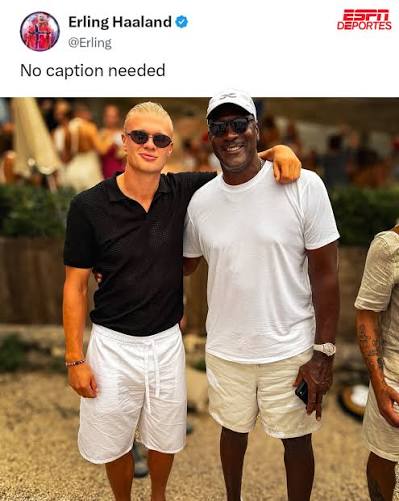
When Haaland shared a picture on his social media of the two in casual attire, fans started commenting on everything from the height comparison to speculation about what the two must have talked about.

The soccer star has become one of the most popular athletes on the globe. Following his stellar World Cup campaign, Haaland is currently enjoying some deserved vacation time. However, he seemingly ran into NBA legend Michael Jordan, one of the world’s best-known figures, even outside of sports. When Haaland shared a picture on his social media of the two in casual attire, fans started commenting on everything from the height comparison to speculation about what the two must have talked about.

****************************************
Related: A Living Swedish Football Legend
****************************************

The Global Haaland Craze
The viral “Viking row” celebration helped putting the Nordic country firmly on travelers’ radar.

The trend mirrors tourism boosts seen after other World Cup successes. Spain’s tournament victory triggered a 33-fold increase in flight searches from China, while Cape Verde’s historic World Cup debut drove a 5,000% surge in US travel searches, highlighting the growing influence of major sporting events on tourism demand.

Fans across the globe are drawn to the striking contrast between his physical dominance on the pitch and his surprisingly down-to-earth, goofy personality off it.

According to Euronews, online interest in Norway has risen sharply since the tournament. Google Trends data shows that searches for the Polish term “Norwegia” increased by 200% year over year, while global searches for the English keyword “Norway” were up 300%. Flight search data from Kiwi.com also showed that average daily flight searches from Poland to Norway between July 1 and 20 were 32.3% higher than during the same period in 2025. Meanwhile, Airbnb recorded a 15% increase in accommodation searches for Norway between June 11 and July 12 compared with the same period a year earlier.

**********************************************
Related: World’s First Best Women’s Soccer Player – From Norway**********************************************

The Global Haaland Craze
After scoring 7 goals to help Norway reach their first quarterfinals since 1998, he has cemented his status as one of the most recognizable and beloved athletes on the planet. Photo, from Instagram.

Viral Appeal

Haaland’s massive social media following surged during the recent World Cup, as fans celebrated everything from his flowing blond hair to his one-word comments and his humorous responses to viral memes.

Much like the “Travis Kelce effect” in American sports, Haaland’s magnetic personality has drawn millions of casual viewers and non-soccer fans into international soccer and tourism.

After scoring 7 goals to help Norway reach their first quarterfinals since 1998, he has cemented his status as one of the most recognizable and beloved athletes on the planet.

Norway’s World Cup campaign adds to growing evidence that success on football’s biggest stage can influence travel demand, as destinations increasingly benefit from the global attention the tournament generates and the viral moments that capture audiences far beyond the pitch.

The Global Haaland Craze, Tor Kjolberg reporting.
Feature image (top) © Norges Fotballforbund.

Moving to Denmark as a Non-EU Expat: What Actually Happens After You Land

0

Most guides to moving to Denmark stop at the visa. You read them, get the residence permit, and book the flight — and then you land in Copenhagen to discover that the permit was the easy part. However, that’s when the paperwork begins. Read on to learn what actually happens after you land, moving to Denmark as a non-EU expat.

What nobody prepares you for is the sequence: a chain of registrations in which each step is a prerequisite for the next, and getting the order wrong can cost you weeks and, in one specific case, more than half of your first paycheck.

I run NordicExpat, a guide site for people relocating to the Nordics. The single most common question we see about moving to Denmark isn’t “which bank should I use” or “how do I find a flat.” It’s some version of “I’m here, and everything needs something I don’t have yet — where do I start?” Here is the order that actually works.

******************************************
Related: What It’s Like Living as an Expat in Stockholm
******************************************

First: the permit is a combined permit

If you’re a non-EU national, what you think of as your “work visa” is, in Denmark, a combined work-and-residence permit. You cannot legally start work until it is approved, and — unlike some countries — most routes offer no in-country grace period to begin work while you wait. Your Danish employer submits the application on your behalf through the nyidanmark.dk business portal, usually under the Pay Limit Scheme (for salaries above a set annual threshold) or the Fast-track Scheme (available to certified employers). Standard routes take longer, typically two to six months.

The practical implication: don’t base your notice at your old job on your start date. Base it on the permit approval date, the only date that matters. We provide a plain-language breakdown of the schemes and timelines in our guide to Danish work permits for non-EU nationals.

Second, and out of order for most people: a registered address

Here is the trap. The next thing you need is a CPR number (more on that below), and to get one you need a registered Danish address — which means a proper rental contract in the commune where you’ll live. Airbnb, a hotel, or a friend’s sofa will not be accepted.

This is why so many arrivals stall in week one: they come to sort out the CPR first, only to find they can’t because they don’t have a lease yet, since they were waiting until they had a CPR number to sign one. Break the loop by treating housing as the true first task on the ground. Some employers will let you use their office address temporarily to register — it’s worth asking before you arrive.

Moving to Denmark as a Non-EU Expat: What Actually Happens After You Land
MitID, Denmark’s national digital ID — the key that unlocks banking, tax and public services once your CPR is issued.

**************************************
Related: The Benefits of Employing Expats
**************************************

Third: the CPR number (your key to everything)

The CPR number (Central Person Register) is the master key to Danish life. Without it, you can’t finalize a real bank account, get a health card and a GP, sign most contracts, or receive your salary without issues. You register in person at your commune’s Borgerservice, or — in the four largest cities — at an International Citizen Service (ICS), which conveniently bundles CPR registration, a tax card, and residence formalities under one roof.

Two things people get wrong here, both expensive:

  1. Book the appointment. Walk-ins are almost never accepted. Arriving at Borgerservice or the ICS without a slot doesn’t get you seen any faster — it gets you sent home to book online and try again, and during the busy August–September arrival season, that can mean losing weeks you didn’t budget for.2. Bring the permit or proof of it. You need either the physical permit card or an official confirmation letter from SIRI, along with your rental contract and passport. Without the permit documentation, the appointment will not proceed.

At the appointment, you’re usually handed a document showing your CPR number the same day; the physical yellow health card, with your assigned GP, then follows by mail, typically within about two weeks. And here’s the costly detail that catches everyone: if you start work before you have a CPR number and tax card, your employer is legally required to withhold tax at the maximum rate of 55%. You get it back in your annual tax return, but in the meantime your take-home pay is gutted. We break down the full step-by-step — the exact documents and the SIRI edge cases  — in our guide to getting a CPR number in Denmark.

Moving to Denmark as a Non-EU Expat: What Actually Happens After You Land
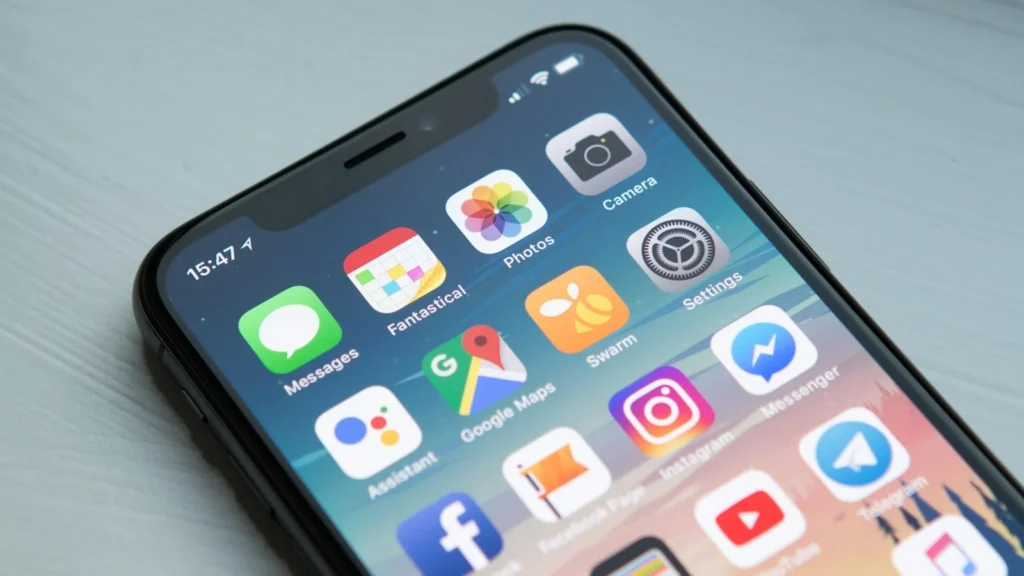
MobilePay on a Danish phone — near-essential for daily life, but it needs a real Danish account behind it.

Image 3 (attached: 03-danish-banking-app.webp) — MobilePay on a Danish phone — near-essential for daily life, but it needs a real Danish account behind it.

Fourth: the banking chicken-and-egg

You need a Danish bank account to receive your salary. A real Danish bank account requires a CPR number, and app-based banks like Lunar also require MitID (the national digital ID), which is linked to your CPR. So for your first two to four weeks in Denmark, you may already be working but have no way to be paid locally.

The standard bridge is a passport-only account with Wise or Revolut. Either opens in about ten minutes with just a passport and covers card payments and transfers while you wait. The catch to understand up front: neither provides a Danish account number, so neither can serve as your NemKonto — the official account the state and your employer pay into — and neither works with MobilePay, which in Denmark is closer to essential than optional. So the bridge account handles day-to-day spending, not your salary.

The clean fix is to ask your employer to hold your first paycheck until your Danish account is registered, or to send a one-off international transfer to the bridge account in the meantime. Once your CPR and MitID are active, opening a proper account (Lunar takes about fifteen minutes) and registering it as your NemKonto closes the loop. We cover the bridge-account strategy in full, along with what a NemKonto actually is and why it matters.

The order that saves you weeks

Put simply, the chain is: permit → registered address → CPR (requires the permit and address) → MitID → real bank account → NemKonto, with a Wise or Revolut bridge running alongside from day one so you’re never without a card. People who have a smooth first month are almost never the ones who did the most research on Danish culture. They’re the ones who understood this is a dependency chain, secured housing before pursuing the CPR, and booked every appointment in advance.

Denmark rewards the prepared and quietly punishes improvisation — which, once you’re through the paperwork and actually living here, proves to be a fairly accurate preview of the place.

Bikram Nath

Moving to Denmark as a Non-EU Expat: What Actually Happens After You Land, written explicitly for Daily Scandinavian by Bikram Nath. Bikram is the editor of NordicExpat, where he writes plain-English guides to the practical aspects of moving to Denmark, Sweden, Norway, and Finland: residence registration, digital ID, bank accounts, and tax cards, all sourced from official government sites.

All images © Unsplash.

Seven Strategies for Increasing Customer Participation in Brand Stories

The strongest brand stories are those in which customers become characters, contributors, and eventually storytellers. Read on to learn seven strategies for increasing customer participation in brand stories.

Two people buy the exact same running shoes. One simply owns another pair of shoes. The other becomes part of a worldwide community that shares training stories, celebrates personal victories, and inspires thousands of runners online. The product is identical. The story is not. The difference is participation. One customer purchased a product. The other joined a narrative.

Do you see why participation matters?

The most successful brand stories are no longer told to customers—they are co-created with them. Customer participation transforms storytelling from a one-way broadcast into a shared experience.

Seven Strategies for Increasing Customer Participation in Brand StoriesWhy participation changes everything

Traditional advertising positions the company as the hero. Modern storytelling positions the customer as the hero. People rarely tell friends about ads. They often share stories about experiences they helped create. Participation creates ownership. Ownership creates advocacy.

At Amdocs, a $4.5 billion provider of customer-experience software and services, showcasing marquee customers’ success stories is central to its marketing and PR efforts. “If we want to do something we think the press might also pick up, or for awards submissions, the bigger the name, the better,” said Stephanie Porter, Director of Relationship Marketing.

Seven strategies for increasing customer participation

  1. Invite customers into the story early

Don’t wait until after a purchase. Ask questions before customers buy, such as “Why are you looking for this?” “What problem are you hoping to solve?” or “What adventure are you planning?”

People enjoy talking about themselves, and their answers may become story material.

  1. Make customers the heroes

Instead of saying: “Our company has fifty years of experience,” tell the story of: “Maria finally climbed her first mountain after years of believing she never could.”

Customers remember people far more readily than corporate achievements.

Seven Strategies for Increasing Customer Participation in Brand Stories

  1. Collect stories continuously

Many companies gather testimonials once a year. Great storytellers collect stories every day. Potential sources include customer service, sales staff, support teams, social media, events, newsletters, and online communities.

Think of every employee as a story scout.

  1. Build communities rather than audiences

Audiences listen. Communities participate. Create opportunities for customers to exchange ideas, solve problems together, celebrate successes, and inspire newcomers.

When customers start talking to each other, the brand story grows on its own.

  1. Reward storytelling—not just purchasing

Many loyalty programs reward spending. Imagine rewarding customers for sharing experiences, mentoring new customers, submitting ideas, contributing photos, creating videos, writing travel journals, or helping other customers.

You reward contribution rather than consumption.Seven Strategies for Increasing Customer Participation in Brand Stories

  1. Leave room for customers to add their own chapters

Don’t over-control the message. The strongest brand stories evolve. Encourage customers to adapt the story to their own experiences. Think of your story as an open book rather than a finished novel.

  1. Celebrate customer achievements

The customer’s success should be the headline. Instead of saying:

“Our software increased productivity,” tell the story of the entrepreneur who finally had evenings free to spend with family.

Stories about transformed lives resonate more deeply than stories about product features.

Seven Strategies for Increasing Customer Participation in Brand StoriesThe psychology behind participation

Incentives are a tricky topic when it comes to offering them in exchange for endorsements of your product or service. To both sides, it can feel like the customer’s endorsement is being “bought,” even if customers are genuinely happy with your solution. In fact, few large companies offer discounts in exchange for customer stories or other forms of reference activity.

Pure participation satisfies several fundamental human motivations. People want to belong and be recognized. They like to influence others, share experiences, leave a legacy, and learn from peers.

When brands support these motivations, storytelling becomes meaningful rather than promotional.

Seven Strategies for Increasing Customer Participation in Brand StoriesPractical ideas for brand managers

Encourage readers to ask themselves:

  • How many customer stories did we collect this week?
  • How many customers became visible heroes?
  • How often do customers create content without being asked?
  • What percentage of our marketing comes from real customer experiences?
  • Are we building conversations or simply broadcasting messages?
  • Which employees are uncovering the best stories?
  • What prevents customers from participating more actively?

These questions shift storytelling from a creative exercise to an organizational capability.

Seven Strategies for Increasing Customer Participation in Brand Stories – Conclusion

Brands do not own stories. People do.

Every customer arrives with a personal history, dreams, challenges, and ambitions. The most successful companies understand that their role is not to write the entire script but to provide a stage where customers can become the heroes of stories worth telling.

When customers share those stories with friends, family, and colleagues, marketing evolves into something far more powerful: a community of authentic voices. That is where brand storytelling reaches its greatest potential—not when a company tells its story, but when customers choose to tell it for the company.

Seven Strategies for Increasing Customer Participation in Brand StoriesThe Customer Story Participation Ladder

The Customer Story Participation Ladder shows that participation develops in stages rather than occurring all at once:
  1. Observer – Reads or watches the brand’s stories.
  2. Engager – Likes, comments, or responds.
  3. Contributor – Shares photos, reviews, or ideas.
  4. Co-creator – Helps shape campaigns, products, or events.
  5. Advocate – Voluntarily tells the brand’s story to others.
  6. Ambassador – Becomes a trusted voice whose experiences inspire new customers.

This framework provides brand managers with a practical way to assess where their customers are today and to identify initiatives that move them toward deeper participation. It also reinforces a key message: successful brand storytelling is not just about producing better content—it’s about creating more opportunities for customers to become active participants in the narrative.

Seven Strategies for Increasing Customer Participation in Brand StoriesTake-away

If you learned something from this article, I believe you’ll also enjoy my recent book, “How I’ve Survived as a Storyteller for Over 50 Years: 12 Survival Techniques.” Get your FREE e-book copy by sending me your name and e-mail address, and including “Storytelling” in the subject line. Thank you for reading!

Seven Strategies for Increasing Customer Participation in Brand Stories, written by Tor Kjolberg.

More articles on Storytelling by Tor Kjolberg you may like:
Brand Masters of Storytelling 3
Stop Chasing Case Studies: Build a Living Library of Customer Stories
The Anatomy of a Brand Story for Destinations
Brand Stories Are Boring
Travel Stories Designed for the Adult Part of Our Population

Seven Strategies for Increasing Customer Participation in Brand Stories, written by Tor Kjolberg.

The World of the Odyssey: A Palimpsest of the Hellenic Art of Living Well

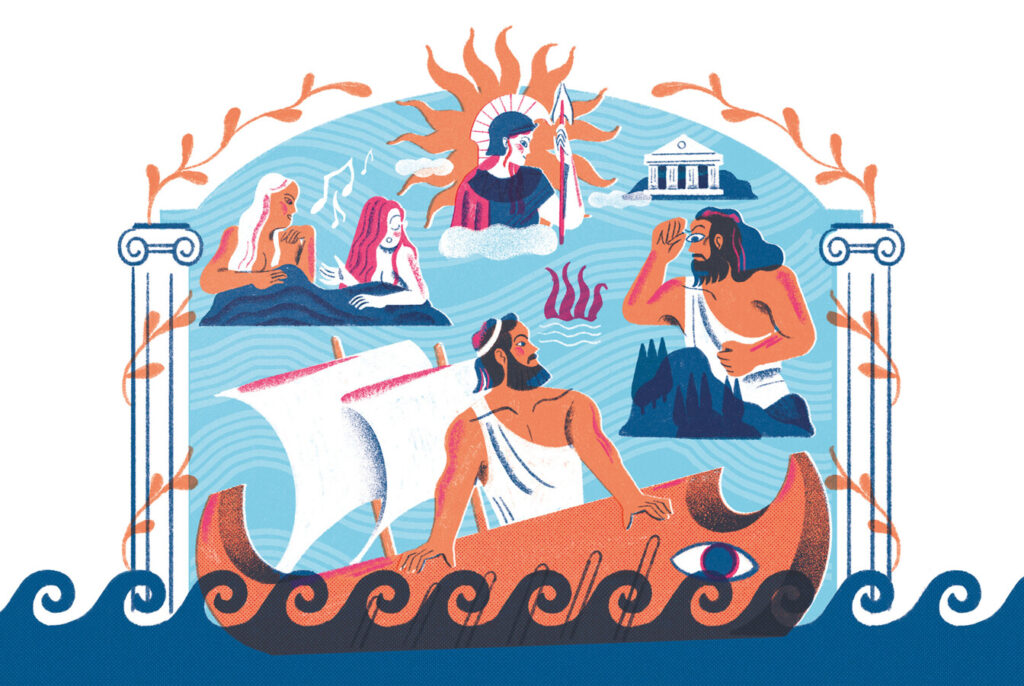
The Odyssey is an epic Greek poem by Homer that recounts King Odysseus’s 10-year struggle to return to Ithaca after the Trojan War. The Odyssey is our third article in the series, “Stories of Travel Stories.” The world of the Odyssey is a palimpsest of the Hellenic art of living well.

While battling monsters and gods, King Odysseus faces a secondary challenge: 108 unruly suitors who have taken over his palace and are pressuring his faithful wife, Penelope, to remarry. 

The World of the Odyssey: A Palimpsest of the Hellenic Art of Living Well
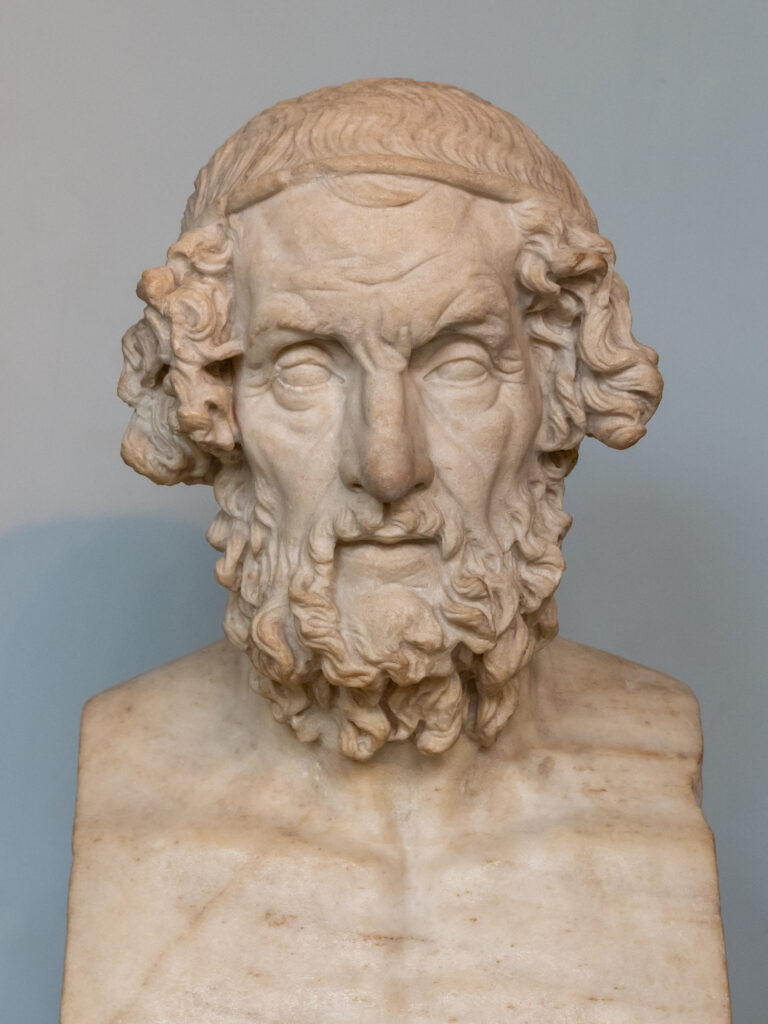
Marble terminal bust of Homer at British Museum, London. Photo: Wikipedia.

Who was Homer?

There is no unique historical human person called ‘Homer’. Modern scholarly research since about 1700, but especially since the 1930s, has established beyond a shadow of doubt that ‘Homer’ was a tradition – many bards over several centuries, perhaps as many as nine – but a tradition with a difference, namely the genius of two separate individual master poet-editors.

The World of the Odyssey: A Palimpsest of the Hellenic Art of Living Well
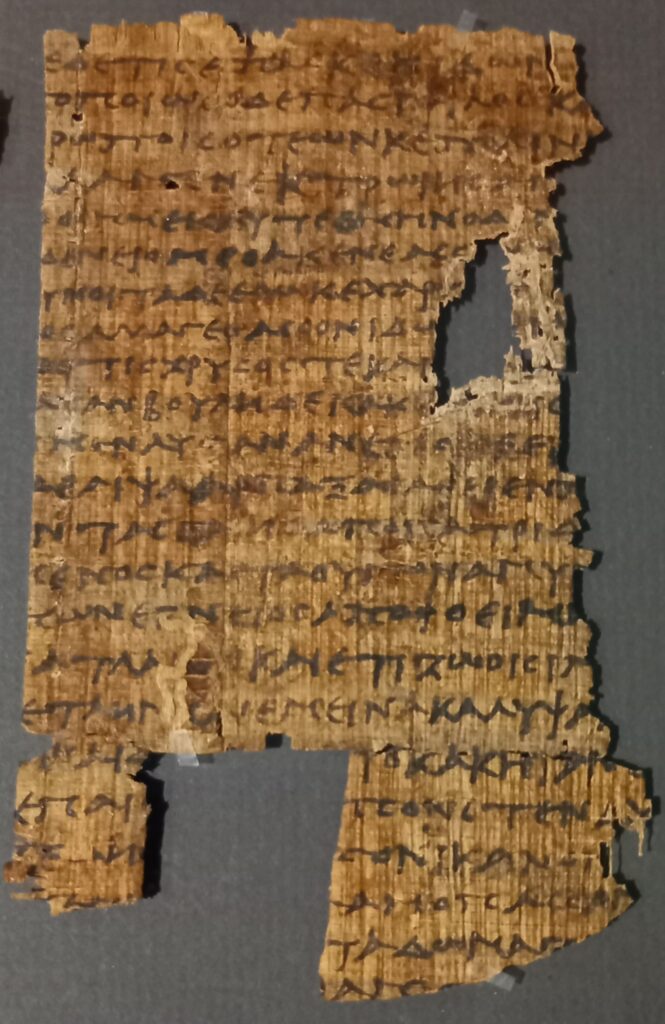
No one today, anywhere, is a ‘native’ reader of Homer, so translation into other modern vernaculars, including Greek, is not just a luxury add-on but a basic necessity. Photo: Wikipedia.

The Odyssey story

The epic is famous for beginning in medias res (in the middle of the story), with Odysseus trapped on the island of Ogygia by the nymph Calypso, who offers him immortality if he stays. Meanwhile, back in Ithaca, his son Telemachus leaves home to seek news of his father.

Eventually released by the gods, Odysseus is shipwrecked and rescued by the Phaeacians. In their court, he reveals his identity and recounts the harrowing adventures that have delayed him.

The World of the Odyssey: A Palimpsest of the Hellenic Art of Living WellTranslations of Homer’s Odysseus

In some sense and at some level of interpretation, ‘knowledge’ of Homer requires the ability to read the original language fluently. But no one today, anywhere, is a ‘native’ reader of Homer, so translation into other modern vernaculars, including Greek, is not just a luxury add-on but a basic necessity. The nature and quality of literary translations matter a great deal. How many people now even read in hard copy? Screens are the thing. Films are another kind of ‘translation’ altogether, and the development of digital technology has transformed the moviemaker’s possibilities for rendering or interpreting the ancient myths.

A 2026 Epic Action Fantasy Film on The Odyssey

Christopher Nolan has adapted Homer’s ancient Greek epic poem into a film starring an ensemble cast including Matt Damon, Tom Holland, Zendaya, and Charlize Theron. In the film, Odysseus (Damon), the Greek king of Ithaca, undertakes a long, perilous journey home after the Trojan War and encounters mythical beings as he tries to reunite with his wife, Penelope (Hathaway).

Nolan began writing the script in March 2024 and secured the project with Universal Pictures by October.

The World of the Odyssey: A Palimpsest of the Hellenic Art of Living Well
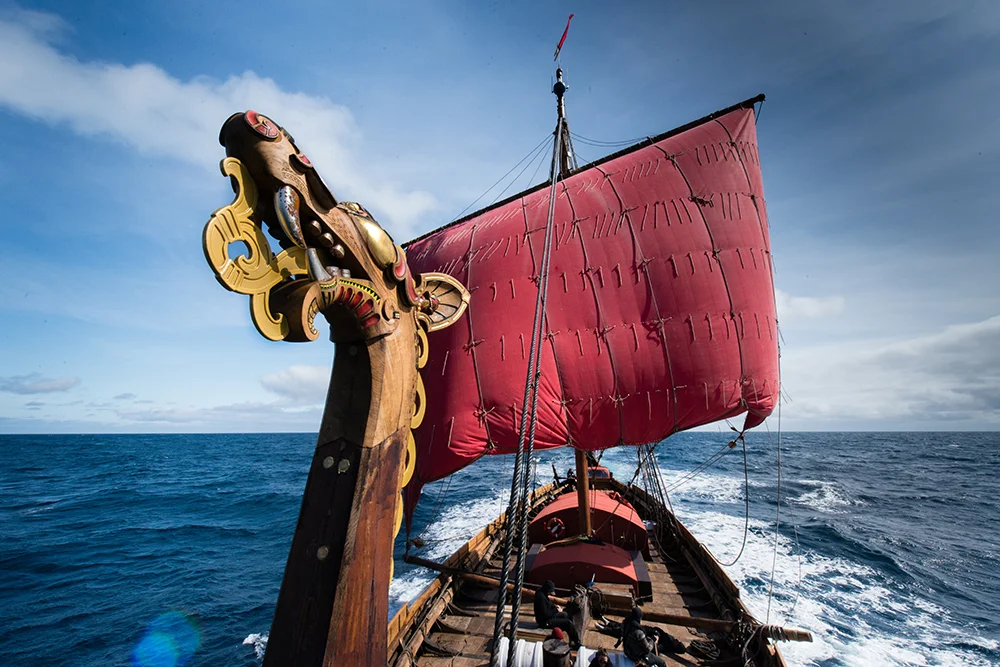
Dragon Harald Fairhair is an 115-foot modern Viking longship built in Haugesund, Norway, between 2010 and 2012. Photo: Peder Jacobsson.

The Viking Ship in ‘The Odyssey’ Is More Than Digital Technology

The Draken Harald Hårfagre is making its big-screen debut in Christopher Nolan’s latest film. The full-scale, seaworthy vessel has been painstakingly built using Viking shipbuilding techniques and the era’s materials, with breathtaking dimensions.

Dragon Harald Fairhair is an 115-foot modern Viking longship built in Haugesund, Norway, between 2010 and 2012. Named after the king who unified Norway, it is the largest Viking ship built in modern times, combining traditional clinker-building techniques with deep-sea ocean exploration capabilities.

To build an authentic ocean-going vessel, boatbuilders drew on archaeological knowledge, Norse sagas, and traditional Norwegian clinker-building techniques (overlapping planks) to recreate a seaworthy warship.

A 2026 Epic Action Fantasy Film on The Odyssey
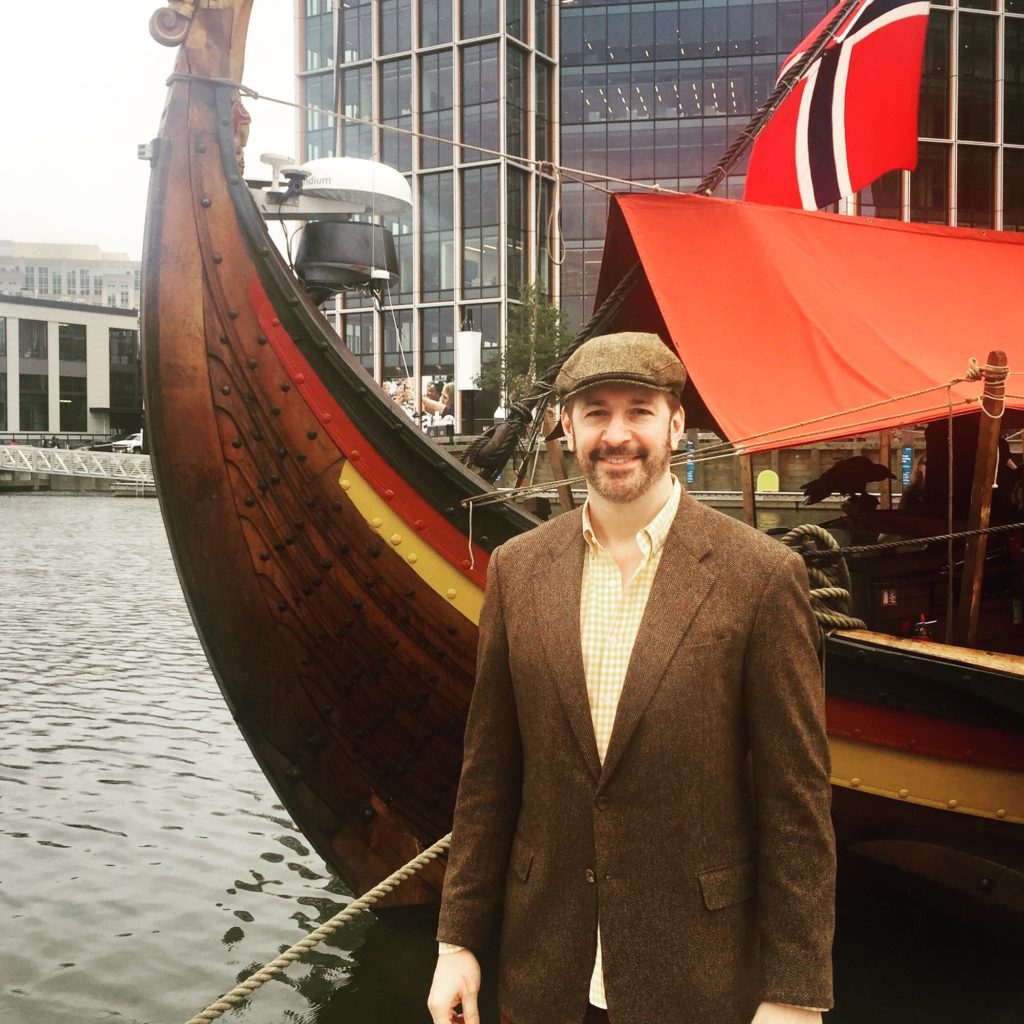
Emanuel Persson, visiting the Explorers Club Washington Group, October 15, 2018.

“There is something on board that cannot be easily faked: the weight of the oak, the sound of the rigging, the movement of the sail, and the crew working together in real wind and water,” says Emanuel Persson, Draken’s CEO and expedition director. “When you put a real ship in real conditions, it brings a different kind of truth to the image.”

The World of the Odyssey: A Palimpsest of the Hellenic Art of Living Well, written by Tor Kjolberg.
Previous stories in this series:
The World’s Oldest Surviving Travel Story


The100th Anniversary of the Michelin Stars

A century after the first Michelin star was awarded, the award continues to shape the world of dining, recognizing everything from elegant French restaurants to Singaporean street-food stalls — and everything in between. 2026 marks the 100th anniversary of the Michelin Stars.

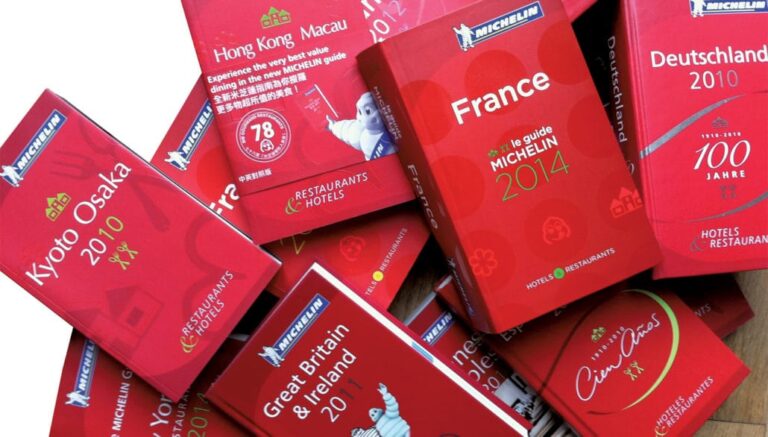
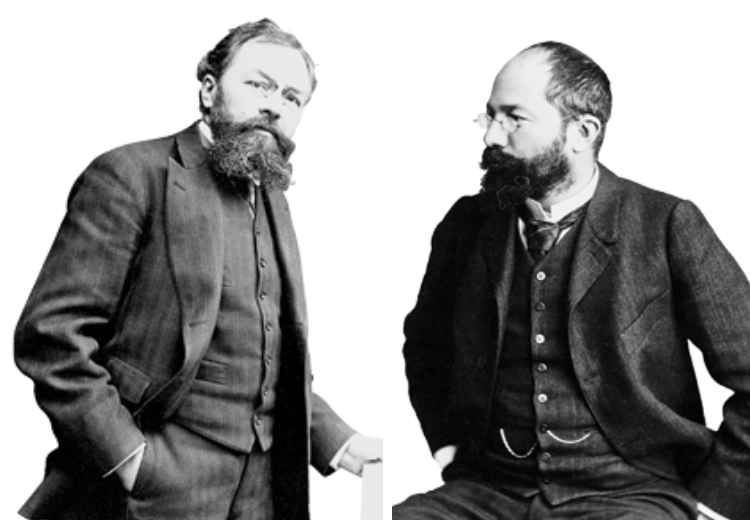
The first iterations of the Guide appeared in the early 20th century, when French brothers and tire company owners André and Edouard Michelin began producing a printed publication for motorists. “This book will be published at the turn of the century, and it will last just as long,” André Michelin wrote in the first guide.

Originally featuring maps and car-related tips, such as how to change a tire, the little red book was relaunched in 1920 to list restaurant recommendations across France. The brothers’ thinking was clear: by encouraging motor tourism, the company would sell more tires.

**************************************
Related: Michelin Stars Shine on Bergen
**************************************

The Michelin Guide began awarding its first stars in 1926. What started as a single star denoting a “good table” evolved by 1931 into the iconic hierarchy that still defines global culinary excellence today.

In 1931, the famous zero-, one-, two-, and three-star tiering is formally introduced. The definitions have remained identical for nearly 100 years:

1 Star: A very good restaurant in its category.

2 Stars: Excellent cooking, worth a detour.

3 Stars: Exceptional cuisine, worth a special journey.

The100th Anniversary of the Michelin Stars
French brothers and tire company owners André and Edouard Michelin.

In 2026, the collection covers 28 titles across more than 25 countries, and several other restaurant categories have been added over the years. For example, the so-called Bib Gourmand indicates “high-quality food at great value,” while the Green stars have been introduced specifically to recognize sustainable gastronomy.

************************************** ****
Related: Michelin Star Sprangled Scandinavia
*******************************************

The100th Anniversary of the Michelin Stars
The Michelin brothers’ thinking was clear: by encouraging motor tourism, the company would sell more tires.

The selection process is notoriously secretive, but according to the official Michelin Guide site, inspectors follow strict rules. They are full-time employees—usually hospitality veterans with more than a decade of experience—who eat up to 250 meals a year, all while remaining completely undercover.

The100th Anniversary of the Michelin Stars, written by Tor Kjolberg.

The Swedish Exit

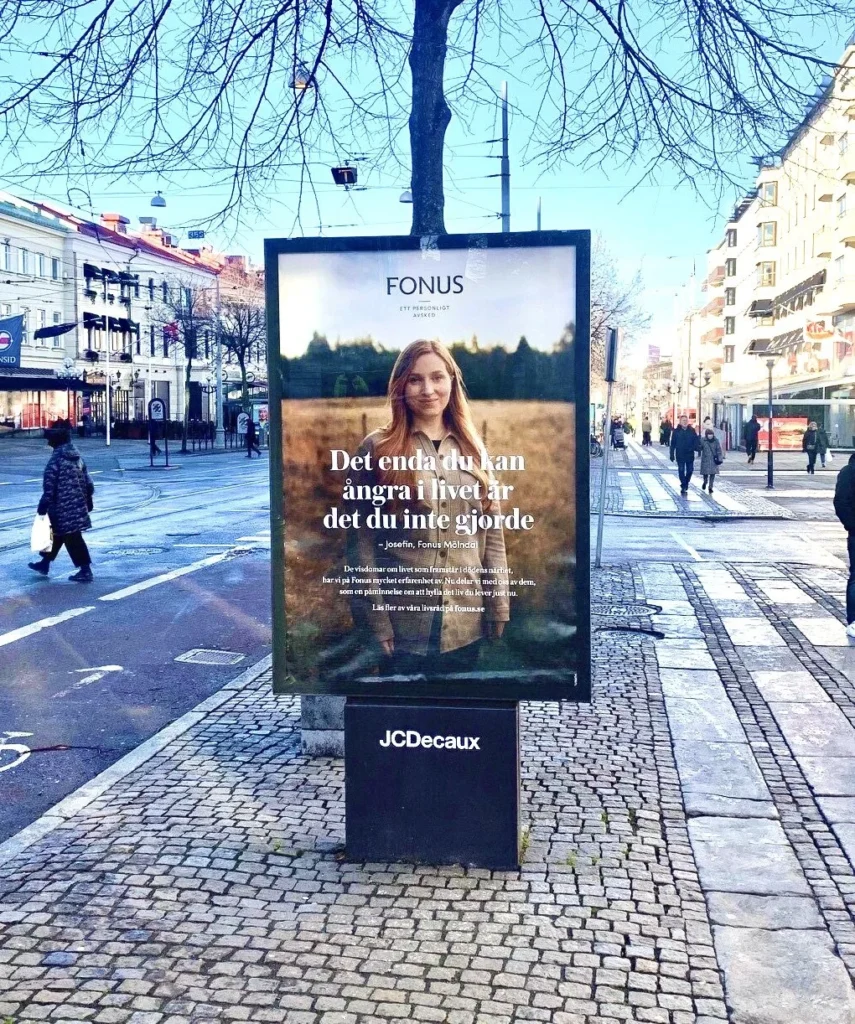
The Swedish funeral agency Fonus has launched “The Swedish Exit.” It is a campaign and visual interpretation—driven by survey data and AI-generated imagery—designed to shift funeral traditions away from quiet, somber ceremonies and toward festive, life-celebrating farewells with music, laughter, and warmth.

Grief and funerals in Sweden have traditionally been marked by flowers, silence, and coffee afterward. But it seems this introverted nation, known for patiently waiting in line and following rules, increasingly wants to go out with a bang.  

The Swedish Exit
The launch of The Swedish Exit highlights a growing cultural shift in how people want to be remembered.

The launch of The Swedish Exit highlights a growing cultural shift in how people want to be remembered. Surveys show that more than a third (35%) of Swedes prefer a more festive farewell that celebrates the life lived rather than focusing solely on grief. Younger generations are even more open to the idea; among those aged 18 to 29, the share rises to over 41%.

However, it is not an “Irish goodbye,” where someone slips away from the party unnoticed, nor is it a memorial or held in church. Instead, it’s a party in the style of a Swedish Midsummer celebration – schnapps included. Maybe it’s connected to the way Swedes like to party hard while abroad?

*************************
Related: Typically Swedish
*************************

The Swedish Exit
“People are increasingly willing to discuss how they want to be remembered, and we are moving toward a cultural shift in how we think about the final farewell,” says Conny Sohlberg, funeral director at Fonus.

Conny Sohlberg, funeral director at Fonus, comments on the unexpected shift: “In the funeral industry, we have seen this develop over the past few years. People are increasingly willing to discuss how they want to be remembered, and we are moving toward a cultural shift in how we think about the final farewell. For many Swedes, it is no longer only about saying goodbye. It is also about throwing one last party for the life that was lived. That does not make it less respectful. On the contrary, a farewell with warmth, laughter, music, and celebration can be a very meaningful way to be remembered.”

The Swedish Exit, based on a press release from Geelmuyden Kiese.

Helsinki – the World’s 16th Most Liveable City

Helsinki, the capital of Finland, is ranked the world’s 16th most liveable city in Monocle’s Quality of Life survey. It is behind Amsterdam but ahead of Seoul.

Helsinki earns its high global livability ranking due to world-class public education, a virtually crime-free environment, pristine infrastructure, and an extensive network of green spaces. The Finnish capital perfectly balances an innovative, tech-forward economy with a deep cultural emphasis on sustainability, wellness, and work-life balance.

Helsinki – the World’s 16th Most Livable City: The article continues below the image.

Helsinki – the World’s 16th Most Livable City
With over 300 islands, numerous parks, and clean air, the city allows residents to easily escape into nature and enjoy a wellness-focused lifestyle. Photo: KLM.

Global indexes, such as the Monocle Quality of Life Survey, consistently highlight Helsinki for several key factors. One, mentioned by the Monocle correspondent, is public trust in the police, which stands at 92 percent.

With over 300 islands, numerous parks, and clean air, the city allows residents to easily escape into nature and enjoy a wellness-focused lifestyle.

Helsinki – the World’s 16th Most Livable City
Suomenlinna bridge. Photo: Visit Finland.

But Helsinki so often undersells itself internationally. There can be a lack of the kind of confidence and bold storytelling displayed by rival Nordic capitals Copenhagen, Stockholm and Oslo.

Helsinki – the World’s 16th Most Liveable City, Tor Kjolberg reporting.
Feature image (top): Visit Finland.