




Information tells people what they can experience. Entertainment makes them want to experience it. Storytelling can do both. The question is: How do you balance the two? In brand storytelling, should you inform or entertain?
Kirk Cheufitz, CEO of Story Worldwide, said that communicating with customers consists of four stages:
1. Inform and help
2. Entertain
3. Self-serving and promotional
4. Traditional advertising.
A traveler may initially look for practical information about a destination. But a story that sparks curiosity, surprises them, or introduces them to an interesting person can turn that information into something memorable and, ultimately, something that makes them want to visit.

Inform or Entertain?
The most effective destination stories do both. Imagine two ways to promote the same destination.
The first tells you that a small Norwegian coastal village has colorful wooden houses, a historic harbor, excellent seafood restaurants, and beautiful views of the surrounding mountains.
The second introduces you to an elderly fisherman who has spent 50 years at sea. He knows which mountain catches the first morning light, remembers when the harbor was filled with fishing boats, and can explain why the village’s best fish soup is still made according to his grandmother’s recipe.
Both convey information, but which one makes you curious enough to visit? The difference is storytelling.

Four ways of communicating with customers
Kirk Cheufitz’s four ways of communicating with customers offer a framework with an interesting perspective for everyone working in destination marketing, hospitality, and tourism.
The first two approaches begin with the audience. They provide something useful, interesting, or enjoyable before asking for anything in return. The latter two place the commercial message more prominently in the foreground.
Of course, promotional communication and traditional advertising have their place. Tourism businesses need to sell, and destinations need visitors. But the question is whether selling should always be what people notice first.
What if we started by offering travelers something that deserves their attention?
First, inform and help
Travelers need information. They want to know where to go, what to see, how to get around, where to eat, and what an experience will cost.
Good destination marketing should answer these questions clearly and honestly. But information alone is not necessarily a compelling story. Consider a destination website describing a historic hotel. It might list the number of rooms, restaurant facilities, conference services, and proximity to local attractions. All useful information.
Now imagine adding the story of the architect who designed the building, the unusual circumstances surrounding its construction, or the local tradition that inspired its restaurant menu. The information has not disappeared. Instead, it has gained context, character, and meaning.
This distinction matters: storytelling does not replace useful information. It gives people a reason to pay attention.

Then, entertain
The word entertain can be misleading. It does not mean that every destination story needs a joke, a celebrity, or a spectacular surprise. Entertainment can mean curiosity, suspense, humor, human drama, discovery, or an unexpected detail that makes us want to know what happens next.
A destination might have a famous attraction that everyone knows. But the most interesting story may be hidden behind it. Why was the attraction built in the first place? Who opposed it? What unusual incident occurred during its construction? Is there a local legend that visitors rarely hear?
These questions can turn a familiar sightseeing stop into a discovery. Consider the difference between reading that a town square dates from the eighteenth century and discovering that it was once a lake, a marketplace, or the setting for an extraordinary local event.
The first statement presents a fact. The second opens a door. Naturally, the story must be accurate. A storyteller should never sacrifice truth for entertainment. Yet verified facts can be presented in ways that stimulate the imagination.

The art of combining information with entertainment
The real opportunity lies in combining the two approaches. Consider a destination promoting a walking tour.
The purely informative approach: “Our two-hour guided walking tour takes visitors through the historic town center, featuring its medieval church, old marketplace, and traditional wooden houses.”
The storytelling approach: “Every old town has its secrets. On this two-hour walk, discover why the medieval church was built where it stands, what traders once sold in the marketplace, and which curious detail in the wooden houses reveals how people lived centuries ago.”
The second version still tells visitors what they will get, but it also promises discovery.
Or consider a hotel surrounded by beautiful scenery. A conventional description might mention panoramic views, comfortable rooms, and easy access to hiking trails.
A storytelling approach could begin with a question: “What makes the hotel manager rise before dawn, even on her days off? It is not the alarm clock. It is the view from the terrace when the first sunlight reaches the mountains.”
The story can then introduce the scenery, the hotel’s location, and the experiences available to guests. The practical information remains. What changes is how it reaches the reader.
 Make the traveler the hero
Another important principle is at work here. Destination marketers often make the destination the hero of the story, telling us how beautiful, unique, exciting, or exceptional their place is.
But travelers are primarily interested in what the destination might mean to them. Will they discover something new? Meet fascinating people? Learn about another culture? Spend precious time with their family? Return home with an experience worth sharing?
A good destination story helps travelers picture themselves in the scene. Instead of simply describing a local food market, introduce the vendor who has sold the same regional delicacy for decades. Let the reader imagine tasting it, asking questions, and discovering a tradition through the person who keeps it alive.
The destination provides the setting. The people provide the human connection. The traveler becomes a potential participant. That is when destination marketing can move beyond a list of attractions and become an invitation to a meaningful experience.
 From attention to action
There is a commercial reason to take this approach seriously. When a destination communicates only through lists of attractions, facilities, and promotional claims, it risks sounding like competing destinations.
A distinctive story gives the audience something more concrete to remember. It can spark curiosity about an unfamiliar place, explain why an experience is special, and help a traveler decide whether it’s right for them.
Storytelling is not a substitute for clear pricing, accurate travel information, convenient booking, and a good tourism product. Nor can an entertaining story guarantee a sale. But it can make the product easier to understand, more distinctive, and more appealing to the right audience.
When the time comes to present the practical details or booking opportunity, the reader already has a reason to be interested.
 Become a destination detective
So how can tourism marketers put this into practice? My suggestion: become a destination detective.
Look beyond the familiar descriptions. Talk to local residents, craftspeople, guides, hoteliers, historians, and business owners. Ask questions that reveal details visitors would not typically find in a brochure.
What is the most surprising thing about this place? What do outsiders misunderstand about it? Which local tradition is at risk of disappearing? What happened here that even some residents have forgotten? Who has a remarkable personal connection to the destination?
Not every answer will become a story. Some will lead nowhere, while others may reveal a fresh perspective on an otherwise familiar tourism product. The task is to find stories that are true, relevant to the intended audience, and interesting enough to merit their attention.
And remember: a story need not be dramatic to be compelling. Sometimes an ordinary person with an extraordinary passion is all you need.
Inform, entertain — and let the story do its work.
Perhaps the question should not be whether destination storytelling ought to inform or entertain. It should be how to combine the two without losing sight of the traveler.
Provide people with information that helps them. Present it in a way that sparks their curiosity. Introduce them to the people, places, and experiences that make a destination distinctive. Let them discover its appeal rather than simply telling them how wonderful it is.
Destination Storytelling: Inform or Entertain? written by Tor Kjolberg
 Take-away
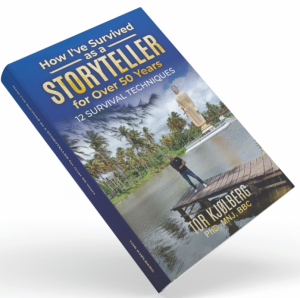
If you learned something from this article, I believe you’ll also enjoy my recent book, “How I’ve Survived as a Storyteller for Over 50 Years: 12 Survival Techniques.” Get your FREE e-book copy by sending me your name and email address, and including “Storytelling” in the subject line. Thank you for reading!
More articles on Brand Storytelling by Tor Kjolberg you may like:
Stop Selling Perfect Destinations
Destination Storytelling: The Questionnaire Is Your Map – Not Your Prison
Tales of the Unexpected: The Hotel Detective Is on the Case
The Customer Magazines That Sell Without Selling
Brand Storytelling: Facts Tell. Stories Sell