Patagonia’s brand storytelling centers on its mission, “We’re in business to save our home planet.” Its award-winning campaigns blend environmental activism, radical transparency, and customer empowerment. Rather than promoting pure consumerism, it champions product longevity, repair, and environmental defense. This is our Brand Masters of Storytelling #4.
Brands are catching on to how people look for brands that reflect who we are, where we’ve been, and what we care about, particularly when it comes to environmental responsibility. From Nature Valley granola bars to Seventh Generation cleaning products, corporations are leaning into our generation’s collective call for corporate sustainability through both meaningful action and authentic brand storytelling.
Patagonia is a poster child for authentic environmental stewardship and brand storytelling.
“Turn everything off, at least until we know more” – It’s a sentence you never expect to hear from a Marketing Manager while partway through several large campaigns at the start of the new season; but this was no ordinary year. This was 2020.
Patagonia is a poster child for authentic environmental stewardship and brand storytelling. Sustainability is central to their purpose, promise, and product. Their purpose statement, “We’re in business to save our home planet,” encapsulates their commitment to sustainability and sound business.
In March 2020, when COVID-19 took hold of the world, the ‘Dirksen Derby’ splitboard race was just about to take place, the ‘Running up for Air’ fell race was planned for the weeks after, and Torrentshell, a large eCommerce push, was all scheduled and ready to start firing any day now. But as with most things at that time, the only option was to hit ‘pause’ and wait.
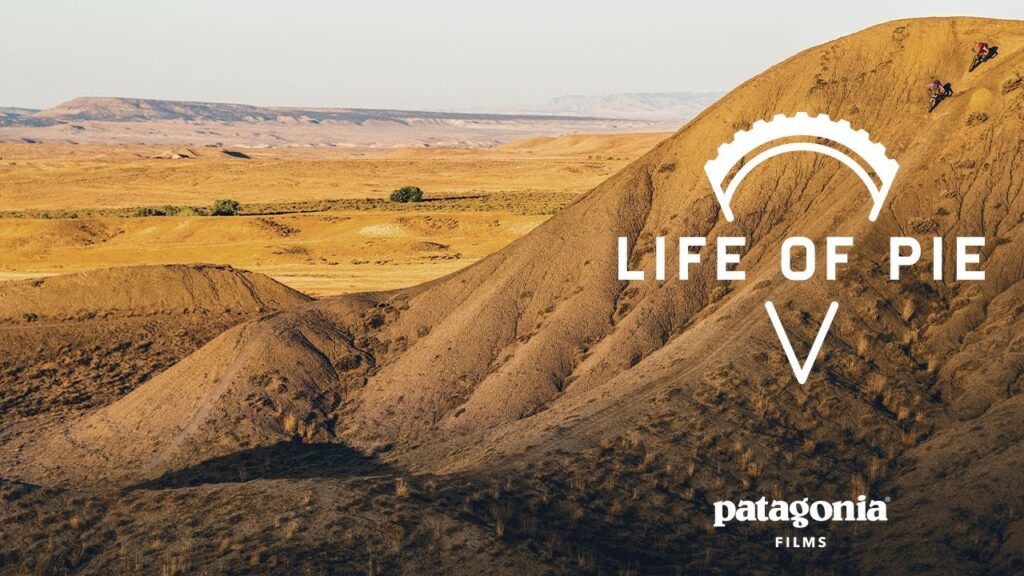
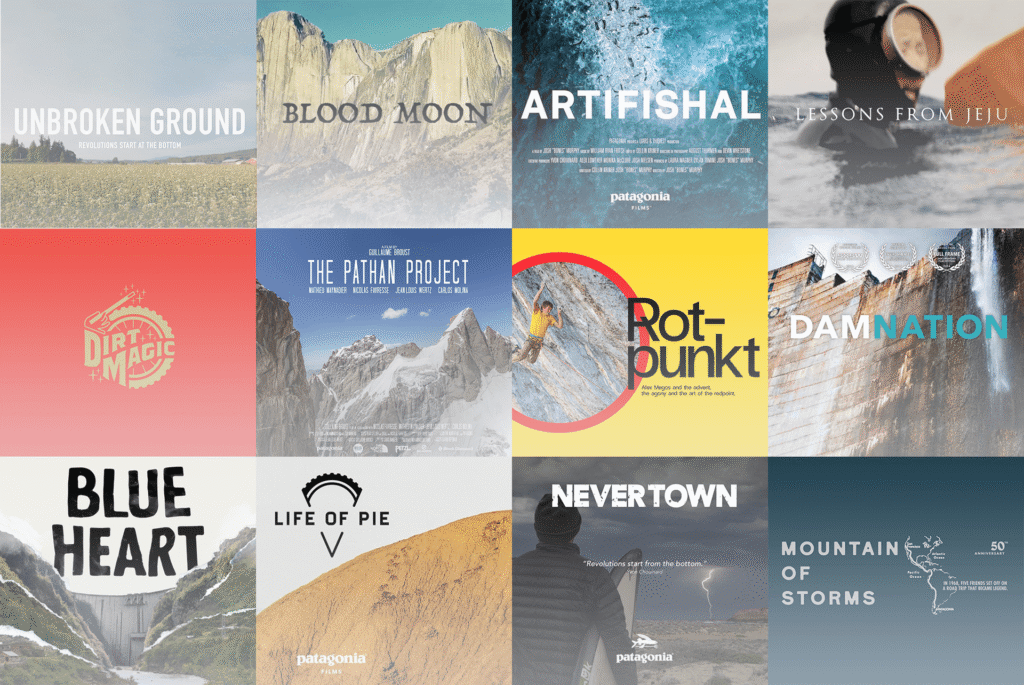
The first film in the Stories That Inspire series was Life of Pie – a story of pizza and mountain biking in Utah.
Patagonia does not want you to buy excess products – they’d rather customers reuse, resell, and share. By accepting trade-ins through “Worn Wear,” repairing used products in their stores, and ultimately extending the life of the products they sell, they send a powerful message about their commitment to sustainability. The classic “Don’t Buy This Jacket” campaign articulated this message succinctly.
“We’re in business to save our home planet”.
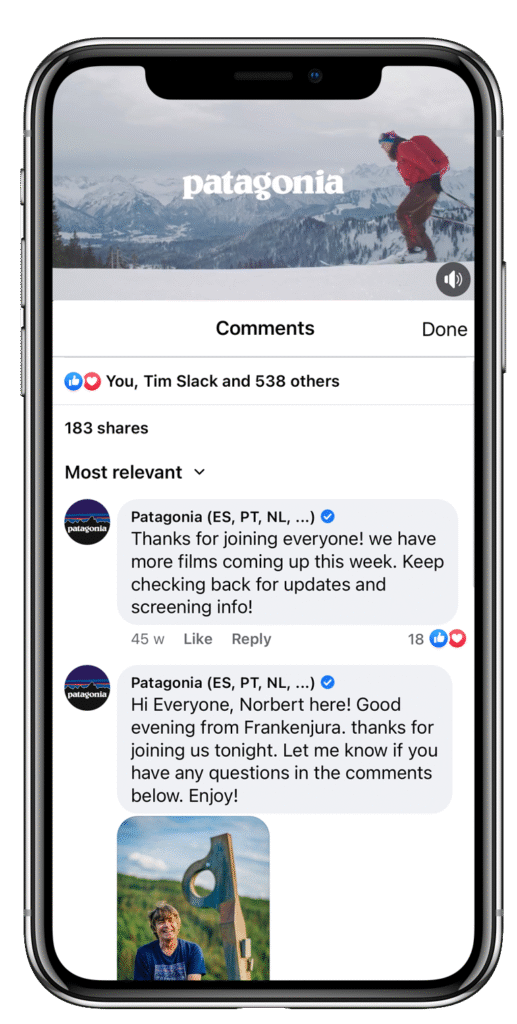
During the COVID period, Patagonia decided that because its audiences would not be able to attend in-person events for an extended period, it would recreate these events online, providing much-needed inspiration and ‘stoke’ in the process. The first film in the Stories That Inspire series was Life of Pie – a story of pizza and mountain biking in Utah.
Patagonia does not want you to buy excess products – they’d rather customers reuse, resell, and share.
In 2022, founder Yvon Chouinard transferred ownership of the billion-dollar company to the Patagonia Purpose Trust and Holdfast Collective, ensuring that all profits not reinvested in the company are used to fight the environmental crisis.
A travelogue is a narrative account of a journey, combining personal experiences, cultural observations, and vivid descriptions of the places visited. It can take the form of a book, a film, a blog post, or a spoken lecture, moving beyond a standard guidebook to offer the soul and meaning of a trip. Story of Sinuhe (c. 1875 BCE) is often cited as the earliest surviving travelogue.
This ancient Egyptian text follows a court official who flees into exile in the Levant (modern-day Lebanon/Syria) after the assassination of the Pharaoh, detailing his years of wandering and eventual return home.
The Story of Sinuhe provides an incredibly detailed, realistic look at the geopolitics of the Ancient Near East around 1900 BCE. It acts as an ancient intelligence report, highlighting the vast differences between Egyptian civilization and the tribal regions of the Levant.
The Story of Sinuhe provides an incredibly detailed, realistic look at the geopolitics of the Ancient Near East around 1900 BCE.
Sinuhe’s escape route reveals how strictly Egypt guarded its borders during the Middle Kingdom.
Sinuhe must sneak past the Walls of the Ruler, a massive string of desert fortresses built to keep out Asian migrants (Asiatics).
He hides in the bushes of the Bitter Lakes (near modern-day Suez) to avoid the frontier guards, nearly dying of thirst before being rescued by nomadic Bedouins.
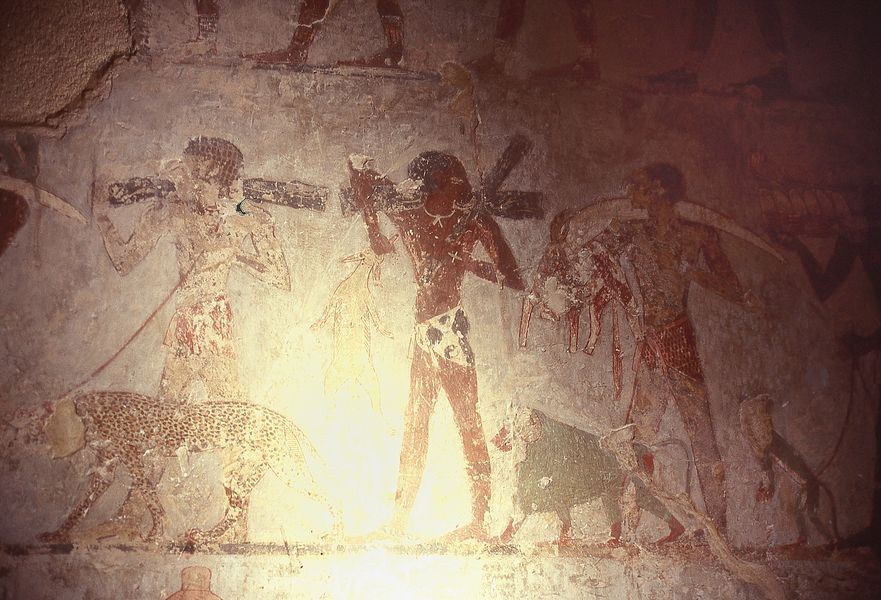
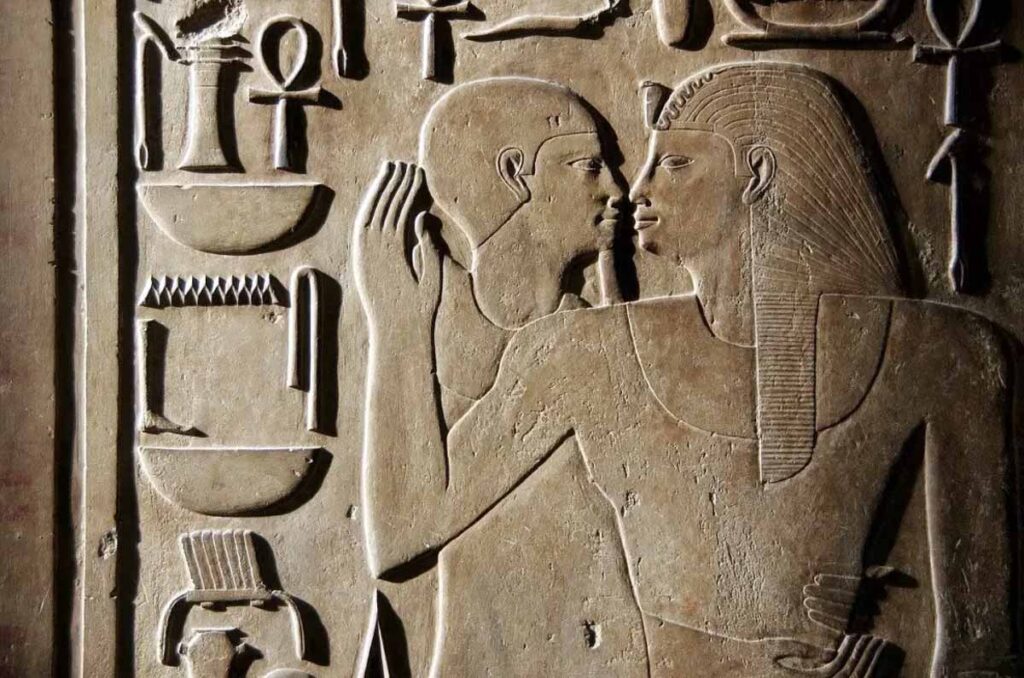
Limestone hieroglyphs tell the tale of Sinuhe.
Egyptian Supremacy vs. Levantine Tribes
The text contrasts Egypt’s centralized, urban government with the decentralized tribal systems of Retjenu (modern-day Syria and Lebanon).
Sinuhe is taken in by this local ruler of Upper Retjenu, Amunenshi, who recognizes Sinuhe’s high-ranking status in Egypt.
Sinuhe is given the ruler’s eldest daughter in marriage, showing how foreign chieftains used high-status Egyptian defectors to elevate their own political standing.
Sinuhe is granted a rich, fertile borderland called Yaa, packed with figs, grapes, olives, and barley—a strategic move to place an Egyptian general in charge of protecting the tribe’s frontiers.
The narrative shifts into a military chronicle that mirrors Bronze Age geopolitics. Sinuhe commands Amunenshi’s army against invading desert tribes, showcasing how foreign rulers relied on Egyptian military tactics.
Sinuhe fights a local champion in a formal, one-on-one combat to settle a tribal dispute. He wins by shooting the giant through the neck with an arrow, capturing the rival tribe’s cattle and goods.
The narrative shifts into a military chronicle that mirrors Bronze Age geopolitics.
Pharaoh’s Soft Power and Amnesty
The story concludes with a display of Egyptian political reach. Even while living in exile, Sinuhe cannot escape the influence of the Pharaoh (Senwosret I).
The Pharaoh sends a formal letter offering total amnesty. The decree explicitly warns Sinuhe not to die in a foreign land, as “Asiatics” do not wrap bodies in linen or build proper tombs.
Sinuhe surrenders all his foreign property to his children and returns to Egypt, illustrating that for an Egyptian, political exile in a wealthy foreign land was still considered a fate worse than death. The World’s Earliest Surviving Travelogue, written by Tor Kjolberg
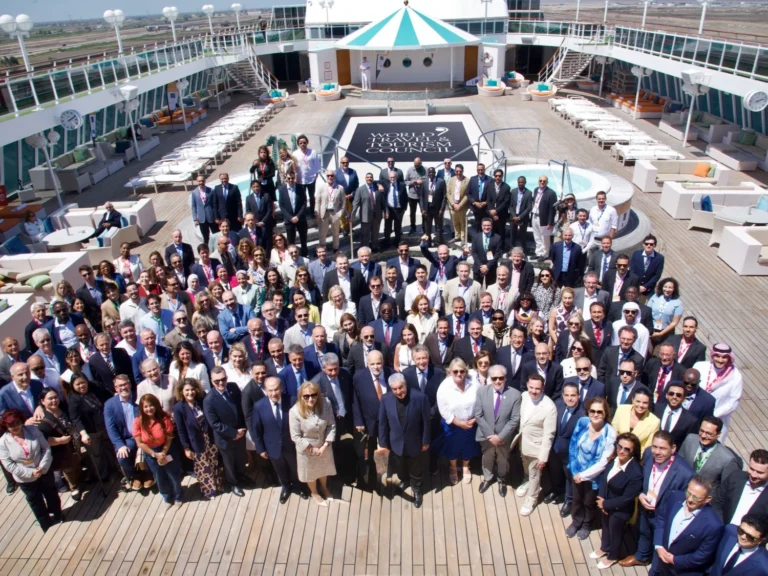
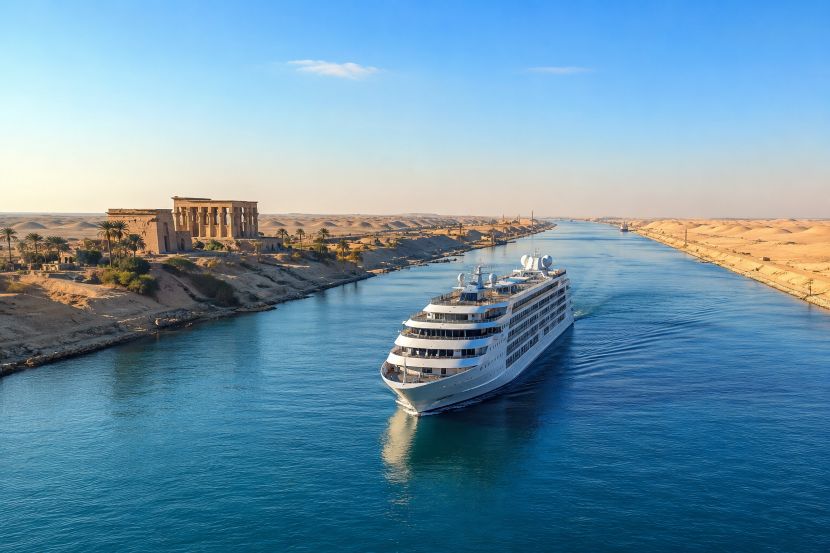
The inaugural WTTC Leadership Cruise took place in Egypt in early May 2026, bringing together more than 300 global travel and tourism leaders. Following the Leadership Cruise, WTTC has published its latest findings, sending one clear message to the world: tourism always recovers.
Hosted by the Egyptian Government and sponsored by the Antonio Lefebvre Foundation, Coral Travel Group, Crystal Cruises, and Abercrombie & Kent, the three-day program brought together some of the most influential figures in global Travel & Tourism, including WTTC Chairman Manfredi Lefebvre d’Ovidio, WTTC President & CEO Gloria Guevara, Egypt’s Minister for Tourism and Antiquities Sherif Fathy, former Presidents of Mexico Felipe Calderón and Argentina Mauricio Macri, and former Italian Prime Minister Matteo Renzi.
The three-day floating summit focused on accelerating industry recovery and strengthening resilience in the Middle East travel sector.
During its transit through the Suez Canal, the three-day floating summit focused on accelerating industry recovery and strengthening resilience in the Middle East travel sector. Attending government representatives included Nick Adams, the US Special Presidential Envoy for Tourism; Harris Whitbeck, the Tourism Minister of Guatemala; and private sector leaders, including Audrey Hendley, President of American Express Travel; Jennifer Wilson-Buttigieg, Head of Policy at Chase Travel; Jerry Inzerillo, Group CEO of Diriyah Company; Frank Marini, President and CEO of Railbookers; Enrique Ybarra, Founder and CEO of City Sightseeing Worldwide; Richard Attias, Chairman of the FII Institute Executive Committee; and the renowned Egyptologist Dr. Zahi Hawass.
The cruise ran from May 6 to May 9, 2026, navigating the Suez Canal, docking in historic Port Said, and concluding in Alexandria. The study, titled Accelerating Travel & Tourism – Global Evidence from Four Decades of Crisis, analyzes 100 significant crises over 40 years. Developed in partnership with Chemonics International and the George Washington University Business School, it was launched aboard the Crystal Serenity as the ship transited the Suez Canal. Set against the backdrop of the Middle East’s continued recovery and renewed global confidence in the region, the WTTC Leadership Cruise served as the first major global platform dedicated to accelerating Travel & Tourism recovery through stronger public-private collaboration.
*******************************************
You may also like to read A Short History of Tourism in Norway
*******************************************
The Egyptian government highlighted its significant growth, noting that it welcomed 19 million international visitors. The location was highly symbolic, given ongoing disruptions in the Strait of Hormuz and the Red Sea, reinforcing the idea that global connectivity and cooperation are fundamental to recovery. From strategic discussions on rebuilding connectivity, seamless cross-border travel, workforce and talent shortages, and destination stewardship, to high-level conversations on leadership during a crisis and the future of high-value tourism, the program focused on the critical actions required to move from recovery to sustained, long-term growth.
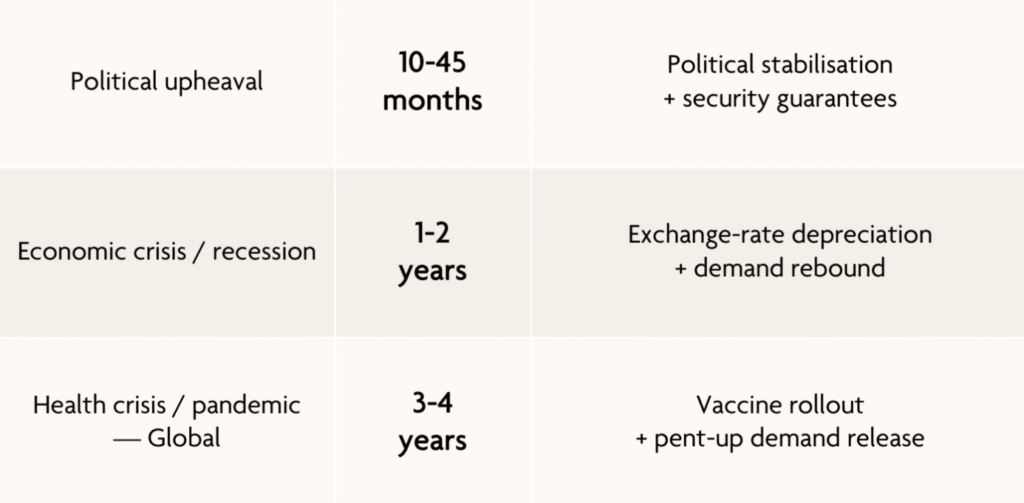
The report finds that not a single destination has suffered a permanent collapse in tourism. Recovery is the norm, and in most cases, the sector emerges stronger. Furthermore, the authors stress that the only real variable is speed and that this is a policy choice.
Gloria Guevara, President & CEO of WTTC, said: “This event was created to bring global leaders together at a pivotal moment for Travel & Tourism.”
Gloria Guevara, President & CEO of WTTC, said: “This event was created to bring global leaders together at a pivotal moment for Travel & Tourism. As we said from the outset, rebuilding trust and confidence requires strong coordination between governments and the private sector. Over these three days, leaders from around the world came together not only to discuss recovery but also to define the actions needed to deliver it. This historic first Leadership Cruise marks an important milestone for WTTC and the Middle East, reinforcing the region’s role as a driver of global Travel & Tourism growth, resilience, and opportunity.”
**********************************************
You may also like to read Nordic Guidebook for Tourism Innovation
**********************************************
The report highlights several notable recoveries: Phuket’s recovery after the 2004 tsunami and its record arrivals by 2010, despite the 2008 financial crisis; Tunisia’s record 8.3 million arrivals just three years after the 2015 attacks; and Nepal’s recovery after the earthquake in the same year.
As the sector looks ahead to the next decade of transformation, the event leaves behind not only a successful first edition but also a renewed sense of confidence that Travel & Tourism can continue to lead economic recovery, create jobs, and strengthen global stability.
The first-ever WTTC Leadership Cruise has concluded, making history.
The World Tourism Always Recovers, Tor Kjolberg reporting.
Stockholm, the capital of Sweden, is ranked the world’s 11th most liveable city in Monocle’s Quality of Life survey. It is behind Oslo but ahead of Milan.
Stockholm consistently ranks among the world’s most livable cities. The city achieves this through its excellent work-life balance, abundant green spaces, robust public transit, and top-tier educational institutions. Explore these metrics on the Monocle Quality of Life Survey.
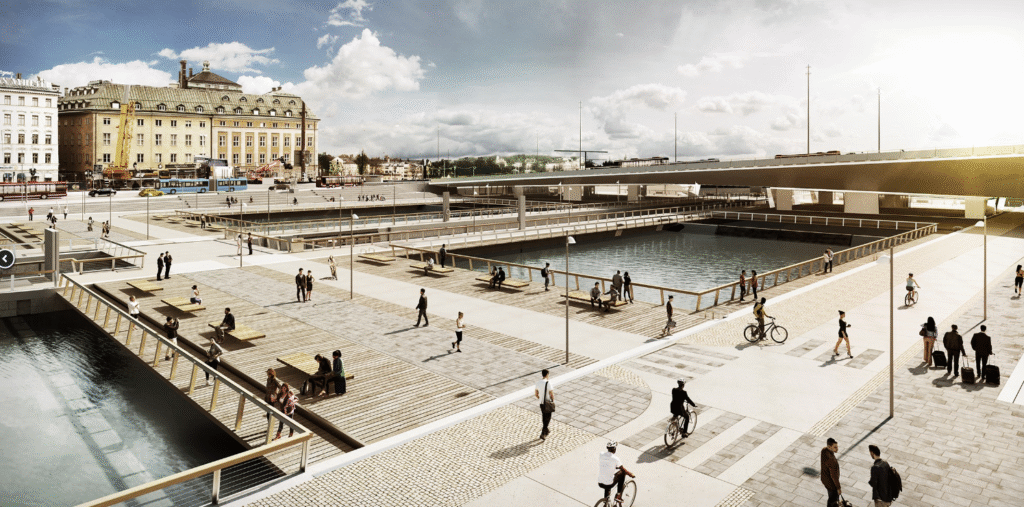
After years of development, the new Slussen project, a gleaming urban quarter linking Södermalm to the old town, is complete and teeming with people. Stockholmers enjoy flexible work hours, generous parental leave, and quick commutes from surrounding residential areas to the city center.
After years of development, the new Slussen project, a gleaming urban quarter linking Södermalm to the old town. Photo: C40Cities.
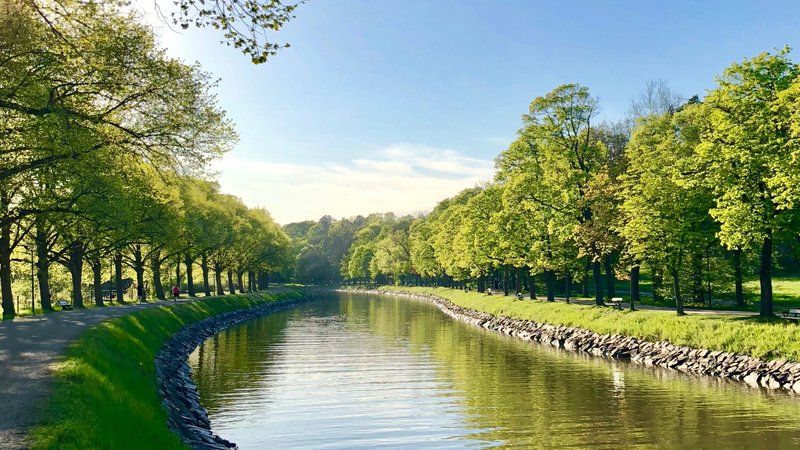
However, Stockholm’s trump card is its natural beauty. Wherever you are in the city, a park, forest, or swimming spot is never far. At the same time, Stockholm features one of the world’s best public transportation systems, with an extensive network of subways (Tunnelbana), buses, and commuter ferries.
The Stockholm Archipelago Hiking Trail is a 167-mile (270km) path that has been gradually opening, section by section. The official launch was in October 2024.
. Wherever you are in the city, a park, forest, or swimming spot is never far. Photo: Visit Sweden.
Nonetheless, there has recently been significant criticism from both inside and outside the city that the Swedish model of high taxes in return for free health care, childcare, and education has not protected the country from economic and racial segregation. In recent years, the levels of gang-related crime have gone up, and the housing market has wobbled. However, hope and ambition in Stockholm remain strong.
Another complaint is that strict enforcement of noise control at late-night bars has forced many beloved establishments to close in recent years.
But again, the city is rapidly expanding its green infrastructure, as evidenced by ongoing developments such as Stockholm Wood City in Sickla, the world’s largest planned mass-timber neighborhood.
Stockholm – the World’s 11th Most Livable City, Tor Kjolberg reporting.
What a stupid question. Companies depend on clients and need to be visible. We rephrased the question and asked Joe Wareham, founder of Zen SEO Agency and Growth Marketing Manager at More Sailing, for advice on how companies should position themselves to be visible.
Born in Spain and raised mostly in England, Joe Wareham entered the world of SEO around 16 years ago and began traveling the world a couple of years later, before most people used the term “digital nomad.”
Joe is not focused on destination marketing, but as an avid traveler, we wanted to learn more about his approach as a growth marketing manager.
Joe Wareham
Please tell me a little about what drives you.
I’m driven by the desire to benefit others.
What is the biggest obstacle destinations face today?
I was born in Mallorca and now live in Budva, Montenegro, so I’ve seen how overtourism works. When destinations rely too heavily on tourism, it not only degrades travelers’ experience and locals’ quality of life but also prevents the area from growing in other ways essential to its future.
Joe was traveling the world before most people used the term “digital nomad.”
How do you approach growth differently?
I think the best thing you can do is make the company and what it offers as good as possible, and then just let people know about it. Many marketing tricks exist in the world. But I always start with the question “What’s our existing richness?” and work from there.
Can you describe a real campaign that illustrates your philosophy?
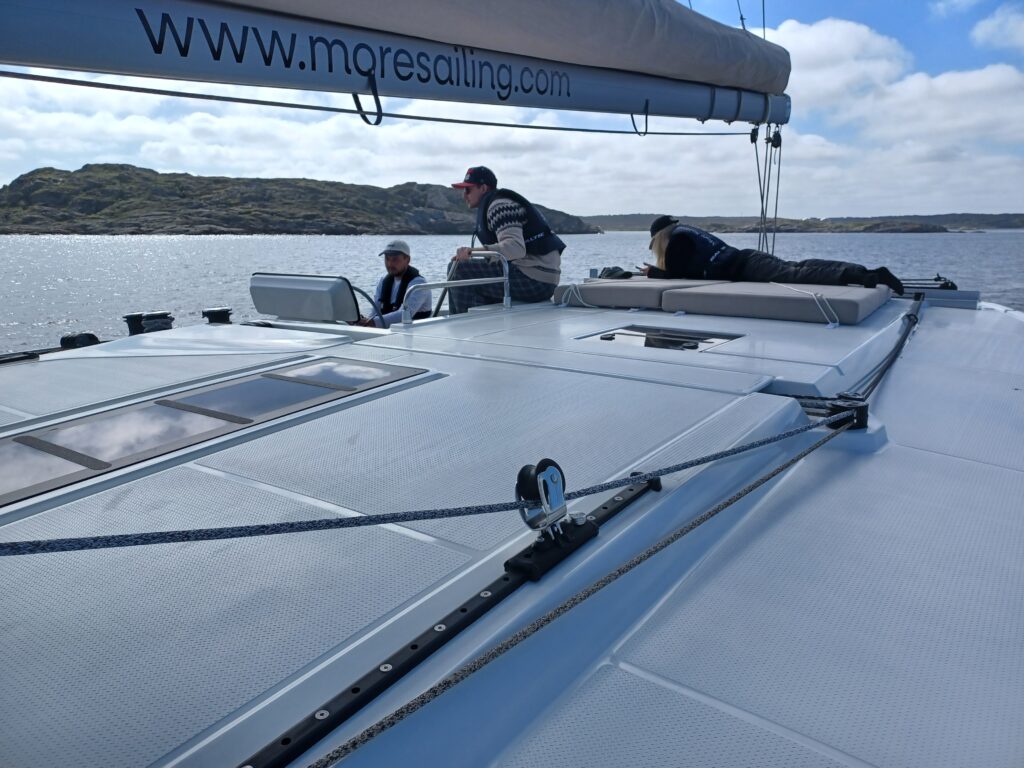
At More Sailing, we’re doing just that. We’re inviting travel publications to experience our trips and review them honestly. No more, no less. The results have been stellar because people love the trips, the More Sailing philosophy (“If we’re happy, our customers will be happy”), and the idea of making sailing more accessible.
Where is destination marketing heading?
Given the large number of people who are location-independent and the many more who want to travel outside peak season, I think many destinations could market themselves as great places to live year-round, not just visit during the season. This would attract high-value residents who support the local economy in the long term rather than give a short-term boost to the tourism sector. This requires thought and investment that ultimately benefit all residents.
“I think the best thing you can do is make the company and what it offers as good as possible, and then just let people know about it,” says Joe.
Can you tell me about a campaign that completely exceeded expectations?
Again, our current campaign with More Sailing is doing just that. First, my expectations, because at some point we started getting interest from major publications just by pitching our trips, and it surprised me how well it went. Second, the expectations of those who come on the trips, because in many cases, it seems people really weren’t expecting this level of experience.
One said it was the most relaxed they’d been all year; another said they enjoyed it so much they decided to learn to sail; and another said they were so blown away they couldn’t put it into words. It’s very gratifying to offer people something they enjoy so much… and it’s fascinating to hear from someone who writes for a living that they’re speechless!
“At More Sailing, we invited travel publications to experience our trips and review them honestly. No more, no less.”
Can you tell me about one that failed—and what you learned?
I worked on a couple of campaigns for major global travel companies that wanted to offer branded “Top-rated” badges for attractions, accommodations, restaurants, etc., to put on their websites. Almost no one was interested. I learned you have to let go of gimmicks and really offer something of value.
Some additional rapid-answer questions:
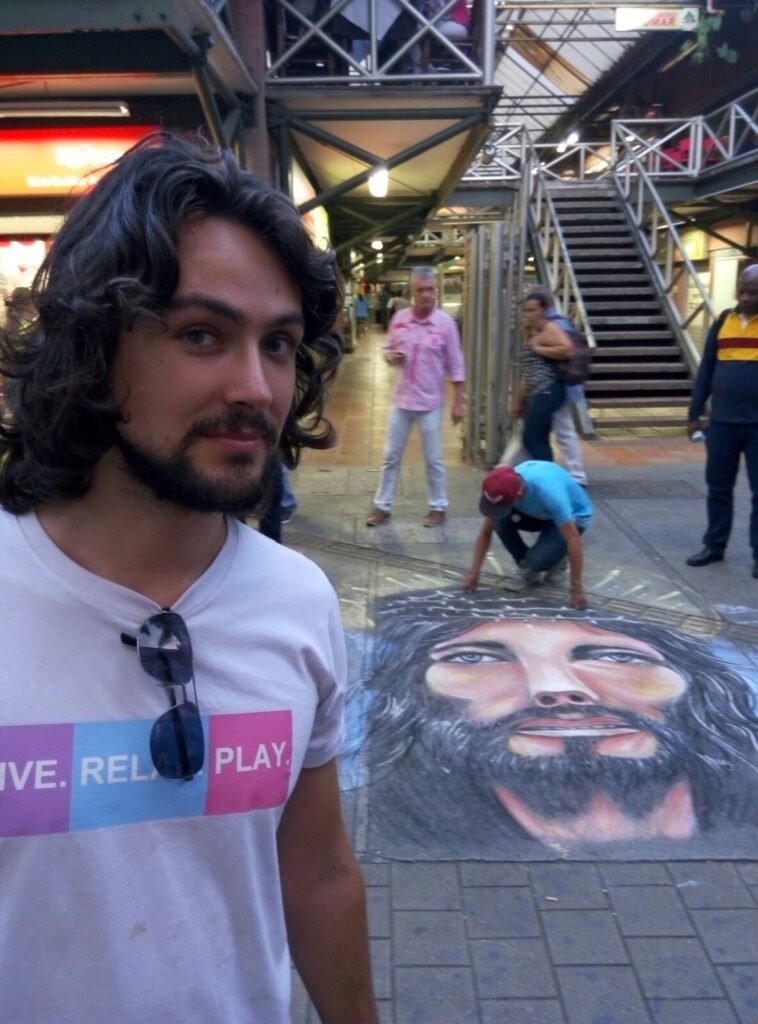
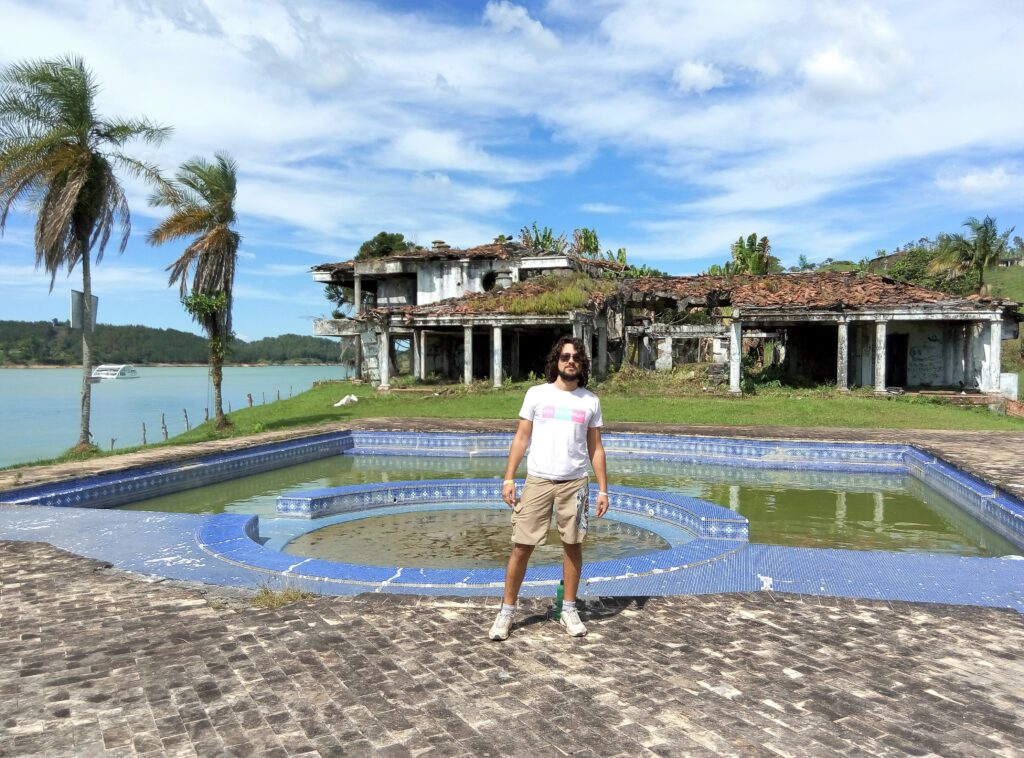
One destination that inspires you? I spent 7 months traveling across Colombia and woke up every morning, happy to be there. There’s a certain joy that lingers even after you leave.
One marketing campaign you wish you had created? Anything by Southwest Airlines. The best part is, they don’t even need one; they just keep doing their thing, and people post videos of the hilarious announcements. I flew Southwest a couple of times as a child, and I’ve never forgotten it.
One book every marketer should read? Fewer books, more doing.
One AI tool you use every week? Smartlead.
One marketing myth that needs to disappear? “Create a blog on your company site and post lots of content” is one of the best ways to waste time and effort unless you’re doing it with purpose.
The human brain is hardwired for narrative. While an online brochure or a sterile list of hotel amenities appeals to our logic, it is the story that captures our imagination. This is the anatomy of a story designed for a group of people who have the time and money – the adult part of our population.
Introduction: The Catalyst in the Armchair
The house is quiet, save for the rhythmic tick of the grandfather clock in the hallway. Outside, the afternoon sun casts long, amber shadows across a perfectly manicured lawn. On the coffee table rests a stack of glossy magazines, a few historical biographies, and a freshly opened memoir. For decades, this room was a sanctuary from the relentless pace of a demanding career and the beautiful chaos of raising a family. Now it is something else: a launching pad.
Retirement was never meant to be a long pause at the end of a long sentence. Photo: Rengeford Villages.
You open a page and are instantly transported. You are no longer sitting in a comfortable armchair; you are navigating the mist-shrouded foothills of the Japanese Alps. The writer describes the crunch of gravel underfoot along the ancient Nakasendo Trail, the scent of cedarwood smoke wafting from a wayside minshuku, and the profound, bowing gratitude of an elderly innkeeper handing you a cup of steaming matcha.
Suddenly, a profound realization hits you. Retirement was never meant to be a long pause at the end of a long sentence. It is a completely new stanza.
For a generation that has spent forty years accumulating assets, meeting deadlines, and fulfilling obligations, the greatest luxury of retirement is not leisure—it is time. Yet time without direction can easily become routine. This is where the power of a deeply moving travel story comes into play. It serves as an emotional catalyst, transforming passive wanderlust into active, purposeful exploration.
Inspiring travel narratives do far more than offer a checklist of global monuments. They unlock a threefold transformation:
The Catalyst for Movement: They turn financial freedom and open schedules into concrete travel plans.
The Cultural Bridge: They replace abstract global news with the warm, human faces of local communities.
The Internal Mirror: They offer a deeper perspective on life, resilience, and what it means to grow older with curiosity rather than complacency.
Part I: From Narrative to Navigation – The Spark of Action
The human brain is hardwired for narrative. While an online brochure or a sterile list of hotel amenities appeals to our logic, it is the story that captures our imagination. For a retiree with the financial means to go anywhere on earth, the paradox of choice can be paralyzing. When you can book a flight to Paris, Patagonia, or Perth with equal ease, how do you choose? You look for a story that mirrors your inner desires.
Siab Bazaar. Photo: Eurasia Travel.
Case Study: The Call of the Silk Road
Consider the real-world impact of travel writers like Colin Thubron or the enduring legacy of Robyn Davidson. When a retired executive reads an account of traversing the ancient Silk Road—not through the lens of a luxury tour, but through the intimate details of navigating the bustling, spice-scented bazaars of Samarkand—something shifts.
The story strips away the intimidation of remote travel. It replaces fear of the unknown with an intoxicating sense of mystery.
“Reading about another person’s journey reveals that the world is not a dangerous puzzle to be solved but a tapestry waiting to be touched.”
When travel stories spotlight peers exploring the world in their sixties, seventies, and beyond, they dismantle the societal myth that adventure belongs only to the young. They prove that physical vitality is secondary to intellectual curiosity. Platforms dedicated to authentic narratives, such as World Nomads Travel Stories, consistently show that the most profound journeys occur when travelers stop viewing the world as consumers and start engaging with it as participants.
The Financial Shift: Investing in Experience over Belongings
For decades, success was measured by what was added to the property ledger. Travel storytelling fundamentally rewrites that definition. It reframes travel not as an expensive indulgence but as the ultimate investment in one’s intellectual capital.
When a story vividly captures the profound peace of watching the sunrise over Angkor Wat, or the exhilarating camaraderie of learning to cook traditional dishes from a local chef in Tuscany, it highlights an undeniable truth: experiences appreciate in value over time, while material goods only depreciate. Inspired by these narratives, retirees willingly downsize their physical footprints to expand their global horizons.
Part II: The Cultural Bridge – Deconstructing the “Other”
We live in an era of unprecedented connectivity, yet true global understanding remains elusive. Media outlets often distill vast, complex nations into sound bites about conflict, economic disparity, or political tension. This institutionalized bias breeds caution, prompting many wealthy travelers to isolate themselves in sterile, all-inclusive luxury enclaves that shield them from the very cultures they came to see.
A truly masterful travel story serves as the ultimate antidote to this cultural isolation. It humanizes the map.
Fes Medina. Photo: Viator.
Case Study: The Shared Table in Morocco
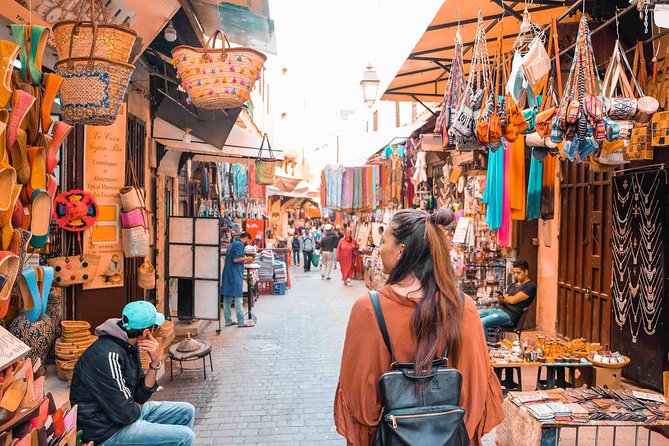
Imagine a narrative that takes the reader deep into the labyrinthine alleys of the Fes Medina in Morocco. The writer isn’t focusing on the architecture; instead, they recount getting hopelessly lost in the rain, only to be invited into a modest home by an elderly carpet weaver. The author describes the warmth of the brazier, the sweet tang of mint tea poured from a height, and the universal, nonverbal language of grandmothers comparing photos of their grandchildren.
For a retired reader, this story completely shatters the abstract concept of geopolitical division, replacing it with a deeply relatable human reality. When that reader subsequently books their own trip to North Africa, they arrive without defenses. They arrive with an open mind, eager to find their own shared table.
The Power of Vulnerability
The most inspiring travel stories are rarely about flawless itineraries where everything goes perfectly. Instead, they celebrate moments of beautiful vulnerability, such as the awkward, laughter-filled attempts to speak a language using only hand gestures, the humbling kindness of a stranger who guides a lost traveler back to their train station, or the profound realization that beneath the external differences of dress, religion, and custom, our core human desires remain the same.
For those in their post-career years, this realization is incredibly liberating. It fosters a unique form of global citizenship. It allows travelers to approach new cultures not as wealthy patrons looking down from a tour bus, but as humble students eager to learn from teachers who have lived completely different lives.
Part III: The Internal Mirror – A Deeper Perspective on Life
Perhaps the most significant impact of travel storytelling is its ability to spark an internal revolution. When we step outside our comfort zones, our long-held assumptions about success, time, happiness, and mortality are instantly called into question.
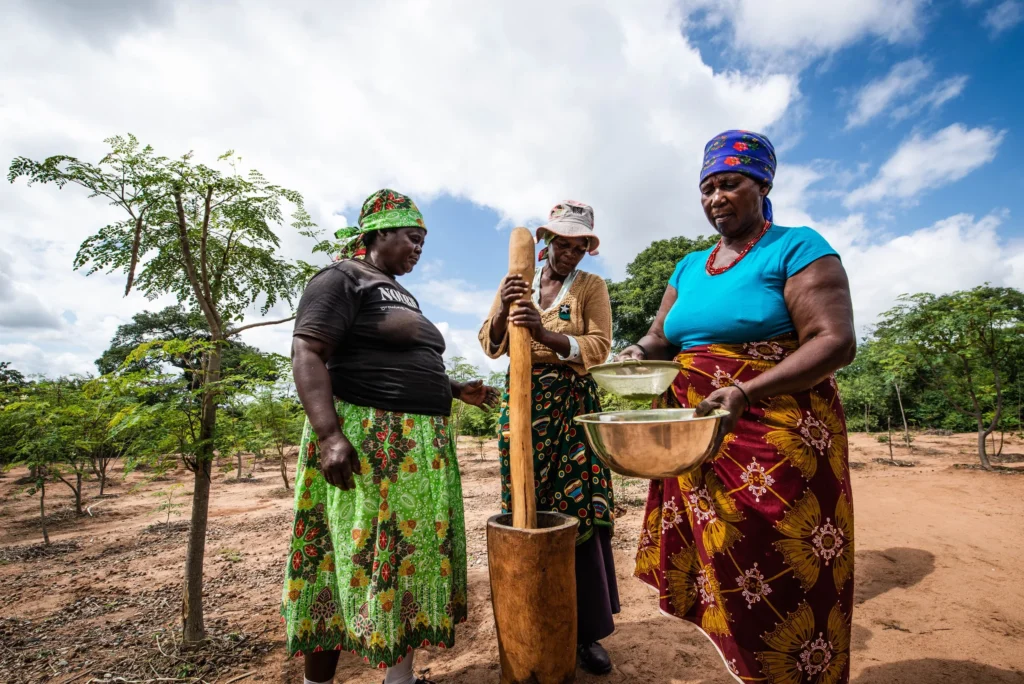
Ubuntu. Photo: Damari McBride/Photographers without borders.
Case Study: The Slow Time of the South Pacific
Consider the impact of reading about the concept of “Island Time” or the philosophical framework of Ubuntu in Southern Africa. A retired professional—someone who has spent forty years living by the dictates of Outlook calendars, quarterly earnings, and strict efficiency—reads a story about a community in Fiji where time is measured not by hours but by tides, seasons, and social connections.
The writer describes how the village elders sit in the shade of a banyan tree, completely unbothered by the lack of a schedule, fully invested in the conversation unfolding right before them.
For the reader, this narrative becomes a powerful mirror. It compels an existential inventory:
Why am I still rushing through my mornings?
What am I rushing toward?
Have I sacrificed the joy of the present moment on the altar of productivity?
By traveling to these destinations, inspired by these narratives, retirees can actively practice a slower, more deliberate way of being. They learn to trade the frantic pace of the Western world for a lifestyle centered on presence, community, and deep listening.
Rewriting the Narrative of Aging
In many Western societies, aging is subtly associated with retraction—a shrinking of one’s world, a retreat into predictable routines, and a focus on physical decline. Yet travel stories from around the globe offer alternative, inspiring paradigms.
Culture / Region
Core Philosophical Concept
Impact on the Traveler’s Perspective
Japan
Inishie (Veneration of the Old)
Shifts perspective from seeing age as a liability to viewing it as a crown of accumulated wisdom.
Latin America
Intergenerational Living
Highlights the joy of vibrant, loud, multi-generational households over isolated retirement communities.
India / South Asia
Vanaprastha (Forest Dweller Phase)
Frames retirement not as a useless void, but as a sacred time for spiritual seeking and global exploration.
Integrational living Latin America.
When a retiree reads a beautifully crafted essay on platforms like BreatheDreamgo that highlights soul-searching expeditions across the Indian subcontinent, they see firsthand how later life is celebrated as a period of profound spiritual and philosophical expansion. The travel story provides the blueprint; the journey itself provides the transformation.
Part IV: Practical Application – How to Craft Your Own Chapter
If you are standing on the shore of retirement, looking out at a vast ocean of unscheduled time, let travel stories be your compass. Here is a structured approach to turning the inspiration you find on the page into a tangible, life-changing journey.
READ & RECORD –> Identify recurring themes in your favorite travel memoirs.
DEFINE THE WHY –> Choose journeys that challenge your perspective, not just your passport.
EMBRACE BOLDLY –> Opt for independent, slow travel over highly insulated tour packages.
Curate Your Reading List for Intentionality
Stop reading standard commercial travel brochures that focus exclusively on luxury consumerism. Instead, seek out long-form travel literature, personal memoirs, and in-depth cultural essays. Look for stories in which the author’s primary goal is to understand a people rather than check off a tourist bucket list.
Hire a private chef in Tuscany. Photo: Take a Chef,\.
As you read, keep an active journal. Note the specific sentences, cultural customs, or geographical landscapes that evoke a strong emotional reaction. If a story about a train journey through the Scottish Highlands or a walking pilgrimage in Spain makes your heart beat a little faster, pay close attention. Your intuition is mapping out your next destination.
2. Seek Out the “Friction”
When planning your travels, consciously resist the temptation to make every aspect of your trip effortless. While five-star hotels and private drivers certainly have their place, excessive comfort often acts as an insulating barrier, completely blocking authentic cultural immersion.
Instead, intentionally build opportunities for real human connection into your itinerary:
Hire local, independent guides who can take you into their neighborhoods.
Stay in boutique, family-run guesthouses where you can interact directly with the owners.
Use local public transportation, such as trains or ferries, to sit side-by-side with residents going about their daily lives.
Remember: the mishaps, the confusing moments, and the unexpected detours are almost always the chapters of the story you will remember most fondly for decades to come.
Travel with a Purpose
Use your retirement to align your global travels with your deepest personal values. If you read a story about marine conservation efforts in the Galapagos Islands or archaeological preservation in Peru, don’t just visit as a passive tourist. Explore high-end, reputable philanthropic travel organizations or educational alumni groups that let you contribute your time, resources, and career wisdom to local initiatives.
By shifting your travel objective from self-indulgence to contribution, you ensure that your journeys remain deeply fulfilling, intellectually stimulating, and profoundly purposeful.
Photo: Acampora Interiors.
Conclusion: The Unwritten Page
The ultimate value of a great travel story is that it never truly ends with the final sentence on a page. It serves as an open invitation. It coaxes you out of your comfortable armchair, nudges you past lingering hesitations, and gently guides you toward the front door.
You possess the two most valuable resources on earth: the financial freedom to explore any corner of our planet and the unhurried time to truly sit and savor the experience. The world is not a sequence of images to be viewed on a screen from afar; it is a living, breathing classroom filled with millions of fascinating individuals waiting to share their stories with you.
Close the book on your desk. Turn the key in the front door. Step out into the waiting world. It is time to stop reading other people’s masterfully written adventures, pack your bags, and start writing your very own unforgettable chapter.
Take-away
If you learned something from this article, I believe you’ll also enjoy my recent book, “How I’ve Survived as a Storyteller for Over 50 Years: 12 Survival Techniques.” Get your FREE e-book copy by sending me your name and e-mail address, and including “Storytelling” in the subject line. Thank you for reading!
The Anatomy of a Brand Story for Destinations, written by Tor Kjolberg.
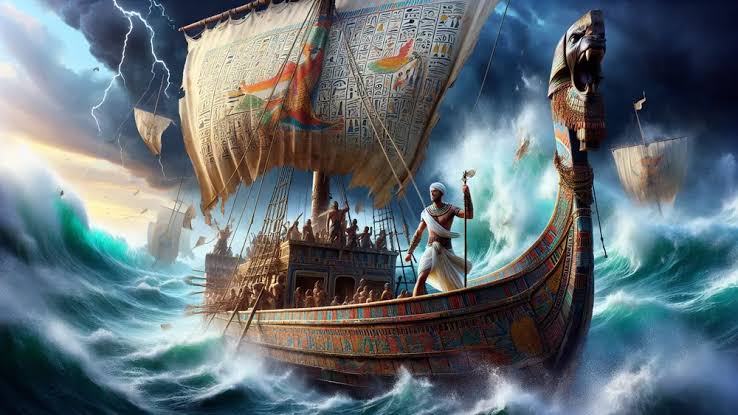
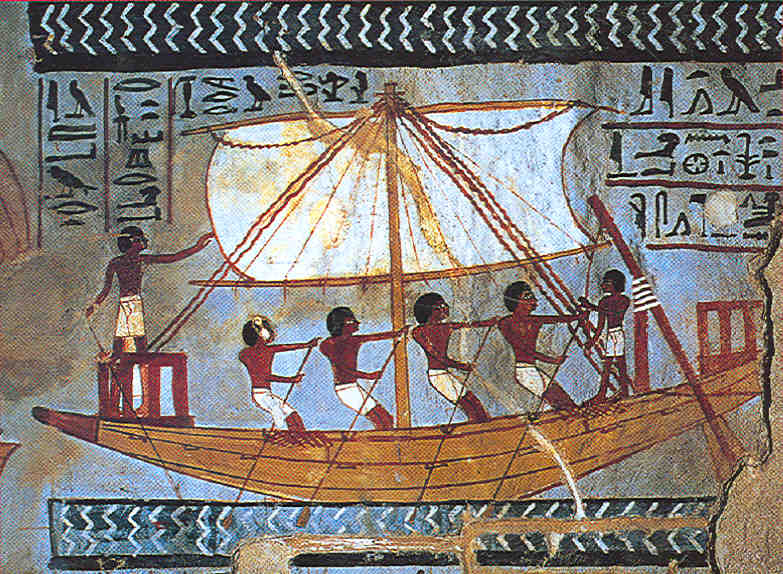
The world’s oldest surviving travel story, the Tale of the Shipwrecked Sailor, is widely considered to date back to around 2000 BCE during ancient Egypt’s Middle Kingdom.
The narrative, preserved on a single papyrus (the Hermitage Museum Papyrus 1115 in Russia), follows a sailor who is comforted by a crewmate after returning from a failed expedition. To ease his fear of facing the Pharaoh, the sailor recounts how his ship was destroyed in a storm, leaving him stranded on a magical island, where he was greeted by a massive, talking snake deity of gold and lapis lazuli.
This story is one of the earliest examples of a “marooned on a mystical island” narrative.
This story is one of the earliest examples of a “marooned on a mystical island” narrative, featuring a story-within-a-story.
Plot Summary
The text opens with a worried Egyptian official or retainer returning from a failed expedition, terrified of the Pharaoh’s reaction. To comfort his master, an attendant recounts a story from his own past sea voyage:
The attendant had once been part of an expedition aboard a ship manned by 120 sailors.
The attendant had once been part of an expedition aboard a ship manned by 120 sailors. A violent storm sank the ship, and he was the sole survivor, washing ashore on a magical, prosperous island (often associated with the mythical land of Punt). While preparing an offering to the gods, the island shook, and a giant serpent—the island’s guardian—approached him.
The serpent demanded to know who had brought the sailor to the island. After hearing the sailor’s account of loyalty to the Pharaoh, the serpent spared him and prophesied that another ship would rescue him in four months. The serpent also imparted wisdom, urging the sailor to remain humble and to return home. True to the prophecy, a passing ship rescued him, and he returned to Egypt laden with exotic treasures.
The Value of Storytelling
The attendant uses the anecdote as a therapeutic device, emphasizing the power of speech through the proverb, “The mouth of a man saves him.” The story contrasts the exotic, mythical island with the comfort and security of Egypt. Despite the island’s abundance, the sailor’s ultimate goal is to return home. The story also explores the relationship between humans and the divine, highlighting themes of survival, gratitude, and diplomacy.
The World’s Oldest Surviving Travel Story, written by Tor Kjolberg
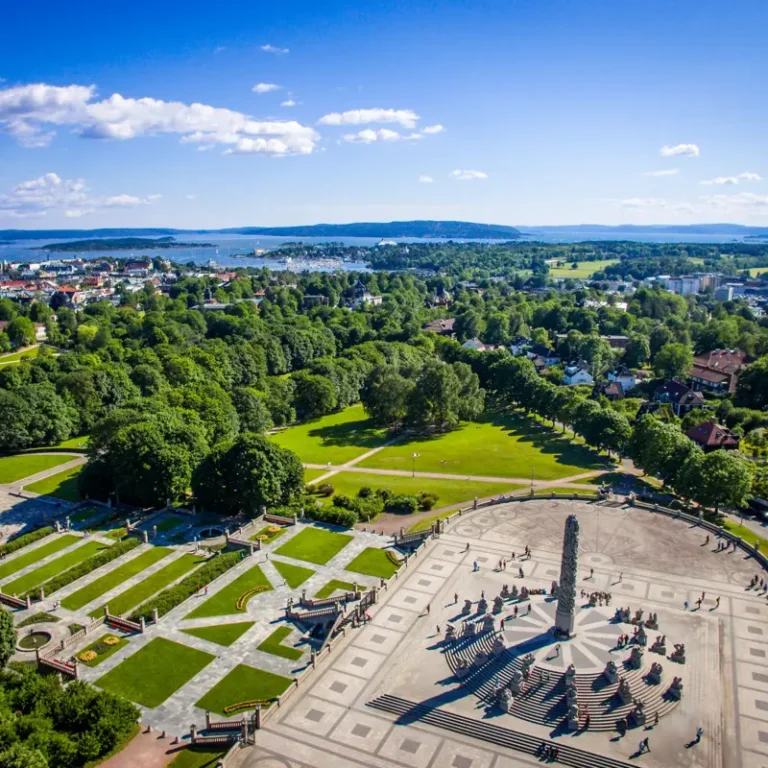
Oslo, the capital of Norway, is ranked the world’s 10th most liveable city in the Quality of Life survey conducted by Monocle magazine. It is behind Munich but ahead of Stockholm.
Oslo seamlessly blends metropolitan sophistication with untouched nature, consistently ranking among the world’s most livable cities. Residents enjoy a pristine environment, with 95% of the population living within 300 meters of a green space, top-tier social welfare, and an incredible urban work-life balance.
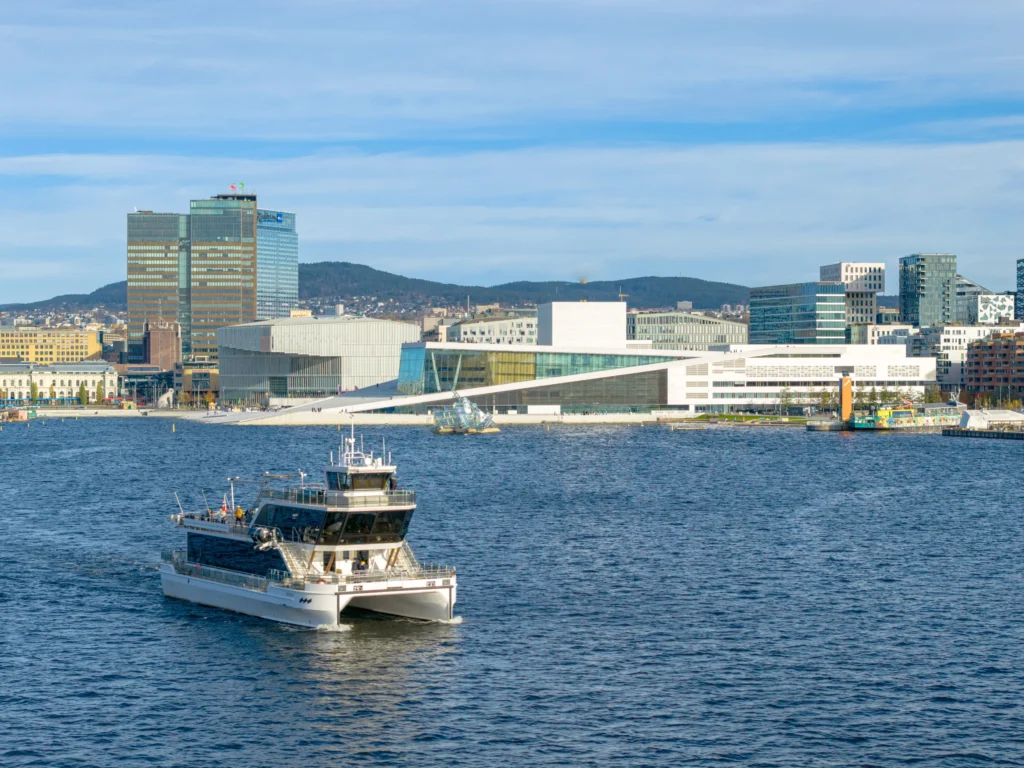
Known collectively as Fjord City, Oslo has fully opened the waterfront and transformed the Norwegian capital into an outward-facing city. Photo: Fjord Tours.
According to the survey, Oslo is at ease with both its heritage and its new role as a hyper-modern green capital – a self-assurance that has it finish above Stockholm this year.
Locals and expats are drawn to the city’s unique mix of modern architecture, high safety standards, and immediate access to both the Oslofjord and the surrounding Oslomarka forest.
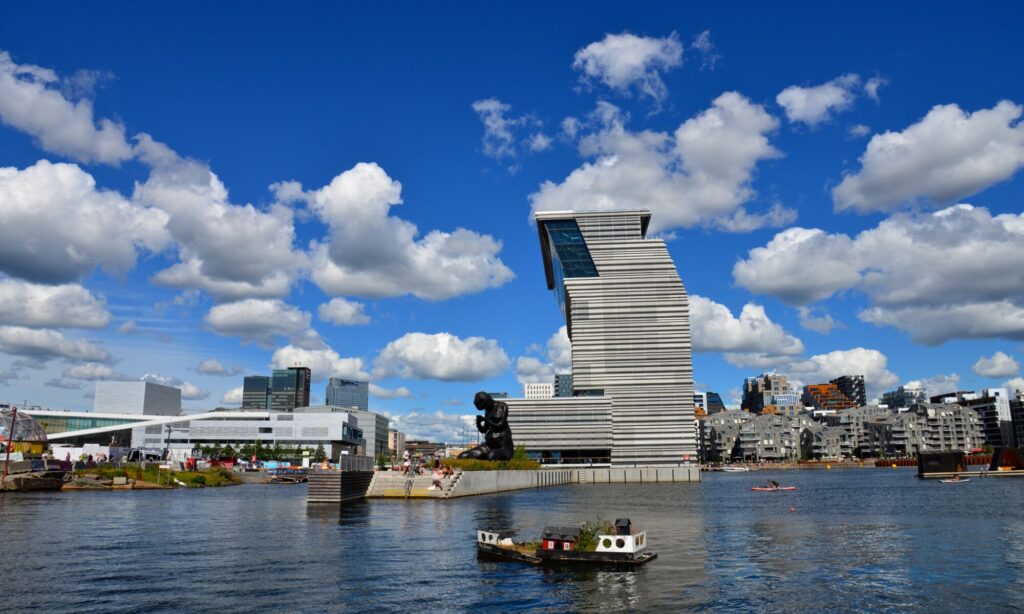
Decades of ambitious harbor-side developments are now almost complete. Known collectively as Fjord City, they have fully opened the waterfront and transformed the Norwegian capital into an outward-facing city. Many of Oslo’s most exciting cultural attractions line the harbor promenade, a five-kilometer stretch that runs from Filipstad to Sørenga.
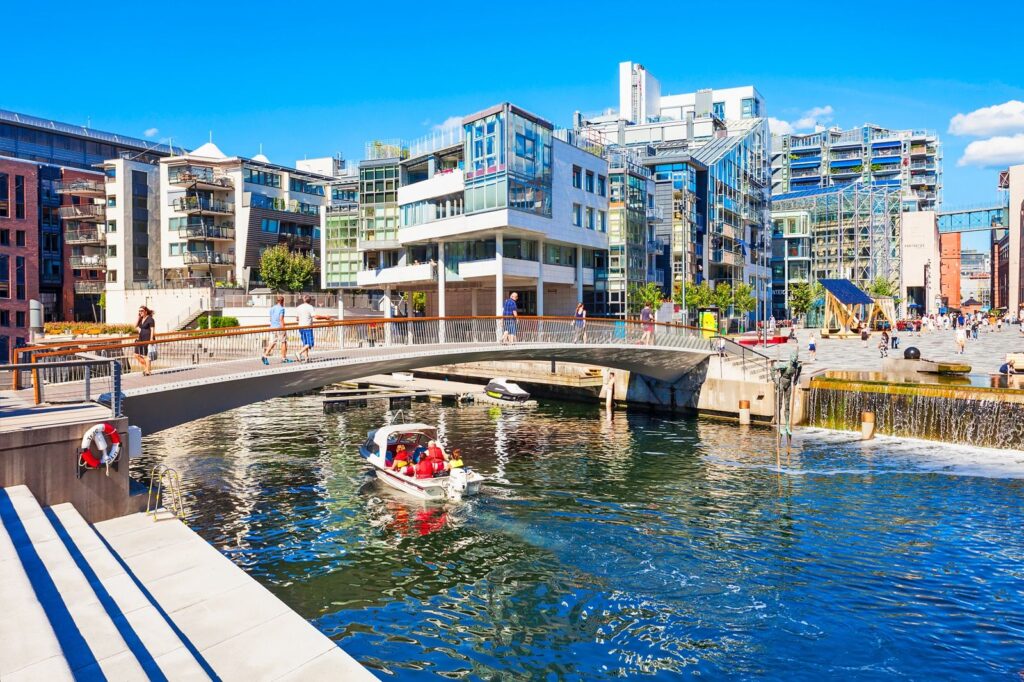
According to the survey, Oslo is at ease with both its heritage and its new role as a hyper-modern green capital. Photo: hotels.com
The New Government Quarter (Regjeringskvartalet) in Oslo is designed to redevelop the site of the 2011 terror attacks into an open, secure, and green civic space. Now, 15 years later, national pride in Oslo has been rebuilt.
Many of Oslo’s most exciting cultural attractions line the harbor promenade. Photo: fjords.com
A survey by the Allstate Insurance Company reveals thatnearly one-third of active social media users may potentially risk a home break-in by posting online before or during a vacation trip.
The survey further reveals that:
Over half of those planning to travel out of the country this summer plan to post about their trip on social media.
Nearly 10% post before their trip to share their plans; and
Almost one-third post during their trip to show they are traveling – a number that climbs to nearly 40% among parents (as opposed to those traveling without kids).
Posting about travel in real time is generally unsafe. Publicly broadcasting your location signals that your primary residence is vacant, significantly increasing the risk of a home burglary. It also makes you vulnerable to physical stalking and online scams.
Posting about travel in real time is generally unsafe.
As travel consumers increasingly rely on tech tools and online advice, there has been an unsurprising proliferation of travel-inspired internet content—and an accompanying rise in incidents in which creators take risks with their own safety and that of others. From the public dissemination of a traveler’s itinerary and location to the high-octane nature of the exploits that go viral, posting about one’s adventures carries a degree of risk.
The insurance company’s own data shows that property theft has risen over the last decade during the summer holidays, peaking in August, making summer a critical time to prioritize home safety and security.
Ironically, that same survey shows that
A strong majority (62%) say their main concern is making sure their home is safe while they’re away; yet
15% shockingly say sharing on social media is a higher priority than protecting their homes from a break-in.
To safely share your travel experiences, experts and security professionals recommend a few best practices:
As travel consumers increasingly rely on tech tools and online advice, there has been an unsurprising proliferation of travel-inspired internet content.
Delay Your Posts: Wait to publish your photos, videos, and check-ins until you have left the location or safely returned home.
Remove Geotags and Metadata: Disable precise GPS tagging in your social media apps and use your phone’s privacy settings to remove geolocation data from photos before posting.
Protect Your Travel Documents: Never post images of your boarding passes, passports, or itinerary details, as they contain sensitive personal data that could lead to identity theft.
Horrifying statistics and a lack of caution in one’s own surroundings are only one of the dangers to consider.
Horrifying statistics and a lack of caution in one’s own surroundings are only one of the dangers to consider here. The rise of online publishing includes live location sharing and time-limited releases like Instagram Stories, posted for only 24 hours. These formats create risk in themselves. They effectively reveal to others where the original poster is geographically, within a given timeframe. That means bad actors could physically stalk the poster or deduce that they are “not at home” and target an empty domestic address.
While increasingly popular technologies like smart cameras and alarm systems (in addition to old-fashioned helpful or nosy neighbors!) contribute to home security when residents are away, travelers should also take precautions to mitigate the risks posed by their social media posts.
Is it possible to stay safe in this universe?
Hide Your Home Environment: Avoid sharing images of your street address, neighborhood landmarks, or house numbers, as advised by Forbes Travel. A safety initiative from Yale University notes that “cybercriminals will use all methods to learn about your travel plans. When you post on social media about your plans, you make it easier for them to target you.” Yale urges people not to post itinerary details and to wait until they return home before sharing holiday posts. The university also recommends setting accounts to private and turning off GPS tracking.
Other good practices for travelers include setting up a “safeword” or “emergency word” with friends and relatives, using emergency contact features on their phones, and informing trusted local providers, such as hotels or walking refuges, of their plans.
Travelers Risk a Home Break-In by Posting Online Before or During a Vacation Trip, compiled by Tor Kjolberg.
Long before wearable devices tracked our sleep, wellness apps prompted us to breathe, or nutrition labels filled our grocery carts, practitioners of Traditional Chinese Medicine (TCM) were asking a simple question: What is the body trying to tell us? Read on to learn more about ancient wisdom and modern wellness.
For thousands of years, Traditional Chinese Medicine (TCM) has viewed health not merely as the absence of disease but as a dynamic state of balance. Rather than focusing on a single symptom or diagnosis, it recognizes that the body’s physical, emotional, and environmental systems continually influence one another. According to acupuncturist Maggie Mejia, owner and practitioner at Family Tree Acupuncture in Daytona Beach, Florida, true health and healing begin with understanding the whole person.
“One of the hallmarks of Chinese medicine, and what makes it most different from Western medicine, is its holistic approach to the body,” Mejia explains. “While Western medicine often zooms in on a specific ailment, Chinese medicine zooms out to look at how the body’s systems work together, influence one another, and create balance and harmony throughout the whole person.”
One of the defining characteristics of Traditional Chinese Medicine is that it asks a different question. Photo: Torrens University, Australia.
Looking Beyond a Diagnosis for Optimal Wellness
One of the defining characteristics of Traditional Chinese Medicine is that it asks a different question. Instead of simply asking, What disease does this person have? TCM practitioners ask, What is the imbalance and why has it developed in this particular person?
“Body symptoms let you know that there is an imbalance,” says Mejia. “Someone may come in with headaches, difficulty sleeping, digestive issues, or another diagnosis, but we don’t just look at the diagnosis itself. We investigate why that imbalance is occurring.”
This means there is no one-size-fits-all treatment. “If two people come in with insomnia,” she explains, “there isn’t simply an insomnia protocol. We determine which imbalance is causing that person’s insomnia, and it may be completely different from the next person experiencing the same symptom.”
In Traditional Chinese Medicine, treatment typically includes acupuncture (the best-known practice within TCM) and herbal treatments. “In order to understand TCM and acupuncture,” Maggie Mejia explains, “you first have to understand the concept of qi. The body contains qi (pronounced “chee”), often described as the body’s vital energy. Our job is to determine where that energy may be blocked, lacking, or flowing in the wrong direction so we can help restore balance through acupuncture treatments.” Scientific research continues to explore how acupuncture influences the nervous system and may benefit certain conditions, particularly chronic pain, stress, and anxiety. Many people seek acupuncture as part of a broader, whole-person approach to wellness alongside Western medical treatments.
While acupuncture can play an important role, Mejia believes lasting well-being is built on everyday choices.
The Small Habits That Shape Our Health
While acupuncture can play an important role, Mejia believes lasting well-being is built on everyday choices. “Chinese medicine has always emphasized nutrition, rest, and work-life balance,” she says. “Don’t overwork. Prioritize sleep. Give your body time to recover. Practice gentle movements such as qi gong and tai chi, and nourish properly.”
These ideas may sound surprisingly familiar, including prioritizing consistent sleep and nutrition, taking breaks from work, spending time outdoors, and allowing space for recovery, all of which echo habits long embraced throughout Scandinavia. Whether described through the lens of lagom, friluftsliv, or Traditional Chinese Medicine, the message is similar: health is cultivated through balance rather than extremes. Mejia also encourages slowing down during meals, avoiding overeating, and eating until about seventy percent full. Traditional Chinese Medicine generally recommends warm, nourishing foods and minimizing icy beverages during meals because, within its framework, cold foods and drinks are thought to interfere with digestion. While these practices may differ from Western nutritional guidance, they reflect TCM’s emphasis on supporting the body’s natural rhythms.
Honestly evaluate your own balance.
Listening to What the Body Is Saying
Perhaps the most compelling lesson Traditional Chinese Medicine offers is that symptoms deserve our attention, not our dismissal. “When we continually draw from our physical, mental, and emotional reserves without replenishing them, the body begins sending signals that something is out of balance.” Those signals may appear as fatigue, insomnia, digestive issues, anxiety, headaches, or chronic pain. Yet, as Mejia points out, modern society often teaches us to ignore them. “We wear exhaustion as a badge of honor,” she says. “We stay connected to work around the clock and often measure our worth by our productivity.” Mejia suggests a simple exercise: honestly evaluate your own balance. Has life become physically, mentally, or emotionally consuming? Have certain symptoms become so familiar that you’ve stopped paying attention to them?
TCM offers effective ways to restore balance, including acupuncture and possibly herbs, when guided by a licensed practitioner.
Ancient Wisdom for Modern Life
Traditional Chinese Medicine is dynamic; there is no single formula that works for everyone because each treatment is tailored to the individual. TCM offers effective ways to restore balance, including acupuncture and possibly herbs, when guided by a licensed practitioner. Other principles can be practiced at home, including meditation, breathwork, qigong, tai chi, nourishing meals, healthy sleep routines, spending time in nature, and setting boundaries around work and technology, as mentioned. The ultimate goal of it all is to help the body function in greater harmony. One final quote from Mejia may be easy to remember: “Our bodies are incredibly wise,” she says. “Symptoms are not the enemy; they are our body’s way of communicating important information.” One of the greatest things we can do for our well-being is to learn to pause enough to listen.
Although developed on opposite sides of the world, Traditional Chinese Medicine and many Scandinavian approaches to well-being share a remarkably similar philosophy. Both emphasize prevention over reaction, living in harmony with nature, honoring rest, and recognizing that small daily habits shape long-term health.
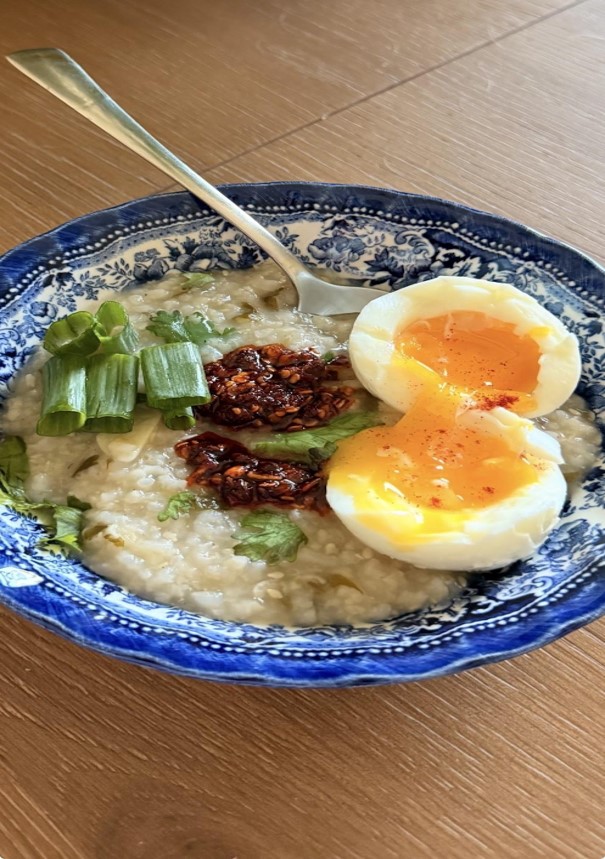
Congee. Photo: Nicole Hammond.
A healthy TCM recipe to try:
Congee: Bring 4 cups of water and ½ cup of rice to a boil. Reduce to a simmer and cook for an hour. This breaks down into a nutritious tonic for the body and resembles porridge when finished. Top with a “jammy” egg: In a separate pot, bring water to a boil, crack in an egg, and cook for 6 minutes. Remove the egg and top the congee. Garnish with whatever you like. Scallions, sesame seeds, soy sauce, and red pepper flakes are a personal favorite of mine. Have fun with it : )
Dr. Maggie Mejia
Maggie Mejia is a Florida-licensed Acupuncture Physician with more than 15 years of experience helping patients achieve better health through Chinese medicine. She is the owner and clinical director of Family Tree Acupuncture, a multi-practitioner Chinese medicine clinic serving the Daytona Beach, Florida, community since 2012. Maggie’s passion for Chinese medicine began in her early 20s, after firsthand experience with the profound impact acupuncture and herbal medicine had on her health. That personal transformation inspired a lifelong commitment to helping others restore balance, relieve pain, and improve their quality of life. You can connect with her or find out more about her clinic at familytreeacupuncture.com
Nicole Hammond
Ancient Wisdom, Modern Wellness, written exclusively for Daily Scandinavian by Nicole Hammond. Nicole is a health educator, coach, and wellness writer with a Master of Science in Health and Human Performance and a Bachelor of Science in Health Science. She also holds certifications in stress management, coaching, and feng shui design. She enjoys writing, researching, creating, and facilitating in the areas of health and creating balance in mind, body, and the home. In her spare time, Nicole enjoys reading, cooking, traveling, exercising, and spending time with her family, including her two golden retrievers and cocker spaniel.







 The report highlights several notable recoveries: Phuket’s recovery after the 2004 tsunami and its record arrivals by 2010, despite the 2008 financial crisis; Tunisia’s record 8.3 million arrivals just three years after the 2015 attacks; and Nepal’s recovery after the earthquake in the same year.








 Take-away