




Both involve communicating with potential travelers, publishing content, and promoting destinations, but they are not the same thing. So the question about destination storytelling vs. social media marketing is really about understanding the difference and why destinations need both.
As I meet with DMCs, I still encounter people who are unfamiliar with the term ‘destination storytelling’. When I begin to explain it, they often respond, ‘Oh, destinations publishing content? You mean social media marketing?’
I have heard variations of this response several times when introducing destination storytelling to people in the tourism industry. It is understandable. Confusing destination storytelling with social media marketing is like confusing the message with the messenger or the book with the printing press.
One is a strategic approach to creating meaning, emotional connections, and demand. The other is a collection of channels, tools, and techniques for reaching an audience.
Defining the two concepts

Destination storytelling is a communication strategy that uses authentic, engaging narratives to convey what makes a destination meaningful, distinctive, and worth experiencing.
It goes beyond describing attractions, hotels, landscapes, and activities. It uncovers the people, traditions, history, culture, unexpected experiences, and lesser-known aspects that give a destination its identity.
Its purpose is to create emotional connections, spark curiosity, establish a distinctive destination identity, and inspire travel decisions.
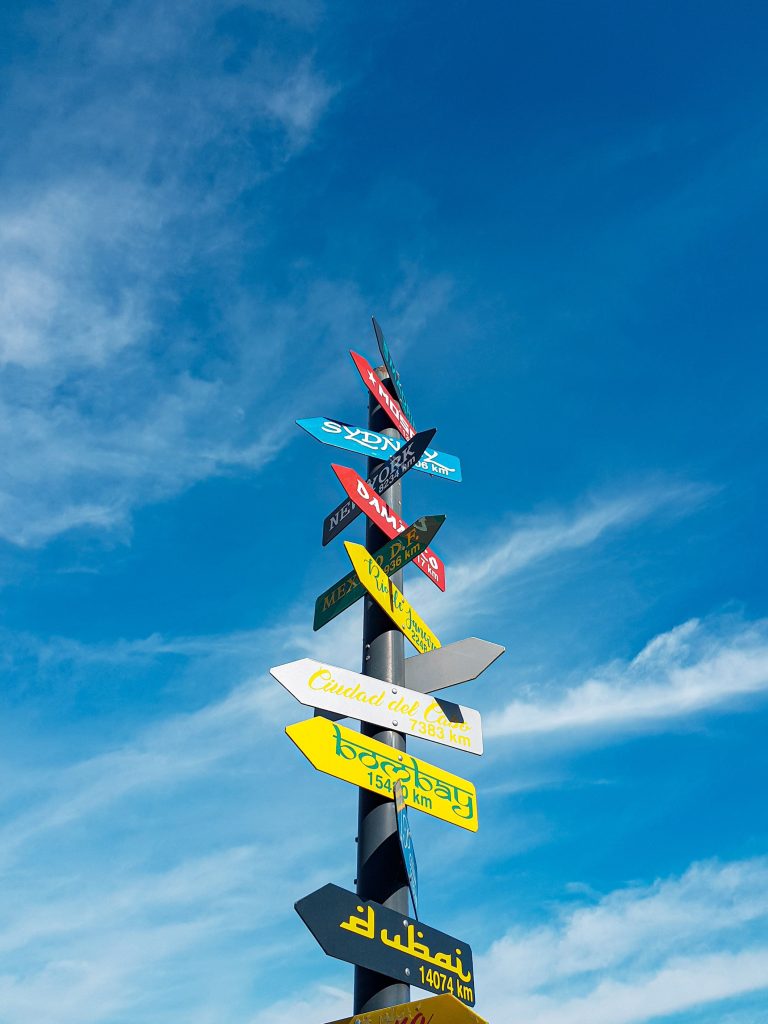
Social media marketing is both a marketing discipline and a distribution environment. It uses social platforms such as Instagram, Facebook, TikTok, LinkedIn, and YouTube to communicate with audiences, build awareness, engage followers, distribute content, and generate business.
It encompasses organic posts, paid advertising, campaigns, competitions, influencer collaborations, video content and community management.
Its purpose is to reach, engage and influence target audiences through social media channels.
The two overlap, but they are not interchangeable.
The differences at a glance
| Destination storytelling | Social media marketing |
| Starts with a story | Starts with a marketing objective |
| Focuses on meaning and identity | Focuses on reach and engagement |
| Creates emotional connections | Creates audience interaction |
| Explores people, culture and experiences | Uses platforms, formats and campaigns |
| Builds distinctive destination positioning | Builds visibility and audience relationships |
| Can create long-term brand value | Can generate short- and long-term results |
| Can be distributed across many channels | Uses social media as its primary environment |
An important qualification: these are differences in emphasis, not rigid boundaries. Social media marketing can be highly emotional and strategic, and storytelling can also have immediate commercial objectives.
Publishing content is not necessarily storytelling
A destination can publish hundreds of social media posts without telling a single meaningful story.
I have mentioned such examples almost to the point of boredom, but they are important for understanding the difference:

Ordinary destination content
Discover our beautiful fjords! Visit our spectacular mountains! Experience authentic Norwegian fishing villages! Book your summer vacation now!
These messages provide information and promote attractions. They are not necessarily stories.
Destination storytelling
The fisherman who has spent fifty years following the same Arctic cod migration. The small fishing village that refused to disappear when its school closed. The woman who revived an almost-forgotten local craft and turned it into a tourism experience.
These are potential stories. We have people, conflict, change, heritage, personal experiences, and something worth discovering.
The difference is that the first examples describe a destination, whereas the second reveal something about it. I particularly like this distinction:
Content tells people what a destination offers. Storytelling gives them a reason to care.
Of course, a social media post can tell a wonderful story. The point is that publishing content does not automatically constitute storytelling.
Storytelling is not restricted to social media
Another important misunderstanding to address is that destination storytelling can be communicated through:
- Editorial articles in travel magazines.
- Destination websites and blogs.
- Printed publications and travel guides.
- Documentaries and short films.
- Podcasts and interviews.
- Newsletters.
- Social media posts, Reels and videos.
- Travel agency presentations and sales material.
- Trade fairs and tourism exhibitions.
Social media is one of many distribution channels. A well-developed destination story can be adapted into multiple formats without losing its core narrative. For instance, a 1,500-word story about a local community can become:
A shorter editorial article or a two-minute documentary can be adapted into five Instagram posts or a series of short videos. It can also be presented as a travel agency presentation or a newsletter feature.
This is where storytelling becomes particularly valuable commercially: one good story can generate an entire family of marketing materials.

Social media marketing without storytelling – and with storytelling
Consider two different approaches to promoting a destination.
Social media marketing without a storytelling foundation
A destination shares attractive photos, seasonal offers, hotel presentations, activity descriptions, competitions, and promotional videos. It may achieve strong reach and engagement. But what makes this destination different from hundreds of competing destinations?
Social media marketing supported by destination storytelling
The destination has defined its identity and compiled a collection of authentic stories. Its social media content now centers on real people, remarkable experiences, local traditions, surprising discoveries, and stories that reveal what makes the destination special.
The platforms remain the same. The difference lies in the substance of the communication.
Social media can distribute a destination’s message. Storytelling can make that message worth sharing.

Why DMCs should pay attention
DMCs are experts at creating and delivering tourism experiences. They know their hotels, restaurants, guides, attractions, excursions, and local suppliers. But knowing a tourism product and knowing how to tell its story are two distinct competencies.
A product description might read: “Our excursion includes a guided visit to a historic fishing village, a traditional lunch, and a boat trip.”
A storytelling approach might begin: “What happens when a village that once supplied the Arctic fishing fleet becomes a place where visitors can experience the traditions that kept Northern Norway alive?”
The excursion is essentially the same, but the second approach opens a door to curiosity, meaning, and discovery.
This is where DMCs can benefit from collaboration with professional storytellers. Instead of simply selling itineraries, they can help travel agencies sell experiences that have a distinctive narrative. And that is a much more interesting proposition.
The relationship: not competitors, but partners
Storytelling and social media marketing are not competing disciplines. They should complement each other.
Here’s a simple model to consider:
DESTINATION STORYTELLING
Discovering the identity, meaning and stories that make a destination distinctive
CONTENT DEVELOPMENT
Articles, photographs, films, interviews, narratives and other creative material
DISTRIBUTION AND MARKETING
Social media, websites, publications, newsletters, travel agencies and other channels
DESIRED OUTCOME
Greater awareness, emotional connections, stronger positioning and increased travel demand
The model illustrates that storytelling can provide the strategic foundation, while content production and distribution bring the stories to their audiences.

Some myths worth challenging
| Misconception | Clarification |
| We already do storytelling. We publish on Instagram. | Publishing is not synonymous with storytelling. |
| Beautiful photographs are storytelling. | Images can support a story, but beauty alone does not constitute a narrative. |
| Storytelling is only about history and traditions. | Contemporary people, innovation, personal experiences and future ambitions can also make compelling stories. |
| Storytelling is only about emotions. | Good storytelling combines emotion with facts, credibility and authentic experiences. |
| Storytelling is too time-consuming. | One well-developed story can be repurposed into numerous marketing formats. |
| Storytelling is difficult to measure. | Its impact can be assessed through awareness, engagement, brand perception, referral traffic, enquiries and bookings, although attribution requires care. |
A challenge to the tourism industry
I challenge destination marketers to reconsider what they are communicating.
Are they merely showing travelers what they can see and do, or are they giving them reasons to become curious, emotionally involved, and ultimately motivated to visit? A destination does not become distinctive simply by publishing more photographs, videos, and promotional messages.
It becomes distinctive when it communicates something that competing destinations cannot easily replicate: its own people, experiences, heritage, character, and authentic stories.
Social media marketing tells us where to publish. Destination storytelling challenges us to consider what to communicate, why it matters, and how we can make people care.
The tourism industry does not need to choose between the two. It needs to understand the difference. Social media marketing without compelling content risks becoming noise in an increasingly crowded digital marketplace. Destination storytelling gives that content substance, identity and meaning.
Perhaps it is time to stop asking destinations how often they publish content and start asking which stories they have worth telling.
Destination Storytelling vs. Social Media Marketing: Understanding the Difference, written by Tor Kjolberg.
All images © Pexels. Feature image (top): Artawkrn
 Take-away
If you learned something from this article, I believe you’ll also enjoy my recent book, “How I’ve Survived as a Storyteller for Over 50 Years: 12 Survival Techniques.” Get your FREE e-book copy by sending me your name and email address, and including “Storytelling” in the subject line. Thank you for reading!
More articles on Brand Storytelling by Tor Kjolberg you may like:
Destination Storytelling: The Questionnaire Is Your Map – Not Your Prison
Tales of the Unexpected: The Hotel Detective Is on the Case
The Customer Magazines That Sell Without Selling
Brand Storytelling: Facts Tell. Stories Sell
Destination Storytelling: Inform or Entertain?