



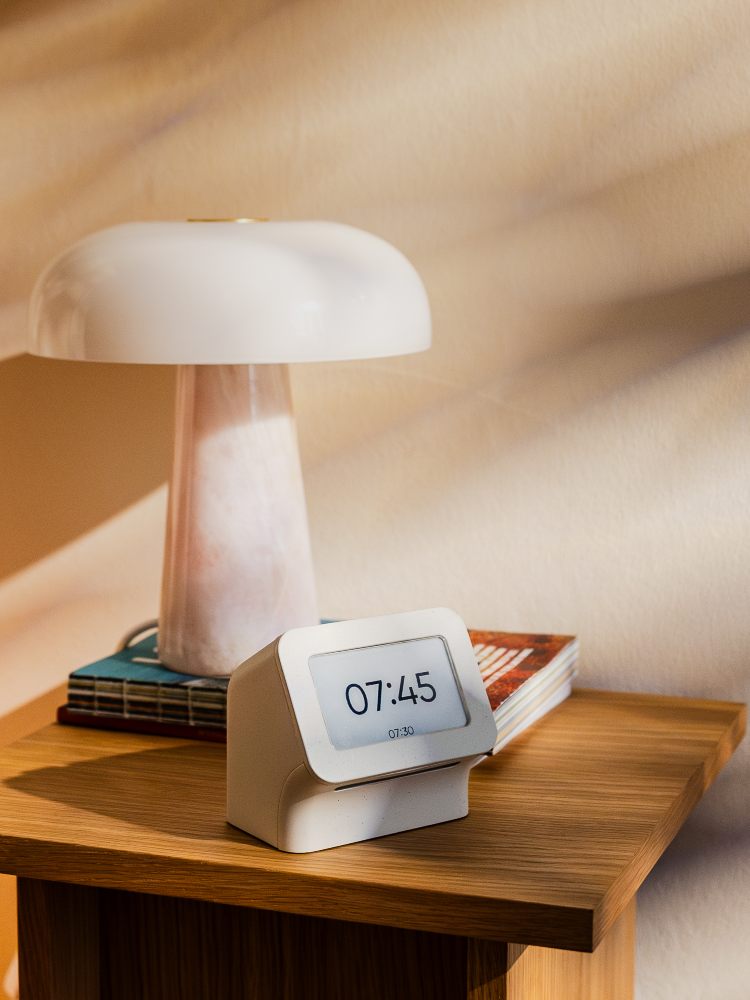
Habity, the new smart Danish Bedside Clock, uses an e-paper display to reduce users’ screen time and exposure to blue light. Compact and self-contained, it operates without a Wi-Fi connection or mobile apps, and users control all functions directly through the clock’s interface.
The clock offers multiple wake-up tones that gradually increase in volume. Sleep sound functions play throughout the night to support rest, and there’s even a wind-down experience that activates before bedtime to signal that it’s time to switch offline.
Over 600 people have already supported Habity Bedside Clock, easily exceeding the €25,000 funding goal. This alarm clock is particularly interesting to us because it will integrate with Hue.
************************************************
You may also like to read Norwegian Watchmaker on Classic Wrist Watches
************************************************
This nifty bedside clock doesn’t just tell the time or wake you up in the morning; it’ll help you switch off at night, too. The device uses e-paper display technology that emits no blue light, maintaining visibility while avoiding the blue light that disrupts circadian rhythms. It also consumes power only when updating the screen.
The display shows time, alarm settings, and function status, allowing users to read information in low-light conditions without additional illumination that can strain their eyes. The e-paper screen of the Habity Bedside Clock remains visible both day and night, regardless of lighting conditions.
**************************************************
You may also like to read Why Do Scandinavians Sleep So Well?
**************************************************
Local control
Habity communicates via your local network using the Hue Bridge’s REST API instead of relying on a cloud connection. The Hue Bridge is automatically detected on the network and paired with a single button press. You can then select the scene you want to use to wake up directly from the display.
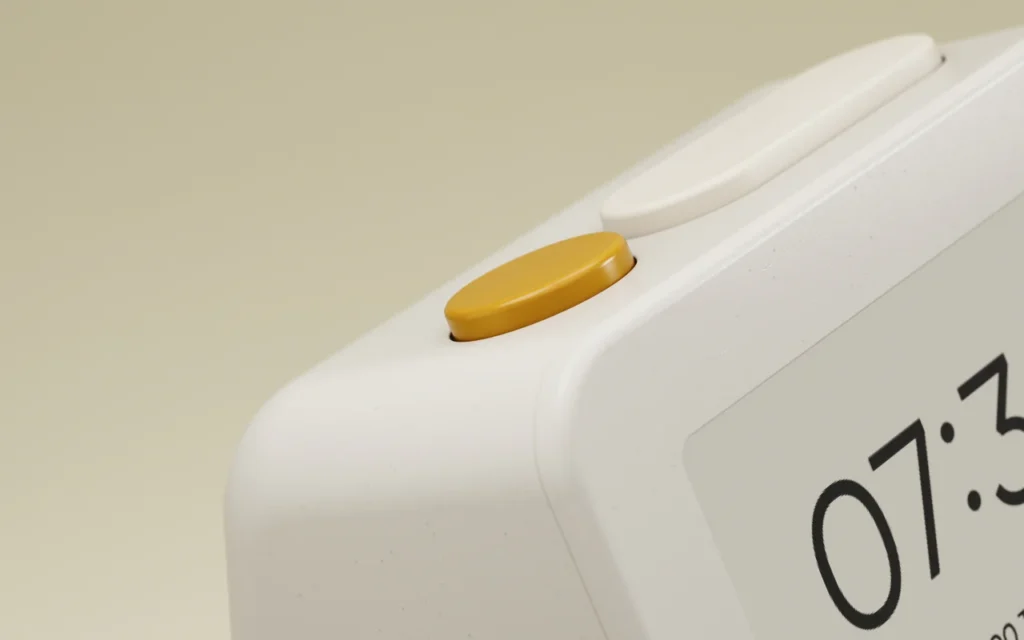
We appreciate this clock for everything it offers and for what it does away with – namely the need to download an app or fiddle with complex settings. The alarm clock is powered by USB-C and also has a built-in battery, so you won’t oversleep in the event of a power failure.
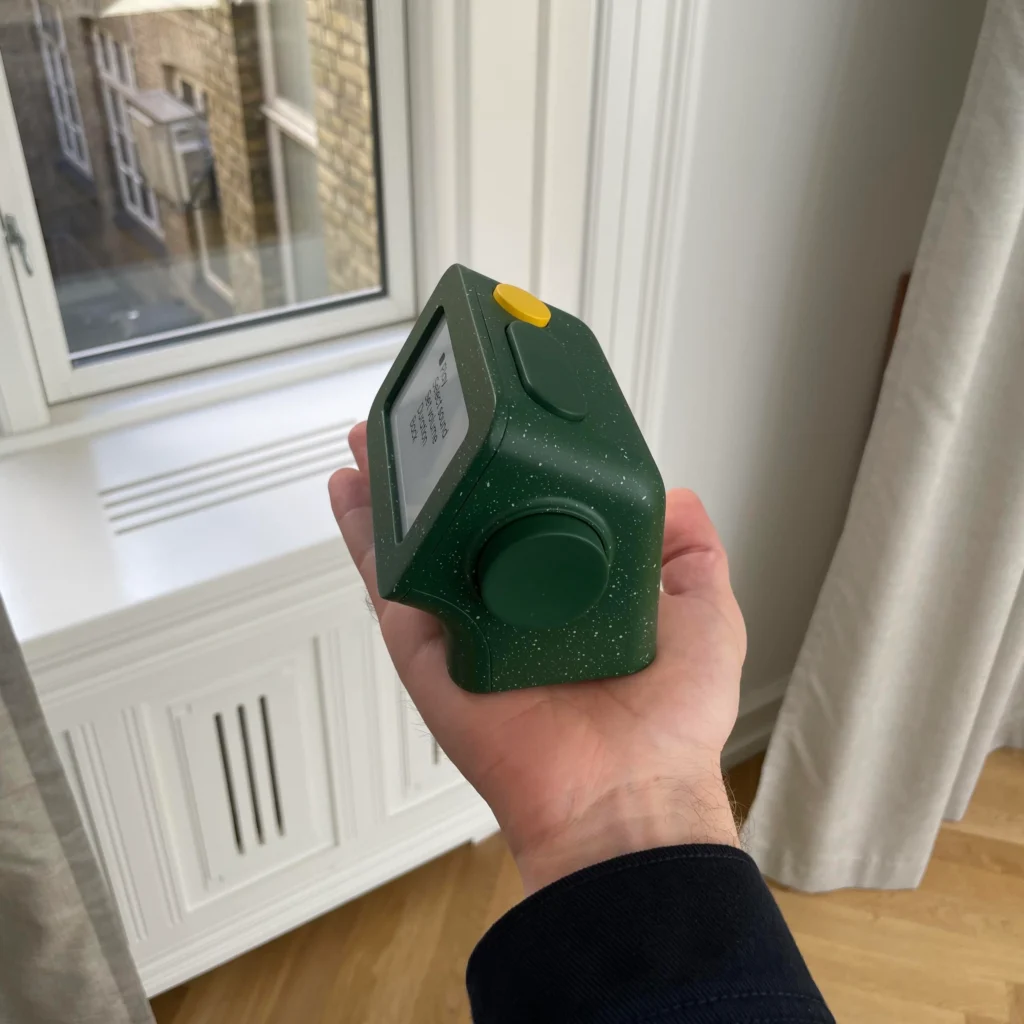
The Habity Bedside Clock with e-paper display also comes with a sunrise simulation function, which allows the lights to fade from zero brightness to full illumination over a programmed time period. This feature is tailored for limited natural light, such as that experienced in winter.
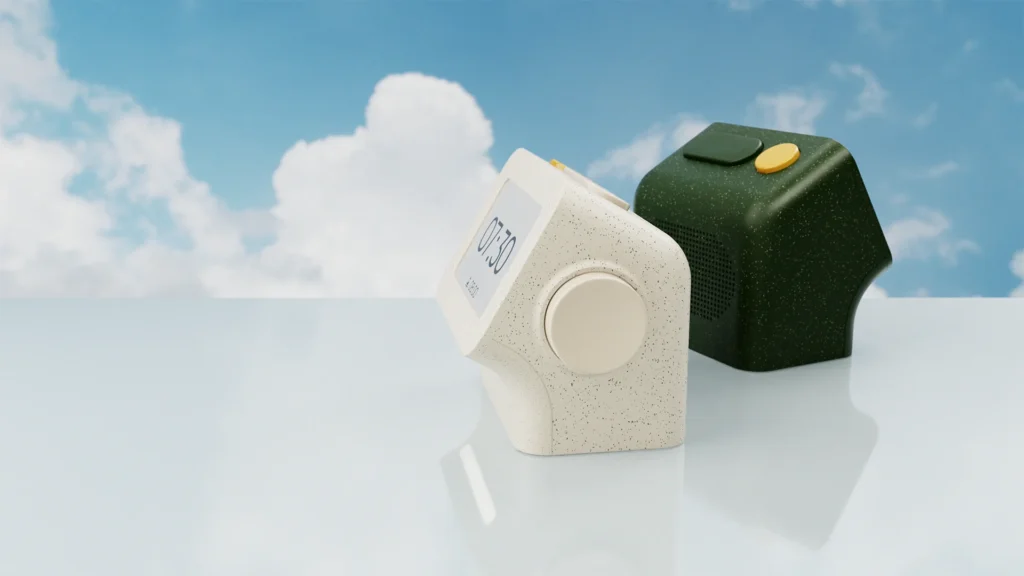
Created by Copenhagen-based design company Habity, this compact alarm clock is intuitive to use and pleasing to the eye, thanks to its rounded shape and e-paper display.
The lighting gradually brightens before the alarm rings. The clock also doubles as a nightlight, so users waking up at night can still faintly see their surroundings. Users can activate the light manually or program it to turn on automatically, and the nightlight uses a warm color temperature that reduces its impact on sleep patterns.
All in all, we think Habity is an exciting project and possibly a way to banish your smartphone from the bedroom. You can purchase the Habity bedside clock here.
Smart Danish Bedside Clock, Tor Kjolberg reporting.