



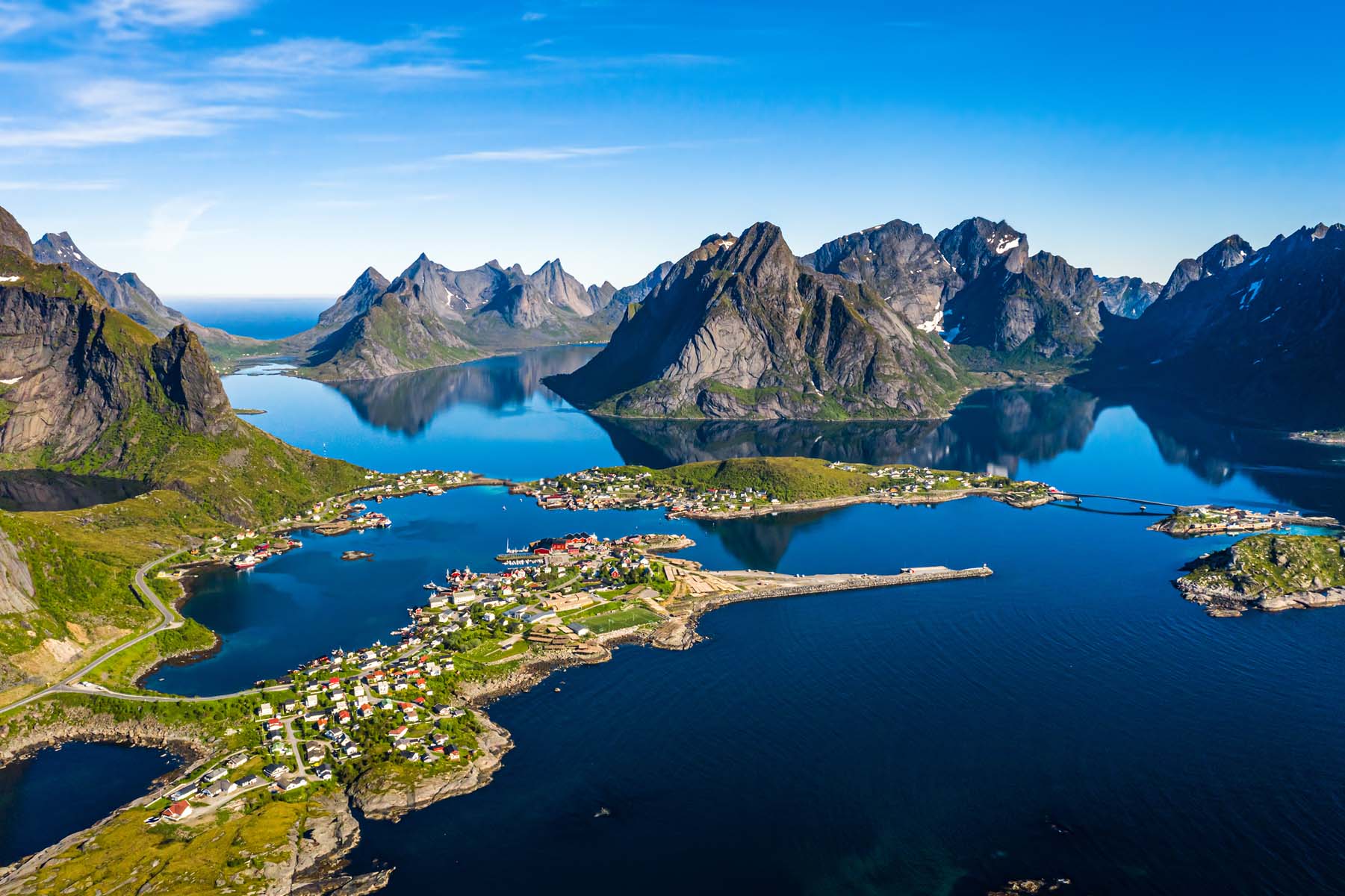
Suddenly, the world discovered Lofoten. No Norwegian tourist destination is growing faster. For centuries, the Lofoten archipelago fed a famine-stricken Europe with cod. Today, an insatiable tourism industry circles one of the world’s most beautiful archipelagos.
The Lofoten archipelago in Northern Norway is a breathtaking Arctic destination renowned for dramatic, steep mountains rising from turquoise fjords, picturesque red fishing villages (rorbuer), and white sandy beaches. But as the islands face overtourism for the first time, residents have an important message for visitors.
“We don’t want the strong market forces to become even stronger, for turbo tourism to destroy everything real. We want people to be inspired to make their own choices,” said filmmaker Eivind Drivflaadt in 2005 during the filming of the nature film “Loop.”
Situated above the Arctic Circle, Lofoten offers the Midnight Sun in summer and the Northern Lights from September to April, making it a premier destination for hiking, kayaking, surfing, and photography.
Visitors here are nothing new. The islands were home to northern Norway’s earliest Viking settlement, drawing traders from as far away as Iceland. For centuries, tens of thousands of sailors journeyed here each winter to fish for Arctic cod, a tradition still reflected in the red rorbuers (fishermen’s cabins) that now host tourists rather than seafarers.
Situated at the far end of the ocean, surrounded by moody weather gods and almost forgotten by the Ministry of Transport, the world’s most beautiful archipelago was long written off by the tourist industry. The sight of Lofoten’s Northern Lights, powder snow, killer whales, and stunning peaks rising above the waters was reserved for fishermen with more important things to do than looking up.
Then, at the turn of the millennium, the snowball started to roll. The roads became wider, the bridges more numerous, the airfares cheaper. Today, it is the shoals of both winter and summer tourists, not cod, that generate the greatest enthusiasm in the archipelago. Or maybe not?
Visitors here are nothing new. The islands were home to northern Norway’s earliest Viking settlement, drawing traders from as far away as Iceland. For centuries, tens of thousands of sailors journeyed here each winter to fish for Arctic cod, a tradition still reflected in the red rorbuers (fishermen’s cabins) that now host tourists rather than seafarers.
Situated at the far end of the ocean, surrounded by moody weather gods and almost forgotten by the Ministry of Transport, the world’s most beautiful archipelago was long written off by the tourist industry. The sight of Lofoten’s northern lights, powder snow, killer whales, and stunning peaks rising above the waters was reserved for fishermen with more important things to do than looking up.
Then, at the turn of the millennium, the snowball started to roll. The roads became wider, the bridges more numerous, the airfares cheaper. Today, it is the shoals of both winter and summer tourists, not cod, that generate the greatest enthusiasm in the archipelago. Or maybe not?
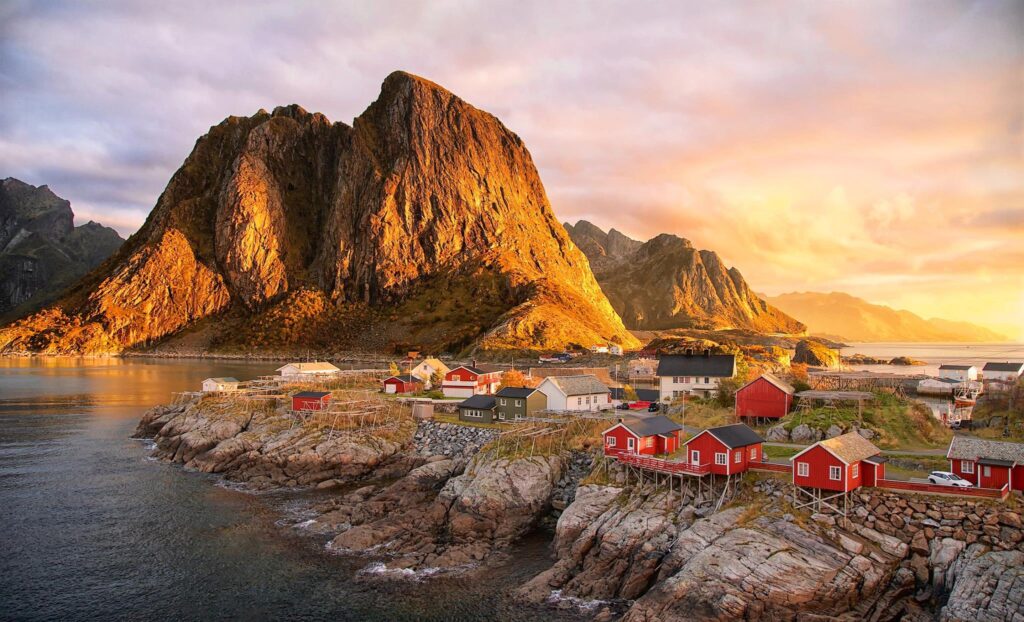
Lofoten’s beauty is no longer a secret. What was once a seasonal outpost for survival and commerce has become one of Norway’s most popular destinations. In 2023, the islands welcomed about one million visitors, roughly 40 times Lofoten’s permanent population of 25,000. In 2025, Condé Nast highlighted Vesterålen in Lofoten, making waves in the culinary world.
As European heatwaves drive travelers further north and new seasonal flights from Paris, Frankfurt, and Zurich have launched, tourism is set to rise further. A weaker Norwegian krone is helping seal the deal.
Lofoten has seen stronger visitor growth than any other travel destination since the turn of the millennium. The increase is greatest in winter, at almost 60 percent.
Media tell stories without context
“CHAOS IN LOFOTEN!” and “CAR QUEUES EVERYWHERE!”
True, it happens, but very seldom. Perhaps during a few peak weeks, and only at certain times of day, like just after the ferry from Bodø docks.
What about the locals?
They have to deal with very real and valid tourism-related issues that deserve to be heard and addressed. It’s frustrating to live with something day after day, speak up about it, and be told it’s “not such a big deal.”
What about the tourism industry?
Parts of the tourism industry have been downplaying these problems for years, worried that the word “overtourism” will scare away the responsible visitors locals actually want to keep.
According to the Guide to Lofoten, no one seems willing to take real responsibility. Instead of sitting down together to discuss solutions and how to get there, discussions often devolve into a blame game, with fingers pointed in every direction and little concrete action.
Lofoten residents claim they’re proud to share their home and welcome new jobs, attractions, bars, and restaurants brought by tourism, but they wonder whether the infrastructure can keep up. They also worry whether this influx of visitors will affect the landscape and fragile ecosystem that makes Lofoten so special.
The world’s most beautiful archipelago, Tor Kjolberg reporting
Feature image (top) © Lofoten Havfiske