



When I am asked about Finnish furniture, people always refer to Alvar Aalto’s pieces. However, Werner West and Ilmari Tapiovaara are two undervalued Finnish furniture designers.
When people in the design world refer to the Finnish designer Werner, they are almost always talking about Werner West (1890–1959). He is widely credited with laying the foundation for modern Finnish industrial furniture design.
Werner West: The Pioneer of Finnish Functionalism
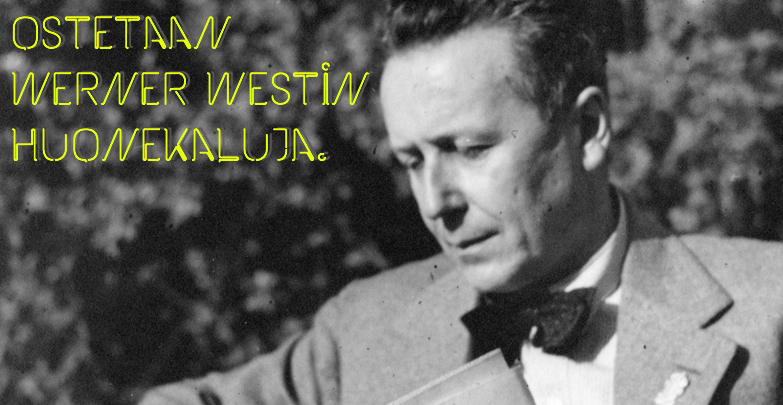
Werner West (born in Tuusula, Finland) was a central figure in bringing international functionalism to Finland. Throughout his career, he operated as both a furniture maker and a prominent interior designer.
West is known for his soft, rounded shapes. He seamlessly blended playful aesthetics with sturdy, comfortable construction. He specialized in solid and laminated steam-bent birch. He is frequently cited as an early instructor and mentor to many young, mid-century Finnish designers and was heavily involved in the Finnish decorative arts union, Ornamo (which he helped found in 1911).
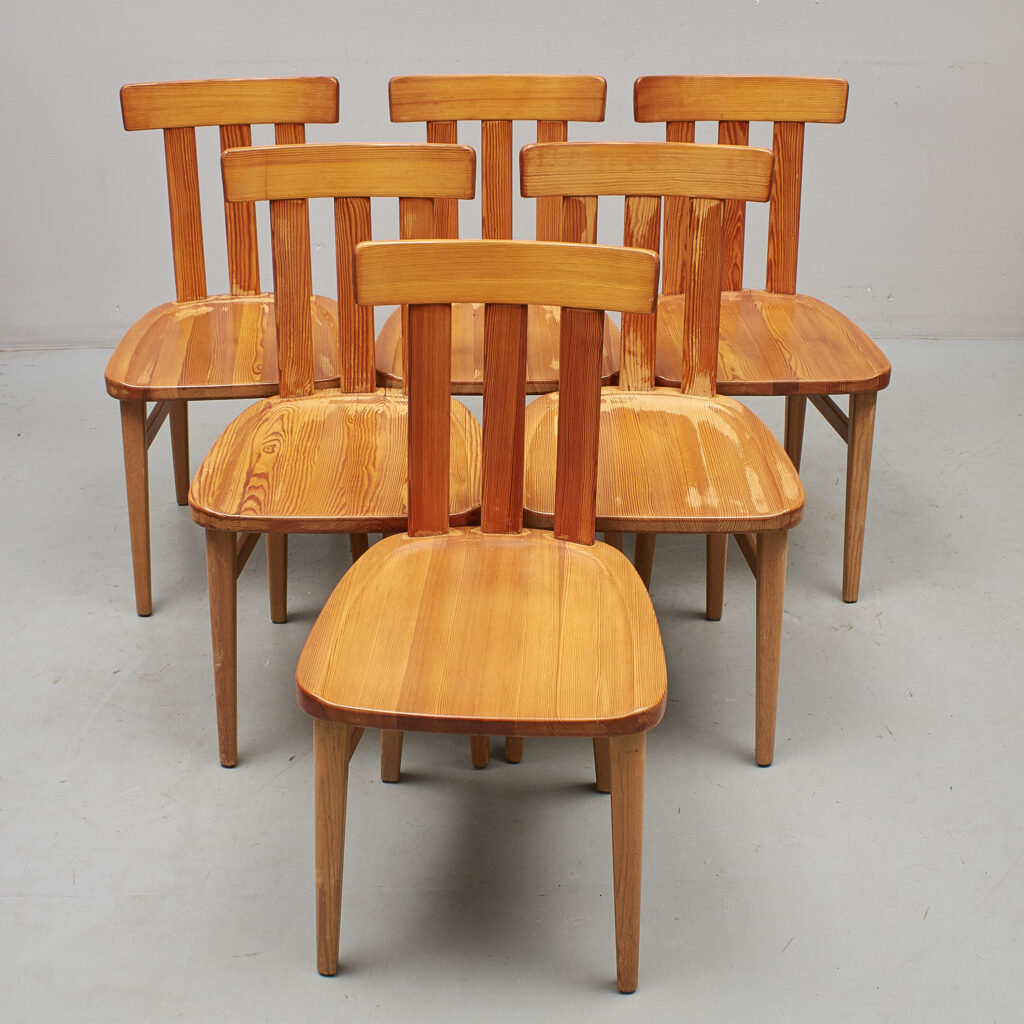
West was entrusted with designing interiors for some of Finland’s most prestigious public spaces, including banks, hotels, and, most famously, the Parliament House in Helsinki. His classic pieces—such as the W1 Dining Chair and his 1930s “Hugging” armchairs (often manufactured by Wilh. Schauman)—remain highly sought-after collector’s items today.
************************************************
Related: Collectors’ Choice: Original Nordic Pine Furniture
************************************************
Ilmari Tapiovaara: One of the most influential interior architects and furniture designers of the 20th century

Ilmari Tapiovaara(1914–1999) was celebrated as a champion of “democratic design”. His philosophy in life was centered on creating affordable, high-quality, and functional everyday objects for the masses.
Tapiovaara had a deeply international education, working in Le Corbusier’s office in Paris and alongside Mies van der Rohe in Chicago. However, his design language was thoroughly Finnish. During World War II, he designed field furniture for the Finnish Army using only a pocket knife, local timber, and absolutely no nails or screws—an experience he called his true higher education.

His ultimate breakthrough came in 1946 with the iconic Domus Chair, a stackable, ergonomic multi-purpose piece designed for student housing in Helsinki that went on to sell by the millions worldwide.
*******************************************
You may also like to read The Finnish Embassy in New Delhi – A Beauty of a Building
*******************************************
Three Giants of Finnish Modernism
While Werner West, Alvar Aalto, and Ilmari Tapiovaara are all structural pillars of Finnish modernism, they represent successive generations that pushed the boundaries of functionalism in unique ways.
| Feature | Werner West (1890–1959) | Alvar Aalto (1898–1976) | Ilmari Tapiovaara (1914–1999) |
| Generational Role | The Pioneer & Mentor | The Master of Humanist Modernism | The Explorer & Democratizer |
| Core Philosophy | Soft functionalism anchored in institutional craft. | Organic modernism merging nature, architecture, and art. | Universal, affordable furniture for everyday people. |
| Material Innovation | Steam-bent solid birch, prioritizing longevity and structural sturdiness. | Revolutionized bent laminated plywood and the patented “L-leg” technology. | Mixed molded plywood with solid wood dowels, optimized for factory mass-production. |
| Defining Masterpiece | Parliament House Interiors (Helsinki) | Paimio Chair (Model 41) & Stool 60 | Domus Chair & Mademoiselle Chair |
Key Distinctions in Their Legacies
Alvar Aalto was primarily a visionary architect whose furniture was designed to fit his specific building commissions (such as the Paimio Sanatorium). Werner West operated somewhere in the middle, curating grand civic interior designs. Tapiovaara, by contrast, focused fiercely on the industrial scalability of individual objects, believing a single well-made chair could anchor an entire room’s energy.
Tapiovaara deeply admired Aalto and briefly worked for Artek’s London office in 1935. While Aalto proved that wood could bend like tubular steel, Tapiovaara took that ideology and refined it specifically for efficient, cheap shipping and post-war factory manufacturing.
While Alvar Aalto’s pieces are global high-art status symbols, vintage collectors note that Werner West and Ilmari Tapiovaara designs still represent incredibly high-value, durable examples of Finnish modernism that are criminally underrated compared to Aalto’s premium prestige.
Two Undervalued Finnish Furniture Designers, Tor Kjolberg reporting.
Feature image (top): Werner West chairs.