
After the Coronavirus: Norway for Norwegians

For Norwegians, this summer is likely to be spent in Norway. This is important for a hard-pressed tourism industry. However, Norwegians traditionally leave little of their holiday money in their own country. Now, the Norwegian government’s most important instrument for innovation and development of Norwegian enterprises and industry, Innovation Norway, is launching a campaign to give Norwegian tourists knowledge of everything Norway has to offer. Read more about After the Coronavirus: Norway for Norwegians.

Innovation Norway will now turn its usual mission of profiling Norway as an international destination through Visit Norway, to promote Norway to Norwegians.

“This is a special year and a very special situation. The corona epidemic has put a large part of the industry out of play, but if we still want to see something positive in all the sadness, many of those who have previously traveled abroad, now express that they will experience Norway this year. Our job is therefore to inspire and guide holiday-loving Norwegians to use everything that Norway has to offer through our channels. A job we do together with the tourism industry,” says tourism director Bente Bratland Holm.

After the Coronavirus: Norway for Norwegians
Kayaking at Hidra, Flekkefjord. Photo: Visit Sørlandet

Related: How is Scandinavia Solving the Economic Corona-Crisis?

Holidays in Norway – spending money abroad
Figures from 2019 show that just under 14 million holiday trips were added to Norway. This means that 60 per cent of all Norwegians’ holidays already take place in their own country.

In the summer of 2020, even more people will probably choose to vacation in Norway. However, despite the fact that as many as two out of three holiday trips are inland, Norwegians spend two out of three holiday kroner on foreign holidays. The reason is the fact that when Norwegians vacation domestically, more than 6 out of 10 stay overnight in private accommodations, whether this is in their cabin, in a vacation home or with friends.

After the Coronavirus: Norway for Norwegians
“This is a special year and a very special situation;” says Director Tourism in Innovation Norway Bente Bratland Holm.

In 2019, only 12 per cent of Norwegians’ overnight holiday stays took place in hotels. On holidays abroad, however, figures from Statistics Norway show that more than half chose to stay in hotels.

Related: Sweden’s Corona Immunity Strategy Seems To Be Successful

Norwegian campaign inspires to discover ‘the unknown Norway’
Norwegians spent just under NOK 123 billion on holiday trips in 2019. Compared to 2018, spending in Norway was reduced by NOK 12 billion, a decrease of 27 per cent. By comparison, consumption on foreign holidays increased by 3.4 billion.

“If everyone who is now planning a Norwegian holiday in the summer of 2020 also leaves money on hotels, restaurants, cultural and leisure activities and activity providers, then it will mean a lot to Norwegian tourism. For many, it can mean further existence, and that we still will have a vibrant, wide-ranging travel industry in Norway,” says Holm.

After the corona crisis: Norway for Norwegians
Bergen city center with surroundings. Photo: Wikipedia
After the Coronavirus: Norway for Norwegians
To inspire increased spending of the holiday budget is the very message in Innovation Norway’s domestic campaign, which started in March and will continue through the spring. “Through telling stories we want to show Norwegians a Norway they may not know as well. Book a guide and go musk safari, or paddle under the midnight sun. We encourage travelers to experience what has repeatedly placed Norway on international lists of the best destinations,” says Holm.

Related: Coronavirus in Sweden: Business As Usual

Same travel pattern in the EU
Norwegians have always mostly vacationed in their own country, and it is not a particularly Norwegian phenomenon to choose their home country as a destination. More or less, all EU citizens have the same travel pattern as Norwegians when it comes to the distribution between domestic and foreign travel. Figures from the European statistics agency Eurostat show that about two out of three journeys made by EU citizens are in their home country.
After the Coronavirus: Norway for Norwegians
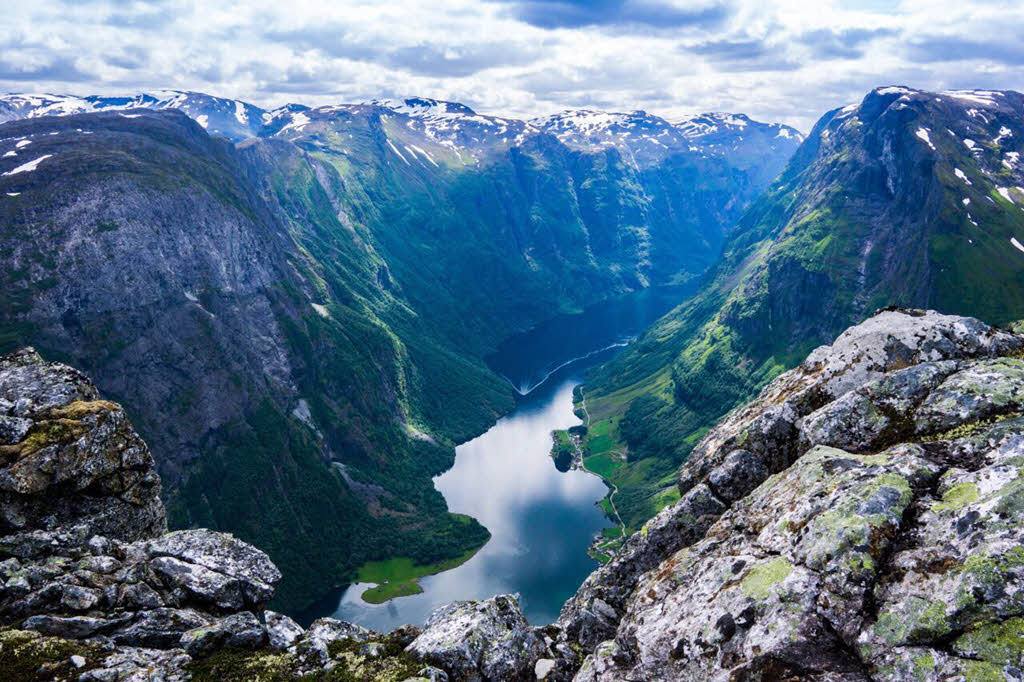
Nærøyfjord, photo: Terese Kvinge/UNESCO

Facts

Norwegian tourists in Norway

  • 72 per cent of Norwegians preferred a holiday in Norway because they wanted to travel less by air. 53 percent would choose destinations that paid attention to environments and 38 percent would simply travel less abroad.
  • Nine out of ten Norwegians have traveled abroad three or more times in the last three years.
  • Norwegian tourists in Norway belong mainly to the older age groups.
  • Norwegians are mainly motivated by big cities, local culture, art and way of life, dramatic, wild nature and beautiful landscape, and pure and unspoiled nature.
  • Main opinion about holidays in Norway: nature, mountains, Lofoten, expensive and beautiful.
  • An interesting finding in the survey is that in a normal year there are no differences based on income level in Norway. All four income levels have remained stable at roughly the same measure over time.

Source: Innovation Norway’s tracker survey from 2019

After Corona: Norway for Norwegians, based on a press release from Innovation Norway.

Feature image (on top): Photo: Visit Bergen
Why do People Want to Live in Scandinavia?

A lot of people adore Scandinavia. Denmark, Sweden, and Norway attract numerous tourists every year. Someone is preparing to move there, some are trying to bring Scandinavia to their own countries, and everyone mentions happiness while talking about it. However, what are the reasons behind that phenomenon? Find out more why people want to live in Scandinavia.

If you have ever wondered what is so special about Scandinavia and why people want to live here, here comes your ultimate answer.

Why do People Want to Live in Scandinavia?
Scandinavian welfare programs contribute to living instead of surviving. Photo: Silje Bergum Kinsten/ norden.org
Government Takes Care of You
Many countries, that are considered democratic and flourishing, are not really comfortable for living. Many people work two shifts at least to pay for rent and food. Still, they have neither time nor money to travel, visit cinemas and theatres, go out to a bar or cafe. If they lose their job, it is over for them.

The situation is quite different in Scandinavia. Even though taxes take away almost 50% of your income, they do not just disappear. Scandinavian welfare programs contribute to living instead of surviving a lot. School and child daycare are free, health insurance is almost free. Consequently, the nation is more educated and they do not have to worry about saving money for insurance or college. Stress and anxiety levels are not as high, if you know that when something goes wrong, your country will have your back.

Why do People Want to Live in Scandinavia?
Scandinavian work-life balance is about being present at the moment and appreciate small things in life. Photo: Danielle MacInnes/Unsplash
Work-Life Balance
We have mentioned happiness at the very first passage of the text, and that is what usually happens when people talk about Scandinavia – the first thought that crosses their mind is happiness. Why though?

Scandinavian people know how to enjoy their lives. They actually dedicate their lives to…. living. It is not about working, surviving, building a career. It is about being present at the moment and appreciate small things in life.

There is one thing that helps to achieve that life philosophy – an amazing work-life balance. They have around five weeks of vacation and many holidays, both national and international. Moreover, they never say no to a vacation. A lot of people sacrifice their days off to getting a promotion. It is the environment we live in – everyone is as productive as possible. In Scandinavia, people will possibly consider you being an idiot for not taking a vacation.

Related: The Nearly Almost Perfect People

Why do People Want to Live in Scandinavia?
While same-sex marriages are banned in more than half countries of the European Union, Scandinavian countries legalized it long ago. Photo: Thomas AE/Unsplash
Equality
No country in the world has achieved complete equality. Yet, Scandinavia is pretty close to getting there.

While same-sex marriages are banned in more than half countries of the European Union, Scandinavian countries legalized it long ago. While it is quite difficult and considered as wild to take parental leave for men worldwide, Denmark, Sweden, and Norway do not care what is thought worldwide about that question. They just support fathers, encourage taking parental leave, and being as engaged in the children`s life as moms are.

This makes fathers feel confident while raising their children. It also gets easier for women to get a job since many companies worldwide do not hire female workers while they will take maternity leave one day. Consequently, men are considered more profitable by employers. The situation is different in Scandinavian countries.

By the way, parents get strong financial support from the government while they are not working.

Related: Create a Healthier Lifestyle – the Swedish Way

Why do People Want to Live in Scandinavia?
Aesthetic Scandinavian design
Aesthetic
A lot of people fall in love with the Scandinavian aesthetic instantly.

The Scandinavian peacefulness is present even in the way their apartments look. White color and light shades are dominant in the design. It makes everything look so calm and full of light. Wood that is widely used in the interior adds up to the coziness of the place, as well as fuzzy pillows, carpets, lots of knitted blankets and woven rope do. Lightning is a very special topic there. Never white, always warm, their lightning is a huge part of their happiness philosophy.

Scandinavian people are well-known for their simple, yet stunning style. You do not have to be overdressed and question yourself if trendy purple is a good match with your favorite yellow sweater. Scandinavians focus on nude and black colors, simple forms, and high quality. Our favorite piece of clothing is a coat that looks stylish in 9 cases out of 10. The good news is that you can wear it for almost the whole year!

Why do People Want to Live in Scandinavia?
Scandinavian people appreciate pastry time a lot. Photo: Wouter Supardi Dalari/Unsplash
Food
Food is a thing in every country, and Scandinavia is for people who love pastries. Unlike French pastries, it is very simple (as all Scandinavian things are), it does not have to be all fancy, but at the same time, taste and quality are on the point. Scandinavian pastries are not a sugar and butter bomb, bakers keep everything balanced. They use spices like cardamom, saffron, cinnamon, and vanilla which adds a little special something to Scandinavian pastry.

Scandinavian people appreciate pastry time a lot. They even have special words that mean meeting for a cup of coffee and a cake. They can sneak them from the table after a business meeting. Considering how delicious pastry is, we are not even surprised and would definitely do it too!

Related: Scandinavia Ranked One of the Safest Areas in the World

Why do People Want to Live in Scandinavia?
Biking in Norway. Photo: Visit Norway
Biking Culture
After eating a bunch of pastries, Scandinavians get on their bikes and burn these calories.

In many countries, the progress takes over and the streets are flooded with cars, scooters, and motorcycles. Even if you want to cycle to work or to meet a group of friends, it is fairly dangerous to be a biker in this crazy traffic. Drivers are not really into respecting cyclists.

However, is this kind of progress actually better?

Cycling has a lot of benefits: a decrease in the risk of heart disease, obesity, and diabetics, reduction of air pollution in the big cities and it makes traffic jams way shorter. In Scandinavia, citizens understand that, and the government supports them in that. While cycling is very common, drivers usually take cyclists into account and it is safer to cycle there. Moreover, you will not need to drag yourself to a gym every day which is a very popular thing to do worldwide. In Scandinavia, you just go to work and have your workout done!

Why do People Want to Live in Scandinavia?
Taking into account all the benefits of living in Scandinavia, it is not at all surprising why people want to live there. It is peaceful, it is focused on living and not surviving, they have the nicest food and the way to not worry about eating too much of that foo. The whole concept is beautifully packed in a Scandinavian aesthetic. So you get what you get – a perfect place to live in!
Why do People Want to Live in Scandinavia?
Cheryl Hearts
Why do People Want to Live in Scandinavia? is written for Daily Scandinavian by Cheryl Hearts. Cheryl is a writer and journalist from Boston, Massachusetts. Her passion for writing started at an early age and evolved during the high school years. She enjoyed creating her own stories, so she decided to make writing her career.  After earning a degree in Journalism, Cheryl started running her own blog CherylHearts.com where she’s covering topics of great interest to society.

Feature image (on top): Caitlyn Wynne/Unsplash

The Norwegian Apocalypse Singer/Songwriter

Norwegian singer-songwriter, record producer, multi instrumental musician and novelist Jenny Hval (b. 1980) started her musical career in the gothic Australian metal band Shellyz Raven. Her fifth album “Apocalypse, Girl” (2015) announced an imminent breakdown. “People say I sing like an angel before they hear what I’m singing about,” she says.

Ella Hval studied at the University of Melbourne, Australia, specializing in creative writing and performance. While studying, she was vocalist in Australian bands iPanic and Folding For Air.

Apocalypse, Girl
Apocalypse, Girl won widespread critical acclaim. Her next album, Blood Bitch was a concept album released the following year influenced by vampires, menstruation and 1970s horror films. Last year, she released her seventh album, “The Practice of Love,” where she has taken love to heart. 90s-sounding synths back her varied vocals, and the lyrics are often whispered, more like a secret than a traditional song.
The Norwegian Apocalypse Singer/Songwriter
Apocalypse, Girl won widespread critical acclaim. Photo: Wikipedia commons
Related: Meet British-Norwegian Singer-Songwriter and Composer Sasha Siem

Ella Hval’s solo music has among other terms been described as avant-garde, art-pop or a kind of experimental folk music.

The Practice of Love
In a statement accompanying the announcement of Thye Practice of Love, she wrote, “Love as a theme in art has been the domain of the canonized, big artists. I have always seen myself as a minor character, a voice that speaks of other things.” That being said, the Norwegian artist manages to take the exhausted topic of love and transform it into something that feels both erudite and primal, a work that encourages both contemplation and movement.
The Norwegian Apocalypse Singer/Songwriter
Ella Hval’s seventh album, The Practice of Love
Related: 7 Years With Norwegian Singer/Songwriter Hanne Kolstø

The song titled “The Practice of Love” begins with musicians Vivian Wang and Lasse Marhaug reading from their own, original writings, and the song feels almost like spoken word. The artists discuss their relationship with the idea of love, saying “I hate ‘love’ in my own language. It contains the entire word ‘honesty’ inside it, which makes it sound religious … purified.”

I love Scandinavian culture
”I love Scandinavian culture, where gender differences are not as aggressively highlighted as in countries with more macho culture,” Jenny says and continues. “At the same time, it’s important to me not to perform wearing a traditional Scandinavian sweater right now.”

The Norwegian Apocalypse Singer/Songwriter
Jenny Hval from video Spells

Related: Norwegian Pop Singer Wearing Nothing

The Norwegian Apocalypse singer/songwriter – and author
Jenny Hval published her novel Perlebryggeriet (Pearl Brewery) in 2009, and has also published article works in journals and anthologies, after studying literature and working as a freelance columnist and writer. An English edition, Paradise Rot: A Novel was translated by Marjam Idriss and published by Verso in October 2018.

The Norwegian Apocalypse Singer/Songwriter, written by Tor Kjolberg

Norway’s Sovereign Wealth Fund Liquidates Assets

Norway’s $1 trillion piggy bank, the world’s biggest sovereign fund, will have to liquidate assets to “give room to maneuver through the worst economic crisis since World War II” according to Norwegian Bank’s Governor Øystein Olsen. Now, Norway’s Sovereign Wealth Fund liquidates assets.

On 12th May the Norwegian government proposed a revised budget for 2020, which called for using US$41 billion (420 billion Norwegian crowns), 4.2 per cent of the fund’s estimated value at the beginning of this year. In its original budget the government had planned to spend just 2.6 per cent of the fund.

Norway’s Sovereign Wealth Fund Liquidates Assets
“It’s part of the general guidelines that in such circumstances you can spend more, says Norwegian Bank’s governor Øystein Olsen. Photo: YouTube

Spending more in time of crisis
In an interview with Bloomberg Television, Olsen said, “It’s part of the general guidelines that in such circumstances you can spend more. It obviously is a positive feature of our society that we have this room to maneuver, unlike a number of other countries.”

Related: How is Scandinavia Solving the Economic Corona-Crisis?

Norway’s Sovereign Wealth Fund Liquidates Assets
Statfjord A plaform 1982. Photo: Wikipedia commons/A. Jarvi

Norway has rarely used more than 3 percent of the Government Pension Fund Global, as Norway’s oil fund is officially known. “To counter the economic fallout of the virus’ outbreak the Government has introduced sweeping measures in successive rounds,” the finance ministry said in a statement.

Both the corona induced lockdown and a historic rout in oil, Norway’s main export, have caused the country’s present crisis.

Norway’s Sovereign Wealth Fund Liquidates Assets
“‘Increased spending has been a necessity in the current situation ,” says Finance Minister Jan Tore Sanner. Photo: screenshot

Increased spending a necessity
“‘Increased spending has been a necessity in the current situation – both to avoid an even sharper downturn and to help healthy companies through the crisis so they can create jobs and growth when normal circumstances return,” Finance Minister Jan Tore Sanner said in a statement.

Related: Coronavirus: What it Means for Your Visit to Scandinavia or Elsewhere

Norway’s government already drew more money from the fund in March than in any other month. The extra spending will pay for a tax shortfall and a range of initiatives announced since a partial lockdown of the country began on March 12, including extra unemployment benefits, cash support for companies and oil industry investment incentives.

Norway’s Sovereign Wealth Fund Liquidates Assets
Corona protection on a bus. Photo: Wikipedia commons 

Last week, Norway slashed its key policy rate to 0 percent in a surprise move. “The downturn is amplified by the severe impact of the pandemic on surrounding countries and by a sharp fall in oil prices. Lower oil prices have contributed to weakening the krone exchange rate,” Norges Bank said in a statement.

Related: Sweden’s Corona Immunity Strategy Seems to be Successful

Norway’s Sovereign Wealth Fund Liquidates Assets
Closed and empty public spaces, here from Fredrikstad. Photo: Wikipedia commons

Reopening after the country’s lockdown
Norway in recent weeks began a gradual reopening of its economy as the rate of Covid-19 infection declined, and has said the revised budget will be followed in late May or early June by a long-term recovery roadmap.

Cutting oil production
Norway has decided it would cut its crude oil production by 250,000 bpd (barrels per day) in June, and then maintain a 134,000-bpd lower rate of production for the rest of 2020. This is the first time Norway has joined oil production cuts since 2002.

Norway’s Sovereign Wealth Fund Liquidates Assets, written by Tor Kjolberg

Feature image (on top): Zbynek Burival/Unsplash

A Summer Promise From A Norwegian Hotel Group

Hotel group Classic Norway Hotels was like all other hotels badly hit by the corona virus and wanted to capture the interest of domestic tourists this summer when the pandemic hopefully will rebound. So, they developed a campaign strategy “A Summer Promise”. We liked the campaign so much that we interviewed the CEO to find out more about the summer promise from the Norwegian hotel group.

Hotel group Classic Norway Hotels consists of 18 environmentally certified hotels spread all over Norway from Fevik in the south to Lofoten in northern Norway. In addition, a fisherman’s cabin (“rorbu”) and a lighthouse facility are parts of its offerings.

Classic Norway Hotels is one of Norway’s leading hospitality groups. “We have achieved our position through effective teamwork, expertise and a passion for our craft. It has defined our growth for more than 15 years,” says CEO Stephen Meinich-Bache. “Our current footprint of selected hotels and resorts are operating in the finest locations in Norway,” he adds.

A Summer Promise From A Norwegian Hotel Group
“We have achieved our position through effective teamwork, expertise and a passion for our craft,” says Stephen Meinich-Bache

Related: Old Bergen Stock Exchange Converted Into Boutique Hotel
The corona virus had reached Norway
After barely five weeks as CEO at the Molde headquarters, given very little time to visit a few of the group’s facilities and employees, his tasks were turned upside down. Plans had to be set aside and new solutions to unknown problems had to be put on the table overnight. The corona virus had reached Norway.

Meinich-Bache explains to us that the group constantly strives to provide the informal and very special environment while at the same time caring for each guest. “We do this by constantly hand-picking employees to show the guest a genuine attention and care that comes from the heart. We think this is much more important than having pretentious hotels and lavish luxury, because we are committed to offering hotel experiences rather than hotel nights. When we create magical moments for each guest, we feel the same joy as the guest,” explains Meinich-Bache.

A Summer Promise From A Norwegian Hotel Group
Valldal Fjord Hotel

But suddenly, the corona pandemic hit the country in full force and almost all travel industry in Norway had to be shut down within a few hours.

Related: A Room With A View

“For many years I have dealt with hotels, tourism development and experiences. It’s always about meeting people and the special feeling of working with hotels. In fact, it was on a trip in Norway as a little boy a particular experience created my professional interest in hotels. I was allowed to join my history-interested mother on a journey with the local history team from our hometown of Stavanger to the beautiful Farsund Fjord hotel. Expectations and excitement of getting into the reception, meeting staff in uniform, eating shrimp cocktail, pepper steak and banana split did something to a little boy. And I’ve never forgotten it,” says Meinich-Bache.

A Summer Promise From A Norwegian Hotel Group
“Our current footprint of selected hotels and resorts are operating in the finest locations in Norway,” says Stephen

Navigating in unknown waters
“My dream is that as many people as possible can experience such moments. It has very much shaped my career choice,” he continues, reflecting on the almost unreal days in mid-March which completely changed Norwegian travel industry.

“We had guests from virtually all corners of the world at our hotels at this time. We had to quickly navigate in unknown waters and get an overview of the situation. For both us at the head office, and for our hosts at the hotels, guests’ needs and wishes as well as security issues were suddenly becoming urgent priority.

A Summer Promise From A Norwegian Hotel Group
Henningsvær bryggehotell

Some guests wanted to stay in the hotels and to complete their Norwegian holiday during the booked period. For these, we had to put the conditions in line with the government’s guidelines as well as in understanding with the guests. Others wanted to go home earlier than planned. For them it was important to be assisted with re-booking, choosing a safe and secure way to go home and knowing that we were available with the help they needed all the time.

Related: The Most Remote Hotel In Norway

A Summer Promise From A Norwegian Hotel Group
“We had guests from virtually all corners of the world at our hotels when the corona virus hit us,” explains Meinich-Bache

A hectic new season
We immediately understood that we had to decrease in staff at our various hotels and resorts, so it was important for us to implement layoffs in the best way possible in this difficult situation. Many of our good employees experienced these days as very tough, and worked almost 24/7 to provide good information and help during this hectic period. I am very proud of how our staff handled the guests when they knew they were soon going out in layoffs and uncertainty. I realized what a wonderful organization I had accepted to lead. These are values that have been created throughout our association over a long period of time which we also carry with us as we enter a hectic new season,” continues Stephen Meinich-Bache.

Many Norwegians and their families had their lives turned upside down after the corona pandemic broke out and the authorities had to take major and comprehensive measures. This led, among other things, to a changed financial situation for many people. “At the same time, we know how important it is to have something to look forward to, something to dream about,” says Meinich-Backe.

A Summer Promise From A Norwegian Hotel Group
Angsvik gamle handelsted

A summer promise from a Norwegian hotel group
“Our main task at Classic Norway Hotels is to fulfill these dreams for our guests at all times. Our mission has been accomplished before the corona era and so it will be afterwards. Therefore, we wanted to reach out to as many people as possible who were severely affected by layoffs and dismissals. So, we established the “Summer Promise” campaign. We invited those who realized that their summer holiday plans were ruined to visit our hotels this summer at an extraordinarily low promotional price. We made 4-5 rooms in each hotel each day in July available and offered these rooms at Summer Promise prices, including a 3 course dinner. We are not at all keen to dump prices, but we’re in a situation where we wanted to open our doors specifically for those who are affected by the difficult times.

A Summer Promise From A Norwegian Hotel Group
The response has been formidable and now all the Summer Promise rooms have been booked.

Meinich-Backe says the response has been formidable and now all the Summer Promise rooms have been booked. “We are very much looking forward to welcoming these guests and we also welcome all other Norwegians who choose to vacation in Norway this summer. Hotel managers in our group now report on busy booking days, and we promise to give all our guests magical experiences at unique hotels, whether they visit us in the north, west, south or east,” he adds.

“We at Classic Norway Hotels make a living from creating good experiences and lasting good memories. We are pleased to continue with this in hopefully brighter times ahead – in a double sense,” he explains.

A Summer Promise From A Norwegian Hotel Group
Stephen Meinich-Bache, CEO of hotel group Classic Norway Hotels

About Stephen Meinich-Bache
Stephen Meinich-Bache’s career started as an officer in the navy before he eventually started in what he always had experienced as a very exciting industry, the hotel business; from Lillehammer through Stavanger and to Copenhagen where he was responsible for the re-branding of Nordic Choice hotels to First Hotels. He was then appointed CEO at Tribe Hotels. In February 2020, the journey continued to the CEO job at Classic Norway Hotels.
“I have a strong commercial focus in everything I do, but at the same time, I am passionate about having an inclusive style and I have great faith in involvement,” he says and continues, “I have an operational leadership style and like to talk to the employees in the organization. It is important that we all go in the same direction, and honesty in all aspects is highly valued,” he adds.

Four key words
“Now, we will continue to work on the good things in the periods ahead of us together.

We have spent the most demanding weeks in our history to refurbish a number of our sites. Now, they appear as better than ever, and we are convinced that we’re able to take good care of both guests and staff.

The four key words for us are “history”, “nature”, “culture” and “experience” which are consistent with our product promise,” concludes CEO of Classic Norway Hotels Stephen Meinich-Bache.

A Summer Promise From A Norwegian Hotel Group, Stephen Meinich-Bache was interviewed by Tor Kjolberg.

All images: Private and copyright Norway Classic Hotels

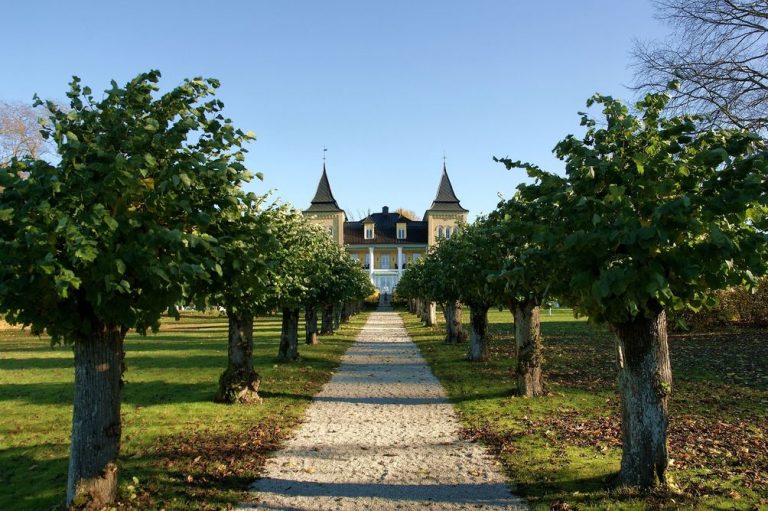
Feature image (on top): Refsnes gods (estate) outside Moss

Tiger King Producer Escaped to Norway

When a suspected arson fire in an insane tiger park In Oklahoma destroyed all of his footage, reality producer Rick Kirkman escaped to Norway. According to Variety, he’s making lots of reindeer stew and working on a documentary ‘about a man with an exciting double life’. Read more about the Tiger King producer who escaped to Norway.

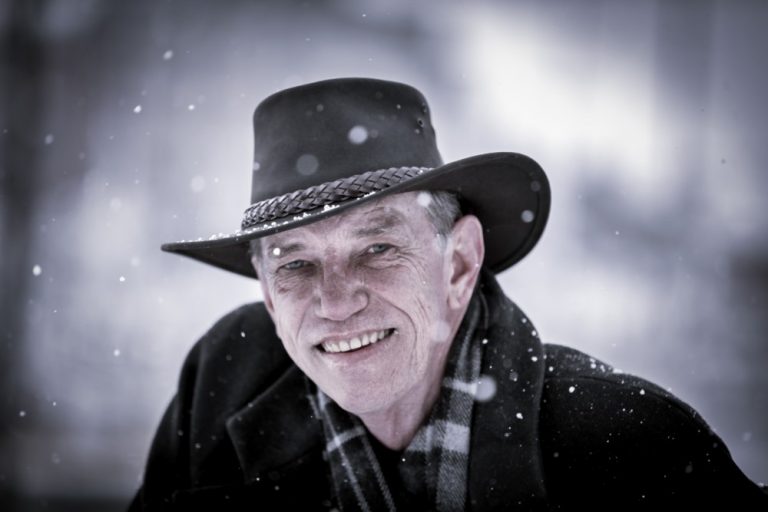
New York Magazine reported that his house in Texas caught on fire in the middle of the night and nearly killed him 6 months later. You may have seen Rick Kirkman wearing his wide-brim hat in Netflix’s original production of Tiger King.

Tiger King Producer Escaped to Norway
Rick Kirkman (61) moved to Bodø, Norway two years ago and married his Norwegian girlfriend. Photo: TV Junkie

You may also like: Hard Core Fishing and Champagne in Norway

Rick Kirkman (61) moved to Bodø, Norway two years ago and married his Norwegian girlfriend after a long career as a reporter and TV producer in the USA.

Began as a crime reporter in Las Vegas
Kirkman began his career in the television industry in the 1980s, first as a crime reporter in Las Vegas and then as a reporter for the CBS program “Inside Edition”. He became known for his so-called “participatory journalism”. For example, he participated in boxing matches against professional boxers, he has been wrestling a nine-foot alligator and has been shot out of a cannon.

Later, Kirkham moved onto Exotic’s Greater Wynnewood Zoo property to film a reality show about Joe Exotic. The deal was to boost the production value of Exotic’s somewhat unhinged web series. He stayed at Joe’s zoo in Oklahoma for almost one year. After the fire, he immediately left and had a nervous breakdown.

Tiger King Producer Escaped to Norway
Kirkham moved onto Exotic’s Greater Wynnewood Zoo property to film a reality show about Joe Exotic (above). Photo: Netflix

You may also like: The Fascinating Arctic Through The Eyes Of Irish Artist Blaise Drummond

A turbulent life
We may never know all of what Kirkham caught on tape, but he has quite the story of his own. His filmed diaries form the basis of the 2006 documentary “TV Junkie” is all about Rick Kirkman’s turbulent life. It was edited by directors Michael Cain and Matt Radecki and received the jury’s special award during the Sundance Festival that year.

In Netflix’s production Tiger King, there is a scene where Kirkham is interviewed sitting at a coffee table sipping on a cup of coffee. That scene is recorded at the Valkyrien restaurant in Oslo (photo below).

You may also like: One Of The World’s Best Ghost Towns

Tiger King Producer Escaped to Norway
In 2018, he married his girlfriend, teacher Kristin Elisabeth Rosøy, and tore to pieces his return ticket back to the United States. They met after she emailed him after watching “TV Junkie”.
Tiger King Producer Escaped to Norway
Kirkham at Valkyrien restaurant, Oslo. Photo: Screenshot

Kirkham now lives in Norway with his wife where he works as a freelance reporter for the local newspaper Bodø Nu. From time to time he also teaches Norwegian students of journalism.

«Rick is a fascinating person who has experienced the most incredible things. Now he has become a Bodø super patriot. He also makes a classic pickle that he often presents as Christmas presents to friends and acquaintances,” says creative director Rune Nilsen in Bodø nu, who shot our feature image.

Tiger King Producer Escaped To Norway, written by Tor Kjolberg

Daily Scandinavian thanks Rune Nilsen, creative director at Bodø Nu for permission to use his photo of Rick Kirkman as feature image (on top).

Scandinavia for First Timers: Trip Ideas

If you have already made up your mind to visit the land of the Vikings, you will not be disappointed. Although it can be a little on the pricey side, Scandinavian countries are definitely worth visiting. Read more about Scandinavia for first timers: Trip ideas.

With their beautiful scenic landscapes, almost fairytale-like cities, and clear blue waters, these countries will simply take your breath away. Here are some gorgeous places to visit if you are traveling to Scandinavia for the first time.

Scandinavia for First Timers: Trip Ideas
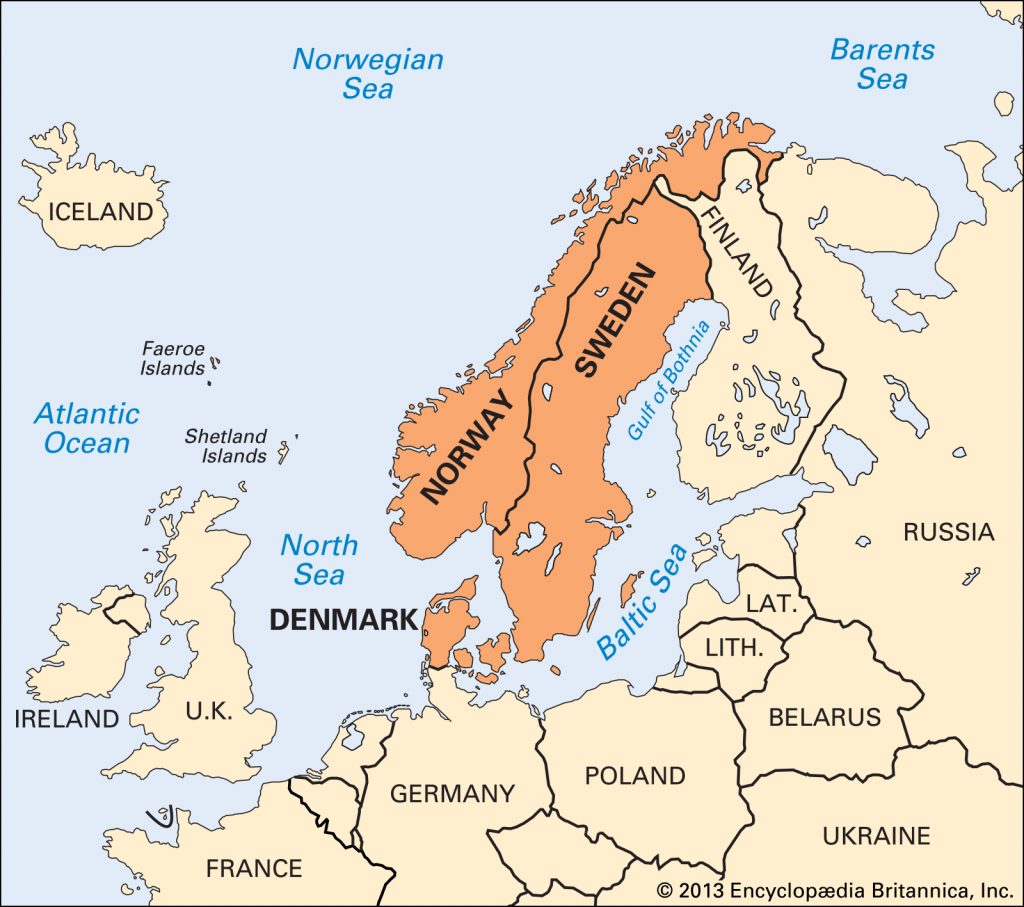
Map of Scandinavia

What countries make up Scandinavia?
Norway, Sweden and Denmark are the three Scandinavian countries. Finland and Iceland are sometimes included in a broader definition by some, but the correct term for all is the Nordic countries.

Visit the capitals
Although this is a prominent tourist choice, when it comes to Scandinavian countries, visiting the capital cities is a must.

Gamla Stan is the sole one thing you need to see in Stockholm. The old town is beautiful, with its colorful buildings and fantastic restaurants. Also, make sure to see the Vasa museum and the only 17th-century ship that is preserved, and its full size and glory.

With so much to see, walking is a great form of exercise during your trip, and you will do it a lot. One thing that is actually worth the ride is the Öresund bridge that connects Sweden and Denmark.

Next up is Copenhagen, the city of the fairytale heroine: The Little Mermaid. Copenhagen is also the city of excitement, and some people visit it only to see the Tivoli gardens, the fantastic amusement park.

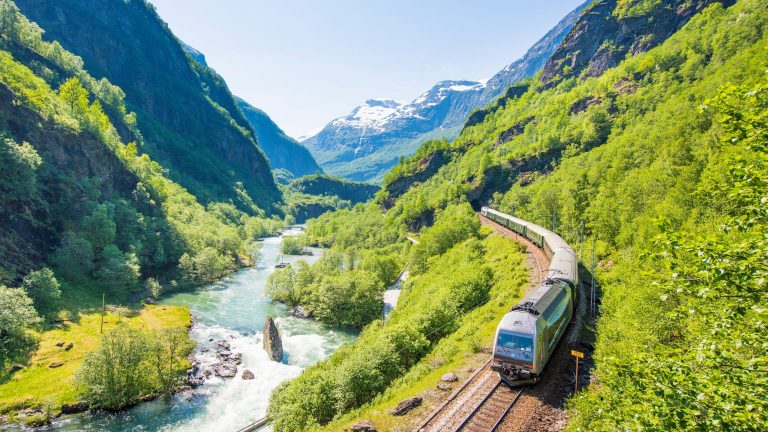
If you are not bored of ships from your visit to Stockholm, also make sure to see the Viking Ship Museum in Oslo. Also, prepare yourself for the most excellent adventure of all – the Flåm Railway, where you will be able to enjoy the gorgeous landscapes of Norwegian mountains. Flåm is a village in the Flåmsdalen valley which is located at the inner end of the Aurlandsfjorden, a branch of Sognefjorden.

Scandinavia for First Timers: Trip Ideas
Stockholm is worth a visit. Photo: Pixabay

Lofoten Islands, Norway
If you are not already in love with the landscapes in Scandinavia, the Lofoten Islands will change your mind. These small islands north of the Arctic circle are probably going to be the most beautiful places you have ever seen. The snowy, sharp mountains towering colorful fishing huts are something you could only read in a fairytale, or see in Norway. If you are an adventurer with a big love for outdoor activities, like hiking and kayaking, the trip to the Lofoten Islands will definitely be worth your time. Make sure to bring your camera, because you will find an Instagrammable landscape almost anywhere you go.

Scandinavia for First Timers: Trip Ideas
From Copenhagen Tivoli. Phito: Wikipedia commons

Visit Denmark’s amazing castles
Denmark is home to many beautiful castles. It is, after all, a very old monarchy. One of the tourists’ favorites is Amalienborg in Copenhagen, so make sure to visit it.

Frederiksborg Castle is also a good choice for everyone who wants to experience pure fairytale vibes. Beautiful lakes surround the castle, and the most magnificent gardens you will ever see. It is also a home to The Museum of National History where you can learn more about the fantastic history of Denmark.

See the whales in Norway
Whale watching is also a trendy tourist attraction, especially for the ones that have never seen these enormous creatures before. But also, for the returning watchers who simply enjoy the beauty of various whales you can see in these regions. Depending on which part you go, you can see minke whales, humpback whales, blue whales, sperm whales, and orcas. If you are really excited about the whales, you can sign up for a special offering from the whale safaris – swimming with whales.

If you are not already in love with Scandinavia, just by looking at its photos, you will be after you visit it. It is home to exciting adventures and beautiful architecture (also very odd at the time – like the ice hotel in Sweden), but it will definitely inspire you with its charm and beauty. Although pricey and cold, it is one of the most amazing corners of our Planet, and you will keep coming back for more.

Scandinavia for First Timers: Trip Ideas
Namanja Marinkoff

Scandinavia for First Timers: Trip Ideas, written for Daily Scandinavian by Nemanja Marinkoff. Nemanja is the editor-in-chief at WalkJogRunnet. He was born in Srpski Itebej, Serbia, and has lived in many countries since then. He absolutely adores marzipan and basketball. You can find him on Twitter.

Feature image (on top): Flåm railway, Norway. Photo: Visit Flåm

The Arts Council Norway Celebrating 55 Years

The establishment of the Arts Council was probably the single most important initiative in Norwegian cultural policy in the last century. Its foundation transformed cultural life, and helped to increase cultural production and consumption radically. This year, the Arts Council Norway is celebrating 55 years. 

Arts Council Norway, founded in 1965, is the primary governmental organization responsible for the implementation of Norwegian cultural policy. Arts Council Norway functions as an advisory body to the central government and public sector on cultural affairs, and is fully funded by the Ministry of Culture.

Related: Art and Culture in Norway

The Arts Council Norway Celebrating 55 Years
In 2019, Arts Council Norway provided NOK 949,5 million (USD 94 million) in funding to the Norwegian cultural sector to support a variety of projects and activities in performing and visual arts, music, literature, archives and museums, also introducing a new budget mechanism whereby allocations to the Sami Parliament in the fiscal budget were grouped as a single budget item under the Ministry of Local Government and Modernization. The Arts Council (Kulturrådet) currently has 136 employees.

The Arts Council Norway Celebrating 55 Years
Map of the Oslo National Academy of the Arts

Research and development
In order to meet future challenges, and to provide a solid platform for decision-making, the Arts Council develops, funds and commissions research programs, projects and publications. The R&D work strives to be investigative, non-dogmatic and seeks to involve a variety of academic traditions and perspectives. The R&D department publishes a series of evaluation reports and a book series with a wider thematic and theoretical scope.

Related: Art, Music and Architecture in the Polar Landscape of Norway

The role of art in society
Art plays a key role in a modern society. Art supports a wide range of experiences. It can be a purely aesthetic experience, and it can foster reflection and set the public agenda. Art participates in the important discussions regarding ethical values in a complex present. By creating shared experiences, art strengthens communities in an increasingly fragmented public sphere. Such communities are a prerequisite for maintaining and developing all liberal democracies. Art plays a part in the story of who we are, and discusses who we should be. Artists play an important role in the public discourse. This is why it is important that the cultural sector is independent so as to prevent public authorities from intervening in artistic choices.

The Arts Council Norway Celebrating 55 Years
Arts Council Norway – Research and Development

Art and education
Norwegian cultural policy is characterized by an ideology of democratization, which has prompted an alliance between the culture and education sectors, aiming to render arts and culture available to every child. The concept of Bildung is prominent in that respect, harboring a potential in explaining the discourse behind much educational and cultural policy.

Related: The Coolest Library in the World – for Kids

Perspectives on aesthetic quality in the cultural field
A research program aims at raising awareness of, and reflecting on, the basis for the evaluation of aesthetic quality in the cultural field, including literature, music, the visual and performing arts, and the museums. The program was started in 2014, and will involve researchers from various academic institutions.

Art and cultural arenas
In recent years, there has been significant investment in new arenas for art and culture in Norway. At the same time, improvements in the physical infrastructure for arts and culture have been paralleled by new ways art is created and communicated. There has been important cultural-political debate over whether these two processes are related to each other. These issues were addressed in a research project conducted by Uni Research Rokkan Centre.

The Norwegian music and literature industry
The purpose of this project was to estimate the economic value of the Norwegian literature and music industries. The data collected for this project intends to shed light on how the music and literature industry is developing, and to illustrate how different segments have varied over time. The project is carried out by Rambøll Management Consulting

Church music in Norway
Church music has long traditions in Norway, and has become an important part of the church’s religious mission. At the same time, church music has unique aesthetic qualities independent of the religious context. The aim of this project is to provide knowledge on recent developments within this musical branch, through exploring both organizational and aesthetic conditions for professional church music in Norway.  The Telemark Research Institute was conducting the research in cooperation with the Norwegian Academy of Music and KIFO.

The Arts Council Norway Celebrating 55 Years
Culture in corona crisis time

Culture in Norway in corona crisis times
“The corona crisis goes very far beyond the cultural sector and we need to analyze the situation and identify necessary measures,” says Kristin Danielsen. Menon Economics will assist Arts Council Norway with the analysis project, which started two weeks ago and lasts until the summer holidays.

Feature image (on top): Art and conflict/University of Agder.

The Arts Council Norway Celebrating 55 Years, compiled and edited by Tor Kjolberg

What Did A Swedish Hollywood Director Do During Quarantine Times?

Swedish film director David F. Sandberg made a horror movie in his own house starring his wife. Read more about what the Swedish Hollywood director did during quarantine times.

In these Corona times when all of us more or less has been stuck indoor, the Hollywood director from far north in Sweden has done what he does best, made a new creepy 3 minutes horror film starring his wife Lotta Losten with almost no budget. The film is about a woman tormented by something malevolent and supernatural.

What Did A Swedish Hollywood Director Do During Quarantine Times?
In these Corona times when all of us more or less are stuck indoor, the Hollywood director from far north in Sweden has done what he does best, made a new creepy horror film

Lived on 10 kronor tubes of bean soup
Things weren’t looking brilliant for David Sandberg around 2013 when he had to sell his TV and couch and live on 10 kronor tubes of bean soup. Sandberg had quit his job as a visual effects artist and stopped doing commercials. He wanted to make a movie inspired by Miami Vice. His main problem, however, was that he had never made a feature before.

Related: Swedish Prize Winner Shooting a Follow-Up

In 2014, the trailer for Kung Fury became the most watched trailer ever for a Swedish film, with almost 13 million YouTube views. Later, Sandberg gained popularity by injecting a level of charm and fun in the comic book movie sphere by helming ‘Shazami’.

Lights out for Sandberg
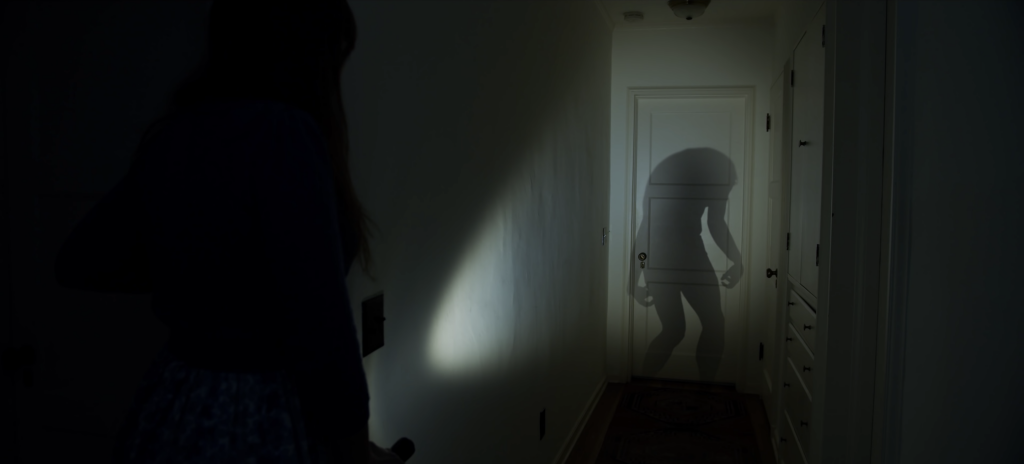
Sandberg’s claim to fame was the short horror film “Lights Out”, which was later turned into a feature film. Recently, he has returned to that format with ‘Shadowed’ which is perfect for making everyone’s self-imposed isolation a living nightmare.

Via Twitter, Sandberg has released his spooky, three-minute horror film which he calls a ‘companion piece’ to ‘Lights Out’. “It’s best to watch loud in the dark,” he says. His wife, co-director and brilliant actress Lotta Losten plays an unnamed woman who thinks she’s alone in her house, but it turns out she’s wrong – dead wrong.

Related: Ingmar Bergman’s Passion

What Did A Swedish Hollywood Director Do During Quarantine Times?
His wife, co-director and brilliant actress Lotta Losten plays an unnamed woman who thinks she’s alone in her house

Scaring dark figures
Sandberg knows how to use dark figures that pop up when we stare too long into the dark voids of our own homes. Sandberg, who was born in Kiruna, but moved to Umeå aged three months, has like many other filmmakers and movie stars found his way to reach his audience from behind closed doors. He has also posted videos showing how the films were put together, showcasing how you can make a great-looking short film for next to no budget. Well, it helps if you have some talent.

What Does A Swedish Hollywood Director Do During Quarantine Times?
What Sandberg seems very good at is timing. He has released this short horror film at a time when going out wasn’t an option. And after watching this, you’re bound to see some freaky things moving around in your house.

“It has been a lot of bean soup, more hard work and more overwhelming than I ever could have expected…. But it’s been an awesome journey and this is only the beginning,” says David Sandberg.

You can watch Shadowed here:


What Does A Swedish Hollywood Director Do During Quarantine Times? written by Tor Kjolberg

Smart and Entertaining Norwegian Novel

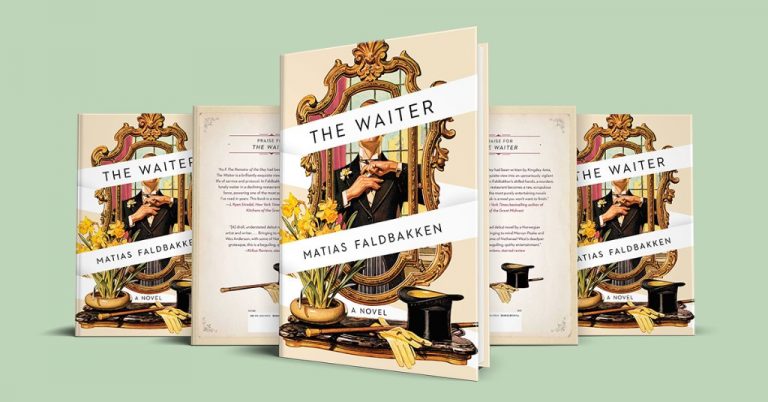
Norwegian author Matias Faldbakken’s novel The Waitor is a story of waiters and regulars, bar-managers and cloakroom managers, chandeliers and mezzanines, storage cellars and in-house pianists. The result is a smart and entertaining novel.

The Waiter (English translation 2018 – original title The Hills) is a finely tuned story of a grand European restaurant that has seen better days. Its continental interior greets the visitors as they enter the premises surrounded by walls covered in portraits, drawings, paintings and stamps. The one who guides the reader through this landscape is a waiter, a veteran of thirteen years. One day, the restaurant The Hills is irrevocably upset by an unexpected guest, a young woman who’s taking a seat among the regulars.

Smart and Entertaining Norwegian Novel
Norwegian author Matias Faldbakken (b. 1973), has unanimously been hailed as the freshest new voice to emerge in Norwegian literature during the past decade. Photo: Wikipedia commons

Related: A Norwegian Author’s Love for Germany

A captivating study
Normally, there is scarcely any contact between the tables in The Hills, but this young woman upsets the delicate balance of all the establishment has come to represent. The Waiter is an unexpected smart and entertaining novel about collapsing structures and a world caught somewhere between diligence and decay. Matias Faldbakken has a rare talent for observation and an uncompromising eye for detail and humor. He pushes the performances of the novel to the point of absurdity and at the same time in a manner that evokes a sense of unease as well as gravity. The novel is a captivating study in miniature and seems so effortlessly and candidly written.

Smart and Entertaining Norwegian Novel
From Strong Words Magazine

Reviews
“As if The Remains of the Day had been written by Kingsley Amis, The Waiter is a brilliantly exquisite view into an uproariously vigilant life of service and protocol. In Faldbakken’s skilled hands, a mordant, lonely waiter in a declining restaurant becomes a raw, scrupulous force, powering one of the most purely entertaining novels I’ve read in years. This book is a meal you won’t want to finish.” J. Ryan Stradal.

Related: Best-selling Norwegian Author Maja Lunde

The New York Times Book Review, US wrote, “Faldbakken has a way with nonaction. He builds a delicious tension between the paucity of events and the lavishness of the technique with which they are described. His waiter, though taciturn while on duty, is a chatterbox as a narrator, providing a busy, intricate analysis until each minor stumble achieves seismic status. Played in slow motion, his malfunctions unspool as slapstick with an undertow of dread. As the story moves along, the waiter loses his sense of who he is and what he’s supposed to be doing so completely that he starts to seem like a man who could do anything. He’s like Travis Bickle played by Buster Keaton.”

Related: Fishy Tales From Award-Winning Norwegian Author

Smart and Entertaining Norwegian Novel
From Los Angeles Times

About Matias Faldbakken
Norwegian author Matias Faldbakken (b. 1973), has unanimously been hailed as the freshest new voice to emerge in Norwegian literature during the past decade. He made his literary debut in 2001, with the much praised and award-winning The Cocka Hola Company – Scandinavian Misanthropy I.

Two years later, it was followed by the equally critically acclaimed and fervidly debated Macht und Rebel – Scandinavian Misanthropy II. In Spring 2008, Matias Faldbakken brought the trilogy to a close with Unfun – Scandinavian Misanthropy III, thereby completing one of the most exciting and original literary projects in contemporary Scandinavian fiction. The Waiter is Faldbakken’s first novel in nine years and the very first he writes under his own name.

Smart and Entertaining Norwegian Novel translated into French
The Waiter has recently been translated into French and received extensive reviews in La Monde, L’Express and Le Figaro. Faldbakken’s novel will be published by the prestigious French publisher Fayard.

Smart and Entertaining Norwegian Novel, written by Tor Kjolberg