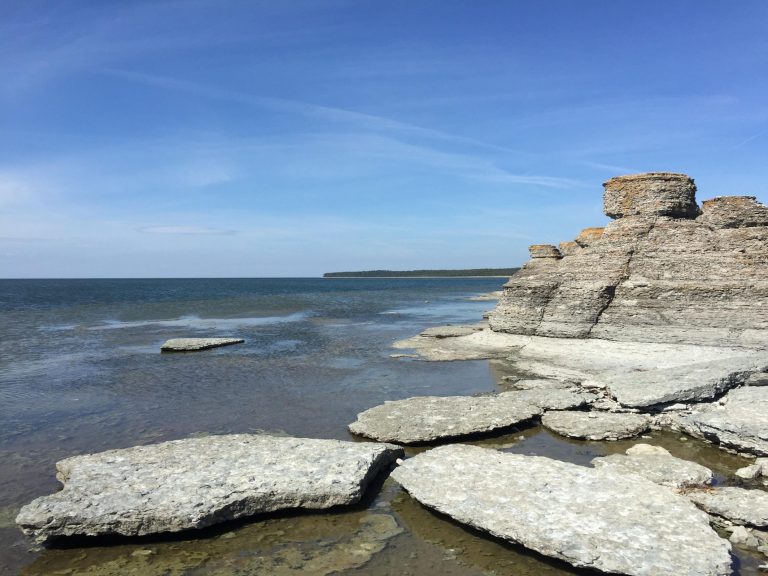
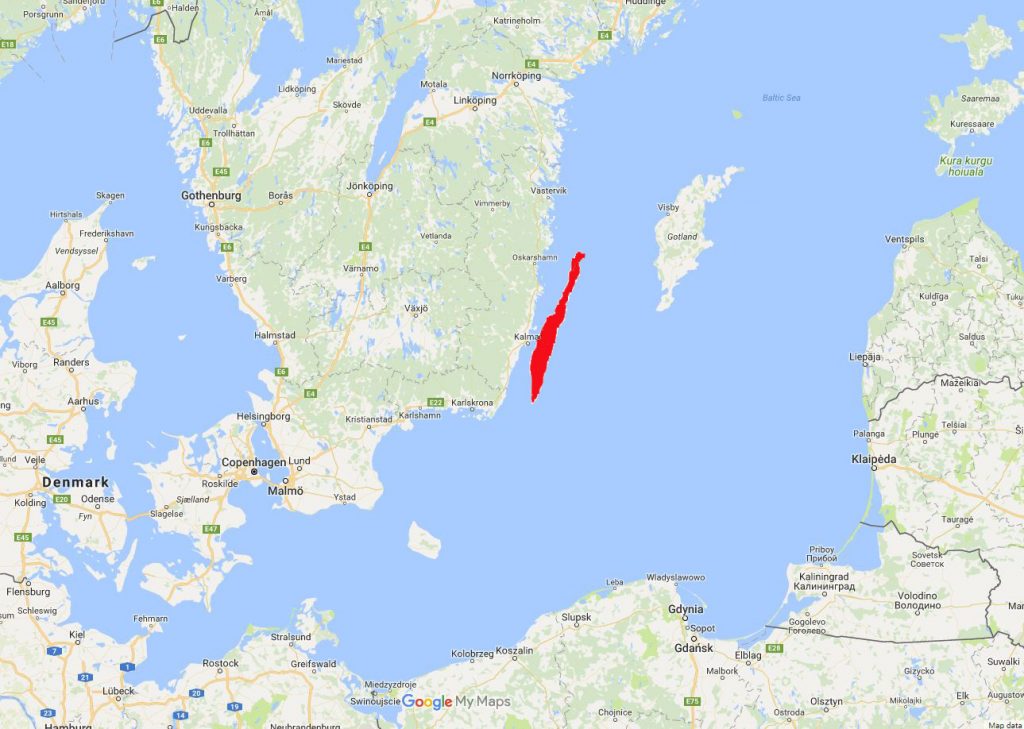
The island of Öland, off the east coast of Sweden, is one of the most visited areas of Sweden and, with its diverse landscape and superb beaches, it is a paradise for birdwatchers, nature lovers and sun-worshippers. Read more about one of the most visited areas of Sweden.
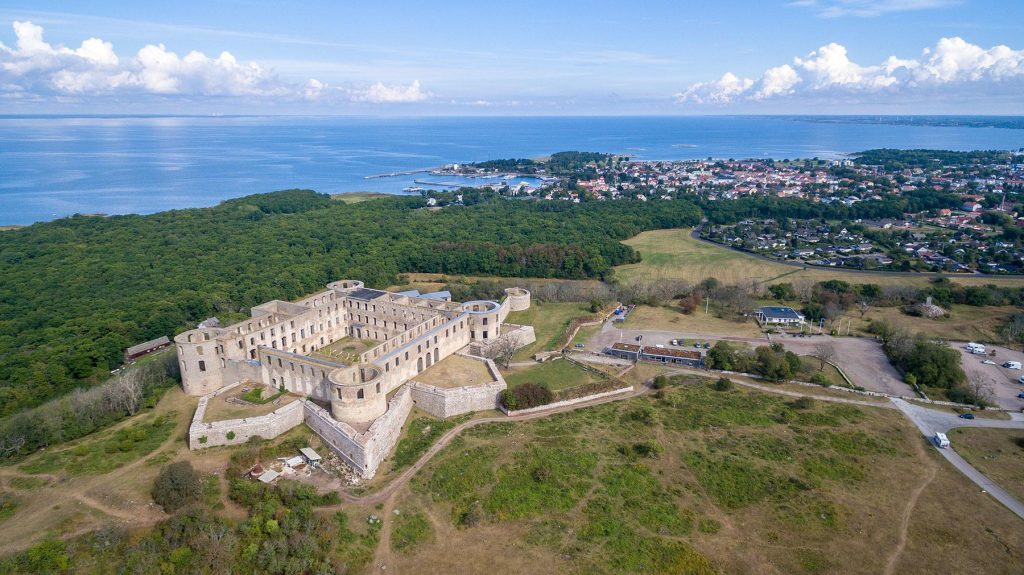
Above the main town of Borgholm rise the huge ruins of Borgholm Castle, a once splendid residence from the 12th century.
The burial places of Öland
The area has many ancient burial places, and there are remains of 16 fortified dwellings from earlier times. The most interesting is Eketorp, which has been reconstructed and now hums with medieval re-enactors and craftspeople in summer.
Bird-watching paradise
Sweden’s prime bird-watching can be enjoyed at the Ottenby Bird Station, on the island’s southerly tip, where more than 370 species have been recorded.
Historical and beautiful
Nearby, you can see Karl X’s Wall, impressive for its sheer size; it was built in 1650 to distinguish Ottenby’s domain and keep out peasant’s animals.
Stora Albaret, an expanse of bare limestone soil in central southern Öland, is a starkly beautiful landscape offering rare flowers and flocks of cranes in the autumn.
Sweden’s best-preserved Renaissance castle
Kalmar, one of Sweden’s oldest cities, was of great importance in the Swedish-Danish wars. Sweden’s best-preserved Renaissance castle, Kalmar Slott was begun in the 12th century but was completely renovated during the 16th century by the Vasa kings. The castle’s coffered ceilings and magnificent stonework have inspired the Renaissance Festival held every July, featuring tournament games, market, music and theatre.
Kosta Boda Art Hotel
Kingdom of glass Northwest of Kalmar, about 20 km (12 miles) is Orrefors, part of Sweden’s Glass Kingdom. The first glass was melted in Sweden in 1556, but it was not established as an industry until 1742, when Kosta, the oldest works, was founded to the west of Orrefors.
Today, the Kosta, Orefors and Åfors glassworks have merged to create one mighty glass-making company; you’ll find its wares marketed under both the brand names “Kosta Boda” and “Orrefors”. Most of the 13 glassworks in the area are open to visitors for demonstration, and many have shops.
Biking on Öland. Photo: Miriam Eriksson/Visit Sweden
Glasswork herring nights
Also look for hyttsill (“glassworks herring”) evenings. In bygone times the glassworks were a social center where locals would gather to bake herring and potatoes in the furnace, with music provided by an accordionist or fiddler. Some glassworks have revived this tradition for visitors.
Feature image (on top): Visit Sweden.
One Of The Most Visited Areas Of Sweden, written by Tor Kjolberg
The representation of the gods, life, and the worldview itself in Ancient Scandinavia was uniquely fabulous and quite bright in comparison to other mythological systems known to us. Read more about theTop 8 Norse Mythology Resources for Students Studying Runic Writing System
Before I properly researched the topic, I ordered my paper from EssayWritingService.com. There, you will get assistance from experienced professionals who will use credible sources only. Yet, if you want to get the hang of the subject in question yourself – continue reading.
In this article, we have tried to cover the most important aspects of Norse Mythology for the students studying the runic writing system.
Paul Rhys Mountfort’s book on runes
Nordic Runes: Understanding, Casting, and Interpreting the Ancient Viking Oracle by Paul Rhys Mountfort The book by Paul Rhys Mountfort, a researcher of runic tradition, will immerse you in the rich history of the ancient Viking Oracle.
It will help one learn about the mythological, magical, and practical meaning of the runes. For the first time, twenty-four runes of Senior Futhark are considered by the author not only as a means of divination.
They are seen as keys to the rich mythological heritage of the world of the North. This knowledge will give you the opportunity to work with runes and their secret meanings at a deeper level.
The book also contains tips for individual research on runes, fortune-telling practice, which will be useful to practitioners of runology.
The Secret of the Runes is Guido von List’s main work on runic art
The Secret of the Runes by Guido von List The Secret of the Runes is Guido von List’s main work on runic art. It has been translated into many European languages as of now. The runes have always been the author’s favorite subject. They allowed him to explore ancient symbols and images, interpret songs, and develop mystical concepts.
It is not by accident that von List’s development in the field of runes mysticism and magic are his main heritage. The whole school of runic magic, now widely spread around the world, originates from this work and the works of his successors.
Pennic’s book on runes
Secrets of the Runes: Discover the Magic of the Ancient Runic Alphabet by Nigel Pennick This unique book is dedicated to the esotericism of the Jewish and Greek alphabets, the Scandinavian runes, as well as the magical and alchemical alphabets of Renaissance Europe.
All these symbolic systems do not only offer a metaphysical description of reality. They also serve as tools for internal spiritual transformation.
They are closely related to numerology, operational, and ceremonial magic. Nigel Pennick is a true expert on runes, geomancy, Tarot, ancient and modern Western magical traditions.
Futhark by Edred Thorsson
A Handbook of Rune Magic by Edred Thorsson This book by a famous author-runologist, Edred Thorsson, covers the history of the runes. It also sheds light on the symbolic meaning of signs, as well as the practical application of this sacred knowledge.
The researchers of the runes, and all who are interested in the northern tradition, will be involved in a scientific approach to the coverage of this issue.
The book is a detailed account of the origin and meaning of runes and Norse mythology.
Lisa Perchel on runes
A Practical Guide to the Runes: Their Uses in Divination and Magic by Lisa Peschel The author’s goal was to describe in detail the runic system that can help people understand the world for the better.
Beginners and experts will be able to get lots of useful information relating to the meaning of individual runes in divination and magic.
The four runes layout, methods of manufacturing of runes and talismans are covered in this book. You will learn about each rune, learn its meaning, and the process of making the runes yourself.
The Book of Runes by Ralph Blum The Book of Runes by contemporary American author Ralph Blum was first published in 1982 by St. Martin Press. Immediately it attracted the attention of many people interested in many spheres.
It was discussed by whose into esotericism, psychoanalysis, and applied psychology. It is one of the most popular books in the world about runes.
Ralph Blum has managed to describe the centuries-old mystical tradition of interpretation of runes in a simple, clear, understandable to modern man language. Thus, his “Book of Runes” has deservedly become an international bestseller.
Kenneth Meadows on runes
Rune Power: The Secret Knowledge of the Wise Ones by Kenneth Meadows This book tells about the most mysterious means of influencing fate, which is runes. They can be treated in different ways: as a means to achieve wealth and power, or to predict fate.
You will learn how our choices and actions create an energy pattern that defines reality and shapes our future and destiny.
Despite the small volume of the book, it contains quite a lot of useful information presented in easy to understand language.
Thomas Karlsson on runes
Uthark: Nightside of the Runes by Thomas Karlsson The magical power of runes has been known since ancient times. In our time, the extraordinary influence of runes and the presence of some unexplored energy has been confirmed even by research.
Runes heal, protect health and success, predict the future. Nordic magic is one of the strongest magic schools in the world. It is based on the power of the runes.
The strongest magical rituals and rites in Scandinavia are listed in this book.
Top 8 Norse Mythology Resources for Students Studying Runic Writing System – Final Words In today’s world, Scandinavian mythology is still popular and actively sought after among scientists. The times when secret knowledge was only transmitted by word of mouth are long gone.
So as a student interested in this topic, try to get as many benefits as possible. Choose a book or a few from our list and enhance your knowledge!
Top 8 Norse Mythology Resources for Students Studying Runic Writing System, written for Daily Scandinavian by Leroy Fowler.
Dale of Norway has made the knit sweater world famous. Both Ralph Lauren and Dolce & Gabbana have used Norwegian traditional patterns, and now the Dale sweaters have become more fashionable than ever. Read more about the classic Norwegian Sweater that became a fashion hit.
The village of Dale in Norway is nestled between steep mountains, waterfalls and fjords on the west coast of Norway about 50 kilometres (31 miles) west of Bergen. In 1872, the Bergen-born textile engineer, Peder Jebsen (1824–1892) traveled through the small village of Dale, located close to the city of Bergen. He recognized Dale as an ideal place to establish a premium textile production facility utilizing the valley’s potential for natural hydro power and easy access to Norwegian wool and strong knitting traditions. In 1879, when the textile facility was completed, he moved back from England, where he lived at that time, to the valley of Dale in Norway.
Ordinary people at Dale find it hard to understand the dimensions of the brand that Dale represents
Focus on crafting premium wool qualities
From the beginning, the focus was set on crafting premium wool qualities. The factory quickly grew to be the largest employer in the region. Skilled knitters and artisans joined the company, often followed by their family members. Subsequently, this experience and expertise was passed on to the next generation.
Starting in 1912, the operation included the production of hand-knitted yarn. Norwegian sweaters, popular among skiers, have been synonymous with the sport of skiing since early 1900s, but knitted garments found in Norway have been dated as far back as between 1476 and 1525. Some of the most well-known sweater patterns attributed to Norwegian colorwork knitting are the Setesdal Lusekofte and the Fanacofte patterns.
Dale wes an ideal place to establish a premium textile production facility utilizing the valley’s potential for natural hydro power
Branding Norway
After World War II, Dale of Norway developed exports of its knitted sweaters, and since 1956, Dale of Norway has designed and produced official Olympic and World Championship sweaters for the Norwegian National Alpine Ski Team, with new designs for every event. Dale of Norway was later chosen to design the official sweaters for the Winter Olympic Games through the International Olympic Committee (IOC), with the rights to use the Olympic symbols.
When Dale of Norway celebrated its 125th anniversary in 2004, author and social scientist Ole Petter Lien wrote in the anniversary book: “I believe ordinary people at Dale find it hard to understand the dimensions of the brand that Dale represents.” When Arnold Schwarzenegger visited Norway in 2011, Dale of Norway was on his bucket list.
Dale of Norway is one of the very few textile companies with production in Norway
The Classic Norwegian Sweater That Became a Fashion Hit
Dale of Norway is one of the very few textile companies with production in Norway. It’s paid close attention to every garment and every stage of the production. Fast forward to 2020, not much has changed. When Thinsulate and NASA technologies commit to keeping us warm, there are few items in an outdoor enthusiast’s closet quite as classic – and timeless – as a Dale of Norway sweater.
All Dale of Norway sweaters continue to be made in the Dale Valley, where production continues to be generated by sustainable hydroelectricity. Dale’s knitwear is also crafted with 100% natural wool — a resource Dale likes to call “nature’s own high-tech fiber.”
In 2017, The French Rossignol Group acquired Dale of Norway for an undisclosed sum.
The Classic Norwegian Sweater That Became a Fashion Hit, written by Tor Kjolberg
Three independent Scandinavian countries, Denmark, Sweden and Norway, have different ways of solving the financial corona-crisis. The Danish government is covering 75 to 90 percent of all worker salaries, Norway uses stabilizing measures, such as deferred tax payments and tax relief and Sweden launches financial aid packages and political solutions. Read more about how Scandinavia is solving the economic corona-crises.
Political parties in Denmark from across the ideological spectrum have joined with labor unions and employers’ associations to unite and launch a rescue package covering 75 to 90 percent of all workers salaries over the next three months, provided that companies refrain from layoffs.
Counteracting reduced activity
The Norwegian government passed a crisis package to counteract reduced activity in the business sector. One of the measures adopted was to postpone the payment of advance tax by self-employed persons, from March 15 to the 1st of May.
Sweden has introduced a new system for shortening work hours, while the employees still retains 90 percent of their original pay. The state will cover a large portion of the costs. The state will also take on all the costs related to employee sick leave in April and May.
Paying rents for companies
The governments of Denmark and Norway have also agreed to cover costs like paying rent for companies and compensation for shortfall in revenues due to their lockdown of companies in fear of spreading the virus. Norway’s government has agreed a massive support package with opposition parties of 20bn Norwegian kroner (2bn USD) a month in support to companies hit by the lockdown.
The aim of the Scandinavia approach is to prevent the wrenching experience of mass unemployment and at the same time allowing businesses to retain their people rather than firing and hiring them again. Companies is supposed to be in a position to quickly resume operations and restoring economic growth once normalcy returns.
Expedite the return to normal
“If you can tide firms over by quickly produce exceptional initiatives and thereby reduce the severity of bankruptcies and firings, you can expedite the return to normal,” said Carl-Johan Dalgaard, an economist at the University of Copenhagen and chair of the Danish Economic Council.
The Norwegian rescue plan sees value added tax reduced to six percent for many industries up until 31 October 2020, and postpone payment of special taxes on the energy and brewing industries until June. The Norwegian package also intended to provide cash support for small businesses, such as hairdressers, which lost their income.
Sweden benefits from having had several years of a booming economy, but Sweden’s central bank, the Riksbank, has left the country’s key interest rate unchanged – but did not rule out cutting it below zero further down the road. Sweden, which has had a relatively softer approach to coronavirus lockdown than in many other countries is still expecting to be hit hard by the crisis. The Riksbank states that it is difficult to say at this stage exactly how deep the economic downturn will be.
Extraordinary amounts of government money
Part of the reason why Scandinavian countries could quickly pledge extraordinary amounts of government money is that they are already financing some of the world’s most generous social safety net programs.
In Norway, the government has agreed to provide an extra 5bn Norwegian kroner in funding for the country’s municipalities, and a billion kroner in extra infrastructure spending on roads and railways.
Sweden fears that unemployment could rise to 10.1 percent this year in the worst-case scenario, with a further rise to 10.4 percent next year. GDP meanwhile, according to the same estimate, could fall by -9.7 percent this year, and slowly climb back with a 1.7 percent recovery in 2021.
Various contagion measures
The Scandinavian countries have implemented various contagion measures that affect the economy differently. In Norway and Denmark, hairdressers, dentists, gyms and many restaurants had to close overnight due to the restrictions. In Sweden, these have remained open all the way. Although economic measures may indicate that Swedish companies can do better than their neighbors, it is too early to conclude.
How is Scandinavia Solving the Economic Corona-Crises? written by Tor Kjolberg
Norway is such a wonderful country with beautiful people. But just like any other culture, it has its habits and tourists often fail to consider them. Learn about the 10 Common Mistakes You Must Avoid in Norway.
People living in Norway seem aloof, but if you engage in a conversation with them, you can discover they are very friendly and sociable. However, you should avoid making common mistakes foreigners do and your experience in Norway will be wonderful.
Buy Food from Supermarkets You probably know by now that Norway is an expensive country, compared to others in Europe. And you have probably heard about those stories when someone bought some biscuits and a bottle of water with 12 euros. While these stories might be true, they are false at the same time. Food and drinks are more expensive at gas stations and convenience stores. Buy your food from supermarkets, they have a wide offer of delicious food items and they are cheaper than in other stores.
Buy your food from supermarkets. Photo: Wikipedia commons
Refill Your Bottle One of the common mistakes people do in Norway and you should avoid is buying bottled water. Norway is a country that promotes healthy habits and they strive their best to offer quality to the country’s inhabitants. It is the second country in the world when talking about the quality of tap water. They have among the best tap water in the world, so it would be a pity to not refill your bottle and pay at least 4 euros for one bottle of water.
Don’t Drive After You Drink Even though some European countries are more permissive when talking about drinking and driving, Norway has very strict laws. If the authorities find out that you have more than 0.2 milligrams of alcohol in your blood, they will apply strict penalties such as huge fines and even prison. Norway is not a country with zero tolerance for drinking and driving, but it has the strictest laws in Europe.
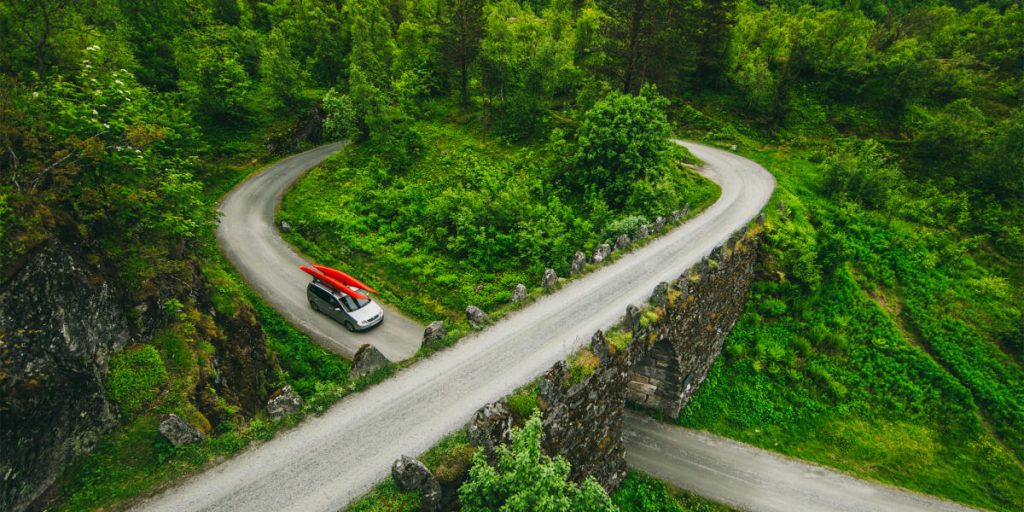
Driving in Geiranger. Photo: Samuel Taipale/Visit Norway
Do Not Assume the Marital Status Norway is a country that gives its inhabitants the freedom to choose their own lifestyle. And just like other Scandinavian countries, it does not state that marriage is mandatory to start a family.
Michela Johnson, a writer of custom papers who lives in Norway, says that people living there are very open-minded. She advises not to make any marital status or lifestyle assumptions. They do not judge same-sex couples or the ones that choose to not marry, so nor should you.
Norway Is a Big Country Even though when you look on the map Norway seems a small country, it isn’t. It is the longest country in Europe, so you will travel a lot between cities and towns. Always check on Google Maps the distances between the cities you want to visit and plan your trip accordingly. You do not want to end up spending more time on the road than you expected to.
Check the Bus Schedule If you have enough money, you can rent a car and travel at your own pace. The gas price in Norway is among the highest in Europe, so if you want to save money, you can rely on a bus as a means of transportation. In more secluded places in Norway, the buses run twice a day. So, always check the bus schedule and plan your trip according to those. In rural areas, it’s difficult to rely entirely on buses, so if you have enough money, you should rent a car.
Book the Accommodation in Advance Norway is such a wonderful country where you can see the amazing fjords in the summer and Northern Lights in the winter. There are lots of tourists that visit the country, so there is a huge demand for accommodation places.
Johanna Kinta, an editor for assignment help, says you must book your accommodation well in advance. The earlier, the better. If you can, book it at least six months prior to your trip. Like this, you can find the cheapest and nicest places.
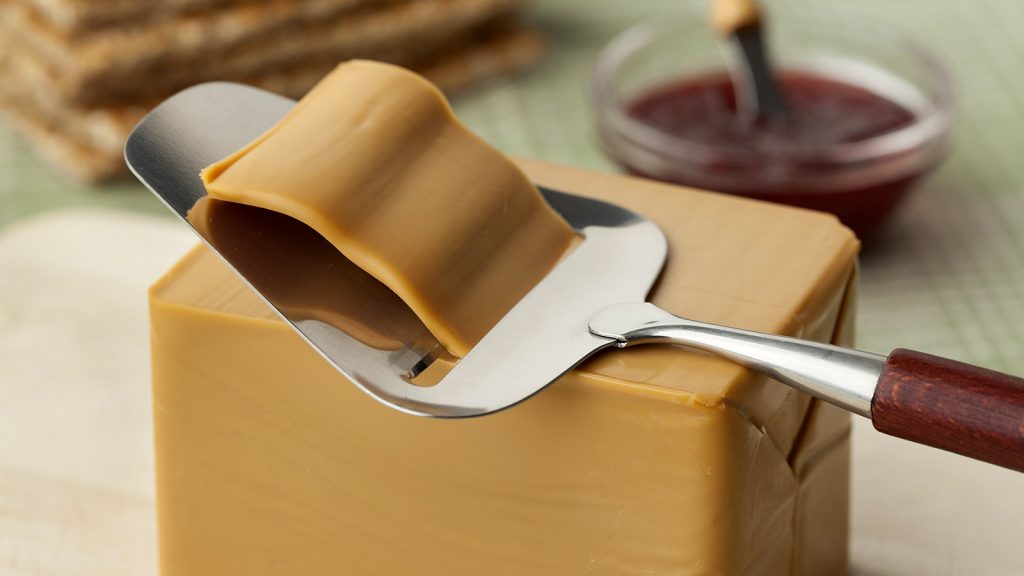
Piece of norwegian flotemysost cheese and a slicer
Do Not Forget About Seasons One common mistake people often do is that they forget about the specifics of the country. Norway is one of those countries where winter lasts six months. This means that you should plan your trip accordingly. Even though other European countries welcome the spring in March, in Norway it’s still winter, so many hiking trails are still not available for the public.
Always check which roads are closed and which not. In some regions of Norway, winter is harsher and some roads might be closed until May or June.
Do Not Judge and Criticize Them Norway is an open-minded country and so are its people. But one thing that they cannot put up to is criticism. `One thing that they hate is people that behave as they are better than them` – says Roy Smith, the HR software specialist from the Norwegian travel agency . Or people that judge and criticize them for their lifestyle and eating habits.
Norway is the country that is known for its advanced culture and habits. Even though some topics might be hot, such as their huge taxes, it is better to hold that to yourself. Another topic that gets environmentalists’ and wildlife activists’ attention is their whale eating habits. They see it as a normal thing to do, even if it’s not approved by everyone.
Inform Before Choosing Activities One of the most popular reasons people are visiting Norway is to see the Northern Lights. Even if Norway is a civilized country, there are lots of people that have sort of fake advertising. They promote their locations as one of the best to see the Northern Lights, but in fact, you will have a small chance to see them in the south of Norway. Head for the northern part of Norway and choose from Tromso, Bodo, Helgeland or North Cape.
10 Common Mistakes You Must Avoid in Norway – Conclusion Norway is a beautiful country that offers you mesmerizing landscapes. Its people are friendly and sociable, even though they seem unapproachable. However, there are some mistakes you must avoid while in Norway. Buy your food from supermarkets and drink tap water.
Book the accommodation in advance and always check the bus schedule beforehand. Do not forget that Norway is a country where winter lasts six months, so plan your trip and activities accordingly.
Kurt Walker
10 Common Mistakes You Must Avoid in Norway, is written for Daily Scandimnavian by Kurt Walker. Kurt has been working as an editor and a copywriter at UK assignment help, a paper service in London, for 3 years. He offered professional writing services, such as resume services and masterpapers review. Kurt is also a professional content writer and journalist in such topics as inspiration, motivation, education, and traveling. He has his own proofreading service for students.
When neighboring countries Denmark and Norway decided to impose a lockdown, Sweden’s strategy was aimed at building a broad-base of immunity while at the same time protecting at-risk groups. Now, Sweden’s chief epidemiologist Dr. Anders Tegnell says the “herd immunity” may be reached in the capital within weeks.” So, Sweden’s corona immunity strategy seems to be successful.
Recently, Anders Tegnell, the architect behind Sweden’s relatively relaxed response to Covid-19, told local media that the latest figures on infection rates and fatalities indicate the situation is starting to stabilize. People in neighboring countries Denmark and Norway shook their heads in disbelief at Sweden’s approach while the country’s inhabitants greatly supported the country’s corona experts.
Image: Orna Wachman/Pixabay
A controversial strategy
Some health experts in other countries claimed that Sweden’s controversial strategy could be associated with playing Russian roulette with public health. But now, the unusual approach is starting to yield results. “We’re on a sort of plateau,” Tegnell told Swedish news agency TT.
When Sweden launched the strategy, the Lancet medical journal, perhaps the world’s most recognized research journal, reported growing anger in the Swedish population towards their leaders who had not provided enough testing and personal protecting equipment, or respirators for hospitals where their capacity had been overwhelmed.
“In major parts of Sweden, around Stockholm, we have reached a plateau (in new cases) and we’re already seeing the effect of herd immunity and in a few weeks’ time we’ll see even more of the effects of that. And in the rest of the country, the situation is stable,” Tegnell told CNBC Television last week.
Swedish public is supporting the strategy
Sweden left its schools, gyms, cafes, bars and restaurants open throughout the spread of the pandemic. However, the government urged citizens to act responsibly and follow social distancing guidelines. A new opinion poll from the Swedish organization Vetenskap & Allmennhet (Public and Science) states that an overwhelming majority of 91 per cent supported the strategy and had confidence in doctors and hospital staff. Eighty-seven per cent of those surveyed had a high level of confidence in researchers who comment on the coronavirus crisis in the media.
Tegnell said sampling and modeling data indicated that 20% of Stockholm’s population is already immune to the virus, and that “in a few weeks’ time we might reach herd immunity and we believe that is why we’re seeing a slow decline in cases, in spite of sampling (testing for the coronavirus) more and more.”
However, even experts in Sweden say it’s too early to draw conclusions, but given the huge economic damage caused by strict lockdowns, the Swedish approach has drawn considerable interest around the world.
Researcher on politicians and medical authorities
“When a country is exposed to a threat, as you could call the coronavirus, then politicians have an urge to show that they can handle the situation. That may be in spite of whatever the experts say,” says Swedish media researcher Marina Ghersetti. In this case, Swedish politicians clearly differ from their Scandinavian counterparts.
Tegnell says he is still very concerned about the elderly. “The death toll is very closely related to elderly care homes. More than half of the people that have died have lived in elderly care homes,” he says.
At no stage of the pandemic did Sweden see a real shortage of medical equipment or hospital capacity, and tents set up as emergency care facilities around the country have mostly remained empty. Part of Sweden’s approach has relied on having access to one of the world’s best-functioning health-care systems.
Image: Ursula Schneider/Pixabay
Sweden’s Corona Immunity Strategy Seems To Be Successful
Even if most of the Swedish press largely has supported the public health agency’s strategy, there has been voiced a demand for stronger political leadership. The most visible source is the editor of the Swedish newspaper Dagens Nyheter, Peter Wolodarski.
“We don’t have a radically different view,” Foreign Minister Ann Linde said in an interview with Radio Sweden. “The government has made a series of decisions that affect the whole society. It’s a myth that life goes on as normal in Sweden.”
Sweden’s Corona Immunity Strategy Seems To Be Successful, written by Tor Kjolberg
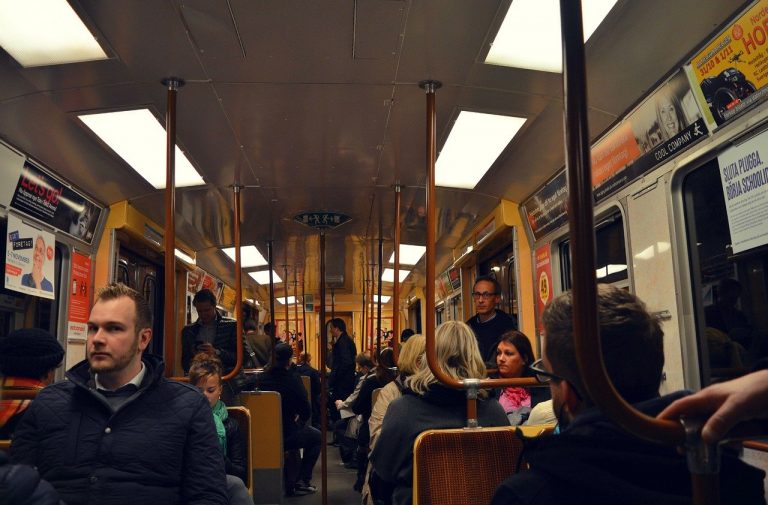
Feature image (on top): Metro, Stockholm Nick Walker/Pixabay
Choosing Scandinavian countries as a study abroad destination for international students is a great deal. Every year there are numerous scholarship programs that are offered to international students so that they can easily acquire higher education, work on their research, and learn something new in minimal or no amount. The best thing about these scholarship programs is you get a chance to study in the countries which are safe, welcoming, and have the best academics. Find out more about these 4 Scholarships in Scandinavia for International Students.
Scandinavian universities and their scholarships You do not need to learn any new language to pursue your studies in case you are applying for Sweden scholarships. There is no language barrier as this country deals with education in English so people from all over the world can easily apply here. Below mentioned is the list of few scholarship programs for which international students can apply for.
The best thing about this scholarship program is that it covers the complete tuition fee, insurance, and living cost
Swedish Institute Scholarships for Global Professionals This scholarship program is sponsored by the Swedish government for all the international students who plan to pursue their education in one of the Scandinavian universities. There are many students who face different challenges while studying abroad, so if you are not sure about your abilities or feeling overwhelmed, do not consider this as an issue at all.
It’s fine to find an online service that provides coursework help for British students or students from other countries, you just need to look up for them so that you do not have to compromise your grades due to any challenging tasks. SISGP targets international students and provides them with full-time scholarships. The best thing about this scholarship program is that it covers the complete tuition fee, insurance, and living cost.
Halmstad University Scholarships This university offers scholarships for students who are looking for PhD programs in Sweden. They have a handful of scholarships for students who are outside of the EU/EEA and Switzerland. This scholarship is inclined towards master’s programs, which later help students with PhD. Students can select any field they are looking up to, and the university would cover up to 50% of their tuition fees.
Denmark Government Scholarships for Non-EU Students To attract well deserving and hardworking students from all over the world, the Danish government came up with its own scholarship programs that provide the best possibilities for students to pursue higher education. Every year 1000s of students are welcomed outside of the European Union, where they are awarded a complete degree scholarship.
Though there is a certain criterion to be selected for this scholarship and shortlisted candidates are awarded living grants along with waiving off on their tuition fees. There are students who initially find it hard to learn a new language and require time to adjust at a new place, in such cases, they should take assistance from coursework writing services so that things do not become overwhelming. Look out for online coursework writing service uk, and you will certainly find the one which suits your niche.
Danish State Tuition Fee Waivers and Scholarships at Roskilde University Roskilde University is among the best universities in Denmark, and students really work hard to get admitted there. Danish government made sure that students from all over the world got an equal chance to be enrolled in this university and came up with this scholarship program where students can acquire education with minimal tuition fees along with the residency permit. This is the bright chance for students to make their dream come true, and again you need not worry regarding the language barrier. Coursework help uk can easily get through the whole degree in good grades, just work persistently and in the right direction.
Photo: Silviarita from Pixabay
Image: Student. silviarita fra Pixabay
4 Scholarships in Scandinavia for International Students These scholarship programs aim to attract talented international students. Each scholarship program has its own terms and conditions list, while some are partial, some cover complete tuition fees along with a monthly stipend. Choose the one which suits you best.
4 Scholarships in Scandinavia for International Students, is written for Daily Scandinavia by Helen Anderson. Helen enjoys writing about her travel and studying abroad experience. The reason why she is so passionate about Scandinavian countries is those mysterious mountain landscapes and fairy-tale-like towns.
While Denmark’s landscape is flatter than most countries it has a staggering 185 hiking trails on offer for you to choose from. These stunning paths are filled with scenic views, lustrous forests and, breathtakingly high cliffs. We’ve compiled a list of 5 impressive hikes, most of which can be taken on foot or by bike. These trails will not only be memorable for their magnificence but will also highlight Denmark’s earlier history and culture. Find out more about these 5 Unforgettable Hiking Trails in Denmark.
Camønoen Starting on our list is the Camønoen trail. The newer and the ‘friendlier’ of the Danish hiking trails can be taken on foot or bike. The path spans 175km and covers the southern islands of Møn, Nyrod, and Bogø.
Camønoen is the newer and the ‘friendlier’ of the Danish hiking trails. Photo: Anna Ydegaard
To begin your hike, we recommend stopping off at the Møns Museum to plan your trip ahead. The trail is known for its guided tours and many experts to meet along the way on Denmark’s longest coastline.
“The highlight of this trail is the magnificent Møns Klint, the 100-meter high white limestone cliff that scales the sea and boasts a panoramic view from the top. The trail offers shelters, camping sites and interactive centre to stop off at during your journey” says John Ayala, a travel blogger at Study demic and Topcanadianwriters.
This path is included in the Sjællandsleden trail.
With a history of 4,000 years, the Hærvejen trail runs over southern Jutland from the town of Padborg.Photo: Visit Herning
Hærvejen Armies, merchants and many pilgrims alike have made their way through the Hærvejen trail.
One of the oldest paths in Denmark, the Ancient Road or Ox Road as its also referred to spans an incredible 500km and takes you through historic farmlands and idyllic forests as well as heartlands and sand mounds.
With a history of 4,000 years, the trail runs over southern Jutland from the town of Padborg.
This hike can take a number of days to complete and we recommend you stay in one of the historic farms, buildings or hostels.
Along the way be sure to check out the runic stones left over during the Viking age.
Along the waters at Gendarmstien. Photo: Visit Sønderborg
Gendarmstien The first hiking trail ever to be certified in Denmark, the Gendarmstien path takes you along the beautiful coast and immerses you in stunning wildlife and nature.
At 84km, the trail and can be divided into five different stages across a number of days. The path leads you past the Flensburg Fjords and sits on the German border all the way from Padborg to Skovby.
“Expect hilly terrain, small sign posts and fantastic views as make your way through the historic trail. Remembered and named after the Gerdarms – the men who looked after the boarder – that was formed in 1839 and subsequently added to the trail during the 1980s” says Johnny Murdock, a lifestyle blogger at Uktopwriters and Studentwritingservices.
Many exotic plants can be spotted along this path.
Featuring a unique UNESCO heritage site, the Stevns Klint Trampesti trail is 22km. Photo: Wikipedia commons
Stevns Klint Trampesti Featuring a unique UNESCO heritage site, the Stevns Klint Trampesti trail is 22km and starts at the Bøgeskov harbour and ends at the Rødvig port. Walk along and soon you’ll make it to the edge of the cliff, 41 meters above sea level.
Due to the meteor disaster that wiped out the dinosaur’s 66 million years ago, the erosion has caused the cliff to change with folds and lapping’s of white-yellowish limestone, forever preserving the cliff that still stands today.
Climb further and you’ll meet the Højup old church, 30 meters above the sea. The lighthouse is another stunning landmark to meet on your travels and is 42 meters high once you reach the top.
Located in Zealand, Gilbjergstien offers one of the most northern points in Denmark. Photo: Visit Denmark
Gibjergstein Located in Zealand, this trail offers one of the most northern points in Denmark, Gibjergstein covers 2.5km. Begin your journey from Vesterbrogade in Gilleleje City and finish at Gilbjerghoved for this scenic journey.
As you walk along the 33m high cliffs you’ll be sure to spot the region of Kullen in Sweden across the sea.
The hike includes a distinctive monument dedicated to Søren Kierkegaard, the great Danish theologian and philosopher, located at Giberg Hoved.
Along the way you’ll see the amazing nature reserves with 72 hectares of land dedicated due to the distinctive vegetation of the area.
5 Unforgettable Hiking Trails in Denmark With many impressive hiking paths to choose from we hope we’ve made your decision a little easier by highlighting these 5 different trails. Why not choose your next adventure today and see why Denmark is the perfect place for a remarkable hiking expedition.
Feature image (on top): Hærvejen/Frederikshaab. Photo: Visit Denmark
Molly Crockett
5 Unforgettable Hiking Trails in Denmark, written for Daily Scandinavian by Molly Crockett.Molly is a marketing and business expert who writes on how managers can optimize their business practices. These writings can be found at Australian Reviewer and Writemyaustralia. She is also involved with teaching young writers the writing and research skills required to be successful as a writer. She teaches at Ukservicesreviews.
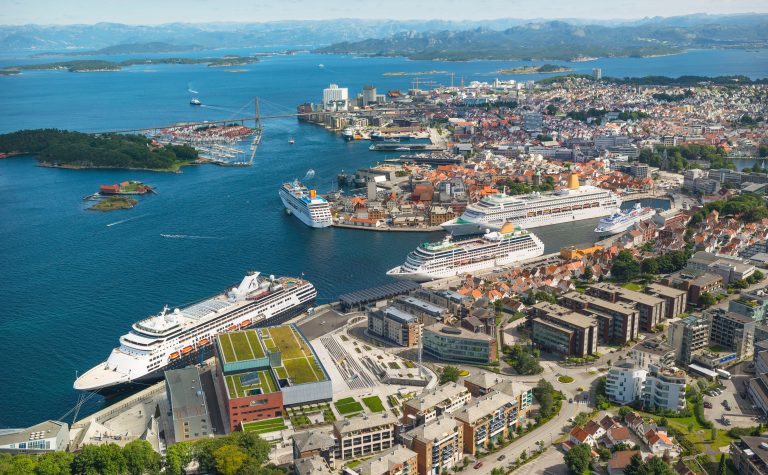
When Norway discovered North Sea oilfields in 1965, Stavanger became the base of the oil exploration. Nearly one of ten of its 142,000 inhabitants was born abroad in Norway’s fourth-largest city. This is rather ironic since in the early 19th and 20th century, Stavanger was the principal port of embarkation for the great waves of Norwegian emigration to the United States. Read more about the oil capital of Norway.
The first 52 emigrants left in 1825, bound for New York on the sloop Restauration. Those wishing to trace their roots can contact Norwegian Emigration Center (Det norske utvandingssenteret).
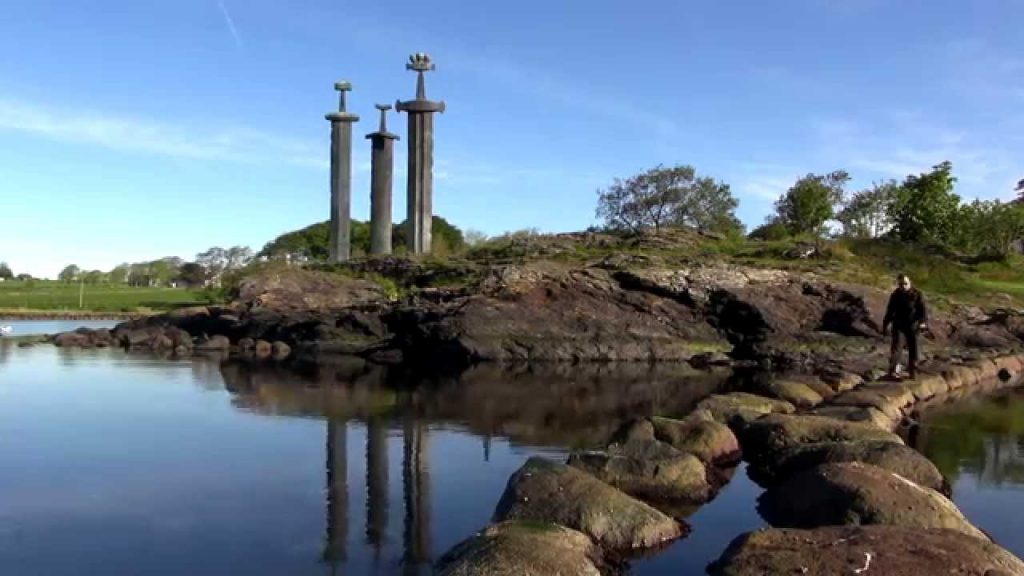
The Stavanger siddis (colloquialism for a person from Stavanger) claim to be the oldest true Norwegians, tracing their lines to the Battle of Hafsfjord. This decisive battle that first united the country under King Harald Hårfagre, ca 880, took place at a bay just southwest of the city. On the shore is an impressive monument to the event, Sverd i fjell, three larger-than-life Viking swords seemingly thrust into bedrock.
The heart of modern Stavanger is the area around Breiavatnet, the small lake in the middle of the city, near the Anglo-Norman-style cathedral, dating to 1125. Northwest of the cathedral are winding cobbled streets and old timber houses of Old (Gamle) Stavanger.
Sverd i fjell, three larger-than-life Viking swords seemingly thrust into bedrock. Photo: Visit Stavanger
Around 1870, as fishing and shipping were in decline, the fishermen turned their attention to brisling (small herring) which were cured and canned in the town and sent as Norwegian “sardines” all over the world. Stavanger thrived on sardines until the 1950s. Today, the Canning Museum, located in the former cannery, has recreated an authentic 1920s environment.
The interactive Norwegian Petrolium Museum (Norsk Oljemuseum) provides insight into the exploration and production of oil and gas.
Feature image (on top): Visit Norway
The Oil Capital of Norway, written by Tor Kjolberg
International students who pick Europe as their study destination often place Scandinavia on their list. Scandinavian countries are known for their great education, as well as the big focus on innovation and research. According to Bloomberg, Sweden is ranked second in the list of 50 most innovative economies, followed by Finland as seventh. This makes the three countries an excellent opportunity for students, especially since they are the home of some of the best universities on a global level.
Why Scandinavian Universities? Nordic and Scandinavian countries are home to some of the top-rated universities in the world. In 2019, the QS World University Rankings featured 27 Nordic universities out of which 10 in Finland, 8 in Sweden, and 4 n Norway. To be more, some Scandinavian universities are specialized and don’t meet the criteria for the overall rankings, while their popularity is immense on a global level. For example, Scandinavia is the home of the renowned medical university Karolinska and the Stockholm School of Economics, both pillars in quality education worldwide.
Scandinavian universities’ popularity is immense on a global level. Photo: Pixabay
How to Choose a University to Study at If you’ve decided to study in Scandinavia, you still have a lot to consider. There are the matters of where to study, where to live, not to mention the enrollment requirements for the university of your choice. Here are five tips to help you with this.
Follow Your Passion Before anything else, follow your passion! Scandinavia has a lot to offer to students. On its grounds, you can find specialized universities like nowhere else in the world, so check all your options before you make a decision.
Scandinavia has a lot to offer to students. Photo: Pixabay
The first thing you need to do is decide where and what you want to study. Have an alternative or two you’ll apply for, especially if you’re looking to study on a scholarship, but find something that excites you. Studying at a university is not an easy ordeal, especially not when you’re enrolled in top quality institutions with a great potential for research.
Many international students today reduce the burden by paying somebody to write an essay for them or edit their papers. This can definitely help you, but you still need to love what you’ve chosen.
Check the Courses in Detail Even when you choose a university, you need to know exactly what you’ll study there. Dig into the offered programs and know what you want to study before you send out your applications. It can be scary to move to a different country and enroll in an entirely new level of education right away. You need to be prepared for university before you set foot there. This will help you make informed decisions and increase your confidence in the selected program. Not to mention, it will help you immerse in the country and the lifestyle faster.
There are plenty of great choices in Scandinavia but the three countries in it can offer very different conditions. Photo: Andrew Neel/Unsplash
Know Your School Choices When you know what to study and what programs are at your disposal, it’s time to pick the schools. Narrow down the list to your top choices and start researching. Before you apply, you need to know what kind of school it is, what it requires from the students, and how you can enroll there.
Research the Location Picking a school is not enough to get you prepared. There are plenty of great choices in Scandinavia but the three countries in it can offer very different conditions. Location is something you should definitely consider when studying here. Do you like to study in a school that’s full of nightlife and have many restaurants and pubs nearby? Or maybe you want to study in a school that is surrounded by nature and clean air? Perhaps you like the idea of seeing the northern lights and enjoying 6 feet of snow?
Consider the Budget Beyond the academic institutions, Scandinavia has a lot to offer in terms of lifestyle and quality of life. They have amazing social support systems, high quality of life, and a relatively relaxed atmosphere. Students who move to study there are immediately immersed by the lovely culture and amazing lifestyle of the locals, not to mention they have the option to study there free of charge.
When you choose a university, you need to know exactly what you’ll study there. Photo: Priscilla du Preez/Unsplash
Scandinavian Universities: 5 Tips on How to Choose – How? Well, Scandinavian countries have relatively high costs of living, which is why many students toss the idea of studying there aside too abruptly. But, the tuition fees are actually quite low compared to the living expenses, and there are plenty of discounts and scholarships offered to international students.
For example, if you study in Finland, you should know that EU and EEA citizens and PhD students aren’t required to pay fees. In Norway, the public universities are free for students of all nationalities and study levels, with a minimal fee of around $50 per semester.
There’s one final tip that applies to all international students – take your time!
Scandinavian Universities: 5 Tips on How to Choose, written for Daily Scandinavian by Emma Rundle. Emma is a career coach who does her work mostly online. She schedules online sessions and posts tutorials for people who need help with their career choice. To be more, Emma shares her expertise in online blogs.
























 The interactive