At 365 meters long and 20 decks high, the scale of the Star of the Seas is more in keeping with a moveable skyscraper than a boat. The mega cruise ship is built in Finland.
The Star of the Seas is a new, large cruise ship from Royal Caribbean International and the second in its Icon Class of ships, having begun service in August 2025. Built in Finland, the boat features the largest waterpark at sea, with six waterslides, the largest ice-skating arena in the fleet (Absolute Zero), and seven pools, including a suspended pool, as well as diverse dining and entertainment options. It is powered by liquefied natural gas (LNG) and sails from Port Canaveral, Florida.
At its handing-over ceremony at Meyer shipyard in Turku, the owners confirmed it was the largest cruise ship ever built – an honor that it shares with its less-than-humbly-named sister vessel Icon of the Seas.
Steel cutting for the ship began on 15 February 2023. The name was announced on 5 October 2023, the keel was laid on 15 December 2023, and the ship was floated out on 25 September 2024. The sea trials took place in spring 2025and the vessel was delivered in July. Service started on 16 August 2025.
Star of the Seas shares the title of the largest cruise ship in the world with her sister ship, Icon of the Seas (above).
Shipbuilding is a significant force in Finland. It employs 30,000 people and contributes €12bn to the economy every year. In Turku, that strength is matched by momentum. Four more vessels of the same class are in the works, ensuring that shipbuilding – and, as brands see it, world-building – remains a modern point of pride for Finland’s oldest city.
Mega Cruise Ship Built in Finland, edited by Tor Khjolberg
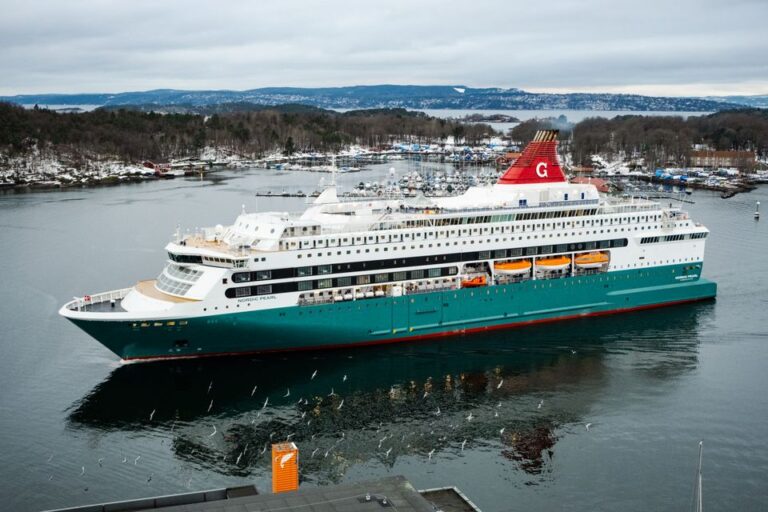
TheOslo–Copenhagen routeis notable as theworld’s oldest continuously operating passenger ferry route, operated byDFDS A/S. Operated since 1867 and sold to Swedish operator Gotlandsbolaget last year, we wanted to find out if or how the Swedes have upgraded the two ships. Read on and learn more about the seaborne adventure between two capitals, two cultures, and countless stories.
As part of our mission, we have visited Copenhagen countless times to write about the capital’s attractions and soul, as well as its history and business life. Most of the time, we have sailed on the two ships, Crown of Scandinavia and Pearl of Scandinavia.
We must admit that on our last trips, the boats seemed run-down, the cabins smelled of stale tobacco, and even the crew seemed tired.
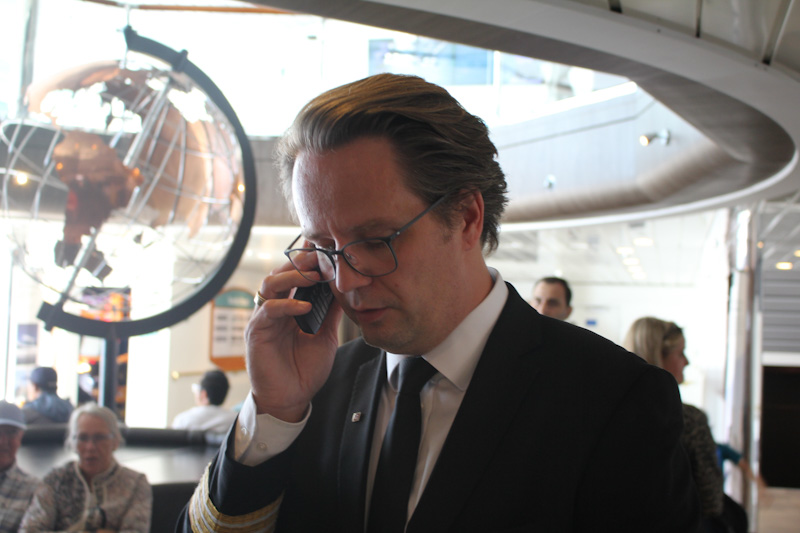
The purser on board the Nordic Pearl shared his experiences with us regarding the renovation of the ships.Commodore de luxe cabin.
During our recent voyage, the purser on board the Nordic Pearl shared his experiences with us regarding the process. Asking what he experiences as the most important change, he says, “To me, it is the upgrading of the cabins. It is obviously the best thing that has happened.”
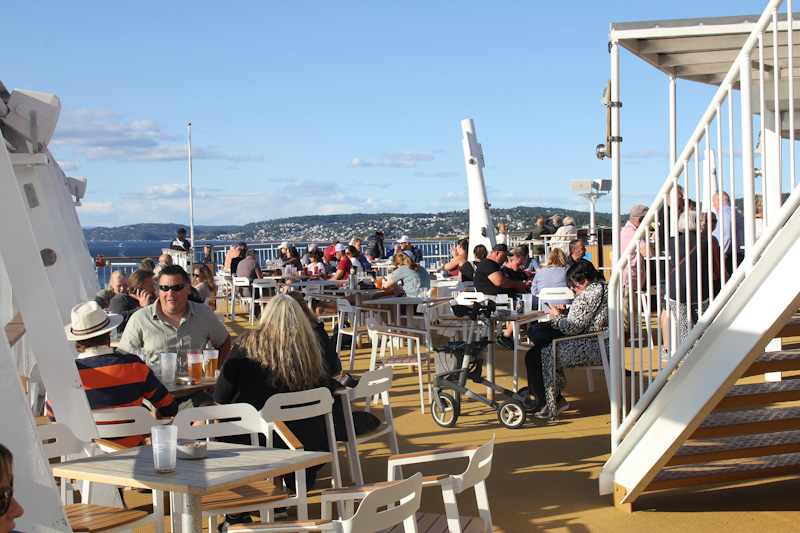
Passengers enjoying the sundeck on board.
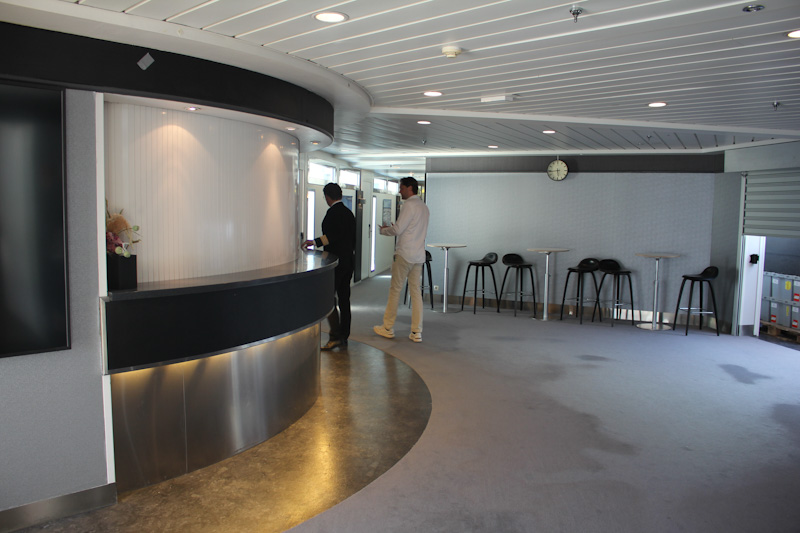
Nordic Pearl (and Crown) isn’t one of those giant floating cities – more like a cozy hotel drifting on the sea. On the first day, we stood on the deck, watching the coast along the Oslo Fjord with its charming small houses, lush vegetation, and gentle valleys, and sailboats and small motorboats playing in the waves from the ship. You can enjoy watching the shore for more than three hours!
You can enjoy watching the shore for more than three hours!
Conferences on board
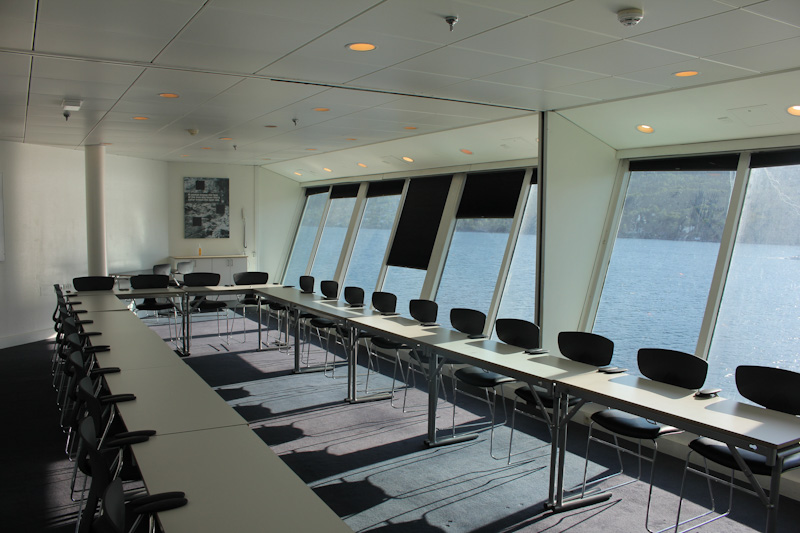
Companies and organizations can combine business and leisure by utilizing the ship’s professional Conference center. Nordic Pearl (and its sister ship) offer a unique and inspiring setting equipped with advanced multimedia and AV technology, catering, and dedicated conference services, creating a seamless blend of work, relaxation, and exploration.
Companies and organizations can combine business and leisure by utilizing the ship’s professional Conference center.One of the conference rooms on board.
More time in Copenhagen
In the summer of 2020, DFDS reintroduced a stop at Frederikshavn on the route after a 46-year hiatus, creating a Copenhagen–Frederikshavn–Oslo connection. For passengers with return tickets, this reduced the available time in Copenhagen by two hours. The new shipowners have dropped the Fredrikshavn stop, and passengers can once again enjoy more time in the Danish capital.
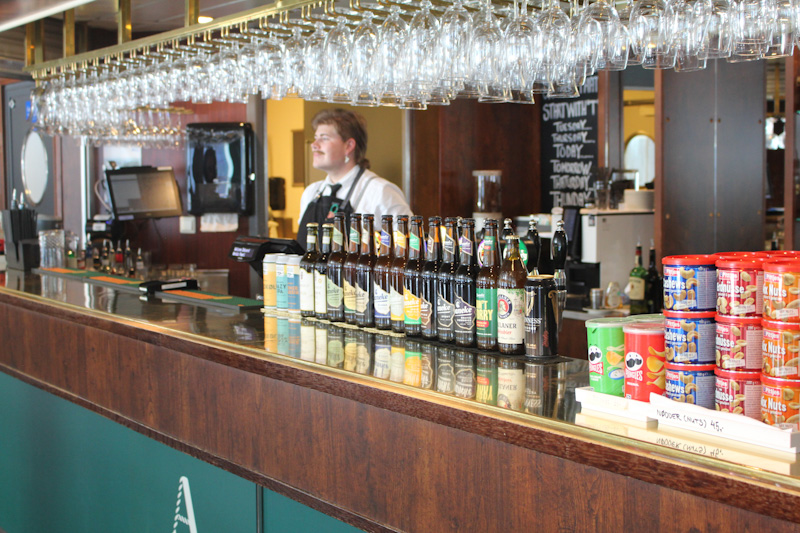
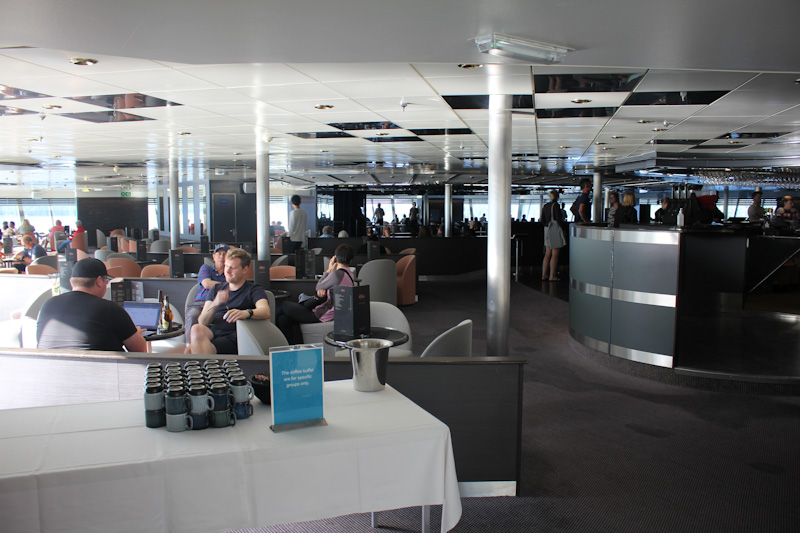
From one of the bars on board.
New Name – Same Harbor
A guitar man played softly in a nearby bar, while strangers clinked glasses under strings of light. My photographer and I felt suspended between places and times, as if the ship was carrying us into a new version of itself.
Pool area of Nordic Pearl in Oslo harbor.
A tour of the cabins showed that they were upgraded and inviting, even the smallest ones without a view. The company slogan is now “Nytt navn, samme havn” (New name, same harbor). DFDS has become “Go Nordic Cruise Lines”. The Nordic spirit is part of every step of the journey. From the aqua-green hulls of the ships, Nordic Crown and Nordic Pearl, inspired by local seas, to the subtle Nordic flavors in the onboard restaurants, every detail reflects the Nordic roots.
Preparing our food.
Excellent Restaurants
Nordic Pearl has four excellent restaurants. I must admit that our meal was a step up in quality compared to my last voyage to Copenhagen (*), and the service was of superior standard.
We were offered a harmonious combination of fresh, seasonal ingredients prepared with respect and balanced with the chef’s distinctive personal touch to create a memorable experience. I would say that the food on board has undergone an extraordinary improvement.
The young sommelier offering us an aperitif based on Njord Gin Small Batch Mystery.Our Njord Gin Cocktail.
At the Explorer a la carte Restaurant, it all started with the young sommelier offering us an aperitif based on Njord Gin Small Batch Mystery.
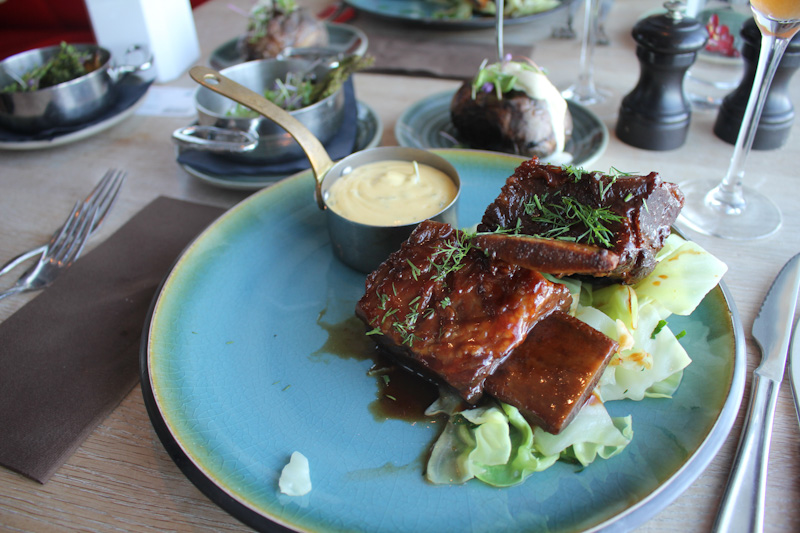
Black angus ribeye steak
Then we had a black Angus ribeye steak with homemade béarnaise sauce and a baked potato. It was bursting with robust beef flavor and juicy, with generous marbling. It was one of the most tender beef cuts I’ve ever been served. The main dish was accompanied by a 2022 Chateau de Vieux Guinot Saint-Émilion.
Our waiter Felix serving wine.
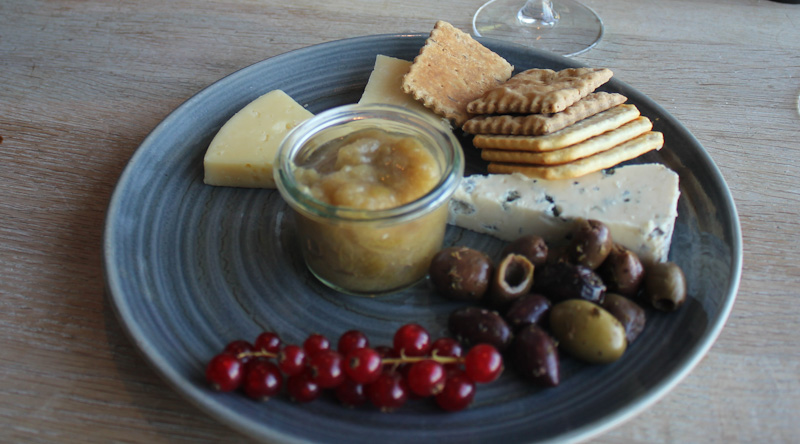
For dessert, we had a cheese platter accompanied by the sommelier’s choice, a Rojal Tokaij 2018.
For dessert we had a cheese platter.
On our return, we chose the Nord a la carte restaurant, where we enjoyed Nordic and international delicacies of the highest quality.
A Route Steeped in History
The route, carrying over 700,000 passengers annually, has been a treasured service in the region. The ferry between Oslo and Copenhagen isn’t just a way to get from A to B—it’s a floating cultural icon. Known affectionately in Norway as the “Danskebåten” (“the Danish boat”), it has long been both a practical link and a playground for generations of Scandinavians.
Historically, passengers were amazed at the luxury compared to land travel. Freshly made beds, hot meals, and the chance to socialize at sea made the trip glamorous. For many Norwegians, it was their first taste of “continental Europe.”
For Norwegians, the Danskebåten often symbolized freedom—a chance to drink cheaper beer, buy Danish pastries, or enjoy continental fashion and culture.
For Norwegians, the Danskebåten often symbolized freedom—a chance to drink cheaper beer, buy Danish pastries, or enjoy continental fashion and culture. For Danes, it was a bridge to Norway’s fjords and mountains, adding a touch of adventure. Countless stories exist of romances blossoming onboard, bachelor parties that became legendary, and families who made the cruise an annual tradition.
Even with new owners and names, the spirit of the journey remains unchanged.
(*) The link from 2014 is from one of my many crossings, not my last voyage with DFDS.
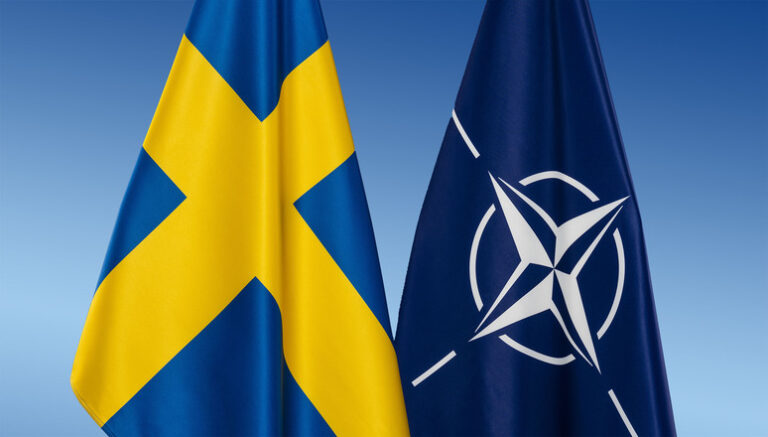
After 30 years of close partnership with NATO, Sweden joined the Alliance on 7 March 2024. Sweden’s cooperation with NATO was historically based on its policy of military non-alignment, which changed following Russia’s full-scale invasion of Ukraine in February 2022. In this overview, you can learn more about Sweden and its relationship with NATO.
Russia’s sharp escalation of aggression against Ukraine in 2014 marked a turning point for both NATO and Sweden. In the face of Russia’s brutal violation of basic principles of international law and the UN Charter, the Alliance was forced to reconsider its perception of Russian behavior and its own concept of security. This led to gradual changes in official NATO documents and strategic planning. The same changes apply to Sweden, which has had to improve its awareness of the evolving nature of its immediate neighborhood, especially given that the Baltic countries and Finland, Stockholm’s closest partner, felt threatened by Russia’s behavior and its geographical proximity.
The application process began in May 2022, and while Sweden had a history of close cooperation with NATO through programs like Partnership for Peace, full membership brings new responsibilities and challenges. Sweden’s membership enhances NATO’s capabilities with its advanced military, strategic geographical location in the Baltic Sea, significant civil defense, and expertise in Nordic conditions.
Sweden and Its Relationship with NATO – an Overview, article continues below the map.
NATO has 32 member countries.
NATO is a defense Alliance whose purpose is to safeguard the Allies’ freedom and security. The Alliance has 32 member countries. The North Atlantic Treaty serves as the foundation of NATO. Here, you will find information about the government’s work and policies in NATO, as well as what NATO membership means for Sweden.
Cooperation began when Sweden joined the Partnership for Peace (PfP) program in 1994 and the Euro-Atlantic Partnership Council (a multilateral forum for dialogue that brings together all Allies and partner countries in the Euro-Atlantic area) in 1997.
For centuries, Sweden maintained a policy of non-alignment, but Russia’s aggression in Ukraine led to a shift in policy and reassessment of its security.
For many years before its accession, Sweden had been one of NATO’s most active partners and a valued contributor to the NATO-led Resolute Support Mission in Afghanistan, the Kosovo Force (KFOR) in Kosovo, and NATO Mission Iraq (NMI).
Sweden formally applied for NATO membership on May 18, 2022. The 30 Allies signed the Accession Protocols for Sweden (as well as for Finland) the following day, giving them the status of ‘Invitee’.
Sweden became a full member of NATO when the Instrument of Accession was deposited in Washington, D.C on 7 March 2024. By becoming a full NATO member, Sweden has acquired a new identity in its foreign and security policy.
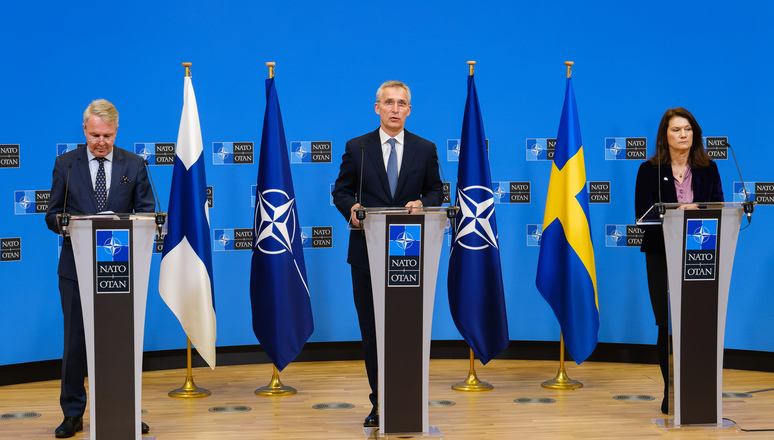
Sweden and Its Relationship with NATO – an Overview, article continues below the image.
Press conference with NATO Secretary General Jens Stoltenberg, the Minister for Foreign Affairs of Finland, Pekka Haavisto and the Minister for Foreign Affairs of Sweden, Ann Linde.
The implications for Sweden’s security and foreign policy, as well as for the Alliance, are evident. Stockholm has agreed to assume a greater responsibility in ensuring national security and the security of the region, including the Baltic Sea, Northern Europe, and the Arctic. By abandoning neutrality, strengthening ties with NATO, and supporting Ukraine, Sweden is positioning itself as one of the key players in shaping the future of European security. NATO, in its turn, by incorporating Sweden, becomes a proactive Northern player. Stockholm contributes to NATO’s expertise on the region by sharing its knowledge, as well as its territory and corresponding facilities. With every member, the Alliance gets stronger, both politically and militarily.
Sweden and Its Relationship with NATO – an Overview, compiled by Tor Kjolberg
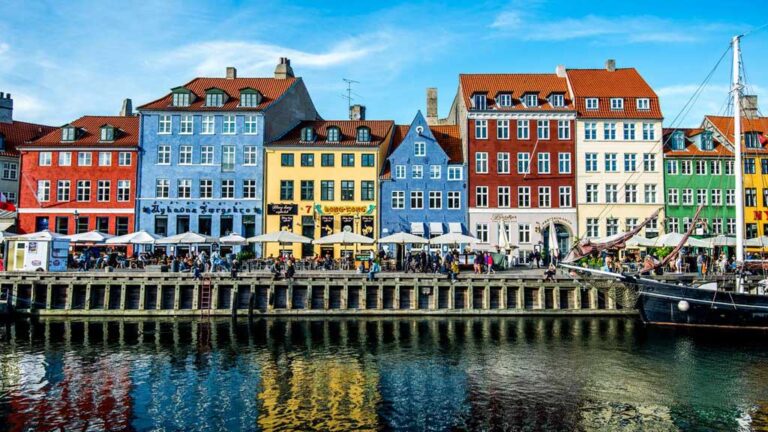
The capital of Denmark topped the list of the happiest cities for 2025, revealed by Happy City Index. The World’s happiest city 2025: Copenhagen.
Copenhagen, the vibrant capital of Denmark, is a city that seamlessly blends history, modernity, and sustainability. With a population of 1,391,200 people spread across 179.8 square kilometers, it serves as a vital hub for culture, governance, and economic activity. The city holds a significant place in the national landscape, accounting for 23.3% of Denmark’s population. A well-structured administration ensures smooth governance, with nearly 30% of all employed individuals working in public administration. The city’s budget for 2024 stands at £724.5 million GBP, supporting its extensive public services and infrastructure.
Out of every city in the world, Copenhagen tops the ranks in the ‘gold’ category.
What exactly makes a “happy city”?
To find out, researchers at the Institute for the Quality of Life have tracked 82 indicators of happiness across six major categories, including Citizens, Governance, Environment, Economy, Health, and Mobility. The index measured the policies that contribute to the quality of life, as well as their implementation and impact on residents.
Out of every city in the world, Copenhagen tops the ranks in the ‘gold’ category. The Happy City Index awarded the Danish capital with 1039 points. It evaluates the city’s well-being by combining existing data on factors such as employment, education, and health with survey data on residents’ perceptions.
The city also ranked well in the Citizens category, which includes cultural resources such as libraries and museums, as well as resident engagement and community events. For permanent residents, the lively food and cultural scene keep them loving where they live.
Many people, when traveling off the beaten path, ask the question: “To drink or not to drink local water?”
Many locations throughout the world have water that contains microorganisms that can cause minor or, on rare occasions, fatal illnesses for foreign travelers. The locals in the countries have developed an immunity to these impurities, so they have no problem drinking water from the tap.
Keep in mind that, for the most part, travelers may suffer from diarrhea when consuming tap water in these areas. It is, however, possible to contract hepatitis A, cholera, and typhoid fever from tap water in developing countries.
Many locations throughout the world have water that contains microorganisms that can cause minor or, on rare occasions, fatal illnesses for foreign travelers. Photo: Good Parenting Brighter Children.
********************************************
Related: Vaccinations for Safe Travel
********************************************
One thing many travelers often forget is that ice cubes are typically made from tap water, so use caution when ordering drinks in restaurants. It is also worth noting that you may need to use bottled water when brushing your teeth and keep your mouth closed while showering. Although we do not necessarily drink large amounts of water when brushing our teeth or showering, we do inadvertently allow harmful microorganisms to enter our bodies when doing so in developing countries.
Like most of the warnings we have discussed in our texts, some are overstated in many cases. According to many online resources, the only places that contain tap water that is safe to drink are North America, Western Europe, Australia, New Zealand, and a few locations in Asia. I have had no problem brushing my teeth in most of Eastern Europe, as well as in some countries in Asia, South America, and Africa. That is not to say that I never brush my teeth using bottled water. I have definitely had many occasions, but I refuse to believe that so few developed countries on Earth have safe tap water.
I refuse to believe that so few developed countries on Earth have safe tap water. Photo: UCLA Health
**************************************
Related: Is it Safe to Travel Abroad?
**************************************
Again, use discretion at your own comfort level here. All of our bodies react differently, and I don’t want to ruin your trip by advising you to be overly cautious about drinking tap water in some areas of the world.
You can find more helpful information on drinking water on the CDC homepage.
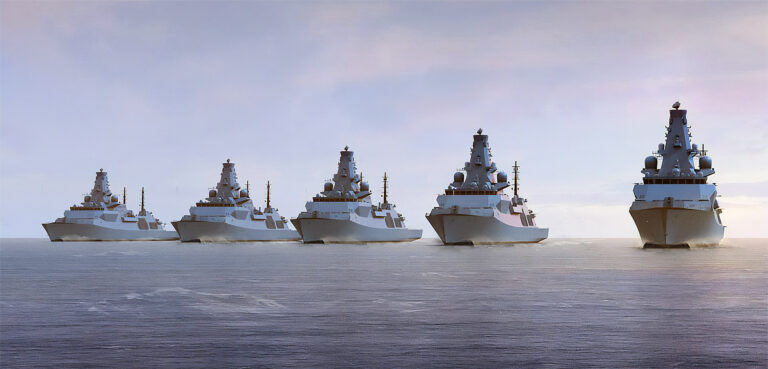
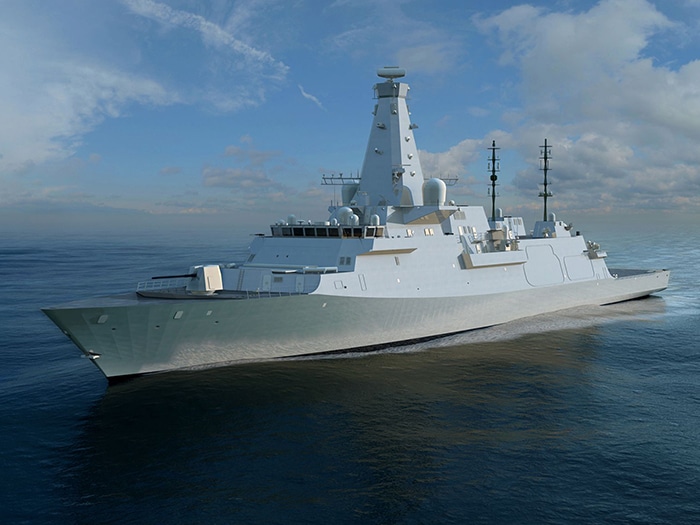
Type 26 frigates will significantly reinforce the ability of the Royal Norwegian Navy to protect a country with primary maritime interests – all of Norway’s oilfields, the source of much of its considerable wealth, are offshore. This is the most significant export order the UK has ever received for warships – from Norway.
The future frigates are set to be delivered in 2030 and “will be as identical as possible, and have the same technical specifications,” as those under construction for the Royal Navy.
Norway plans to acquire at least five UK Type 26 Anti-Submarine Warfare (ASW) frigates, with an estimated price tag of £10 billion ($13.5 billion), following the announcement of the selection of the BAE Systems-designed vessel.
Norway plans to acquire at least five UK Type 26 Anti-Submarine Warfare (ASW) frigates
The agreement under which the UK will supply Norway over the coming decade appears to be a win-win outcome. To demonstrate that the threat is not theoretical, last week, British, Norwegian, and US forces pursued a Russian submarine in the North Sea to deter any potential interference with an exercise involving the US aircraft carrier USS Gerald Ford. One of the primary attractions of the Type 26 is its capacity to hunt subs.
Hailed by Oslo in a statement as the “largest Norwegian defense capability investment to date,” the procurement is intended to replace Norway’s legacy Fridtjof Nansen-class frigates, with the successor vessels set to be built at BAE’s shipyard in Clyde, Scotland.
Norway and the UK will soon finalize a firm agreement to lock in the new buy, described by the British Ministry of Defense as its “biggest ever warship export deal by value.” The multibillion-dollar procurement is also expected to open up “extensive industrial cooperation” between the two European allies.
According to the government’s estimates, it will create or protect some 4,000 jobs, including 2,000 at the BAE Systems shipyard and hundreds of other UK businesses.
“I am confident that the strategic partnership with the UK for purchasing, developing, and operating frigates is the right decision,” said Norwegian Prime Minister Jonas Gahr Støre. “This partnership enables Norway to reach the strategic objectives our Parliament set out in the current Long-Term Plan on Defense.”
Hailed by Oslo in a statement as the “largest Norwegian defense capability investment to date.”
“This success is a testament to the thousands of people across the country who are not just delivering these next-generation capabilities for our Armed Forces but also national security for the UK, our Norwegian partners, and NATO for years to come,” said UK Prime Minister Sir Keir Starmer.
Canada and Australia are already buying the Type 26, and New Zealand, Brazil, and Malaysia have expressed interest. The deal also represents a vote of confidence in British manufacturing, as Norway could have purchased from France, Germany, or the US.
Most Significant Export Order the UK Has Ever Received for Warships – From Norway, Tor Kjolberg reporting.
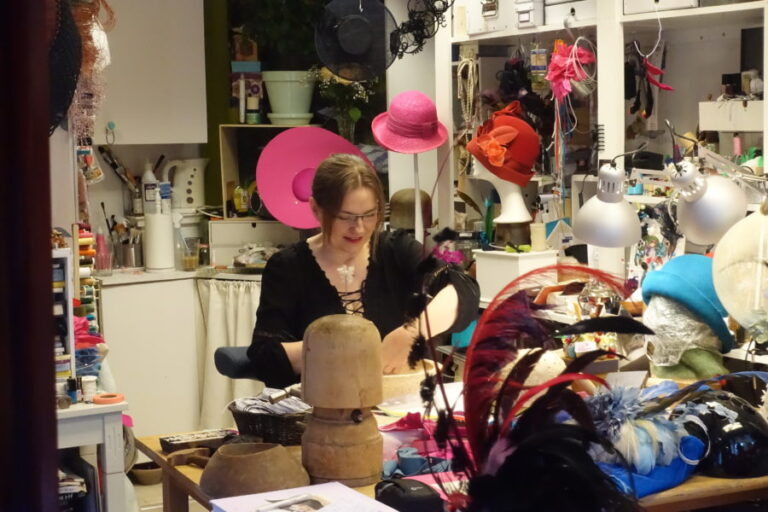
The 2025 honorary award from fashion magazine Costumes went to hat designer and milliner Mona Strand, who passed away this summer at the age of 60. Her two sons accepted the award. Norway’s most famous hat designer, Mona Strand, was honored after her death.
Queen Sonja and Crown Princess Mette-Marit were among Strand’s regular customers. The milliner passed away in August at the age of 60. The National Museum has acquired her works and featured them in Vogue Scandinavia, Vogue Arabia, and Vogue Portugal. She was also awarded a 10-year artist fellowship, which gave her a unique opportunity to immerse herself in artistic processes.
Milliner Mona Strand created hats for the rich and famous, as well as for anyone else who desired one. Photo: The National Museum.
Milliner Mona Strand created hats for the rich and famous, as well as for anyone else who desired one. The beloved craftswoman, also known as Hat-Mona, has indeed refuted Coco Chanel’s statement that “the hat would not be democratized.” Chanel started her career as a milliner. When photographer Douglas Kirkland spent three weeks shadowing the couturier, including images later used for his visual memoir, Coco Chanel: Three Weeks/1962, he never once saw her remove her hat.
Her shop at St. Hans haugen in Oslo. Photo: Trude Henrichsen.
****************************************
You may also like to read A Norwegian Designer for Tomorrow
****************************************
“People wearing hats have a more enjoyable life,” said Mona. PHOTO: Knut Bry.
“People wearing hats have a more enjoyable life,” said Mona. Mona Strand’s hats are more than just headgear; they are also pure works of art in themselves, NTB wrote when the prize winner was interviewed in 2020. The milliner had a master’s degree in sculptural hats and exhibited her hats at art exhibitions and museums in the Nordic countries, England, and Germany. She also contributed hats to theater productions and TV productions in Norway.
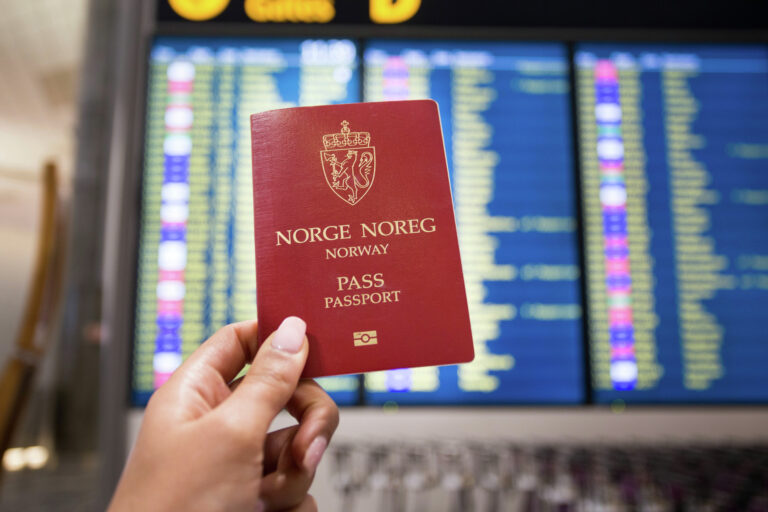
Norway is the latest European country to update its travel information for the United States, informing its citizens of stricter entry conditions and changes related to gender recognition. Read more about the Norwegian travel update for the US.
A growing number of countries are issuing travel advisories for the US, including Canada and several European nations, prompting some visitors to reconsider their trip plans. While most government advisories don’t specify why they were added, the timing suggests that they were influenced by the Trump administration’s executive orders regarding immigration and the tightening of border policies.
The Ministry of Foreign Affairs issued the updated advice in March. Included in the updated advice is a section on the entry rules. The foreign ministry said that a visa or an ESTA waiver no longer guaranteed entry and that the final decision would be made by immigration officials.
The recent uptick in travel warnings is already having a significant impact on US tourism.
It reads: “The ESTA or visa does not guarantee entry. It is the immigration authorities on arrival who make the final decision. The Norwegian authorities cannot intervene in this decision.”
Many of the European countries that have issued US travel warnings have flagged the White House’s executive order that states “it is the policy of the United States to recognize two sexes, male and female,” potentially causing issues for transgender travelers with self-identified or “X” gender markers on their passports.
It suggests that travelers whose current gender identity differs from the gender listed on their birth certificate should contact the U.S. Embassy before traveling.
“Violations of US law, false statements about the purpose of your stay, or previous overstays in the US may result in you being rejected at the border,” the advice says.
The recent uptick in travel warnings is already having a significant impact on US tourism, as several of the advisories were issued by countries that are top drivers of inbound travel to the US, including Canada, the UK, and Germany.
Travelers from Norway and other visa waiver programs typically have visa-free access to the US for up to 90 days. This is in addition to a valid passport.
The same applies to other non-US nationals who travel to the US from Norway. However, some foreign nationals would also need a visa, depending on their nationality.
A growing number of countries are issuing travel advisories for the US.
*************************************
Related: Vaccinations for Safe Travel
*************************************
Norway joins a growing list of European countries that have revised their information for citizens traveling to the U.S.
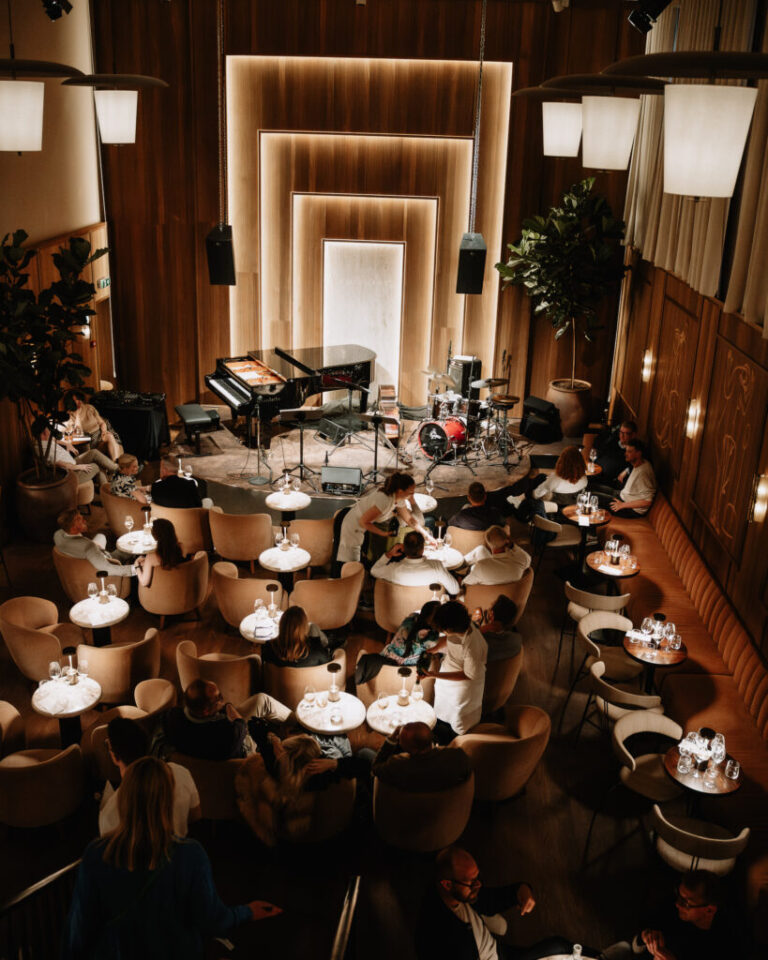
A culinary and musical powerhouse has emerged in the heart of downtown Copenhagen, uniting Denmark’s gastronomic elite with jazz royalty. Read more about the ambitious new jazz venue Epicurus in Copenhagen’s city center.
Lars Seier Christensen, co-owner of the three-Michelin-starred Geranium (World’s Best Restaurant 2022) and two-Michelin-starred Alchemist, has joined forces with Mads Bøttger of the one-Michelin-starred Dragsholm Castle Gourmet. Together, they have partnered with Sir Niels Lan Doky, the knighted jazz pianist, composer, and producer celebrated for his extraordinary improvisations and collaborations with global luminaries.
Epicurus is synonymous with luxury and the indulgence of sensual pleasures.
*******************************************
Related: Copenhagen’s Culinary Scene
*******************************************
Epicurus is synonymous with luxury and the indulgence of sensual pleasures, which is precisely what Epicurus strives to offer. What begins as an elegant dinner in a grand bistro transforms into a mesmerizing jazz experience—an unforgettable journey for the senses. Epicurus is a joint where the focus is as much on delighting the palate as getting people’s feet tapping.
The visionary Danish bar entrepreneur Rasmus Shepherd-Lomborg is responsible for mixing the drinks at Epicurus. He is known for the groundbreaking cocktail bar Ruby, which he founded in 2007 alongside his Scottish wife Adeline. Ruby has been featured six times on the prestigious World’s 50 Best Bars list.
The menu offers Franco-Nordic fare, featuring a mix of indulgence and clean flavors.
The menu offers Franco-Nordic fare, featuring a mix of indulgence and clean flavors. Locally sourced, seasonal produce features in dishes such as beef tartare with wood sorrel.
Epicurus is a harmonious blend of a luxury bistro, an ambitious cocktail bar, and a jazz hall with international aspirations. This combination allows for a versatile evening—whether you wish to experience just one aspect or indulge in all three. Epicurus is a flawless union of a luxury bistro, an exceptional cocktail program, and world-class jazz. It’s the harmonious combination of all three that makes Epicurus extraordinary.
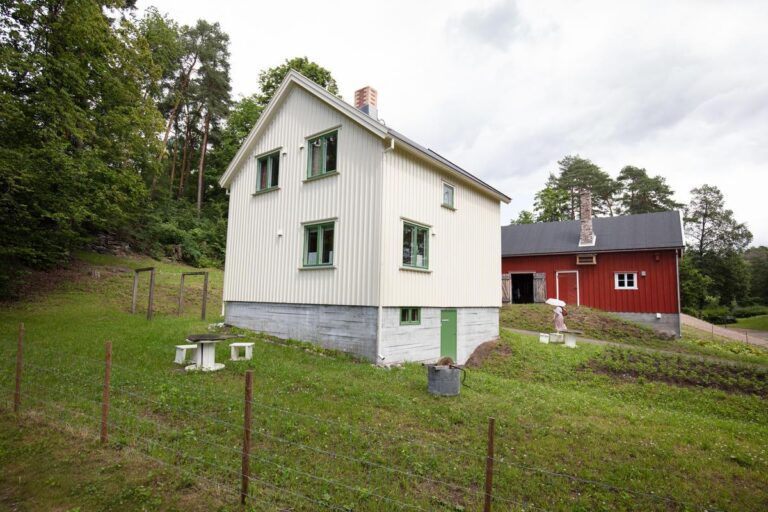
The German occupation forces in Norway knew that World War II was lost, but they were not going to be given shelter by the Russians. Therefore, the Germans were eager to burn down as many of the wooden houses in Finnmark as they could. After the liberation in 1945, the region was rebuilt, and the buildings were referred to as the reconstruction houses from Finnmark.
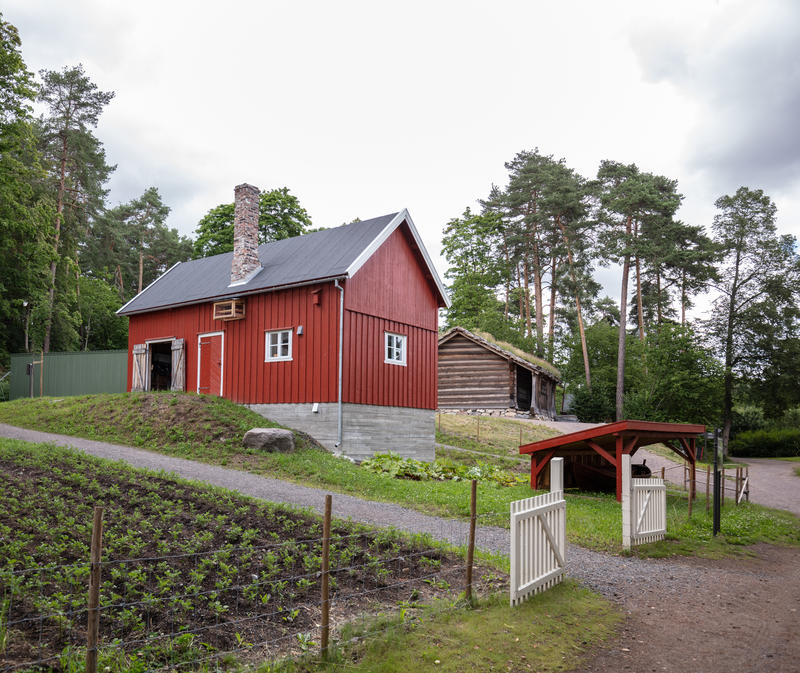
At the Norwegian Folk Museum in Oslo, several reconstructed houses from Porsanger are on display. There, you can learn about the story of war, evacuation, refugee life, and reconstruction, but most of all about the people who have lived in Finnmark – about the Sami, Kvens, and Norwegians.
At the Norwegian Folk Museum in Oslo, several reconstructed houses from Porsanger are on display.
Traditionally, the houses in Finnmark were log cabins before they were destroyed during the war. The reconstruction houses were built using different methods. Some were constructed with log planks, while others were machine-made, approximately. 7 x 15cm horizontal planks with double tongue and groove. These were papered and paneled inside and out. Others were built in a strong (heavy) timber frame. Some houses were partially prefabricated and assembled from elements.
In Manndalen, the residents received support to build the reconstruction houses. Almost everyone there still lives in this type of house: a small, nearly square rectangle with two symmetrical windows, a steep roof with a chimney in the middle. A kind of prototype of a house, an iconic house, a house like children draw it.
The Directorate of Reconstruction oversaw the construction, established guidelines for housing quality, and held an architectural competition. Drawings were also made at the so-called Finnmark Office and at district offices.
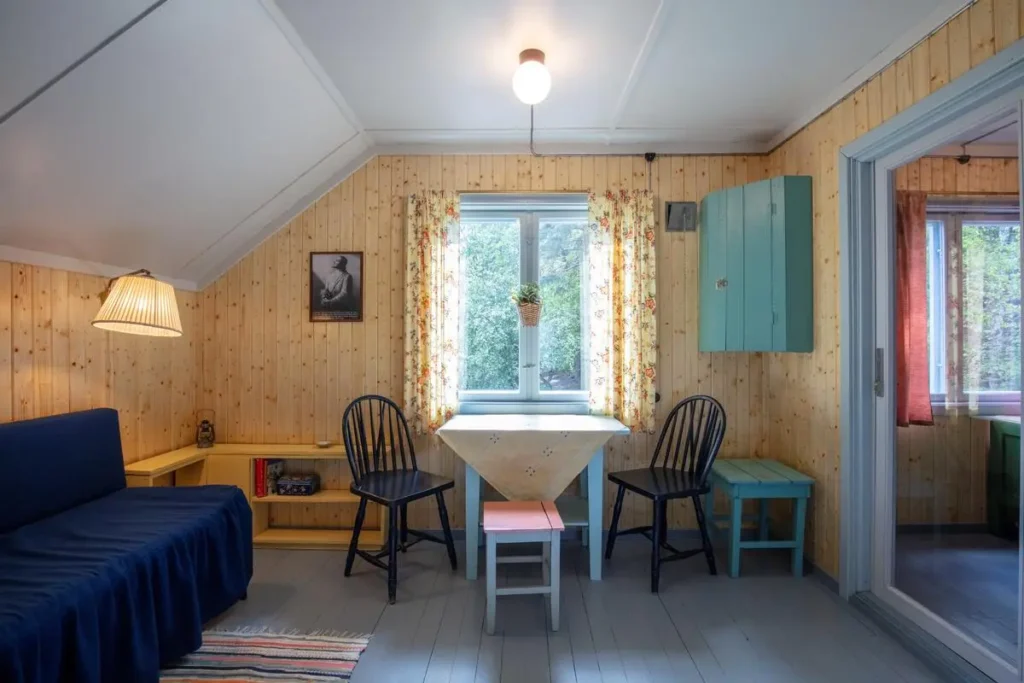
Interior in a reconstruction house.
Finnmark is located in the far north of Norway and constitutes one-sixth of mainland Norway, with an area of just over 48,000 square kilometers. Finnmark borders the Arctic Ocean to the north, Troms (Kvænangen) to the west, Finland to the south, and Russia to the east.
Porsanger is a trilingual municipality with Sami, Kven, and Norwegian as official languages. The population of Porsanger was mainly Sami (Sea Sami) until the 18th century, when Kvens from the Tornedalen in Sweden also settled in the area. Until World War II, fishing, agriculture, and reindeer herding were the most essential economic bases in Porsanger.










 Copenhagen even has a