More than half of the approximately 40 Norwegian craft distilleries, spread around Norway, have established a new industry organization.
Norwegian Distilleries was founded on May 2, 2024.
“It is essential that we in this industry are made aware of the fantastic opportunities we have to make quality spirits in Norway. And we are first and foremost an industry for the districts,” says elected chairman, Odd J. Nelvik, from Det Norske Brenneri in Grimstad.
“Together we’ll make visible what we stand for: professional pride, local value creation, and cultural heritage. We have already had many meetings with key politicians and, of course, the management of Vinmonopolet (sales of wine and spirits in Norway are restricted to state alcohol shops). The association’s goal is to influence public policy as well as act as a familiar voice for craft distilleries,” says Nelvik.
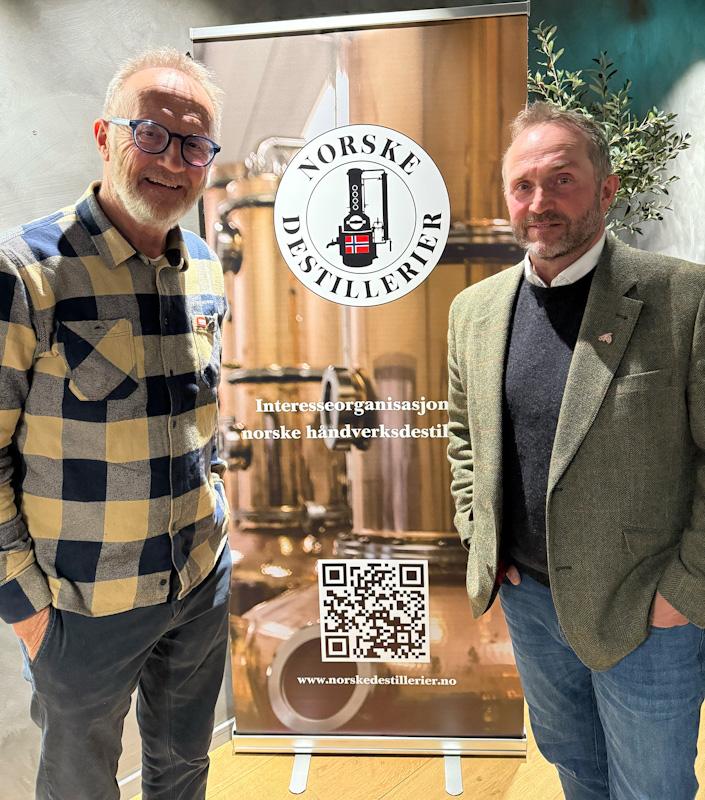
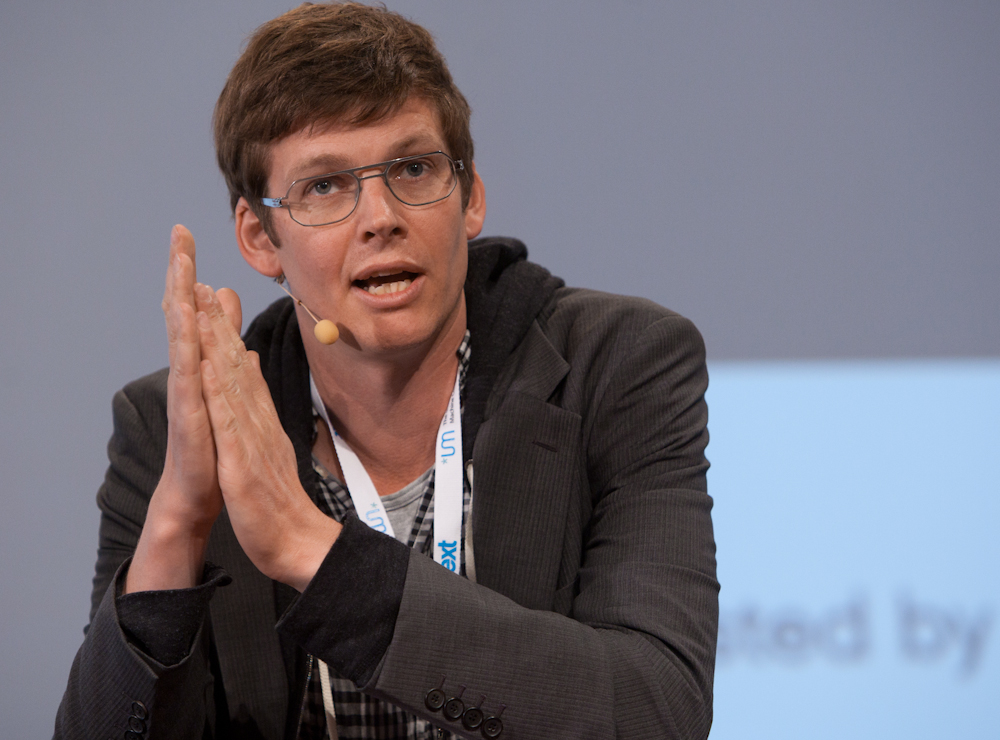
Odd Johan Nelvik (left) was elected chairman of the board and Tor Petter Weien Christensen as deputy chairman.
***************************************
You may also like to read Drinking in Scandinavia
***************************************
Norwegian Destilleries will also promote research and development that can contribute positively to the members’ products, processes, and market development, as well as being the members’ spokesperson towards Vinmonopolet in relation to general framework conditions. The association will also promote a responsible drinking culture.
Norwegian Destilleries will promote research and development that can contribute positively to the members’ products, processes, and market development
“We are constantly gaining new members,” says chairman Nelvik.
Norwegian Craft Distilleries Have Established a New Industry Organization, based on a press release from Norwegian Destilleries.
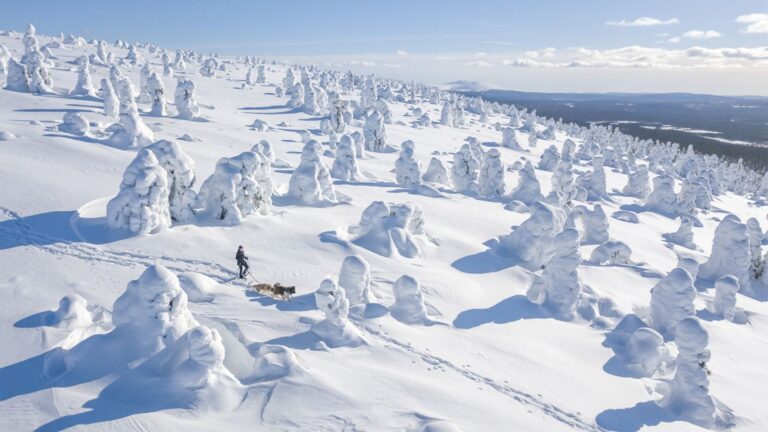
Finnish Lapland offers much more than Northern Lights and Santa Claud. Magical Finnish Lapland covers nearly a third of Finland, stretching from the fell highlands of the far north to the unique archipelago on the Bothnian Bay.
Visiting Finnish Lapland may seem like a challenging trip, but fortunately, the Arctic in Europe is incredibly accessible compared to other places in the world. While nature lovers and Christmas fans will feel right at home, gastronomes, extreme sports enthusiasts, and cultural heritage devotees alike are sure to find that Lapland and its far-reaching fells and snow-covered slopes are short of end-of-the-rainbow magical.
With five airports, two railway lines, and an extensive road network, Lapland’s tiny villages and small towns – and of course, the awe-inspiring wilderness – are easily accessible. Distances are long, but virtually no traffic and natural sights along the way turn your Lappish journeys into Arctic adventures.
Throughout the summer, you will likely need to transfer through Helsinki. The Finnish Arctic is unbelievably beautiful, with lakes spread out across the land and small peaks rising out of the forests.
There is something about Lapland that gives it an almost surreal quality. Perhaps it is the locals, who live for their family-run businesses, who welcome tourists and tell them all about the Lappish culture and traditions, as well as the Sámi people, with Europe’s only surviving indigenous culture. Maybe it is the symbiosis of people and nature, their cloudberry picking, salmon fishing, and reindeer herding – all of which you can participate in and experience for real.
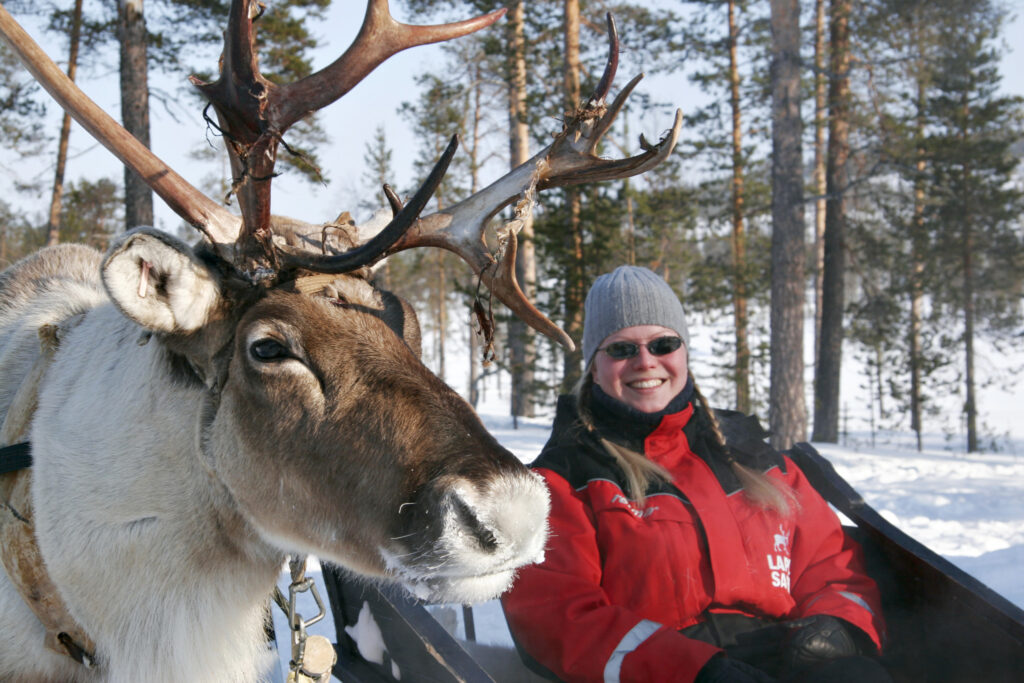
Reindeer excursion in Rovaniemi. Photo: Visit Rovaniemi.
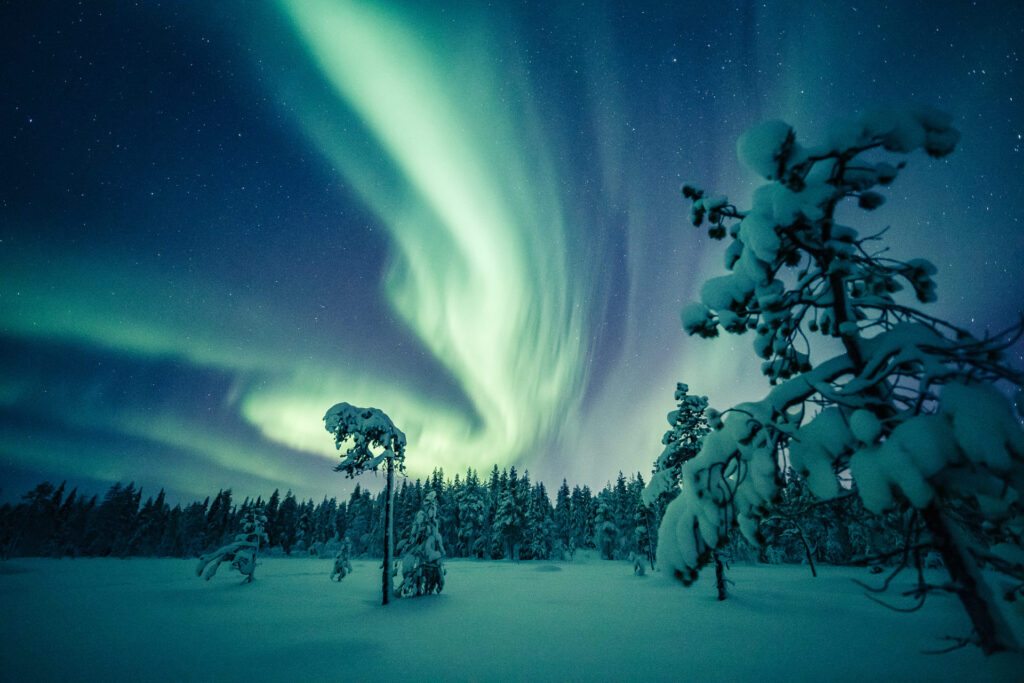
The eight seasons of northern nature offer their stunning phenomena for visitors to marvel at. The Northern Lights, midnight sun, and autumn colors are accompanied by the polar night, the snow-covered spring, and the world’s cleanest air (a researched fact). Eight national parks offer natural therapy under the Lapland sky, an experience found nowhere else.
Past the Arctic Circle, seasons morph into a different beast, with long, drawn-out winters that encroach well into what would typically be spring, and summers that burst into life with never-ending days before fall quickly sneaks in.
Don’t forget the kicks: the peaks and slopes that make for some of the best skiing and snowboarding in the world, or the reindeer safaris, husky rides, and snowmobiles racing across the vast snow-covered fields. Unless, of course, you are a lover of all things edible. Finnish Lapland offers the most exquisite, unusual delicacies, such as Lappish game, red king crab from the Arctic Sea, and, naturally, sautéed or air-dried reindeer.
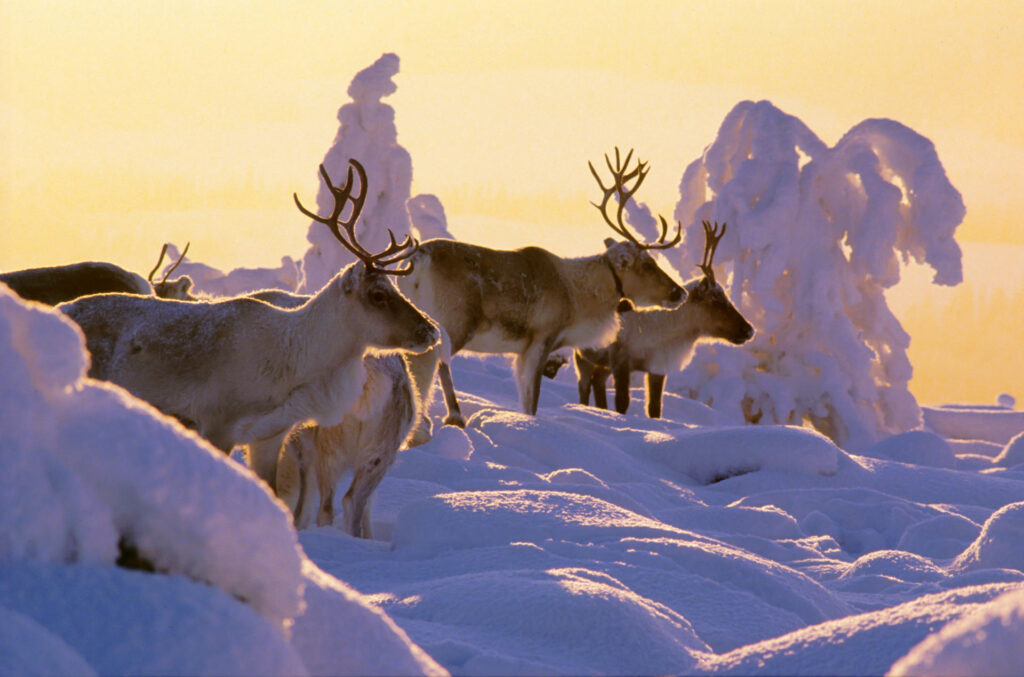
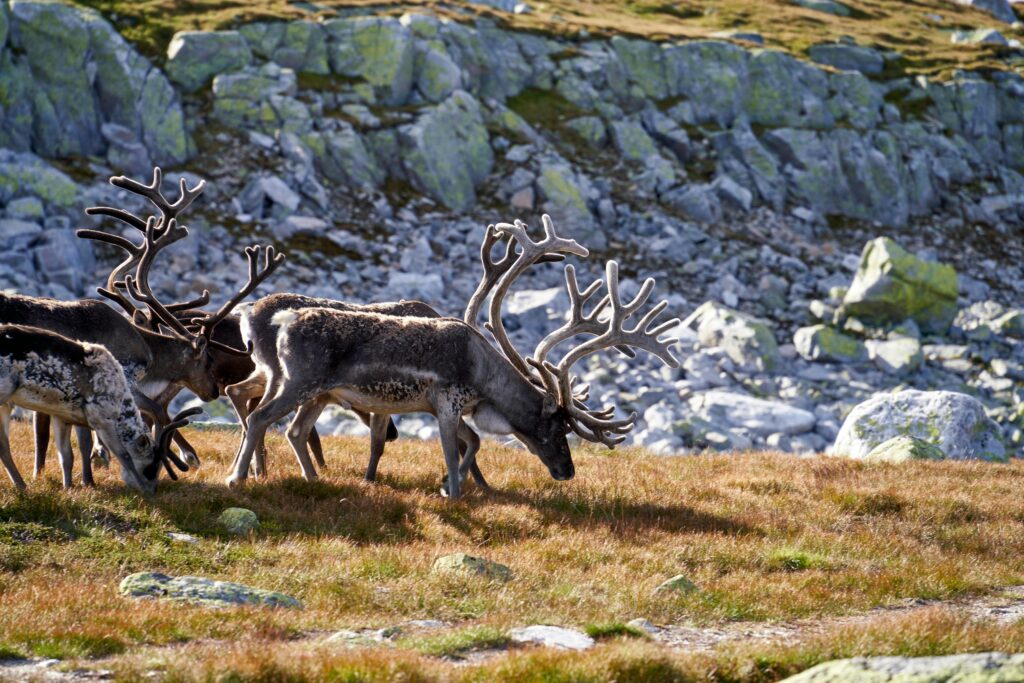
Even the 200,000 reindeer agree that enjoying the silence in peace is the best way to spend time. Photo: Arto Komulainen/Visit Lapland.
In magical Finnish Lapland, you can stay in a cottage, a hotel, or even a traditional “kammi” hut, unless a snow igloo is your cup of hot chocolate. There’s no shortage of things to do in Lapland, but doing nothing might be just what you’re looking for: even the 200,000 reindeer agree that enjoying the silence in peace is the best way to spend time.
“Insurance covers a lot, but not everything. Sometimes we have a little too high expectations of what we can get back,” says claims prevention expert. Read more aboutCreative Claims: Customer reported glasses stolen by a bird.
During the summer, insurance companies receive many claims reports from vacationing Norwegians, and some are more creative than others.
A customer reported the sea stole his glasses. Another pointed out the bird as the “perpetrator”.
Prevention expert Therese Hofstad-Nielsen in Fremtind.
“Since neither the sea nor a bird is a person, they have no benefit in stealing the glasses, according to what is stated in the Penal Code. These cases were therefore dismissed,” says claims prevention expert Therese Hofstad-Nielsen in Fremtind.
Dissatisfaction with hotels and travel destinations is also common in the summer, because not all vacations meet expectations. This was undoubtedly the case for the customer who wanted a refund for her hotel stay due to unhygienic conditions:
“Flies swarm on the food, and the employees rinse plates and glasses with a garden hose in the backyard,” is the explanation.
“Although the customer has obviously been unlucky in choosing a hotel, this is not something that travel insurance covers,” explains the claims prevention specialist. She points out that it is the travel agency that must be contacted in such cases.
Some customers have also wondered whether travel insurance can cover bad weather at the holiday destination. Others have requested cancellation due to divorce or breakup.
“Unfortunately, we do not have sun guarantee insurance or divorce coverage,” says Hofstad-Nielsen.
. Insurance does not cover if you fall asleep in a public place and something is stolen.
Fell asleep in the park
Another customer reported that several valuables were stolen from her bag because someone had burned a hole in it, without her noticing anything. There was also someone who, after a damp night, spent an hour in the park with her mobile phone in her hand. When he woke up again, the mobile phone was gone.
“It might be a good idea to take a nap at home. Insurance does not cover if you fall asleep in a public place and something is stolen,” says Hofstad-Nielsen.
1 in 5 should have better control
In a survey conducted by Respons Analyse for Fremtind, 23 percent of Norwegians said that they should check more closely what their travel insurance covers.
“Sometimes we have somewhat high expectations of what travel insurance covers. That is why it is a good idea to familiarize yourself with your insurance, so that you avoid unnecessary expenses and misunderstandings,” concludes Hofstad-Nilsen.
Creative claims reports: Customer reported glasses stolen by a bird, A press release from Fremtind Insurance.
Feature image (top) (c) Pixabay.
The Danish tournament organizer BLAST Premier has signed a multi-year partnership with the Singapore Tourism Board to bring four additional esports events to Singapore.
The announcement follows the sellout success of the BLAST Premier World Final in 2024, which marked BLAST’s debut in Southeast Asia and saw a sold-out Resorts World Convention Centre witness the best Counter-Strike teams in the world battle for a $1,000,000 prize pool.
BLAST will host four world-class arena esports events in Singapore over the coming years. This deal further highlights Singapore’s growing status as a premier destination for competitive gaming and live entertainment in Asia and globally.
Founded in 2020 by Nikolaj Nyholm, Blast Premier is known for Counter-Strike tournaments, attracting thousands of fans from across the world. Building on the company’s success, BLAST is set to return to Singapore this November for the BLAST Dota Slam Singapore, the company’s first-ever Dota 2 arena event. Taking place at the Singapore Indoor Stadium from 7-9 November 2025, this tournament sets the stage for the newly signed multi-year partnership, which will bring four more premier esports arena events in Singapore after November’s Dota tournament.
BLAST is set to return to Singapore this November .
This partnership reinforces how major esports tournaments are evolving into cultural and economic cornerstones, rivaling traditional international sporting events in scale, viewership, and significance.
Reindeer migration routes you can hike respectfully lead through sweeping tundra, forests, and mountain passes alive with tradition and wildlife.
Joining these ancient trails feels adventurous, offering rare moments alongside roaming herds and untouched landscapes. Yet, every step calls for awareness and respect. Hiking here is not just about exploration but also responsibility. With the proper preparation and mindful choices, you can experience the thrill of the journey while protecting the reindeer and honoring local communities.
The Significance of Reindeer Migration Routes
Reindeer migration is one of nature’s great seasonal journeys. These animals travel hundreds of miles across tundra, forests, and rivers to reach feeding grounds. The routes are more than paths for survival; they are lifelines for entire ecosystems. Birds, predators, and plant cycles all connect to these movements.
For Indigenous communities such as the Sami in Scandinavia or the Nenets in Siberia, the migrations are central to culture and livelihood. Understanding this deep connection helps hikers respect the trails. By seeing the routes as living systems, visitors can step carefully, knowing their presence carries responsibility as well as adventure.
There are many reindeer migration routes you can hike respectfully. Photo: Introspectivedesign/Pexels
Where You Can Experience Reindeer Migration on Foot
In several northern regions, hikers can follow reindeer migration paths and take in striking landscapes along the way. The Kungsleden Trail in Swedish Lapland is well-known for its valleys where herds pass through during spring and autumn.
Norway offers some of the most memorable experiences, especially on the Finnmark Plateau. Here, the vast tundra stretches endlessly, while Sami traditions add depth to the journey. It’s easy to see why people love living here, with Norway’s outdoor wonders, green initiatives, culture, and inclusivity drawing people closer to nature. Beyond Finnmark, northern Norway also provides breathtaking opportunities to walk alongside migrating herds in settings that feel untouched and authentic.
Across the Atlantic, Alaska’s Arctic National Wildlife Refuge allows visitors to witness massive caribou herds on the move. Wherever you go, these routes provide rare encounters with wildlife, cultural heritage, and awe-inspiring scenery.
Preparing for Your Trek Along Migration Paths
Trekking along reindeer migration routes requires solid preparation. The weather in tundra and Arctic regions can shift quickly, so carrying layered clothing is essential. Good boots protect your feet over long distances, and maps or GPS keep you on course. Food, water, and safety kits should always be packed.
You should also consider the hiking gear you’ll need before setting out, especially for remote Scandinavian trails. Traveling light but smart reduces strain and keeps you safe. Planning well is not only about your comfort—it also ensures you hike responsibly, minimizing disturbance to reindeer and preserving the fragile environment they depend on.
Respectful hiking protects animals and the environment. Photo: Barnabas Davoti/Pexels
Respectful Hiking Practices to Protect Wildlife
Hiking along reindeer migration routes means sharing space with sensitive animals. Always keep a safe distance from herds to avoid stress or accidents. Move quietly and avoid sudden gestures that might startle them. Stick to marked trails and respect barriers that protect grazing areas. Of course, carry out all waste and leave nothing behind.
Camp only in designated spots when possible. Drones and loud devices should stay packed away, as noise disrupts the herds. Following these practices not only protects reindeer but also preserves the wild character of the places they call home.
Hiking Etiquette With Local Communities
Many migration routes pass through Indigenous lands, where reindeer herding remains vital. In Scandinavia, the Sami people rely on these herds for culture and livelihood. Respect fences, grazing zones, and private cabins along trails. Avoid disturbing working dogs or herders managing animals.
Supporting local guides and buying regional food or crafts helps communities benefit from respectful tourism. Always ask before taking photos of people or property. By showing courtesy, hikers strengthen ties with local traditions while ensuring their journeys support, not disrupt, cultural heritage.
Best Seasons for Hiking Reindeer Routes
Timing your hike is crucial for safety and experience. Spring and autumn are the main migration periods, offering the best chance to see reindeer on the move. Trails are often more accessible in late spring when snow melts, while in arctic autumn the tundra glows with color and herds shift toward winter grazing grounds.
Summer brings long days but also clouds of insects, while deep winter requires advanced survival skills. Choosing the right season ensures a safer journey and a deeper connection to migration.
Autumn is a fantastic season in Scandinavia. Photo: Clement Proust/Pexels
Safety Concerns on Migration Trails
Reindeer migration routes often cross remote and unpredictable terrain. The weather can shift rapidly, and the environment demands caution. Staying safe means preparing for risks before you set out. Keep these points in mind:
Sudden storms can bring snow, rain, or strong winds.
Wildlife encounters may include bears, wolves, or moose.
Long distances between shelters require careful route planning.
Cold nights demand reliable clothing and sleeping gear.
Communication devices and first aid kits are essential.
Top Reindeer Migration Routes You Can Hike Respectfully
Several reindeer migration routes you can hike stand out for their beauty, accessibility, and cultural significance. Each offers a unique chance to walk in step with nature. Here are some of the most rewarding examples:
Norwegian Finnmark Plateau – Expansive tundra landscapes where herds roam freely, with Sami culture present across the region.
Swedish Lapland Kungsleden Trail – A long-distance trail cutting through valleys and mountains, often crossed by reindeer in spring and autumn.
Alaska’s Arctic National Wildlife Refuge – Home to one of the world’s largest caribou migrations, offering vast wilderness and raw encounters.
Siberia’s Yamal Peninsula – Migration paths used by the Nenets people, combining cultural heritage with rugged, remote tundra hiking.
Finnish Lapland’s Pallas-Yllästunturi National Park – Well-marked trails with high chances of spotting reindeer during seasonal movements.
Supporting Conservation Through Responsible Hiking
Hiking reindeer migration routes is more than a personal adventure—it also supports conservation when done responsibly. Many trails require permits or fees that directly fund habitat protection.
Choosing eco-certified guides and local services ensures your money helps sustain both wildlife and communities. Donations to conservation programs can further protect migration corridors from development.
Simple actions—packing out waste, sticking to marked paths, and minimizing campfires—help preserve fragile tundra. Responsible hiking shows respect both for reindeer and the people who depend on them.
A Journey Shared With Nature
Reindeer migration routes you can hike offer both adventure and responsibility. These paths reveal wild beauty, living traditions, and fragile ecosystems. By preparing well, respecting wildlife, and honoring local communities, hikers ensure these routes remain protected. Every step taken with care supports both reindeer and the culture tied to their journey. Whether in Scandinavia, Siberia, or Alaska, walking these trails provides rare moments of connection. Hike respectfully, and the migration will continue to inspire generations to come.
Reindeer Migration Routes You Can Hike Respectfully, written for Daily Scandinavian by Emelia Collins. Emelia is an outdoor writer and avid hiker passionate about Arctic trails and cultural heritage. She shares practical advice for adventurers seeking meaningful journeys that respect both the land and the communities that call it home.
There was significant interest in a stable energy partnership on hydrogen between Japan and the Nordics at an EXPO 2025 event in Osaka. Read on and learn more about EXPO 2025: Japanese interest in Nordic hydrogen and other energy solutions.
Progress is rapid in Japan, the world’s fifth-largest economy. The Japanese are always on the lookout for new solutions to cope with energy demand, an area where Nordic companies have a role to play, especially in green energy. The joint Nordic Energy Day was a massive draw for current and potential Japanese business partners, who learned about solutions from a range of Nordic companies, as well as about the Nordic Hydrogen Valleys initiative, which was presented by Klaus Skytte, Director of Nordic Energy Research.
Klaus Skytte, Director of Nordic Energy Research
“The Nordic countries are in a unique position to be at the forefront of the green transition, integrate hydrogen into energy systems, and promote a clean hydrogen economy,” says Klaus Skytte, Director of Nordic Energy Research
“I envisage huge potential for the Nordic countries and Japan to work more closely together in this area, which is crucial if we are to reach our climate goals. Hydrogen connects renewables with end-users – including in the infrastructure sector – and helps integrate sectors, too. Developing the whole of the value chain is the key to green transition, so I hope that mapping Nordic Hydrogen Valleys will highlight the strength of Nordic co-operation and promote synergies with Japanese initiatives.” **************************************************
Related: Nordic Guidebook for Tourism Innovation
**************************************************
Hydrogen has potential
One of the key points in the Nordic Hydrogen Valleys presentation was that hydrogen has the potential to be an essential source of energy while cutting CO2 emissions in energy-intensive industrial processes and transport. This point resonates from Oslo to Osaka and all points in between. The Nordic Energy Research report, Nordic Hydrogen Valleys, maps value chains and provides an overview of projects. The mapping is visualized by an interactive digital tool that provides an overview of ongoing developments and progress on value chains. It gives decision makers, investors, and society as a whole a solid foundation on which to make informed and knowledge-based decisions.
*************************************************
Related: Nordic Culture in the Digital Age
*************************************************
A joint initiative for a competitive Nordic Region
The Nordic Council of Ministers organized Nordic Energy Day in close collaboration with business development agencies from the Nordic countries. The Council of Ministers is a partner in the Nordic Pavilion at EXPO as part of its work to maintain and strengthen the competitiveness of the Nordic Region. Energy Day is the second in a series of Joint Nordic Days on various themes that the Council of Ministers is hosting at EXPO 2025. Other themes in the coming months will include health technology, literature, gender equality, regional development, and the Arctic.
For several reasons, some articles are read more than others. The reason varies, from personal relevance and provoking strong emotions to the credibility of the source and clever marketing. Yesterday, we published our article number 3000 since our launch in 2013. In this overview, we publish a list of the ten most-read articles in Daily Scandinavian since then.
3,000 articles mean that Daily Scandinavia is now an encyclopedia of Scandinavian destinations, culture, business, and more. Use the search function for words or phrases that are of interest to you, and it might open new insight into what you are searching for.
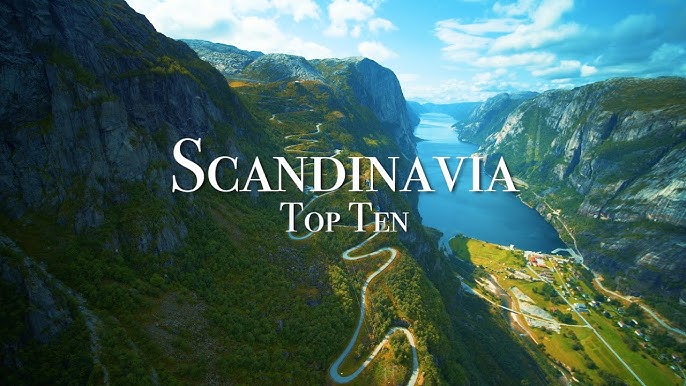
Here is the list of the ten most-read articles in Daily Scandinavian since our launch in 2013.
Your trip to Norway would be much more enjoyable if you could communicate with the locals.
Readers often look for something in an article for themselves, such as inspiration, information, or a benefit that helps them understand or improve their lives. This might be the reason why this article is at the top of our list.
In this article, we invited our readers to learn some basic Norwegian words and phrases before traveling. Their trip to Norway would be much more enjoyable if they could communicate with the locals. Our team reviewed the most common Norwegian words and phrases.
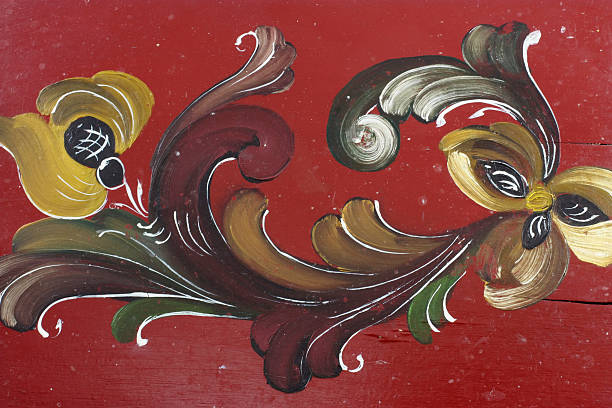
Rosemaling is the decorative folk painting of Norway.
People enjoy articles that align with their interests or hobbies, as these topics are inherently more appealing to them. That is probably why this article scores high.
Rosemaling is the decorative folk painting of Norway, and its history began in the lowland areas of Eastern Norway about 1750, inspired by upper-class artistic styles when Baroque, Rococo, and Regency were introduced to Norway’s rural cultures. At first, Norway’s painters followed these European styles closely.
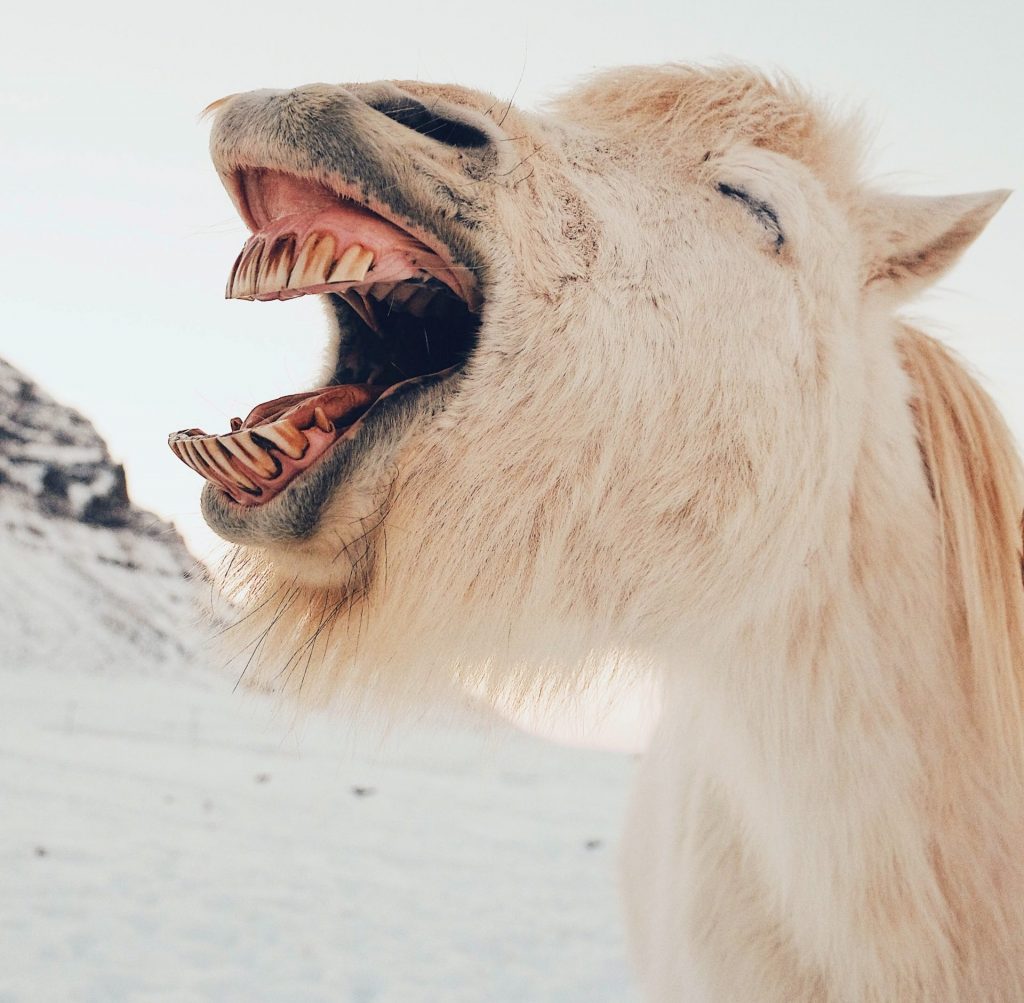
From time to time, we’re searching for jokes about Scandinavians or Scandinavia.
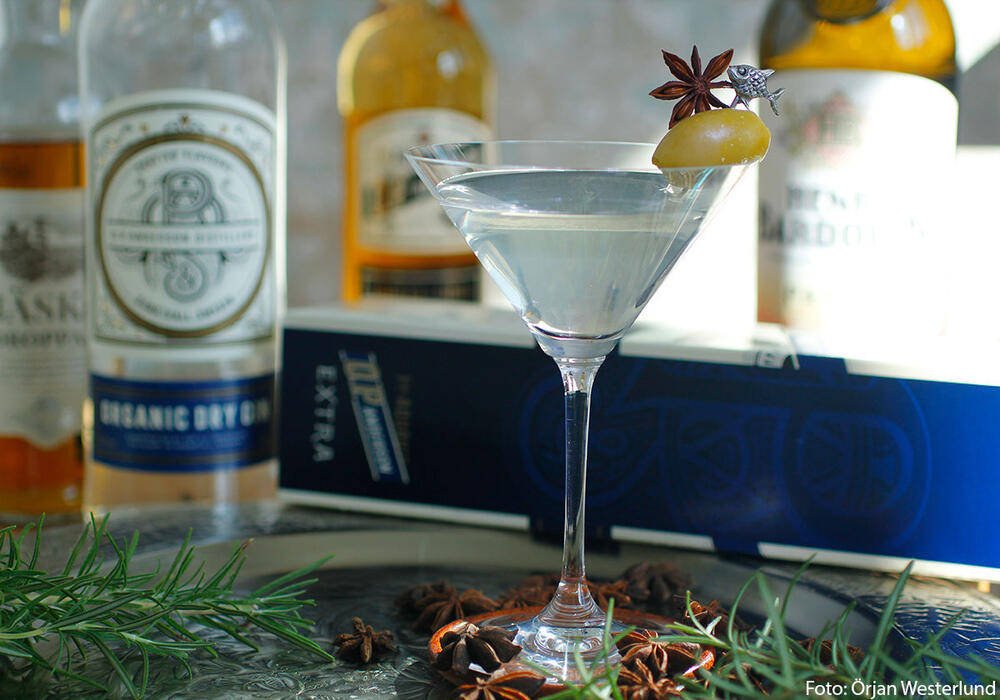
Since alcohol advertising is prohibited in Norway and Sweden, informative articles on such brands probably drive this article upwards among Scandinavian readers.
It’s well known that most other countries perceive Swedes as honest, friendly, and modern (and unequivocally good-looking!) Little, though, is known about alcoholic beverages in Sweden. In this article, we attempted to enlighten our readers as we explored exactly what the Swedes like to drink.
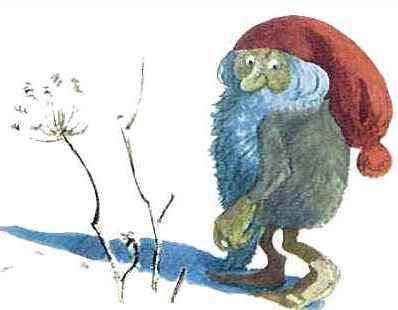
The tomte is an essential part of Scandinavian folklore.
Scandinavian Christmas stories are popular due to the strong visual aesthetic of snow-covered landscapes, the unique folklore figures like the Nisse and tomte (gnomes), and the creation of hygge—a feeling of cozy contentment amidst cold, dark winters.
The tomte is an essential part of Scandinavian folklore. He’s a little gnome of sorts, dedicated to one home or farm, looking out for the farm animals and children of the place, pattering about by night, unseen, to check on everyone’s welfare. Astrid Lindgren has adapted a poem into this wonderful tale about the Tomten.
Driving in Sweden is popular because it offers freedom to explore its vast, beautiful natural landscapes like forests, lakes, and coastlines, often with little traffic outside major cities. The well-maintained road network, including good motorways and country roads, makes for a convenient way to travel, especially for those wanting to go beyond public transport routes.
There are plenty of scenic views that can be experienced from the road in Sweden, and picking out the top 5 drives was no easy task. It’s all about personal preference when it comes to enjoying the surrounding landscape, but Sweden has something for everyone.
Scandinavia is the most open-minded region in the world, and it’s perfectly legal in Scandinavia for nudists to swim naked
Stories about naturism are popular because the lifestyle offers a path to self-acceptance, body positivity, and mental well-being, providing a contrast to societal norms around shame and judgment. Many people find freedom and a deeper connection to nature by shedding clothes, which can also lead to stress relief and a more positive body image.
Scandinavia is the most open-minded region in the world, and it’s perfectly legal in Scandinavia for nudists to swim naked, or to sunbathe either topless or entirely in the nude.
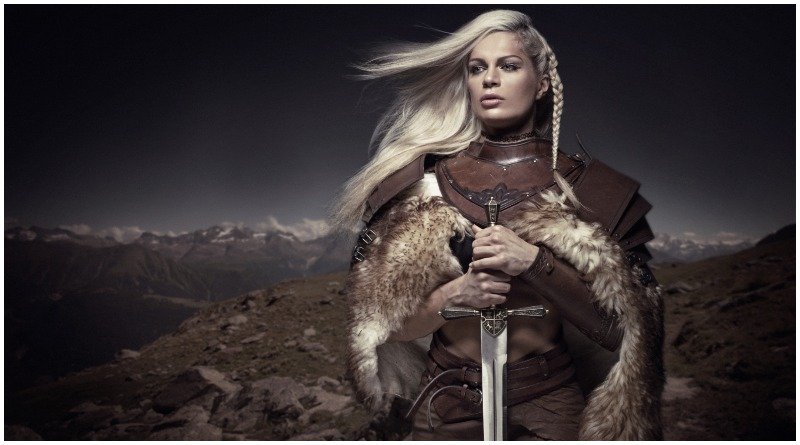
Viking stories remain popular due to the compelling mix of their image as daring explorers and fierce warriors, the richness of Norse mythology and its gods like Odin and Thor, and their historical significance as a culture that shaped and was shaped by others.
Old Norse was the language spoken by the Vikings, and the language in which the Eddas, sagas, and most of the other primary sources for our current knowledge of Norse mythology were written.
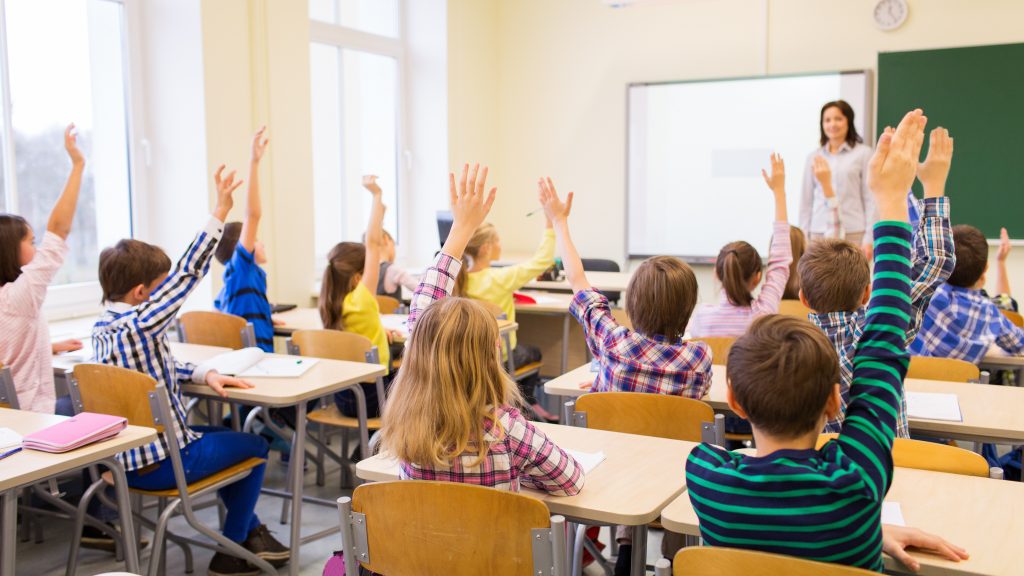
The main thing about school education in Sweden is to identify and develop each child’s talents and abilities.
Articles about learning Swedish education are popular because of its innovative and inclusive learning system, which emphasizes freedom, equality, and critical thinking, as well as its high-quality early childhood education and intense focus on lifelong learning and practical skills.
The main thing about school education in Sweden is to identify and develop each child’s talents and abilities, and to teach students how to set and achieve goals. While working with children, the teacher takes on the role of an assistant rather than a strict teacher with a pointer. Essay writing service EssayShark conducted a study on the advantages of the Swedish education system.
Articles about Scandinavian culture are popular because the region is associated with a unique and appealing combination of values, including egalitarianism, welfare-driven societies, environmental connection, and functional design, all of which create an image of a balanced, modern, and desirable way of life that is aspirational to many people.
Scandinavia refers to a group of three countries in Northern Europe: Norway, Sweden, and Denmark, because of their shared cultural and historical endowments. Besides their wealth of travel opportunities and unique heritage, the Scandinavian countries are invariably categorized among the happiest places worldwide.
The Scandinavian countries are invariably categorized among the happiest places worldwide.
We hope you enjoyed this overview. Daily Scandinavian will continue to produce quality articles about Scandinavian people, businesses, and issues, now including Finland and Iceland.
When it comes to raising healthy, happy children, Scandinavian countries offer more than just good healthcare and excellent schooling—they offer a tradition of food that’s simple, seasonal, and designed to nourish. In this article, you can learn more about Nordic nutrition for kids: Rye bread, berries & balanced plates.
Across Norway, Sweden, Denmark, Finland, and Iceland, mealtime is a chance to slow down, connect, and raise kids who develop a lifelong respect for real food.
For generations, Nordic families have passed down food traditions rooted in balance. Think of thick slices of rye bread topped with boiled eggs, crisp cucumbers, or smoked fish. Add to that warm meals centered around hearty stews, root vegetables, legumes, and wild-caught fish. These are the everyday building blocks of Scandinavian plates—and they’re as delicious as they are nutritious.
So, what makes Nordic food traditions so well-suited for growing bodies and developing minds? And how can families around the world learn from them? Let’s explore how Nordic nutrition helps raise healthy kids—without fad diets, gimmicks, or constant food battles.
The Simplicity Principle: Less Processed, More Whole
One of the most defining characteristics of Scandinavian cuisine is its simplicity. Meals are rarely overcomplicated. A lunchbox might include a piece of whole-grain crispbread with cheese, a boiled egg, and a few carrot sticks. Dinner could be baked salmon with potatoes and green peas. Snacks often feature fresh fruit, yogurt, or leftovers from breakfast.
This simplicity makes it easier for children to understand where food comes from and helps build healthy relationships with everyday ingredients. Children who grow up eating whole foods are more likely to continue doing so into adulthood. This simplicity also reduces exposure to ultra-processed foods—one of the growing concerns in many parts of the world. With fewer additives and artificial flavors, Nordic-style meals help children tune into their natural hunger cues and develop an authentic taste for natural flavors.
One of the most defining characteristics of Scandinavian cuisine is its simplicity.
A Love for Local and Seasonal Foods
Eating seasonally is a natural part of life in Scandinavia, where long winters and short growing seasons have shaped culinary habits for centuries. Root vegetables, cabbage, peas, oats, berries, and hardy greens form the backbone of many traditional meals. In warmer months, there’s a strong focus on fresh herbs, foraged berries, wild mushrooms, and even edible flowers.
This seasonal way of eating not only supports local farmers and reduces environmental impact, but it also gives children a natural rhythm around food. They learn that strawberries come in summer, and rutabagas belong in winter soups. This awareness encourages curiosity and appreciation for ingredients—and can also make trying new foods feel like an adventure rather than a chore.
Eating seasonally is a natural part of life in Scandinavia, where long winters and short growing seasons have shaped culinary habits for centuries.
Modeling Healthy Eating Habits from the Start
Perhaps one of the most powerful influences on a child’s diet isn’t what’s on the plate—but who’s sitting across the table. In Scandinavian homes, it’s common for families to eat together regularly, without distractions like television or phones. These shared meals create space for something incredibly valuable: modeling healthy eating habits.
When children see adults enjoying vegetables, trying new flavors, and eating slowly and with gratitude, they’re more likely to do the same. Mealtime becomes a shared experience, not just an obligation. Parents can use this time to talk about where food comes from, how it helps our bodies, and why balance matters—without lecturing or labeling foods as “good” or “bad.”
The Power of Rye Bread and Grains
Walk into any Scandinavian kitchen, and you’re likely to find rye bread—dense, slightly sour, and packed with fiber. It’s a staple from early childhood, introduced in school lunches and family breakfasts. Rye bread is often served open-faced, encouraging colorful, well-balanced toppings like avocado, egg, pickled herring, cucumber, or cheese. Whole grains like rye, oats, and barley are central to the Nordic diet.
They promote healthy digestion, stabilize energy, and reduce the risk of chronic illness later in life. Kids benefit from sustained energy for learning, play, and growth. Because these grains are so culturally normalized, children grow up with a taste for them, reducing reliance on sugary cereals or processed baked goods. The tactile, customizable nature of open-faced sandwiches also allows for playful food exploration—something young kids especially benefit from.
Berries as Superfoods—Without the Hype
Blueberries, lingonberries, cloudberries, bilberries, and sea buckthorn are just a few of the berries that grow wild across Nordic landscapes. Rich in antioxidants, vitamin C, and fiber, they’re incorporated into meals from a young age. Instead of sugary snacks, kids might enjoy a handful of fresh berries with yogurt or scattered over porridge. Lingonberry sauce often accompanies meat dishes, while cloudberries might appear in festive desserts. These small but powerful fruits are a great way to satisfy a sweet craving while also offering genuine nutrition.
Fish, Legumes, and Plant-Based Balance
Another pillar of Nordic child nutrition is fish. Salmon, mackerel, cod, and herring are common in school meals and home cooking. They’re often baked, grilled, or served cold in sandwiches. These fatty fish are rich in omega-3s, which are essential for brain development and cognitive function, particularly in early childhood. Legumes like lentils and peas are also popular and form the basis of many traditional stews and soups. Plant-based eating isn’t a trend in Scandinavia—it’s simply part of a diverse, practical way of cooking that families pass down for generations.
Beyond what’s eaten, when and how meals happen also play a critical role in children’s nutrition.
Meal Routines and Consistency
Beyond what’s eaten, when and how meals happen also play a critical role in children’s nutrition. Scandinavian families tend to follow structured mealtimes—breakfast, lunch, afternoon snack, and dinner. This predictable rhythm creates security for kids and teaches them to listen to their hunger cues rather than grazing all day.
The after-school snack (or “mellanmål” in Swedish) is often something like fruit with crispbread or a small sandwich. It’s simple but satisfying and prevents the kind of energy dips that lead to cravings for sugar or processed snacks. Schools also support these meal routines. In many Nordic countries, children receive hot, balanced meals at school—reinforcing the same values they receive at home.
A Nourishing Future, One Plate at a Time
At its core, Nordic nutrition for kids is about connection more than anything else. It’s about food that grows with the seasons, that’s prepared with love, and that brings families together. For parents around the world, the lessons from Scandinavia are clear: keep meals simple, share them often, and model the behaviors you hope to pass down. With time, consistency, and curiosity, healthy eating becomes not a battle—but a bond.
Danika Kimball
Nordic Nutrition for Kids: Rye Bread, Berries & Balanced Plates, written for Daily Scandinavian by Danika Kimball. Danika is a ten-year veteran of the SEO industry and is based in Boise, Idaho. Outside of working for Resolve Marketing, she enjoys playing video games and podcasting about The Bachelor.
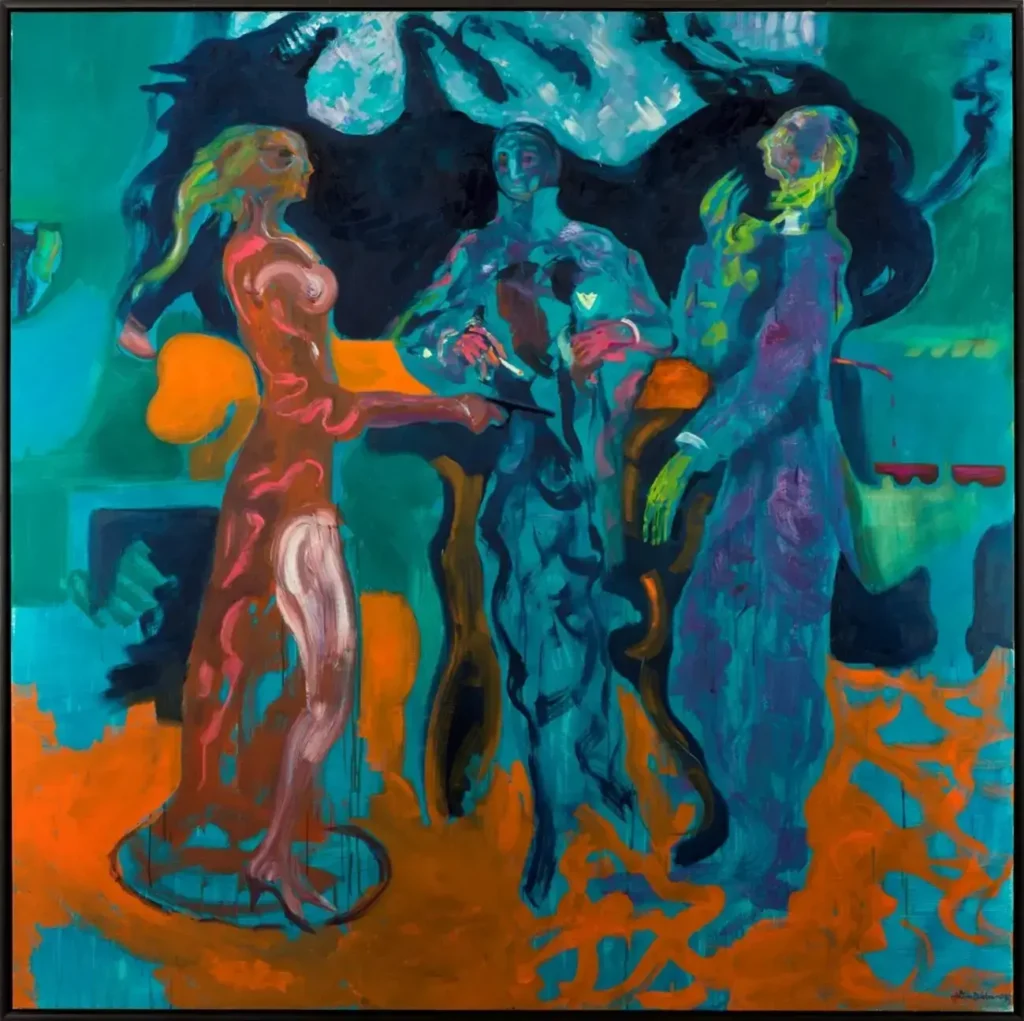
Håkon Bleken was one of Norway’s leading artists. He was born in Trondheim on 9 January 1929 and lived and worked all his life in Trondheim. In 2008, Bleken donated a collection of his works, known as Kunstgaven (The Art Gift). At Trondheim kunstmuseum, you can experience one of Norway’s most significant art gifts.
Few artists have achieved a position on the Norwegian art scene and in public life comparable to that of Håkon Bleken. He made his debut as an artist at the age of 23, in 1952, when he had his first solo exhibition in Trondhjems kunstforening. Death, love, music, literature, and politics are preoccupations that recur in his works. He often makes use of literary references in his discussions of man, society, and the times we live in.
Let it Hammen in Beauty (2006). Photo: Freia Beer.
The significant donation of his artworks is held by and continues to be presented and readdressed in various ways at the museum. Through the exhibition “Vinden stryker natten vekk: Kunstgaven Håkon Bleken” (The wind sweeps the night away: Art Gift Håkon Bleken), the museum takes its visitors on a journey through Håkon Bleken’s rich artistic legacy. The title, which is borrowed from one of Bleken’s charcoal drawings, suggests that something previously hidden comes to light. The exhibition is a marriage of timeless stories and an innovative approach to collection management.
Music, by Håkon Bleken. Photo: Dag-Asle Langø/Multifoto A/S
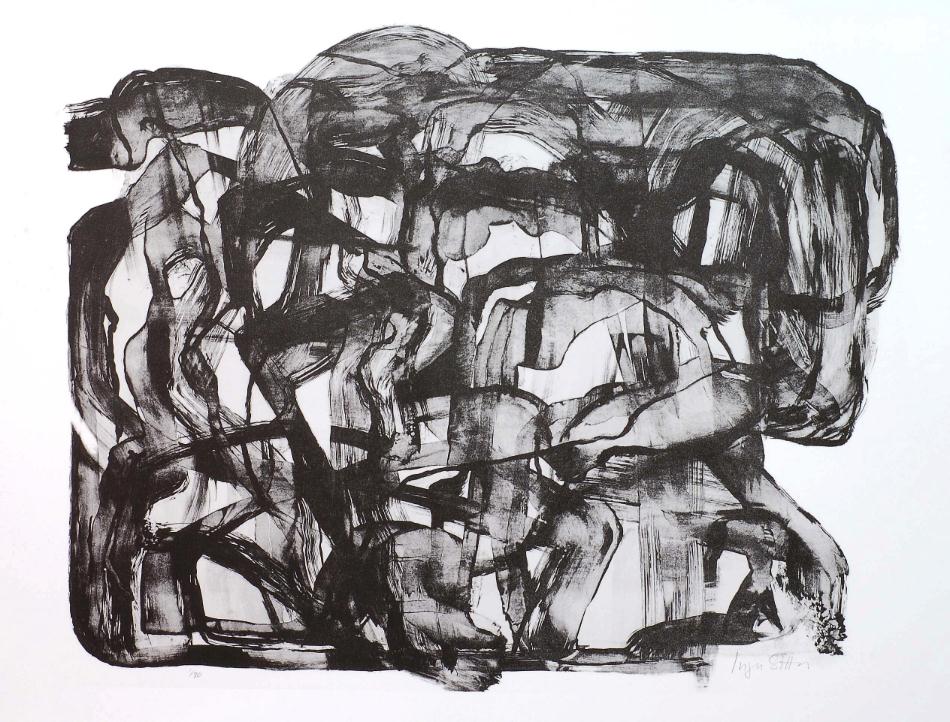
Bleken’s charcoal drawings that have received the most acclaim from art critics and historians. Photo: Kunstverket Galleri.
Bleken is probably best known by the general public for his colorful paintings and prints, but it is his charcoal drawings that have received the most acclaim from art critics and historians. The charcoal drawings are sombre, complex, and precise, but at the same time, the charcoal takes on a guise of softness and life.
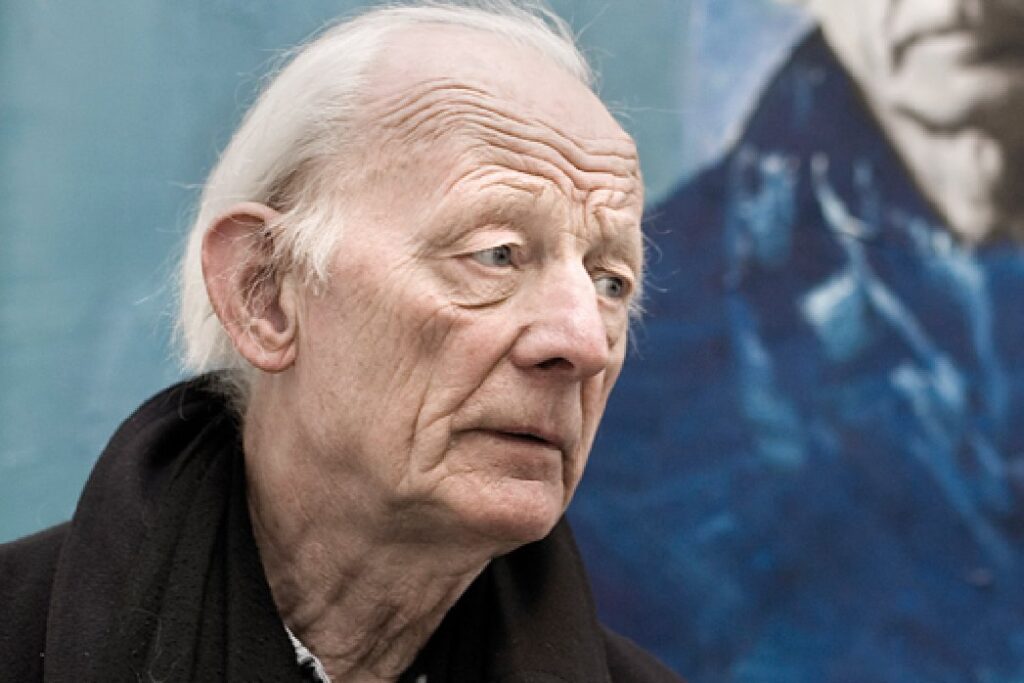
Håkon Bleken portrait. Photo: fineart.no
Håkon Bleken passed away on 21 January 2025 (96 years old).
Trondheim Kunstmuseum has two venues: TKM Bispegata and TKM Gråmølna. TKM Bispegata is the museum’s main venue, located at Nidaros Cathedral, where you can find its beautiful museum shop. In TKM Gråmølna in Trenerys gate at Nedre Elvehavn, you will find works from Kunstgaven Håkon Bleken and other exhibitions.
The European Project Dancing Histor(y)ies comes to an end in Gothenburg, August 29-30. “A Moment of Endlessness” marks the journey of exploring history, culture, and heritage through contemporary dance.
Events of this international project take place at Gathenhielmska Huset and Balettakademien, in collaboration with Göteborgs Kulturkalas.
Co-funded by the Creative Europe program, Dancing Histor(y)ies has been a collaboration between artists, local communities, and institutions across Sweden, Italy, Serbia, Cyprus, Portugal, Hungary, Greece, the Czech Republic, Poland, Bulgaria, and Spain. Throughout 2025, ilDance artists participated in local community-engaged residencies and workshops. They also visited archaeological and cultural heritage sites, including Castel Sant’Angelo (Rome), Viminacium Archaeological Park (Serbia), The Temple of Diana (Mérida), and Nora Archaeological Park (Sardinia). They developed site-responsive works that reflect the layers of history and culture tailored to each site.
Events of this international project take place at Gathenhielmska Huset and Balettakademien, Gothenburg.
In May 2025, ilDance shared their experiences from these journeys and the artistic work that they developed in workshops with students of Balettakademien Gothenburg. This creative exchange contributed to the development of the final performance. Now, they are returning to Gothenburg for the Dancing Histor(y)ies finale.
A series of engaging events will take place in Gothenburg on August 29, with a workshop in collaboration with Balettakademien Gothenburg, followed by a whole program at Gathenhielmska Huset on August 30, including two Gaga/people classes, led by Lee Brummer and the final performances for Dancing Histor(y)ies with the piece A Moment of Endlessness.
*******************************************************
While in Gothenburg, you might be interested in the city’s culinary attractions.
*******************************************************
Co-funded by the Creative Europe program, Dancing Histor(y)ies has been a collaboration between artists, local communities, and institutions across Sweden, Italy, Serbia, Cyprus, Portugal, Hungary, Greece, the Czech Republic, Poland, Bulgaria, and Spain.
The details of events in Gothenburg:
August 29, ilDance and Balettakademien closed workshop
August 30, at 14.30-15.30 and 17.00-18.00, Gaga/people classes led by Lee Brummer at Gathenhielmska Huset
August 30, at 16.00 and 18.30: Final Performances – “A Moment of Endlessness” at Gathenhielmska Huset
The performances reflect on how stories and histories, both distant and near, gain or lose meaning, depending on the contexts in which they are reiterated. Incorporating text by Hayim Nahman Bialik and Kohelet (Ecclesiastes), “A Moment Of Endlessness” explores senses and sensations of time and how it can be pulled, morphed, and transformed through relations and relationships. IlDance Artistic Director Israel Aloni creates the performance and features artists Elias Khanamidi, Jennifer Wallen, Victor Persson, and Tomer Giat.
Admission is free and open to everyone, but registration is required to attend. Registration tickets for the performances are available from August 15, and for Gaga/people classes from August 28 at www.ildance.se/tickets .
The performances reflect on how stories and histories, both distant and near, gain or lose meaning, depending on the contexts in which they are reiterated. Incorporating text by Hayim Nahman Bialik and Kohelet (Ecclesiastes).
About Dancing Histor(y)ies
Dancing Histor(y)ies – Binding Communities and Heritage Through Dance is set to identify an innovative, effective, and replicable model for enhancing cultural sites, actively involving local communities in artistic production and conscious heritage appreciation, while also promoting the international mobility of European artists.
The project aims to create a standard and adaptable general model to be implemented across Europe. By blending the tangible cultural heritage of the sites with the intangible cultural traditions and stories of local communities, it seeks to bring together through the creativity of dance.
Dancing Histor(y)ies is co-funded by the Creative Europe program of the European Union. ilDance’s participation and activities in the project are made possible with the support of the Swedish Arts Council and Kulturförvaltningen Västra Götalandsregionen.



 “It is essential that we in this industry are made aware of the fantastic opportunities we have to make quality spirits in Norway. And we are first and foremost an industry for the districts,” says elected chairman, Odd J. Nelvik, from Det Norske Brenneri in Grimstad.