
San Quentin State Prison in California is Looking to Scandinavia for Inspiration

In 2023, Gov. Gavin Newsom announced that the facility would be transformed to focus on training and rehabilitation, and that San Quentin State Prison in California is looking to Scandinavia for inspiration.

Following a 2023 announcement from the California Governor, the maximum-security prison was to be converted into a “one-of-a-kind facility” renamed the San Quentin Rehabilitation Center.  Danish architecture studio Schmidt Hammer Lassen and American studio DLR Group were selected to redesign the facility, utilizing influences from the Scandinavian incarceration system.

San Quentin State Prison in California is Looking to Scandinavia for Inspiration, the article continues below the image.

San Quentin State Prison in California is Looking to Scandinavia for Inspiration
Gov. Gavin Newsom

Three forthcoming education and vocational training buildings by SHL and DLR Group stand to add new amenities at San Quentin, as part of Governor Newsom’s transformation plan with the California Department of Corrections and Rehabilitation.

The proposed 2023-2024 budget was $20 million, aiming to transform San Quentin into “the preeminent restorative justice facility in the world.”

Schmidt Hammer Lassen (SHL) stated that it intended to apply principles derived from those used by Scandinavian countries in the architecture, design, and management of their carceral facilities, including enhanced daylighting and access to education and landscaping.

Norway has a much stronger social welfare state than California, and the U.S. more broadly. The U.S. has the highest incarceration rate in the world, imprisoning 1 in 100 adults. California’s incarcerated population makes less than $1 per hour and was heavily relied upon to fight the recent waves of Los Angeles wildfires, sparking criticism from human rights groups. California voters recently shot down Proposition 6, which was meant to “bar slavery in any form and repeal a current provision allowing involuntary servitude.”

San Quentin State Prison in California is Looking to Scandinavia for Inspiration, the article continues below the image.

San Quentin State Prison in California is Looking to Scandinavia for Inspiration
The San Quentin rehabilitation

The decision to revamp San Quentin was not met without criticism.  “To overhaul how we define public safety in California, it requires an honest reckoning with the violence and racism inherent to U.S. policing and prison systems. Put another way, we can’t turn a light switch and adopt a care-first Nordic model without taking full stock of why prisons were built to function the way they do in America,” said some.

However, DLR and SHL have worked on similar projects such as the New Correctional Facility Nuuk, using a system introduced in the 1990s that “prioritizes rehabilitation through education”, according to the studio.

“Bringing our expertise with the Nordic model of rehabilitation and education, we are combining the best of both worlds,” said SHL senior project manager Jette Birkeskov Mogensen. “Having DLR Group and SHL working from day one as an integrated design team has ensured an unprecedented level of speed and quality in design informing clients.”

San Quentin State Prison in California is Looking to Scandinavia for Inspiration
SHL senior project manager Jette Birkeskov Mogensen.

California Governor Gavin Newsom’s administration has learned from Norway how to transform San Quentin State Prison into San Quentin Rehabilitation Center. Norwegians never enacted sweeping criminal penalties that unabashedly targeted specific groups, the way the United States did with the black codes, Jim Crow laws, and the war on drugs. Norwegians didn’t abolish slavery only to retain it for people in prison, the way the U.S. did with the penal servitude clause of the 13th Amendment, and in 2022, the California Legislature voted against ending prison slavery.

The California Model was partially informed by an “independent report” submitted to the Governor in early 2024 that details recommendations for expanding rehabilitation efforts including improving housing for inmates and correctional staff, as well as improving officer training.

Three forthcoming education and vocational training buildings by SHL and DLR Group stand to add new amenities at San Quentin, as part of Newsom’s transformation plan with the California Department of Corrections and Rehabilitation (CDCR). The goal, the state said, is to reduce recidivism through education, job training, and substance treatment. Is the “Nordic model,” sometimes used interchangeably with the “California model,” transferable in a state where prison labor is a multi-billion-dollar industry? When, if ever, is it ethical to design carceral spaces?

The culture of America’s prisons is fundamentally punitive. In Norwegian jails, there is no physical abuse, forced labor, or solitary confinement. There are no restrictions on family visits. People in Norway’s prisons never lose the right to vote. Norwegian correctional officers don’t carry any weapons. There is tremendous emphasis on reintegration, and prison workers are trained in psychology and social work far more than they are in self-defense.

San Quentin State Prison in California is Looking to Scandinavia for Inspiration, the article continues below the image.

San Quentin State Prison in California is Looking to Scandinavia for Inspiration
Project design lead Kasper Heiberg Frandsen.

“San Quentin carries a well-earned reputation central to US history and culture based in large part on its notorious punitive and degrading environment,” says project design lead Kasper Heiberg Frandsen.

Lori Coppenrath is DLR Group’s Justice + Civic Planning Leader. She emphasizes that the design for San Quentin “departs from conventional prison architecture through an open, flexible campus layout, emulating a community college environment, and increased connections between the built environment and nature.” Coppenrath added that the design incorporates “trauma-informed and learning environment best practices” to create “physical spaces that promote safety, well-being, and healing for all, including those who work and volunteer at the center.”

While Newsom’s pilot of the Norwegian model at San Quentin is laudable on paper, the realization of the Norwegian approach to prisons in California will require nothing less than a total transformation of the cultural and philosophical lens through which public safety is defined, as well as the societal roles of police and prisons.

Can the culture of prison be changed with new architecture? What difference will a few new Scandinavian buildings make when economic justice still hasn’t been won for those who inhabit them? Perhaps one day, CDCR will realize that going out of business is the only true sign of success.

San Quentin State Prison in California is Looking to Scandinavia for Inspiration, reported by Tor Kjolberg.

All images (except Gov. Newsom) © SHL and DLR Group/ CDCR

Denmark’s Collaborative Cybersecurity Initiatives Protect Local Businesses

Although cybercrime is on the rise across Europe, Denmark appears to be well-equipped to handle growing threats. It was crowned the most cybersecure country in the world thanks to its advanced digital infrastructure. Read on and learn how Denmark’s collaborative cybersecurity initiatives protect local businesses.

This level of security, however, is not always possible for smaller businesses. They’re typically more vulnerable to cyberattacks as they lack the resources or knowledge to defend themselves. A staggering 43% of cyberattacks target these smaller outfits, and when they do, the average cost per incident can range from 820,000 DKK to over seven million DKK. To address this issue, Denmark has launched numerous collaborative cybersecurity initiatives that specifically target small and medium-sized enterprises (SMEs). These include mentorship programs, educational summits, and tools to improve staff awareness and protect digital systems and sensitive data.

********************************************
Related: New National Cyber Security Center To Be Established in Sweden
********************************************
Denmark’s Collaborative Cybersecurity Initiatives Protect Local Businesses, article continues below the image.

Denmark’s Collaborative Cybersecurity Initiatives Protect Local Businesses
Located in the heart of Aarhus, the Security Tech Space (STS) serves as a central hub for local cybersecurity education and SME development.

Cybersecurity mentorship at Security Tech Space 

Located in the heart of Aarhus, the Security Tech Space (STS) serves as a central hub for local cybersecurity education and SME development. Over eighty organizations, including IT experts, academic institutions, and public bodies, actively contribute to this initiative. Their goal? To help SMEs, who often lack the expertise and resources needed to tackle cyberattacks, strengthen their cybersecurity. To achieve this, SME owners are paired with experienced mentors who can help them implement adequate cybersecurity measures to protect their businesses.

Given that around 40% of the Danish SMEs have a serious digital security gap, a mentor can make a real difference in helping them prepare for the risks they face. And it seems this is precisely what SME owners want. Over 70% say simple advice and guidance on common threats would go a long way in solving their cybersecurity problems, a recent report from Aalborg University reveals.

Cybersecurity Summit: Tackling AI threats and ransomware 

Denmark’s Collaborative Cybersecurity Initiatives Protect Local Businesses
STS also hosts an annual Cybersecurity Summit.

In partnership with Computer World, STS also hosts an annual Cybersecurity Summit, where SME owners can meet with industry experts to learn about the latest cybersecurity solutions and best practices. This year’s event, on August 21st, puts the spotlight squarely on AI. It’s undoubtedly a powerful tool in the hands of hackers, but businesses can also utilize it to stay ahead of AI-powered cyber threats. SME owners will specifically learn how to use the latest AI tools to detect and automatically respond to cyberattacks, as well as how to recover from potential security incidents quickly.

Ransomware is another topic that will be covered in depth. While it’s not a new risk, it’s still one of the biggest threats out there. Ransomware and data extortion were actually behind 32% of all reported cyberattacks in 2024, according to a Verizon report. What makes ransomware so sneaky is that it’s constantly evolving. Previously, attackers would encrypt system data and demand a ransom for a decryption key. Now, the threat is triple-fold. Hackers don’t just encrypt data; they also move it to another location and threaten to leak it unless they’re paid. SME owners, therefore, need to know how to defend against ransomware with a multi-layered security approach. This includes real-time threat detection and response, as well as employee education, so they know not to click on dodgy phishing emails.

Denmark’s Collaborative Cybersecurity Initiatives Protect Local Businesses, article continues below the image.

Denmark’s Collaborative Cybersecurity Initiatives Protect Local Businesses
HackerStop is a free tool that helps the country’s SMEs take cybersecurity into their own hands.

Promoting employee cyberawareness 

DanskIT, Denmark’s largest network for IT users and professionals, has also developed HackerStop: a free tool that helps the country’s SMEs take cybersecurity into their own hands. This platform recognizes the crucial role employees play in safeguarding data and enables SME owners to educate their staff on cybersecurity. To assess their cyber awareness, employees are given a brief survey that covers key topics, including phishing, malware, and data protection policies. These surveys are anonymous and take only 5-10 minutes to complete.

Based on the answers, HackerStop generates a report that identifies potential security gaps and weaknesses in the company’s IT strategy. It then gives actionable recommendations on how the SME can improve its cybersecurity practices. There’s also a community element as HackerStop hosts regular meetings, where users, partners, and cybersecurity experts share the latest cybersecurity news and best practices. It’s a great way to build a network of like-minded professionals and further solidify Denmark’s position as a leader in cybersecurity.

With cyberthreats on the rise across Europe, Denmark is taking steps to protect local SMEs. Collaborative initiatives, such as mentorship programs, summits, and cybersecurity awareness tools, help SMEs protect their operations, enabling them to avoid threats and thrive in the years to come proactively.

Denmark’s Collaborative Cybersecurity Initiatives Protect Local Businesses
Karoline Gore

Denmark’s Collaborative Cybersecurity Initiatives Protect Local Businesses, written explicitly for Daily Scandinavian by Karoline Gore. Karoline is a freelance writer from Stoke-on-Trent in the UK who left the corporate grind when she started a family and has never looked back. She enjoys contributing to a range of online publications on the topics that are important to her.

Feature image (top): © Matias Mango/Pexels

Private Helicopter Transfers in the Nordic Region

Private helicopter transfers tend to be functional affairs, with cramped cabins and the lingering scent of jet fuel. Citycopter, however, offers comfortable flights throughout the Nordics with its modern and innovative fleet in Helsinki. Discover more about private helicopter transfers in the Nordic region.

Based in Helsinki, Helsinki Citycopter offers exclusive private helicopter charters and tour flights across the Nordic and Baltic countries. The company is renowned for its sustainability, as it is the only commercial helicopter operator in the Nordics to fly with a blend of sustainable aviation fuel. Operating from the Finnish capital, Helsinki Citycopter offers travelers an exceptional travel experience in Northern Europe.

************************************
You may also like to read The Finnish UFO Houses
************************************

Private Helicopter Transfers in the Nordic Region
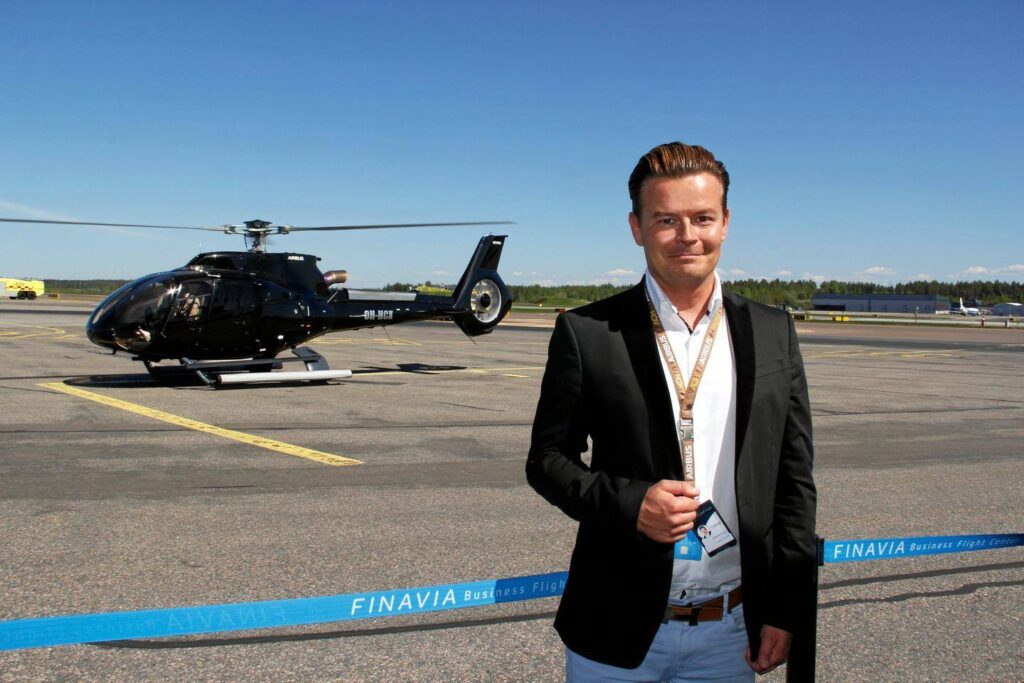
Co-founder Joonas Nurmi.

Helsinki Citycopter, founded in 2020, operates a fleet of five helicopters, comprising two Airbus ACHI30s and an H125. They have spacious interiors with leather seats, noise-cancelling headsets, and efficient climate control.

The company offers the widest selection of helicopters available in Finland, allowing you to choose the right helicopter for your flight based on your group size, convenience, and budget.

Private Helicopter Transfers in the Nordic Region
Helsinki Citycopter’s ACH130

Helsinki Citycopter offers a combination of ready-made packages and customizable experiences, making it perfectly suitable for any occasion. Offering door-to-door services, along with seamless connections within Northern Europe, the company presents you with effortless travel.

Powered by modern low-emission engines, the aircraft also leave a smaller environmental footprint than many of their competitors. “There’s a unique advantage to helicopter travel,” says co-founder Joonas Nurmi, who spent 15 years with Finnair. “You get perspectives that you don’t see from a plane or car, and you can land almost everywhere.”

Safety is the company’s top priority. Its reputation for excellence is built every day, on every flight and the ground, by a professional team of aviation experts who are committed to providing guests with the highest standards of safety in air travel.

Private Helicopter Transfers in the Nordic Region
Helsinki Citycopter offers unique experiences .

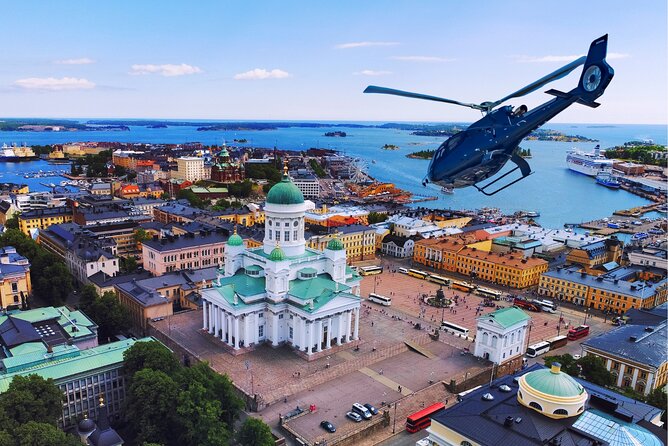
Helsinki Citycopter offers unique experiences such as an all-inclusive day trip to Tallinn or Finnish Lapland, exploration of the Finnish Lakeland, or a Nordic excursion above the Norwegian Fjords. With endless opportunities, travelers can tailor their experience to suit their wishes perfectly.

Now the market leader in northern Europe, the company has steadily expanded, adding a Cessna Citation CJ4 private jet to its portfolio and launching a flight academy for helicopter and fixed-wing pilots.

“Great service begins with great people and real experience, which is why we put so much into choosing the best professionals in the industry to join our team. You’ll always have a pilot who knows punctuality, local weather, safe flying, and customer service inside and out. We aim to not only meet your needs, but also exceed your expectations of what a transportation service can be,” states the company’s homepage.

“Our product is nature,” says Nurmi. “And we fly where no one else does.”

Helsinki Citycopter is part of the Aerocom Aviation Ltd. Group, under which one can also find another two distinct brands: ACXJET, which operates from Helsinki and provides its clients with the ultimate private aviation experience, and ACX Access, the only destination management and luxury concierge company in the Nordics with its fleet of private jets and helicopters.

Private Helicopter Transfers in the Nordic Region, Tor Kjolberg reporting.
All images © Helsinki Citycopter.

Michelin Stars Shine on Bergen

During the prestigious Michelin Guide Ceremony in Denmark, it was a day of celebration for Bergen, Norway, as Michelin stars shone on the city.

Two of the city’s restaurants, Gaptrast and Omakase by Sergey Pak, each received a desirable star, further strengthening Bergen’s position as a leading culinary destination in Norway.

Bergen has distinguished itself as a food city in recent years, and Monday’s awards mark another milestone for both the restaurant industry and the city. The two award-winning restaurants stand out for their dedication to quality, creativity, and the use of top-tier, locally sourced ingredients.

Michelin Stars Shine on Bergen
Dish from Omakase.

****************************************
Related: Michelin Star Sprangled Scandinavia
****************************************

“This is incredibly huge – earning a star in the first year of opening is insane! The real work begins now; we will aim higher and strive to improve every day,” said Kristian B. Vangen and Øystein Ellingsen of Gaptrast enthusiastically. Sergey Pak and Kjetil Smørås from Omakase by Sergey Pak also expressed their pride: “Our focus has solely been on creating great dining experiences based on our fantastic ingredients from Western Norway. Receiving this recognition from the Michelin Guide is a major inspiration for our continued efforts.”

Bergen already boasts a Michelin star at the restaurant Lysverket, and Christopher Haatuft welcomes the new stars. “It’s great that we are getting two new stars in the city, so more people recognize that there are several excellent restaurants here. In Bergen’s restaurant scene, we all support each other – more great restaurants mean more reasons to visit the city.” Haatuft also highlights that access to high-quality local ingredients has significantly improved.

Michelin Stars Shine on Bergen
From Gaptrast. Photo: Visit Bergen.

Mayor Marit Warncke is in a celebratory mood: “This is a cheerful day for Bergen! Our local culinary experiences are once again being put on the world map, contributing to increased interest in the city among both locals and visitors, who are eager to explore everything we have to offer. Hard work and a deep passion for the craft lie behind this achievement, and it serves as a major inspiration for Bergen’s culinary scene.”

“This confirms that Bergen has developed into Norway’s foremost city for gastronomic experiences,” agrees Tourism Director Anders Nyland.

**************************************
Related: Michelin Star Restaurants in Scandinavia
*****************************************

Michelin Stars Shine on Bergen
Good from Gaptrast. Photo: Visit Bergen

Food critic Ove Svendsen from Bergensavisen (BA) has been closely following the city’s culinary development over the past few years. “In a city where several restaurants operate at a high level, there is a continuous flow of creativity and inspiration. I have dined at many Michelin-starred restaurants across Europe, and many of them are nowhere near the outstanding food quality we have in Bergen.”

The Michelin Guide highlights restaurants of exceptional quality worldwide, and this year’s awards have once again placed Bergen on the international gastronomic map. With this recognition, the city’s culinary community hopes to attract even more food lovers from both Norway and abroad.

Michelin Stars Shine on Bergen, a press release from Fjord Norway.
Feature image (top): Omakase by Sergey Pak.

Repeat Purchase for Norway of Self-Propelled Howitzers

Norway, which previously took delivery of 28 K9s and 14 KIO ammunition resupply vehicles to keep their barrels fed with 155mm shells, is buying 24 new K9. This is a repeat purchase for Norway of self-propelled howitzers.

Norway nearly doubles its K9 howitzer fleet for around $534 million. “We are facing a serious security situation. We are therefore requesting the Storting [Parliament] to approve significant investments in various parts of the Armed Forces to strengthen Norway’s defense capability […],” Minister of Defence Tore O. Sandvik said in a statement.

As Europe has set about rearming, the K9 has done excellent business for the South Korean company Hanwha Aerospace. Other customers include Estonia, Finland, Poland, and Romania.

Repeat Purchase for Norway of Self-Propelled Howitzers
Norwegian Minister of Defence Tore O. Sandvik. Photo: Wikipedia

*****************************************
Related: In Case of Crisis or War in the Nordics
*****************************************

The 155 mm howitzers in Norway will equip a new artillery battalion within the planned Finnmark brigade being set up to bolster Norway’s defenses in the high north, according to a government proposal. The purchase plan is part of a proposed 17 billion kroner budget that also includes additional sea mine-clearing capability, new military trucks, and funding for facilities.

In addition to the new howitzers, the brigade will get anti-aircraft weapons, a light infantry battalion, an engineer company, an intelligence company, and a stronger command.

Repeat Purchase for Norway of Self-Propelled Howitzers
The K9 has tremendous mobility and has already proven itself in cold conditions. Photo: Wikipedia

There is little doubt about the K9’s purpose for Norway: to deter Russia from getting any funny ideas about the High North land border that the two countries share.

In October of last year, the Norwegian government proposed increasing the country’s 2025 defense budget by 19.2 billion kroner to 110.1 billion kroner. The budget for the additional howitzers includes the guns as well as spare parts, according to the spending proposal.

“We plan to develop a force that will be in Finnmark, in times of peace, crisis, and war. It will be a standing army force,” Head of the Norwegian Army, Major General Lars Lervik, told a local audience in Kirkenes in January 2025.

Repeat Purchase for Norway of Self-Propelled Howitzers
Head of the Norwegian Army, Major General Lars Lervik. Photo: Wikipedia

**********************************************
Related: Finland’s Security Strategy in Response to the Russia-Ukraine War
**********************************************

The K9 has tremendous mobility and has already proven itself in cold conditions; India’s army has deployed them in the freezing heights of Ladakh on the Chinese border. And they work where it counts too: Ukraine has used Polish-supplied Krab howitzers, which feature a K9 chassis and a 52-calibre gun made by BAE Systems.

Repeat Purchase for Norway of Self-Propelled Howitzers, reported by Tor Kjolberg.
Feature image (top) © Wikipedia.

A Feminist Pioneer in Norwegian Art History

Sidsel Paaske’s work extends beyond most retrospectives, providing not merely a historical context for the artist’s interdisciplinary practice but also evoking the restless energy that drove her constant improvisation. Learn more about a feminist pioneer in Norwegian art history.

“We play as we practise” was Sidsel Paaske’s motto and watchword. Throughout her career, she was open to new ideas and expressed herself through various media. She began in the field of textile art, but was soon breaking new “ism-free” ground.

Whether Paaske is presented as a feminist or a textile artist, she is a figure who has a knack for breaking out of categories. Her approach is particularly significant, as the diverse and unclassifiable nature of her output is undoubtedly one reason why the late Norwegian artist has been largely overlooked since she died in 1980 at the age of 43.

A Feminist Pioneer in Norwegian Art History
Without title. Photo: Grev Wedel Plass Auksjoner.

***************************************
Related: A Pioneer Among Female Norwegian Designers
***************************************

With the joy of experimentation in her bones, she immersed herself in a broad range of expressive forms, working freely with different techniques such as watercolors, painting, textiles, ceramics, music, writing, book illustration, sculpture, and jewelry.

An overwhelming breadth seems to have characterized Paaske’s life’s work, and possibly also stood in the way of her recognition. If you search for her name on the internet, it appears in several cultural contexts, but there is little supplementary information.

During her brief career, Paaske worked across various media, including enamel painting, poetry, and performance. Having been forced to leave art school in 1956 after falling pregnant, she went on, six years later, to gain a vocational qualification in textiles and art education – a field seen as more suitable for women.

Paaske was at the center of Oslo’s art scene from 1965 to 1980. Her sculpture, Extinguished Match (1966), has been described as Norway’s first pop art work. Some 21 years later, Claes Oldenburg, the “father” of pop art, made a variation on the same theme.

A Feminist Pioneer in Norwegian Art History
Hidden heroes, by Sidsel Paaske.

********************************************
Related: Scandinavian Impressions by 9 Contemporary Female Artists
********************************************

Paaske was also a talented singer, collaborating with musicians such as Don Cherry and Jan Garbarek. She designed numerous album covers and posters and created book illustrations for several of Jan Erik Vold’s books.

Abandoning textile design because she felt it was too laborious, Paaske initially gravitated towards abstract painting and printmaking, before exploring pop art, craft, jazz music, and non-Western cultural customs. Throughout her career, she engaged with ‘women’s work’ – making jewelry, for instance, from feathers and metals, as per the folk traditions she studied.

According to art historian Jorunn Veiteberg, Paaske was influenced by both Sami and African cultures, as well as Norwegian folk art, while simultaneously being interested in jazz and among the first in Norway to capture the impulses of American pop art.

A Feminist Pioneer in Norwegian Art History
Extinguished Match (1966).

By the early 1970s, Paaske’s various interests began to coalesce through her engagement in feminist politics. ‘Folk art [and] women’s art […] are concerned with, and characterized by, ornamentation and hence rhythm, which is related in turn to music,’ she wrote in 1975.

In Volume 7 of the standard edition of Norsk Kunsthistorie (The History of Norwegian Art), published just three years after her death, Paaske isn’t even mentioned. Although she was the editor of Billedkunstneren from 1978 to 1980, the periodical noted her death with nothing more than the headline “Sidsel Paaske is dead” and a short, elegiac poem.

There is, however, an article about the artist in Norsk Kunstnerleksikon, I-IV, published in 1982-86.

Why has Paaske’s Extinguished Match not been accorded the central place in Norwegian art history, as it deserves? Why have Paaske’s artistic achievements not been taken seriously? And what are the mechanisms that determine the process of canonisation?

Paaske expressed that her work was far from classical and academic, writing that “ornament, symmetry and rhythm were her starting point, more than anatomy and realism. Poetry and folk music were closer to her than “old masters”. Paaske claimed that she made art for the moment, not for eternity, and addressed the audience directly: “I want to show you the ‘non-authoritarian’, the soft, feminine values. I want to share with you my melodies and songs.”

A Feminist Pioneer in Norwegian Art History, compiled by Tor Kjolberg
Feature image (top): Portrait/National Museum in Oslo.

Norwegian Survey Reveals that a Quarter of the Population Lacks a ‘Basic Understanding’ of How Tides Work

Dr. Liz Morris-Webb works in marine research at Nordlandsforskning in Rana, Norway. In April, she wrote a scientific paper on tides, which found that a quarter of the population in the UK and Ireland do not understand a standard tide table, and that about 10 million people had experienced being caught or nearly caught by the tide. This Norwegian survey reveals that a quarter of the population lacks a ‘basic understanding’ of how tides work.

The study, which surveyed 1,368 participants across the UK and Ireland, found that approximately 15 percent of respondents reported having been cut off, or nearly cut off, by the tide at some point in their lives. This equates to around 10 million people across the UK and Ireland. The study’s authors highlight that a notable proportion of these incidents involved individuals who had not intended to be in or near the water in the first place.

Norwegian Survey Reveals that a Quarter of the Population Lacks a ‘Basic Understanding’ of How Tides Work
Dr. Liz Morris-Webb at Nordlandsforskning. Dr. Liz Morris-Webb photo: Private.

Such a startling lack of basic and vital knowledge did not go unnoticed in the British and Irish media. Bangor University in Wales, where Morris-Webb is an honorary researcher, issued a press release on the matter, along with the RNLI (Royal National Lifeboat Institution), an organization dedicated to saving lives at sea.

****************************************
Related: Discover Norway’s Best Water Show!
****************************************

The survey highlights that 60 per cent of those affected by tidal cut-off were surprised by how quickly the water moved, indicating a general underestimation of tidal speed. Further findings show that 40 percent of people surveyed lack a basic understanding of tides, and only 50 percent check tide times before visiting the beach.

“In the UK, tides can rise to 10 meters, and shortly after our paper was published, a major flood coincided with the Easter holidays, making our research headlines,” says Morris-Webb.

Norwegian Survey Reveals that a Quarter of the Population Lacks a ‘Basic Understanding’ of How Tides Work, article continues below the image.

Norwegian Survey Reveals that a Quarter of the Population Lacks a ‘Basic Understanding’ of How Tides Work
In the UK, tides can rise to 10 meters.

Data collected by the RNLI — which recently issued new safety checklists for boaters — shows that over the past decade, lifeboat crews and lifeguards have attended 7,971 incidents involving tidal cut-off. Of these, many were categorized as life-threatening, and 452 lives were reported to have been saved.

The major media houses, BBC and ITV, ensured that the research by the recent Norwegian citizen reached millions of viewers, listeners, and readers. In particular, coverage on BBC World News was adequate.

“Figures from the media analysis agency Vuelio show that a potential 287 million people have seen the case,” the RNLI press office reports.

*****************************************
You may also like to read Go Fishing in the World’s Strongest Tidal Currents
*****************************************

Yvonne, who only provided her first name, experienced one such incident when she was cut off by the tide at Fleetwood beach during a family outing from North Yorkshire. Despite having consulted tide times beforehand, the group was unaware of the distinctions between high and low tide timings. As they attempted to return from the shore, the rising water quickly isolated them.

Norwegian Survey Reveals that a Quarter of the Population Lacks a ‘Basic Understanding’ of How Tides Work
Liz Morris-Webb thinks it’s cool that a scientific article gets so much attention in society.

Vuelio uses the term “OTS,” which stands for “Opportunities To See,” to estimate the number of times the public has been exposed to media coverage of a case.

Yvonne says: “Suddenly, the water was getting towards waist height. My partner, who had just had a shoulder replacement, got separated from us and was standing on a sand embankment. Within two minutes, all the sand was gone. My phone got wet and I couldn’t make any calls for help, but I knew a lifeguard had seen us. I had to stay strong for my whole family. The water got deep so suddenly that we were almost swimming in it.”

Liz Morris-Webb thinks it’s cool that a scientific article gets so much attention in society. “Here in Norway, too, knowledge about the use of the ocean is vital, and, among other things, through the organization Flyte, drowning prevention work is being put on the agenda nationwide.”

I find it very exciting how research like this can help improve safety messages and save lives in Norway, too,” she adds. “Although we have less difference between high and low tide than the UK, we have the second largest coastline in the world, and this can pose many types of risks if people do not have the necessary knowledge.”

The RNLI encourages coastal visitors to consult reliable sources, such as the Met Office, before making plans. The organization advises that tides follow a predictable pattern, occurring twice each 24 hours, but times vary by location and shift daily. Understanding these variations is considered necessary for both beach users and coastal walkers.

Norwegian Survey Reveals that a Quarter of the Population Lacks a ‘Basic Understanding’ of How Tides Work
Data collected by the RNLI — which recently issued new safety checklists for boaters — shows that over the past decade, lifeboat crews and lifeguards have attended 7,971 incidents involving tidal cut-off. Photo: 8 shannon class illustration by Lee Hawkins/mli.org

Nordlandsforskning is the only social science research institute in Norway with both ownership and headquarters in the North.

The institute aspires to remain an excellent research environment and a trusted knowledge provider, both locally and globally. Its research is used in studies, plans, and consultations. When decisions are made, knowledge from Nordlandsforskning is often the basis.

The institute’s research activities are rooted in the highlands, leveraging local advantages to shed light on broader questions and issues. With projects related to restructuring, innovation, and adaptation, its research helps shape the future society.

Nordlandsforskning was established in 1979 in Bodø. Today, it also has offices in Svolvær and Mo i Rana.

Norwegian Survey Reveals that a Quarter of the Population Lack ‘Basic Understanding’ of How Tides Work, based on a press release from Nordlandsforskning.

Feature image (top): Moon tides/NASA Science

Norwegian Wood + Glass = Hunting & Narud

0

Two Norwegian designers, Amy Hunting and Oscar Narud, create objects that straddle the boundary between design and art. They combine glass and wood in a way that challenges the properties of the materials. Norwegian Wood + Glass = Hunting & Narud.

Their multidisciplinary studio, Hunting & Narud, is based in London. Their work is driven by a shared commitment to craftsmanship, problem-solving, and integrating sustainable solutions into every project. Renowned for their ability to create projects with captivating spatial impact and compelling narratives, Hunting & Narud bring a wealth of knowledge in material processes to their designs. They have collaborated with esteemed clients such as the Tate Modern, the National Museum of Art, Architecture, and Design in Oslo, FLOKK, and the V&A in London.

Norwegian Wood + Glass = Hunting & Narud
Their multidisciplinary studio, Hunting & Narud, is based in London.

****************************************
Related: A Pioneer Among Female Norwegian Designers
****************************************

A notable example of the couple’s design is their 2014 series of side tables, the Apex Table (top). There, they challenged the properties of glass and wood.  Apex is the technical name for the tip of the cone, and it is the only point where the two materials meet in the table.

Norwegian Wood + Glass = Hunting & Narud
Driven by their deep-rooted passion for design and sustainable practices, Hunting & Narud continually strive to push boundaries and challenge conventions.

Driven by their deep-rooted passion for design and sustainable practices, Hunting & Narud continually strive to push boundaries and challenge conventions. Their multidisciplinary approach, combined with their sensibilities of craftsmanship and problem-solving, enables them to create remarkable and environmentally conscious designs.

*******************************************
Related: The Norwegian Minus Chair
*******************************************

Their keen sense of storytelling is evident in their spatial installations, interior design, exhibition design, furniture design, and concept development.

Amy Hunting graduated from the Department of Furniture and Spatial Design at the Royal Danish Academy of Fine Arts in 2008. Meanwhile, Oscar Narud pursued his studies at the Royal College of Art, London, where he completed his MA in Design Products in 2006.

Norwegian Wood + Glass = Hunting & Narud
Renowned for their ability to create projects with captivating spatial impact and compelling narratives, Hunting & Narud bring a wealth of knowledge in material processes to their designs.

«As curious and multidisciplinary designers, we embrace the odd, the strange, and the curious, infusing playfulness into our work. Through storytelling, our designs evolve into objects and spaces that evoke emotions and forge connections. Sustainability guides our responsible approach, leaving a lasting impact on experiences and the environment,» state the designer couple.

Norwegian Wood + Glass = Hunting & Narud, reported by Tor Kjolberg.
All images © Hunting & Narud.

3 Days of Design in Copenhagen: This Year with Design Ambassadors

We were heading to the Danish capital for this annual convergence of design brands. 3 Days of Design in Copenhagen: This year’s event co-hosted by Design Ambassadors, took place from June 18 to 20.

The primary role of the Design Ambassadors was to ensure a memorable experience for guests, exhibitors, the press, and design enthusiasts. They were active hosts, guiding attendees, facilitating discussions, and inspiring new ways of engaging with design. The Design Ambassadors were available at each of the 8 Design Districts, alongside the District Managers at the new i-Points.

3 Days of Design in Copenhagen: This Year with Design Ambassadors
3 Days of Design in Copenhagen

Each Design Ambassador’s area of expertise was matched with the themes within their designated district. Boasting backgrounds in design, interiors, event management, sustainability, and digital marketing, they were keen on fostering connections, sharing knowledge, and making the 2025 festival an unforgettable experience for all.

******************************************
Related: Hotel Alexandra, Copenhagen – a Tribute to Danish Designers
******************************************

After searching the world for the most passionate and skilled design enthusiasts to join the team, the organizer has amassed a diverse group from countries such as the UK, Italy, France, Spain, Portugal, Switzerland, Norway, the US, Canada, and South Korea. It was a multi—cultural group of people excited about design joining our global community.

3 Days of Design in Copenhagen: This Year with Design Ambassadors
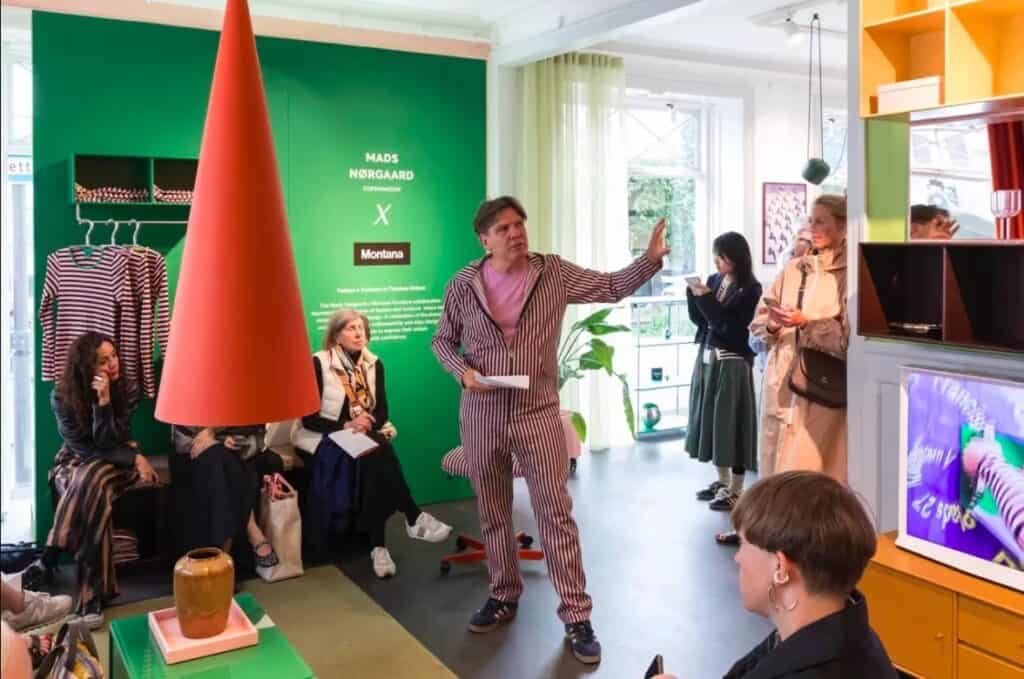
From the Montana exhibition 2024. Screenshot.

“We believe a design festival should be about more than just showcasing designs. At 3daysofdesign, we go to great lengths to foster connections across continents, inspire people with forward-thinking ideas, and offer multi-sensory, immersive experiences – all to create memorable moments that last well beyond the 3 days. Our Design Ambassador Program encourages deeper connections with the stories, ideas, and people behind design. We can’t wait for you to meet them this June. No doubt we will learn from them as much as they will learn from us, as a festival and as people,” said Signe Bydal Terenziani, CEO & Managing Director, 3daysofdesign.

******************************************************
Related: Danish Flair for Design
******************************************************

3 Days of Design in Copenhagen: This Year with Design Ambassadors
Leica Camera has been committed to the art of visual storytelling for 100 years. Photo: 

Through the Lens of Leica

In collaboration with Leica Camera Nordics, the Design Ambassadors documented highlights of the design exhibitions and events, as well as memorable moments during the festival with photography.

Leica Camera has been committed to the art of visual storytelling for 100 years. Their dedication to design, craftsmanship, and innovative technologies has enabled people to bear witness to the world, capturing moments in art, design, and society through a shared passion for photography. This year marks Leica Camera’s 100th anniversary of photography.

3 Days of Design in Copenhagen: This Year with Design Ambassadors
The primary role of the Design Ambassadors was to ensure a memorable experience for guests, exhibitors, the press, and design enthusiasts. Photo: Bamberghi

“Leica Camera is delighted to support 3daysofdesign’s first Design Ambassador Program. We are thrilled to partner with an organization that shares our passion for design and culture, with a community of people much like ours, who are curious about the world,” said Louise Goldstone, Leica Camera Nordics.

Last year’s iteration brought together more than 400 leading brands.

3 Days of Design in Copenhagen: This Year with Design Ambassadors, based on a press release from 3daysofdesign.

Feature image (top) © Filippo Bamberghi

Unearthing Nordic Land Using History Through an Old Satellite Imagery Catalogue

From the snow-blanketed fjords of Norway to the patchwork fields of southern Finland, the Nordic landscape has long been shaped by the quiet interplay between nature and human activity. Yet much of this transformation has gone undocumented, scattered across generations and buried beneath layers of soil, infrastructure, and memory. Learn more about unearthing Nordic land using history through an old satellite imagery catalogue.

Today, a surprising tool is helping researchers across Scandinavia bring those stories to light: an old satellite imagery catalogue. What was once used primarily for Cold War surveillance or early weather prediction has become a rich resource for understanding how people and the environment have interacted over the decades. Now, thanks to improved access, new digital tools, and a growing sense of urgency surrounding climate and land-use planning, these images are being viewed not just as scientific data but as a form of historical testimony.

Unearthing Nordic Land Using History Through an Old Satellite Imagery Catalogue, the article continues below the image.

Unearthing Nordic Land Using History Through an Old Satellite Imagery Catalogue
Aerialview from 2005 over the more central parts of Greater Stockholm, Sweden. Photo: ResearchGate

******************************************
Related: Sweden – A Hub For Commercial Satellites
******************************************

A Digital Time Machine

In many ways, these satellite archives are a time machine. Unlike written records or maps, which often represent decisions rather than reality, historical satellite imagery captures the world as it was, untouched by interpretation. In a single frame, you might glimpse a forest edge from 1975, a fishing village before it morphed into a tourist hub, or a coastline before sea levels began to bite at its edge.

Researchers at institutions like the Norwegian Institute for Nature Research and Sweden’s SLU (Swedish University of Agricultural Sciences) are working to view historical satellite images of key ecosystems over time. With advancements in machine learning and GIS, they can now stitch together thousands of satellite passes into seamless historical mosaics. In doing so, they’re revealing patterns that were previously invisible, such as how agriculture in southern Sweden has migrated northward in response to climate change, or how peatlands in Finland have been slowly drained over decades, sometimes without any official records.

Unearthing Nordic Land Using History Through an Old Satellite Imagery Catalogue
Satellites monitoring ocean currents. Photo: Norwegian SciTech News

What makes this particularly powerful in the Nordic context is the sheer diversity of landscapes across relatively small regions. A one-hour drive can take you from dense urban centers to wetland reserves, from coniferous forests to glacial plateaus. Having decades’ worth of imagery allows researchers to overlay environmental and human history to see how they moved together or, at times, collided.

**************************************
Related: Up, Up and Away With Norwegian Spaceship
**************************************

Tracking Environmental Change

Climate change is often portrayed as something happening fast, but in truth, it builds slowly, over generations. This is why satellite archives are becoming so crucial: they offer the rare ability to watch change unfold, year by year, meter by meter.

Take, for instance, the use of satellite pictures in monitoring Arctic-alpine environments in northern Norway. Scientists have been comparing imagery from the 1970s with contemporary data to measure the shrinkage of snow patches and the northward creep of tree lines. These seemingly small shifts have profound ecological consequences, affecting everything from migratory birds to reindeer herding.

Unearthing Nordic Land Using History Through an Old Satellite Imagery Catalogue, the article continues below the image.

Unearthing Nordic Land Using History Through an Old Satellite Imagery Catalogue
Historic Finnish satellite returns to earth. Photo: Yle News.

In Denmark, urban planners are using archive satellite images to trace the growth of cities like Aarhus and Copenhagen. They’re mapping how green belts have disappeared and reappeared over time, as well as how industrial zones have sprawled, retreated, and often returned in new forms. This isn’t just academic; these visual records inform zoning laws, sustainability targets, and decisions on where new infrastructure should be placed or avoided.

Equally important is the work being done with open-access tools. Many Scandinavian researchers have collaborated with the European Space Agency and universities to make historical satellite imagery free for educational and governmental use. This democratization of data means municipalities, NGOs, and even curious citizens can now examine how their surroundings have changed, with no exceptional credentials or budgets required.

A Window Into Cultural and Ecological Heritage

Beyond urban and environmental planning, this imagery has a deeply human value. Across the region, communities are using it to understand their past, not just in terms of climate, but also in terms of identity.

In Finland, historians have utilized archival satellite images to reconstruct land use on Sámi territories, enabling indigenous communities to prove their historical connections to specific reindeer grazing routes. Meanwhile, Swedish environmental educators are incorporating these images into public exhibitions, allowing children and families to scroll through timelapses of their hometowns and see how forests, lakes, and even schoolyards have evolved over generations.

If societies forget what their landscapes once looked like, they risk making poor decisions in the future. Should a town restore a floodplain? Should a forest be managed for biodiversity or timber? Should agriculture adapt to hotter summers or colder winters? These aren’t hypothetical questions in Scandinavia. They’re pressing, and the answers depend heavily on understanding what came before. Old satellite imagery is helping fill those knowledge gaps. It brings evidence where memory may fail, and context where policies may have lacked foresight.

As Scandinavia continues to grapple with the twin challenges of environmental protection and economic development, one thing is becoming increasingly clear: we cannot build a sustainable future without first understanding the past. In that endeavor, satellite images from decades past are proving to be a necessity.

Unearthing Nordic Land Using History Through an Old Satellite Imagery Catalogue
Peter Kogut

Unearthing Nordic Land Using History Through an Old Satellite Imagery Catalogue, written for Daily Scandinavian by Peter Kogut. Peter has a PhD in Physics and Mathematics and is the author of multiple scientific publications. Among other topics, he has a specific focus on satellite imagery processing and application in his academic research. Currently, Prof. Dr. Petro Kogut also works as a science advisor.

Feature image (top): Aerial shot of a football pitch in Henningsvaer, Norway surrounded by the Atlantic ocean.