Judy Fayard wrote recently an article in the Wall street Journal titled ‘Five of the World’s Best Sculpture Parks’. “Sculpture parks dedicated to modern and contemporary art are now found around the globe,” she wrote, and the Ekeberg Sculpture Park in Oslo, Norway was on her bucket list.
Water mirror
High on a bluff overlooking the city center and its fiord, the Ekeberg area was marked by prehistoric rock carvings as early as the Iron Age. A large abbey farm in the Middle Ages, it eventually became a city park, and gained fame as the viewpoint for Edvard Munch’s 1893 painting “The Scream.”
Ekeberg Woods
Wall Street Journal calls Christian Ringnes’ selection of art in the park ‘an eclectic collection of some 30 works by artists including Rodin,Renoir, Dalí, Maillol, James Turrell, Jenny Holzer, Jake and Dinos Chapman, Damien Hirst and Louise Bourgeois.
Walking Woman by Sean Henry
The other parks on Fayard’s list are Domaine du Muy in South France, Storm King Art Center in New York, Oliver Ranch in California and Hakone Open Air Museum in Japan.
The Pavillion
The Ekeberg Parkhas also been listed in the magazine Bloomerg Business’ list of 20 things to do in Norway.
They wrote: “Visitors to the sculpture park at Ekeberg appreciate Louise Bourgeois’s The Couple from an alternative angle (feature image, on top). The 25-hectare park overlooking Oslo opened at the end of 2013, the brainchild of Norwegian art collector Christian Ringnes. Not only is it free—much appreciated in this expensive city—it’s also open 24 hours a day, so you can appreciate its works—including pieces by James Turrell, Tony Cragg, and Marina Abramovic, as well as 20th century masters such as Auguste Rodin—any time you please.”
One of the World’s Best Sculpture Parks, written by Admin
If you’re planning to study in Europe, then Scandinavian universities should definitely be on your list.
The 2015 Academic Ranking of World Universities (ARWU) was released last week by the Center for World-Class Universities at Shanghai Jiao Tong University.
Starting from 2003, ARWU has been presenting the world Top 500 universities annually based on transparent methodology and third-party data. It has been recognized as the precursor of global university rankings and the most trustworthy one.
Harvard University remains the number one in the world for the 13th year. On the Top 10 list are also: Stanford, MIT, Berkeley, Cambridge, Princeton, Caltech, Columbia, Chicago and Oxford.
Scandinavian universities have the following rankings:
The Center for World-Class Universities also releases the 2015 Academic Ranking of World Universities by Broad Subject Fields (ARWU-FIELD) and 2015 Academic Ranking of World Universities by Subject Fields (ARWU-SUBJECT).
Scandinavian Universities on the World’s Top 100 List, compiled by Admin
Northern Norway’s coastline once again made a spectacular backdrop earlier this month when the world’s cycle elite met in the northernmost bike race in the world.
In 2013, the Arctic Race became the first professional road cycling race to be held above the Arctic Circle. After having wound through the Norwegian fjords around the idyllic islands of Lofoten and Vesterålen in 2013, and having led the pack to the North Cape in 2014, the Arctic Race of Norway 2015 continued its exploration beyond the Arctic Circle to discover the hidden treasures of the north.
Running from Thursday 13 August to Sunday 16 August, the third edition of the Arctic Race of Norway covered a total distance of 700 kilometers in four stages across Northern Norway.
Cycling fever Last year’s race was a great success with over 150,000 spectators, and there is every reason to believe that the number was succeeded this year. Extensive media coverage and a vivid presence in social media – Arctic Race’s Facebook page has about 40,500 likes.
The popularity of road cycling in Norway has grown dramatically in the last 20 years, and thus the Arctic Race of Norway is not just for cyclists. Spectators and visitors now have the chance to enjoy the excitement of watching a major race, as well as experiencing the great wilderness and bustling cities of Northern Norway.
The race is organized by Amaury Sports, the French organization behind Tour de France, Vuelta a Espana and the Dakar Rally.
Four new stages in stunning surroundings The route’s four stages were chosen to display some of Norway’s most awe-inspiring and diverse nature. TV-viewers, spectators and cyclists alike could marvel at the contrasts along the way – from rocky mountains lining the coastline to the stark beauty of vast open plains and snow-capped peaks in the background.
Stage 1: Harstad – Harstad The race started in the town of Harstad, which enjoys a beautiful and strategic location on Norway’s largest island Hinnøya in the county of Troms. In Harstad and its surrounding area you find a rich array of culture and nature-based experiences. The area surrounding Harstad is exciting, with Kvæfjord’s world famous strawberries and the Viking island of Bjarkøy with 523 islets and rocks. Visitors who arrived before 18 July coulf do all of the above with the added bonus of the midnight sun.
Stage 2: Evenskjer – Setermoen The starting point for stage 2 was Evenskjer in the municipality of Skånland, where the nature is grand, from inland wild mountains to coastal landscapes. Here are rich natural resources with sea fishing from land or boat, or inland fishing in rivers and lakes. The riders then headed inland and crossed trough a military base 3 kilometers from the finish in Setermoen.
Stage 3: Senja (Finnsnes) – Målselv The third stage was undoubtedly the climax of the race. It started with a 100 kilometer loop on the Senja island, a genuine gem of Northern Norway. The finish stage was demanding, with a tough climb up to the mountain resort of Målselv – 3.5 kilometers at a gradient of six percent. Along the route the riders and spectators could appreciate the beauty of mountains and fjords, long beaches of fine sand and fishing villages.
Senja National Tourist Route is a 90-kilometre-long stretch of road between Gryllefjord and Botnhamn. In addition, the official route includes detours to Mefjordvær and Husøya, for an additional 12 kilometers of road. The roads are ideal for cycling. Visitors can experience many great viewpoints, and with ferry and express boat you can cycle from island to island.
Stage 4: Narvik – Narvik The peleton returned to the Nordland region on the last day, on a stage full of hazards around Narvik. The port of Narvik was made famous after a major Second World War battle in 1940. The bearer of the blue and orange leader’s jersey had his work cut out for him when it comes to keeping his rivals at bay, as they could take advantage of a particularly lethal last eleven kilometers containing a 2.5 kilometer slope at a gradient of six percent to be climbed four times.
Narvik is a lively place that tempts you with wild, dramatic and beautiful Arctic experiences. A cable car takes you up to the view point on Narvikfjellet mountain, from where you can enjoy scenic views over the Ofotfjord.
Only an hour away from Narvik by car, visitors may enjoy Norway’s national mountain Stetind, a natural obelisk towering 1,381 meters straight up from the fjord. The journey from Narvik to Stetind is a fantastic way to experience Ofoten and enjoy the unique landscape and tranquil surroundings.
Thousands of granite islands make up the Western Islands of Sweden, an archipelago that stretches north into the Norwegian border. It’s an exciting part of Scandinavia!
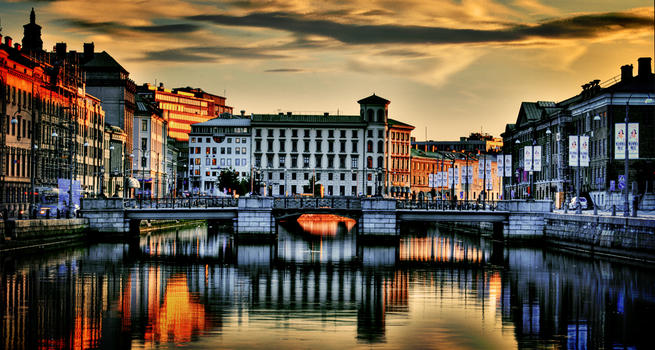
Gothenburg
Why not begin your exploration with the largest city of the Swedish West Coast? Wander the picturesque canal, with its cute bridges and majestic Gustav Adolf square (named after the founding father of Sweden). Enjoy some cold beers alfresco before spending a night at the floating hotel Ibis, housed in a ship on the Gothia river.
Gothenburgh by night
Kayaking Gothenburg archipelago can lead to other adventures
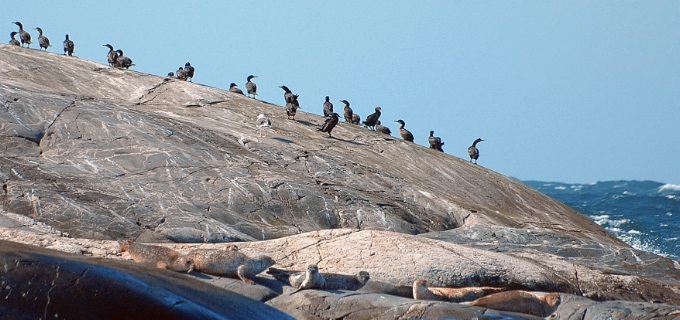
The Gothenburg archipelago, with thousands of islands, is ideal for kayaking. You can takelessons from outfitters, go on an afternoon outing on your own or sign up for a multi-day tour that includes camping. If you’re lucky, you’ll see seals and waterfowl that call the archipelago home.
Kayaking in Gotehneburgh. Photo Henrik Trygg/Visit Sweden
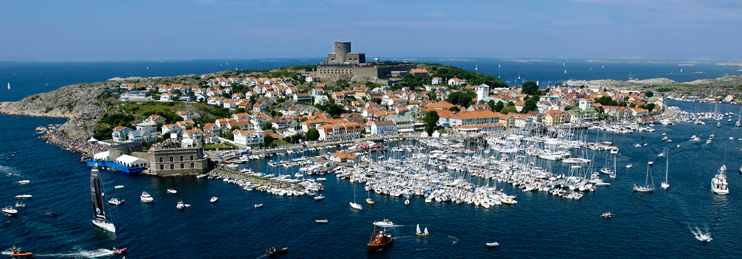
Marstrand The smallest town in the county of Västra Götaland is an absolute must-see – a Swedish playground for royalty and celebrities that boasts a rich and intriguing history. Here you can enjoy the impressive views across the archipelago from Carlsten’s Fortress.
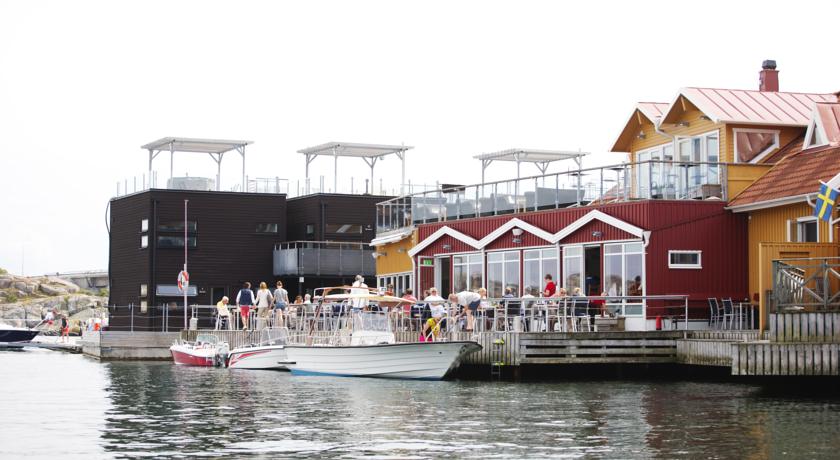
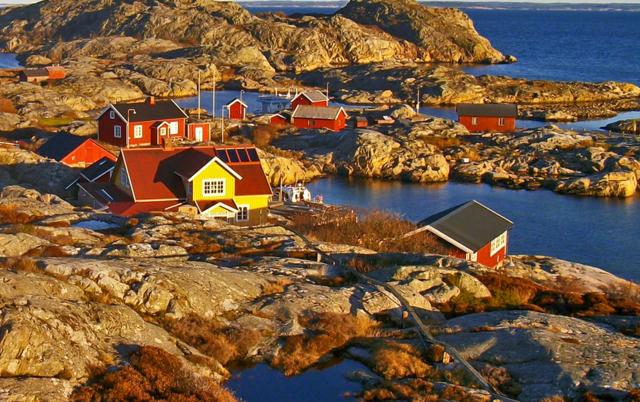
Klädesholmen On this small island in Tjörn municipality, Bohuslän, you can join local fishermen on a seafood safari for lobster, oysters and mussels. Herring is so big on the West Coast that the folks here celebrate “the Day of the Herring” on June 6. A perfect day for festing and raising a glass or two to the picturesque fishing villages there. Be aware though, realize that much of the following day will be spent with head in hands. Exactly at which point during the celebration was it a good idea to get in yet another round?
Visit the floating waterfront restaurant Salt & Sill. Salt & Sill restaurant has one of the West Coast’s best locations. Outdoor serving and windowseats with a sea view that provides an almost surreal closeness to the sea. Here you will enjoy fishing, shellfish and Salt & Sill specialty “herring plate” that has contributed heavily to the tavern as international recognition. Salt & Sill, inter alia, awarded the reviews “Worth a trip” and “White Heart” by the White Guide and Quality Award “West Swedish tastes” of the West Sweden Tourist Board.
The island is connected to Tjörn via a bridge to Bleket.
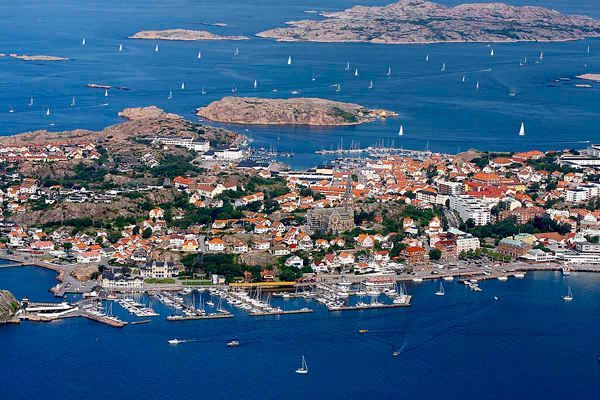
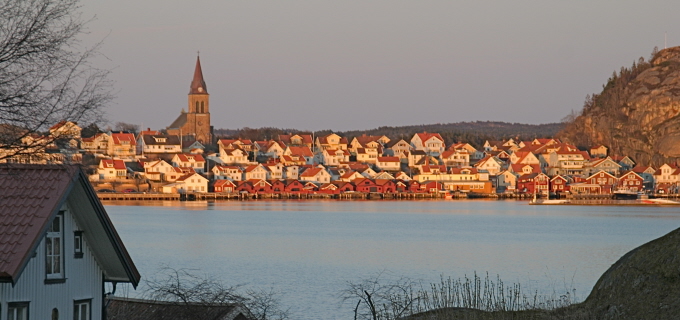
Lysekil This adorable, postcard-pretty village is a great place to base yourself for further island exploration, including the island of Skaftö, where you’ll find Fiskebeckskil and Grandsund.
Fjellbacka is a peaceful burg about 90 miles north of Gothenburg. Fjallbacka boomed in the late 1800s when herring filled the waters offshore.
It became a popular vacation spot for Scandinavians early in the last century and continues to draw visitors, many of whom come to see the about 600 panels of 3,000-year-old Tanum rock carvings, included in the UNESCO World Heritage site north of town. Many of the glyphs shoe boats, humans with bows, spears or axes, rituals and hunting scenes.
If you love lobster, come in September for the lobster fishing season and pot some of these darlings of the foodie world. Back on dry land, you get to prepare and devour your catch. Actress Ingrid Bergman spent many summers on Danholmen Island after she and producer husband Lars Schmidt bought a home there in 1958. And it is there, on the north side of the island, that her ashes were scattered after her death in 1982.
The Fjällbacka archipelago boats leave from the town harbor (Centrumbryggan) by Ingrid Bergman square. Choose a vessel from motor cruisers, fishing boats, yachts and RIB (Rigid Inflatable Boat). If you want a leisurely ‘cruise-type’ experience go for one of the first three. For a rush to the head and a bad hair day go for the RIB option.
High above Fjällbacka rises Vetteberget, from the top of which there is a fantastic view of both the islands off the coast and the mainland. The rock is divided into Stora (Big) and Lilla (Little) Vetteberget by the unusual Kungsklyftan, a cleft that has huge stone blocks wedged in like a roof. That cleft is a must-see spot on Camilla Lackberg murder mystery tours. Lackberg, a bestselling Swedish author, used the Kungsklyftan as the opening scene in her book “The Preacher,” in which a boy finds the body of a young woman covering the skeletons of two young women killed decades earlier.
Getting there: From Gothenburg, you can rent a car and drive on E6 north for about 1 hour and 45 minutes. Or you can take a train to the little town of Dingle and then catch bus 875 to Fjallbacka, which is about 15 miles northwest.
Väderöarna Islands The aptly named Weather Islands are Sweden’s most westerly islands and among the most exotic islands in the country. This is kayaking heavens for seafood lovers.
Väderöarnas guesthouse and restaurant is set on the main island – a wonderful retreat where guests can indulge in fresh seafood and enjoy the beautiful landscape, including walks across the smooth cliffs, swimming in the ocean or relaxing in a wood-fired sauna or hot-tub.
The restaurant is Taste of West Sweden accredited – one of a network of gastronomic eateries that make the most of West Sweden’s first-class produce. It serves up delicacies from the sea, with a menu changing according to season and availability. The tasty mussel soup, laced with cognac, has already become a classic.
Käringön
has an attractive and well protected harbor for guest boats. There are four hotels, bed and breakfast, guesthouses and many private rooms to rent for visitors. The island has 3-4 restaurants and coffee shops, the most famous are “Petersons krog” and “Karingo Oysterbar”, where people come from all over the world to enjoy the fresh seafood and fantastic views.
Kosterhavet National Park This is Sweden’s first national Marine Park with more than 6,000 sea creatures, including rare seabirds, brachiopods, spinge and coral larvae, live in waters of this preserve. Don’t miss:
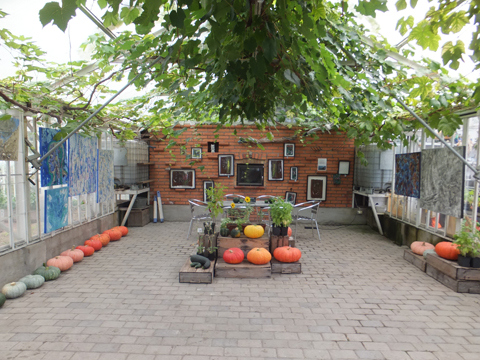
Kosters Tradgarder This is an organic garden restaurant, ideal for a fika, the traditional Swedish coffee brak, typically accompanied by pastries and sandwiches. The restaurant is run by Helena and Dtevan von Bothmer, who once taught at Uppsala University and now sell books and vegetables. The restaurant serves the day’s fresh seafood catc, garnished with selfgrown herbs and vegetables.
Hotel Koster Try to stop for a smorgasbord lunch at Hotel Koster. It looks like a hotel on the Main coast in USA and has been serving guests since 1905. Ask for a table on the deck with a view to the elegant sailboats heading into the Kosterfjord harbor.
Getting there
Take the regular ferry from the Disney-pretty seaside resort in Strömstad, north of Fjallbacka. The boat is usually packed with Swedish families showing off spectacularly efficient systems for transporting huge amount of camping gear on foot. You may rent bicycles on the island.
Grebbestad 90% of Sweden’s oysters originate from this kooky, quaint fishing village. It is also home to Everts Sjöbod, a restored 19th century boathouse where eco-friendly seafood safaris and tasting sessions are on the menu.
The Rocky West Coast of Sweden, written by Tor Kjolberg
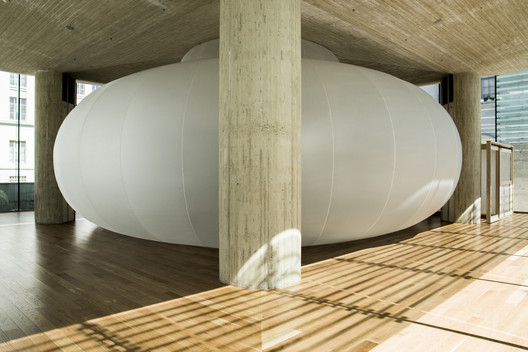
Ode to Osaka explores architect Sverre Fehn’s design for the Nordic Pavilion at the World Expo in Osaka, Japan in 1970. Fehn took part in a competition to design the Nordic Pavillion for the exhibition, without winning. Fehn’s proposal has now been recreated at the National Museum of Architecture in Oslo.
Fehn’s concept is described as consisting of “two inflatable forms, in which the fresh air would stand in contrast to Osaka’s heavily polluted air outside.” Seventy-seven countries contributed to the exhibition, the main theme of which was “Progress and Harmony for Mankind”.
The new installation has been constructed within Fehn’s existing pavilion (2008). Visitors are able to enter the pulsating pavilion and experience it from the outside.
Fehn’s sinuous pavilion would have consisted of two air-filled, interdependently moving chambers containing an atmosphere cleansed of and protected from outside pollution.
Fehn (1924-2009) received international attention for his Norwegian Pavilion at the World Exhibition in Brussels in 1958, as well as in 1962 for his Nordic Pavilion at the Venice Biennale.
Born in Kongsberg, Fehn attended what is now known as the Oslo School of Architecture and Design (AHO) and received his degree in 1949.
He was both a professor at the AHO from 1971 to 1995, and the educational institution’s rector between 1986 and 1989.
Ode to Osaka is on display through September 13.
The reconstruction is curated by Jérémie McGowan, Berit Johanne Henjum and Manthey Kula Architects.
The Winery Hotel in Solna, located at the northern main access road to Stockholm, is a visionary concept hotel with 184 rooms and its own wine production of about 10,000 bottles a year. The hotel opens in January 2016.
The concept has been developed with focus on the substantially increased interest in wine and winemaking in Sweden.
At the Winery Hotel the guests may expect extraordinary wine experiences since it will include a winery, producing its own wine, a wine bar and a delicatessen, where guests can buy take-away ingredients from the restaurant. The largest vinotheque in Sweden will be particularly exciting. This is an entirely new meeting concept in a market hall environment with a focus on events.
The building’s architecture with brick walls and large sections of glazing is inspired by that of a large market hall buzzing with life round the clock. To further amplify the wine-based concept, the hotel will be enclosed by a brick wall and a large open-air restaurant with pergolas and grapevines. On the roof of the hotel, with views over Brunnsviken lake and Haga Park, a health club will be constructed with a spa and a yoga studio.
The lobby will provide a view of the oak barrels where the wine matures, and a wine bar immediately adjacent with thousands of bottles organized by origin.
“The Winery Hotel will be a truly exciting addition, with a completely unique concept for Sweden and interesting architecture that will enrich both Solna and the entire gateway to Stockholm,” says Klaus Hansen Vikström, Director of Business Development at Fabege.
Fabege AB (publ) is one of Sweden’s leading property companies focusing mainly on letting and managing office premises and property development.
“The high standard and the unique concept fit Best Western Premier Collection Hotels,” says Johan Kukacka, CEO of Best Western in Scandinavia, in a press release. “I am looking forward to the finished result, and believe this will be a success.”
Inspiration for the design has among other things been the Wythe Hotel Brooklyn in New York.
Urban Winery in Stockholm, written by Tor Kjolberg
The sea around Stokkøya outside Trondheim is brilliant for surfing, and over time the site has become a base for divers from all over the world.
Roar Svenning grew up at the Troningen farm by Hosnasand, and this story starts way back when his parents decided to add to their income by running a camp site for tourists who needed no frills accommodation.
The building, today called Sjøsenteret (the Sea Centre) – was used for accommodation, communal area and eating. The Sea Centre was originally the main building of a farm called Botnan, and was also at one point used as a workshop for a welding firm.
At one of the surfing events Roar met Torild Langklopp, and the ball got rolling. Together they decided to take the plunge and develop the site into an attractive leisure and activity resort. Their philosophy is based on the main elements of nature, architecture, food and activities and the way they work together.
Nature at Stokkøya is wild and beautiful and practically untouched, both on land and at sea, and the couple aims to keep it in as untouched a state as possible. Conservation and gentle use of the surroundings has been an essential part of the development process and a deciding factor for all the projects, as they wanted a strong interaction between nature and architecture and between landscapes and buildings.
In Middagshaugen (Midday Hill), the hill behind the beach, there were 26 plots allotted to holiday residences, and in 2003 Torild and Roar started to build the cottages. Their choice of a modern design was not to everyone’s liking – some liken the cottages to portacabins, while they were used as an example of successful new European architecture at the Italian architectural exhibition ‘Architettura e memoria’ in Genoa. The holiday cottages are sold to private owners, but some of them are also rented out.
In 2005 building work started on The Beach Bar. Originally meant to be just a shack on the beach, a place for the holiday makers to meet, it has since started catering for a much wider range of guests. The Beach Bar was built quite literally on the foundations of an old cement factory which was started in 1947 and was in business for about 30 years.
The building consists of large glass panes facing the sea, and on a clear summer’s night you can just about see the light from Halten Fyr, the Halten light house, about 16 nautical miles out at sea to the North West. Much of the timber used comes from local woods.
In the autumn of 2008, when the construction business was grinding to a halt because of the Recession, the first stone was laid on the latest project, the SUB or subterranean house. After intensive and hectic building activity throughout the winter, and before the last coat of paint was even dry, the units were in use in the beginning of May 2009.
The inspiration for the new units was the old earth cellars, but the couple has given them a far more exclusive feel with glass doors opening out toward the sea. The SUB units are situated just above the Beach Bar. One of the main reasons why they chose to dig the building into the sand was to soften the impact on the landscape around it. The building itself is made primarily from concrete and glass, but each unit has been decorated with soft furnishings and canvas and a varied range of interior design elements.
The architects behind the cottages, the Beach Bar and the Sub units are Ogmund Sørli and Ragnhild Erdal from the Pir 2 Arkitektkontor.
With his knowledge of local produce, Roar started delivering seafood to good restaurants in Trondheim and Oslo, and later also as far afield as France and Japan. This experience, combined with a keen interest in food and a large network of skillful chefs and food lovers, has made the culinary side of things a strong focal point in the development of Stokkøya Sjøsenter.
Nature itself is the starting point for all your activities out here – whether you are enjoying a good meal while taking in the fantastic view, going for a walk in the surrounding area, taking a bath in the Dutch tubs or a dip in the sea or playing about with a dinghy, a kayak or a fishing boat.
Appreciate the nature here from wherever you choose to be. And maybe the best way to do so is to do absolutely nothing …
At the Coastline of Mid-Norway, source: Stokkøya Sea Center
A house in Snorrslida, Sweden, has been on the market for more than three years because the village name is deemed to be rude in the Swedish language.
The housing shortage in Sweden normally implies that a house like this should be sold within minutes. This house has, however, despite being offered at a low 5.500 USD, not been sold due to its genital-based address.
Snorrslida, which in Sweden translates to ‘penis vagina’ is a small village near Laholm, but many Swedes have pereviously been completely unaware that there was a village with such a name in their country.
But that was until now. When the house was advertised for sale recently, the ad went viral in Sweden.
However, real estate agent Henrik Håkansson, who helps potential Danish buyers relocate to Sweden, does not believe the name of the village is what has put off prospective house buyers.
“The house is in a bad condition, and the difficulties selling it are not related to the name,” he told a domestic news service.
The two Scandinavian languages are similar, and Swedes and Danes are often able to understand one another. But not all words are identical, and while Snorrslida can lead to misunderstandings in Swedish, the word would not raise any attention at all in Denmark.
Håkansson still believes they’re able to sell the house, but admitted that the area is small with few potential buyers.
Place name expert Annette Torensjö at Lantmäteriet (the authority that maps Sweden’s geography and properties) says that ‘Snorr’ used to be a common name in Viking times, and ‘lida’ means ‘hill’ in ancient Norse. The name has thus nothing to do with either penises or vaginas.
“It’s in the eyes of the beholder to determine if it is ugly and dirty,” she told public broadcaster SVT.
Feature image on top: The property in Snorrslida, Sweden. Photo: Dansk Ejendoms Consult
Rude-Sounding Village Name in Sweden, written by Tor Kjolberg
Four days last week the famous German Oktoberfest visited Oslo – Wednesday through Saturday. You no longer have to go to Munich, Germany, to experience the fantastic and fun atmosphere of the Oktoberfest.
For the second year in a row the Oktoberfest took place downtown in Oslo, at Youngstorget, serving German schnitzels, sausages, Bavarian fries and German Oktoberfest beer in the authentic Bavarian beer tent.
Tyrolean music, played by a South German band, and one liters of beer served by the pleasant servants in their traditional outfit like Dirndl and Lederhosen gave us the feeling of being in the heart of Bavaria.
“Where there’s beer, you’ll find us,” said Geir Solberg (left) and Tor Arne Skjefstad
Oktoberfest in Oslo, written and photographed by Tor Kjolberg
Experience historical ruins, beautiful roses, interesting design and world-class food – In Gotland, Sweden.
Gotland is a destination where you can spend your vacation among hens, truffle-dogs and hermits.
To site the locals: “Gotland is a place full of opportunities, a place to explore, a place to relax. It is a place for exciting encounters, between land and sea, between the past and the present but also between people enjoying each other’s company.”
So what is there to explore?
Truffles safari
Truffles are the black gold of Gotland. At Risungs farm, 50 kilometer from Visby airport, there is a Lagotto Romagnolo kennel, which is a dog that is great at finding truffles. Truffles are delivered from the farm to Maemo in Copenhagen, which some say is the best restaurant in the world. From August through November, the farm invites guests to join their truffles safari.
Stay in a Hermit cabin? Driving a short distance from the farm you’ll notice a yellow sign pointing to Fabriken Furillen, a hotel, with a smart restaurant and shapely Scandinavian furniture. We recommend you, however to stay in one of the two Hermit cabins with no electricity, no running water, no lightning, just simple wooden constructions, looking like lumberjacks’ homes, albeit designed by the top Swedish architect, Mats Theselius.
In the Hermit cabins you can forget everything else for a few days. You just find true solitude.
One of Sweden’s top photographers, Johan Hellström, is the founder and manager of Fabriken Furillen (which, by the way have 18 rooms with electricity and hot and cold running water), and where master chef Filip Fastén is in charge of a fabulous restaurant.
The hotel was built on a former limestone plant.
If you want to rent a cabin, there is an interesting payment system; First night is SEK 5,000, second night is SEK 500, third night SEK 50, forth night is SEK 5 and the fifth night is free.
Viking heritage
When you are on the island of Gotland, be sure to visit the former Viking site, and only city on the island, Visby. Visby was the main center of the Hanseatic League in the Baltic from the 12th to the 14th century. Its 13th-century ramparts and more than 200 warehouses and wealthy merchants’ dwellings from the same period make it the best-preserved fortified commercial city in northern Europe. The 3.5 kilometer long town wall and the old houses have been on UNESCOs World Heritage List for 20 years.
Pippi Longstockings on Gotland The home of Astrid Lindgren is on Sweden’s mainland. But the house used in the first Pippi Longstockings film shootings is on Gotland.
Favorites of the locals After asking the locals for their favorite places to eat or shop, we can offer you the following list:
Bakfickan (back pocket), Visby’æs only fish and shellfish restaurant. Try fish-soup or smoked shrimps at the restaurant situated by the grand square.
Gutekällaren, restaurant, bar and nightclub loved by summer revelers, situated by the grand square.
Amarillo restaurant. Enjoy international inspired small dishes served at thes central restaurant.
Black Sheep Arms is a “hostery, serving good food, fine ales, beers & malts to regulars as well as Amiable strangers.”
Want to shop in an old chapel? Then Berså at Tofte (15 kilometer south of Visby) is the place.
Rute Stenugnsbageri. Bakery and cafeteria in Rute, north Gotland, in an old ruin with a beautiful garden. Famous for their stone oven baked bread.
About Gotland Sweden’s largest island, 3,134 square meters, 50 kilometers wide. 57,400 inhabitants.
92 churches from the middle ages built between 1100s-1400s. Visby, only city, was listed on UNESCOs World Heritage List in 1995.
What to do?
Guided tours, surfing, kiting, climbing, biking, riding, truffle-safaris, golfing, botanical garden.
How to get here? Via Stockholm by ferry from Nynäshamn and Oskarshamn.