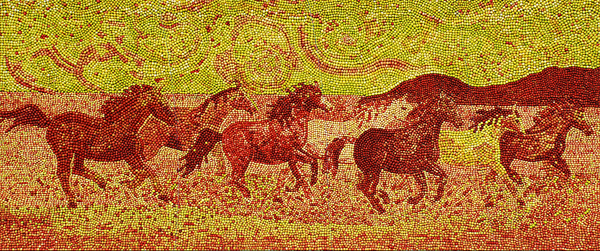
Skåne in Southern Sweden is famous for its apples and 26-27 September sees the annual Apple Market in Kivik.
Artist Emma Karp Lundström has been behind the apple art at The Kivik Apple Market in recent years and this year will be no exception. This year’s market takes place in Kivik 26-27 September.
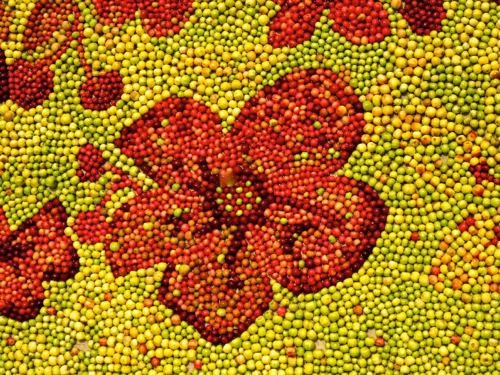
The Kivik Apple Market is a harvest festival focusing on the Swedish apple. Every year the market features a piece of apple art. The piece of art looks like a painting, but is actually pieced together by colorful apples. The theme is kept secret until the art is unveiled at the market.
The Kivik Apple Market started in 1988 when the Swedish fruit-growing industry joined forces to raise positive awareness of Swedish fruit. In 1988, an estimated 6,000 visitors attended the market in the square. Twenty or so years later, between 20,000 and 25,000 people are attracted to Kivik Harbour during the last weekend in September.
During the market, visitors can taste and buy a wide range of Swedish fruit, listen to artists performing on the stage, buy Swedish handicrafts and attend the annual Golden Apple award ceremony. The Apple Market is organized by the non-profit company Äpplemarknaden i Kivik – a cooperative effort from several fruit growers and companies in the Swedish fruit industry, including Äppelriket & Kiviks Musteri.
Kivik is a small town in the southern county of Skåne. It is located in a part of Skåne called Österlen.
Apple Art in Southern Sweden, source: Visit Sweden
The Norwegian artist Gardar Eide Einarsson is perhaps the most unpopular young artist in Norway, but in his new hometown Tokyo he has acquired an added status as an all over tattooed performer of martial arts.
His exhibitions over the past decade have followed a highly consistent thematic trajectory, continuously tracing out what one would call an ‘iconography of resistance’.
“Say nothing” by Gardar Eide Einarsson
When Gardar Eide Einarsson (39) moved from Norway to New York some years ago, he believed he would return to Norway after a short stay. Instead he moved to Tokyo, and bought an apartment in the fashionable Aoyama district. Later he bought a house from the elderly professor and famous architect Kazunari Sakamoto, who had just restored his own designed house in the Ebisu area. “The project had been more expensive than expected, but this is a home suitable for an artist who actually wanted to be an architect,” he says.
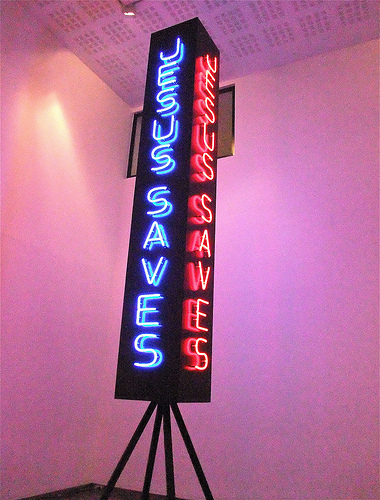
Some years ago he made a rotating neon sign that said, Jesus Saves for Art Basel in Switzerland. Einarsson says it is based on one of the scenes in Dirty Harry, where Clint Eastwood is hiding on a rooftop, staking out a serial killer. It became clear to him how evil the bad guy is when he shoots up a Jesus Saves sign.
The artist used lives with his Japanese wife and their two years old son. His Japanese wife runs a fashion and PR-agency. Einarsson exercises daily in his Brazilian jiu-jitsu club, and he has of course, he has designed the club’s logo.
The signs and symbols created by Einarsson often refer to fundamental conflictual structures between a society of control following 9/11, and the individual’s rebellion against and threat to central power.
66 car tyres and resin. Photo: Joshua White
“I grew up with a lot of American culture,” he says. “I was interested in stuff like skateboarding and hardcore music. But growing up in Norway, the whole relationship between the individual and society is very different from what I experienced in America.”
From the exhibition “Power Has a Fragrance” by Gardar Eide Einarsson at the Astrup Fearnley Museum of Modern Art, Oslo, Norway. May 6, 2010.
He explained that he moved to New York the day before 9/11, and there were armed guards on the subways and Humveens downtown. There was a very different relationship to individualism than he was used to in Norway. “I can still see those experiences in my work,” he adds.
Einarsson also uses historical examples of tragic, abortive attempts to achieve individual freedom, and looks at popular culture’s treatments of the myths, signs, and visuality of the outsider ideal as drawn from examples in reality where instances of extreme individualism have resulted in terrorism and crime.
Yves Saint Laurent by Einarsson
He explains that he became interested in arts through conceptual art and institutional critique during the ‘70s. If that critique hadn’t been there, I think a lot of my work would be stupid,” he adds.
During a solo exhibition in Bergen Kunsthall in Norway, the book “Versuchsstation des Weltuntergangs” was published and is the artist’s first comprehensive monograph. The book contains documentation of a large section of works since the early 2000s.
Three paintings by Gardar Einarsson and one by Stanley Whitney
The walls in his house is filled with photographs, depicting his life and his acquaintances, from both New York and Tokyo. One image shows a sculpture made by Einarsson’s favourite artist Cady Noland, photographed by Larry Clark. A photography from the famous work “Following Poece” by Vito Acconci, a New York artist, who Einarsson assisted for two years after having been asked to help him to build a shelf. Pictures by the post war classics Daido Moriyama and Araki, photo veterans Einarsson happens to meet in Tokyo.
He tells that he has become increasingly attracted to the more extreme, tragic versions of rebellion. He has done a number of collaborations with the Norwegian artist Matias Faldbakken, who he met in school, including Norway’s least favorite public arts piece. “It was demolished by the people,” he smiles. It was based in a German fairy tale about Schlaraffenland (Cockaigne) where nobody has to work, and if they did, they were punished.
“We tried to turn a public square in Bergen, the second largest city in Norway, into the fairy tale, and people got mad, telling us it was the worst thing they had ever seen.
The philosopher Nick Land outlines a complex interpretative horizon in the ecounter with Einarsson’s precise analyses of the language of power by exploiting and reactivating the vocabulary of ‘post-Minimalist’ art. Martin Herbert tackles Einarsson’s output in the 2000s, and shows how he continually problematizes the residual potential of art as critique and political tool within an art institution that has long since been exposed as a power structure in its own right, by constantly pointing to the contradictory oppositions between power and anti-power, between resistance and repressive tolerance.
Einarsson is, however, concerned about that his art is not becoming too nice and clever.
Gardar Eide Einarsson – Born in 1976, grew up at Ås, outside Oslo.
– Educated 1995-2003 at Bergen Art College, Städelschule, Frankfurt and New York’s Whitney Museum Independent Study Program.
– Known for paintings, sculptures and installations, using found material, often depicting sub cultures.
– Together with his artist partner Matias Faldbakken, he is often described as new conceptualist.
– He belongs to the most noted international artists during the recent years.
– His work has been bought by prestigious museums, like Museum of Modern Art in New York and Moderna Museet in Stockholm.
– He is represented by prestigious galleries, like Standard in Oslo, Yvon Lambert in Paris, Team Gallery in New York Maureen Paley in London and Nils Stærk in Copenhagen.
– He has cooperated with fashion designer Johan Lindeberg and designed perfume flacons for Yves Saint-Laurents.
Nippon Art by a Norwegian Artist, written by Tor Kjolberg
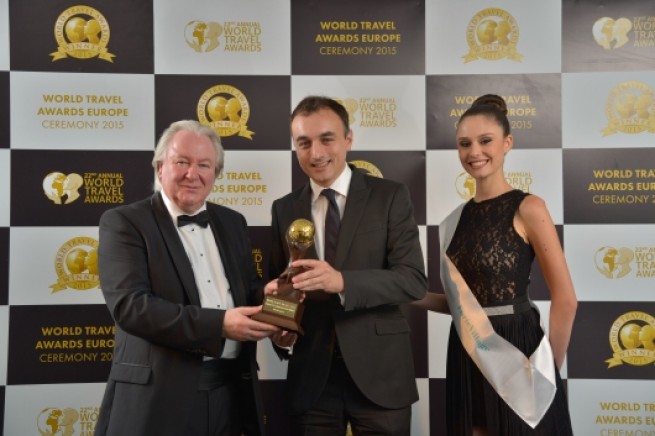
“Congratulations to all our winners here at Forte Village Resort in Sardinia,” said World Travel Awards President Graham Cooke last week-end. “These are the leaders of our industry here in Europe and it is a pleasure and an honor to recognize their achievements this evening.”
The European Gala Ceremony was held at Forte Village Resort in Sardinia, Italy. The European Gala Ceremony held on Saturday night September 5 was followed by an audience of more than 250 industry leaders from across Europe.
Feature image (on top): A representative from Norwegian Air Shuttle receives the World Travel Award 2015.
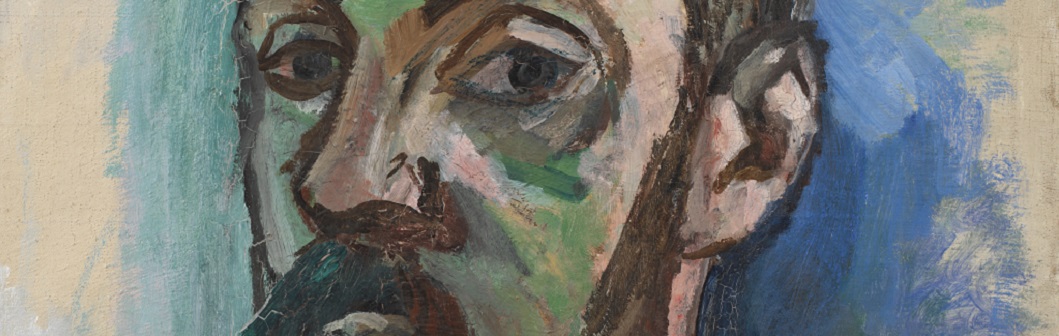
Focus this autumn is on the French painter Matisse at Henie Onstad Art Center outside Oslo as well as at Ordrupgaard Museum outside Copenhagen.
Basis for the two exhibitions is, however, fundamentally different.
Henie Onstad Kunstsenter is launching a provenance project with vast cultural and informational significance for museum institutions, art history students and professionals in Scandinavia as well as a general audience. The exhibition In Search of Matisse is the first research project in Norway on the relationship between looting and art collecting during and after World War II, and the role of the market also in contemporary situations such as Bagdad in 2003 and the ongoing destruction by IS in Mosul.
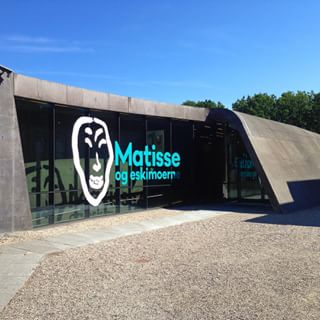
In Copenhagen, on the other hand, the focus is on a period in Matisse’s life in which the artist directed his attention and creative motivation towards the North, in a series of black and white depictions of Eskimos, whose faces and mask art, he was introduced to by his son-in-law’s collection of inuit masks and the Danish polar explorer Knud Rasmussen’s books. The exhibition Matisse and The Eskimos draws attention to an overlooked niche in Matisse’s late work, in which, he increasingly simplifies and radicalizes his portraits and figurative representations and endows them with the monumentality of the mask.
Blue Dress in Ocher armchair
The title of the exhibition in Oslo might give the impression that Henie Onstad Art Center will exhibit works by Matisse only, but there are only two works by the world famous French artist on display. The title refers to the story relating to the artworks’ ownership history (provenance) and comes in the wake of the fact that the Art Center in 2014 relinquished the painting Blue dress in ocher armchair to the heirs of the French Jewish art collector Paul Rosenberg. Where this painting is today is unknown to the Henie Onstad Foundation.
The exhibition is open September 11 to December 13.
The exhibition Matisse and The Eskimos at Ordrupgaard Museumexhibits works from the 1940s, and the theme os the artist’s interest for this ethnic group. This is an overlooked chapter in Matisse’s production, and is complemented by several reference works, including works by Césanne, Pissaro, Gauguin and Delacroix, who also were concerned by the so called exotic.
Philodendron noir et citrons
The exhibition is open through November 29.
In Search of Matisse in Copenhagen and Oslo, compiled by Tor Kjolberg
Lyngfjord Adventure, Tromsoe, North Norway, was rewarded the Norwegian Tourism Prize 2015 yesterday.The Tourism Prize is awarded by Innovation Norway and consists of a cash award of NOK 250,000. The announcement was made by Cathrine Pia Lund, director of Brand Norway/Innovation Norway
Lyngfjord Adventure has offered Arctic adventures since 2007, and visitors can enjoy a combination of outdoor activities and Northern Lights experiences every day and evening during the winter season – seven days a week.
The activity center Camp Tamok provides guests with crisp Arctic air, silence, untouched wilderness and once-in-a-lifetime experiences.
“Lyngfjord Adventure has created values to the company as well as to the local community – and with national engagement,” said the jury. “The team has focused on economy, security and sustainability and has managed to attract an international audience.” More than 10,000 foreign visitors have enjoyed the services of Lyngfjord Adventures.
“It’s an honor to receive the Norwegian Tourism Award 2015,” said founder and chairman Hans-Olav Eriksen. “When we started to play with the thought of making an Arctic attraction several years ago, we knew nothing about tourism, and there were no benchmarking reports to guide us. It was purely enthusiasm, teamwork and trial and error. The only thing we knew was stated in a report we had read, saying that tourism was the least profitable business in the country with the least knowledgeable employees.”
The prize of NOK 250,000 will be used to further improve the product and cooperation with the benevolent municipalities.
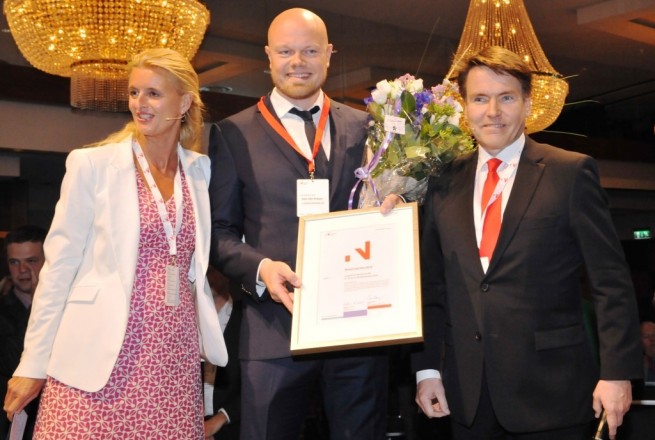
Feature image (on top) shows founder and CEO Hans-Olav Eriksen, Lyngfjord Adventure (in the middle), Cathrine Pia Lund, Brand Norway/Innovation Norway (left) and Per-Arne Tuftin, manager Tourism, Innovation Norway/(right). Photo: Audun Pettersen.
All other images, Lyngfjord Adventures.
Norwegian Tourism Prize 2015, written by Tor Kjolberg
ABBA’s Dancing Queen piano, which will go under the hammer at Sotheby’s Rock & Pop Auction in London on 29 September, is expected to make £800,000.
The ABBA Grand Piano has featured in many ABBA pop classics, like “Waterloo”, “Dancing Queen”, “Mamma Mia”, “SOS”, Knowing Me, Knowing You”, “Ting Ring” and “Money. Money, Money.” “The opening piano glissando from Dancing Queen is one of the most distinctive sounds of the 1970s and we are delighted to offer the actual instrument used by the legendary ABBA in their major recordings,” said Sotheby’s books and manuscript specialist Dr. Philip W Errington.
The piano was built by the Swedish musical instrument maker George Bolin for the American jazz pianist Bill Evans. In 1964 the New York Times described it as a “space-age piano” and wrote: “the new piano represents Mr. Bolin’s ultimate desire – to produce an instrument that gives the pianist the sensation of playing ‘directly on the strings’ as a guitarist would.”
Evans said it was one of the most unbelievable instruments he had ever played.
Stockholm’s Metronome Studios bought the piano in 1967 and it appeared on nearly all of the group’s recordings between 1973 and 1977. The piano is now sold by Atlantis Grammofon, the former Metronome Studios.
The groups pianist Benny Andersson has described the piano as “One of a kind and a great source of inspiration during the ABBA sessions in the studio.” The instrument comes with a certificate of authentication from the ABBA pianist.
The Swedish band shot to fame after winning the Eurovision Song Contest in 1974 and their hits dominated charts in both the UK and the US. Their music inspired a generation of artists and was immortalized in the film and musical production Mamma Mia!
ABBA is estimated to be one of the best-selling music artists of all time, second only to The Beatles. It is rare for any ABBA-related material to be sold and this is the first major ABBA piece to be offered at auction.
The four member pop group comprising Andersson, Bjoern Ulvaeus, Anni-Frid Lyngstad and Agnetha Faeltskog split up in 1983. They have never performed as a group since.
It is not the first time a famous piano has appeared at auction.
John Lennon’s Steinway upright piano, on which he composed Imagine, was sold for £1.67 million in 2000 to singer George Michael, while the piano which featured in the film Casablanca was sold for 3.4 million dollars (£2.2 million) last year.
Iconic ABBA Piano to be auctioned at Sotheby’s, written by Tor Kjolberg
The Exhibition Munch and Van Gogh at the Munch Museum in Oslo was a huge success. From September 29 the Van Gogh Museum in Amsterdam is organizing this unique exhibition in the Dutch capital, exposing the many similarities between these two artists’ work and artistic ambitions.
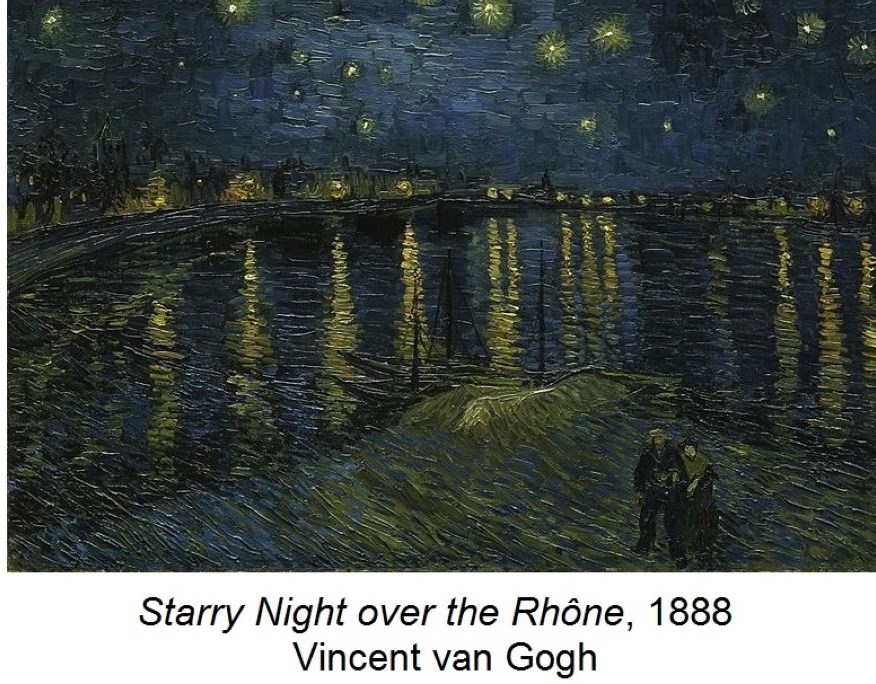
Discover the parallels between these two iconic artists. Admire more than one hundred artworks from all over the world, including The scream and Madonna by Edvard Munch and Starry night over the Rhone and Patience Escalier (The Farmer) by Van Gogh in one spectacular exhibition.
The two artists’ vision on life and art are closely related, despite the fact that they never met. Their work is colorful, intense, espressive and radical. Their lives are remarkably similar in many ways.
For that reason, Vincent van Gogh (1853-1890) and the Norwegian artist Edvard Munch (1863-1944) are often mentioned together. Munch : Van Gogh offers the unique opportunity to admire an important part of the work of both artists in one location.
The oeuvres and artistic ambitions of Van Gogh and Munch reveal striking parallels. Both artists are known for their emotionally charged paintings and drawings, their unique and innovative style and their tormented lives.
They modernized the arts and developed a highly personal, expressive visual language to convey the universal emotions of the human condition.
The Scream, by Edvard Munch
Despite the many references to the similarities between Munch and Van Gogh in literature and popular culture, this level of in-depth research into their affinity has never before been carried out.
The year 2015 marks the 125th anniversary of Vincent van Gogh’s death, and this is being commemorated with an international cultural program entitled ‘125 years of inspiration’. The Van Gogh Museum will be centered on its new collection presentation in 2015, as well as present this unique exhibition – Munch : Van Gogh.
Munch and Van Gogh move to Amsterdam, source: Van Gogh Museum, Amsterdam
Explore Denmark’s rich cultural heritage in a series of events at the Golden Days Festival, September 4 – 20.
What is cultural heritage? Whose is it and why is it important? In September, Golden Days puts the theme of cultural heritage on the agenda with the Festival of Important Shit.
An entire weekend dedicated to visitors and expats, Hello Heritage is a 3-day festival within the history and culture festival Golden Days. With more than 30 participating museums and cultural institutions, and more than 40 talks, concerts, city walks, guided tours and other events, Hello Heritage offers a unique insight into some of the highlights of Danish art, history, and culture. And best of all, all events are in English.
What is cultural heritage? This year’s Golden Days Festival (called ‘Festival of Important Shit’) emphasizes the fact that cultural heritage consists of both the precious objects exhibited in cultural institutions as well as the trinkets of everyday life – the ‘important shit’, so to speak – the personal things and objects that shape us and make us who we are.
More than 200 events – concerts, parties, performances, debates, city walks, and talks – take place in the period 4 – 20 September. You’ll have the opportunity to meet authors, journalists, actors, cartoonists, politicians, publishers, architects, musicians and singers, all representing Danish heritage in one way or another.
Under the heading “Hello Heritage” tourists are invited to explore Danish cultural heritage through exhibitions, lectures, walks, films and music and more. On one hand, the festival management presents the classical heritage that proudly are put on display in various tourist guides, and on the other hand you may experience parts of Danish heritage that often is overlooked – from the Sun Chariot at the National Museum to sunbathing at Assistens Cemetery, from iconic buildings and great symbols of power to Danish “hygge”, liver paté and playgrounds. www.goldendaysfestival.dk
Painting by Peder Severin Kroyer
With more than 30 participating museums and cultural institutions, tourists and expats will be introduced to the highlights of Danish cultural heritage through a series of events over the course of a weekend – from the concept of ‘smørrebrød’, the traditional Danish open sandwich, to the world-renowned author Karen Blixen and satirist Storm P, among others.
Important Shit in Copenhagen, compiled by Tor Kjolberg
Judy Fayard wrote recently an article in the Wall street Journal titled ‘Five of the World’s Best Sculpture Parks’. “Sculpture parks dedicated to modern and contemporary art are now found around the globe,” she wrote, and the Ekeberg Sculpture Park in Oslo, Norway was on her bucket list.
Water mirror
High on a bluff overlooking the city center and its fiord, the Ekeberg area was marked by prehistoric rock carvings as early as the Iron Age. A large abbey farm in the Middle Ages, it eventually became a city park, and gained fame as the viewpoint for Edvard Munch’s 1893 painting “The Scream.”
Ekeberg Woods
Wall Street Journal calls Christian Ringnes’ selection of art in the park ‘an eclectic collection of some 30 works by artists including Rodin,Renoir, Dalí, Maillol, James Turrell, Jenny Holzer, Jake and Dinos Chapman, Damien Hirst and Louise Bourgeois.
Walking Woman by Sean Henry
The other parks on Fayard’s list are Domaine du Muy in South France, Storm King Art Center in New York, Oliver Ranch in California and Hakone Open Air Museum in Japan.
The Pavillion
The Ekeberg Parkhas also been listed in the magazine Bloomerg Business’ list of 20 things to do in Norway.
They wrote: “Visitors to the sculpture park at Ekeberg appreciate Louise Bourgeois’s The Couple from an alternative angle (feature image, on top). The 25-hectare park overlooking Oslo opened at the end of 2013, the brainchild of Norwegian art collector Christian Ringnes. Not only is it free—much appreciated in this expensive city—it’s also open 24 hours a day, so you can appreciate its works—including pieces by James Turrell, Tony Cragg, and Marina Abramovic, as well as 20th century masters such as Auguste Rodin—any time you please.”
One of the World’s Best Sculpture Parks, written by Admin
If you’re planning to study in Europe, then Scandinavian universities should definitely be on your list.
The 2015 Academic Ranking of World Universities (ARWU) was released last week by the Center for World-Class Universities at Shanghai Jiao Tong University.
Starting from 2003, ARWU has been presenting the world Top 500 universities annually based on transparent methodology and third-party data. It has been recognized as the precursor of global university rankings and the most trustworthy one.
Harvard University remains the number one in the world for the 13th year. On the Top 10 list are also: Stanford, MIT, Berkeley, Cambridge, Princeton, Caltech, Columbia, Chicago and Oxford.
Scandinavian universities have the following rankings:
The Center for World-Class Universities also releases the 2015 Academic Ranking of World Universities by Broad Subject Fields (ARWU-FIELD) and 2015 Academic Ranking of World Universities by Subject Fields (ARWU-SUBJECT).
Scandinavian Universities on the World’s Top 100 List, compiled by Admin