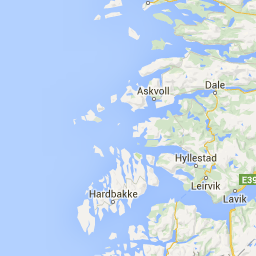
For a whole new way of enjoying opera, gourmet food and events, visit the Boutique Festival of Opera in the Åmot Country Villa and Opera Farm on the West-Coast of Norway in August.
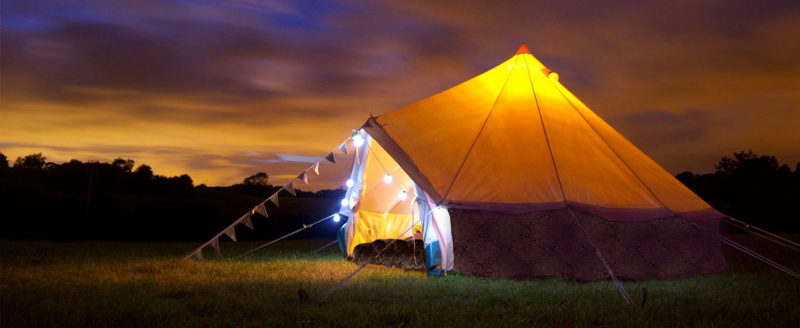
Bergen National Opera and Åmot Country Villa and Opera Farm invite you to this year’s Opera Festival 21 – 23 August, “Mimi goes glamping”. You may actually hear snatches of La Bohème, in addition to the enjoyment of gourmet food, speakers, late-night singer-songwriters, pop-ups, masterclasses, yoga and forest walks.
In the Åmot Country Villa, you will have the opportunity to experience an authentic Norwegian atmosphere. The interior of the Villa tells the story of strong female characters, whose spirits can still be felt in the house. Being the family home of co-owner Steinar, every piece has a story to tell, every picture on the wall captures a moment that passed in this family, on this farm.
While recently renovated, the villa still has the feel of a country home. The modern elements of comfort, such as the tiled bathrooms and sleek kitchen appliances, manage to fit together perfectly with antique wooden furniture. Most of the furnishings are authentic, family pieces with a history of their own.
The living room areas of the villa harken back to the days of sitting rooms, with a table instead of a television as the centerpiece, the perfect place for conversation over after-dinner drinks. An atmosphere of pomp and ceremony from the 1890s still pervades, but is inviting, not stiff. Attention has been given to every beautiful detail from floor to ceiling. The Villa is home to two suites, the Kiri Suite and the Sina Suite.
Hidden amongst The Fjords and Valleys of Norway the Villa together with the estate may be rented. The historic villa is restored by the Åmot family into a modern villa without losing the history. Amongst the most well-appointed properties in the fjords, the country villa is like paradise where privacy, seclusion and proximity to the nature have not come at the expense of comfort and service.
From abroad, you can fly to Oslo or Bergen, the two largest cities in Norway. Both cities have good connections to the region, and both cities have daily flights with the airline Widerøe to the closest airport in Førde. From Bergen, the flight takes about 30min, from Oslo about one hour, and you will be picked up at the airport.
From Bergen you can also take a regional bus to Sande, where the management will pick you up. The bus ride takes about 3 hours.
In the deep forests of Smaaland in Sweden, Pippi Longstocking as well as Emil and Ronja the robber-daughter come alive during the Swedish summer months.
The park in Vimmerby, southern Sweden, a Swedish version of Disneyland, was founded in 1981. Vimmerby is the native town of this popular award-winning authoress of children’s books and was therefore the natural choice for the world of Astrid Lindgren.
Astrid Lindgren’s childhood home
The theme park is placed just at the end of the road where she lived as a child and young adult and is today Sweden’s largest open-air theme park set on 180,000 square meters.
Vimmerby (population 15,000) is one of Sweden’s oldest towns, dating to the 12th century. It is about four hours’ drive south of Stockholm, or a short ferry trip from the Danish town of Helsingör.
Kids as well as adults love Astrid Lundgren’s books and characters, and in the park you can meet all of her characters in person.
A completely new theme area dedicated to Emil in Lönneberga and his adventures was opened on a 22,000 square meter large area in June 2013.
According to the park’s charter, Astrid Lindgren’s World aims to encourage children to read and write. Astrid Lindgren’s World receives some 490,000 visitors every year, of whom around 30% come from abroad.
The park is open from 13 May to 30 August and on weekends in September, as well as certain weeks in October (week 43) and November (week 44). During the peak season Astrid Lindgren’s World has approximately 400 employees, just over 120 of whom work on the theatrical side.
The best time to travel to Smaaland is between June and September as all the attractions are open. However, we recommend traveling to Småland in the middle of May or early October as all the tourists will be gone and you have everything to yourself.
Lindgren began writing her children’s books in 1946 and continued until late in her life, during which she penned such classics as Emil of Maple Hill (“Emil i Lönneberga”), Madicken, Karlsson-on-the-Roof, Ronia the Robber’s Daughter and the series about the strongest girl in the world, Pippi Longstocking.
“With such an unusual name, she became an unusual girl,” noted the late Swedish author Astrid Lindgren, whose story about the freckle-faced, pigtailed 9-year-old has been loved by children for 70 years. Since Pippi Longstocking was first published in 1945 (in the U.S. in 1950), it has sold more than 60 million copies worldwide and has been translated into some 70 languages.
The World of Astrid Lindgren, written by Tor Kjolberg
On the island Sør-Hidle, a twenty minutes boat trip from Stavanger on the Norwegian west-coast, you can experience a tropical feeling, wandering through several flower-gardens, palm trees, a Bonsai water garden with its 80 happy koi-fishes, not to mention enjoying gourmet food!
It all began in 1987 with a health ailing gardener, who settled on this windswept island to make himself a rest home.
But already in 1965, Stavanger residents Åsmund and Else Marie Bryn bought a farmstead, named Magela and built a small cabin on this small island. In 1987 the couple moved more permanently to the island, hoping that fresh air and quiet would bring better health. The island featured little shelter from the strong winds known to the area and thus, pine trees were planted. As time went on, the garden was expanded and became more and more elaborate and impressive.
In 1995, Åsmund’s son, Olav, and his wife Siri welcomed their first guests, 700 visitors, to the island to view the gardens. Next year the number was 10,000 and today over 30,000 visitors find their way every year from May through September.
The third generation of the Bryn family now cares for the gardens and it’s become an entire career. In the off season, new plants are sought after worldwide and they’re constantly envisioning new directions to take with the elaborate gardens.
Endre Bryn is the manager today. He told us that they have bought a farm on the island, and three weeks ago they received their first Scottish Blackface sheep , the most common breed of domestic sheep in the United Kingdom, suitable for the Norwegian west-coast.
Endre told us about happy guests, many of whom are claiming that “this is one of the sites they should see before they die”.
The Queen of Norway celebrated her 70th year anniversary here, and the Norwegian master of chess, Magnus Carlsen, arranged a private event last June.
One month during wintertime the family travel abroad to find inspiration and new ideas. “There is nothing better than Flo and Fjære in the world,” claims Endre Bryn. “The nearest I can think of is Butchart Gardens in Victoria, Canada.”
A tropical paradise consisting of 10 different gardens
Today Flor og Fjære (meaning something like ‘bloom and ebb’) invites guests to a guided tour around the beautiful gardens after a 20 minute boat trip with MS Rygerfjord from the Skagenkaien in Stavanger.
The ten gardens are the Palm garden, Cactus hill, Bamboo garden, Bonsai garden, the Wilderness, the Perennial garden, the Rose garden, the Flower garden, the Cypress garden and the Monastery garden.
After the tour the guests will enjoy a delicious meal, inspired by all corners of the world, prepared with local ingredients in the garden restaurant by chef André. The restaurant has an interesting collection specially imported wines from Italy, France, South Africa, Portugal and Brazil. Chef André, living on the island from May through September, told the guests with his very dry sense of humor that he was allergic and hated living on the island. He explained the meal we would be eating with elaborate stories, for instance that he had made so much fish soup that he could swim in it.
The food, being a buffet, was delicious and even with many guests, arranged without irritating queuing.
Torstein Nilsen, who had invited his wife Nattuya Nilsen, and friends from Thailand, Nuttakun and Nutchanat Huttanasin, was impressed by the gardens. So was the rest of the group.
The intricate gardens are completely unexpected in Scandinavia, and the sheer amount of work to keep them beautiful is astounding. We do recommend a visit should you be in the area or planning to do so.
A Touch of Paradise in Norway, written and photographed by Tor Kjolberg
Interested in art? Copenhagen offers an abundance of contemporary art galleries and museums. Here is our list of our preferred venues.
The Hirschprung Collection Hirschsprung is an art museum in a class of its own. It stands as a unique presentation of Danish art from the 19th and early 20th centuries, spanning the period from the Danish Golden Age to the Skagen painters and the Modern Breakthrough.
Containing a selection of the most important works by masters such as Eckersberg, Købke, Krøyer and Hammershøi, the Hirschsprung Collection offers a representative selection of paintings from one of the most outstanding eras of Danish art history.
Beautiful building in a beautiful garden The museum building is a beautiful example of the neo-classical style, where the interior, with its subdued colors and small galleries, creates a special and intimate atmosphere.
The museum is in the Østre Anlæg park in central Copenhagen, and is today listed as a building of special importance.
The museum is built around the personal art collection of Heinrich Hirschsprung, a tobacco manufacturer, who donated his collection to the Danish state in 1902.
Address: Stockholmsgade 20
Ordrupgaard Art Museum Ordrupgaard Museum houses French Impressionist art and Danish art from the Golden Age with an exquisite collection of paintings by artists such as Monet, Gauguin and Hammershøi. With an extension to the building made by star architect Zaha Hadid in 2005 and Finn Juhl’s house in 2008, the museum has gained a strong architectural profile. The museum has changing special exhibitions and exhibits art in the open in Art Park Ordrupgaard.
Adress: Vilvordevej 110, 2920 Charlottenlund
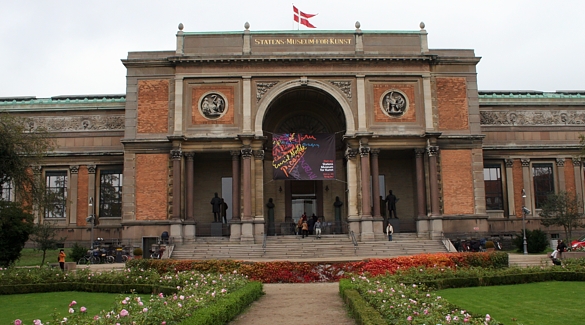
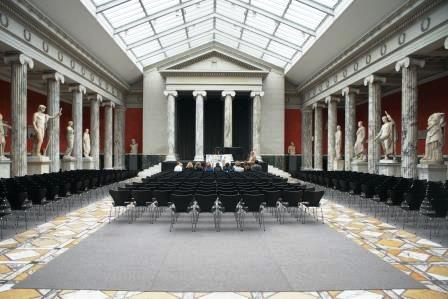
National Gallery of Art The history of the museum is inextricably bound up with the history of the art collections amassed by Danish monarchs. That is why the story of the museum does not begin with the building in Sølvgade, the address of the museum, but with the diary of the German painter Albrecht Dürer. In 1521 this eminent artist made an entry stating that the king of Denmark, Christian II, had received “the best copies of all my prints.” With this gift the cornerstone of the National Gallery of Denmark was laid down.
Today Dürer’s works form part of the museum’s collection of art, and his gift sparked an interest in art at the Danish court. Subsequent generations of kings kept that interest alive, even if their ardour for art and sense of quality varied somewhat.
Today the museum’s vast collection of art can be experienced in the permanent displays of European Art 1300-1800,Danish and Nordic Art 1750-1900,French Art 1900-1930and Danish and International Art after 1900.Works from the Royal Collection of Graphic Art can be viewed in the Study Room, whereas the Royal Cast Collection can be visited at the Vestindisk Pakhus, a former warehouse on the harbor front in Copenhagen.
Address: Sølvgade 48-50
Louisiana Museum of Modern Art The beautiful museum, Louisiana Museum of Modern Art, is located 40 kilometers north of Copenhagen and it has gained a reputation as a museum in touch with the zeitgeist of the contemporary art world. Experience international artists, concerts and lectures.
You can always be sure to take in refreshing and innovative contemporary art as well as modernist classics when you visit Lousiana. Besides the impressive permanent collection with over 3,000 works, the museum has 8-12 special exhibitions annually. See ‘events’ for further information.
New Carlsberg Glyptotek The New Carlsberg Glyptotek contains the largest collection of ancient art in Northern Europe and a significant collection of Danish and French works from the 19th and 20th centuries. It receives around 350,000 visitors per year, making it one of the most popular art museums in Denmark.
Most of the artworks came from Carl and Ottilia Jacobsen, who created one of the largest private art collections of the time – ultimately to the risk of his brewing business. In the early 1880s, they allowed the public to view the works in their own home but, as the collection continued to grow, they came to an agreement with the Danish State and the City of Copenhagen. They donated their collection of modern art to the Danish people in return for a building in which to house it.
The Carlsberg Foundation and the New Carlsberg Foundation continue to be the Glyptotek’s most important benefactors. In 2006, to celebrate the museum’s centenary, the Foundations donated DKK 100 million for renovations and enhancements to the buildings and improved communications and layouts for the collections. The 1970s front entrance has been replaced – with the door originally fitted in the 1920s – and the whole façade has been carefully cleaned to remove 100 years of coal smoke and traffic pollution.
Coming to Oslo thinking a fjord cruise is expensive? Not at all. With Ruter’s summer offerings you may take a more than two hours cruise for just 150 kroner (USD 19). Saturdays and Sundays during the Summer months Ruter (a common management company for public transport in Oslo and Akershus which is owned by Oslo municipality (60 %) and Akershus County Council (40 %)) offers three daily sailings, 10.05 pm, 01.05 am and 4.35 am from the Town Hall Pier in Oslo.
The cruise has four stops, and if you want to hop off and on, it’s possible, as long as you watch your time table.
Crew member Olav Nytruen
Crew member Olav Nytrøen, is on his fifth cruise on Baronessen, the hydrofoil taking tourists to the islands and mainland in the inner Oslo fjord. He says that these cruises are extremely popular, maybe a little crowded on sunny days. “But people do enjoy themselves,” he emphasizes.
It’s wise to bring something to eat and drink, since there’s only a vending machine on board.
Telenor’s headquarter at Fornebu
Stop 1. Fornebu
Oslo Airport, Fornebu (FBU) served as the main airport for Oslo and the country since before World War II and until the evening of October 7, 1998,
Leaving from the Town Hall pier
As of 2001, the Fornebu area is being developed as a center for information technology and telecom industry, as well as there being some housing project developments nearby. The new headquarters of Norway’s telecom giant Telenor are located in the area.
Passing Tjuvholmen on our way out
Stop 2. Vollen, Asker Vollen is a part of the Asker municipality in Akershus county. For statistical purposes, it is usually treated as part of the Oslo urban area. It is mainly a residential area, though the area has a café, a restaurant, several art galleries, a primary school and secondary school.
Summer residence at inner Oslo fjord
Stop 3. Slemmestad Historically Slemmestad was located on the old highway running between from Oslo and Drammen. Until the establishment of cement factory in 1888, this was a pure farming village. The largest farms were the Lillelien, together with øvre and nedre Slemmestad. Slemmestad was built around the Aktieselskabet Christiania Portland Cementfabrik cement plant. Aktieselskabet Christiania Portland Cementfabrik, later Slemmestad sementfabrikk, was in operation from 1893 to 1989. The company was for many years the principal manufacturer of cement within Norway. The factory was rebuilt several times with new and more modern cement kilns. Cement production peaked in 1973 when it produced 1,082,677 tons.
Odden Marina at Slemmestad
Slemmestad Cement Museum (Slemmestad Cementmuseum) is located in the cement factory’s former bag factory in Slemmestad. The museum was opened in 1991. It features photographs, artifacts, records and other documentation that shows 100 years of development of cement production and the great importance of the factory was Slemmestad and the people who lived there.
Stop 4. Håøya Its area is 5.6 km², which makes it the largest island in the inner Oslo fjord.
Meeting the ferry to Kiel, Germany, on its way out the Oslo fjord
Stop 5. Oscarsborg Oscarsborg Fortress is a coastal fortress, close to the small town of Drøbak. The best known part is situated on two small islets. The main artillery batteries are on the island Håøya and smaller batteries on the mainland to the west and east in the fjord and was military territory until 2003 when it was made a publicly available resort island.
From Oscarsborg Fortress
A notable event in Oscarsborg’s history is the World War II sinking of the German cruiser Blücher in the Drøbak narrows (only 1 mile (1.5 km) wide), on the early morning of 9 April 1940. The cruiser was transporting German soldiers and bureaucrats for the planned swift occupation of Oslo, but the sinking by the Oscarsborg fortress delayed this, and thus allowed for the evacuation of the Norwegian Royal Family, parliament, and cabinet, and for the nation’s gold reserves to be denied the occupiers.
In 2014, Oscarsborg Fortress was given protected status, effective from 9 April that year.
From Drobak
Stop 6. Drøbak In summertime, cruise ships visit Oslo almost every day. Often, as many as four or five cruise ships visit each day, in addition to all the regular traffic, it has made Drøbak a popular sea-side tourist spot. However, the numerous restaurants, art galleries and mild summers are probably more important factors for visiting tourists.
Shirin Shen (right) brought her cousin from India, Twinkle Dawes, on a day trip on the Oslo fjord
Drøbak is also known for its many art galleries. The town has a Christmas shop called Julehuset (the Christmas house), and letters to Santa Claus often end up in Drøbak from Europe similarly to how they end up in Santa Claus, Indiana in the United States.
A small aquarium with local species of fish and shellfish is open to the public.
The best part of the cruise, however, is enjoying the fresh breeze and the scenic coastal landscape from the top deck.
“We really do enjoy the trip,” says Twinkle Dawes, who brings a family member, Shirin Sen, from India. They had bought a return ticket and stayed on board from Oslo and back.
From left to right: Iver Strand, André Kongsvoll and Karl Petter Ulriksen
The three friends Iver Strand, André Kongsvoll and Karl Petter Ulriksen, enjoy their summer vacation in a cabin at Drøbak and are preparing for a birthday celebration in Oslo.
“It is very convenient and the best way to go to Oslo from here,” they agree.
Contrary to what many believes, Scandinavian cooking is special, exotic, particular, ethnic and diverse. The ingredients and traditions of Scandinavian cooking might surprise you, and we will in upcoming articles share our secrets with you.
We suppose that when you grew up with certain tastes, seasonal specialities, and very fresh ingredients, it’s in your bones, and feels almost universal, but Scandinavian cooking and Scandinavian ingredients are truly unique.
This has become internationally recognized in the past few years. The particularity of both the cooking and ingredients of the north is now receiving global acclaim, at the same level as the other great regional cuisines of the world.
Growing conditions are the roots of any kitchen; the flavors of our food here in the north stem from cool summers and icy winters, plenty of rain, cold waters and long summer days with endless light evenings.
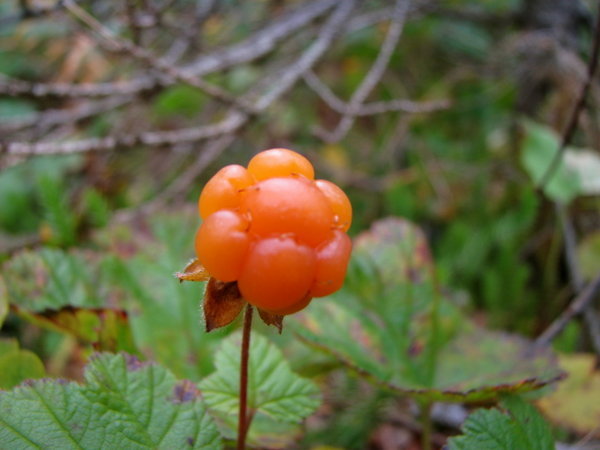
Cloudberry from NorwayStrawberries from Scandinavia
These conditions produce extremely sweet berries, thin-skinned apples, firm, sweet-fleshed fish and shellfish, and slow-growing flavorful vegetables. The northern climates are perfect for mushrooms and all manner of foraging, and the huge forests, the mountains and tundra are very much alive with game.
Scandinavian sandwich
The flavors are fresh and intense, but not overwhelming, and has taught us to prepare food simply, but effectively, to allow every ingredient to shine.
Swedish meatballs
Scandinavian cooking achieves a delicate balance between extravagance and the humble, producing a wealth of fine tastes, seasonal daily food and more luxurious festive food.
Scandinavian wheat
We are proud of our traditions, and they are mostly very much alive, some of them very local or regional.
Scandinavians are eager foragers, home picklers and home bakers, and traditions are here to stay, but also coexist with new ways. Young chefs and young families embrace traditions, in order to evolve them, creating fresher, lighter, even more seasonal and local food.
Smokehouse in Bornholm, Denmark
Environmental awareness is big, and growing and eating organic food, and eating locally and seasonally re growing fast. Small dairies, small-scale farms, smokehouses, market gardens, butchers, breweries, farmers’ markets and bakeries are increasing in numbers at fast pace. And this means a recreation of local specialities, keeping and evolving traditions almost lost to large-scale farming and factory food. It is happening before our eyes, and it is very, very welcome.
Swedish crayfish
Daily Scandinavian aims from time to time to reflect on both the traditional, worth preserving and new techniques, dishes and ingredients, all necessary to keep the particularity of Scandinavian cooking alive and well.
We do hope that our presentations of the Scandinavian kitchen allow you to get a sense of the cooking of the north, and maybe help you in creating and recreating the special Scandinavian tastes on your own kitchen.
In Norway “dinner” is called “middag”, and for Norwegians the gathering around the dinner table was traditionally the most important time of the day. Few elements during the weekdays have so many positive values as gathering around a theme, which a meal is, whether it is breakfast, dinner or an evening meal.
What is a good meal? Impossible to describe. Luckily there are too many favorite dishes, national dishes, traditions and not least external success factors influencing a good experience. We have been asked, “What is Norwegian food?” There is no simple answer, since our tradition and culture always are developing. But we want you to know what it has been like – and why.
From time to time we will therefore publish receipts of Norwegian (and Scandinavian) dishes.
So what’s on the menu?
Let’s start up North in Lofoten:
Reason #1: Excellent lamb, especially from the North, in Norway
Filled Lamb from Lofoten (Serves 4-5 persons)
1 leg of lamb (5 to 7 pounds)
2 cloves of garlic
100 g champignon
100 g bacon
100 g onion
1 bunch parsley
1 ts rosemary
1 ts thyme
salt
pepper
2 dl whipping cream
1 ts cornstarch
When we talk about lamb leg, we mean one of the back haunches of the animal, and the most common cut includes the upper part of the leg only. (Think of the thigh, without the lower part of the leg.)
Usually leg of lamb is sold without the shank attached; you are just buying the upper part of the leg, as seen here, without the lower part. You can order a leg of lamb with the shank left on, however; this is sometimes called an “American leg,” but usually it’s simply referred to as “shank-on leg.”
We prefer bone-in, for the flavor. Think of how we make stock from bones. The bones hold so much of the flavor. When you roast a piece of meat with the bone still in, you are getting all that flavor in the meat itself. A bone-in lamb leg can be a little trickier to carve, but we opted for bone-in.
Ask the butcher if they can trim the lamblegfor you if they have not already done so. This means that they will trim away the fell, a thick outer layer of fat (which is what can make lamb taste so strongly “mutton-y”), as well as any additional fat that you request to have removed. Personally, we like a nice pad of fat, which insulates the meat and keeps it tender.
Remove the bone. Cook the bone in a frying pan with water and a little salt and save the juice.
Cut garlic, champignon, bacon, onion and parsley and brown them in a pan.
Fill the mixture into the steak together with rosemary and thyme.
When the bone is removed from the lamb, the meat needs to be held together in the shape of the leg for cooking, so heatproof, oven-safe netting is usually used.
Rub the lamb with salt and pepper.
Brown the steak on all sides.
Put it in a long pan and broil it in oven at 200 degrees C (425 degrees F) for about 1 ½ hours.
Let the steak rest for 20 minutes before you cut it. Cook out the long pan with juice.
Sauce:
Filter the juice (3 dl) and add the cream. Cook the gravy and taste it with salt and pepper and adjust the sauce with cornstarch.
Reason #2: Mandelpotet, the typically Norwegian delicacy potato (ask for it, if you’re in the country)
Serve with mandelpotet (a typically Norwegian delicacy potato in the shape of a bent almond), butter damped carrots, yellow turnip and leek.
To drink: Spanish Reserva, from Riocha or Ribera del Duero
or
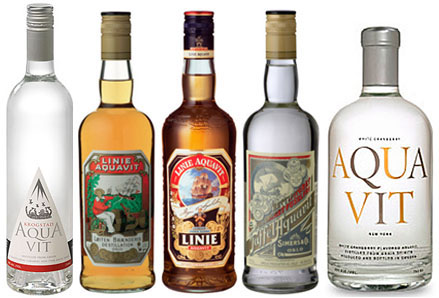
Reason #3: Beer and Norwegian Aquavita
Norwegian Aquavita does not, contrary to what many believe, taste like moonshining.
Cheers!
3 Shocking Reasons Why You’ll Love Norwegian Cuisine, written by Tor Kjolberg
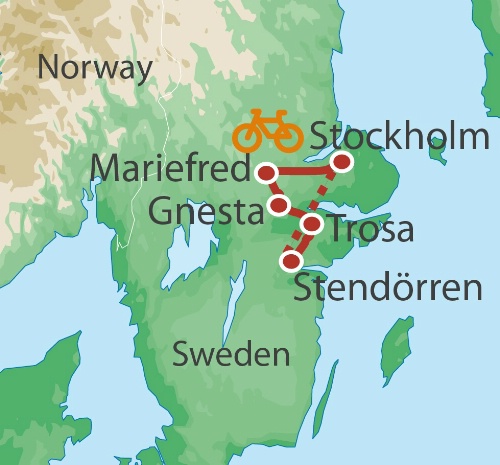
Explore the picturesque countryside in the Stockholm area by bike. Read our suggestion for a six day’s cycling tour in the beautiful region of Sörmland through pristine nature, passing lakes, wonderful views, manor and castles, and the delightful seaside towns of Marienfred and Trosa.
Highlights:
Cycle in a landscape of sparkling lakes, deep forests and rolling countryside. Visit historic Gripsholm Castle, Royal Tullgarn Palace and Nynäs Manor House. Stroll around the charming and historic seaside villages of Trosa & Mariefred. Ride by the Marviken lake system or take a canoe trip across its waters. Journey across Lake Mälaren onboard a historic steamboat
Tour starting and ending in Stockholm
Six day itinerary
Day 1:
Stockholm: Today you can choose to take an optional self-guided bicycle tour through Stockholm’s unique Ecopark – the world’s first National Park to be located within a bustling city. The Ekopark is a green oasis combining cultural heritage and natural features. Cycle through ancient forests, visit palaces and bathe from waterside rocks – right here, in the city center.
Day 2:
From Stockholm through Stendörren nature reserve to Trosa. Stendörren Nature Reserve is an archipelago recognized for its distinct feeling of peace and tranquility. Here you hike across the many islands using their intriguing system of suspension bridges. You then cycle along country lanes through varied countryside; evergreen forests, meadows and lakes, passing the impressive 17th century Nynäs Manor House where you may enjoy your lunch. Then you continue to the seaside town of Trosa – a seaside village surrounded by another marvelous archipelago. Cycling Distance: 43 km/Estimated cycling time: 3 hrs)
Day 3:
From Trosa through Tullgarn palace to Trosa. Trosa is a charming 17th century town on the banks of the Baltic Sea. The walkway along the canal as it winds its way to the ocean should not be missed. After a stroll around town, you get back on your bikes for your day trip to the royal Tullgarn Palace, an 18th century palace located on the seashore with magnificent views of the Baltic waters. After a visit to Tullgarn, you head back to Trosa enjoying the Swedish countryside at its very best. Cycling Distance: 32km /Estimated cycling time: 2½ hrs)
Day 4:
From Trosa through Lake Klämmingen through Marviken Lakes to Mariefred. Today you cycle through a landscape of sparkling lakes. From Trosa you cycle along the shores of the beautiful Lake Klämmingen and the Marviken lakes. The area has its own unique character because of its geological history – the mountain split in two and as a result Lake Marviken is bordered by 50 meter high cliffs. Your cycle ride ends in the charming town of Mariefred, founded in 1605 and famed for its colorful houses as well as being home to one of the most important castles in the region, Gripsholm. Cycling Distance: 62km/Estimated cycling time: 5 hrs.
Day 5:
From Mariefred through Taxinge Manor to Stockholm. Enjoy the area around Mariefred. Choose either to cycle along the shores of Lake Mälaren to Taxinge Manor – famed for its fabulous cake display, largest in Northern Europe with more than 60 different cakes. You could also take a break from cycling and board the charming steam train, reminiscent of times gone by. Or you may choose to visit the impressive Gripsholm’s Castle, and learn more about Swedish history. This afternoon board the steamboat which takes you back to Stockholm. Cycling Distance: 32km /Estimated cycling time: 2½ hrs, Steamboat trip: Mariefred to Stockholm 3½ hrs.
Day 6:
Stockholm. Explore the Old Town in Stockholm.
Old town, Stockholm
Bicycle rent is possible nearby The Djurgården Bridge in central park of the city.
Cycling through the Stockholm Countryside, written by Admin
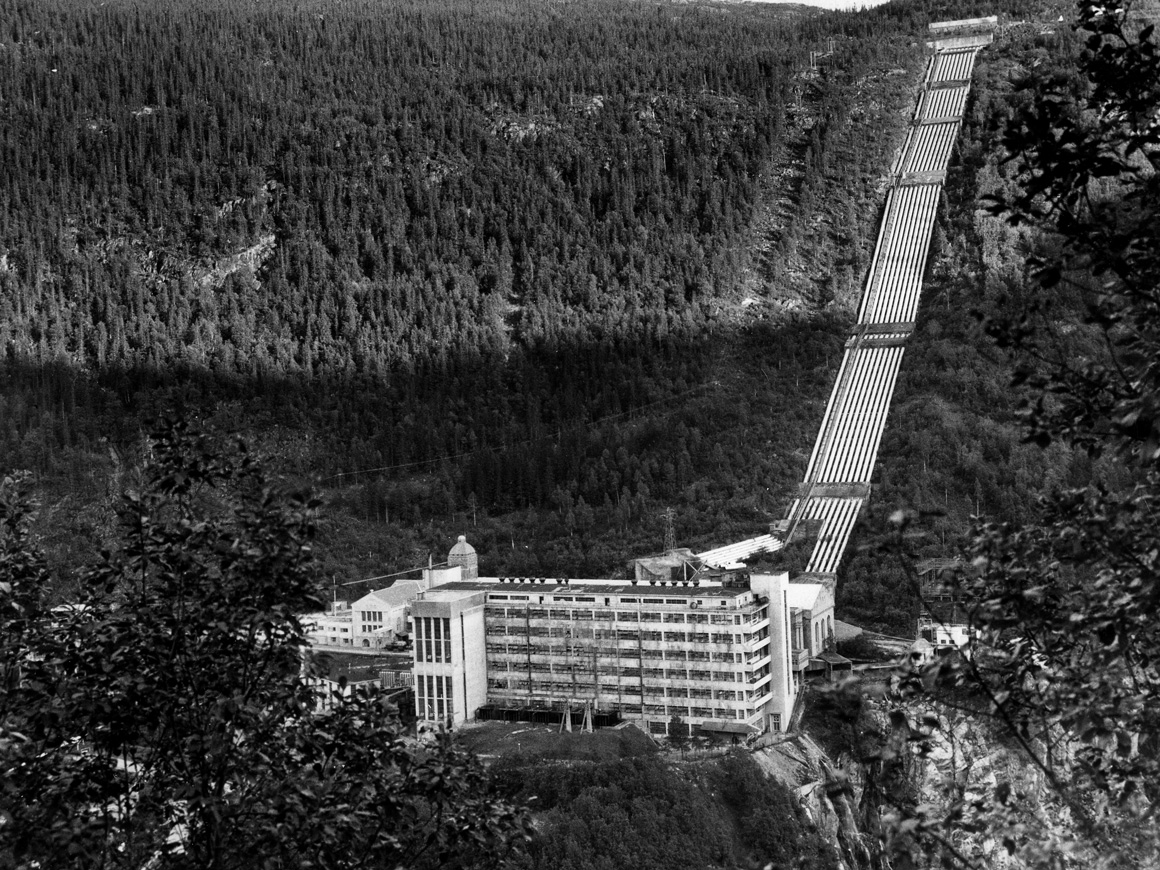
The legendary Second World War Hydro Plant in Rjukan, also known from the Hollywood film ‘Heroes of the Telemark’, starring Kirk Douglas, has now been enlisted on the UNESCO’s World Heritage List.
The Vemork plant in Rjukan-Notodden was built in 1911. The heavy water, or deuteriumoxide, which was produced there during the Second World War, was essential to the German scientists working on an atomic bomb project, and the allies were desperate to destroy it.
The World Heritage Committee approved on June 5 the inscription of Rjukan-Notodden Industrial Heritage Site in Norway on World Heritage List.
World Heritage List (WHL), was established in 1972 by UNESCO (UN’s organization for education, science and culture).
“Heritage is our legacy from the past, what we live with today, and what we pass on to future generations. Our cultural and natural heritage is both irreplaceable sources of life and inspiration,” states UNESCO on its homepage.
The status of being on the list, imply responsibility to secure the site for future generations. It is an added quality stamp, an exclusive international standard and a brand for national tourism.
World famous sites on the WHL are Grand Canyon, Galapgos Islands and Yellowstone National Park. Six other sites are on the WHL in Norway:
Urnes Stave Church (1979)
Bryggen – the old Wharf of Bergen (1979)
Røros Mining Town and Circumference (1980)
Bergstaden, Røros
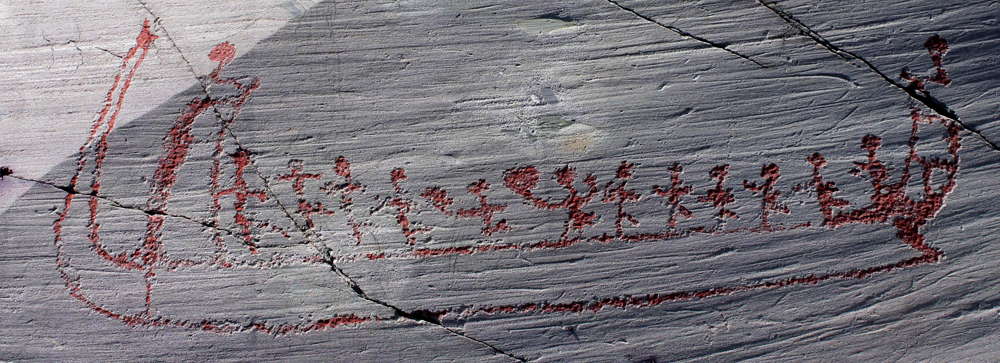
Rock Art of Alta (1985)
The Vega Archipelago (2004)
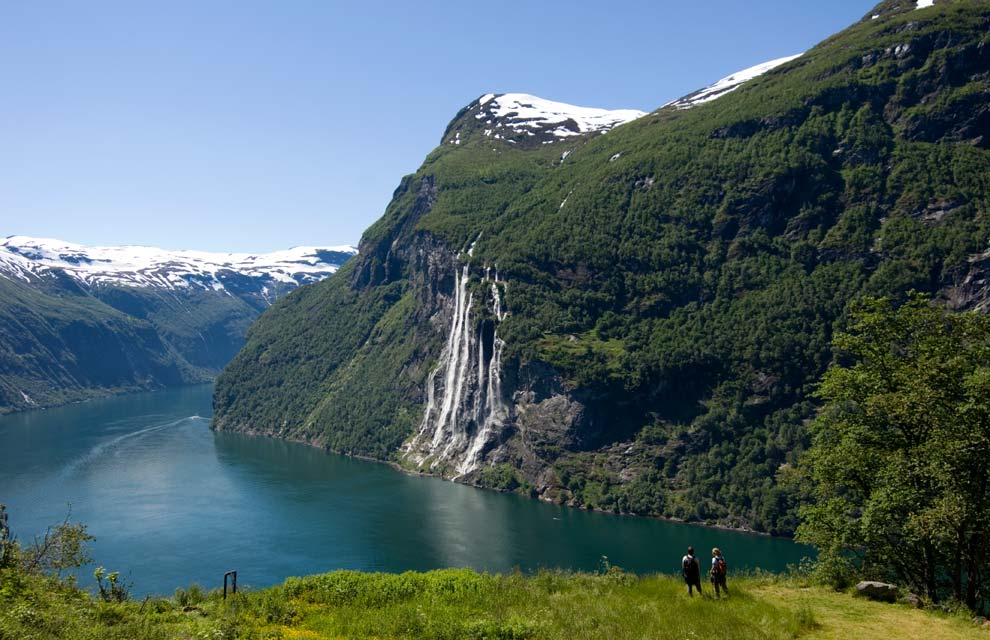
West Norwegian Fjords – Geirangerfjord and Nærøyfjord (2005)
Geiranger fjord
Norwegian Hydro Plant on the World Heritage List, written by Tor Kjolberg
Nordic Choice Hotels has completely renovated all 400 rooms at the Comfort Hotel Vesterbro. The hotel also have a new cocktail bar, restaurant and lobby.
“Comfort Hotel Vesterbro has always had an absolutely fantastic potential with its location 300 meters from Central Station and Tivoli. Vesterbro deserves a hotel like this. It’s a pleasure to welcome guests and visitors to our new hotel,” said hotel manager Martin P. Kraunsøe.
The cocktail bar and the hotel restaurant on the ground floor, Plectrum Vesterbro, are managed by Andreas Pieplow. The restaurant offers both modern and classic cuisine with touches of local produce. Large windows and structural changes in the room division has been a conscious choice. The lobby and reception have been built into an open atrium.
Interior designer Anders Björkén from Björkén Architects, has been responsible for the new design. Björken Achtiects have also designed Clarion Hotel & Congress in Trondheim and Clarion Hotel Arlanda Airport.
“The idea behind the renovation was to create an urban hotel suitable for the trendy and artistic Vesterbro. Whether you want to eat or drink with good friends, work or sleep you are welcome to more comfort at Comfort Hotel Vestrbro in Copenhagen. Vesterbro is known for having exciting bars and restaurants, but after the renovations Comfort Hotel Vesterbro will certainly add an emotional and visual experience in the heart of Copenhagen,” says Anders Björkén, Björkén Architects.
More Comfort at Comfort Hotel Vesterbro Copenhagen, written by Tor Kjolberg