Pop Art Design Exhibition in Oslo

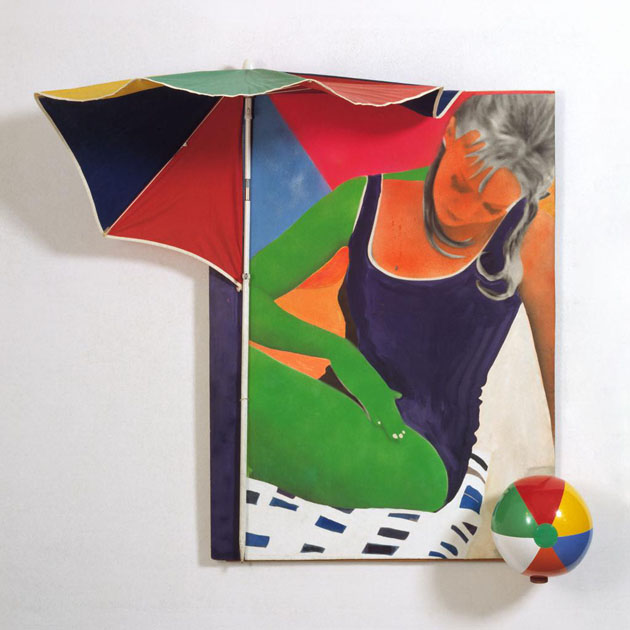
The Pop Art Design Exhibition takes place at the Henie Onstad Kunstsenter and explores the connections between art and design in a selection of hundreds of works by both designers and artists.

Pop Art is widely regarded as the most significant artistic movement since 1945.Famous design icons and classics have revolutionized our relationship to everyday objects. The exhibition covers art and design objects from the early 1950s to the early 1970s and features Jim Dine, Richard Hamilton, Pontus Hultén, Claes Oldenburg, Verner Panton, Ed Ruscha, Reiner Ruthenbeck, Andy Warhol and others.

100615-pop-art-design-3
Bold objects designed by Raymond Loewy, the colourful furniture and even more colourful lifestyle proposed by Charles and Ray Eames, or the intricate graphic designs of the period, have all penetrated the art world marking it unforgettable.

Vitra Design Museum presented the first-ever comprehensive exhibition on the topic “Pop Art Design” in 2012. The exhibition has since traveled to major cities around the world and paints a new picture of Pop Art – one that finally recognizes the central role played by design.

100615-pop-art-design-5-daily-scandinavian
The exhibition was presented at London’s Barbican in 2013.

https://youtu.be/-e2WwmCwzW0

About the exhibition in London, Ben Luke in London Evening Standard wrote:

“Amid the vast amounts of material, there’s a profound sense of artists and designers wanting to form new languages and engage with modern technologies, so a group of then-new Tupperware boxes sit close to a sublime plastic lozenge of light by Californian artist Craig Kauffman”.

“Pop Art Design” includes photography, architecture and both graphic and furniture design and explores the decades following the Second World War, providing an insightful and colorful perspective on the arrival of art into the everyday.

100615-pop-art-design-4-daily-scandinavian
The exhibition is on cooperation with the Vitra Design Museum, the Louisiana Museum of Modern Art, Humlebaek and Moderna Museet, Stockholm.

The exhibition lasts until September 6.

Pop Art Design Exhibition in Oslo, written by Tor Kjolberg

Artist Talk in Stockholm

World famous fashion photographers Inez van Lamsweerde and Vinoodh, opens the exhibition “Pretty Much Everything 2015” at Fotografiska in Stockholm today. Tonight visitors might hear the couple Inez & Vindooh telling their own story about their images and their work. The exhibition is. however, open through 27 September.

It’s hard to read an international fashion magazine these days without seeing an image created by the Dutch couple Inez van Lamsweerde and Vinoodh Matadin. Their work is an exciting blend of art, fashion and advertising. At Fotografiska in Stockolm you may experience some of their iconic portraits, fashion photographs, collages and sculptures.
120615-Fotografiska-Stockholm-Inez-van-Lamsweerde-Vinoodh-Matadin
In more than two decades the couple has challenged and inspired the fashion photography world by their somewhat reckless photographic language. It always seems to be a low-spoken twist in their apparently simple images. Many of their fashion photographs have an ironic sprinkling, an humorous whim or a life-loving expression which differs from traditional posing.
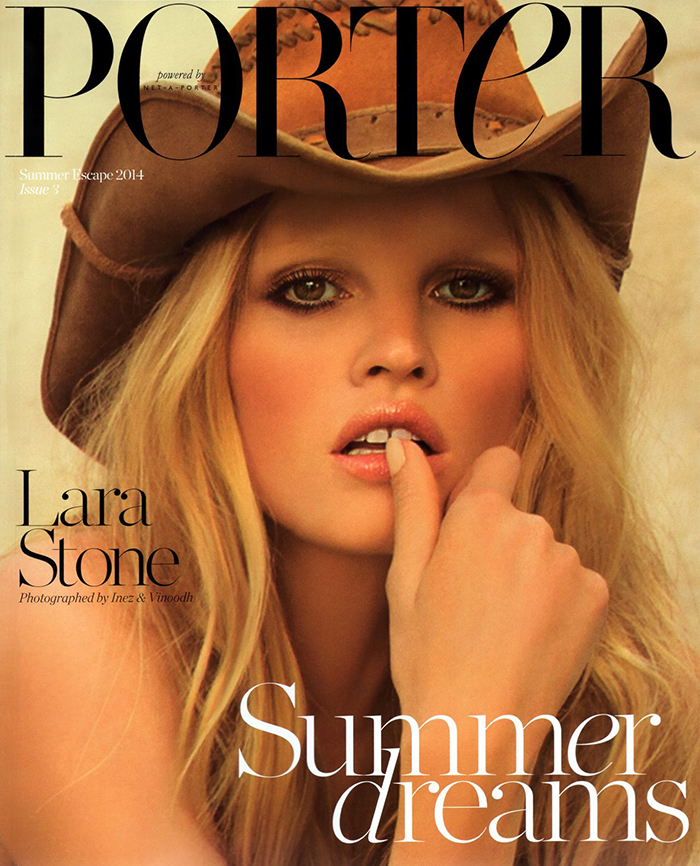
120615-Edita-Vilkeviciute-for-Bonbon-by-Viktor-and-Rolf1 Pop into a magazine store, and you’ll find their photos I fashion bibles like Vogue, V Magazine, W Magazine, Flair, Porter, Bonbon and others, promoting today’s world fashion leaders.

120615-Lara-Stone-by-Inez-and-Vinoodh-for-Porter-Magazine
In this summer’s T Magazine, The NY Times Style Magazine, Icelandic artist Bjork takes the cover story on women’s fashion spring 2015 edition, lensed by Inez & Vinoodh.
120615-Gisele-Bundchen-covers-Vogue-Brasil
The photographers work hard on small details and symbols which mirror the models’ personality, like a body form, accessories or a pattern. They unwind the borders between the traditional male and female and focus on the human being, rather than the origin or sex.

The couple has issued a photography book, “Pretty Much Everything”, made a perfume and a jewelry line. The music video they directed for Lady Gaga’s Applause has cumulated almost 211 million plays on You Tube.

https://youtu.be/pco91kroVgQ

Inez and Vindooh has worked with fashion labels like Dior, Calvin Klein, YSL and Louis Vuitton. They have portrayed stars like Bjork, Lady Gaga and Clint Eastwood, all thoroughly idea based on the person’s personality or the label’s style. This often results in something the couple has named Sculptographs, a blend of photography and sculpture in cooperation with Eugene van Lamsweerde.

120615-Bjork-T-NYTimes-Style
Inez and Vinoodh live and work in New York. They are represented by Gagosian Gallery, and their exhibition in Stockholm is their first in the Nordic region. Visitors may see more than 100 images, showcasing a universe of images.

Several of their fashion and music videos will also be shown at the exhibition.

Inez and Vinoodh met as students at Art Academy in Amsterdam and their formal cooperation began early in the 1990s. Lamsweerde was at that time inspired by Helmut Newton and Guy Bourdin, not least because her mom bought home the French Vogue from her workplace in Paris. Vinoodh Matadin was inspored by Ed van der Elsken and Richard Avedon.

Alexander McQueen - V Magazine, 2004
Alexander McQueen – V Magazine, 2004

The Dutch couple, who also are married, have been darlings of the fashion world for much of their two decades career. Now they are crossing over into a cultural mainstream. Their goal is to become a lifestyle brand.

The exhibition is a cooperation between Inez and Vinoodh, Gagosian Gallery and Fotografiska, Stockholm.

Artist Talk in Stockholm , written by Tor Kjolberg

A Norwegian’s Passion for Design

0

An humble Norwegian from the small island of Fogn, outside Stavanger, is one of the world’s most exciting designers. Per Ivar Selvaag studied transport design at the Royal College of Art in London, and has been lead designer for BMW as well as chief designer at Peugot.

110615-peugeot-per-ivar-selvaag
Selvaag got a kick-start when Land Rover by chance noticed his university project at the Coventry University. The company was so impressed that it sponsored his Master’s degree at The Royal College of Art in London (1997).

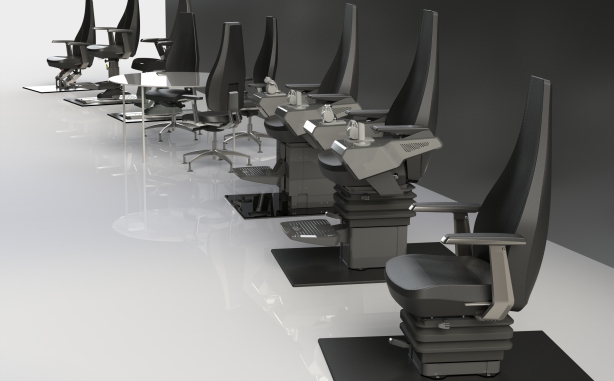
Alu Design marine chairs

Later he relocated to San Francisco where he was managing partner at Native Design LLC.

Today Selvaag has signed an exclusive agreement with the Norwegian-based (Kristiansand) company Alu Design where he will design advanced marine pilot and operator chairs. Einar Ulrichsen, the CEO at Alu Design claims this as “a huge coup for the business”.

As a part of the San Francisco-based company Montaag he has agreed to work on the state-of-the-art moulded aluminium chars and not design chairs for any other manufacturer.

110615-alu-design-marine-chairs-2
Alu Design supplies advanced pilot chairs and deck rails to clients including Kongsberg Maritime, Oceaneering, Rolls Royce and Aker Solutions. The firm’s MH OCH 300 operator chair attracted global attention this summer when it was featured prominently in the Transformers: Age of Extinction film sets.

Peugeot HX1 concept interior

Per Ivar Selvaag  worked for General Motors Advanced Design in Birmingham (1999-2000) and Lincoln Design Organization in Detroit (2000-2006).

110615-BMW
He designed the 4-series range for BMW, unveiled his startling Peugeoy HX1 hybrid concept car, where he was chief designer from November 2010.  He founded Montaag after 15 years as a vehicle designer.

A Norwegian’s Passion for Design, written by Tor Kjolberg

Michael Booth on Sweden

0

Are the Swedes different from the Danes or the Norwegians? In his book «The Almost Nearly Perfect People» British author and journalist Michael Booth wonders what the Scandinavians really are like. Here are excerpts from his book, published by kind permission of the author. Michael Booth on Sweden.

Writing about what the three Scandinavian tribes really think of each other is a bit like discussing someone else’s marriage – you never really know how one feels about the other, deep down, how they talk to each other when they are taking their make-up off and brushing their teeth at the end of the evening. I only know how Danes, Swedes and Norwegians talk to an Englishman about each other, and it has to be said that the main topic of conversation on that front is how annoying the Swedes are. None of their neighbors seem to like Swedes very much. Historic enmities still simmer, resentments linger, the Swedes still have a habit of getting up people’s noses. The Swedes meanwhile, tend to remain aloof to the regional resentment.
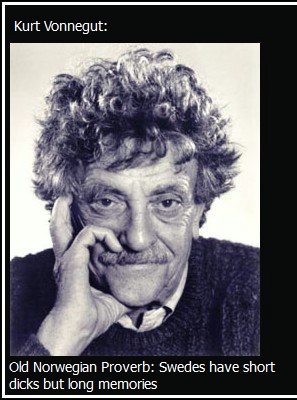
100615-norwegians-about-the-swedes-Kurt-Vonnegut_Fotor
“We really like the Danes, they are lovely people,” Åke Daun told me. “There are Danish characterizations of the Swedes, saying we are more efficient and hard-working, more serious and so on, while we think the Danes are charming, warm. Lovely, a little chaotic. We envy their lack of alcohol restrictions.”

“Tha Danes have always been seen as the more easygoing, cosmopolitan, less working, more drinking, more frivolous people; less, shall we say, industrious than Swedes,” Jonsson, the multiculturalism expert from Stockholm University told me. “We go to Copenhagen to breath Europe, to have a beer. It’s looser, freer, more European, and you also have this more open attitude to drugs and alcohol, but more recently people are shaking their heads that Denmark has become a fascist country, at war with Islam, extremely eager to send aircraft to bomb Libya.”

100615-denmark__sweden_and_norway_by_jennimakemake
Leaving aside the notion of Danes really ‘knowing how to have a good time’ (clearly he has never spent an afternoon on a sports hall in Slagelse watching a women’s handball matrch – neither have I, actually, but the though…), Jonsson, Daun and many of the Swedes I spoke to seemed oddly obvious to how disliked the Swedes are. I suspect they might be taken aback by the extent to which the Danes bad-.mouth them to anyone who’ll listen.

“They are so stiff and boring,” is the common Danish description of the Swedes, ‘and they don’t know how to handle their beer.’  They didn’t win back Skåne,’ one Danish friend told me, referring to the stroll traumatic (to the Danes, at least) year of 1658 when the Swedes wrestled the Danes’ southern province from them. ‘We granted them their freedom.’ (I once heard a Danish radio talk show in which the host only half-jokingly suggested that Sweden’s traditional August crayfish party season would be a good time to reinvade the south and take back their former territory.)

100615-danish-beerdrinker
I asked Henrik Berggren about Swedish-Danisk relations, pointing out that Swedes could afford to remain aloof from the Nordic trash-talk as they have, but just about every measurement, ended up richer, and more successful than their neighbours.

“Yes, we were the winners,” he agreed. “The big brother, definitely. But there is more animosity in it than we understand at first. When I was growing up we had a very positive view of the Danes and Denmark. They were like us – welfare state, modern – but by God they were a lot more fun than us. Danish women! Christiania! Smoking hash! I think a lot of Swedes felt like the Danes had it all, plus a bit more joie de vivre. But with this whole Danish anti-immigrant thing the perception of Denmark has changed drastically into “God, we don’t understand this. Where did this come from?” And it’s kind of funny because I think it’s kindled a kind of Swedish nationalism in a sense that before we felt a bit inferior to the Danes, but suddenly now we can get on a moral high horse.”
100615-swedes_attack_by_zabdyr
And boy don’t the Danes know it: they are mightily tired of the Swede’s sanctimony towards their immigration policy and their condescension regarding the rise of the anti-Islamist Danish People’s Party. Tee Swedes haven’t just got on their high horse over what they perceive as Danish racism and xenophobia, they are standing on its back, riding round the circus ring juggling fire and playing kazoos. Oh, how long they have waited to repay all the slights about their Nazi past and ‘cowardly’ neutrality, the jokes about the hairnets and the armament sales. And they have seized their chance.

In truth though, if we can set aside the typical younger brother resentment of a patronizing older sibling, the Danes don’t have very much reason to resent the Swedes, and neither do the Norwegians, who certainly those days have enough money to rise above ancient bitterness. They probably do have grounds for anger, but guys, I think it’s time to move on. For all the moaning about the Swedes, I remain convinced that there is greater fellow feeling up here in the North than between any of the other countries in Europe. I am not aware of much grudging affection emanating from the Belgians towards the French, for instance, or from the Swiss towards the Italians, do you? For all the bickering, the Nordic region is hardly likely to go the way of the Balkans. As Stefan Jonsson pointed out to me when I got a little carried away on the subject of inter-Scandinavian rivalry, “This isn’t Israel-Palestine, you know.”

100615-sweden_welfare
The fact that the Swedes have appeared fallible in recent years ought to have helped temper neighborly jealousies a little. They are facing similar problems to the Danes in terms of having to curb their welfare state and keep their provinces from dying a slow death, and have even greater challenges in the areas of integration and globalization.  The truth is that the great Swedish social democratic adventure hit the buffers a couple of decades ago when the country’s economy tanked and the then government introduced quite radical privatization programs, reduced taxes and began to tackle the welfare state. Yet the rest of the world has still not really cottoned on how much Sweden has changes – in the US, right-learning politicians still cite Swedish society as an example of socialist extremism when really it is no such thing. The Sweden we came to know and politely admire while secretly being glad we didn’t live there, is, these days, an uncertain place in a state of political flux.

According to Stefan Jonsson, his country has reached a crucial crossroads. “There is huge confusion in Sweden. I think it is a society on the edge of cracking up. Mentally it is disintegrating, questioning what it is. Questioning social democracy. Many are now wondering what to salvage, whether this is sustainable, and what will come if it is not sustainable.”

100615-swedes
This sounds dramatic – we are still talking about Sweden here, after all – but to pluck out one sobering statistic, as I write Sweden’s ratio if tax revenue to GDP is 47.9 percent – the fourth highest in the world (with Denmark third). To give you an idea of what kind of an indicator this is of the economic well-being of a country, Zimbabwe is second and Kiribati first.

“I am not optimistic for Sweden,” agrees Ulf Nilson. “We have to open up this rigid system; the welfare state is too bureaucratic. Too many people are invested in the system. Tax strategy is the obvious key to it all. I live in France and there, if I earned 100,000 kroner a month, they take maybe 30,000 of it. Here they take 50,000, but there is no doubt that French healthcare is better. So are we being taken for a ride? Yeah, we are being taken for a ride. The fact that we have thousands of people who could work living on the dole is of course not good. That dependence system is no good. I have left Sweden and become a millionaire by work. You could never do that here. I feel I have escaped, I was lucky.”

100615-leaving-sweden-banner
As always, Henrik Berggren remains a lone voice of optimism: “The system is doing rather well. I’ve lived through all these prognoses that it isn’t going to work because people aren’t motivated to work, and so on. Do you see a society decaying around you? Be honest. We might be a bit rude, but….”

One deeper issue did trouble me about Sweden’s long-term prospects: in rejecting their Lutheran principles to embrace consumerism and the various temptations of the modern world, had the Swedes perhaps thrown the puritanical baby out with the globalization bath water? Put differently, consider all those old agrarian principles of self-sufficiency, caution, modesty, equality and parsimony, the instinctive urge to compromise, to cooperate and share – the very characteristics that laid the foundations for the Social Democratic experiment. Are these characteristics not inevitably, fatally eroded by increased wealth, consumerism, globalization and urbanization? Is the country’s great modern, urban experiment not destabilizing the very foundation on which that modernity was constructed?

100615-Typical-swedes
Åke Daun answered this with the breezy “Oh yes, I think so, yes” of an elderly man who has seen it all before and has resigned himself to the world going to the dogs.

Andrew Brown appeared to agree to: “Whether prosperity can survive without the memories and disciplines of poverty is a question I don’t know the answer to.” In his book Fishing in Utopia Brown points to the marked rise in crime in Sweden since the 1970s, in particular rape (in recent years Sweden has seen the highest number of reported rapes per capita in Europe); to the McDonald’s fever sweeping the country with the result that he begins to notice obese people in the streets of Stockholm for the first time; to the changing media landscape (“A generation of flamboyant gangsters and businessmen, not always easy to tell apart, moved through the newspapers”);  to a new openness about alcohol, symbolized by the slick rebranding of Absolut Vodka, once a resolutely unglamorous state-owned alcohol producer (‘Drunkenness came back into fashion”), not to mention the loss of two-fifths of industrial jobs since the mid-seventies. All, he says, are signifiers of a country which is, essentially, making one final circumnavigation of the plughole.

100615-absolute-dislexia
I don’t believe this is the case, but Sweden does appear to be sitting on a demographic time bomb. It is the only country in the world in which people over eighty years old make up over 5 per cent of the population (the global average is 1 per cent). Almost 20 per cent of Swedes are over sixty-five, making Sweden the oldest country in Scandinavia, and the eighth oldest in the world. The World Bank predicts that by 2040 a third of Swedes will be over retirement age. But Sweden, as you would expect, is well prepared (unlike, say, Italy, which is truly screwed in this regard). It has a highly developed state pension system which is expected to be able to cope with future demographic challenges; the IMF ranked Sweden seventh globally for its current elderly care and its future preparedness in terms of looking after an aging population.

In the final analysis, perhaps we shouldn’t be so worried about Sweden. As Henrik Berggren pointed out, people have been writing off his homeland since the seventies, and even after the early nineties, when the Swedish model did appear to have been fatally undermined by its economic imbalance, it recovered quickly and strongly. Sweden still has one of the highest-achieving economies in the world chiefly because it overhauled the old Democratic structures and transformed itself into a rather unique type of mixed economy, and introduced both some marked liberal economic tendencies and strict fiscal and banking controls.

100-year-old Swedish twins Gunhild Gaellstedt (L) and Siri Ivarsson (R) with a cake from the "Twinregistry" as they holds their long lifes first pressconference in their home in Stockholm 28 January 2005. The birthday is on Sunday 30 January. The two are the oldest twins in Sweden that according to the Twinregistry, counts to 86 000 couples. The two manage their daily life without a permanent assistance. They will celebrate their 100th birthday on 30 January 2005.

So Sweden is probably safe economically for the time being. Politically it has endured the assassination of its prime minister and its foreign minister (the latter, Anne Lindh, was stabbed to death in a Stockholm department store in 2003; as it happened the day after I had visited). But how resilient is it culturally? One thing that often surprised me during my travels in Sweden was the dismissive attitude of many Swedes I spoke to about their country’s cultural output. I’ve always thought of Sweden as being home to heavy hitters like Strindberg and Bergman, as well as all those massively popular authors like Astrid Lindgren, Henning Mankell and of course Stieg Larsson. From Jenny Lind, the Swedish nightingale on whom Hans Christian Andersen doted, to ABBA and Robyn, Sweden has also sent forth great popular singers and songwriters into a grateful world.
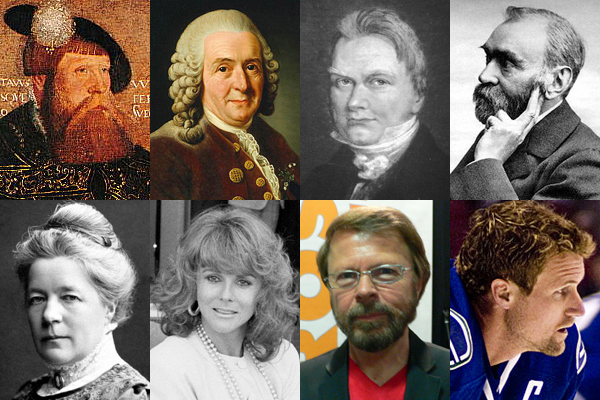
100615-famous-swedish-people
Nevertheless, comments such as this from Åke Daun were not untypical: “Culture is not a big thing in Sweden. We are technically creative, not artistically.” He suggested that Sweden’s self-image was more invested in being a successful manufacturer of ball bearings, zippers and safety matches.

“It’s true, you run out after Bergman and Strindberg,” agreed Stefan Jonsson. “Culturally and intellectually the international contribution of Sweden is quite limited, but the typical Swedish intellectual believes the country is big enough for him to have a career, and not so small that he feels he needs to go outside and bring things in. It’s the tragedy of being a mid-sized country.”

100615-swedish-safety-matches

When I tentatively mentioned the country’s paucity of cultural titans to Henrik Berggren, he reacted with his customary patriotic vigor.

From what objective standpoint are you saying this? That sounds rather typically British, to be honest, a rather snotty British attitude to the world: ‘I can sit on my island and I can judge all cultures…’”

Oh dear. Honestly, Henrik, that’s not what I meant.

Though, you are right, I probably am a snotty Brit.

You might laso like to read:

A Literary Masterpiece About the 22nd July Massacre in Norway

The Nearly Almost Perfect People

Danish Bacon

Michael Booth on Scandinavia

Egoiste from Norway

Positive Trend for Norwegian Salmon

0

Norway exported salmon worth NOK 3.5 billion in May. This is the same value as in May 2014, according to analysis from the Norwegian Seafood Council.

Salmon from Norway is in a class by itself among international consumers, according to the latest statistics from the Seafood Council. “Salmon has its natural place in the future,” according to physician, professor and EAT-advisor Alessandro R. Demaio.

IMG0034.PCD;1
”The salmon market has developed broadly as expected following the exclusion of Norwegian salmon to the Russian market”, says Bjørn-Erik Stabell, Marketing Manager for Salmon at the Norwegian Seafood Council.

The annual global consumer research conducted by the Seafood Council shows that the public opinion of Norwegian salmon has improved from 64 to 69point in the course of only one year. More than three times of consumers prefer Norwegian salmon compared to salmon from Alaska, which has a good number two ranking.

”Exports to Eastern Europe have returned, increasing exports to core markets within the EU. Particularly pleasing is the positive development of the largest export market France. This is a market that has seen a negative trend in recent years, but that trend has now reversed”, observes Stabell.

“The world looks to the North when it comes to food, which gives food producers from these countries advantages on international markets. At the same time it is evident that the rest of the world cannot eat the way you do in the north. We have to change to a more vegetarian based diet and supplement with fish and poultry instead of red meat,» says Allessandro R. Demaio.

090615-Norwegian-salmon
84.739 tons of salmon were exported in May, an increase of 4 per cent compared with the same period last year.

So far this year, salmon exports have been worth NOK 18.1 billion. This is NOK 97 million more than during the same period in 2014. Export volumes so far this year, in total 408.000 tons, an increase of 7 per cent year-on-year.

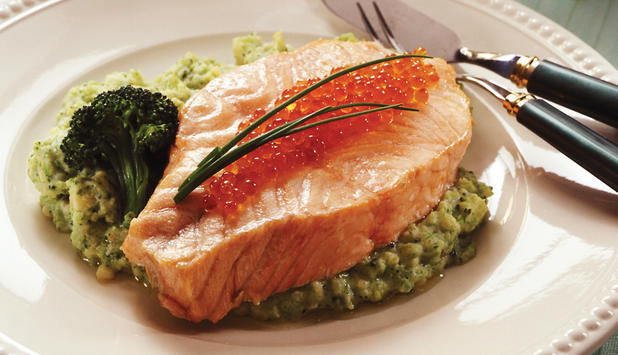
090615-salmon_steak-daily-scandinavian
Last year the international fish farming group Cermaq, with head office in Oslo, were purchased by the Japanese Mitsubishi Corporation. The director of the board, Yu Sato, confirms that the organization’s sustainable profile was a decisive motivation for the acquisition.

Positive Trend for Norwegian Salmon, written by Tor Kjolberg

Scandinavia’s Largest Waterpark

0

Skara Sommarland is sandwiched approximately halfway between the other two big Swedish theme parks – Liseberg and Grona Lund. Grona Lund is owned by the same company as Skara Sommarland. This is Skara’s 31st season.

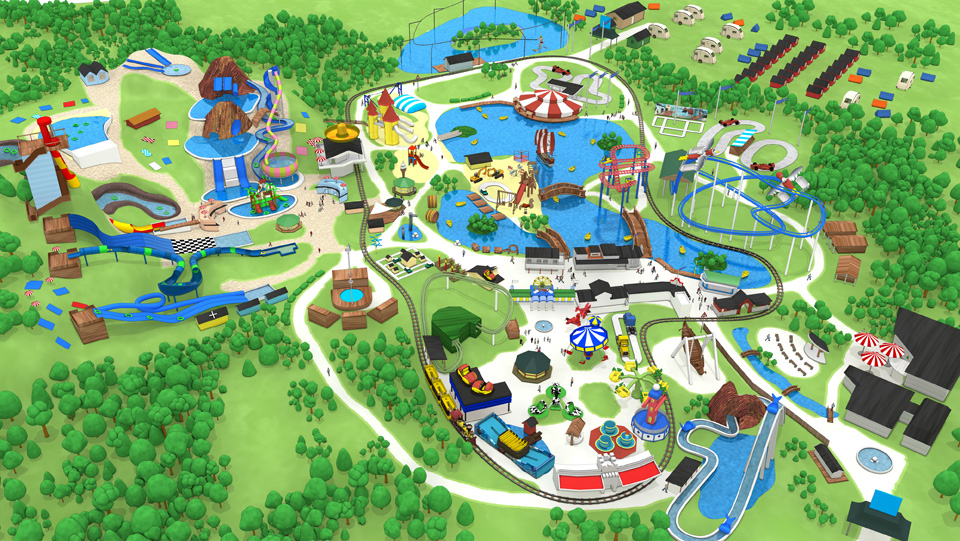
160615-Skara-sommarland-plan
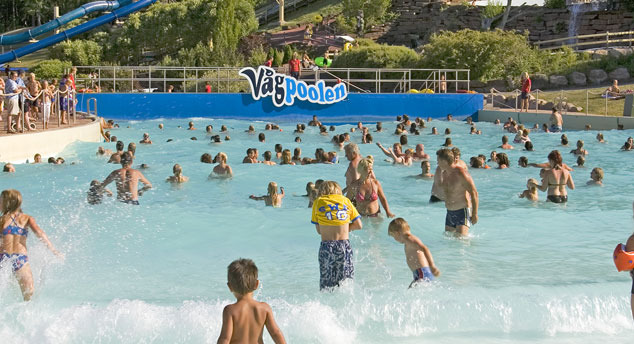
Four million liters of heated water are pumped into the several swimming-pools and attractions in Skara Sommarland (Summer Land). But there are not only wet experiences waiting you in the park. The entrance to Skara Sommarland may reveal very little of what’s in store for visitors, but when guests walk through the park will they discover the joy of exploring it. In every corner there is a surprising uniquely themed ride, which although mainly suited to children, should please a casual thrill seeker too.

Several carousels, restaurants and a play-area are just some of the attractions offered in the 400,000 sqaure meter park. If you have been to Liseberg amusement park in Liseberg, Skara Sommerland is twice the size. Over 350,000 visitors are coming to the park during the season.

160615-skara-sommarland-hara-kiri-slide
Skara Sommarland opened in 1984 by the Swedish entrepreneur and politician Bert Karlsson. Famous Swedish musicians play at the venue every season. Karlsson sold the park in 1994 to the Swedish restaurant chain Rasta since it was threated of bankruptcy. In 2001 the park was sold once again to the current owners, Parks & Resorts Scandinavia AB (P&RS).

160615-skara-sommarland-cobra
Since then more than 25 million dollars have been invested in the park, especially in attractions in the amusement park. Last year’s newcomer, the water attraction Cobra, was the largest investment in the park’s history. It is 116 meters long and 11 meters deep. In 2012 and 2013 Big Drop and Razer were unveiled.

P&RS installed many of the attractions that are present at the park today, including the one-of-its-kind Tranan roller coaster. Three coasters make up the ride line up, as do theme park favorites such as bumper cars, a log flume and a chair swings. There are about 40 attractions at Skara Sommarland. A lot of thought has gone into the various rides, with most of them offering unique, borderline bizarre, theming or even custom made ride cars.

160615-skara-simmarland-wave-pool
The park is a dream for families. The spectacular stunt- and diver show Wild Style is a 20 minutes show of acrobatics and stunts in a rough street style wrapping.  All attractions on land and in water are included in the entrance fee, except the go-carts.

Behind the rather plain, drab entrance, Skara Sommarland is one of Sweden’s biggest and prettiest parks. It’s very leafy with plenty of open space filled with play equipment, two lakes (one of which features a waterski attraction which is hysterical to watch) and a waterpark. There is camp site at the park which is useful as the nearest significant town is 9km (5.5 miles) away.

160615-skara-sommarland-waterfalls

Facts about Skara Sommarpark:

  • Last year almost 100,000 ice-crème cones were sold. Soft-ice is also popular with 28,556 units in 2014.
  • The most popular lottery in the park is the Milk Chocolate (Mjölkchokoladen) who sold 40,000 pieces during the summer of 2013.
  • The water in the pools holds about 25 degrees Celcius (77 Fahrenheit).
  • The operating season is between June and September.

Scandinavia’s Largest Waterpark, written by Tor Kjolberg

Bjornson Prize to Edward Snowden

Edward Snowden, the American whistleblower, gets the Bjornson Prize for his disclosures regarding governmental surveillance.

Former security contractor Edward Snowden won the Norwegian Bjornson Prize for freedom of expression last Tuesday and received yet another invitation to leave his exile and receive the award in person.

050615-Edward_Snowden
The Bjornson Academy said the 31-year old fugitive had won the Bjornson Prize, named after the Norwegian Nobel literature laureate, “for his work protecting privacy and for shining a critical light on US surveillance of its citizens and others.”

The Academy hopes to hand over the award to Edward Snowden at this year’s Bjornson Seminar in Molde on 5 September. Bjørnson Academy has been in contact with several lawyers to consider whether Snowden may come to Norway without being extradited to the United States.
Snowden was awarded Sweden’s Right Livelihood Award in 2014 but chose to accept it by video link rather than leaving his exile in Russia.

https://youtu.be/rgL0FDCyTrg

He has been nominated for the Nobel Peace Prize for the second year in a row. The Nobel Prize will be awarded in Oslo on October 9.

Bjornson Academy
The Norwegian Academy of Literature and Freedom of Expression (Det Norske Akademi for Litteratur og Ytringsfrihet) is a Norwegian institution, founded in 2003, and also called Bjørnstjerne Bjørnson-Akademiet. The background being that Norway, contrary to many other countries, lacked a free and independent academy of literature.

Who was Bjornstjerne Bjornson?
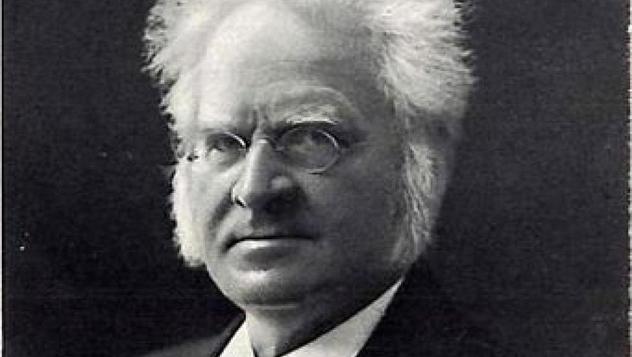
Bjørnstjerne Bjørnson (1832-1910) was the son of a Norwegian pastor. At school in Christiania (Oslo) Henrik Ibsen was one of his fellow students.

050615-bjornstjerne-bjornson
In 1857 he succeeded in starting a literary career when he wrote the historical play Mellem slagene (Between the Battles) and became stage director at the Norwegian Theatre in Bergen.

During the following years he took part in national politics (as he did all his life) and divided his creative activities between historical tragedies and country tales such as Arne (1858) and En glad gut (1860) “A Happy Boy”, both of which were meant to show a kinship between the contemporary peasant and the saga heroes of old in their taciturnity and love of adventure.

Bjornson on Norwegian bank note

The years 1860-1863 he spent abroad, mostly in Italy, where he was deeply affected by Michelangelo and Greek sculpture.

The seventies were marked by a second visit to Italy (1873-1875) and a turn toward realism and social problems which produced the plays En fallit (The Bankrupt) and Redaktøren (The Editor), both in 1875. In Kongen (1877) “The King”, he dealt with the loss of Christian ideals in today’s secular society, a concern which led him into a religious crisis and to a rejection of the church dogma.

Bjornson, painting by Peder Severin Kroyer

In 1882 he left Norway and spent five years abroad where En hanske (1883) “A Gauntlet” was written, a play in which he attacked hypocrisy concerning sexual matters as well as the liberal attitude of the Bohemians. During the following years he wrote educational novels such as Det flager i byen og på havnen(1884) “The Heritage of the Kurts” and På Guds veie (1889) “In God’s Way”, with its main theme of religious tolerance, as well as the educational play Over evne, annet stykke (1895) “Beyond Human Power”.

His last important plays were Paul Lange og Tora Parsberg (1899), which treats the theme of political tolerance, and finally Nar den ny vin blomstrer(1909) “When the New Wine Blooms”. Bjørnson’s collected works were published in nine volumes in 1919.

050615_Bjørnstjerne_Bjørnson_1909
Bjørnstjerne Bjørnson (1832-1910) was the son of a Norwegian pastor. At school in Christiania (Oslo) Ibsen was one of his fellow students. Bjørnson participated early in the movement for a national Norwegian theatre and wrote some poetic plays which he did not publish. While a student, he became a literary critic for theMorgenbladet in 1854 and contributed criticism as well as stories to various other newspapers. In 1857 he succeeded in starting a literary career when he wrote the historical play Mellem slagene (Between the Battles) and became stage director at the Norwegian Theatre in Bergen. During the following years he took part in national politics (as he did all his life) and divided his creative activities between historical tragedies and country tales such as Arne (1858) and En glad gut (1860) “A Happy Boy”, both of which were meant to show a kinship between the contemporary peasant and the saga heroes of old in their taciturnity and love of adventure. The years 1860-1863 he spent abroad, mostly in Italy, where he was deeply affected by Michelangelo and Greek sculpture.

The seventies were marked by a second visit to Italy (1873-1875) and a turn toward realism and social problems which produced the plays En fallit (The Bankrupt) and Redaktøren (The Editor), both in 1875. In Kongen (1877) “The King”, he dealt with the loss of Christian ideals in today’s secular society, a concern which led him into a religious crisis and to a rejection of the church dogma. In 1882 he left Norway and spent five years abroad where En hanske(1883) “A Gauntlet” was written, a play in which he attacked hypocrisy concerning sexual matters as well as the liberal attitude of the Bohemians. During the following years he wrote educational novels such as Det flager i byen og på havnen(1884) “The Heritage of the Kurts” and På Guds veie (1889) “In God’s Way”, with its main theme of religious tolerance, as well as the educational play Over oevne, annet stykke (1895) “Beyond Human Power”.

His last important plays were Paul Lange og Tora Parsberg (1899), which treats the theme of political tolerance, and finally Nar den ny vin blomstrer(1909) “When the New Wine Blooms”. Bjørnson’s collected works were published in nine volumes in 1919.

Bjornson received the 1903 Nobel Prize in Literature “as a tribute to his noble, magnificent and versatile poetry, which has always been distinguished by both the freshness of its inspiration and the rare purity of its spirit”, becoming the first Norwegian Nobel laureate.

Bjornson Prize to Edward Snowden, written by Admin

Hospital of the Future in Denmark

There will be room for healing in the new world-class hospital in North Zealand, designed by the internationally renowned Switzerland-based architects Herzog & de Meuron.

Herzog & de Meuron is particularly known for designing the Olympic stadium (Bird’s Nest”) in Beijing and the Tate Modern in London.

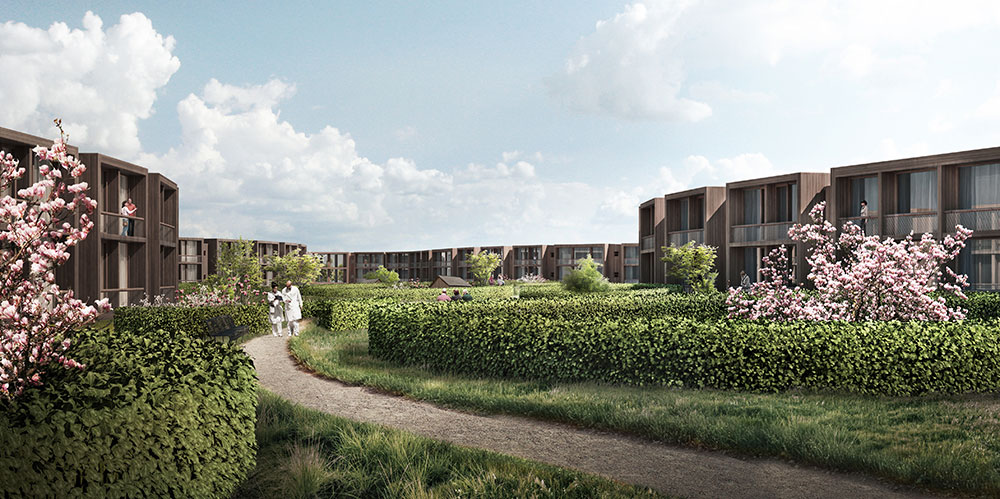
The hospital is built on a 124.000 square meter facility that serves 24 medical departments and provides more than 660 beds. There will be a garden in its center and the hospital is surrounded by nature. To foster exchange across the various departments the architects have chosen a horizontal building construction. Tall hospitals of the last decades have rarely achieved this goal.

Admission discharge at Nyt Hospital at North Zealand

The chair of the Copenhagen regional council, Sophie Hæastorp Andersen, looks forward to the opening of the new hospital in 2020: “It is hugely important for the residents in the Copenhagen Region that we get a functional and beautiful hospital that has been carefully planned from the very beginning. Something all citizens in Copenhagen can be proud of.”

“The hospital organically reaches out into the wide landscape. Simultaneously its soft, flowing form binds the many components of the hospital,” says the architects. “It is a low building that fosters exchange between staff and patients, ans it has a human scale despite its very large size.”

Courtyard
Courtyard

This way the architects marriage two seemingly contradictory goals: the desire for a large central garden and the necessity for short internal connections. The result is an organic cross shape.

“All citizens in North Zealand will have easy access to the best treatment in a new hospital that professionals will travel to North Zealand to see,” says Per Seerup Knudsen, chairman of the political reference group.

Situation plan
Situation plan

The landscaping concept consists of two typical Danish landscape typologies. A forest park with clearings for parking lots surrounds the building, while the central garden is Heathland. Circular hedges inhibit views into the pedestal and create the path network of the garden.
This project will be the heart of the new masterplan of Hillerød South.

“Herzog and de Meuron have designed a patient-centered hospital – a beautiful, healing and functional building that supports our patients’ recovery in the best possible way. The hospital’s great strength is its highly successful and fundamental fusion of form and function,” says hospital director Bent Ourø Rørth.

The park
The park

“When you walk through the glass doors, you’ll get an intuitive sense of calm and harmony. A homely feeling. I can easily imagine working in the hospital,” says head nurse Britt Holmgaard, who has been involved in the process as an advisor.

Head consultant Tomas Joen Jakobsen is particularly enthusiastic: “First and foremost, the wards will work really well. They will get light from both sides, the work stations will be near the patients, and there will be good access.” He is adding: “I’ll be proud to drive past with my grandchildren and show them what I’ve helped start.”

Feature image (on top): Main entrance

Hospital of the Future in Denmark, written by Tor Kjolberg

Images © 2014, Herzog & de Meuron Basel

Italian Passion – Norwegian Ingredients

0

Well, the heading is not completely true. Italian passion, yes, but some of the ingredients were more exotic, like the olive oils and the chocolate beans. The private dining at Vin og Grønt was however a delicious and happy experience.

SONY DSC


Raffaele (Raph) Regan (30) is a professional chef, coming from Naples, the Italian city of culinary tradition of food care.  He studied music for six months at the University in Oslo as an exchange student and fell in love with the place and the local vegetarian ingredients.

One year ago a friend told him about an Internet site called Eat with, which invites strangers to become friends over gourmet meals cooked by talented chefs.

I was curious if there were any private chefs in Norway, offering this opportunity. There was only one, in Oslo.

I contacted Raph and he invited me to his home last week, together with nine other fabulous guests, all Norwegians, except a couple from Belgium, Rina and Jan van den Berbm.

The long table for ten persons was the ideal setting for a delicious five course meal, and the conversation between the guests was soon so load that the background music had to be shut off.

Raph told me he doesn’t like to cook meat or fish. He prefers a tasty vegetarian cuisine, made from fresh local ingredients, unlike the meals other veggie restaurants serve.

Michel Cardarilli (left) and Raph Regan preparing the food
Michel Cardarilli (left) and
Raph Regan preparing the food

This evening he was assisted by another Oslo chef, his friend Michel Cardarilli.

The menu was as follows:

SONY DSC
Scapece
Fermented roots marinated in vinegars, dried garlic and fresh mint.


Sweet Pea Mousse
with mussels, apples, roasted onions and seaweed ash.

SONY DSC
Potatoes
and wild chicory with rhubarb and lovage.


Fregola
and chickpeas with stockfish and raw leek.

SONY DSC
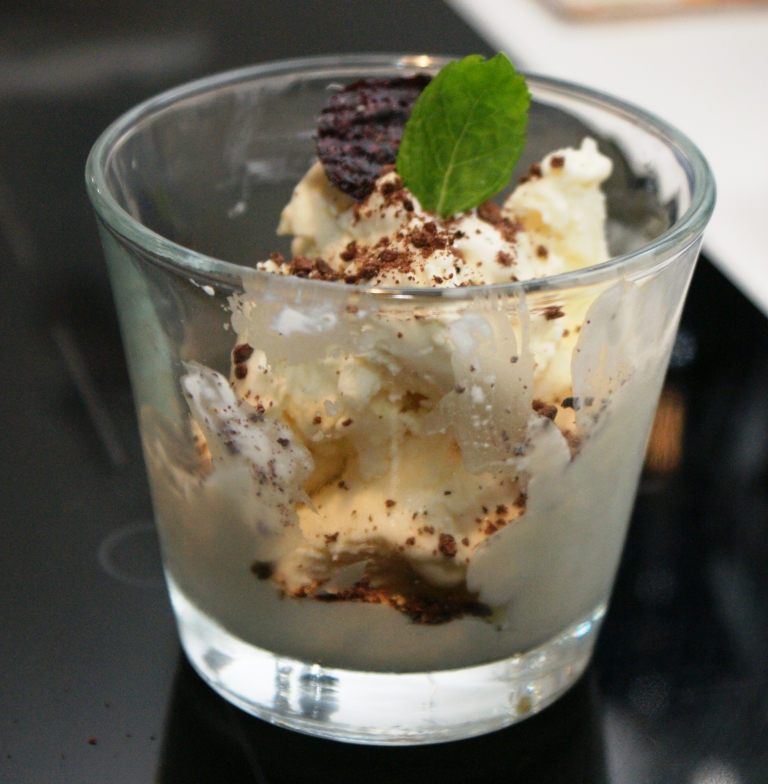
Icecream
of Risotta from Røros milk with chocolate beans and black pepper.

SONY DSC
The dishes were accompanied by beer from Grünerlokka Mini Brewery, Oslo, cider and wines.

Strongly recommended!

Italian Passion – Norwegian Ingredients, text and photos: Tor Kjolberg

Nordic Cross Border Military Training

Arctic Challenge Exercise 2015 is a cross border training between the Nordic neighbors. It evolved from a Swedish exercise, Nordic Air Meet in 2009.

The training this year will be Europe’s largest jet exercise with more than 4,000 persons participating. Norway is lead nation as nearly a hundred fighter jets from nine nations gather for a joint training from May 25 to June 5, with up to 90 planes set to take the skies at the same time.

The exercise will take place in the High North, with activities divided between Bodoe in Norway, Rovaniemi in Finland and Kallax in Sweden. Soldiers from the UK, Switzerland, France, Germany, the USA and the Netherlands will join the Nordic neighbors.

Swedish Saab ias-39A

“This is the second time the multinational training exercise is carried out, the first being in 2013. The plan forward is to continue every other year. Even though Norway, Sweden and Finland are the host nations, all of the participating countries contribute to the planning, which helps build our national and allied capability to lead air operations,” says Brigadier General Jan Ove Rygg, head of RNoAF’s National Air Operations Center (NAOC), and ACE 2015 exercise director.

He continues, “The aim is to exercise and train units in the orchestration and conduct of complex air operations, in close relations to NATO partners. The unique cross border air space makes ACE 2015 a one of a kind training ground for increasing interoperability and skills in all parts of the chain.”

“It gives us an opportunity to exercise with different aircraft types from large composite air forces…tactics and procedures can be practised in a realistic threat environment” said Major General Karl Engelbrektson in a statement in Swedish on the Swedish Armed Forces website.

030615-arctic-challenge-exercise-2015
Sweden has recently increased defense spending, although there has been strong criticism of the Social Democrat-led government’s strategy, with many leading military experts arguing that Sweden would still struggle to defend itself in the event of an attack.

On a press conference Engelbrektson told that it was vital for Sweden to hold “large complex exercises with other nations” to enhance the country’s operational capabilities.

030615-daily-scandinavian-arctic-challenge-exercise-2015-feature-image
“We are getting great operational take-backs with such large scenarios and tactical training,” says Major Trond Ertsgaard at Bodø Main Air Station.

Last weekend there was a confrontation between Russian air fighters type “Sukhoi Su-24” and the U.S. warship “USS Ross”.

Feature image (on top): An F-15C Eagle, assigned to the 493d Fighter Squadron, flies above Bodø Main Air Station, Norway Sept. 24, 2013. Approximately 30 aircraft deployed from RAFs Lakenheath and Mildenhall, to multiple locations in Norway, in support of the Arctic Challenge exercise 2013 (ACE-13). ACE-13 is a combined exercise with NATO and regional allies, which promotes continued interoperability between the U.S., Norway, Sweden, Finland the U.K. and NATO. (Official U.S. Air Force photo by Master Sgt. Lee Osberry/Released)

Nordic Cross Border Military Training, source: Norwegian Armed Forces Website