
Breakthrough on Understanding Demographic History of Scandinavian Stone-Age Humans

An international team led by researchers at Uppsala University and Stockholm University reveals that expanding Stone-age farmers assimilated local hunter-gatherers and that the hunter-gatherers were historically in lower numbers than the farmers.

051114_Osteology-in-scandinavia
The study is published, ahead of print, in the journal Science. The transition between a hunting-gathering lifestyle and a farming lifestyle has been debated for a century. As scientists learned to work with DNA from ancient human material, a complete new way to learn about the people in that period opened up. But even so, prehistoric population structure associated with the transition to an agricultural lifestyle in Europe remains poorly understood.

“For many of the most interesting questions, DNA-information from people today just doesn’t cut it, the best way to learn about ancient history is to analyze direct data – despite the challenges”, says Dr. Pontus Skoglund of Uppsala University, now at Harvard University, and one of the lead authors of the study.

051114_Helena_Malmstroem“We have generated genomic data from the largest number of ancient individuals,” says Dr. Helena Malmström of Uppsala University and one of the lead authors. “The eleven Stone-Age human remains were between 5,000 and 7,000 years old and associated with hunter-gatherer or farmer life-styles,” says Malmström.

Anders Götherström, who led the Stockholm University team, is satisfied with the amount of DNA that they could retrieve, which reveals the history of Scandinavian stone-age in a broader perspective.

“Not only were we able to generate DNA from several individuals, but we did get a lot of it. In some cases we got the equivalent of draft genomes. A population genomic study on this level with a material of this age has never been done before as far as I know.”

The material used in the study is from mainland Scandinavia as well as from the Baltic island Gotland, and it comprises of hunter-gatherers from various time periods as well as early farmers.

Professor Mattias Jakobsson, who led the Uppsala University team, is intrigued by the results.

“Stone-Age hunter-gatherers had much lower genetic diversity than farmers. This suggests that Stone-Age foraging groups were in low numbers compared to farmers,” says Mattias Jakobsson.

Jan Storå at Stockholm University shares Mattias’ fascination.

“The low variation in the hunter gatherers may be related to oscillating living conditions likely affecting the population sizes of hunter-gatherers. One of the additional exciting results is the association of the Mesolithic individual to both the roughly contemporaneous individual from Spain but also the association to the Neolithic hunter-gatherers.”

The study confirms that Stone-Age hunter-gatherers and farmers were genetically distinct and that migration spread farming practices across Europe, but the team was able to go even further by demonstrating that the Neolithic farmers had substantial admixture from hunter-gatherers. Surprisingly, the hunter-gatherers from the Baltic Sea displayed no evidence of introgression from farmers.

“We see clear evidence that people from hunter-gatherer groups were incorporated into farming groups as they expanded across Europe,” says Pontus Skoglund. “This might be clues towards something that happened also when agriculture spread in other parts of the world.”
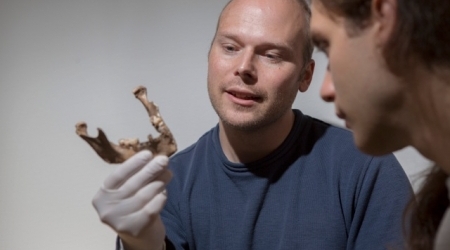
Mattias Jacobsson and Pontus Skoglund. Photo: Mikael Wallerstedt

“The asymmetric gene-flow shows that the farming groups assimilated hunter-gatherer groups, at least partly,” says Mattias Jakobsson. “When we compare Scandinavian to central European farming groups that lived at about the same time, we see greater levels of hunter-gatherer gene-flow into the Scandinavian farming groups.”

This study is part of the recently initiated “Atlas project” – a large-scale genomic investigation of ancient human remains in Scandinavia led by Stockholm and Uppsala Universities and funded by the Swedish Foundation for Humanities and Social Sciences and the Swedish Research Council. The present study brings the first results from the project.

“We have only begun to scratch the surface of the knowledge that this project may bring us in the future,” says Anders Götherström.

Source: Edited from a press release from Uppsala University.

Feature Image (on top):
Osteologists excavating and examining the skeleton of a young woman dated to 2700 BC. Credit: Göran Burenhult

Michelin-starred restaurants in Norway

0

The Michelin Guide 2014 includes a total of six stars divided among five Norwegian restaurants, all situated in the capital city of Oslo. Unfortunately is one of them closed down.

Maaemo
is the first ever restaurant in Scandinavia to receive two stars in the Michelin Guide on its first rating, only 14 months after opening in its sparkling glass locale near Oslo central station.
041114_Restaurant-Maaemo-Oslo-Norway
The seasonal menu is based on 100% organic local ingredients, including rare Norwegian herbs and berries. The food is complemented by an exciting wine list.

Cheap it ain’t (the nine-course menu alone will set you back NOK 1,900, and that’s before you have added drinks) but you get what you pay for – a truly exceptional dining experience.

Here are the Michelin-starred restaurants in Norway.

Bagatelle
Bagatelle reopened in January 2011 after the much published departure of former head chef Eyvind Hellstrøm, who had left, taking with him most of the kitchen staff, at the end of 2009. The restaurant, which has existed since 1932, regained one of its previous Michelin stars in 2012, but is now closed due to financial disputes. 

Statholdergaarden
Each day chefs Bent Stiansen and Torbjørn Forster create a six-course gourmet menu full of surprises. The menu varies according to the time of the year and they pride themselves on using Norwegian produce when it is at its best.

041114_Restaurant-Statholdergaarden-Oslo-Norway
The set menu includes three starters, usually fish and/or shellfish, before moving on to the main meat course, cheese, and dessert. You can choose fewer courses if desired. In addition, Statholdergaarden also has a long à la carte menu. The cuisine is based on the best European food traditions, with touches of inspiration from other areas of the world.

Ylajali
Led by chef Even Ramsvik, Ylajali received its much-anticipated Michelin star in 2014. The restaurant takes its name from a character in Knut Hamsun’s novel “Sult” (“Hunger”), who in the novel lives on the floor above where the restaurant is situated today.

041114_Restaurant-Ylajali-Oslo-Norway
This is no à la carte restaurant, and as such Ylajali has no menu for the guests to choose from. Instead, the restaurant tries to focus on the meal as a complete and comprehensive experience, dividing it up as if a book into a prolog, four chapters, and an epilog.

The six-course meal based on seasonal produce and other top-notch ingredients is priced at NOK 1295, with an additional NOK 1095 for the optional wine menu especially designed to fit the meal.

Ylajali is closed Sundays and Mondays, and accepts online booking for up to 8 people. For larger groups and special dietary requirements, please email the restaurant.

FaunaRestaurant Fauna received its first Michelin star less than a year after opening in the summer of 2013 and is a less formal place than other restaurants in its class. Dress in jeans and a t-shirt, and you won’t be turned away here. A relaxing atmosphere, no matter the occasion, is a stated goal for the restaurant.

041114-Restaurant-Fauna-Oslo-Norway
The prices are relaxed too. A five-course set menu will set you back NOK 750, but if you want more, an add-on is available for an additional NOK 150. The matching wine/drinks menu is NOK 695, and that too has an optional add-on priced at NOK 150.

For the chefs at Fauna, the most important thing is the quality of the food and the ingredients it is based on. To ensure their complete freedom in developing the food and the menu, no particular style or direction has been chosen for Fauna’s cuisine, though they do try to use local ingredients where possible.

Fauna is closed Sundays and Mondays, and most of July.

Other Michelin awards
Far from all the restaurants in the Michelin Guide are given stars, but are still well worth a visit, even so. The Michelin Guide offers several different awards, for different aspects of quality.

Bib Gourmand
An award for restaurants that offer good food at moderate prices, Bib Gourmand has been awarded by the Michelin Guide since 1955. These restaurants in Oslo have been awarded a Bib Gourmand:

Dish at Restaurant Eik


Grapes

Grapes indicate that the restaurant in question has an especially interesting wine list on offer. These restaurants in Oslo have this award:

Dish at Restaurant Statholdergaarden


Forks and spoons

Regardless of other awards, restaurants may also be awarded from one to five forks and spoons, with one indicating a comfortable restaurant, and five indicating a luxurious restaurant. These Oslo restaurants have been awarded forks and spoons:

*) Expensive and not genuine Norwegian cuisine

Feature image (on top): Maaemo Restaurant

More articles on Scandinavian cuisine:
Happy ever after on this fairy-tale gastronomic journey in Copenhagen
Finest Food Traditions in Scandinavia
City of Style – Stockholm

Playful Attitude

0

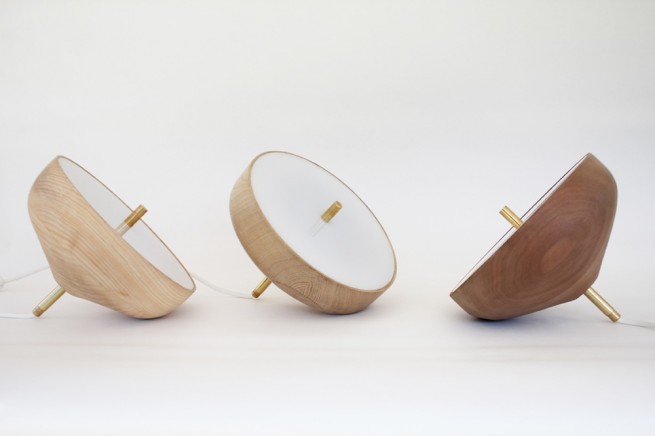
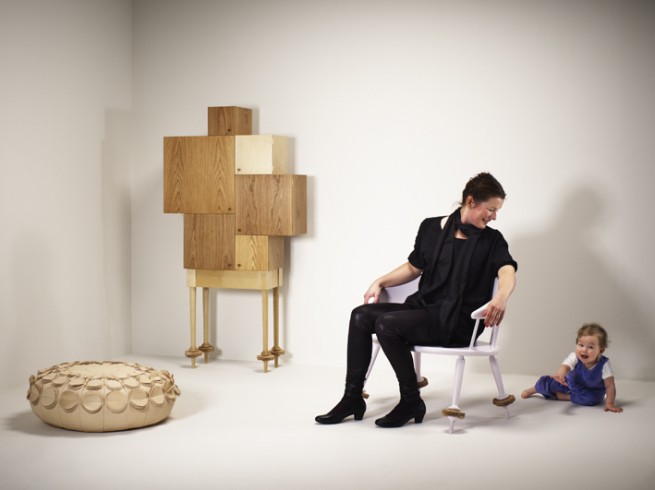
Studio BAAG took inspiration by children’s toys and created furniture and home accessories defined by a playful imprint and a story-telling humour.

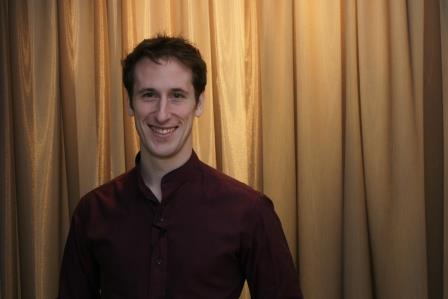
Designer Caroline Bauer and architect Pier Francesco Galuppini, founders of Studio BAAG, transformed a spinning top in a table lamp, a leapfrog stool in a comfy pouf and a simple shape-game in a modular candle holder.  The Swedish-Italian design duo meshes genuine craftsmanship and functionality enhancing the use of natural materials. studiobaag.com

031114_Caroline_Bauer_and_Pier_Francesco_Galuppini
An old-fashioned spinning top and its whirling movement becomes a playful table-lamp that creates a dynamic presence in the room: Pirouette is  composed from turned carrara, bardiglio and nero marquinia marble with brass details and opaline plexiglass.

The project by Studio BAAG comes also in wood, the spinning base is composed  from turned ash, oak or walnut wood, with a really playful attitude.

031114_Studio-BAAG-pirouette-lamp-mix-marble

Studio BAAG was founded in 2010 by Swedish designer Caroline Bauer and Italian architect Pier Francesco Galuppini, and it is based in Milan. They work with various international projects ranging from architecture to design.

Caroline Bauer was born in Malmö, Sweden in 1982. In 2003 she moved to Italy where she studied interior and product design at Accademia Italiana in Florence. In 2007, she received her degree in interior design at the Istituto Europeo di Design, Milan. For the past five years Caroline has been working at an architectural firm in Milan on international projects ranging from exhibitions to hospitality and residential projects.

Pier Francesco Galuppini was born in La Spezia, Italy in 1977. He majored in architecture at the University of Florence and graduated in 2005. He is currently collaborating with an architectural firm in Milan working globally on both residential and commercial projects.

Other articles you may find interesting:
Swedish Designer Lisa Hilland’s Leather Magic
Friends of an Artist
100% Norway 2014

Listen to the Future

Kristian Aartun, a young Norwegian entrepreneur, is the driving force behind the annual international entrepreneur conference, NIEC.

This year’s honorary chairman, Ryan Blair, an American entrepreneur and  New York Time’s best-selling author, along with Aartun,  has gathered some of the most brilliant minds in technology, creativity and entrepreneurship from across the world at the Deloitte House in Oslo. Blair is the CEO and co-founder of Visalus and was named entrepreneur of the year 2012 by Ernst & Young. He will be speaking at NIEC next year. This year’s conference was named Listen to the Future.

Mingling at the NIEC Conference 2014

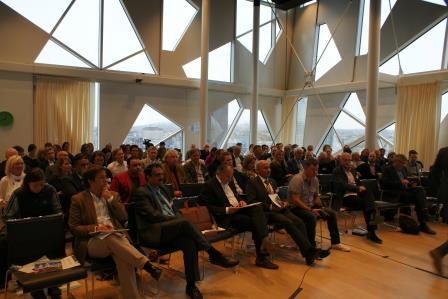
This year’s NIEC (Norwegian International Entrepreneur Conference) was held at the new headquarters of Deloitte’s auditing and consulting firm located in the architecturally acclaimed barcode district in Oslo.

Kristian Aartun tells us that after meetings with the Norwegian Department of Education and Virke, the Enterprise Federation of Norway, he was inspired to establish an international annual entrepreneur conference in Oslo. When he was looking for his first speakers, he came across Ryan Blair (see above) and invited him to give a lecture at The Norwegian Polytechnic Society.

Along the way he became the Norwegian manager of J. Reuben Silverbird, who recently had published his book “Two Sides of Life”. He invited Silverbird to give a lecture in his home town Askim.

“Silverbird is a peace ambassador with strong bonds to the UN,” said Aartun at that time. “In his peace work across the world he has met Dalai Lama, Yassir Arafat, Mother Theresa and Bill Clinton. He has given lectures on motivation for big enterprises and at universities like Columbia and Stanford.” Aartun tells us that a copy of Silverbird’s book was sent to the newly elected president of USA, Obama, and received a warm thank you letter.

The idea of an international conference started to grow in Kristian’s head. His father told him about an interesting professor in innovation in Holland. Kristian, who now lives in Amsterdam, met by coincidence this professor when walking in the streets in Amsterdam, and as the saying goes, the rest is history.

Kristian meets interesting people from all over the world and is known for his serious intentions and extraordinary network building capacities. He has recently been asked by Amir Sheik to invite Queen Ranja of Jordan to give a speech next year.

Kristian emphasizes that his target group is people in the age group 17 to 88. “It’s never too late to be inspired by good role models,” he says.

Liam Bates at the NIEC 2014

120 participants were enthusiastic listeners at this year’s event. It was more like a gathering of a large family. We spoke to one of the key note speakers, Liam Bates, a Swiss born American television host and adventurer, now living in Bejing, China. His first appearance on Chinese television was during the 2010 Chinese Bridge language contest, a world-wide competition for students of Chinese, in which he received first prize and the eloquence prize. The show aired in front of a TV audience of almost 300 million.

“I received an e-mail from a guy called Kristian who told me his father had seen me on television,”  he tells us. “He invited me to this conference. I had never heard of neither Kristian nor the conference before, so I googled and thought I might consider it. I had never been to Norway before, so I thought it might be worth going, and here I am.”

Mupin Xie from the Netherlands (left)

Liam speaks fluent Chinese.  One of the participants, a Chinese student of law at Tilburg University in the Netherlands, told us that Liam speaks better Chinese than he does, since he hasn’t been home for some time, and therefore is not as familiar with some of the newer expressions.

Today Liam is working on air purification systems in China,  noting that the pollution is so heavy that he can almost not see the building across the street where he lives. “It is healthier inside than outside,” he says, and that his girlfriend starts coughing whenever she visits.

“But don’t ignore China,” he summarizes. “You cannot afford to.”

????????
Another keynote speaker was the international award winning entrepreneur, speaker and author Rafael Gordon.

Rafael calls himself a life strategist, leadership specialist, and innovator of inspiration. He gave a touching speech about his poor childhood,  how he had to struggle to survive mentally, and how he gradually invented a means to go from one landmark to another. He is a recipient of the Global Young Entrepreneur of the Year Award for Social Entrepreneurship and has provided key insights into the environmental and physical circumstances that impact an individual’s personal and business performance.

????????
Lisa Lipkin, auditor, editor and CEO of Story Strategies, was the first speaker with interesting views on story telling. She was also the moderator of the this brilliantly conducted conference.

????????
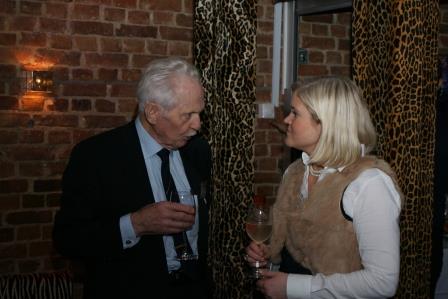
After the conference there was a reception and dinner in the bar and restaurant house Mona Lisa in downtown Oslo (images below).

Text and photos: Tor Kjolberg
????????

????????

????????????????

Red-sailed ships terrorizing the Mediterranean

Back in the year 859, with a fleet of 62 red-sailed ships, the Viking chieftain Hasting negotiated the Straits of Gibraltar, sacked Algericas, spent a week in Morocco rounding up “blue men” for subsequent sale in Ireland and then wintered on La Camargue in the Rhône Delta, “causing great annoyance and detriment to the inhabitants”.

Come spring, he was ready for Italy. After looting Pisa, he turned south and came across a city of such marbled magnificence that it could only be Rome.

251014_Vikings-Map
Hasting dispatched messengers who related that their leader was dying, and his last wish was to be given a Christian burial in hallowed ground. Permission granted, the gates admitted a coffin followed by a long procession of mournful Vikings.

251014_Volok_by_Roerich
As the local bishop was praying over the coffin it flew open and out leapt Hasting himself. The startled bishop was run through with Hasting’s sword, and the mourners went off to reduce the city to ashes. Only then dis Hasting learn that he had destroyed Luna, not Rome, and felt so cheated that he ordered the massacre of all male prisoners.

251014_Nicholas_Roerich,_Guests_from_Overseas
His next port of call was Alexandria in Egypt. The campaign closed in 862 with an overland march to sack Pamplona.

Feature image (on top) Paul B. Moore/Shutterstock

Other Viking articles you might be interested in:
1,000 Years of Viking Adventure, Denmark
Remarkable 1,000-Year-Old  Relics
Viking Ship Design


In Bed With A Norwegian

That’s right. I’m opening my bedroom door. But let me warn you, it’s chilly….And I’m not just saying that to shake off porn-seekers.

The temperature
In a previous post, i have talked about air having special qualities in Norway. It is no coincidence that in this northern part of the world, cold air is associated with freshness and good health. Try to deny it, and they will look at your like a French farmer who just heard that wine and butter are bad for you. In a Norwegian household, sleeping in a cold room is the best start for a good night’s rest. Some couples push it to the extreme by removing the heater altogether. And even then, some people sleep with the window open to let the fresh air inside. I cannot begin to tell you how this has been an adaptation challenge for me.
My mother in law’s bedroom is so cold, you could keep cookies in there for ages (great place to keep beer too!).

291014_Norwegian-duvet
The bedroom in our previous apartment was so cold that I could see my own breath, without even opening the window. How can you sleep in those conditions you ask? The key is to have a thick duvet. They come in all shapes, sizes, materials… you can get one for the whole year or buy one for winter and one for the rest of the year. Like everything in this country, the most important characteristic is that it breathes (just like your room, and all your clothes by the way). Meaning: let the air circulate so you don’t sweat, an inconvenience that might kill you when outdoors (and since we’re sleeping with the window open at -15 C, I guess you could almost qualify a normal night in a Norwegian home as “living on the edge”).

The bed
Notwithstanding the corpse-preservation temperature, the typical Norwegian couple’s bed is not one that transpires warmth and contact at first glance. It is quite common to have 2 covers, one each. Sometimes even one mattress each!
Let me specify: i do not live in a nursing home; my friends are all way younger than 70; and no, I don’t lift the bed covers when I visit them. Most of my insider info comes from showrooms at furniture stores and bedding ads on TV (and the occasional conversation with some of my closest friends…).

291014_Norwegian-bed
No matter how hot your husband is, nothing says “keep your distance” like two pairs of covers on the same bed. To me, this is a dangerous passion-killer and I will never give into it (@husband).

Lights
As winters are dark and cold, so are summers bright (….and some times cold too). This is why your choice of curtains is crucial. Never before have i put so much thought (and money!) into curtains. They must be thick enough but at the same time not look like you ripped off the velvet drapes at the movies. We have bought and tossed more curtains than I can think of either because they were too thin or too “velvety”.

291014-norwegian-bedroom-light
We finally found the perfect combination: a roll down curtain plus normal curtains over. That’s right, 2 different systems and 4 sets of wholes on your window frame and walls. Nevertheless, it’s the best way I have found to reconcile beauty and comfort. And it’s more flexible too, since you can choose almost any type of normal curtains to cover the roll-down, which is usually very plain.

S & S
Forgive me for being raw, but if there is one rule I share with Norwegians when it comes to the master-bedroom setting it’s this: Sex and Sleep only. Norwegians being big fans of natural and healthy living do not keep a TV in the bedroom. All those waves pollute the air (maybe even mess up with its temperature??). This is something I truly believe contributes to a better quality of sleep.

291014-norwegian-bedroom-shop
I can honestly say that every time i slip into a cold bed, i shiver with cultural chock. Although my mind accepts it, my skin will never adapt to it. First of all, coming from a tropical country, it’s not that I’m not used to cold: entering my room and feeling like i have to push around dead cows hanging from the ceiling before I reach my bed is not my idea of cozy.

Second, I am a heavy sleeper. I would sleep under any circumstances, regardless of the temperature or setting, so I can’t really notice the benefits of the Norwegian-way.

However, I have put a cross on my sexy PJ-set because I know my husband needs it to be cold (besides, sexy negligées are itchy). It is a small price to pay though, when you get to snuggle in winter with your favorite Viking; that is, if I never give into having one duvet each!

By now you should have an idea about how it is to be in bed with a Norwegian.

Feature image (on top) Shutterstock

Contributor Gisèle Le ChevallierStory and photos by Giséle Le Chevallier (also see our contributors). Giséle is editor of the blog expatsnorway.

A Smile is the Shortest Distance – A Tribute to Victor Borge

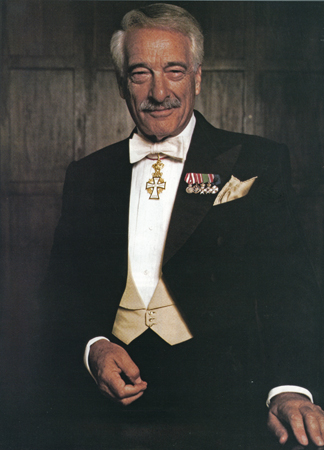
Victor Borge was born as Børge Rosenbaum in Copenhagen, Denmark, into a Jewish family. His parents, Bernhard and Frederikke Rosenbaum, were both musicians (his father was a violinist in the Royal Danish Chapel, and his mother played piano), Borge began to lear piano at the age of three, and it was soon apparent that he was a prodigy.

He gave his first piano recital when he was only eight years old, and in 1918 he was awarded a full scholarship to the Royal Danish Academy of Music.

170914_victor-borge
Borge played his first major concert in 1926 at the Danish concert-hall Odd Fellow Palæet . After a few years as a classical concert pianist, he started his now famous stand up comedy act, with a signature blend of piano music and jokes. He married American Elsie Chilton in 1933, the same year he debuted with his revue acts. Borge started touring extensively in Europe, where he began telling anti-Nazi jokes.

When the Nazis overtook Denmark during World War II, Borge was playing a concert in Sweden and managed to escape to Finland. He traveled to America on the USS American Legion, the last passenger ship that made it out of Europe prior to the war, and arrived in America on August 28, 1940. Disguised as a sailor, Borge managed to return to Denmark once during the occupation to visit his dying mother.

170914_victor-borge-02
Even though Borge didn’t speak a word of English upon arrival, he quickly managed to adapt his jokes to the American audience. He took the name of Victor Borge, and, in 1941, he started his American career at Bing Crosby’s Kraft Music Hall.

Borge won the title “Best New Radio Performer” in 1942. Soon after the award, he was offered film roles with stars such as Frank Sinatra.

Borge appeared on Toast of the Town hosted by Ed Sullivan several times during 1948, and became a naturalized citizen of the United States the same year. He started the Comedy in Music show at John Golden Theatre in New York City on October 2, 1953. Comedy in Music became the longest running one-man show with 849 performances when it closed on January 21, 1956 – which placed it in the Guinness Book of World Records.

After divorcing his wife Elsie, he married Sarabel Sanna Scraper in 1953. Continuing his success with several tours and shows, Borge played with some of the world’s most renowned orchestras such as the New York Philharmonic and London Philharmonic. He was invited back to his native country to conduct the Danish Royal Symphony Orchestra at the Royal Danish Theatre in Copenhagen, Denmark in 1992.

Borge appeared often on televison. He guest starred many times on Sesame Street and was the star guest on the fourth season of The Muppet Show.

Borge helped start several trust funds, including the Thanks to Scandinavia Fund, which was started in dedication to those who helped the Jews escape the German persecution during the war. Borge received Kennedy Center Honors in 1999.

Aside from his musical work, Borge wrote two books, My Favorite Intermissions and My Favorite Comedies in Music (along with Robert Sherman), and the autobiography Smilet er den korteste afstand with Niels-Jørgen Kaiser. Victor Borge continued to tour until his last days, performing up to 60 times per year when he was 90 years old.

Borge died in Greenwich, Connecticut, after more than 75 years of entertaining.

Victor Borge Hall, located in Scandinavia House in New York City, was named in Borge’s honor in 2000, as was Victor Borges Plads (“Victor Borge Square”) in Copenhagen in 2002.

He fathered five children who, on occasion, would perform alongside of him: Sanna, Victor Jr., and Frederikke with Sarabel; and Ronald and Janet with Elsie.

Feature image (on top): Victor Borge and the Muppets. Photo: Wiki Muppets.

Oslo Opera Festival 2014 To Feature Star Musicians October 31st

On Friday, October 31st, Oslo Opera Festival will take over the grand hall of Oslo, the University Aula for one night only. The concert will feature Ketil Bjornstad, Hakon Kornstad and many more performing Ketil Bjornstad’s “A Passion for John Donne”.

John Donne was a poet of religion, metaphysics and the world of sensations. After having worked with John Donne’s poesy for many years, Ketil Bjornstad continues to find new dimensions in his poetry and texts, and in it he also finds music.

271014-Ketil-Bjornstad
The language, rhythms, the silence between the sentences – a wish to find understanding and comfort in the human presence here on earth, Donne’s dramatic life is reflected in the texts, and in them rests a source of passion and music.


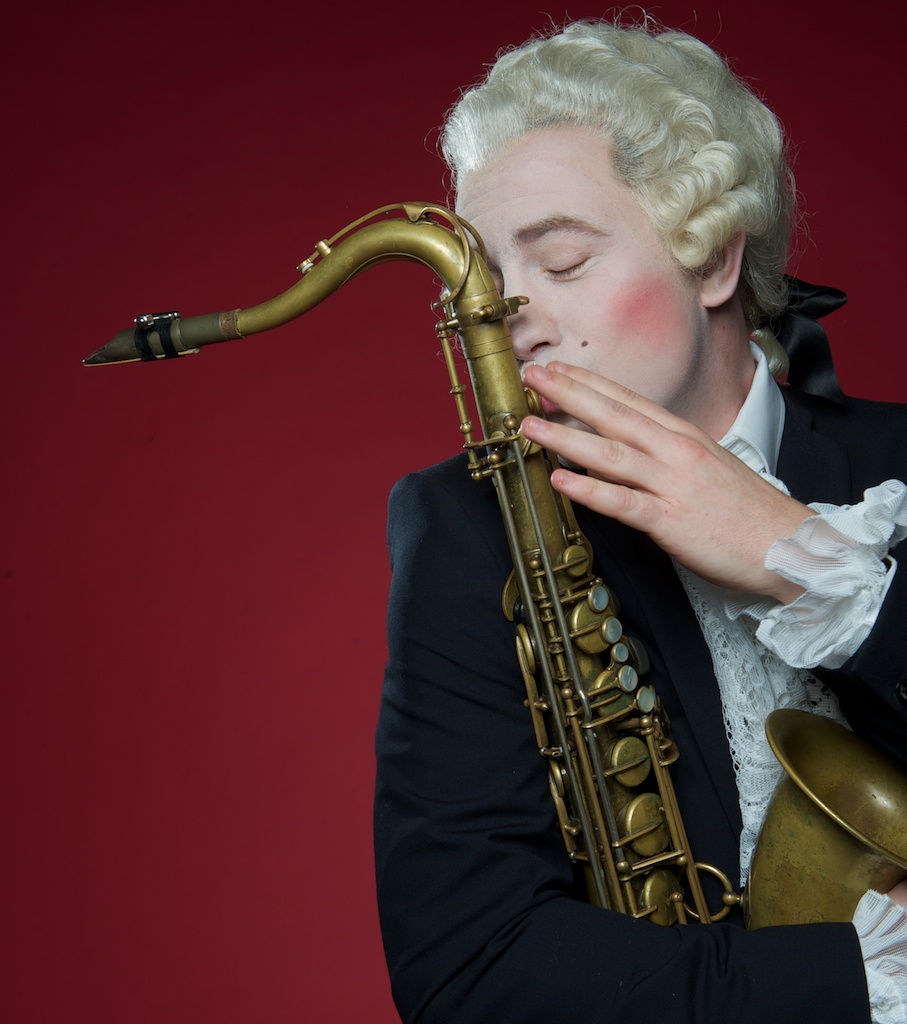
Saxophone player Hakon Kornstad

Three years ago Oslo International Church Music Festival invited Bjornstad to compose a passion of our time, and so this tribute to the English priest and poet came to be.

The work was premiered in Sofienberg Church, Oslo, on 16 March 2012.

Gjoril Songvoll, the festival manager, says,  “The aim of the festival is to make opera more familiar to the people.” She believes that the reason many people have prejudices against opera is that they have little knowledge of it.

“I think opera is just as important as sports and other forms of entertainment, and this message will be communicated throughout the festival,” Gjoril concludes.

Photo of Festival Director Gjoril Songvoll by Tor Kjolberg (feature image on top)

The concert begins at 7pm. For tickets please visit: Billettservice.

Related articles:
Best Festivals in Scandinavia
Scandinavia – the Best Jazz Region in the World?
The Only Ice Music Festival in the World

Swedish Designer Lisa Hilland’s Leather Magic

0

It is no secret designer Lisa Hilland is fond of working with leather as one her favourite materials. Collaborating with Elmo, a leading manufacturer of exclusive leather based in Svenljunga Sweden, Lisa Hilland set out to explore how the beautiful qualities of leather can be showed off at its best.

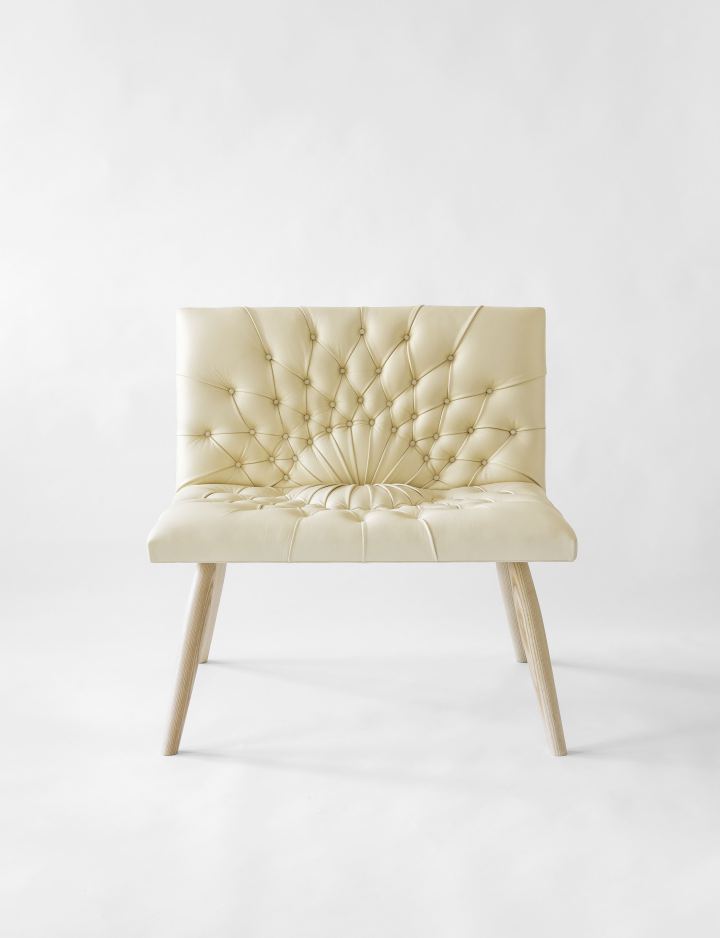
“I started to experiment with the traditional chesterfield leather upholstery technique with fresh design approach, giving it a renaissance in a new pattern and updated design approach. The result is ’Halo Armchair’ with a luxorious feel made out of softest pearl Elmo leather. Nothing beats a natural material like leather; it’s softness, colour, the small varieties in its appearance and the wonderful smell. Leather has a long life cycle and ages beautifully when handled with care. I want this anyone who sits in this chair to feel really special – surrounded by a beautiful halo pattern with the great sensation of leather.”
241014_diamond_pliss_lisa_hilland

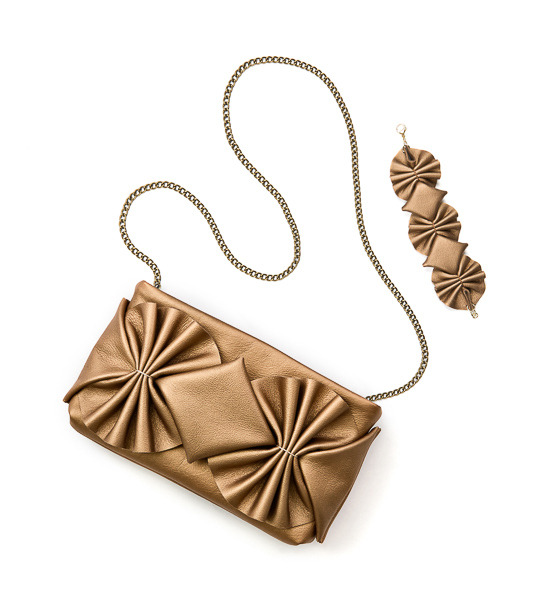
As a part of this successful collaboration Swedish designer Lisa Hilland also experimented with a plissé pattern for a deries of bags and jewellery. First out in this series was ‘Diamond Plissé Clutch and Bracelet’. Made out of softest Elmo Leather these accessories are perfect for everyday use as well as the occasional party.

241014_halo_armchair_lisa_hilland


About Lisa Hilland
Lisa Hilland has gained a reputation for contemporary design with a poetic twist,
combining modern high-tech production techniques with artisan quality craftsmanship.
After graduating from Central St Martin´s College of Art and Design, she worked ten years
as a designer in London before setting up her own studio in Sweden in 2005.
Her current clients include renowned furniture producers such as
Klong, Olby Design, Gärsnäs, Gemla, and Svenskt Tenn.

Read more about Scandinavian design here:
100% Norway 2014
The Best Contemporary Design Shops in Copenhagen
Please be seated

Friends of an Artist

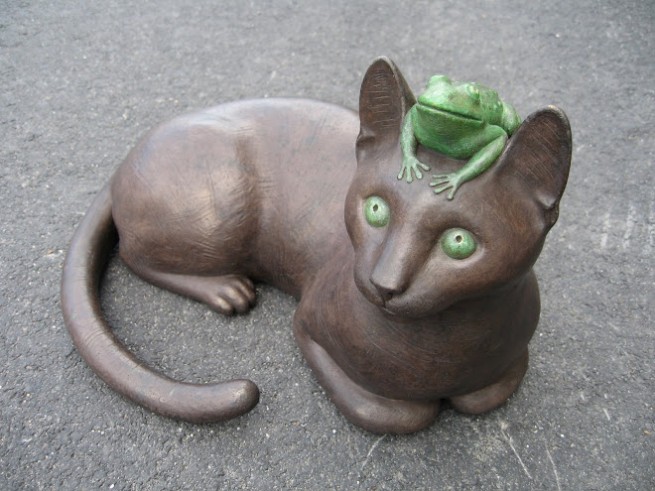
The title of this portrait of the Norwegian sculptor Anne Berit Nedland refers to her lifelong love for cats. She has sculpted cats in all imaginable situations.

Nedland received her formal training at the Oslo National Academy of the Arts and the Academy of Fine Arts in Oslo and also received several scholarships during the period 1980 to 2001. She works with bronze, concrete, wood and paper mache.

The Meeting, by Anne Berit Nedland

Her works has been purchased by art galleries all over Norway . Born in the south of Norway in 1950, Nedland is now headquartered in the old firehouse at the former Oslo International Airport at Fornebo.

Boat with Spirits, by Anne Berit Nedland

At present she is working on a sculpture for the 200 Year Anniversary of Gyland Church in Flekkefjord, a sculture of a longship with people representing all ages from birth to death.

In 2005 her video exhibition “Old Habits Die Hard” was presented at Art in General, New York.

Anne Berit Nedland with cat carriage, Photo: Tor Kjolberg

Nedland’s work is authentic and her creativity is seemingly endless.  She has experienced and lived what she depicts, and the title “Friends” refers to her lifelong love for cats. “Cats have followed me all my life,” she says, posing with her cat carriage, which eventually became a video presentation. Anne Berit Nedland is concerned by how animals are treated in general, and is a very nature conscious woman. The cats are certainly friends of an artist.

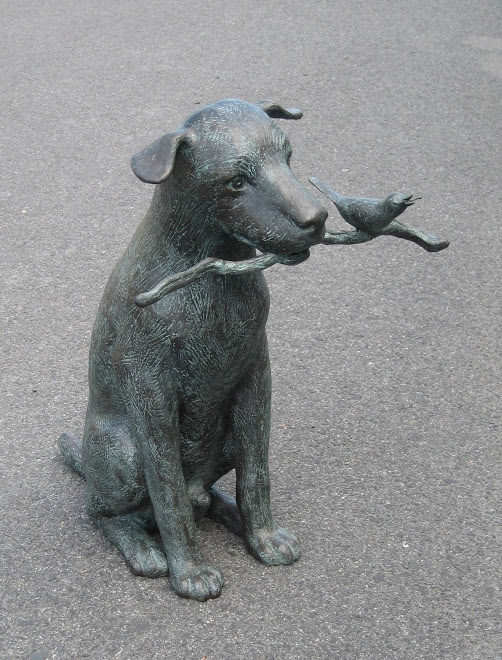
Dog's Watch, by Anne Berit Nedland
Dog’s Watch, by Anne Berit Nedland

When asked if she would like her sculptures to be exhibited in the new Oslo attraction, the Ekeberg Sculpture Park, initiated and sponsored by Kristian Ringnes,  she replies, “Of course, but Ringnes has already bought five of my female sculptures, called Dreamtime. They are hanging on one of the walls in his Folketeateret; actually an odd location, since the women are supposed to be lying down to sleep.”

Dreamtime, Photo: Tor Kjolberg

At the present time several artists have studios at Fornebu, Oslo.  There is even a little street called the “Artists’ Road” where there are art studios side by side.

Feature image (on Top): Friends