The Vikings – Medieval Thugs or Merchant Traders?

The Vikings plundered their way into the annals of Scandinavian history. But archeology reveals there’s more to these raiders than meets the eye.

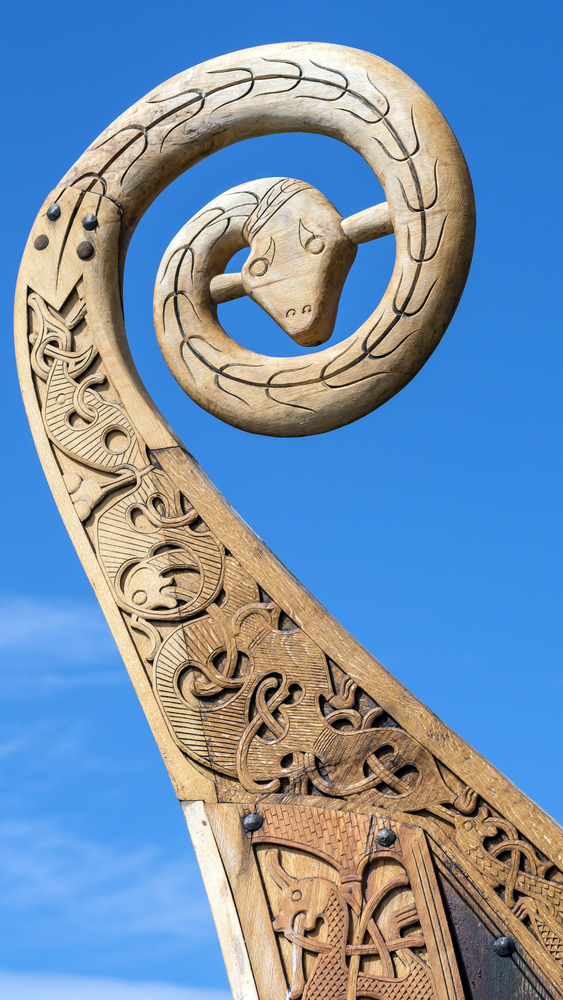
011214_Dragon-head-viking-longship-shutterstock_194103629
At first glance the Viking legacy appears to be little more than an impressive catalogue of violence and piracy. Archeological finds have, however, shed light not only on the way the Vikings lived (everything from the food they ate to the clothing they wore) but also on their burial tradition.

Today, the Vikings are recognized for their skills as craftsmen, traders and, of course, sailors.

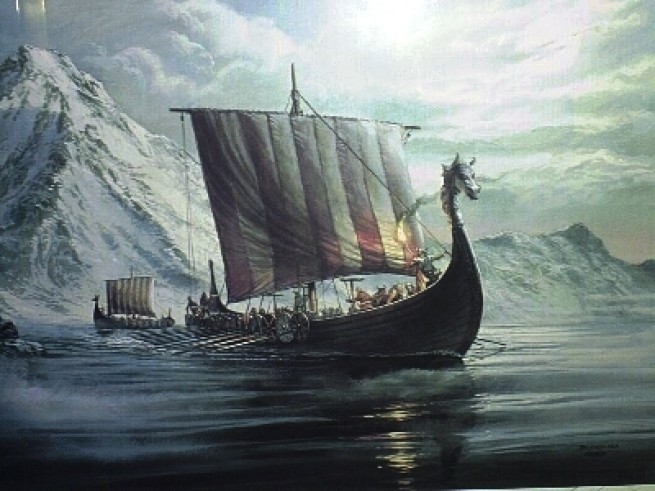
The Viking longship, essential for both raiding and trading, was also used to bury kings and chieftains. Superb examples can be seen at the Viking ship museums in Roskilde, Denmark, and Oslo, Norway, where textiles, household utensils and other artefacts excavated from the burial mounds around the Oslo Fjord, are also on display.

In Denmark, Funen’s Ladby Ship Museum houses a magnificent burial ship with a dragon’s head and tail.

011214_Ladby-viking-ship-museum
Sites and open-air museums such as those at Birka outside Stockholm, and Denmark’s Fyrkat and Trelleborg, offer a unique look into the daily lives of the Vikings.

011214_Viking-fortress_trelleborg
Other places of interest include the burial ground at Lindholm Høje, Jutland, and Jelling in Zealand, with its runes and burial mounds, often referred to as Denmark’s “birth certificate”.

011214-lindholm-hoeje-viking-burial-sote-denmark

Snapshots of Scandinavia

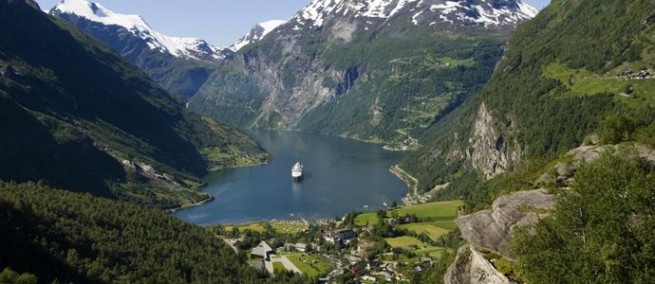
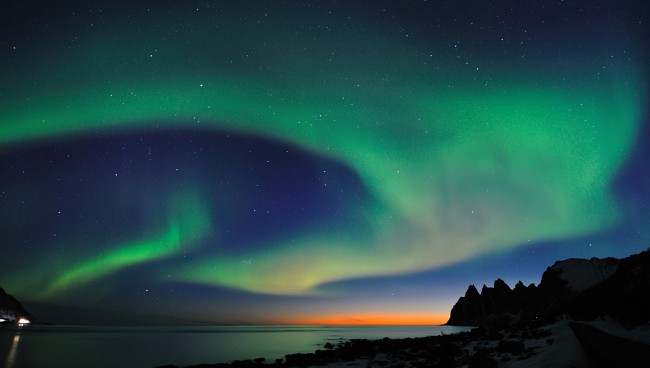
Fjords, Vikings, reindeer, colorful fishing villages, northern lights, maybe a stave church, that is the images many travelers already may have of Scandinavia. But with the help of Daily Scandinavian you can be introduced to a few things you may not know.

201014_Biking-in-copenhagen

Scandinavia has a lot to offer. Enjoy these snapshots of Scandinavia.

Scandinavia is a hands-on place, filled with active people, and travel there is all about experiences. More than half the residents of Copenhagen, for example, bike to work. Travel agencies having clients going to Scandinavia will have no trouble helping them to rent a bike, skis, kayaks, even a yacht with the help of Daily Scandinavian and its partners. We will personally help you arrange for them to canoe mountain waters, hike by midnight sun, climb a mountain, go whitewater rafting, go off-piste skiing or mountain biking, take a snowmobile safari or dogsled across frozen tundra.

201014-Northern-lights-norway
In Northern Norway and northern Sweden, wildlife enthusiasts can meet and photograph bears in the wild. We have a dozen full of pre-planned itineraries especially designed to inspire travel agents, with themes covering every interest, including culinary, design, Viking heritage, island hopping, cycling, castles and Christmas. We are even planning an email course on Visiting Scandinavia.

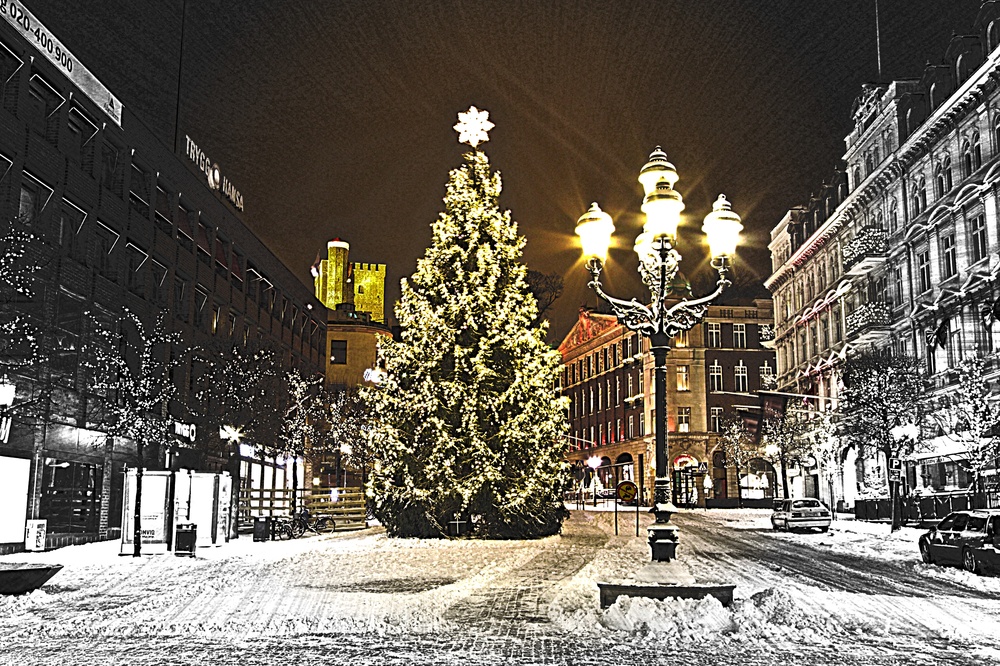
201014-christmas-in-sweden
Speaking of Christmas, don’t forget that Scandinavia has some of Europe’s best Christmas markets. Norway has a special relationship with Christmas, with Santa himself living at the North Pole

201014_Sweden's-sin
New Museums and Attractions
The Swedish band ABBA now has a state-of-the-art interactive Stockholm museum, where fans can sing and dance with ABBA holograms and record a song (www.abbathemuseum.com). Spritmuseum features alcoholic drinks, and along with exhibits and a tasting room, includes the Absolut Art Collection of works by modern greats, including Andy Warhol (http://spritmuseum.se/en/). Also in Stockholm, the new Fotografiska showcases the best international contemporary photography (http://en.fotografiska.eu).

201014-Astrup_Fearnley_Oslo
Following close on Oslo’s recent opening of Renzo Piano-designed Astrup Fearnley Museum and the new harbor art district is Ekebergparken Sculpture Park, an outdoor collection with 30 works already in place. The artistic spectrum ranges from classical masters such as Rodin to Salvador Dali’s surrealism, to modern and contemporary styles (www.ekebergparken.com/en). Den Blå Planet is Denmark’s new national aquarium, with striking architecture that allows 360-degree viewing, and a new Maritime Museum has opened in Elsinore, next to Hamlet’s Castle.

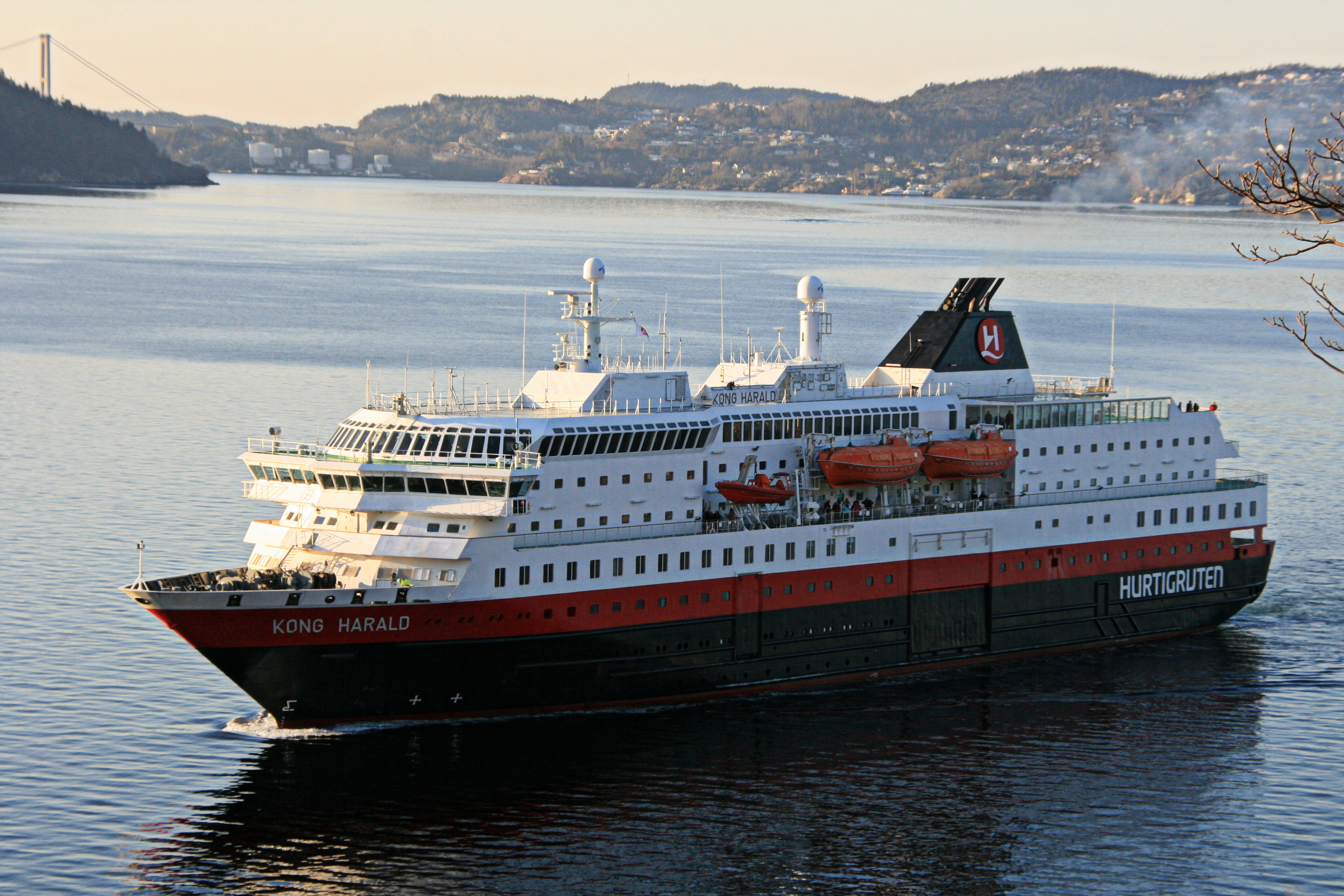
201014-MS_Kong_Harald_Hurtigruten_Norway
See it by Sea
Along with what’s new, your clients will want to savor the favorite icons; none says Scandinavia like Norway’s historic Hurtigruten (www.hurtigruten.us), the ships that for 120 years have popped in and out of 34 towns along the fjord-cut coast each day. Part cruise, part scenic spectacular, part cultural immersion and all great fun, this journey is on every traveler’s bucket list. Each season brings different views and experiences, from summer’s midnight sun to winter’s northern lights.

201014-GORAN_BILLESON_gotakanal
You’ll find a lot more boat experiences for your clients. Regular ferries shuttle from Oslo’s harbor across to the museums of Bygdøy, even to Denmark and Germany. Boats weave among the islands of Oslo and Stockholm’s archipelago, and a century-old ship carries passengers along the Gota Canal between Stockholm and Goteborg. This is Sweden’s second largest city, on the west coast, a center for water play from crayfish or mussel gathering cruises to week-long kayak trips in the archipelago.

Clients can even stay at a floating hotel, Salt & Sill, on the small island of Klädesholmen (www.taberhols.co.uk), or relax after a shrimp safari in Gullmarsfjorden fjord, at the Vann Spa and Hotel (www.vann.se).

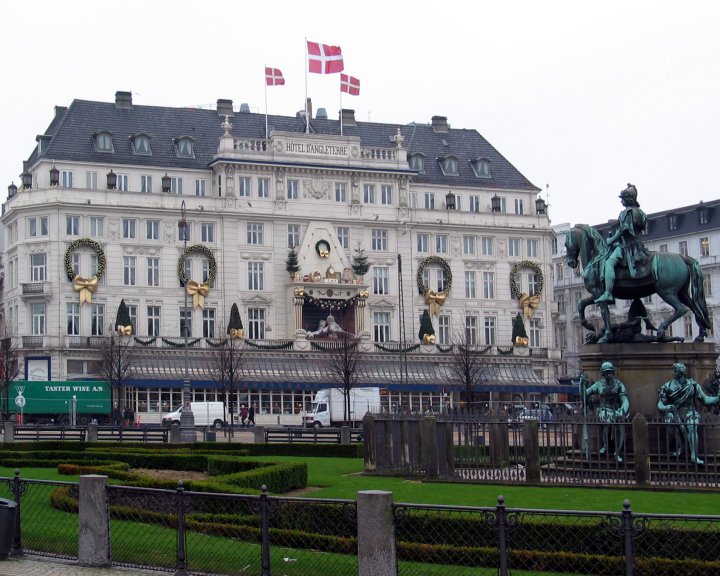
201014-Hotel-d-angleterre-copenhagen
Hotel News

In Copenhagen it’s the reopening of grand dame D’Angleterre Hotel after the most ambitious hotel restoration in Danish history upgraded rooms and added a luxury spa and Balthazar champagne bar (www.dangleterre.com). The 5-star Kokkedal Castle Copenhagen has opened north of the city, a stately manor house transformed into a contemporary hotel with a restaurant, spa and meeting rooms. The castle experience is retained, with formal invitations instead of booking confirmations, and hosts replacing a reception desk (www.kokkedalslotcopenhagen.dk). Hotel SP34 opened this April, targeting “luxury Bohemian” business and leisure travelers with 118 rooms and a conference center (www.brochner-hotels.dk/our-hotels/sp34).

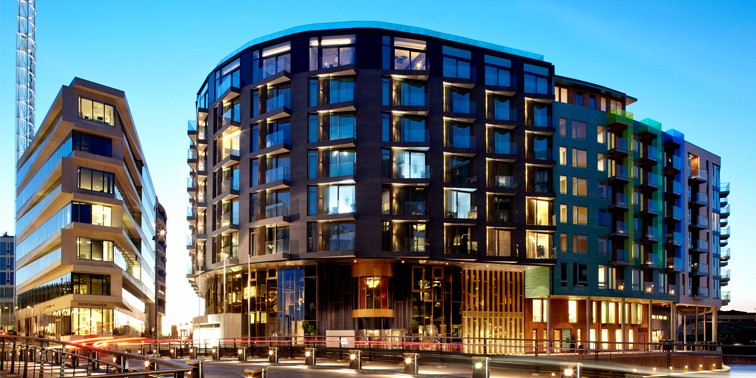
201014-the-thief-hotel-oslo-norway
Oslo’s THE THIEF wows with a swanky new spa experience that targets men as well as women. The city’s largest spa, it features a pool, sauna, steam room, Oslo’s first hamam and a full gym (www.designhotels.com/hotels/norway/oslo/the-thief). THE address in Oslo, though, is Europe’s winner of this year’s World Luxury Hotel Awards, the elegant Grand Hotel, known for its opulent suites, the open-faced sandwiches served in The Grand Café and the Royal Guard parading past its door each day. Your female clients will especially like the dedicated Ladies Floor, Europe’s first (http://grand.no/en). On Norway’s west coast, Rica opened a new hotel this spring in the center of Bergen, the city’s largest with 370 rooms and modern conference facilities (www.rica.no/bergen).

201014-ice-hotel-sweden
Gothenburg will soon have Europe’s largest fully-integrated hotel, exhibition and conference facility, with the new tower added to the Hotel Gothia Towers. After completion the end of 2014, the three towers will have 1,200 rooms (www.gothiatowers.com). And, of course, new each winter is Sweden’s ICEHOTEL, 100 miles north of the Arctic Circle and built entirely of crystal-clear ice (www.icehotel.com).

Scandinavia Exports Urban Master Planning Expertise

Well-functioning cities require commitment from residents and strong architectural master planning. The capital cities of Scandinavia are role models for the rest of the world. 

Copenhagen, Stockholm and Oslo, the capitals of Scandinavia are international trailblazers when it comes to sustainability according to a joint study by the Economist Intelligence Unit and Siemens, and now rhey offer urban master planning expertise. The three cities are dedicated to minimizing environmental impact, reducing CO2 emissions and improving the lives of inhabitants; three factors that make the cities global models.

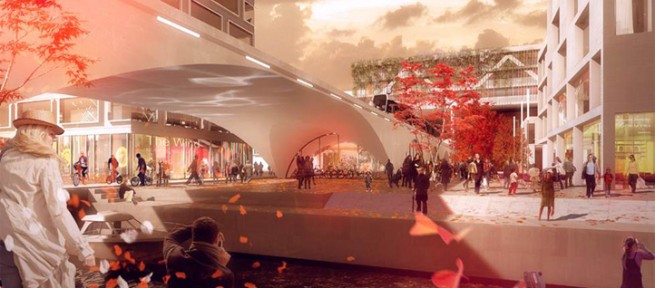
191014_Ramboll_City_Plan_Deature_Image
Scandinavian urban design is a strong source of inspiration for city planners around the world when it comes to implementing master plans. There is, among other things, widespread interest in Copenhagen’s bicycle infrastructure, which has led to a greater number of people travelling by bike. The purification of the water in Copenhagen Harbor is also a source of inspiration worldwide since it is clean enough for residents and tourists to swim in.

Scandinavia: a role model
“One of the reasons why Scandinavia is a role model is probably that the gap between rich and poor is small – and that people are happy at all levels of 191014_Lars_Ostenfeld_Riemannsociety. The happiness index shows that the Nordic countries are at the very top. People trust each other and expect that cities will be designed sustainably. We are aware of the importance of maintaining positive urban development – and we can help other cities to do the same,” said Lars Ostenfeld Riemann, Director of Buildings in Ramboll.

Ramboll has helped to define many of the sustainable attributes of Copenhagen, Stockholm and Oslo, and we are involved in several master planning initiatives including Nordhavnen and Carlsberg in Copenhagen.

These experiences have been applied further afield, for instance at Chicago Lakeside in USA, where Ramboll developed concepts for district heating and cooling as well as waste and water.

More and more complex
“It is difficult to simply copy the Scandinavian model abroad,” explained Lars Ostenfeld Riemann. “Cultural elements vary from city to city as the populations live in very different ways. It is therefore important to understand the cultural elements and preferences, and together with architects, create a logical master plan.”

Innovation Centre, Guthenburg, Sweden

“Master planning has become an increasingly complex multidisciplinary task. Today, education, social life, and the healthiness are all taken into consideration. There is also an economic component. Instead of looking at the individual buildings, master planning is thought of as an economic investment for society. Models are changing from being based on costs and revenues to also taking softer values into account,” added Lars Ostenfeld Riemann.

He points out that there are two main challenges when creating master plans. In countries like China, the main priority is to build up huge cities from scratch at the same time as the population moves from rural to urban areas. In the western world, the challenge is to improve the sustainability credential of cities that have already been built, for example, by alleviating congestion and accessibility problems; inefficiencies that cost society huge amounts of money.

We must improve the way we live
According to Lars Ostenfeld Riemann, well-functioning and sustainable cities also depend on a strong social element. In order to solve problems such as deprived areas with elevated crime rates, unemployment and a high number of immigrants, large architectural master plans are required. However, local residents themselves also have to take responsibility for preserving and maintaining cities and neighbourhoods.

“Well-functioning cities are not just about creating sustainability and ensuring that we can continue to live. Sustainability also involves improving the way we live and improving the way we live with the benefits we have today. This requires a strong commitment from the people who live in and use the cities,” concluded Lars Ostenfeld Riemann.

Related articles:
Nordic Pavillion to Study Architecture’s Role in East African Independence
Architecture: Oslo Recoded
Norwegian Architects Conquer the World

Mr. McTattoo

0

A Norwegian teenager deserves the nickname McTattoo.  As the story goes the 18-year-old from Lørenskog, outside Oslo, Norway, does well in the women department and his friends wanted to punish him for his luck with the ladies by diminishing his attractiveness so girls wouldn’t find him as desirable and demanded a tattoo of Barbie on his bottom or a McDonald’s receipt on his arm. He chose the latter.

181014_mcdonalds_tattoo
We’re not sure why Stian telling his friends to go f*ck themselves wasn’t option #3, but Ytterdahl decided that the McDonald’s receipt tattoo was more “cool” than the Barbie tattoo. He got the fast food receipt and it will forever remind Stian of his unhealthy eating habits of his youth including his love for something called “Happy Cheese”.

It appears he decided to plump for a second unusual inking, after Sabelink Tattoo offered to inscribe the receipt for the tattoo on to his other arm for free.

Mr Ytterdahl revealed his new body art on his Facebook page under the post ‘new tat!’.

A tattoo artist from Sabelink Tattoo posted the photo on the store’s Facebook page, calling it “my weirdest tattoo ever.”

Ytterdahl’s tattoo became an internet phenomenon in 24 hours.

181014_mcdonalds-tattoo2
The tattoo includes the purchase of a cheeseburger for NOK 36  and a “Happy Cheese” for NOK 35, half a liter Cola for NOK 25, some toppings and also a “Nonstop Flurry”, for a total of NOK 143 (24 USD).

After the news appeared on the international media, the young Norwegian has suddenly become very popular. Talking to Norwegian newspaper VG, Ytterdahl said he had to turn off his phone because of enormous calls and messages.

Ytterdahl told the newspaper Romerikes Blad:

Now I’m a living billboard. But I think all this is just fun. Maybe it won’t be as fun when I’m 50 or 60 years, but it’s my choice,  but at least I can tell my grandchildren where I ate my dinners. And so we can compare prices.”

Paul Robeson – In Memoriam

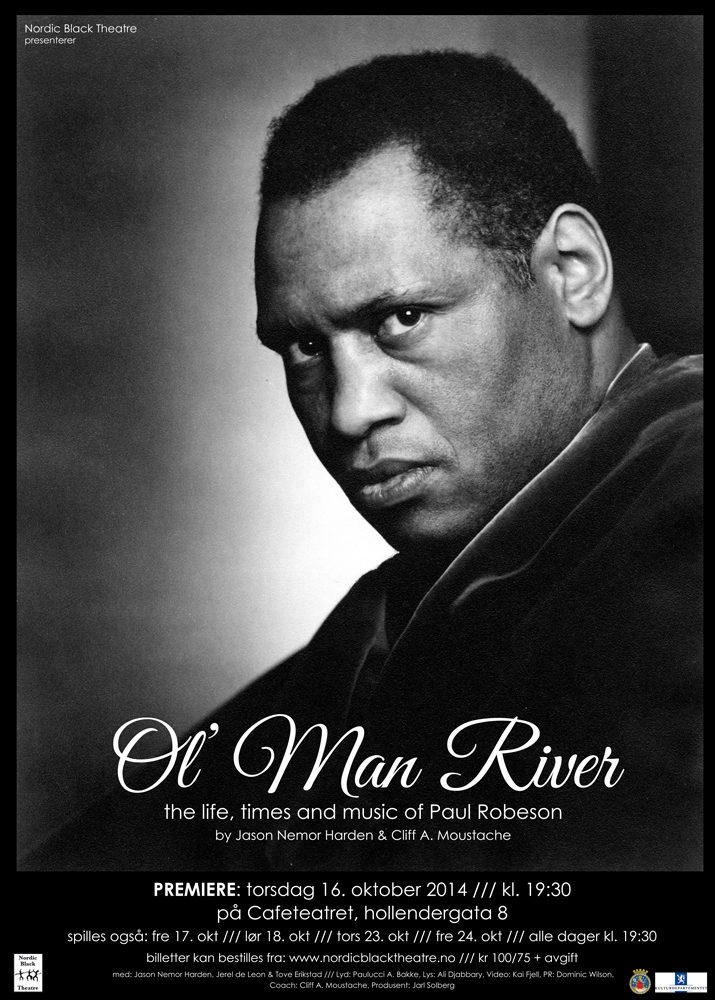
Experience the life, times and music of “Ol’ Man River” himself, Paul Robeson, performed at Cafeteatret, Oslo, premiering today. The play is written by Jason Nemor Harden and Cliff A. Moustache.

161014_Paul_Robeson_Black_Theatre
“No one told us about Paul Robeson when I was growing up in Texas in the 80’s!” says Jason Nemore Harden who is starring in the play “Ol Man River”. “Robeson has been a great inspiration to people all over the world, but we did not hear anything about him.” He is adding.

“Yes, it makes me sad in a way, or frustrated, but it also provides inspiration and motivation to work with the notion that more people may know about Robeson’s life and work”

Jason Nemor Harden in "Motown Revisited" at Norwegian Opera. Photo: Monica Santos Herberg
Jason Nemor Harden in “Motown Revisited” at Norwegian Opera. Photo: Monica Santos Herberg

Actor, singer and musician, Jason Nemore Harden was first acquainted with Paul Robeson when he worked at Nordic Black Theatre’s “Tribute to the Heroes” which was performed at The Norwegian Opera and Ballet in February 2014.

“After that I started reading about Robeson and soon realized that this was a show I wanted to do to convey his story and music.”

Paul Robeson is more or less forgotten today, but in his time he was one of the world’s greatest artists. The Afro-American entertainer and civil rights activist managed to lift his music from small local scenes in the United States to the most renowned stages across the world. He used his position to fight against the violent racism in the United States.

Harden was so inspired that he along with film maker Cliff A. Moustache prepared the script for this performance. This has become an intimate and moving story of Paul Robeson’s life and music, and the challenges he battled through a lifetime.

Robeson was educated lawyer before becoming a football player and artist. This he managed despite heavy segregation in the United States. Discipline and hard work took him to the top in the United States and on the world before his career was brutally stopped by McCarthyism and the CIA witch hunt for communists. He refused to change his opinions, which made him even more popular in the world.

Robeson was an inspiration for the next generation of freedom fighters such as Martin Luther King and Nelson Mandela.

The show is about Paul Robeson’s life and his music in a difficult time in America. The main role is played by the Afro-American musician Jason Nemore Harden, accompanied by Jerelene de Leon on piano and Tove Erikstad on Cello.

161114-alston-drawing-of-paul-robesonEditorial Drawing of Paul Robeson by artist, Charles H. Alston 1943

“This amazing man, this great intellect, this magnificent genius and his everlasting love for humanity is a devastating challenge to a society built on hypocrisy, greed and profit-seeking at the expense of common humanity.” (New York Times)

Don’t miss this opportunity to experience the show, performed at Cafeteatret, Hollendergate 8, Oslo at 7:30 pm on the following dates in October: 16, 17, 18, 23 and 24.

Cool Off In Scandinavia

Why not escape to a cooler climate? Here’s a sampling of tours that offer a choice of chilling out in the cosmopolitan cities of Oslo, Copenhagen and Stockholm to the majestic fjords of Norway. A journey to Scandinavia promises spectacular scenery, cultural riches and cool breezes.

This is just a short sample cruise possible through the travel agency Authentic Scandinavia.

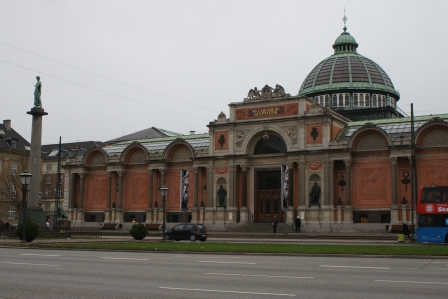
Glyptotek, Copenhagen, Photo: Tor Kjolberg

Copenhagen, Cruise & Oslo – 4 days
Explore two of the Scandinavian capitals, Oslo and Copenhagen. Enjoy an overnight cruise from Oslo to Copenhagen, including the beautiful Oslo Fjord. This short break is the ideal extension for tours starting or ending in Oslo.

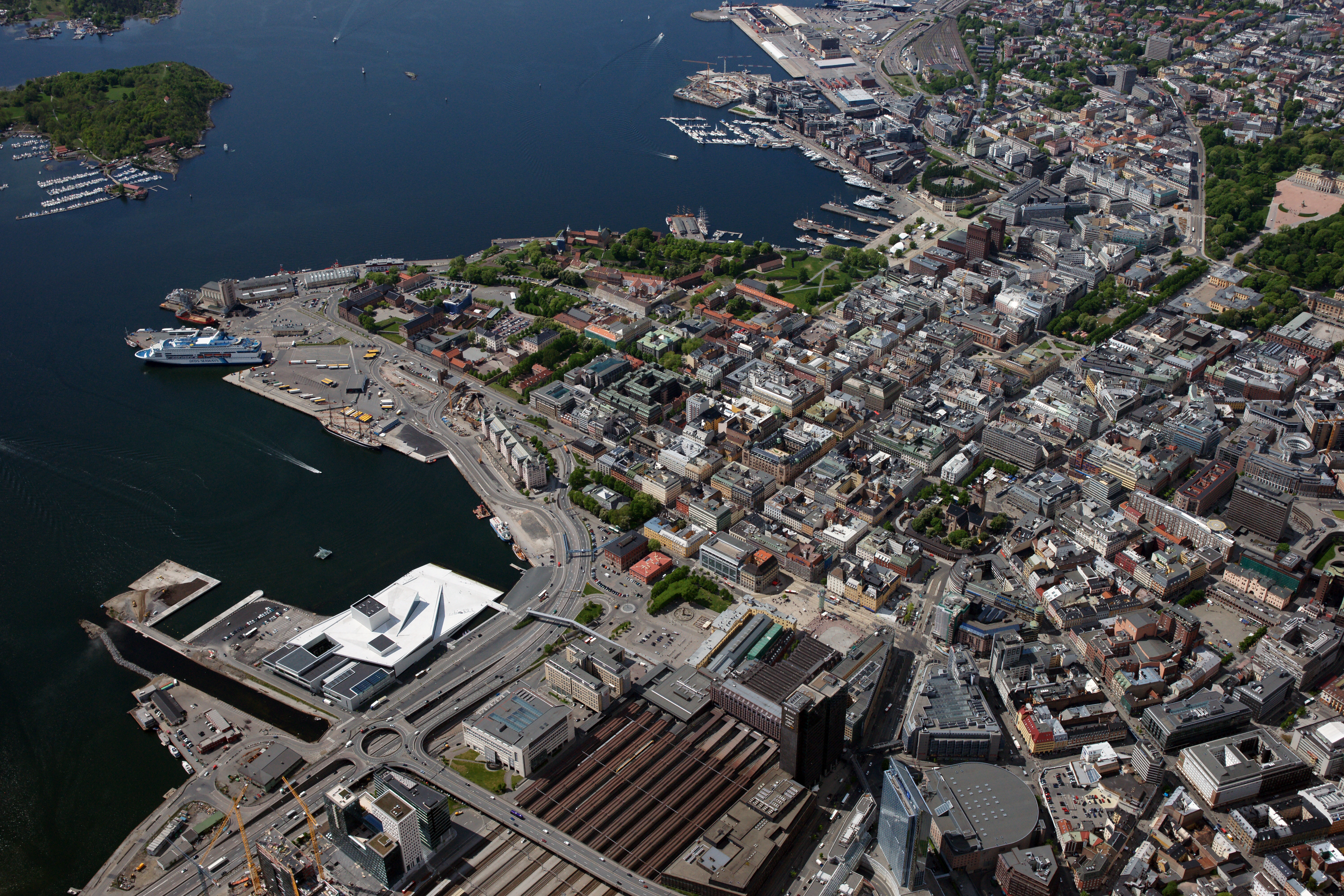
Oslo ftom above. Photo: Lasse Tur

Day 01: Oslo, the Capital of Norway

Arrival in Oslo. The Norwegian capital is beautifully situated at the head of the Oslo Fjord and surrounded by forested ridges. Arable fields, vast forests and the untouched nature areas. The city’s surroundings provide recreational opportunities that are frequently taken advantage of by the city’s inhabitants, as well as increasingly by visitors.
Oslo offers many well know sights such as the Vigeland Sculpture Park, the Viking Ship Museum, the Munch Museum and Oslo’s new opera house. We recommend one of the many sightseeing tours in Oslo . Accommodation in Oslo.

151014-DFDS_Pearl_Seaways
Day 02: Overnight cruise from Oslo to Copenhagen

Breakfast at the hotel. This day is at your own leisure before departure from Oslo in the late afternoon with a ferry from DFDS Seaways. Accommodation onboard.

151014_Nyhaven_Copenhagen_Denmark
Day 03: Copenhagen, the capital of Denmark

Breakfast onboard before arriving in Copenhagen, the capital of Denmark, at 09:45 hrs. In this charming city one thousand years of history awaits you in the medieval streets; the same streets walked on by every generation of the world’s oldest royal family, the same streets and canals which have inspired artists for centuries and been home and workplace to meticulous craftsmen and famous designers. The city offers many attractions such Tivoli, Nyhavn wharf, the Little Mermaid, the Gefion Fountain, the Royal Palace Amalienborg and much more.
Accommodation in Copenhagen.

Day 04: Departure from Copenhagen

Breakfast at the hotel. Departure from Copenhagen according to your own itinerary.

Vikings’ Trade with Byzantium

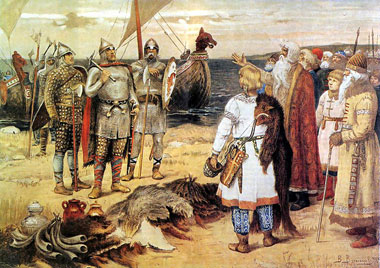
Muslims conquests in Europe disrupted traditional trade, encouraging the Swedes to open up alternative routes through Russia.

Apparently the Slavs then begged them to take charge of their territory. “Our land is large and fruitful but it lacks order,” the message allegedly read. “Come over and rule us.”

131014_varangians_rus
By 900, Swedish influence radiated throughout Eastern Europe from their strongholds Novgorod and Kiev. The Swedes were soon assimilated under the weight of Slavic numbers, but they left an indelible mark in the name by which they were locally known, Rus.

Marauding expedition of Northmen AKA Vikings
Polygamy and primogeniture also shaped the Viking Age. Only a tiny proportion of Scandinavia was actually habitable, and farmland could only be subdivided so many times. The whole of patrimony generally went to the eldest son, or rather the eldest surviving son, so Swedish kings with 40 women in their harem, or Norwegian earls with a dozen sons by various wives and concubines, were sure recipes for orgiastic fratricide.

131014_Harald_Fairhair
Harald Fairhair’s ascendancy, c. 890, went a long way towards defining Norway, but as he stropped and disbanded numerous lesser dynasties, their scions were compelled to try their luck abroad.

131014_Varangians_besiege_the_Byzantine_city_of_Chersinesos_in_Crimaea
To begin with, Viking enterprise abroad was a matter of independent initiative, as epitomized by a certain Hasting. Born in Denmark, his first foray in 844 opened with a rebuff at La Coruña on Spain’s Atlantic coast, improved with the sacking of Lisbon, Cádiz and Seville, and ended with the loss of two ships crammed with gold, silver and prisoners to the Moors.

Related articles:
Viking ship design
1,000 years of Viking adventure, Denmark

DølaJazz – Highlights

This jazz festival in Lillehammer is a great place to discover talented Scandinavian musicians.

A small, laid back music festival, which for over 30 years has been attracting local jazz musicians and fans with its small, intimate format. The festival is also a platform for young Scandinavian artists to perform in front of a wider audience. There are concerts throughout the day, with several free events and various venues.

The stage is set for great jazz this year’s Super Natta (Super Night) in Dølajazz, when the legendary and world famous band Mezzforte enters the stage. In addition, the band Pixel including Ellen Andra Wang will perform.  Kulturhuset Banken Saturday 18 October!

Many terms are used to characterize the Icelandic band Mezzoforte; volcanic jazz rock. Nordic funk and even the term fusion. Mezzoforte blends elements of funk, jazz and rock with sounds taken from the saga island’s musical heritage. A recipe that has made them sought after by record buyers and festival organizers around the world.

Many may claim that a band which celebrated its 35th year anniversary in 2012, is outdated. Not Mezzoforte. Unlike other concepts where most of the original members are gone, while some try to squeeze the money through touring under the rights of an acquired name, Mezzoforte still consists of the core staff that started in 1977 and created the world hit “Garden Party” in 1983.

Their success was a complete surprise at the time. When the song Garden Party went round the world, the four boys from Iceland had just come of age. Since then, Mezzoforte has been considered Europe’s most important fusion band. The new ISLANDS album documents the band’s process of maturing musically and adds another gem to its discography.

“Anyone who has a chance to experience this band with its furious instrumentalists in a live show will know what artistic fire is in this formation”.(BHM productions)

Do you not get the chance to confirm this at this year Dølajazz, – you miss etgourmetisk fusion meal, with guaranteed long and rich aftertaste.

121014_Pixel-the-band
The young band Pixel offers a fusion of jazz and rock. The band includes Ellen Andre Wang (bass / vocals). Pixel receives wonderful reviews wherever they play! Dølajazz are very proud to have Ellen Andrea Wang back at Dølajazz. She is joined by Harald Lasser (Sax), Jonas Kilmork Vemøy (trumpet) and Jon Audun Baar (percussion).

Visitors to the Super Night may experience several concerts in the Festival Hall and Cafe Pin for only one ticket with a real festival feeling  and party atmosphere into the late night hours.

Read more about program and tickets here.

Related articles:
Scandinavia – the Best Jazz Region in the World?
Best festivals in Scandinavia
Umea- A Swedish Music Loving City

Burns Pub in Oslo, Norway, Celebrates its 25 Year Anniversary

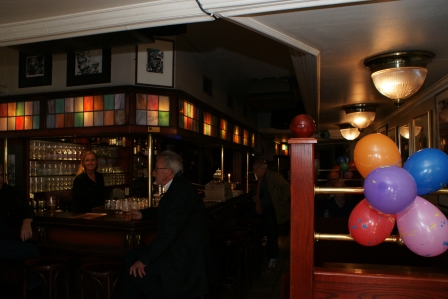
In the same year and season as the fall of the Berlin Wall, a new watering hole opened in downtown Oslo, just a few steps from the National Theatre. On October 2, 1989 the doors opened for the first time to what since has become both a loved and hated drinking establishment for many Oslo inhabitants.

????????
The owner, Sephr Saeïd (61), tells us that he bought the lease and goodwill from two Arabians who owned a small clothing store at Stortingsgaten 28, planning to start a delicatessen there. He later realized that he had paid too high a price for the lease of the small shop in that the ventilation system was inadequate for an eatery due to the local Oslo building codes.

????????
With the good help of Mr. Loeken, the building manager at that time (the building is owned by the Independent Order Of Odd Fellows in Oslo),  he was advised to make the room into a bar,  Saeïd then drew a sketch with pencil on a piece of paper, showed it to the local authorities and got it approved on the spot.

Having paid a considerable amount of money for the enterprise, income was needed, so he inquired about selling hot dogs at the entrance.  This was approved by the building owner, thus Burns pub opened it’s business as a hot dog stand.

Manager Bjorn Magnussen serving guests hot dogs

At that time Saeïd lived in Drammen, a city about 40 kilometers from Oslo, traveling back and forth seven days a week. Working from three in the afternoon to five in the morning, he had almost no contact with his family for nearly seventeen months. There were lot of discos in that area of Oslo in those days, and hungry young people simply loved hot dogs.

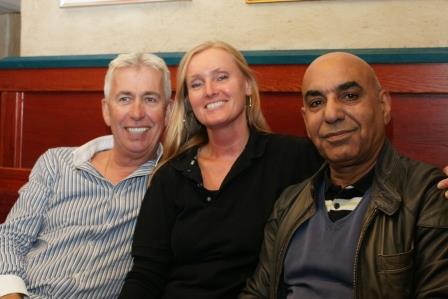
Bjorn, Linda and Saeïd

Saeïd had some money left, and with his partner, Jens Rojan, engaged an interior design company from Holland to make a pub in the little shop.  For several months the establishment was run as a coffee bar with a hot dog stand, the name Burns being taken from the Scottish poet Robert Burns for no particular reason.

Happy Anniversary
Happy Anniversary

The two partners felt that something was missing – music. They bought 20 CD’s, mainly operatic and jazz recordings. The music was popular, especially among employees from the nearby National Theatre and Continental Hotel.  The 12 – 14 seats in the pub were steadily occupied, and after 10 months had paid their dues to the two Arabians –but still more hot dogs were being sold than beer.

????????
Adjacent to Burns was a small tourist shop and eventually the partners secured that lease too, rearranging the premises by moving the hot dog stand into that new section, but after complaints about the smell, the hot dog area came to an end.

In 2003 Bjoern Magnussen (58), who worked for the Hansa brewery, became a partner. Today Saeïd and Magnussen own 40 percent each and Siamak Saeïd, eldest son of Saeïd, owns 20 percent.

Two years later the neighbor store was closed down, and Burns was once more extended and turned into what it is today.  When the smoke prohibition laws were introduced in 2004 the partners rented the outdoor area from the Oslo municipality.

Typical guest at Burns

Today Burns is a pub that one either loves or hates. The visitors are mainly well seasoned people, shabby-glam, artists, authors, architects, journalists, diplomats, doctors, actors, intellectuals and a broad range representing the adult community in Oslo.

Guests having fun at Burns

As one guest, a distinguished lady, expressed it, “It is a wonderful place for the old boys, but terrible if you don’t belong to the Chesterfield type.  I have never been to there without receiving a marriage proposal from an old uncle coming from north of the Polar Circle.”

Happy gathering at Burns

Many couples have started their relationships at Burns. Even if the guests are almost the very same as 25 years ago, don’t forget, they were 25 years younger at that time.

Happy Anniversary!
Happy Anniversary!

Our distinguished lady continues, “Don’t misunderstand me, I love this place where you still meet the ‘ship o’ hoi’ generation, who come in for their lunch pint with yesterday’s paper under their arm and then stay until closing time.”

Didi serving guest
Didi serving guest

One of the reasons people are attracted to Burns is without doubt the friendly staff.  Both the men and women working there are almost like family members of  the guests – always helpful, smiling and with a good sense of humor.  Today’s stars are Linda (employed there for nearly 20 years), Elisabeth, Didi (from Romania) and the youngest son of Saeïd, Siavash.

Today,  October 2, 2014, is the 25th anniversary celebration day, and we are treated with what else – free hot dogs in wraps. The drink price list is the same as in 1989 – three pints for 100 Norwegian kroner (including tips),  or about five dollars each,  roughly  one third of 2014 prices.

Hanne Korsbrekke Askeland performing
Maria Therese Bersas performing
Bernhard Greter performing

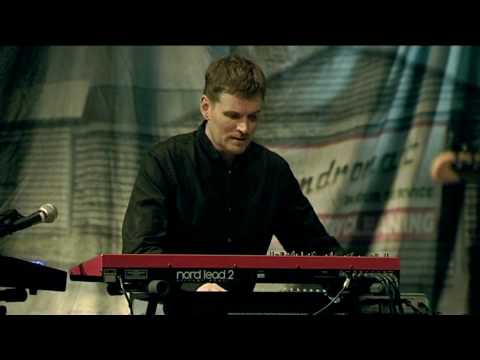
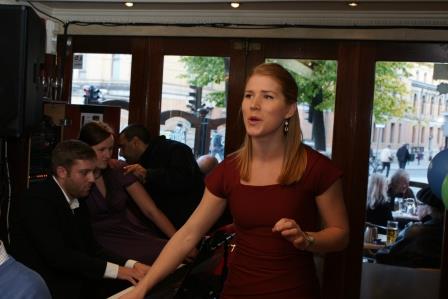
There is also live music, not surprisingly, opera to the people. The sopranos Maria Therese Bersas and Hanne Korsbrekke Askeland, along with Bernhard Greter on keyboard perform operetta and opera arias all through the night to ovations from the guests.

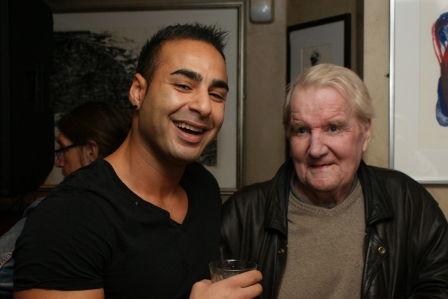
Siavash Saeïd with guest

When we asked the owners if they planned make changes to attract a younger clientele,  they answered that it would depend on the new  lease in 2017. The rent has increased considerably over the years, so they just have to wait and see.  Revenue has increased in the latter years, but the bottom line has not,  mainly due to higher rental costs and the impact of the Norwegian tax system on business.

After hours at Burns pub in Oslo

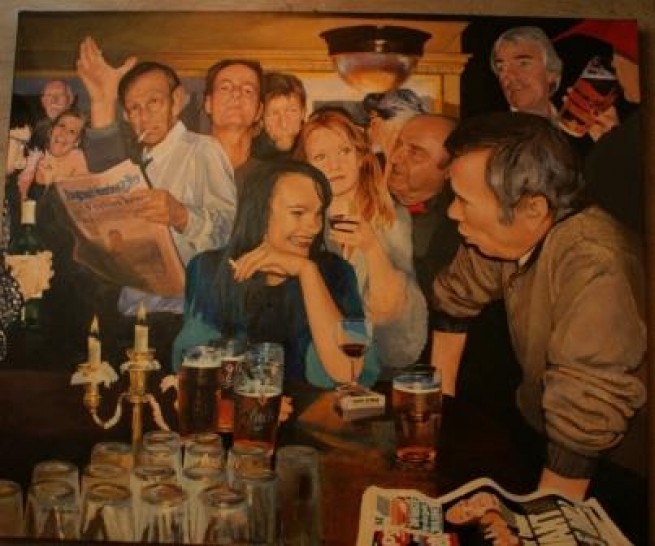
Feature image (on top) Guests at Burns, painted by Knut Husebo

Text and photos: Tor Kjolberg

The New York Times recommends Norway

A travel writers description of his voyage onboard Hurtigruten, along Norway’s impressive coastline.

The Hurtigruten website modestly describes its cruise up the Norwegian coast as “the world’s most beautiful voyage.” When I read this, I could not help but think of that old Monty Python skit in which a man writes the world’s funniest joke — a joke so funny that everyone who reads it instantly dies from laughter. I wondered if beauty, pressed toward hyperbole, could become similarly perilous. Would the decks of the ship be littered with tourists smitten by the sublime?

091014-Walk-on-Trollfjord
A view from the MS Trollfjord north of Rorvik, Norway. Credit Damon Winter/The New York Times

We were about to find out. I was standing on the top deck of the nine-deck MS Trollfjord with my wife, Katie, and 6-month-old son, Holt. On the quay far below us, my Norwegian relatives were maniacally waving at the boat, though not at where we were standing on the ferry. I had just spent the last day running around Trondheim — a lovable, wharf-laden university town perched on the lip of a fjord — trying to track down my grandfather’s old house, with mixed success. It seemed he had lived in several different houses, or maybe no house at all. I, like many Americans before me, had dragged my family to Norway for mysterious reasons. I was only technically one-quarter Norwegian, though yearned for much more. My heart swelled every time Norwegians mistakenly addressed me in their native tongue even when I would have to sheepishly reply in English. I both relished and hated my role as an impostor.

I also fancied myself a kind of amateur anthropologist. The previous night around 10 p.m., as the sun showed no real intention of setting, my cousin Coleman had asked if we wanted to go on an “afternoon” walk. Such is the casual relationship that people seemed to maintain with time at northern latitudes, where in winter the daylight shrinks to a couple of hours and in the summer the night never quite grows dark. Above the Arctic Circle, this binary existence becomes even more extreme, to the point where the entire year becomes a kind of single, interminable day, with six months of light and six months of night. I wanted to go as far north as I could and see for myself how people managed to survive such a dualistic relationship with the sun without going at least some kind of crazy.

My relatives had finally located us on the top deck. I tried to match the enthusiasm of their waves. The breeze had freshened against our faces; a hovering gull eyed us skeptically. I could feel that very particular tingle that one feels just before departing for uncertain territory. With a long blast from the ship’s horn, we pulled out into the fjord and headed north. I watched as the mint-colored steeple of Trondheim’s cathedral slipped from view, replaced by layered mountains of pine that swept down to the water’s edge, forming a narrow channel to the sea.

Hurtigruten literally means “the express route,” and while there is nothing “express” about it these days, back when it was founded in 1893, the ferry line was nothing short of a revelation, delivering mail and cargo and passengers to northern communities that were otherwise completely isolated from the rest of the world. By combining navigational prowess, humble practicality and stunning natural beauty, the Hurtigruten has become one of Norway’s treasured national symbols. My grandfather took my father on this same route 50 years ago.

Yet the Hurtigruten of 2014 bears little resemblance to the Hurtigruten of old. Over time, the original service mission of the coastal express became largely redundant as mail, cargo and passengers turned increasingly to the convenience of air transport, forcing the company to look toward tourism for its primary source of revenue. Its transition from a utilitarian coastal ferry to an all-out cruise line has caused more than a few growing pains.

Built in 2002, our ship, the 445-foot MS Trollfjord, was representative of this new Hurtigruten. As Holt and I excitedly explored the ship’s decks, what quickly became apparent was that we were witnessing a company in the midst of a mild identity crisis. Our hosts were trying to simultaneously indulge the desires of the increasingly discerning modern cruise passenger while also maintaining the understated modesty of Norwegian culture. Thus, the MS Trollfjord featured two small Jacuzzis on Deck 9, complete with multicolored party lights, but these closed promptly at 11 p.m. There was no swimming pool or water slide or mini-golf course. Deck 8 featured an abandoned dance floor that nonetheless piped out soft ’80s ballads 24 hours a day, as elderly couples sat nearby sipping Scotch and playing bridge. One night around 1 a.m., insomniac and alone, I couldn’t resist dancing solo to “Life Is a Highway,” as I stared out at a distant smattering of islands silhouetted like beached whales against a sky that had forgotten to turn dark.

Part of the issue here was the crowd. The passengers were 80 to 90 percent German retirees, a high percentage of whom sported fanny packs and matching Jack Wolfskin parkas. Needless to say, these people had not come to Norway to dance. Much of our fellow passengers’ focus was concentrated on the various off-boat excursions offered each day. This was a relatively recent addition to the Hurtigruten package, and clearly an attempt to placate the demands of the modern cruise tourist. On any given day you could go dog sledding, hang out with sea eagles or eat a meal with a man dressed as a Viking. There were also near constant P.A. announcements in Norwegian, German and English about the excursions. When I later met Esklid Arne Ognes, who broadcast these announcements, I felt a bit as if I were meeting the voice of God.

People act in peculiar ways when forced to live together in confined places. This is particularly true on sightseeing cruises like the Hurtigruten, where landscape is transformed into a kind of currency. By boarding a ship that declares itself “the world’s most beautiful voyage,” passengers maintain an expectation of transcendent topographic voyeurism and this was encouraged by the ship’s layout: almost all chairs faced outward. Such an arrangement did not inspire community or group engagement. People could get territorial about their sightlines. Seats in the very front of the panorama lounge on Decks 8 and 9 were always occupied, and if someone abandoned a post (gasp), a keen lingerer would quickly take up the position.

The view, admittedly, was fantastic. If you have never been to Norway, you must understand it is blessed with an overabundance of staggering landscapes. Glaciers tend to leave dramatic geology in their wake, and Norway is no exception: Soaring granite mountains drop straight down into the sea; waterfalls plunge 300 feet through scree fields and terraced alpine meadows; everywhere you look there are clusters of rocky islands and impossibly cute red farmhouses poised on the crook of some bluff. Think coast of Maine meets Yosemite meets Tolkien. After a day or two navigating these panoramas, one becomes so desensitized to the utter stunningness of it all that you begin to take just another spectacular sea-and-mountain vista for granted, even if this same vista in the United States would instantly become a national park.

Despite being only 150,000 square miles (about the size of Montana), the country boasts one of the most undulatory coastlines in the world, measuring an astonishing 64,000 miles long. (By comparison the entire coast of the United States is 95,471, according to the National Ocean Service.) Unsurprisingly, the Norwegian coastline is essential to the country’s identity — and not just because of the country’s primary industries of fishing and offshore drilling. A line of skerries — essentially small, uninhabited rocky reefs — creates a naturally protected coastal passage all the way to the North Cape and gives rise to the country’s name: Nor-way means “the way north” in Old Norse. Studying Norway’s ragged coast, with its hundreds of thousands of islands, is like studying the country’s metaphorical DNA: It is unique; it is unendingly complex; it is the fingerprint of a nation.

But what’s fascinating is that the view from the Hurtigruten’s panorama lounges is also very slow. As in: very, very slow. Despite once upon a time being billed as the “coastal express,” the Hurtigruten actually travels at a maximum speed of around 15 knots, which is about the speed of a brisk bicycle ride. So you really have time to linger on every skerry, every shoal, every little red farmhouse.

This protracted (and mediated) narrative pace mirrors a baffling trend taking place in Norwegian television called Slow TV. In 2009, the public television station NRK broadcast a six-hour, 22-minute uninterrupted train trip from Bergen to Oslo by mounting a camera on the front of the locomotive. NRK had modest expectations for viewership, but the show became an overnight sensation — approximately 20 percent of all Norwegians tuned in to the train ride at some point. One 76-year-old viewer, upon arrival of the train in Oslo, forgot that he was not actually a passenger himself, and when he got up to fetch his overhead luggage he crashed into his living room curtains.

NRK followed this up two years later with an even slower program, “Hurtigruten Minute for Minute,” in which the entire 134-hour coastal journey was broadcast live. After a relatively subdued departure from Bergen, the show began to steadily gather viewers, such that by the third or fourth day, entire towns were coming out to greet the camera. People dressed up in ridiculous Norwegian costumes; marching bands serenaded the boat’s arrival and departures; one opportunistic local politician announced her candidacy on the show by unfurling a giant banner across the quay. The last day of the trip the queen of Norway even waved to the ship from her royal yacht. The program became a bona fide national event —half the country watched the voyage at some point. I made a habit of asking almost every Norwegian I met why they thought Slow TV was so popular in Norway. Most of them gave me highly unsatisfactory answers — they said that Norwegians were simply “patriotic” or that they found the shows “relaxing.” I explained to them that many people were patriotic or wanted to relax, but this did not mean they would sit down and watch a train for six hours.

091014_Trollfjord

I began to develop a more robust hypothesis about what attracted Norwegians in particular to Slow TV after speaking with Sverre Andreas Rud, the MS Trollfjord’s first officer. He was showing me around the ship’s impressive bridge, demonstrating how the boat’s giant twin propellers could rotate 360 degrees and turn the boat on a dime, which is convenient for some of the smaller harbors.

We got to talking about how much Norway has changed in the last 20 years, a sentiment echoed by many of those I talked to. Officially founded in 1905 after finally ridding itself of Swedish rule, Norway is the second youngest of the Scandinavian nations. But then oil reserves were discovered off Norway’s coast in 1969, and everything changed. The youngest child had suddenly become rich.

One of the byproducts of this sudden influx of capital has been an intensive modernization in nearly all sectors of Norwegian life. Just 20 years ago, Oslo was a sleepy, provincial town known mainly for annually handing out the Nobel Peace Prize. Today, it is Europe’s fastest growing capital. Everywhere you look, skyscrapers are being hastily erected, including a controversial sequence of five metal and glass buildings disparagingly called the “bar code.” As income and consumerism have increased, the pace of life has also accelerated dramatically. In trying to adjust to such rapid change in a relatively short amount of time, many Norwegians seem to be suffering from a kind of cultural whiplash, leaving them apprehensive for the future and nostalgic for a past that was barely the past.

When I asked him about his thoughts on Slow TV’s popularity, Mr. Rud became reflective.

“Maybe it’s a way for people to get back to the way things were not so long ago,” he said. “To remember what it was like.”

“What was it like?” I asked.

“I’m not sure,” he said. “Slower.”

The more I thought about this, the more sense it made, as even Norwegians in their 30s would grow nostalgic about their youth using the same kind of hyperbole normally reserved for people in their 80s. It seemed particularly appropriate that this mode of nostalgia, while directed at a mythical pace of life that perhaps never quite existed, does so via an entirely modern medium. The live Twitter feedback that NRK receives over the course of a program (which the station claims affects its content and editing choices in real time) feels like new media recreating old forms of storytelling: Norwegians gather around the virtual campfire to hear wistful tales from the old frontier.

Of course, Norway, with only five million people, is still small enough (and homogeneous enough) to allow a story or program to become a national event. When I visited the country a couple of years ago, all anyone could talk about was Karl Ove Knausgaard’s 1,600-page autobiographical novel “My Struggle,” the first two volumes of which had just been published. Never in my life had I seen a culture so captured by a piece of literature. And “My Struggle” is perhaps the ultimate form of slow storytelling — it is a celebration of the exquisite beauty of the mundane, in which Mr. Knausgaard recounts his life’s minutiae. Just like Slow TV, Mr. Knausgaard manages to reinvent narrative stakes by pushing past the point when we feel the camera should cut away or the writer should put down his pen. He dares us to keep reading, to keep watching, and in doing so we become complicit in a mutual humanness — we are all this ordinary, and isn’t that extraordinary.

We disembarked and bid adieu to the MS Trollfjord at the village of Stamsund, on the southern coast of the Lofoten Archipelago, which extends out into the Norwegian Sea like a lazy finger. Lofoten is famous for its scenery, and in a country blessed with a bounty of scenery, this is really saying something. The island chain features a wall of soaring, granite peaks running down its spine. In the summer, the rock faces of these mountains are brushed with a soft palette of green scrub and lichen; from a distance, the islands appear to be floating above the surface of the sea.

Even though it lies 100 miles north of the Arctic Circle, Lofoten, like the rest of Norway, remains relatively temperate due primarily to the Gulf Stream flowing up from Florida. Every Norwegian should write an annual love letter to the Gulf Stream. The warm currents keep harbors from freezing in the winter, provide bountiful fishing grounds and moderate sea and land temperatures all year round. From Stamsund we drove out to Moskenes Island, at the very tip of the finger. The drive, across a series of 16 bridges, was jaw-dropping and also nose-wrinkling, especially when we passed by one of the many racks of cod being air-dried into stockfish, a popular dish in Italy, Spain and Nigeria. Cod fishing used to be Lofoten’s main industry but industrial boats, offshore processing and corporate consolidation have caused entire villages to disappear. We stayed in the village of Reine, at Reine Rorbuer, which lies on a beautiful little nugget of a peninsula bordered on three sides by towering Middle Earth mountains. The rorbuer, or fisherman’s cabin, is the classic accommodation in Lofoten, particularly because so many of them are unused these days. Our cabin, painted in immaculate Norwegian red, sat on stilts and overlooked a sleepy little harbor of puttering fishing boats.

Drained from taking in so much landscape, we settled down for a dinner at the cute Gammelbua restaurant and sampled whale steak, which tasted a bit like overcooked entrecôte, and cod fish tongues, a local delicacy, which tasted divine. We eventually climbed into bed around midnight, though such a choice seemed merely happenstance, since the light was still streaming through the windows.

The next day, we headed back to Stamsund to catch our new boat, the MS Kong Harald. If the Trollfjord was the Bellagio of Hurtigrutens, then the Kong Harald was the El Cortez in downtown Vegas. Built in 1993, it had a lovely element of ’80s kitsch — inappropriate brass columns, faux leather couches, heavy carpeting, a ceiling that was a couple of inches too low. It felt a bit as though Barry Manilow might show up at any minute and warble out a couple of numbers. And I mean this as a compliment — I actually preferred the Kong Harald’s décor to the clean, cool modernity of the Trollfjord. The Kong was a decisive step back toward Hurtigruten’s workmanlike roots.

The crowd had also changed. Gone were the parka-clad Germans, replaced by a boisterous French charter group. God now spoke in Norwegian, French and English. There was a palpable liveliness in the air. This French crowd was also remarkably aggressive. When the ship squeezed through the Trollfjord — a narrow fjord buttressed by soaring cliffs on either side — the value of landscape currency skyrocketed. Elbows were thrown; grown men could be seen sprinting from one side of the boat to the other brandishing their telephoto lenses; several children were knocked down in the mayhem.

On our last night on the Kong, as we rounded the very north of Norway and brushed against the rolls of the Barents Sea, we finally decided to spring for the seated dinner, since it was a lavish seafood buffet appropriately named “The End of the World.” We had not sat down to a proper dinner yet in the dining hall. Unlike most passengers, who had purchased full board, we had bought a basic ticket that included only our cabin and breakfast.

I would be remiss, at this point, not to mention the prices in Norway. Let us not mince words: The country is bone-chillingly expensive. The spiraling cost of living is another inadvertent offshoot of the oil boom, but it is also the single biggest impediment to the tourism industry and is why I cannot fully endorse a trip to Norway unless you, like me, are on some crazy ancestral/identity goose chase. I was told never to convert Norwegian kroner into dollars lest you give yourself a stroke, but after purchasing a $12 coffee and $30 personal pizza for the umpteenth time, my very moral fibers began to erode and I contemplated becoming a kleptomaniac just on principle alone. For most of the trip, we had subsisted on apples and nuts and open-face sandwiches, but our last night on the Kong seemed as good a time as any to splurge on all-you-can-eat king crab legs and halibut.

But we never got to taste those king crab legs. The dinner hostess, who was a bit shocked to see us — “Where have you been the whole trip?” — seated us at Table 1, the delinquent table, and we waited for the French, who had gathered in a kind of pulsating, impenetrable nebula around the buffet table, to finish loading up their plates. This did not happen. By the time diners had just completed amassing their first helping, people were already getting their second. Wave after wave of passengers came at the buffet, like some kind of culinary re-enactment of the Battle of Normandy. After 15 minutes of waiting without so much as a glimpse of the food through this mass of humanity, our appetites disappeared, and we left the dining room under the reproachful eye of the hostess for the safer ground of the cafeteria, where we ordered our usual prawn-and-tomato-on-bread standby.

Unlike the televised Hurtigruten, our boat sailed into Kirkenes sans royal greeting. Nestled in a sheltered bay next to the Russian border, Kirkenes is an oddly anticlimactic terminus for such a beautiful journey. The town, like much of the north, was destroyed during World War II and it feels like a place that was rebuilt without a plan. Walking through the streets, I could not help but be reminded of certain pop-up mining towns in the American West.

We stayed at the lovely, if minimalist, Sollia Guesthouse, a 15-minute drive out of town, 500 yards from the Russian border station. Sollia has an operating husky kennel; in the winters you can go on dog sled runs through a boreal forest of small spruce and pine. Curiously, the no-nonsense guesthouse also features a world-class restaurant, Gaphahuken, housed in an elegant wooden wave of a building on the shore of a lake. We ate silky arctic char and reindeer — which is possibly the best tasting meat in the world — and slowly sipped at glasses of white wine while staring at the foreboding specter of Mother Russia on the other side of the lake.

The owners, Jorunn and Eivind Nordhus, were delightful. Eivind was also the accomplished chef. A lanky, understated man, he looked a bit like an amateur magician in his chef’s whites. He has cooked for, among others, the Norwegian royal family and the president of Russia. I asked him if the different seasons of light and darkness affected his preparations. He shook his head, “I used to cook in a submarine when I was in the navy,” he said. “So I can cook in a box.” But after pausing a minute he added, “I like the winters. The winters are bigger than the summers.”

Indeed, in my anthropological quest to discover how Norwegians survived such extreme seasonal light conditions, I was met with a giant collective shrug. People did universally admit that they slept less in the summer and gained a kind of energy from the sun, but beyond that, they had not really thought about it.

“I lived in Florida for a year,” said Trine Moller, the husky trainer at Sollia. “It was much weirder to have no seasons at all.”

In the end, I realized my whole premise about the interrelationship between light and sanity was flawed. It was like my turning to someone and asking, “But how do you survive the night? It gets dark every day, right? That’scrazy.” The answer is: Repetition normalizes all. People adapt. It’s what we do.

Norwegians do not speak of the midnight sun. The midnight sun is an arbitrary concept invented for tourists’ hats and perpetuated by writers of uncertain talent. But if I’d learned anything on this trip to the north, it is that truth and significance have little to do with each other. Even if glimpsing the sun at midnight was completely arbitrary, I still wanted to see it. And I hadn’t gotten to all trip, as we were blessed with the quite common Norwegian weather of complete, 24-hour cloud cover, which is incredibly disorienting because the light remains flat and endless, and time begins to feel like a distant memory.

On our last night in Norway, the sky finally began to clear. So I scurried up a small mountain, just reaching its crest at 11:58 p.m. I had low expectations; I was ready to be disappointed by whatever I saw. The clock struck midnight and there it was: the sun, unimpeded, resplendent. The same sun as always. But what a sun. And what an earth. I imagined myself at the top of a swiftly spinning planet, tilting its head in salutation to that distant solar body. It was what I had seen every day but I had never seen it before today.

Text Reif Larsen Photos: Damon Winter/The New York Times

Feature image (on top): The village of Reine in the Lofoten Islands. Credit Damon Winter/The New York Times

Reif Larsen is the author of “The Selected Works of T. S. Spivet,” which has been made into a film. His second novel, “I Am Radar,” will be published in February.

In this way New York Times recommends Norway as a tourist country.

Read also: Hurtigruten (The Speed Route)

IF YOU GO

To get from Oslo to Bergen to start your boat trip, you can take the stunning Bergenspan train across the Hardanger plateau to Bergen (seven hours; from 249 kroner, or $40 at 6.15 kroner to the dollar, one way; nsb.no).

Hurtigruten’s vessels depart Bergen to Kirkenes daily (one way, seven days, from about $2,000 per person in summer, and lower in winter; prices include full board;hurtigruten.us). You can also book shorter port-to-port trips, which include only breakfast.

In Lofoten, Reine Rorbuer and Gammelbua restaurant (range of cabins, from 1,395 kroner; classicnorway.com/hotels/reine-rorbuer).

In Kirkenes, Sollia Guesthouse and Gaphuken restaurant (rooms from 1,690 kroner for four people; storskog.no/engelsk).