Louisiana Museum of Modern Art, Copenhagen

A Remarkable Day Trip and Not Just for the Art

Louisiana Museum of Modern Art, Copenhagen

Follow one of Zealand’s most picturesque drives north of Copenhagen to this exceptional museum situated at a stunning site on the “Danish Riviera”. Since opening in 1958, the Louisiana Museum has brought together art, nature, and architecture in perfect harmony.

Its highly regarded exhibitions of modern classics of post-WW II era as well as the (sometimes controversial) vanguard of contemporary art are displayed in spacious, natural-light-flooded halls that embody the very essence of Danish modernism.

Louisiana Museum of Modern Art, Copenhagen
From the exhibitions

No less impressive is its permanent collection, including an estensive collection of the fragile and spindly sculptures of Alberto Giacometti and works by Picasso, Francis Bacon, and George Baselitz.

Louisiana Museum of Modern Art, Copenhagen
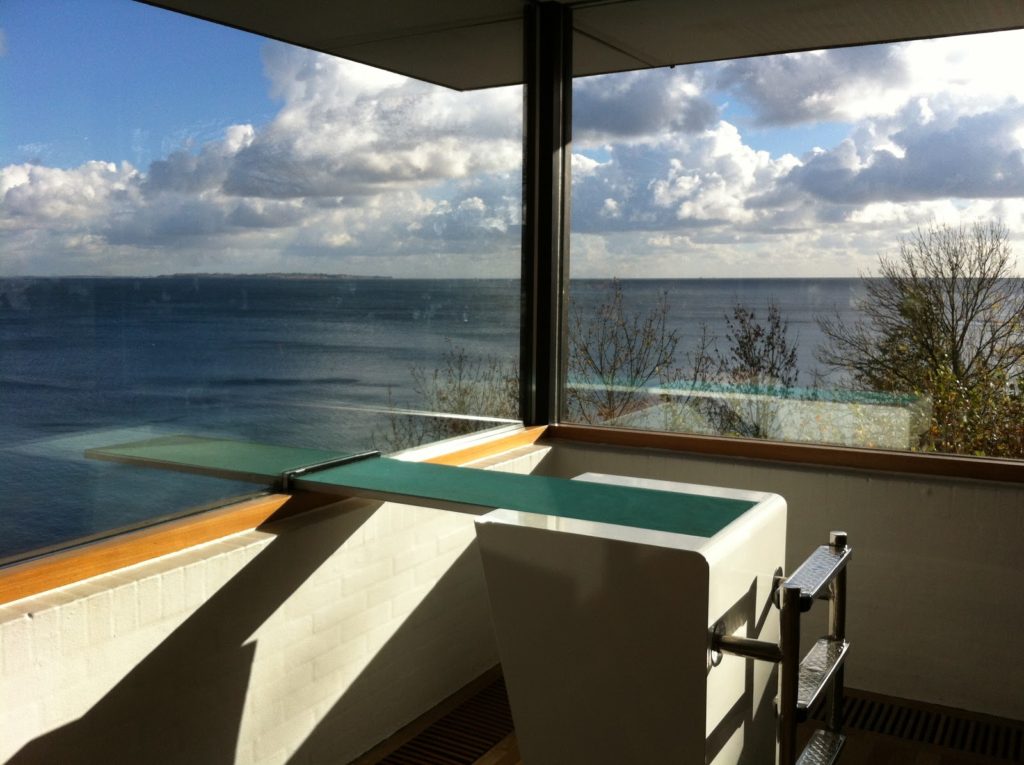
The sparkling waters of the Oresund separates Denmark from nearby Sweden

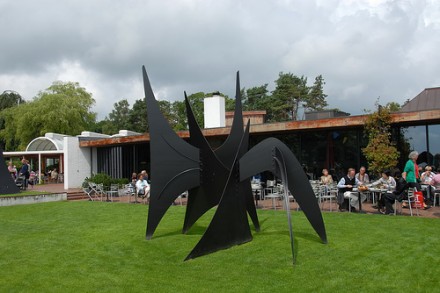
The sparkling waters of the Oresund that separates Denmark from nearby Sweden vie for your attention from every window, and the open-air sculpture garden boasts work by such artists as Alexander Calder, Henry Moore, and Jean Arp.

The origin of the name of the Louisiana Museum of Modern Art, Copenhagen, is a curious one: the original landowner had a succession of three wives, all named Louise.

Source: Louisiana Museum of Modern Art, Copenhagen

Weekend Cabin in Vega, Norway

The house stands on the island of Vega in the Norwegian archipelago not far from the polar circle. The site is distinctive for its grand and harsh northern landscape with wide panoramas of the Norwegian Sea and the jagged mountains rising from it.

020414_Cabin_in_Vega_Norway

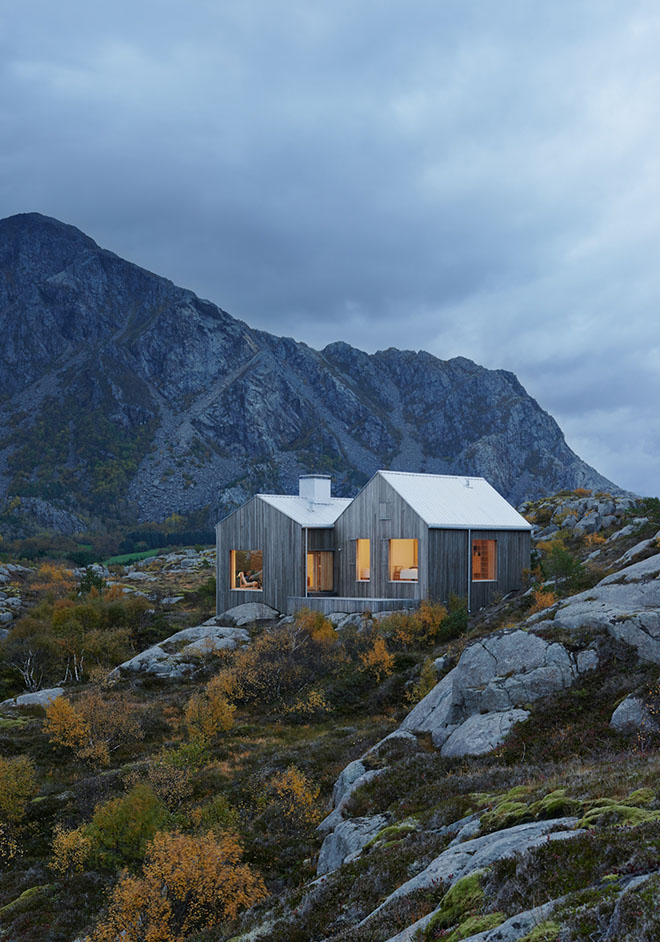
Seemingly growing from the landscape, the weekend cabin in Vega, Norway sits on a rock beneath a granite shoulder negotiating the uneven terrain. As not to disturb the dominant view towards the sea, access to the house is given through a narrow natural ravine densely grown with gnarled birch shrubs and laid out with sea-sand from the nearby shore. The surrounding landscape remains untouched and wild.

The large windows of the house face three directions, each with its strong unique characteristic. They are simple and robust in detailing and the optically white glass conveys undisturbed frames of the ocean, the mountain range and the bedrock. 020414_Cabin_Vega_Norway_2

Organised on two levels adapting to the terrain, the plan is compact, providing generous social spaces within a limited floor area. The upper level is comprised of smaller scale bedrooms and family rooms, whereas the lower level is a large gallery-like space structured around a stone hearth.

Completed in linseed oil painted pine with untreated birch skirting, frames and reveals – the interior is kept subtle with a character of being hand-built – promoting tactile qualities and the attractive patina developed over time.

020414_Cabin_Vega_Norway_interior
Written by guest contributor

Portraits Showing Life Before Death

Coming up spring/summer 2014: Life before death (Noch Mal Leben), showing 26 portraits of death – exploring experiences, hope and fair of the ones that are dying.

010414_Noch_mal_Leven_1
Few experiences are likely to affect us as profoundly as an encounter with death. Yet most deaths occur almost covertly, at one remove from our everyday lives. Death and dying are arguably our last taboos – the topics our society finds most difficult. Opportunities to learn more about them are rare indeed. Experience the exhibition at Norsk Teknisk Museum in Oslo between March 4 and August 25.

The exhibition with portraits showing life before death in Oslo is in collaboration with Kreftforeningen / Norwegian Cancer Society
010414_Noch_mal_leben-3

Photographer Walter Schels and journalist Beate Lakotta asked terminally ill people if they could accompany them during their last weeks and days. This exhibition explores the experiences, hopes and fears of the dying, and gives them one more opportunity to be heard. All of them agreed to be photographed shortly before and immediately after death. The majority of the 26 subjects portrayed spent their last days in hospices. All those who come to such places realize that their lives are drawing to a close. They know there is not much time left to settle their personal affairs. Yet hardly anyone here is devoid of hope: they hope for a few more days; they hope that a dignified death awaits them or that death will not be the end of everything. In preparing this exhibition, Walter Schels and Beate Lakotta spent over a year in hospices in Germany.
See also: Noch Mal Leben

Hans Gedda & Masters of Darkness

Last chance to visit National Museum in Stockholm showing some 140 works by Hans Gedda, one of Sweden’s most notable photographers. Portraits of international and Swedish celebrities appear alongside still lives and semi-documenatary images, from the 1950s to the present day. The exhibition lasts until 30th of March.

Hans Gedda
 (born 1942) has long been recognized as one of Sweden’s most notable photographers. This retrospective will feature some 140 works: a mix of portraits, still lifes and semi-documentary images. The sliding scale on which the various genres are classified invites questions such as what constitutes a portrait, and what makes it different from other motifs. The featured works will cover Gedda’s long and productive artistic career from the 1950s to date.

Hans Gedda displayed a precocious talent for photography, making his artistic debut while still a teenager. The exhibition will therefore include several early works never previously exhibited. It will then trace Gedda’s ongoing development, from his student days with Teddy Aarni in Eskilstuna through the period he spent as assistant to Rolf Winquist at Ateljé Uggla.

NMGrh 4877

FAMOUS PORTAITS

Gedda’s breakthrough came in 1967 with his portraits of Sara Lidman and Tove Jansson. As one of the dominant components of Gedda’s oeuvre, portraits will make up a major part of the exhibition. Visitors will encounter well-known images of Angela Davis, Andy Warhol, Nelson Mandela and famous Swedes such as Olof Palme, Birgit Nilsson and Jonas Gardell. In these portrayals, time and space are non-existent; everything is pared down. Examples of closeness and distance alike can be seen. One of the most innovative works is a portrait of King Carl XVI Gustaf.

NMGrh 4874

COMMERCIAL AND ARTISTIC

Gedda has worked as a commercial photographer all his life, frequently changing perspectives and using the same models in his artistic projects. His pictures of older men with colourful personalities were created in parallel with jeans advertisements. Another example is Gedda’s circus images, commissioned by Cirkus Scott, which mix portrait photography with semi-documentary photojournalism. Since these are among the most fascinating of Gedda’s works, separate sections will be dedicated to them.
310314_HansGedda_Clown

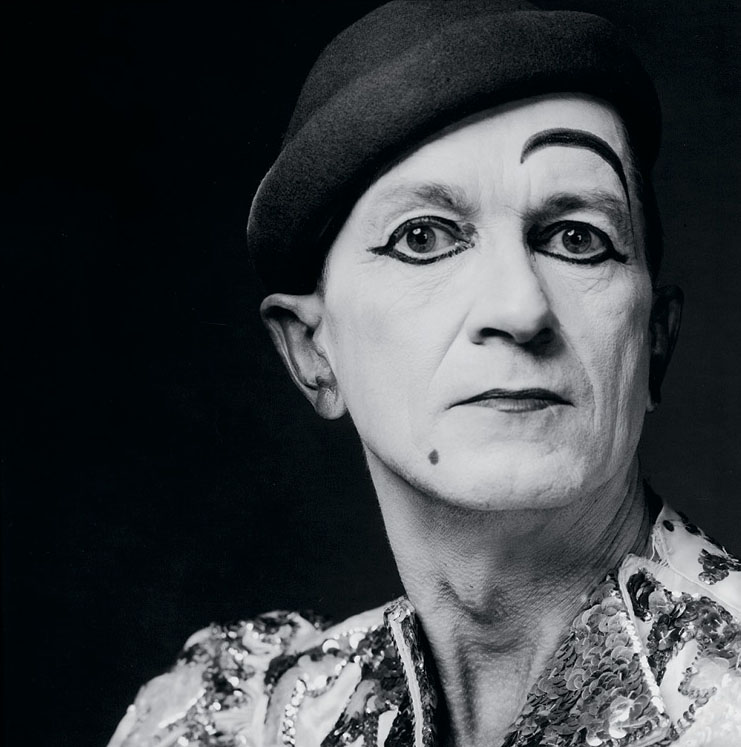
As far as self-portraits are concerned, Gedda has employed a variety of motifs as reflections of himself. He has appeared both as a white clown and as a still life in the form of scrap metal parts. In this way, he continues to experiment to this day with a sliding scale covering a number of genres such as portraiture, nature studies and still life.

310314_gedda_cirkus_princess

MASTERS OF DARKNESS

As a historical counterpoint to Gedda’s contemporary imagery, a selection of works from Nationalmuseum’s collection of Caravaggisti and related artists will be on view.

In early 17th-century Rome, a group of artists devised a radical painting style that was a major influence on baroque art and, later, on photography and cinema.

The distinctive features of their paintings are strong contrasts between light and dark, dramatic narratives, and real, flesh-and-blood characters. The strong emotional expression and tense, almost aggressive composition have appealed to contemporary filmmakers such as Scorsese, Jarman and Pasolini. Although more than three centuries separate the Caravaggisti from Hans Gedda’s images, they have many features in common.

A total of 30 oil paintings by 24 artists from six countries will be exhibited. The artists include famous names such as Jusepe de Ribera, Francisco de Zurbarán and Jacob Jordaens. Nationalmuseum does not own any originals by Caravaggio, on whom these artists modelled themselves, but does possess a high-quality collection of works by his followers.

CATALOGUE

To coincide with the exhibition, a lavishly illustrated catalogue has been published in Swedish and English. It contains two essays by Magnus Olausson and Eva-Lena Karlsson, the exhibition curators, which draw extensively on numerous conversations with Gedda.

GUIDED TOURS AND PROGRAMMES

A full listing of guided tours and programming for adults and children is now availalble.

To Be or Not to Be at Hamlet’s Elsinore

So Elsinore Castle’s real name is Kronborg Slot, and so it was built centuries after the time of the Danish prince in whom Shakespare based his tormented, brooding Hamlet. But his fortified Nordic icon of secret passages, with its suitably dungeon and canon-studded battlements, could not have been a better backdrop for Shakespeare’s dark tragedy. 

280314_Kronborg_Slot_seen-from-above

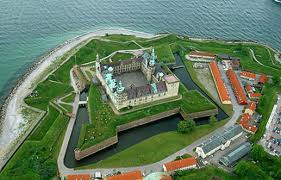
After several miles of sleepy fishing villages along the coastal road north of Copenhagen, the great moat-encircled castle rises above the town of Helsingor that grew up around it. Filling its vast coffers via “400 years of legal piracy,” Helsingor Castle (as it is also called) collected tolls paid to the Danish crown from passing ships, until taxes were abolished in 1857.

Hamlet’s Elsinore, originally built in 1420 and enlargened in 1574, Kronborg had all the trappings og a great regal Renaissance residence.  Its starkly furnished Knights Hall is one of the largest and oldest in northern Europe; the luxurious caste chapel is still the dream of wedding location for many a lucky Danish couple.

Occasional performances of Hamlet are staged in the torch-lit courtyard where audiences can envision the inky fog and the tormented prince agonizing over the “slings and arrows of outrageous fortune.”

280314_Holger_Danske
Meanwhile, somewhere off in a dark and dank chamber reposes the spirit of Viking chief Holger Danske, a mythic Charlemange-era hero: legend has it that as long as he sleeps, the kingdom of Denmark will be safe.

Where Is This?

It’s in fact Europe’s best cabins selected by the Dutch ANWB for the best cabins in 2014, exquisite luxury with private Jacuzzi.

270314_Hvidebjerg_Strand_Jutland_Denmark
Where is this?

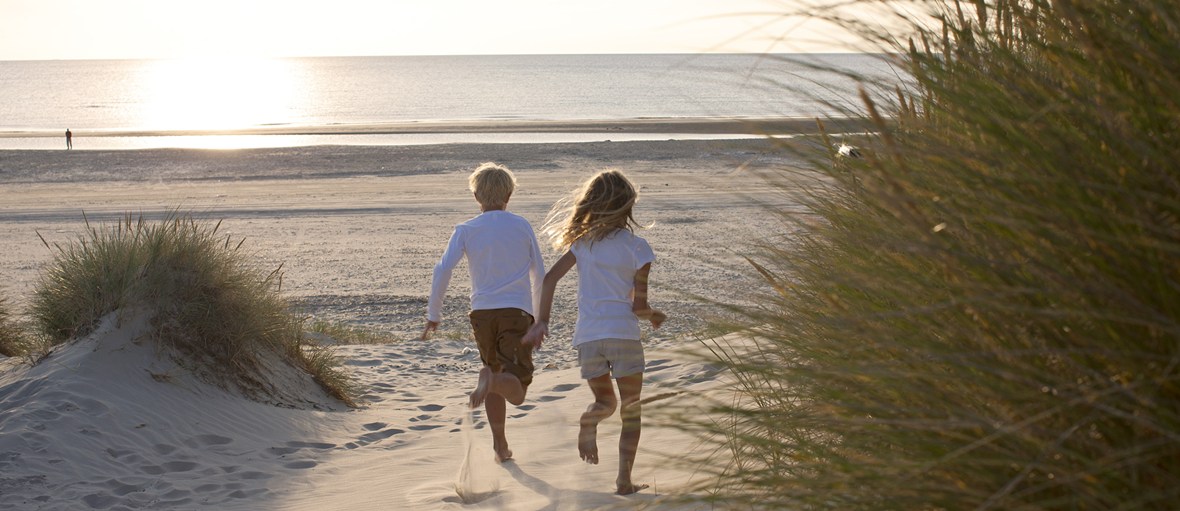
At Hvitebjerg Strand, right next to the North Sea you may enjoy children friendly beaches with low water and walk along the  40 kilometer water’s edge where it’s good opportunity to find amber.

270314_Hvideberg_Strand_Jutland_Denmark

Hvidbjerg Strand is one of Europe’s leading camping sites, perfectly situated in Western Jutland in Blaavand at a beautiful and sandy Nort Sea beach. Hvidbjerg Strand is a favourite 5 star camp site in Denmark for international visitors as well as natives. It has a wonderful wellness centre as well as a fantastic playcentre and indoor water park for the kids.

PLAY CITY, the indoor play center, is a pure paradise for children.

In Play City you will find:

  • Climbing wall.
  • Climbing land with suspension bridges.
  • Jumping pillow.
  • Trampolines.
  • Football fields.
  • Free fall slide.
  • Playstations.
  • Other fun activities.

There’s  also have a smaller play centre, “Hacienda”, where the children can play with Lego and beads or read books and have fun.

It is free of charge for campsite visitors to go to Play City.

Best Museums in Scandinavia

The team of Daily Scandinavian have voted the top museums in Scandinavia. We want to point you in the right direction, so you may enjoy your stay in this part of the world even better.

In our opinion these are the best museums in Scandinavia.

Vasa Museum – Stockholm, Sweden
Carvings of cherubs and mermaids festoon this spectacular 17th-century warship.

260314_vasa-museum_stockholm

Viking Ship Museum – Oslo, Norway
In display are splendid Viking longships unearthed in southern Norway.

260314_VikingShipMuseumOslo
Skansen – Stockholm, Sweden
Over 150 traditional Swedish buildings at the world’s oldest open air museum.
260314_Skansen-Stockholm
Louisiana – Humlebæk, Denmark
This huge modern-art gallery contains an impressive collection, including works by Giacometti and Andy Warhol.
260314_humlebaek-louisiana-museum
National Gallery – Oslo, Norway
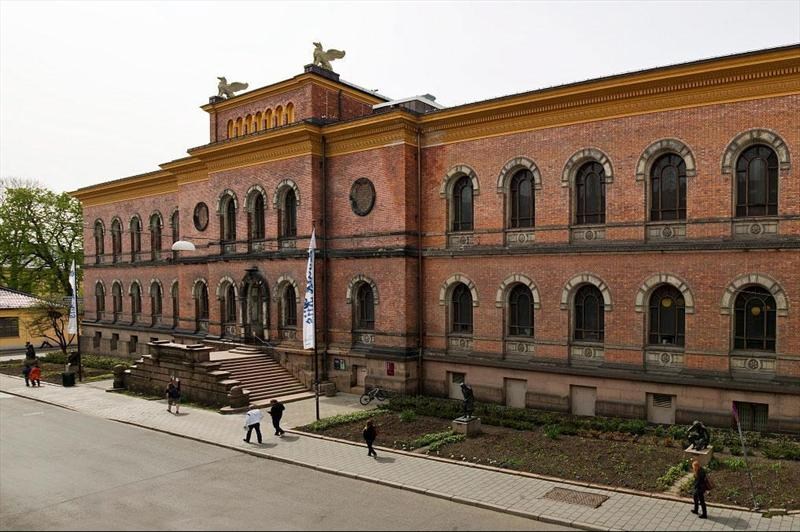
Among the paintings here is Edvard Munch’s The Scream.

260314_Oslo National_Gallery

Best International Hotel Chain

Grand Travel Awards is organized by Travel News in Stockholm and it is the largest travel industry media in Sweden, both in print and online. The votes are casted by 1,200 travel agents, PCOs, DMCs and travel planners. This is the fourth consecutive year that the Radisson Blu wins this reputable award in Sweden.

“We are very proud of this prestigious award, and we are delighted that our hotel is appreciated by the travel industry. Being awarded the prize ‘the best international hotel chain’ confirms that we continue to deliver excellent service and top experiences for our guests. I also want to thank all our employees who every day deliver superior “YesI Can!” service and passion for true hospitality,” says Jan Petter Eilertsen, Regional Director Sweden, Denmark, Iceland – Carlson Rezidor Hotel Group.

250314_Jan_Petter_Eilertsen_Carlson_Rezidor
“All our Radisson Blu hotels continually strive to deliver 100% guest satisfaction. We are extremely pleased to announce that the 1014 TripAdvisor Travelers’ Choice Awards, included Radisson Blu hotels in Sweden, Denmark, Finland, Saudi Arabia, Luxembourg, Latvia and Iceland, just to name a few. There is no doubt that these hotels have contributed to the recognition of our strong international brand. We are now looking forward to our newest hotel openings in the Nordics – Park Inn by Radisson in Lund, Sweden opened on March 1 and in Norway Radisson Blu and Park Inn by Radisson Alna, Oslo, opens April 1, our first dual branded hotel in the Nordic,” continues Jan Petter Eilertsen.

Åre, Sweden – Where Ancient and Recent Hold Hands

The first time I went to Åre, Sweden, it was springtime, and I took a taxi from the airport in Ostersund, an hour south. The driver, a large man with a red nose, was nice if somewhat eccentric. As we drove the shoreline of Storsjön — the Great Lake — he told me about fishing and growing up on an island in its middle. He also told me a giant monster dwelt there, and that he had seen it several times. I was new to the area and ready to believe anything. I nodded, smiled, and stared out across the cold, steely surface. 

240314_Jonas_kullman_Skistar

There was a womb-like comfort in the lapping waters, the surrounding sweep of birch and pine, and a land that rolled to the horizon like a carpet bunched in the hall. Signs warning of marauding moose picketed the roadside, and tidy red cottages in countrified Scando style rose and fell from view. There was a creeping familiarity. As we drove into Åre, I saw the ski runs gathering the mountain’s upper reaches into the village square and remember thinking, “I could live here.”

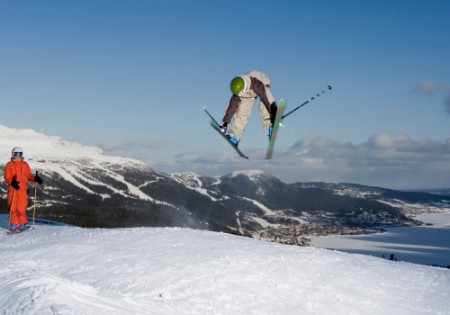
Nothing I experienced that visit did anything to change my mind: skiing soupy May snow and gazing out over the snowy highlands to the west; watching a big-air contest under a molten late-evening sun; raccoon tans and smiles in every quarter; outdoor parties, good food, crazy drinks, welcoming people; life as simple celebration. It was the ski town I knew in a country I didn’t. That was a teaching moment.

I could live where ancient and recent hold hands around every corner. Where culture and tradition have a place in the march of a modern world. Where people aren’t shackled by history, but acknowledge it with every nod and action. As if they’re part of something bigger, something great, something that can only get better.

I could live where the sky holds the mountains in its hands. Where storms come in low and black, pressing you to the earth and making you wonder aloud what’s going on up there. Where you can tramp through wet autumn woods while a brisk northerly tears clouds from snow-covered peaks like presents being unwrapped. Where one sunny day can make up for weeks of darkness, and clean air and fresh water are a right not a privilege.

240314_Fjallgarden_Are_

I could live where people laugh and smile not because they feel the need to, but because they can’t help themselves. Where people live a little outside of the world not because they reject it, but because they care so passionately about it.

Ultimately, the lesson of Åre was that I could live where people might be uncertain about everything else, but very certain about why they were there: to be part of a family sharing a to-do list of endless possibility.

I’ve visited many times since and always think about the taxi driver. His monster wasn’t real, but it had meaning. An expression of humanity’s most deeply cherished ideas: the unknown, wilderness, possibility. There’s something in these words we need to believe. Because if we ever actually found that monster it would be over — no more unknown, no more wilderness, no more possibility.

Some people invent monsters because they want to believe anything is possible; the rest of us, to make it simpler, move to the mountains.

Book a hotel in Åre here.

Written by guest contributor.

HÖST – FROM DINNERWARE TO “THE WORLD’S BEST DESIGN RESTAURANT 2013”!

In 2011 Danish design company Menu launched the New Norm Dinnerware collection, designed by Norm Architects. It was original and had a very unique Nordic feel to it. It soon became clear the collection deserved an equally unique platform from which to be showcased. The two companies joined forces with renowned Copenhagen restaurateurs Cofoco; a partnership that resulted in a little piece of restaurant magic called Höst

210314_Host_Copenhagen

The design restaurant Höst expresses everything that could be categorised as “Nordic”, and is the exquisite result of clashes: romantic yet modern, urban yet rural and rustic yet simplistic. It holds a very special place in people’s hearts because of its multiple stories, mixed inspirations and materials.

At Höst the classic virtues of Nordic cooking finds its contemporary counterpart. And in the kitchen traditional ingredients are combined with the visions characterising the New Nordic Cuisine, resulting in something aesthetically pleasing for all senses.

210314_Host_Restaurant_Copenhagen

In September 2013 Höst won “The World’s Best Design Restaurant” award at the annual Bar & Restaurant Design Awards in London. It was the first time ever a Danish restaurant received the award.

Head chef Jonas Christensen

Höst is designed to match the unique Nordic ways and continues to inspire visitors from all over the world, over and over again.