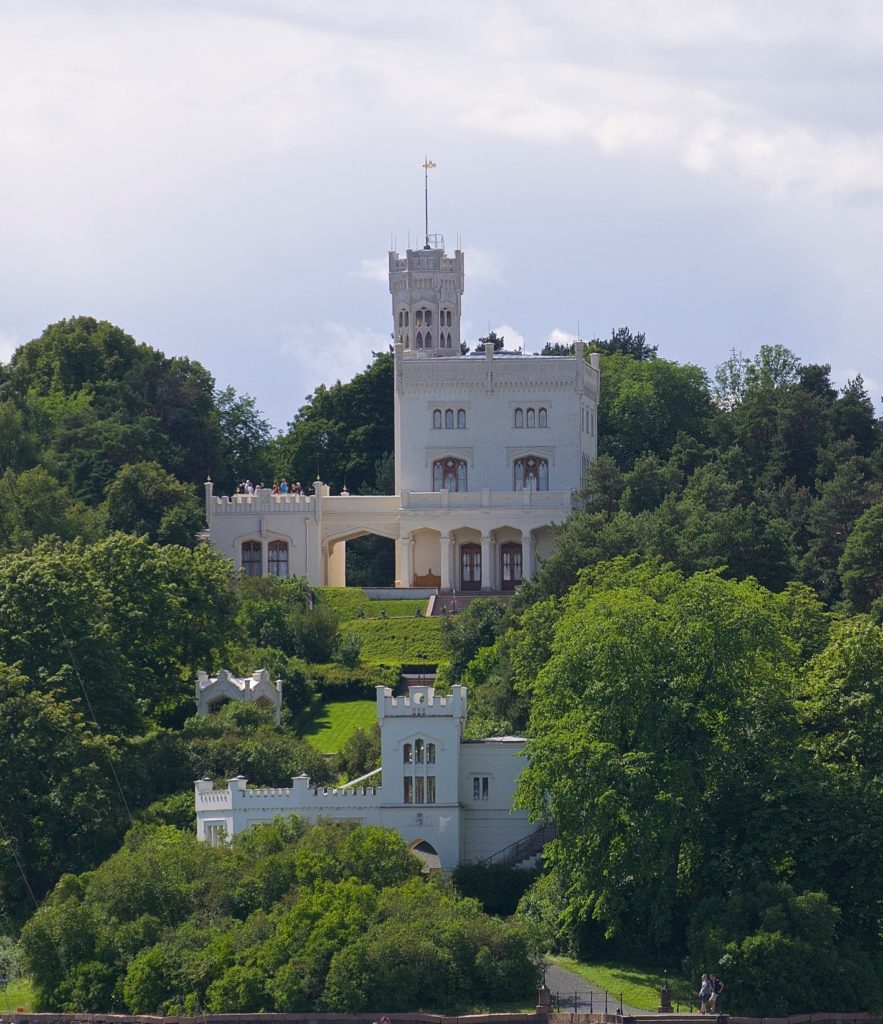
The beautiful Oscarhall summer palace at Bygdøy, Oslo, was built during the period 1847-1852, commissioned by King Oscar I. From Oscarshall there’s a view to Frognerkilen and the palace is placed in an idyllic setting, in what was once called Ladegaardsøen.
The building of Oscarshall was led by the Danish architect Johan Henrik Nebelong. Both King Oscar I himself and Queen Joséphine were deeply involved in the project. The architecture is English late Gothic, called Tudor. Frognerkilen and its surroundings, including Oscarshall, tell us a story about a romantic king and queen.
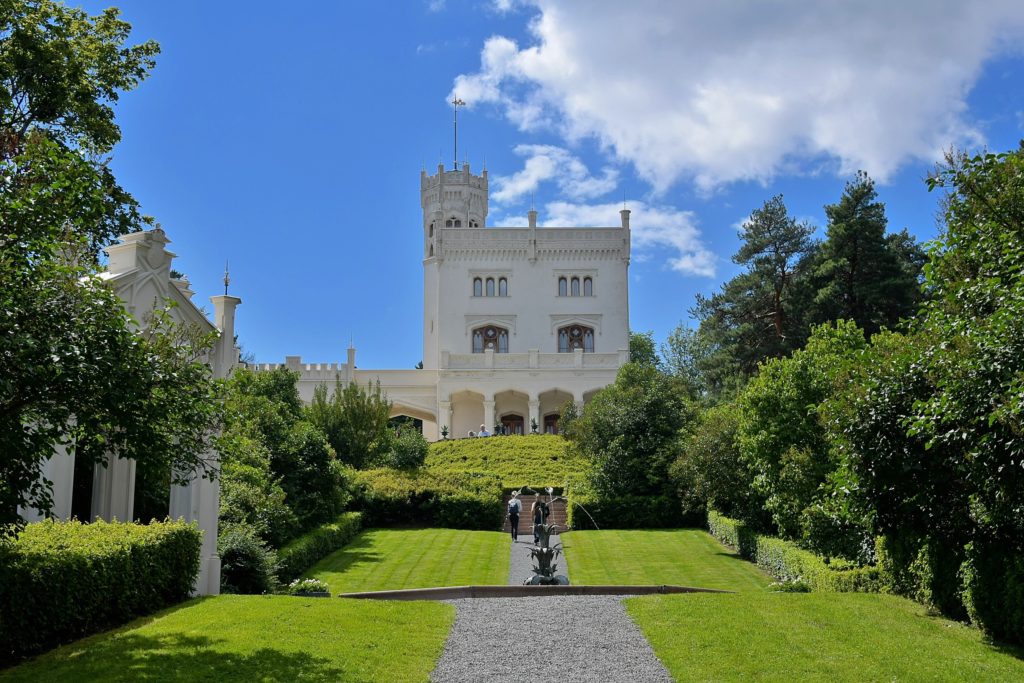
From the Oscarshall garden
King Oscar I and Queen Joséphine sought to promote Norwegian art and craftsmanship when they commissioned the building of the summer palace, and today it is a monument to Norwegian art and artisans from the mid-1800s.
Concert at Osacarshall. Photo: Jan Haug
The original thought for King Oscar and his queen Joséphine was to build a place where they could withdraw together with their guests when they visited the capital. However, history tells us that the beautiful summer house never was properly used. On the other hand, there are long traditions of receptions and parties connected to royal events at Oscarashall.
At that time, large parts of Ladegaardsøen, now known as the Bygdøy peninsula, belonged to the Royal Family. According to contemporary writers the site of the summer palace was chosen by Oscar I’s sons during a sailing trip in the summer of 1847. The dramatic location at the top of a steep slove overlooking the sea reflected the popular trends of the era.
Although the palace seldom was occupied, it was a popular motif for painters and photographers during the late 1800s. Oscarshall is beautifully situated in the landscape, and it’s not surprising that “everybody” wanted to visit this small, but still great royal pearl.
The King and Queen used private funds for the construction work and were themselves the owners of the land. Architect Johan Henrik Nebelung worked closely with them, helping to turn their wishes into reality.
Poor maintenance and later restoration
Oacarshall was like many other buildings a victim of poor maintenance. Count Wedel Jarlsberg’s desire to save money may have been the detriment of Oscarshall. The desire to speed up the work led to demands that the workers continue throughout November and December 1850. As early as spring 1851 repair work had to be carried out because of damp and frost damage.
Over the years the building has undergone extensive repairs and the quality of the work has varied.
Oscarshall against sunlight
However, the total renovation of Oscarshall from 2005 to 2009 included a complete restoration of the main building’s exteriors and interiors, as well as the ancillary buildings. The primary objective was to recreate Nebelong’s original as closely as possible.
Oscarshall and the surrounding park were officially opened for public in 2009. Nina E. Høye has written a beautiful and instructive book on Oscarshall and the events who lead to what can be experienced today. More accessible One of the main aims has been to make Oscarshall more accessible than before. The summer palace is now to a larger extent used as a venue for official events as well as entertainment and concerts. In addition the building is better equipped to accommodate the public, and guided tours are offered during the summer season. This will continue the tradition of King Oscar I, who himself opened Oscarshall to the public and made the summer palace a popular destination for the population of Christiania (now Oslo) as well as visitors.
Stairways at Oscarshall. Photo: Jan Haug
Oscarshall is situated in a park called “Benadotte’s Public Park”. Inside the castle you may experience several interesting items. The castle has in fact turned into a great museum for young and old, about “kings and queens” who have “come and gone”. It is an interesting and important part of Norwegian history.
Oscarhall Summer Palace in Oslo, written by Tor Kjolberg
All exterior photos by Jon Arne Foss
All interior photos by The Royal Court, Norway
Espresso, cappuccino, caffe latte or macchiato – The World Barrista Championship has fostered several Scandinavian coffee-making champions.
Making really good coffee is an art; a good espresso, cappuccino, caffe latte or any other delicious variation based on coffee. There is a world championship in the art of making coffee, with those taking part called baristas. Not many people know that.
But that is perhaps not so strange barista championships first started in 2000!
What is a little strange is that the Scandinavia countries have dominated the event right from the start. Robert Thorean of Norway won the first World Barista Championship in Monte Carlo involving 14 countries.
Espresso making in Scandinavia
We tend to think of Italy as the center of the coffee-making universe. Not surprising when the names of all the most common coffee drinks are Italian. Nevertheless, in 2001 Martin Hildebrand was the first Dane to be crowned the World Barista Champion in USA.
The third Annual WBC in Norway (2002) grew to 26 countries, and Fritz Storm secured the title for Denmark. In 2004 Tim Wendelboe beceam the second WBC Champion from Norway in Italy, and in 2005 Troels Overdal Paulsen triumphed for Denmark against 34 countries in Seattle, USA. Klaus Thomsen became the fourth Champion hailing from Denmark in Switzerland in 2006.
Troels Overdal Paulsen from Denmark
In 2008 Daniel Remheden from Sweden was no. 4 and Søren Stiller Markussen from Denmark was no. 6. In 20010 Søren Stiller Marskussen advanced to no. 4.
Daniel Remheden from Sweden
After-church coffee laid the foundation
One of the people behind the competition has an explanation. Tone Liavaag from the coffee company Solberg & Hansen in Oslo laid the ‘blame’ at the door of the church.
“A couple of hundred years ago, alcohol was a major social problem. The church’s solution was to introduce the habit of drinking coffee together after the Sunday service. That is how coffee drinking became a sociable affair in the Nordic region. Or so says the myth.”
And Italians are not sociable?
A Danish barista admits that Italians are super-sociable. However, espresso is used more as a pick-me-up between meals. They gulp it down and rush off. So it is not often that coffee forms the center of their sociability.
Café culture
But the after-church coffee habit may be a bit outdated?
My Swedish barrista friend claims there is no doubt that coffee bars are the social arenas of today. At our fika we take time to enjoy our coffee. And we certainly do enjoy it, even though the quality of the drink could sometimes have been better.
When I asked Tona Liavaag if she is the one who started the international competition, she said, “ That is not entirely wrong, but it was not only me. There was a small band of enthusiasts and extremely good baristas who entered the competition quite early on, and who are still going strong. After coffee bars became a trend phenomenon in the late 1990s, it has become more fashionable to work in a coffee bar. In the big cities being a barista is seen as a career path, not just something you do to make money while you’re in college. So the quality of the drinks served at coffee bars is improving all the time. I wish you could say the same about the coffee being drunk at home, but even there the quality is slowly getting better. But there it is not the coffee itself that is the problem, but the way it is prepared and how it is kept once it is made.”
Coffee consumption in Scandinavia
Norwegians drink around 160 liters if coffee annually per head, so the Scandinavian region, believe it or not, leads the world in coffee drinking, it I saying something when the Nordic region account for only 0.3 per cent of the world’s population and accounts for 5.5 per cent of the world’s annual coffee production.
Scandinavian Coffee-Making Champions, written by Tor Kjolberg
The Modern Art Center at Hovikodden in Oslo was founded in 1968 by World and Olympic champion figure skater Sonja Henie (1912-1969) and her husband, shipping magnate and art collector Niels Onstad (1909-1978). The couple’s private collection of contemporary art consisted of about 110 images.
Sonja Henie
In 1936, Henie signed a tour contract with the American manager Arthur M. Wirtz. In the early fall of that year, Henie and her family traveled to the United States where she gave a series of figure skating performances on the ice. Her family thereafter moved to Hollywood, where following tough negotiations with director Darryl Zanuck, Sonja Henie signed a 5 year contract with the film company 20th Century Fox.
By 1940, she was one of Hollywood’s best paid actors, on par with Clark Gable and the childhood star Shirley Temple.
Niels Onstad
Niels Onstad was an active football player, peaking during the Norwegian Championship in 1928 during which he played for the Lyn football club. However, he is best known for his prowess as ship owner and art collector. His interest in art was influenced by his mother, who was a painter, and he maintained several contacts in the Norwegian art community.
Henie Onstad Museum of Modern Art
Together with his brother, Haakon Onstad, he established the shipping company Niels Onstad Tankrederi A/S in 1935. In 1940, Onstad moved to the U.S. where he worked for Nortraship. During WWII, this company managed the large Norwegian merchant fleet outside of the German-controlled waterways and contributed decisively to the Allied efforts during the war.
Jon Eikvar, Niels Onstad, Ole Henrik Moe and Svein-Erik Engebretsen in 1967
Sonja Hernie met Niels Onstad in 1955. The couple married a year later and developed their art collection.
Responding to a request from Kunstnernes Hus in Oslo in 1959, the couple decided it was time to make the collection accessible to the public, sending it on an expansive exhibition tour for two years throughout many countries in Europe. As their collection only kept growing, the Sonja Henie and Niels Onstad trusts were formed in 1961 as two separate gifts, with its most important goal being the founding of a modern art museum; becoming the largest private art donation in the history of Norway.
From the art installation High Tadee
An Architectural competition was held in 1962, the winners would be awarded the opportunity to design the art center for the famous couple. The center was eventually designed by the two young Norwegian architects Jon Eikvar and Sven Erik Engebretsen. Sonja Henie died of leukemia one year after the inauguration of the Henie Onstad Kunstsenter. She was then 59 years old. All of her awards, photographs, films and private documentation were donated to the HOK. Having accumulated almost 600 items, the HOK provided its own award exhibition room.
Sonja Henie and Niels Onstad
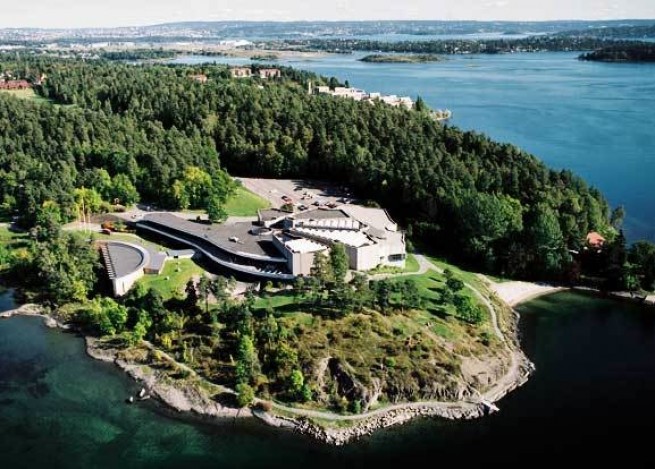
In 1994, the building was extended, and a two-story wing with exhibition spaces and technical rooms was added. This project was designed by the same architects—the new wing abuts the main body of the building as an organic extension. In 2003, another extension was made, this time in the form of an annex that extends into the outdoor park, connected to the main building by a passage leading from the lower level. In addition to six exhibition halls, the Centre also has an auditorium and smaller meeting rooms. Today, the total building area is approximately 9,500 square meters, of which 3,500 are occupied by exhibition spaces.
The HOK, placed organically within the landscape at the beach of Hovikodden has become one of Norway’s most iconic cultural buildings. It’s unique and sensitive architecture has given it its own distinctive character, using only Norwegian suppliers and materials, the selection rose a lot of attention. The combination of natural stone, concrete and copper with large glass panels created an architectural volume that just beautifully engaged the surrounding terrain.
Henie Onstad Kunstsenter organizes exhibitions and performances. The art center is visited by around 100,000 people each year. The center celebrated its 40th anniversary in 2008 with exhibitions, seminars, book, concert and movie titled Høvikodden LIVE.
After being identified in an exhibition catalogue in 2012 by the family of noted French-Jewish art dealer Paul Rosenberg it was demanded that the HOK return Profil bleu devant la cheminée (Woman in Blue in Front of Fireplace) (1937), a Matisse painting that was confiscated by the Nazis in 1941. Museum Director Tone Hansen said the museum did not know the painting was stolen by the Nazis, until it was notified by the Rosenberg family. The painting was returned to the heirs of Paul Rosenberg in March 2014 One art editor once said, “As we learned more about the collection, one thought kept coming back: This amazing material should be shared with the world, not only made available at the museum.”
Modern Art – Or Just a Beach Day?, edited by Tor Kjolberg
Read also:
More than 20,000 images were sent to the Swedish-Danish Postnord’s competition through Instagram. Now the jury has cut them, down to 20 finalists.
The general public can still vote for their three favorites intil 20 October, where three images with the highest votes will be combined with the judges’ four picks to make up seven new stamps.
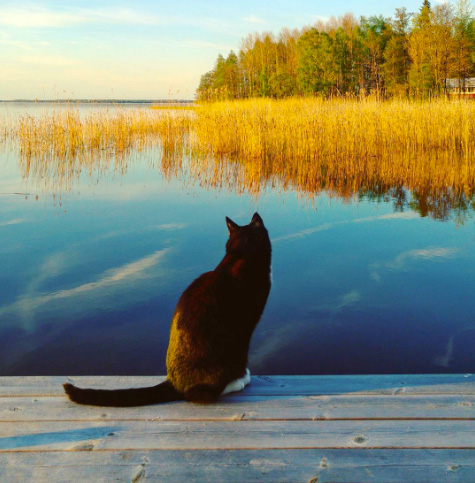
Cat on pier
The winning stamps will be presented in November, and released in May 2017.
One of the images that made it to the final 20 was Fredrik Thomasson holding his sleeping son, Charlie.
Father and child by Fredrik Thomasson
“I was sitting watching TV and drinking my coffee when they were doing an interview with Postnord about the competition. That picture came to mind straight away because it means a lot for me. I sent it in for fun and apparently more people than just me like it,” he told The Local.
Dog fresh out of the bath by Jennifer Fredin
“Charlie has already decided that if we get to be on a stamp he wants to send the fee we’ll get to sick kids so they can be happy and perhaps healthy. So it’ll go to the Swedish Barncancerfonden (Child Cancer Fund),” he explained.
This is the first time that the general public will compete to be on one of Sweden’s stamps, but the country has a history for getting creative with its postage.
Postboxes in a row by Laila Haggelund
In 2014, stamps featuring pictures of Zlatan Ibrahimovic’s famous bicycle kick goal against England were released.
Feature image (on top) Evening promenade in the woods by Monica Thelin
The art of fruit cultivation came to Hardanger with the monks in the 11th century, and has since become a long tradition in the Hardanger Fjord in Western Norway.
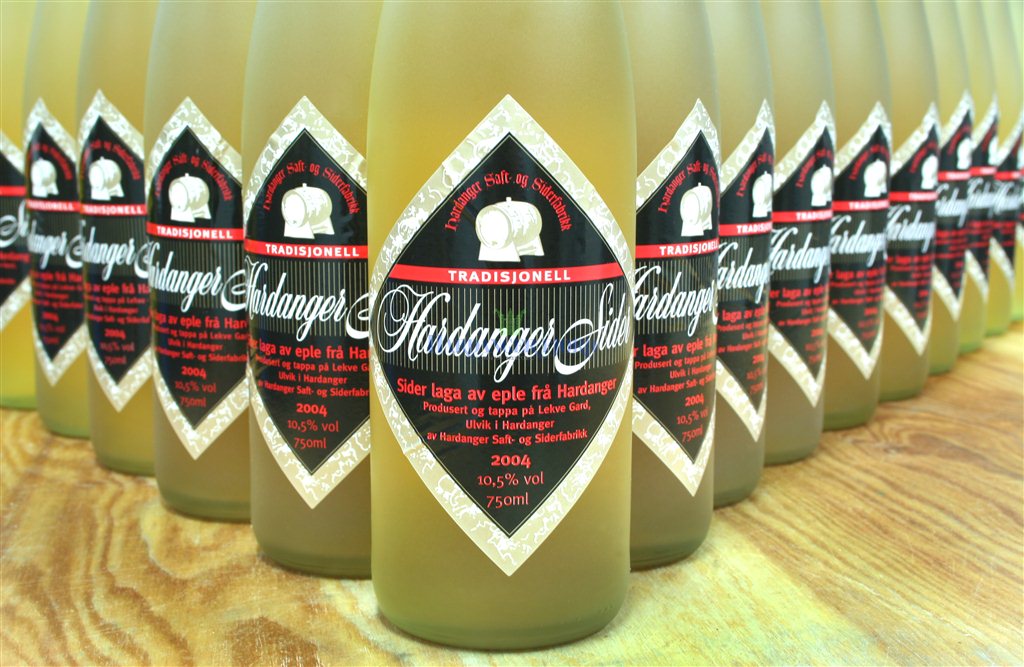
The world famous Hardanger cider is to be produced with natural fermentation from the apple and no yeast added. The juice is pressed out of the apples and fermented for months. It can gain an alcohol content of up to 8-10 per cent.
The cider is meant to be non-cloudy and have the taste and smell of good, fresh apples when the bottle is opened. The cider is slightly sparkling when poured into the glass.
Hardanger has the perfect growing conditions for apples. There is a special micro-climate surrounding the fjord that makes the area a few degrees warmer than just a few miles in either direction. The first apples were brought here by monks. The apple tree had a special religious significance, symbolizing paradise before the fall of man.
Apple cider production in Hardanger
In Europe they made cider in areas where the climate was too cold and wet for vineyards to grow. France is the greatest producer of cider in the world, and Hardanger in Norway is the cradle of this golden drink. The Hardanger apple cider was a trading product from the end of year 1800 and until the government declared alcohol forbiddingness in 1919. The situation today is that the Cider Producers Society in Hardanger (40 members) has been fronting the work of letting the cider back into the farmer’s items for consumption amongst with other culture aspects like travelling.
The alcohol regulations were changed 1.april – 2003 and made it possible for producers of cider to get concession to brew and serve cider in their own approved premises. These producers are also entitled to sell cider to restaurants and liqueur stores.
A cider contest held during the Sweet Cherry Festival, has an aim to allure the cider producers up from their cellars so that they can present their own brewed cider. The competition is open for sweet cherry wine and other wines made of local fruit and berries.
Ekspedisjonen Skjenkestove is the coolest pub in Hardanger just across the fjord. They have concerts, pub-quiz and serve their own brew of both beer and apple cider.
Feature image (on top): Blooming in Hardanger
Everything Smells of Apples in Hardanger, written by Admin
Salmo Salar. When I was a child in Norway, salmon was a luxury. Now it’s become cheap and tasteless, with a fatty acid content similar to that of conventionally farmed pigs.
Not the healthy meat you hope for. We pay for the low price in other and less transparent ways. If you want the real thing, which means not farmed, polluting, medicated or heavily colored, you must wait for the season, and pay what it costs to buy a line-caught, beautiful silver creature.
The reward is one of the most delicate, versatile and delicious fish you can possibly eat. The flesh is melting and sweet, and the color of pale apricot, the qualities that made it popular in the first place.
Norwegian salmon festival
Wild salmon used to be so numerous in northern Scandinavia that it was written in Norwegian farm boys’ contracts, before Second World War, that they should not be served wild salmon more than twice a week.
Salmon fisherman – Wikipedia
Habitat The coast of Norway is specked with marine fish farms raising thousands of tons of salmon. It’s a serous source og pollution, ruining the seabed, and the raised fish are generally of low quality; with a bland taste, dyed meat, higher-than-usual fat content, and full of medicine residues. Even though it has made salmon everyday fare, there is a raising awareness that this mass production is not sustainable, and there are new ways of raising salmon, even organically, which is higher priced and of wonderful quality.
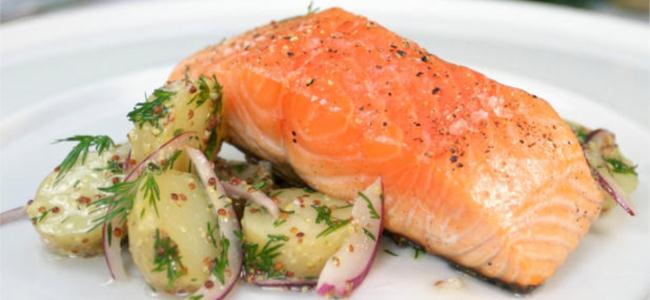
Norwegian salmon steak
Appearance and taste Salmon are silver and black, and soft-fleshed when raw. Wild salmon have pretty, pale apricot-colored flesh, not the bright orange flesh of farmed fish. Wild fish have tails and fins with sharp edges, while farmed fish live so close together that the fins and tails are bitten into shreds. Organically farmed salmon have similar characteristics to wild fish.
Buying and storing Buy only organically farmed fish, or wild salmon, caught in sustainable ways. Eat it on the day it is bought, unless you are curing the fish.
Smoked organic Norwegian salmon
Health benefits Wild salmon are full og healthy fatty acids and lots of minerals. Conventionally farmed fish, which are fed like conventional pigs, are not at all the same. The fats are different and they have dye and medication in their food. It is not advisable to eat conventionally farmed fish for health reasons, let alone because the taste is not comparable.
Norwegian seafood farm
Culinary uses Like all fatty fish, salmon must not be overcooked, though traditionally it often was. We know better know, and bake or fry salmon only long enough for it to become just firm to the touch, and still a little opaque in the middle. Cooked for too long, salmon like other fatty fish, becomes very, very dry. There are several traditional ways of curing and smoking that will make the most of a perfect salmon.
Here is our receipt of
Salmon pudding
Laxpudding is a Swedish classic. Eat it with rye bread and a green salad, or cucumber salad with dill.
500 g salmon filet
2 teaspoons coarse sea salt
1.5kg waxy potatoes, thinly sliced
1 onion, chopped
2 bunches of fresh dill, chopped
4 eggs
300ml whipping cream
500ml full-fat milk
½ teaspoon coarsely ground black pepper
SERVES 4-5
Slice the fish as thinly as you can, then pre-salt with half the coarse sea salt. Let it rest for a couple of hours.
Preheat the oven to 180 ͦC/gas mark 4. Layer the potatoes, salmon, onion and dill in a deep ovenproof dish, beginning and ending with a layer of potatoes.
Whisk the eggs, cream, milk, pepper and remaining salt together in a bowl and pour over the top. Bake in the oven for about 25 minutes, or until the potatoes are done and the crust is nicely browned.
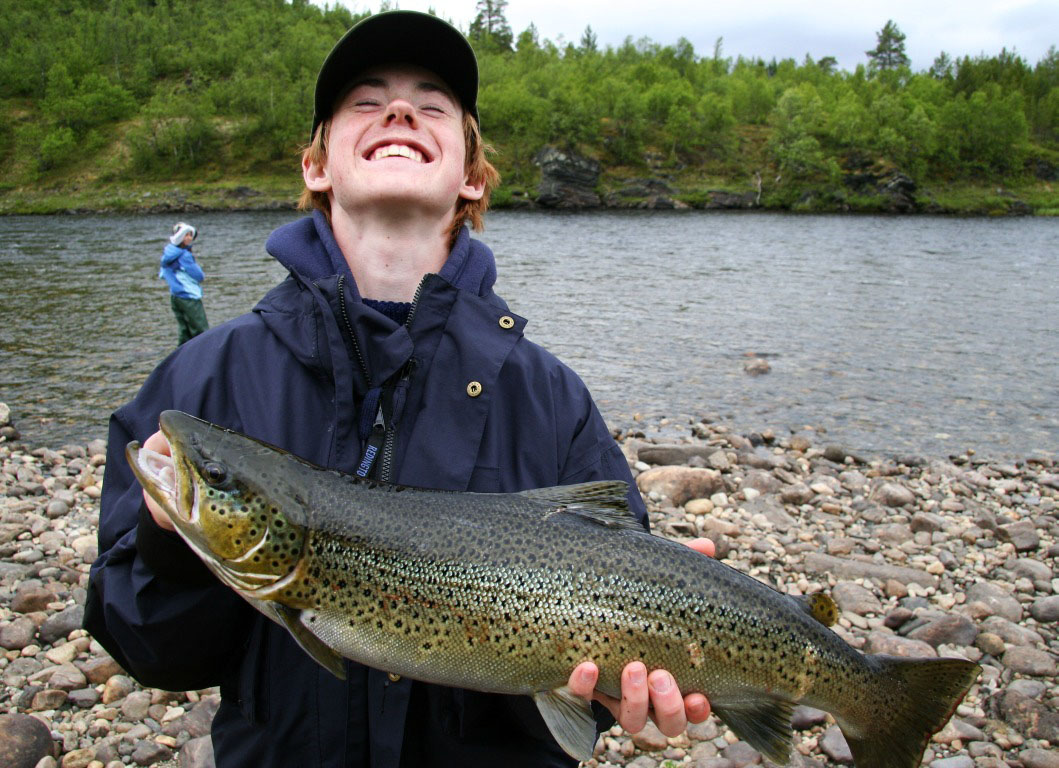
Feature image (on top): Nowegian fly-fishers with a 21.5kg Atlantic salmon at Gaula
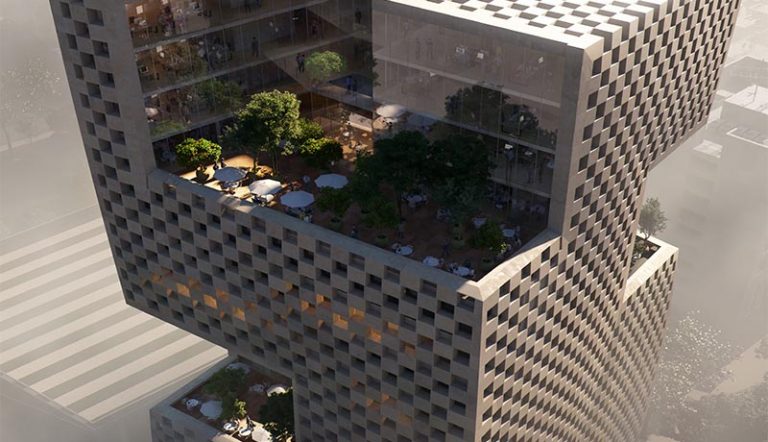
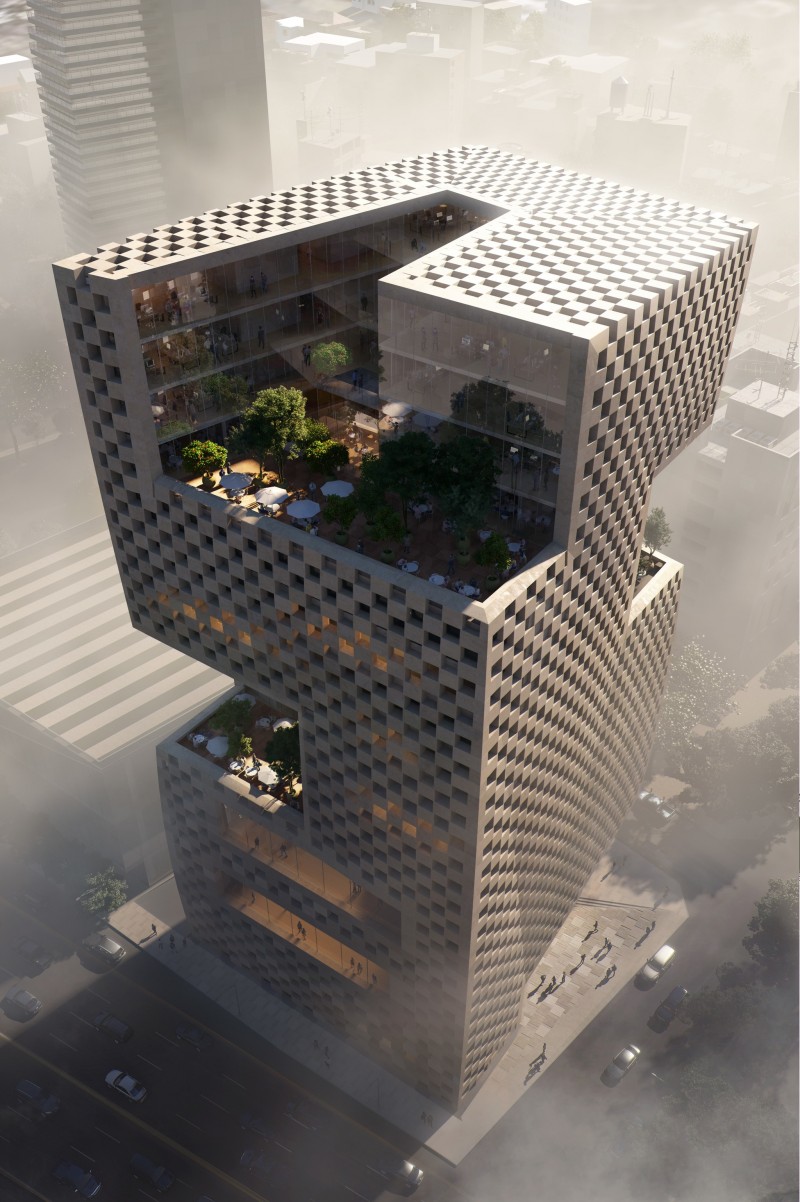
The Oslo- and New York-based architect company Snøhetta was selected to design a high-rise block with checker-board patterned facades for Banque Libano Francaise (BLF) in Lebanon.
The project marks Snøhetta’s first ever commission in Lebanon, and the building will feature a geometric facade and several large outdoor terraces carved from the built volume to create a vibrant workplace community. The outdoor space and vegetation are also intended as a symbol of sustainability.
The design for the new general headquarters points towards a new future both for the bank and for the city and community of which it is a part. To create a building emblematic of the evolving strategies of the corporate world, Snøhetta approached the design with an architectural language that is “both generic and conceptual at the same time.”
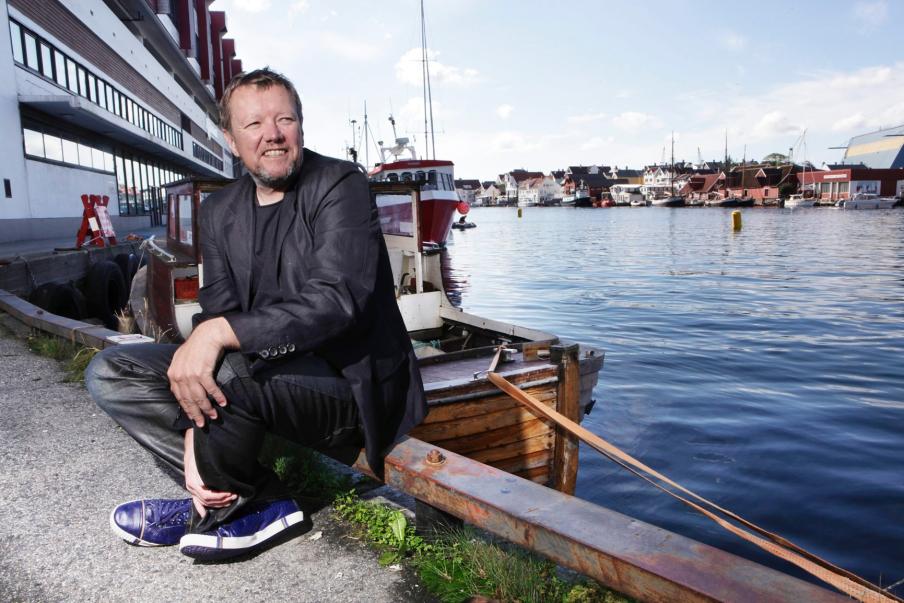
Kjetil Traedal Thorsen
“In a time of profound change and transformation, the BLF is an ideal partner for Snøhetta with our shared ideals of sustainability, community, and dialogue,” said Snøhetta founding partner Kjetil Trædal Thorsen.
Snøhetta’s project was a perfect fit to the BLF design brief and its objective to create a space “not to work more, but to work better”, explained Raya Raphaël Nahas, member of the Board of Directors and General Manager of Banque Libano-Française who added: “Our ambition through this competition was to find the architect who is capable of embodying this will and rethinking our workplace while breaking the conventional codes of private construction in Lebanon, to integrate public spaces within the building without compromising its security, and taking into account the digital evolution and new collaborative methods at work. Snøhetta’s philosophy about collaborative spaces and new work methods, have seduced and convinced us. We have decided that the team shares our values, our attention to detail as well as our respect of the environment, the community and the historical legacy of Beirut…”
Raya Raphaël Nahas
Another key quality of the building will be its sustainability, organized by Snøhetta into three categories: “Economic Sustainability – the project must be fundamentally economically viable; Social Sustainability – the project must give back to the city and complement the existing urban context; and Environmental Sustainability – the project must respond to the environment both in regard to energy consumed and with regard the embodied energy of the structure.”
Snøhetta will continue working to finalize the design. A timetable for construction has not yet been released.
Snøhetta was established in 1989 and are involved in architecture, landscape architecture, interior architecture as well as graphic design. The Snøhetta group has 180 emplyees in Oslo, Innsbruck, Stockholm, Adelaide, New York and San Francisco.
Snøhetta’s most prestigious project so far has been the Library in Alexandra, Egypt, and the Norwegian Opera House in Oslo.
Norwegian Architects in Lebanon, written by Tor Kjolberg
On only six years after Fotografiska in Stockholm was established by Jan Bromann and his brother Per six years ago, the museum is considered to be the world’s best photographic exhibition hall.
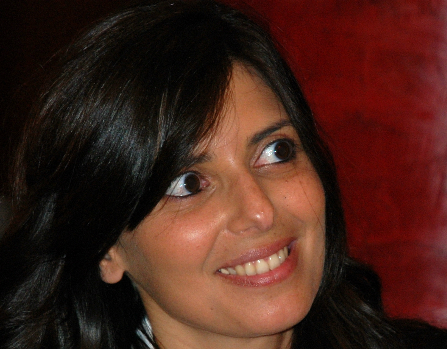
“We wanted a place for photography that would display great photographic exhibitions and great photographers, and we saw a niche that nobody within the art world really had cared about,” said Jan Broman when we met him in Stockholm last July. “My brother and I are very focused on art, and we wanted to create a meeting place for people interested in photography,” he continues. “Our curiosity led us to develop a business of art through the photography interest that we had, and no one really knew about photography.”
Janne Bromann (left) with editor in Chief Tor Kjolberg. Photo Helgard Mahrdt
Jan, or Janne as he is called, had not been involved in practical photography for many years, but his brother Per had been a professional photographer for 15 years. Although the brothers had worked in other professional areas, photography was never far away, since photography had always been with them since they were children.
“Ten years ago, my brother and I had just established the Photography Fair (Fotomessan). It was held in Stockholm, Oslo, Copenhagen and Gothenburg. It still remains in Stockholm, being arranged once a year. It was the first time my brother and I worked together,” says Janne.
“We do not really display art. We show photography in all its forms. If it is documentary, scientific or art, doesn’t really matter, It’s all about photography,“ he explains.
Fotografiska has an exhibition council which meets once a quarter, consisting of janne and his brother, people from inside the house and some external people. “We are looking at what may be interesting to propose for exhibitions here or not,” Janne says.
“Later our proposals end up in the exhibition department, which finds the best possible spot in the house to display it.”
On my question if they receive many suggestions from outside the organization, Bromann says there are very few, and that it is quite rare that proposals end up as an exhibition. “The exhibitions at Fotografiska are usually something we have heard about or sought after ourselves,” he says.
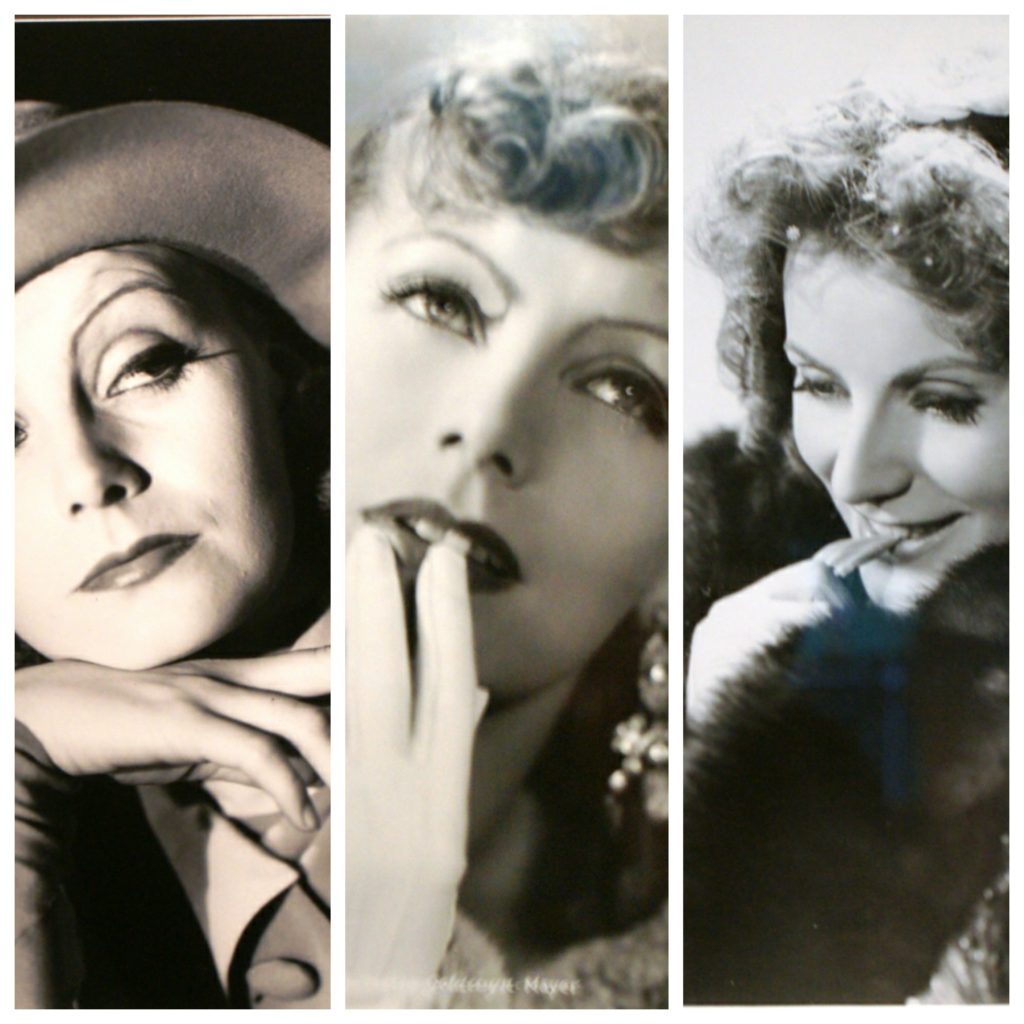
The Greta Garbo exhibition
Regarding the Greta Garbo exhibition this summer, it was the Swedish advertising executive and art collector Lars Nordin, who told Janne that he had collected Greta Garbo images for 20 years. “I did actually not know this,” says Bromann. “We had occasionally met on different occasions. He lives in Southern Sweden and he came and said he had a great Greta Garbo collection he would like to exhibit. He had no organization, he had only bought items that related to Greta Garbo. For him it was kind of a journey, looking at what he actually had.”
One of the very few Grata Garbo signatures in existence
Greta Garbo is really the biggest Swedish icon of all time. “We had visits from China last weekend,” tells Bromann. “He was one of the greatest Chinese fashion photographers, and when he was asked if he knew Greta Garbo, he exclaimed: “Know Greta Garbo? I believe everyone does! ” In other words, even a 30 year old Chinese knows who Greta Garbo is. There are very few Swedes who have such a status in the world. What he did not know, however, was that she was Swedish. Perhaps not so strange, since all her films are American. “But she was born and grew up not far from here,” adds Janne.
Who are visiting Fotografiska?
It is primarily Swedes who visit the exhibitions, but this summer there have been several foreign tourists. “Actually all nationalities, and it’s nice,” says Janne. “We’ve become one of Stockholm’s highest ranked tourist destinations.”
As with almost everything in life, coincidences led to the fact that the home of Fotografiske is a more than 100 old stone brick building at Slussen in Stockholm. The original idea was to build the ABBA museum there.
“We were at a meeting in town,” tells Janne. “Then I heard that the ABBA museum was delayed, and perhaps would not be realized at all. We knew that this building was in question, so we went directly from the meeting to look at it. At that time we already had plans to go heavily into new premises under construction.”
“In 2008 the world looked differently,” he recalls. “We could walk right into the building where there was construction work everywhere. No one asked who we were, or what we were doing, so we could go through the entire building and peek. There and then we decided that this was where we wanted to be.”
Since the house was over 100 years old, it was obviously a lot of things needed to be done. The owners had in principle done nothing for 100 years, but now they had begun renovations. ”If you look at the building from the outside, you see several shades of brick. There are new and old bricks. The roof had to be replaced. Ventilation did not exist, etc.,” says Bromann. “They were doing a complete renovation of the house, which should provide a standard we could use. For the landlord it was a big renovation project.
No public support
Janne tells us that the fact that all investments are private, without any public support, gives Fotografiska a freedom which enables the museum to do whatever it wants without interference. “We can take rapid decisions. We do not need to pay attention to any party colors or someone who sits in government administration. We can do precisely what as we want,” emphasizes Bromann.
Torso by Dan Wolgers
The sculpture on the outside of the building, Torso, is made by and of Dan Wolgers, who lived and grew up right in the neighborhood. It’s actually his own head, slightly askew as he peeks into Stockholm, as he did when he was a child. On top there is an ear as well, while the other eye is below. “It’s his own head which is scanned,” says Bromann. “At least that’s what’s being said. I cannot confirm it, but I have a pretty reliable source.”
“On the dedicatory, during the press conference, the American photographer Annie Leibowitz was here, and we talked about Fotografiska and museums in London and New York, and that we had the ambition to build the world’s best photography museum,” Janne states.
Ben Kingsley by Brian Adams
“We have succeeded. Today we are considered to be the world’s best photography museum. Modern Museum in San Francisco has recently opened a department dedicated to photography, so we’ll see,” says Janne. “But we have not yet met anyone who says that someone elsewhere in the world are better than us. In Europe there is no longer anyone who produces particularly good photo exhibitions. Therefore, it is also rare that we cooperate with others. We produce almost everything ourselves, and that is because we want relationship with the photographers and have the opportunity to discuss how to do things. We illuminate our exhibitions a little different from other places, and then it’s easier when we can do it ourselves.”
From the exhibition Exposed by Brian Adams
When I ask if photographers can propose their images for an exhibition, Janne smiles and says that skilled photographers, who are interested, can contact the museum by email. “The address can be found on our website,” he adds.
The Autumn Lounge is dedicated to Swedish photographers. Once a year there is an exhibition of young Nordic photographers, under 35 years, who also can apply for a grant.
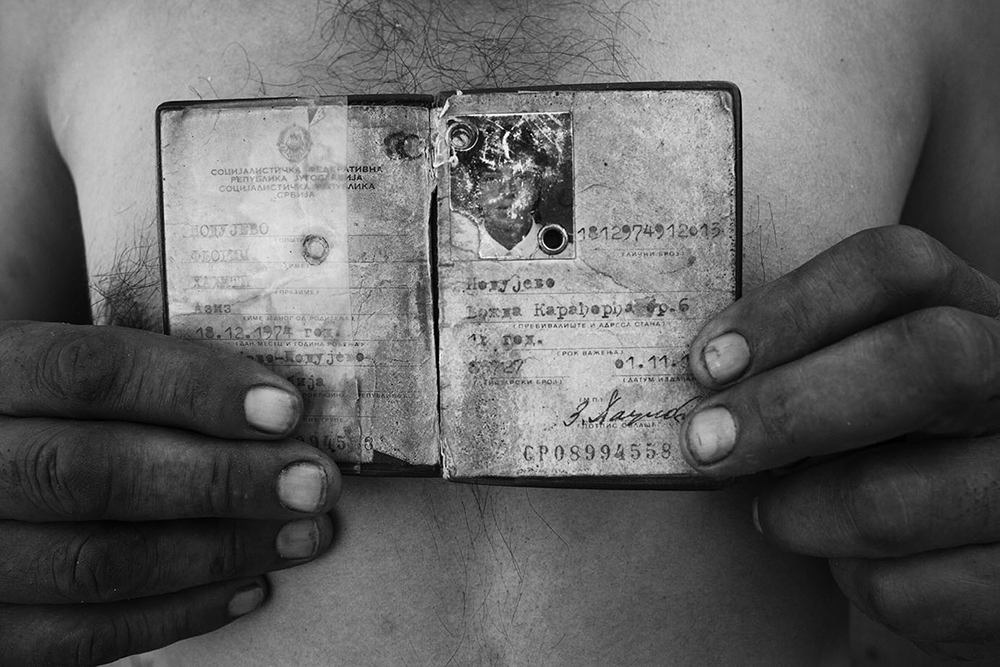
Åke Ericson’s exhibition about the Romani peoples
Focus on the photographer
When I ask if they now and then consider a Scandinavian exhibition, Bromann tells me that they in principle are not so much for collect exhibitions. “We prefer to present solo photographers, who shows a deeper insight into the photographer’s way of working. When we build collect exhibits on a theme, it’s more about theming any questions or things like that. In photography it is the questions that are interesting. However, we do like the themes. Just look at Åke Ericson’s exhibition Non Grata about the Romani peoples, and how these people are treated in Europe, and as a result are sitting and begging in front of our businesses today. Maybe this exhibition can lead people to look at the Romani peoples in a different way. That would of course be very important for us. But to make a collect exhibition on the Romani peoples in general, would never happen. There are, however, many photographers who are able to create depth projects. Åke was travelling around Europe for six years to get closer to the Romani people than anyone else.”
“But we’re actually doing a collect exhibition, which comes in a few years,” Bromann adds. “The theme will be horses, and that would not be as exciting with just one photographer. The funny thing about horses is that there are very, very many talented photographers using horses as objects.”
From the exhibition Exposed by Brian Adams
A meeting point for everyone
“We want Fotografiska to be perceived as a meeting place,” claims Bromann. “People meeting themselves, meeting their friends, having a total experience, something that you take with you home. Just read our texts about an exhibition. They are not academic. They are written in a way so everyone can take part in them. We do not have to synthesize for the visitors for them to be able to benefit from the text. We do not want to problematize what we want to display within cultural journalism.
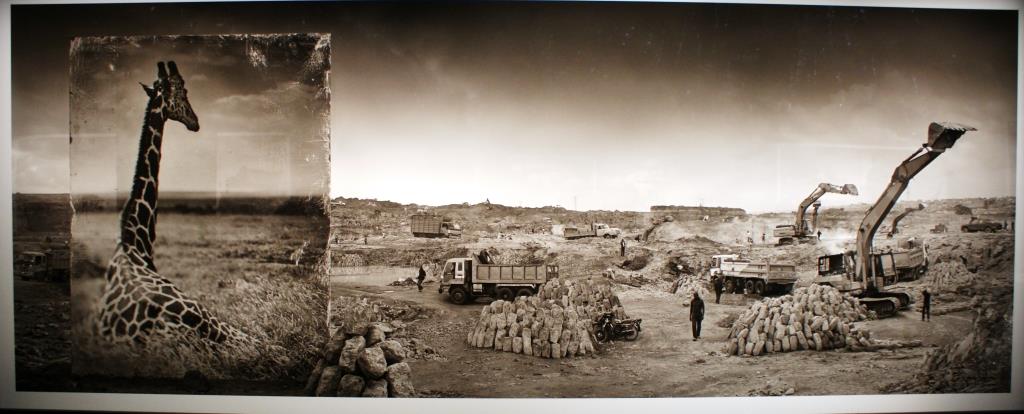
From the exhibition “Inherit the Dust” bu Nick Brandt
We are here for everyone, and we direct us towards those who may not be as interested in photography, but still receive a dividend of looking at the pictures. And then we must not make it too cumbersome. We must also include them in the experience. Their experience may not be the same as visiting Louisiana Museum of Modern Art outside Copenhagen, where very long texts discuss things about matters and things for the very passionate, which actually is quite few. Our aim is to create an environment where very many people can take part.”
“Our restaurant, for example, serves both meat and vegetarian dishes, showing that everyone can take part in the dining experience as well. And even when they go to the bar, both those who drink alcohol, and those who do not, order the same drinks with and without alcohol. We have our own signature drinks, which we have composed ourselves. At Fotografiska people can meet the same conditions, with the same opportunities and the same assumptions.”
A clear philosophy
Jan Bromann’s philosophy is that all companies in the future must have a concept that is grounded in what their customers want or stand for. “This is very rooted in our own assessments, and what we stand for,” he says. “And when we then open a bar, we must ensure that drinks with alcohol are likewise as those without. It is a result of our philosophy that all are equal. There are so many wonderful consequences in our business when you have solid ground to stand on. Our basic attitude is that all are equally valuable. That’s where we start when we look at whatever.
And so we are completely free when it comes to political issues. What we are doing has nothing to do with politics. It is about how people are. They may be red, green or blue. It does not matter. It is often difficult to distinguish between politics and empathy. It is believed that if one is red, then you are empathetic, but it is not so. A blue man can also be very empathetic. It is a good feeling that we never have to be political.”
Art and politics
However, there is a historical constellation between art and politics, both in red and blue. There is bourgeois art, and there is social art. Within the social democratic art, and especially in photography, the documentary images are the voice. Regarding the Greta Garbo exhibition, it was a coincidence that it came right now. There comes a guy and says he has a lot of pictures. It is of course an advantage from a commercial perspective that it is in the summer, with many tourists in town. And Greta Garbo is very big abroad. It is of course a way to lure tourists to us. But it could have been anytime. There’s no Garbo anniversary or anything that would indicate that it had to be right now.
Greta Garboe’s pyjamas and personal belongings
“When it comes to photography’s ability to convey reality, I think of a case, I think it was in 2006, when some of the biggest municipalities in Stockholm explained to their politicians and officials that their teachers at school had to understand imagery. With that I mean that they have to learn to draw, and not necessarily understand the photography. Children ‘see’ images. Today children do not write as before. They just post a picture that shows something they want to say. It can describe both emotion and facts. We adults do not have that knowledge. And so it is with the teachers. Children know data processing better than their teachers; wrong weight in the communication balance. The language of photo is so strong that the school should put more effort into it. It might of course be used both wisely and unwisely. Just look at the cyberbullying issues, where the image often is the key. There are not words. If you had an assessment scale on how one could apply the photograph or image, it would be a strength. I do not think there’s any school, at least not in Sweden, talking about this. They cannot imagery.
Fotografiska’s aim is to tell important stories through, precisely, photography and images,” concludes Jan Bromann.
All images by Tor Kjolberg, except where otherwise stated
World’s Best Photographic Museum, Jan Bromann was Interviewed by Tor Kjolberg 12 June 2016
Akershus, Oslo and Østfold: The county of Akershus lies like a pincer around the Norwegian capital, Oslo. The county is divided into four main districts: Upper and Lower Romerike, Follo and Asker/Bærum. The name derives logically from the ancient Akershus fortress located inside the Oslo harbor. It was named after the medieval farm Aker, now incorporated in Oslo.
Akershus is well endowed by nature. Large farms were originally inhabited by kings, princes and other nobles. Not surprisingly, Eidsivating Court was placed in this area.
The Eidsvoll building
All of Norway has its own stake in the momentous event in Eidsvoll in 1814, where the National Assembly met and the country’s constitution came into being. It is therefore a dignified area, offering history as well as local national dishes.
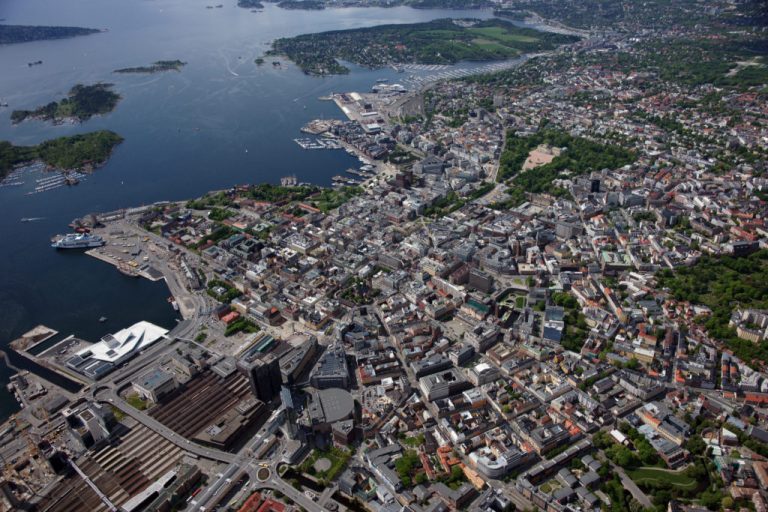
Oslo is an old town, but as a city relatively new. In the previous century, Christiania, as Oslo was called then, had about 10,000 inhabitants. Today Oslo is approaching a million.
Diversity of youth in Oslo / Wikipedia
The large immigration from the rest of the country and from more exotic cultures has left its marks. There have been – and still are – sharp distinctions between rich and poor.
While there has been a certain social cohesion, we also today find groups in the community that fall outside the mainstream
Restaurant in Oslo / Tripadvisor
In recent years there has emerged an interest to preserve traditions that have existed throughout history. Old traditional dishes seem to have come to honor and dignity, corresponding to the old days of urban party food. Restaurant life in Oslo is thriving today.
What makes urban food exciting is its variety – which is a natural consequence of all the people moving. People from all over the country and the world carry with them the traditions and roots that cannot easily be shed even if they are located somewhere else than where they came from.
From Drøbak (Frogn municipality – Akershus county
Østfold lies with its back turned to Sweden and the continent. Therefore Østfold has played the role as the strong back when strife riled between the Nordic sister nations. Østfold also turned its face out to the world – open to impressions and impulses.
Feature image (on top) Oslo from above – Lasse Tur
Every year Swedish Transportstyrelsen (Swedish Transport Authority) rejects tens of requests from drivers for personalized license plates because they are deemed “too offensive”.
And the authorities are doing their work seriously, so it is not easy to slip a naughty word through their net. Swedish number plates traditionally follow a pattern of three letters plus three numbers, but it is possible for drivers to ask for permission to create their own personalized so-called vanity plate.
One driver wanted to extend the authorization to have the sequence of digits “786” on the car license plates – but the Transport Agency said no. The number conveys a religious message and may be offensive, according to authorities.
Sometimes we feel tempted to shout “OMGWTF” – another request that failed to pass muster with the Swedish bureaucrats.
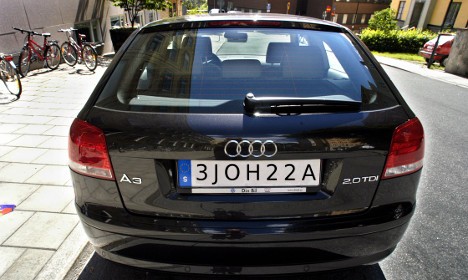
One driver in southern Sweden, was even defeated when he tried to trick the Transport Agency into accepting his license plate of choice: 3JOH22A.
Why?
To the untrained eye, the agency’s decision may seem like an exaggerated display of authority, a sign of Swedish bureaucracy gone mad. However, the letter combination was not as innocent as the man made it out to be.
Here’s a picture of what it would have looked like reflected in a mirror:
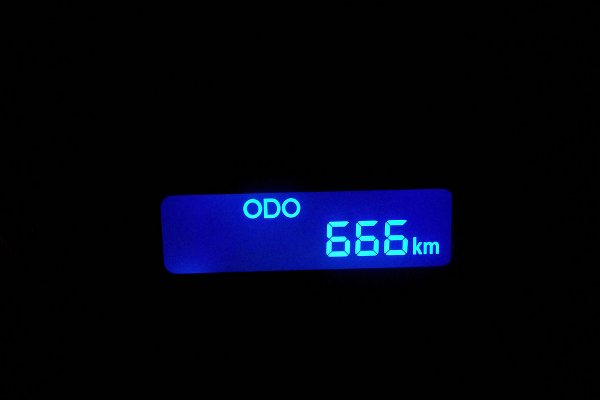
The combination “666” is forbidden, and “ACAB”, which stands for “all cops are bastards”, is not allowed either. The number”1312″, which is a numeric interpretation of “ACAB”, belongs to the same category.
Since 2009, more than 100 applications have been rejected by the agency, with 29 being given the red light so far this year.
According to the Transport Agency’s rules, a personalized number plate “may not be designed if it causes offence or harm to anyone else”. Such offence usually involves allusions to alcohol, drugs, sex, swearwords, religion or criminality.
Personalized License Plates Banned in Sweden, written by Tor Kjolberg







 However, the total renovation of Oscarshall from 2005 to 2009 included a complete restoration of the main building’s exteriors and interiors, as well as the ancillary buildings. The primary objective was to recreate Nebelong’s original as closely as possible.