
At the Edge in Oslo

0

Top-notch transit and plenty of attractions concentrated around the downtown harbor, Aker Brygge and Tjuvholmen make it possible to get a good feel for Oslo.

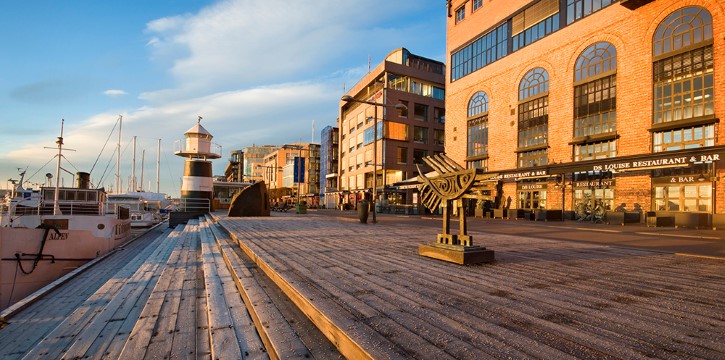
Aker Brygge is known for its strip of restaurants along the boardwalk, with plenty of opportunities for al fresco wining and dining. It was built on the area of Aker Shipyard, which was closed down in 1982, freeing up a potentially attractive area of Oslo’s harbor front.
071016_aker_brygge_oslo
For those with an interest in contemporary architecture, the area has plenty to offer. Buildings by 20 architects feature across the island, among them Niels Torp, Kari Nissen-Brodtkorb and Telje-Torp-Aasen Architects, provide a comprehensive overview of current trends.

Take a leisurely stroll along Aker Brygge’s seaside walkway on the west side of Oslo Harbor. The ultra-modern waterfront is lined with restaurants bustling with young families, bars filled with hipster banker, and motorboats zipping in and out of canals.

071016_aker_brygge2_oslo
There’s also a wide selection of fashion shops, if you want to renew your wardrobe. The area now has the highest concentration of shops in this part of the city and its portfolio of stores makes it well worth a visit. Local clothing labels as well as international brands can be found here.

The construction work was carried out in four steps. The first new part opened the summer of 1986. Due to the financial crisis at that time the owners Aker Eiendom and DNC lost several million kroner.
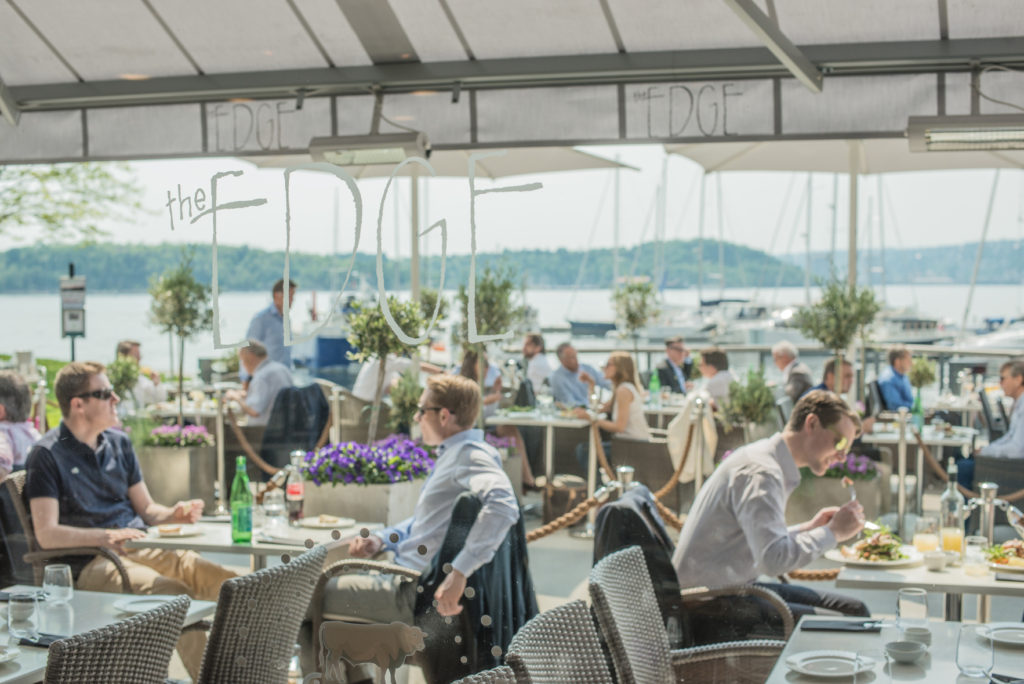
The Edge Restaurant
The Edge Restaurant

12 million people visit Aker Brygge every year using almost 2 billion NOK annually.

There are about 400 apartments at Aker Brygge, and companies situated on the islet employ approximately 5,000 people.

Last year Aker Brygge re-opened with a new and modernized interior, in addition to a wider seaside promenade and a pier, which gives you direct access to the Oslo Fjord.

Astrup Fearnley Museum of Modern Art, Tjuvholmen

The neighboring district Tjuvholmen is one of Oslo’s newest boroughs. The area is characterized by an intriguing architectural diversity and unique outdoor areas. It plays host to several galleries and art installations, including the Astrup Fearnley Museum, designed by Renzo Piano, flanked by a sculpture park and a beach.

Modern architecture at Tjuvholmen

In the 18th century, Norway’s most dangerous criminals were sent to the tiny island of Tjuvholmen (Thieves’ Islet). Today, it has been transformed into a hub of contemporary art and architecture and has become Oslo’s most vibrant district. Just five minutes’ walk from the city center, Tjuvholmen offers 2 kilometers of seafront along with an array of high-end boutiques, award-winning restaurants, extraordinary works of art and magnificent architecture.

Feature image (on top): Tjuvholmen, Photo: Leif Harald Ruud – Visit Oslo

At the Edge in Oslo, written by Tor Kjolberg
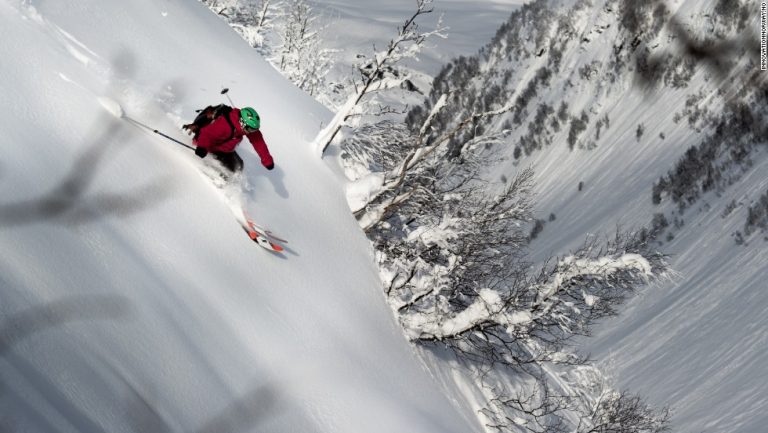
Winter Sports in Scandinavia

2

Long winters, frozen rivers and lakes, and beckoning snow-topped mountains make Sweden, Norway and Denmark a fabulous destination for winter sports enthusiasts.

It’s possible to participate in all kinds of activities, including snowshoeing, ice climbing and snowmobiling, and many ski areas can provide equipment and organize expeditions. Even in the heart of Scandinavian cities, winter sports abound; in Stockholm, for example, you can fly round the 14 islands on a pair of ice skates. Just 20 minutes by tramcar in Oslo, you’re in the middle of an Alpine winter wonderland.

From Hemsedal
From Hemsedal

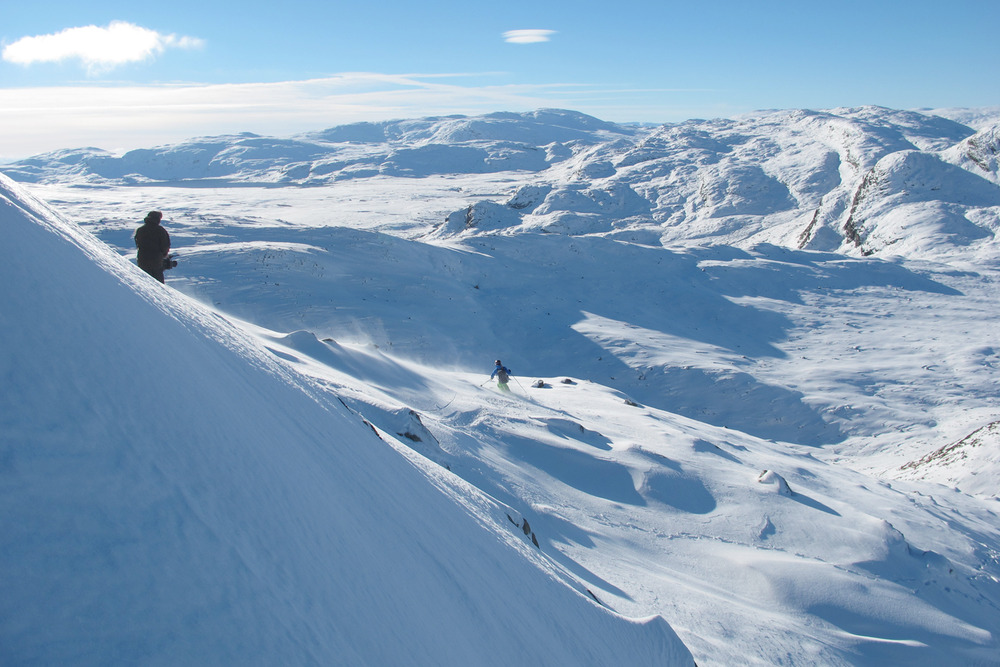
Naturally, skiing is the biggest winter sport, whether it’s downhill (Alpine), cross-country or Telemark. Downhill skiing in Sweden and Norway attracts a growing number of visitors thanks to artificially produced snowfall, a variety of slopes and a reduced avalanche risk compared to Alpine resorts.

From Geilo, Norway
From Geilo, Norway

Sälen is the largest ski resort in Sweden, and Swedish Åre and the Norwegian capital Oslo, where the World Cup Ski Championships are held, attracts skiers from all over Europe with hundreds of top-class, superbly groomed pistes, served by high-speed lifts and cabins. Half-pipes and snow parks are available for snowboarders.

Åre is the most well known ski resort in Sweden

Norway’s six months long skiing season is a boon to fantastic, and there are resorts scattered up and down the country, from Sirdal in the south to Tromsø way up in the Arctic Circle.

Halfway between Oslo and Bergen, Hemsedal is the largest Norwegian ski resort with 51 downhill slopes, cross-country trails and several excellent terrain parks for snowboarders. Although it’s only small, the Kvitfjell resort wins kudos for containing the “black diamond” downhill run used in the 1994 Winter Olympics.

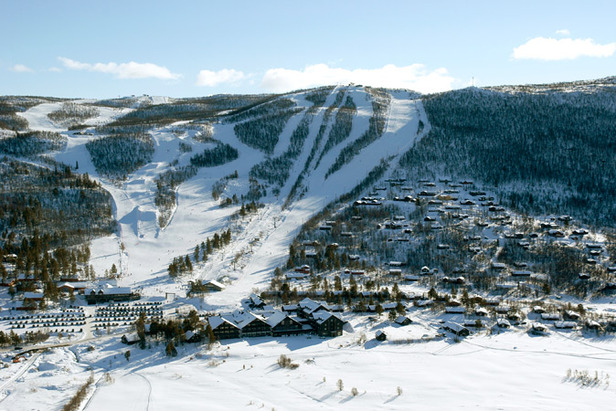
Oslo Winter Park
Oslo Winter Park

At Geilo pure adrenalin-seekers can try snow-kiting, a hair-raising sport whose stars reach speeds of up to 100kmph (60mph).

All images from Norway: Visit Norway
Image from Åre: Åre Ski Resort, Sweden

Feature image (on top): Downhill skiing, Voss Norway (Visit Norway)

Winter Sports in Scandinavia, written by Tor Kjolberg

Read also:
Denmark on Ice


Norway at War with Facebook

0

Norwegian people is furious at Facebook after a post from Aftenposten was removed because of a world-renowned image ‘The Napalm Girl’ from the Vietnam war accompanying an article. Adding fuel to the fire, Facebook then proceeded to delete a post by Norway’s Prime Minister Erna Solberg in which she used the same imagery.

Earlier this month, Facebook deleted multiple copies of the iconic image by Nick Ut and suspended user accounts after a Norwegian newspaper editor posted the picture as part of a series on war photography.

Norwegian Prime Minister Erna Solberg

Facebook administrators had busy days, removing posts from angry Norwegian Facebook users, following the editor-in-chief of the paper, Aftenposten, decried the move by Facebook in an open letter to Facebook’s founder and CEO Mark Zuckerberg. “Dear Mark. I am writing this to inform you that I shall not comply with your requirement to remove this picture,” he wrote.

111016-napalm-girl
This is a June 8, 1972 file photo of South Vietnamese forces following after terrified children, including 9-year-old Kim Phuc, center, as they run down Route 1 near Trang Bang after an aerial napalm attack on suspected Viet Cong hiding places.(Photo: Nick Ut, AP)

The image in question is the famous ‘napalm girl’ image of a nine-year-old girl who had removed her burning clothes after a napalm bomb had gone off in her village.

The girl is seen running down the road nude in the image, crying alongside children running, seemingly followed by soldiers. The nudity is the hot potato for Facebook and its motive for the censorship. This particular image was captured by Cong Huynh for AP News from The Associated Press and caught the world’s attention instantly, showing the vulnerability of children as causalities of war, it was elected image of the year in 1972 by World Press Photo and received the Pulitzer Price in the same year.
It all started with author Tom Egeland posting war imagery that has become symbolic of war and suffering in people’s minds. The post was removed because of nudity and Norwegian’s reacted strongly, re-posting the photo en-mass, all of them swiftly removed by Facebook’s administration.
Solberg maintains that she respects Facebook’s works in removing images showing violence and oppression. “It is important that we weigh in in combatting child abuse online.” With those words she published the image in question and at noon Facebook had removed the post. Solberg reposted the image, with the girl’s nudity hidden.

The chief operating officer of Facebook, Shewryl Sandberg, has apologized to Norway’s prime minister Photo by Jolanda Flubacher/Wikipedia

The chief operating officer of Facebook has apologized to Norway’s prime minister for deleting the iconic photograph of a naked girl running from a napalm attack during the Vietnam War.

In a letter to Prime Minister Erna Solberg, Sheryl Sandberg said “we don’t always get it right”. The social media firm has already said it would review its mechanisms to allow sharing of the image in the future.

Facebook, which bans nudity in most cases, later reinstated the Pulitzer Prize-winning photo and said in a statement that, in the case of the napalm girl photo, the image’s “status as an iconic image of historical importance” and the “value” of permitting users to share it “outweighs the value of protecting the community by removal.”

Norway at War with Facebook, written by Tor Kjolberg

Read also:

Too Nude for Facebook

Monster Night in Tivoli, Copenhagen

0

Halloween in Tivoli boasts no less than 20,000 pumpkins in decorative arrangements.  Saturday 22 October will reveal the biggest of them all when the Danish Championship in Giant Pumpkins is held.

Vice president, Brand & Communications Dorthe Weinkouff Barsøe says: “We have been working for some years to create more all-year-round activities at Tivoli. One of the ways to do this is to extend the seasons which are already so popular. This, we hope, will be good news for tourists visiting Copenhagen who have previously been met by closed gates in week 44 and after New Year’s Eve.”

031016-denmark-copenhagen-danish-school-chidlren-have-autumn-holidays-there-is-halloween-week-in-tivoli-gar-stock-photo
Tivoli’s autumn season opened for the first time in 2006 and became a firm success setting the standard for Halloween celebrations in Denmark. In 2013 the season lasted 17 days and had 417,000 visitors.

This year, when Tivoli opens its gates to Halloween 2016, the Gardens will be dressed up in warm Autumn colours. Halloween in Tivoli is for everyone, whether you’re there on a family day out, to enjoy the thrill of the many rides, going out for a nice dinner or to simply soak in the atmosphere of the beautiful Gardens.

031016-halloween-tivoli-copenhagen-2
We believe that Halloween in Tivoli still has the potential to grow,” states Dorthe W. Barsoe, vice president marketing. Since opening for the first time in 2006 attendance has increased every year. By including the extra week, Halloween in Tivoli covers the school holidays in most Northern European countries. We are convinced that Tivoli Gardens can attract more tourists from neighboring countries such as Sweden, Germany and the United Kingdom.   

Dorthe W. Barsøe, vice director, Marketing, Tivoli
Dorthe W. Barsøe, vice president marketing, Tivoli


Pumpkins, witches and monsters

Tivoli’s friendly witches will be around all day performing in parades and shows and meeting visitors on site for a little chat or a photo.

In the evening Tivoli turns scarier as the Scary Hotel haunted house opens and a parade of zombies and monsters perform in a new show. On Monsters’ Night Out, Saturday 22 October, you can dress up as scarily as you like and come for at stroll with other monsters.

031016-halloween-tivoli-copenhagen-2
Tivoli will be dressed in a Halloween costume of 20,000 pumpkins, bales of straw, spiders, scarecrows, magical creatures and lots of sinister atmosphere (not too scary, we promise!). Day or night, you will experience thousands of lights and harrowing screams from the roller coaster rides.

031016-monster-nighty-out-tivoli-copenhagen
Halloween is not traditionally a Danish holiday, but is known mainly from American movies and television. The first Halloween celebrations began in the 1990s, mainly with jack o’ lanterns on doorsteps, and gradually also dressing-up parties in kindergartens, etc. Halloween trick-or-treating, which used to be customary only at Lent, has also become quite common in Denmark.

Monster Night in Tivoli, Copenhagen, compiled by Admin

The Norwegian Knitting Celebrities

0

The two Norwegian knitting designers Arne & Carlos derived their inspiration from numerous traditional patterns from all over their native country. However, they do not only design traditional knitting patterns, but also patterns for accessories such as mittens, hats, wrist warmers, stockings, pillows, teddy bears and much more.

260916-arne-and-carlos
Carlos Zachrison comes from an artistic family with four generations of painters. Half Spanish and half Swedish, he was born in Brazil and had already travelled around the world before he was 13 years old. Arne Nerjordet also comes from a creative and musical family where everyone knows how to knit. He was born near Lillehammer  and comes from a small farm that has been in his family for more than 400 years.

260916-arne-and-carlos-idea-book
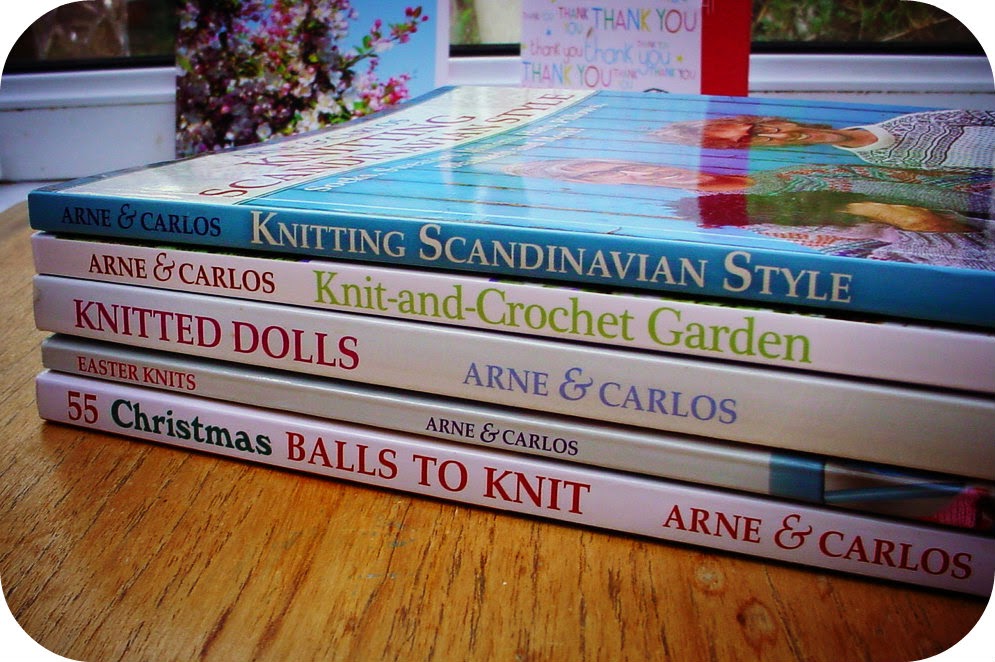
The knitwear designers Carlos Zachrison and Arne Nerjordet are again preparing for the Christmas season, promoting their first book “55 Christmas Balls to Knit”. The book has sold more than 52,000 copies in Norway – a country of five million, where 15,000 would ordinarily qualify a title of its kind as a hit – and topped the bestseller charts.

260916-arne-and-carlos-books
“Where we live, in the mountains near Lillehammer in Norway, we don’t just have a white Christmas, but a pure white Christmas, because there are no cars or people to mess up the snow,” explains Zachrison. “It’s a beautiful time of the year here to light candles, decorate the house, go skiing and eat great food.”

Through experience gained from working alongside Scandinavia’s most respected knitters, many of whom still use centuries-old techniques, Arne & Carlos seek to preserve tradition while creating pieces that are fresh and modern. Their book “Knitting Scandinavian Style” contains 33 traditional patterns.

260916-knitting-scandinavian-style
The popular designers have published six books, starting in 2010, and they are available in 14 languages. In addition to the two mentioned above, there are “Easter Knits”, “Knitted Dolls” “30 Slippers to Knit and Felt” and “Knit-and-Chrochet Garden”.

When they’re not preparing a new book, Carlos & Arne are always on the run, for inspiration or promoting books and giving workshops. They are popular wherever their books are published and wherever the authors travel for book signings or workshops. Do far they have been to England, Northern Ireland, Finland, Denmark, Sweden, Belgium, the Netherlands, Japan and the USA.

260916-easter-knits
“Everyone we meet is so enthusiastic. It’s mainly women,” admits Zachrison, “but there are always a few men at our workshops and the age group takes in everyone – eight-year-olds, novices in their twenties, an experienced knitting crowd from 60 up. It’s a family activity.”

Both men learned their crafting skills from their parents and grandparents. Carlos learnt to paint from his father and grandfather, and how to knit from his mother. Arne learnt most of what he knows from his mother and grandmothers. Carlos learnt the textile part of his skills from Arne.

260916-arne-carlos-knit
The pair never thought that anyone could become a ‘knitting celebrity’, but today there are several authors of knitting books that have reached that status.

The Norwegian Knitting Celebrities, written by Tor Kjolberg

Sweden’s Most Beautiful Places Revealed

0

Halland ranks as Sweden’s most beautiful county, while the medieval city wall in Visby counts as the country’s loveliest building, a new survey suggests.

When asked if they thought their home county was beautiful, 62 percent of Halland residents surveyed said they fully agreed.

Halland
Halland

Stockholmers also held their home county in high regard, with 59 percent of respondents praising its pulchritude.

Of the 2,500 Swedes who took part in a Sifo survey commissioned by the Projektengagemang consultancy, 51 percent fully agreed that their home county was gorgeous; 49 agreed to an extent, and three percent didn’t agree at all.

Here’s how the top ten looks:

Halland 62%

So what’s so great about Halland then? Well, miles and miles of coastline set against the lovely Kattegat strait go a long way to explaining the locals’ satisfaction.

From Varberg
From Varberg

And if we cast our minds back to June, three towns in Halland graced the top ten in the rankings for Sweden’s best summer city: Halmstad, Falkenberg and Varberg.

A month earlier, little Varberg was named the best municipality in Sweden.

As for Sweden’s most beautiful buildings, here’s how respondents voted:

Visby City Wall. Photo: Tor Kjolberg

Visby City Wall 13%, Visby, a stunning medieval city on the Baltic island of Gotland, is a Unesco World Heritage site and this well-preserved defensive fortification is one of the main attractions.

Drottninghom Palace, Stockholm

Drottningholm Palace 11%, also on the Unesco list, this palace is fit for a king. Which is just as well, since Sweden’s King and Queen live here.

Stockholm City Hall
Stockholm City Hall

Stockholm City Hall 7%, this magnificent red-brick structure stands proudly on the shores of Riddarfjärden and plays host each year to the Nobel Prize banquet.

Here’s the rest of the top ten list:

Stockholm 59%
Örebro 54%
Jönköping 52%
Skåne 50%
Uppsala 48%
Västra Götaland 43%
Östergötland 37%
Västerbotten 37%
Södermanland 29%

Feature image (on top): Halland

Photos: Visit Stockholm / Visit Sweden (when not otherwise credited)
Sweden’s Most Beautiful Places Revealed, source: The Local, Sweden

Dances with Wolves in Norway

0

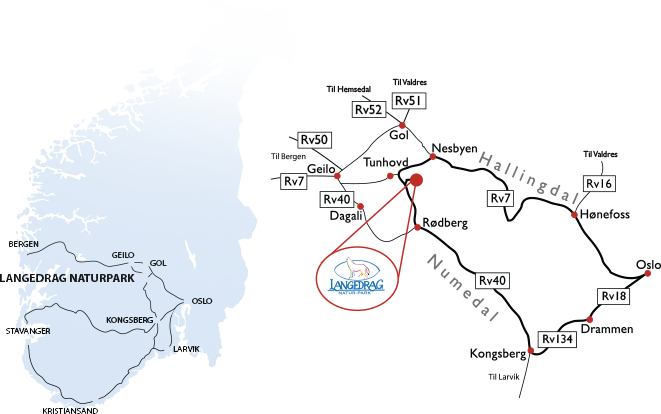
Dances with Wolves was the name of a fantastic film which showed a man’s interaction with wolves. Reality is even more fantastic. And you too can get a taste of it at Langedrag Nature Park and Mountain Farm, a 2 ½ hour drive from Norway’s capital Oslo.

Here animal keepers have been accepted as members of the wolf pack. It is an experience to see at close range how the wolf pack works together, and intriguing to learn more about this great ancestor of the dog. You may join a wolf expert on an exclusive one hour tour into the Wolves Enclosure. Inside the fences you will learn about the language of the wolves, their instincts and life within “The Pack”, all while you sit just a few meters away from them.

210916-langedrag-map
The confidence and trust needed to achieve this level of contact has been built up by understanding and using the wolves’ own signals. There are not many places in the world which can show such close contact between humans and wolves. Watching it happen prompts feelings of warmth and humility in both children and adults.

210916-langedrag-nature-park-norway
But Langedrag is not only about dancing with wolves. It has an extensive collection of wild and domestic animals, with the emphasis on preserving the animals which are as close as possible to the original, wild species – without human ‘engineering’. It is an exciting philosophy, and the host family has succeeded in making Langedrag an exciting place to visit for adults as well as children.

“Animals, large and small, wander freely around the place, and are accessible to visitors,” says the owner, Tuva Thorsen.

“Animals, large and small, wander freely around the place, and are accessible to visitors,” says the owner, Tuva Thorsen. Asked whether that is not perhaps a little dangerous, her enthusiasm for the concept is clear: “It is quite safe because we place great emphasis on teaching all our visitors how to act around the animals. We tell them how important it is to respect the animals, how important it is to let the animals come to us, that we must not chase after them to make contact. As a result our animals feel safe, and an animal that feels safe is not a dangerous animal.”

210916-cattle
We asked Tuva to list the species kept at Langedrag, but that proved not to be an easy task. She had to explain why each individual species was so special.

Riding on fjord ponies

“Take the fjord pony, for example,” she said. “Everyone knows it as a patient, good-tempered horse that is very well suited for teaching youngsters to ride. But few people know that it is the only breed in existence today that is practically identical with the original wild horses, the Przewalski horse. The Fjord pony is also the only breed of horse with a ‘stand-up’ mane.

Scottish highland cattle. Photo: Sverre Vassbotn

“We also have Scottish highland cattle, which are well suited to the harsh climate in the Norwegian mountains. The species is most similar to the primitive European ox. We have 12 of them, and they normally stay outside all year round. We also have yak from central Asia, where they are used as pack animals. You can also see reindeer at Langedrag, both herds of wild reindeer in the mountains and a few tame reindeer which live within the park.”

210916-langedrag-wolf-park
Tuva admits that it is hard to think of the large animals as cuddly, nut insists that they are peaceful. And it is certainly possible to make contact with them – when the animals feel like it!

Lynx at Langedrag. Photo: Eva Loeken

We ask which animals are the most popular with the many youngsters who visit Langedrag. “We have lots of beautiful mouflon sheep. They wander about here in the park and up the mountains. I need hardly say that this is Europe’s original wild sheep! When it is out on its own, it can live side by side with wolves, since it can actually outrun a wolf in mountainous terrain. The wolves can only take the weakest members of the flock, so contributing to natural selection. The rabbits are a bit special, too,” Tuva continues. “They live free in a harsh climate, and that has an effect on their reproduction. They do not mate all the time like most rabbits. They have young only in spring.”

Rabbit
Rabbit

Tuva speaks with passion about the lynx, Western Europe’s largest and most fascinating wild cat, and about the mountain foxes, which are threatened with extinction and which they hand feed! Everyone can enjoy this exciting meeting with the animals, whether you are here just one day or a whole week. Langedrag offers activities for children, families and school classes. All the buildings have been built and are maintained with the same respect for nature that Tuva has for the animals.

Mouflon sheep
Mouflon sheep

We finish where visitors to Langedrag begin, in the reception center. It is impossible to imagine a building more in keeping with its environment than this one, built as it is of 10” logs with a grass roof. Just look, even the sight of it soothes the soul!

Dances with Wolves in Norway, written by John Hammond

Japonism in Scandinavia

0

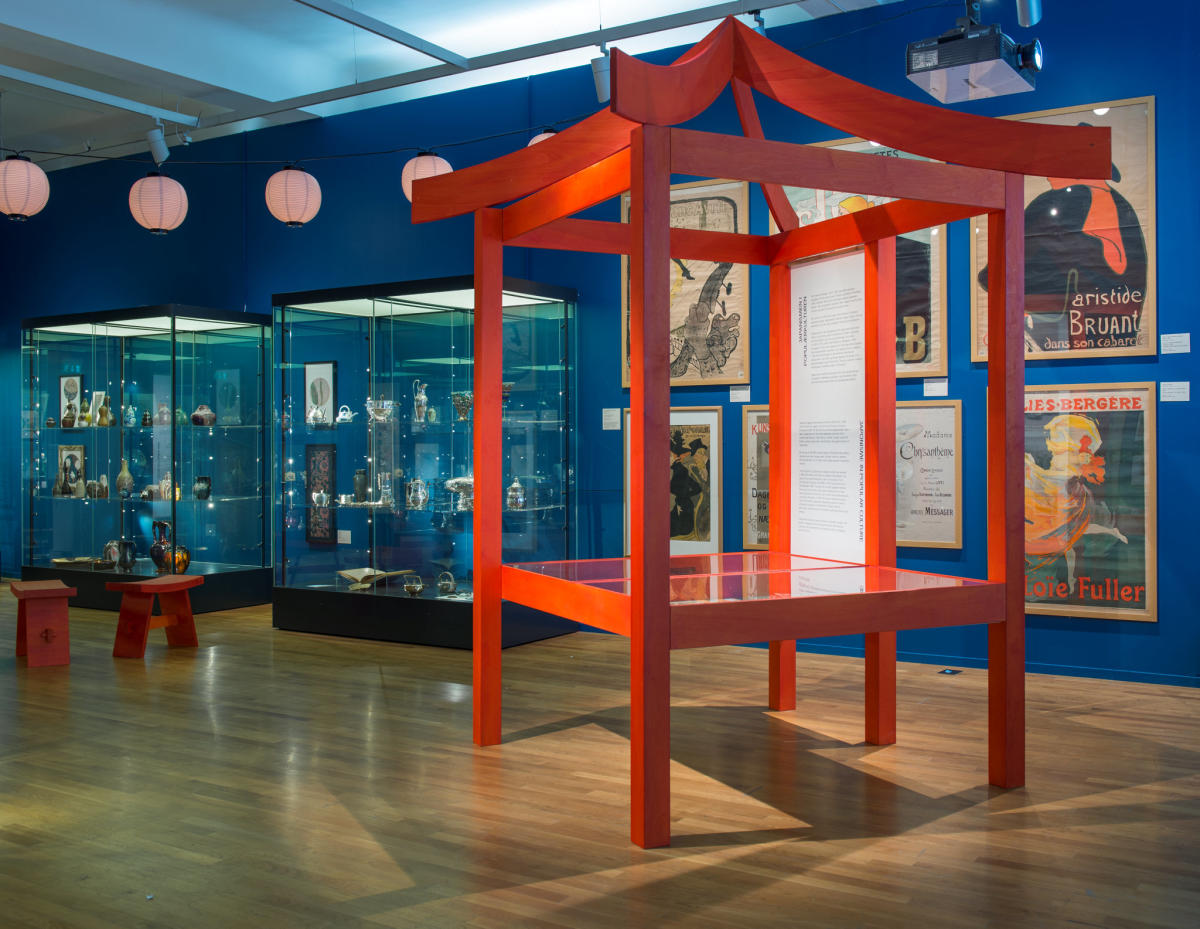
Japanese art and design had a profound influence in the Nordic countries during the final decades of the 19th century and well into the 20th. Several museums and galleries in Oslo, Norway, exhibit Japan-inspired art this summer.  

It was the art critic and collector of Japanese art, Philippe Burty, who coined the term “Japonism”, which has become an international art movement that refers to the influence of Japanese art on the West. “Japanomania” swept the Western world in the early 1850s. By the 1870s the Nordic countries, not surprisingly, became interested, since Nordic art shares the love for and influence of nature.

Japonamia in the north. Exhibition in Oslo

This summer’s major exhibitions in Norway are made in collaboration with other museums across the world. Exhibitions at the National

Professor Gabriel Weisberg

Gallery and The Museum of Decorative Art and Design in Oslo exhibit “The Influence of Japan on Nordic Art and Design”, consisting of two parts: the Museum of Decorative Arts and Design devotes its attention primarily to applied art, while at the National Gallery the principal emphasis is on fine art.

Not everyone sees the clear impact of Japanese art on Scandinavia. Three years ago, US Professor Weisberg attended a conference on

Japonisme at the University of Rennes in France. A Japanese professor asked him what he was working on, and Weisberg explained that he was beginning a project examining the impact of Japanese art on Scandinavia. Weisberg recalls: “He said, ‘There’s no such thing.’ And I said: ‘You’re going to be proven wrong.’”

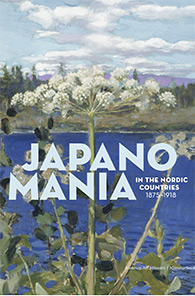
Three years later, Weisberg made good on that promise. In February he traveled to Finland for the opening of Japanomania in the Nordic Countries, 18751918 at the Ateneum Museum in Helsinki. Now the show has traveled to Oslo, where it will remain through 16 October.

270916-japanomania-in-the-nordic-countriesThe major trend when it comes to Norwegian museum exhibition this summer is not related to styles or art forms, but the act of cooperation. As a result, you get people queuing up for an hour or more outside the museums, which is something you rarely see in Oslo. Still, that was the case at the Yayoi Kusama exhibition at Henie Onstad Kunstsenter this spring.  The exhibitions at the National Gallery and The Museum of Decorative Art and Design show record number of visitors.

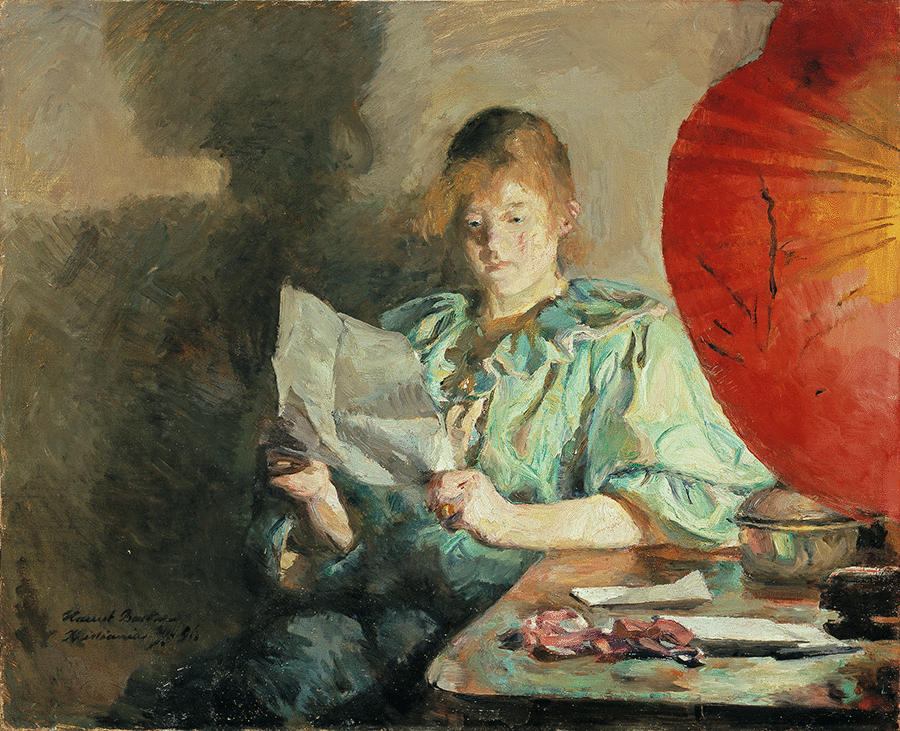
Evening interior Harriet Backer 1890 Photo Nasjonalmuseet part of the exhibition Japonmania in the North

Experience the exhibition in the the Museum of Decorative Arts and Design in 360 degrees

After Japan opened its borders in 1854, Japanese objects soon found their way into world exhibitions and famous department stores in Paris and London. It was in these metropolises, around 1860, that this East-Asian culture first had an impact. Internationally, the movement became known as Japonism.

270916-galleningress-japanomania
A show like this has never been done before. Yet it is important for several reasons, not least highlighting that Japanese art actually has had (and continues to have) an impact on Scandinavian countries and that it takes place in the Nordic countries, giving visitors a chance to reflect upon and understand the influence outside of the gallery walls.

270916-japanomania-in-the-north
It opens up new territory and gives people new ideas about Scandinavian art. “It is unique, and it’s different, and it’s my swan song,” Weisberg says. “The show is scholarly, but it is developed in a way that it can reach the average person.” That is the point of what Weisberg does: he wants to reach and educate the public.

The great wave off Kanagawa

Japanese art and design were seen as something new, fresh and exciting. The emphasis on asymmetry, simplification and stylisation – combined with a profound respect for the smallest of nature’s details – had a liberating effect on artists and designers, who increasingly wanted to consign older styles to history and create something new. Japonism formed a prelude to Nordic modernism.

Japonism in Scandinavia, written by Tor Kjolberg

The Most Beautiful Road in Norway Reopened

0

The King’s Road in Norway was historically one of the main routes between Eastern and Western Norway, and has been in use since 1793. Since 2009 a collaborative upgrading project, involving public and private sectors, has aimed to teach people about the importance of the history of transport over Filefjell.

Driving at King's Road, Norway
Driving at King’s Road, Norway

The result is a 100 km long continuous cultural heritage path between Lærdalsøyri and Vang. Every second year, the Norwegian Public Roads Administration awards “The Beautiful Roads Award” which is the Norwegian Director of Roads’ prestigious honorary prize for “roads with good aesthetic qualities adapted to their surroundings.” Now, the King’s Road  is voted the most beautiful road together with the Skjarvelandet landslide project on the Havøysund road in Northern Norway.

The cache is placed at Mureklopphaugen, about 14 meters southwest of the old county border stone between the old Bergen and Akerhus counties. The stone is made of Danish marble and was placed here in 1797 by C. J. Hammer who built the road.

The King’s Road was the first passable road over Filefjell mountain pass, built by hand under  C. J. Hammer’s leadership using simple tools at a time when dynamite had not yet been invented.

The route runs from the narrow, dramatic fjord landscape at the head of Sognefjorden over the Filefjell Mountains and down to the rural villages in Valdres. It is a journey between regions.

Filefjell, Tyin
Filefjell, Tyin

There is a lovely view over the surrounding mountains, and the highest point is about 1250 meters above sea level. Walking takes about 4 – 5 hours each way. There is a bus connection to Kyrkjestølen mountain farm at Filefjell on the E16 approximately 65 kilometers from the center of Lærdal. You can return by bus from Maristova.

The Troll's Ladder
The Troll’s Ladder

Since 2012 sherpas from Nepal have constructed new walls, bridges have been erected after ancient drawings, vegetation has been cleared, and it is signposted and embellished along the route.

190916-king's-road-norway
The historic Royal Route has been the theme for the project, and alternative paths have been combined to a continuous route where it no longer was suited for hiking. Thus it also offers hikers a complete holiday experience that enlivens all their senses. You can leave your car behind as you walk along historic paths through spectacular scenery; the joy of travelling slowly.

The Most Beautiful Road in Norway Reopened, written by Tor Kjolberg
9/11 Fifteen Years After

0

The Norwegian architectural company, Snøhetta, was selected to design a memorial building at the World Trade Center site after September 11, 2001. On Sunday, 15 years after the tragic events, we may hopefully experience that the architects have sifted the powerful currents of memory, myth and meaning into a sense of events.

Shortly after the 9/11 attacks, the late New York Times architecture critic Herbert Muschamp remarked that the several storeys of twisted metal facade then still standing after the cataclysm recalled Frank Gehry and Issey Miyake’s work.

070916-9-11-memorial-museum
However, Retaining the Twin Towers’ ruins was likened to the ‘aestheticisation of murder’, and in 2004, Snøhetta was commissioned to design the only building on the memorial plaza. In the years since, the program has changed several times, however it has remained a cultural facility dedicated to visitor comfort and orientation.

National 9/11 Memorial Museum Pavilion by Snöhetta

On May 15, 2014, President Obama was present for the dedication of the National September 11 Memorial Museum & Pavilion at the World Trade Center site. The Pavilion and Museum opened to the public for the first time on May 21, 2014.

The design for the building embodies a careful reaction to the horizontal character of the memorial design while also providing the area with a lively organic form that allows the visitor to imagine the site and city in a broader sense.

070916-september-11-memorial-museum-pavilion
“Our desire is to allow visitors to find a place that is a naturally occurring threshold between the everyday life of the city and the uniquely spiritual quality of the Memorial. It is important that people physically engage with the building and feel that it helps lead them on to other areas of the site and other thoughts about their experiences there,” said architect Craig Dykers.

070916-snohetta-national-september-11-memorial-museum-pavilion
The Pavilion’s jewel-like, striped façade was developed in collaboration with the client to allow the building to have a strong resonance for the visitor as well as providing visual and architectural connection to the surrounding urban environment. The flat plane of the Memorial Plaza is pierced by the glass Atrium of the Pavilion, which allows visitors to enter the below-grade Museum and bring with them sunlight from above.

9/11 Memorial Museum director Alice Greenwald said she wanted ‘an emotionally safe encounter with a difficult history’.

Monuments like this are always fraught with disagreements, yet it seems, fifteen years after New York City has a building befitting both the city and the event.

SNØHETTA has been involved in the shaping of several great buildings and architectural landscapes worldwide. Amongst their work are buildings such as the Norwegian Opera and Ballet in Oslo and the Library of Alexandria in Egypt.

9/11 Fifteen Years After, written by Tor Kjolberg