One of the most remarkable places to fish in Scandinavia is right in the center of Stockholm, in the fast moving Strömmen channel which links the fresh water of Lake Mälaren with the Baltic Sea. So, cast your line in Scandinavia.
A clean-up program has brought salmon and sea trout back to the very heart of the Swedish capital.
Fishing salmon in Strömmen river, Stockholm
Big salmon and sea trout can be caught almost anywhere in Sweden – in world-famous waters like the southern Mörrum River, in the large and wild rivers of the north, as well as along the coast when the fish are on their migration.
Fishing in Mörrum river
The salmon season varies between rivers, but usually starts during the summer and continues well into the autumn. The sea trout tend to arrive a little later. Both spinning and fly-fishing can produce good salmon catches, but sturdy tackle is advised.
In Norway the variety of fish and fish products is amazing, and Norwegians look on a proper fish shop as an asset to a community.
Fishmarket in Bergen, Norway. Photo; Visit Norway
Norway is a country of fishermen, both commercial and anglers. The long coastline is a mecca for saltwater angling, yet freshwater angling is more popular, and there are a quarter of a million fishable inland lakes and ponds.
Grayling / Thymallus thymalius
The most common of around 40 freshwater species are trout and char; in the northernmost parts, and in lakes and ponds at higher elevations, they are the only fish. Grayling and pike are more common in larger lakes and rivers in eastern and central areas.
Family icefishing in Gjøvik, Norway. Photo: Visit Norway
Ice fishing is a prime wintertime hobby. It’s a straightforward form of angling, which requires only a bated hand line or a sjort pole and line, warm clothing and lots of patience.
Cast Your Line in Scandinavia, written by Tor Kjolberg.
Danish fashion designer Henrik Vibskov is not only associated with a fashion label, but a multitude of twisted yet tantalizing universes created in relation to each of his collections.
In spite of, perhaps because of, collection names like, “The Transparent Tongue”, “The Stiff Neck Chamber”, “The Bathtub Observer” and the “Spaghetti Handjob” his trendy yet warable clothes are loved by the Copenhagen hipster crowd as well as a growing number of fans abroad.
On a chilly night last August Vibskov drew a horde of fashion types into a theatrical butcher store sprung to life, with rows of hanging stuffed knit “sausages” and workers attending to them in the city’s meatpacking district.
As a fashion designer Henrik Vibskov has produced more than twenty collections since he graduated from Central St. Martin’s in 2001, and he is currently the only Scandinavian designer on the official show schedule of the Paris Men’s Fashion Week, which he has been since January 2003.
This summer he gravitated in particular to the delightful vulgarity of a butcher’s window and a hedonistic idea with beautiful precision of martial art, so the visitors were greeted with a world of meat, baloney and salami.
The collection autumn/winter 2016/2017 gave a sense of the designer’s myriad talents. One can see and appreciate the extravagant, but not overpowering, work that has been well thought out. At the same time it offers options for developing a more basic collection aimed at the consumer.
Danish Fashion’s Rebel Kid, written by Tor Kjolberg
Today, 6 September, The Kavli Prize is awarded during a ceremony in Oslo, honoring nine scientists from Germany, Switzerland, the UK and USA.
On June 2nd, the Norwegian Academy of Science and Letters announced the 2016 Kavli Prize Laureates in Astrophysics, Nanoscience, and Neuroscience. The winners will receive a gold medal, a scroll and their share of the prize money.
The Kavli Prize 2016
This year’s laureates were selected for the direct detection of gravitational waves, the invention and realization of atomic force microscopy, and for the discovery of mechanisms that allow experience and neural activity to remodel brain function.
The Kavli Prize in Astrophysics is shared between Ronald W.P. Drever andKip S. Thorne, both from the California Institute of Technology, USA, and Rainer Weiss of the Massachusetts Institute of Technology, USA. They receive the prize “for the direct detection of gravitational waves”.
The signal picked up by the Laser Interferometer Gravitational-wave Observatory (LIGO) in the US on September 14, 2015, lasted just a fifth of a second but brought to an end a decades-long hunt to directly detect the ripples in space-time known as gravitational waves. It also opened up a completely new way of doing astronomy, which uses gravitational rather than electromagnetic radiation to study some of the most extreme and violent phenomena in the universe.
This detection has, in a single stroke and for the first time, validated Einstein’s General Theory of Relativity for very strong fields, established the nature of gravitational waves, demonstrated the existence of black holes with masses 30 times that of our sun, and opened a new window on the universe.
The detection of gravitational waves is an achievement for which hundreds of scientists, engineers and technicians around the world share credit. Drever, Thorne and Weiss stand out: their ingenuity, inspiration, intellectual leadership and tenacity were the driving force behind this epic discovery.
The Kavli Prize in Nanoscience
is shared between Gerd Binnig, Former Member of IBM Zurich Research Laboratory, Switzerland, Christoph Gerber, University of Basel, Switzerland, andCalvin Quate, Stanford University, USA. They receive the prize “for the invention and realization of atomic force microscopy, a breakthrough in measurement technology and nanosculpting that continues to have a transformative impact on nanoscience and technology”.
The realization of the atomic force microscope was reported by Binnig, Gerber and Quate in 1986, with a demonstration that the instrument could be used to obtain profiles of a solid-state surface with close to atomic resolution.
In the last 30 years the instrument has evolved dramatically and has provided fundamental insight into the chemistry and physics of a large variety of surfaces. It is still widely used today as a versatile tool for imaging and manipulation in a broad range of scientific disciplines.
The Kavli Prize in Neuroscience is shared between Eve Marder, Brandeis University, USA, Michael Merzenich, University of California San Francisco, USA, and Carla Shatz, Stanford University, USA. They receive the prize “for the discovery of mechanisms that allow experience and neural activity to remodel brain function”.
Until the 1970s, neuroscientists largely believed that by the time we reach adulthood the architecture of the brain is hard-wired and relatively inflexible. The ability of nerves to grow and form abundant new connections was thought mainly to occur during infancy and childhood. This view supported the notion that it is easier for children to learn new skills such as a language or musical instrument than it is for adults.
Over the past 40 years, however, the three Kavli neuroscience prize-winners have challenged these assumptions and provided a convincing view of a far more flexible adult brain than previously thought possible – one that is ‘plastic’, or capable of remodelling. Working in different model systems, each researcher has focused on how experience can alter both the architecture and functioning of nerve circuits throughout life, given the right stimulus and context. They have provided a physical and biochemical understanding of the idea of ‘use it, or lose it’.
This new picture of a more adaptable brain offers hope for developing new ways to treat neurological conditions that were once considered untreatable.
About the Kavli Prizes
The Kavli Prize is a partnership between the Norwegian Academy of Science and Letters, The Kavli Foundation (USA) and the Norwegian Ministry of Education and Research. The Kavli Prizes were initiated by and named after Fred Kavli (1927-2013), founder of The Kavli Foundation, which is dedicated to advancing science for the benefit of humanity, promoting public understanding of scientific research, and supporting scientists and their work.
Kavli Prize recipients are chosen biennially by three prize committees comprised of distinguished international scientists recommended by the Chinese Academy of Sciences, the French Academy of Sciences, the Max Planck Society, the U.S. National Academy of Sciences and the Royal Society.
After the prize committees have selected the award recipients, their recommendations are confirmed by the Norwegian Academy of Science and Letters.
The 2016 Kavli Prizes will be awarded in Oslo, Norway, on 6 September. His Royal Highness Crown Prince Haakon will present the prizes to the laureates. This year’s ceremony will be hosted by Alan Alda and Lena Kristin Ellingsen. Prime Minister Erna Solberg will host a banquet at Oslo City Hall in honour of the laureates.
This year’s ceremony will be hosted by Alan Alda and Lena Ellingsen
Masters of tonight’s ceremony will be Alan Alda and Lena Ellingsen.
Alan Alda is an American actor, director, writer and seven-time Emmy Award winner. His long time interest in science and promoting a greater public understanding of science led him to host the award-winning PBS series, “Scientific American Frontiers,” on which he interviewed hundreds of scientists from around the world. He is a Visiting Professor at the Alan Alda Center for Communicating Science at Stony Brook University, and is on the Board of the World Science Festival.
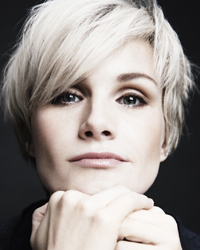
Lena Ellingsen
Lena Ellingsen is a Norwegian actress. In 2009 she received a Gullruten for Best Actress in a Lead Role for her work on the TV series “Himmelblå,” and in 2015 she received a Hedda Award for her supporting role in the musical “Dido + Aeneas.” She is mainly known for her lead role in the Norwegian TV series “Mammon,” but is also a highly acclaimed theater actress who is engaged at The National Theater where she has performed in multiple plays over the years.
The Kavli Prize to Nine Pioneering Scientists, source: The Kavli Price
Solvatten was established in 2006 in Stockholm, Sweden.The primary focus of the organization has since then been to produce and sell Solvatten to governmental and non-governmental partners around the world.
The company also facilitates CSR projects and carbon offsetting strategies. Through such partnerships, Solvatten has been brought to thousands of the world’s poorest and most vulnerable people.
In 2010, Solvatten Africa Ltd. was established in Nairobi, Kenya. The aim is to link the distribution of Solvatten with regionally appropriate financing, thereby encouraging uptake by more individuals and organizations in East Africa.
Solvatten (Sunwater) is a portable 11 liter container that harnesses sunshine to heat and treat water at the household level.
Inventor Petra Wadström
In Uganda, Namutebi runs a small business from her home selling ice.
This is her story:
“I first admired Solvatten when I saw one with a community promoter in my village. I was intrigued by it and welcomed the opportunity to be trained in its usage. Solvatten would help me reduce my expenses, boost my ice block business and prevent illness in my family. I then resolved to save some money to buy a Solvatten unit with support from my husband. It cost about 25,000 UGX.
Safe water is essential in my work as I use it as a raw material. In the past I would boil the water for making the ice using charcoal and firewood, but this was very expensive – I spent 2,000 UGX every day to buy charcoal or firewood, but this is no longer the case. I now use Solvatten and am able to save about 60,000 UGX a month. On a hot day, I can purify water up to three times, a total of 33 litres. Since I quickly achieved good results, I was able to buy a second Solvatten unit with my savings.
Inventor Petra Wadström presents her invention to President Obama
Solvatten has enabled me to expand my small business and subsequently improve my family’s quality of life. I advise those who do not have Solvatten to save up some money and buy it. It comes with a lot of benefits and it is a good way of saving money on energy costs”.
Namutebi’s husband commented “Everybody who passes by our home looks at the Solvatten, and they wonder what it is. Some of them have asked me about it when we meet, and I have been able to explain to them how it works – everyone that I meet is enthusiastic. The challenge is that our people have little money to buy the unit. I am trying to put together some money so that I can buy one for my mother”.
Namutebi is a housewife and mother to five children. She lives in Wakiso district, Uganda and runs a small business from her home, selling ice.
Picture: Namutebi. She is a housewife and mother to five children. She lives in Wakiso district, Uganda. Namutebi runs a small business from her home, selling ice.
Swedish Company Purifies Water in Africa, source: Solvatten
Our aim is to interview ambassadors to Denmark, Norway and Sweden, coming from the top ten countries on our readership list. First out is the Canadian ambassador to Norway, Ambassador Artur Wilczynski.
We interviewed Ambassador Artur Wilczynski on the 12th January 2016.
Why did you decide to join the Foreign Service?
I wanted to be in the Foreign Service for many years, but I am fairly new to it. I joined in the Foreign Ministry in Canada in 2010. I’ve had a very diverse career. I spent many years working as a political advisor on Parliament Hill, and then I joined the public service at the Department of Canadian Heritage, which administers culture, sports and human rights. Actually that is when I started to work with Norway, back in 1999.
Both Norway and Canada were members of International Network on Cultural Policy. We were working on an instrument on cultural diversity at UNESCO. In fact, one of my colleagues, Åse Valle, still works with the Norwegian ministry of Culture. We’ve been in touch for many years. I worked then at Public Safety Canada. I was the Director General of International Affairs and Border Policy. Much of my work was on counterterrorism and security questions. Since I wanted to do this international work for the foreign ministry, I competed for a position – and won.
I was pulled into the foreign ministry and became the Director General, Security and Intelligence. I did that job for four years before I was named as an ambassador.
What exactly is your job, and what issues do you address daily as ambassador?
Part of my job is to understand the full range of policies and issues that different countries face, and trying to explain them back to Canada
and to Canadians and my colleagues in various ministries. I have used my experience from my job in Public Safety in Canada a lot here. You cannot be anywhere in Europe today without appreciating some of the challenges of border management. My job at Public Safety was to look at how we work in particular with the United States. Canada and the United States work as partners to balance security and prosperity issues for the benefit of our populations. It’s a different context from Europe. You support a free flow of movement of people to ensure you have economic prosperity. In Canada and the United States the case of economy and security is very closely intertwined. And it’s the same thing in Europe. Your economies are very closely intertwined with free movement of people and goods. The challenge is to understand how to manage or deal with that, not just in EU but all of Europe. My job is to watch and to listen and to share experiences if they are relevant. My background has been helpful.
How is it to be the Canadian Ambassador to Norway?
The job is different on different issues. It’s never the same thing, and that’s why I like it. It’s a great job. It’s a fantastic job. It’s a huge, huge privilege to serve as an ambassador, particularly serving as an ambassador here in Norway.
Broadly speaking, there are a number of parts to my job. The first part of it is that I am the official representative of my government here in Norway. I need to speak with an official capacity with the Norwegian government. I am working with your foreign ministry and different parts of your government. For example regarding oil energy and defense, I am the main interlocutor in Norway for Canada on these questions.
But I am also a broader spokesperson for Canada and Canadian issues. I try to talk directly to Norwegians, to have public speaking events, to meet with different communities and businesses, to raise awareness about Canada with Norwegians. That’s an important part of my job. Business promotion is an important part. I was actually surprised by how big the trading relations are between Canada and Norway; billions of dollars. Much of it is in natural resources, nickel and metal derivatives but also oil and gas sectors, both in services and commodities, and defense is an important part of the economic relationships. Your pension fund has invested heavily in Canada, but also Canadian companies have invested here in Norway.
So being here to support that process and answer questions is also a part of my duties. I am here to provide service to Canadians, so when Canadians come to Norway, or live in Norway, it is important to help them when they come to the embassy. Many Canadians come to Norway for sport and adventures, and sometimes these adventurous people take risks. And when people take risks, they get hurt, and they hope somebody can be there to help them. When people experience difficult situations they need help, and we are here to provide consular service.
Also I am the manager. I’ve got 25 people working at the embassy, so it’s not a small unit. It’s a good size group. I’ve got six Canadians, and 19 Norwegians or people of different nationalities living in Norway. It’s my job to provide a good workplace and give directions and guidance to do a good job for the embassy.
Foreign Service has its highlights and challenges. Can you give us examples of both from your tenure as the Canadian Ambassador to Norway?
A lot! One of the things I have loved the most so far in Norway is engaging with young people. Last year, about this time, I was asked by Arctic Frontiers, a big conference in Tromso, if I would be a mentor for the Emerging leaders’ program. The Emerging leaders’ program is a group of about 35 young people from across the Arctic region, a good number of them Norwegians, but also people from Germany, Russia, Canada, Finland and Asia.
Minister of Foreign Affairs, Borge Brende at Arctic Frontiers Conference 2016
It was the first time I was invited, and we met up in Svolvaer, Lofoten islands. The purpose of it for them was eventually to make a presentation to Foreign Minister Brende – of their vision of the Arctic. I was providing the guidance and helped these bright and intelligent people with how to communicate and how to speak to senior officials. How they should present their cases, whether it was about some technical issues or around complex issues associated with health care. How do you package these issues in a way that public policy and politicians and bureaucrats can understand what to do with it? For me that was a wonderful highlight, actually a start of a number of activities that I’ve done here in Norway since that with young people.
So I have done events around a group called Alarga, which supports young immigrants and people of diverse backgrounds. I have done a presentation for them about what diversity means, how to integrate and things such as that.
I worked with the Young Ambassadors Program in Oslo. Young Ambassadors is a group of about 30 – 35 eager, young Norwegian high school students, who are looking for leadership positions. It’s a group that helps them to network, helps them to expose themselves to people with different perspectives and give them guidance. So all this is a few instances that I have been able to work with young people.
I was also invited to speak to a Jewish youth organization here in Norway. Engaging with young people, I think has been the biggest highlight. I get a lot of energy from that.
It’s incredibly nice to be here. Norway is one of the best places in the world to live. Are there challenges?
Managing a small team of employees can be challenging. When you’re new and you’re learning, you make mistakes. Some people are forgiving, other people are less. In my opinion there are no challenges that affect the relationship between Canada and Norway. We have a really good relationship. If anything, I think we take each other for granted. When people in Norway think about North America, they think about our big neighbor in the south, US. My job is to help them to think about Canada.
Minister of Education and Research, Torbjørn Røe Isaksen, giving a presentgation at Transatlantic Science Week
It’s interesting. I was recently in Boston, as a part of this job, to a conference that the Research council of Norway and a number of other organizers called Trans-Atlantic Science Week. It was a trilateral conference; Canada, the US and Norway. It was interesting how the Norwegians were talking about how they could do more business in the United States. The Americans emphasized that the American and the Norwegian business culture were very different. And as a Canadian citizen, living next door to the Americans, I know there is a difference, and I think Norwegians would be more at home doing business in Canada. I think we are more similar. I don’t think there is the same kind of raw individualism in Norway and Canada as there is in the US. And I think that affects the way that we behave, the way we interact. The history of the US compared to the history of Canada and Norway is very different.
The Canadian history is around accommodation. We’re the ones who did not rebel against the British crown. We maintained the British crown. America’s moto is life, liberty and the pursuit of happiness. Ours is peace order and good government. And I think that is more like the system in Scandinavia and Norway. National environments are also something we hold in common, in terms of our overall culture.
I encouraged those businesses, saying it was a challenge to work in the US and said, ‘Come to Canada’.
What events and areas of work have defined your Interaction with the Norwegian government
It’s a wide range of issues. The most recent one is to counter violent extremism and terrorism. We brought some officials from Canada and had good meetings with police and various officials here in Norway and had a public event on the issue. I had good meeting with the Minister of justice and security on these issues and recently did a presentation to the Norwegian Defense College. Another one that’s quite significant, we had our Deputy Minister of international development here last summer, talking about education and international cooperation on education.
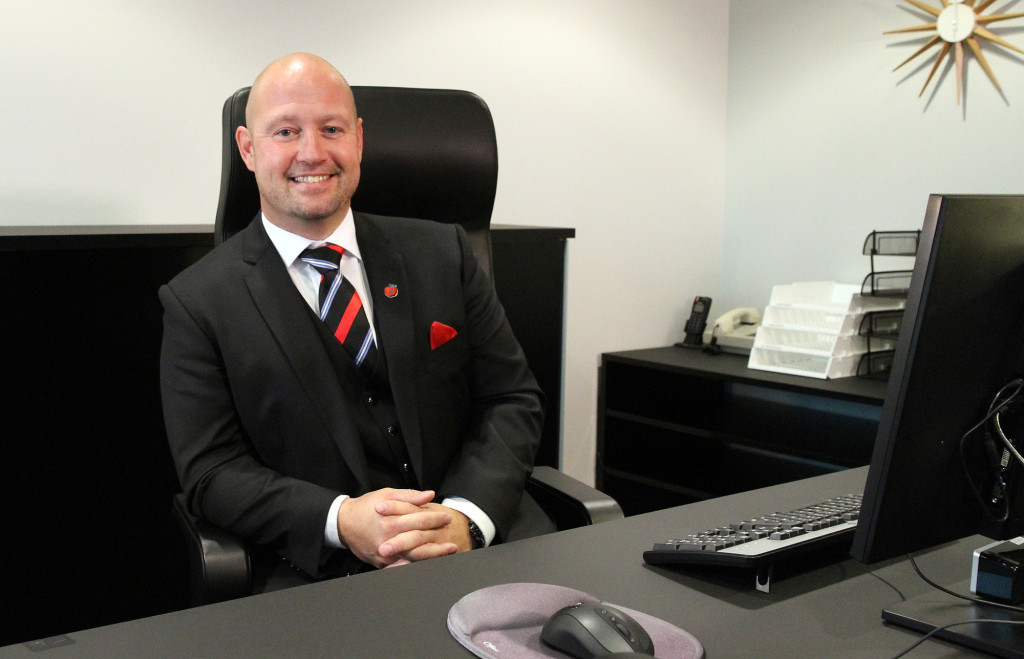
Minister of justice and security, Anders Anundsen
Also another very important issue that we spent a lot of time on, particularly over the past couple of months, was climate. Canada had a change of government, so climate issues have been quite central for my new government, and meeting with the Environment minister before Paris was another area of interaction.
Is there one experience, person, or event in Norway that has greatly influenced your decisions or your policies, and if so, in what way?
The short answer would be ‘no’. But what’s very interesting here is the general approach to how things get done. And I think there are some interesting models here that I think are useful for Canadians to consider. I am for example very impressed with how the political and economic calendar here in Norway get coordinated with the NHO (the main representative organization for Norwegian employers with companies ranging from small family-owned businesses to multi-national companies) annual conference, and how you get business leaders and government coming together and talking about what they think are strategical challenges for the country. And to do that in a format that’s interactive, where you have thousands of people in an audience, from the CEO of Statoil to the Prime Minister; from the Crown Prince to dozens of ambassadors. For me, that is a very interesting model.
Director General of the Confederation of Norwegian Enterprise, Kristin Skogen Lund, and leader of the Norwegian Confederation of Trade Unions, Gerd Kristiansen at the Remix Conference
I have been there last year, and also this year. To see how this happens is very interesting.
Then it is interesting to see how the talking gets translated into doing, and also what does not get translated. For example, last year a presentation was about Norway’s population going to be seven million people. How do you get ready for that? How do you make sure your infrastructure is working? Make sure you have the jobs required for your people? How do you prepare yourselves? It is interesting that the fact that media covers it substantially and in depth and analytically, demonstrates the level of political maturity and sophistication which is really quite interesting. I think in Canada we’ve got many different kinds of dialogues that take place. Canada is a huge country with ten million square kilometers. We’re also a federation with two languages, very diverse. We pull in 250,000 immigrants every year from around the world, because we need it and we want it. It’s part of our identity. So how you develop public policy in that environment is interesting. I think that is one of the areas where your government really is trying to be far more consultative and engaged in terms of reaching out to different actors. The new government has talked about changing the relationship with the indigenous peoples in Canada fundamentally. It is being more engaged in dialogue with provincial and territorial governments. Relationship and dialogue are really important for the new government. See how countries like Norway do that. That’s interesting for us, something we can learn from.
What does Canada stand to learn from Norway? And vice versa?
I think another area where many Canadians have looked to Norway has been how you have managed to sustain a cooperative benefit for your whole society from the natural resources that you’ve extracted; the State pension fund. The decisions that were made many years ago have left Norway with an incredible legacy. And I think that kind of political consensus around something as fundamental as what to do with that asset has been really, really interesting. And I know that in Canada the assets which has been managed for about the same number of years in terms of being in the oil and gas industry, and it’s been an incredible benefit for people right across the country, and it’s been a particular benefit to people in Alberta, Newfoundland, Labrador and Saskatchewan. But we don’t have the same scope and collective legacy in terms of the pension fund like Norway has, even if Canada is a much more diverse country. I think there are lessons to learn.
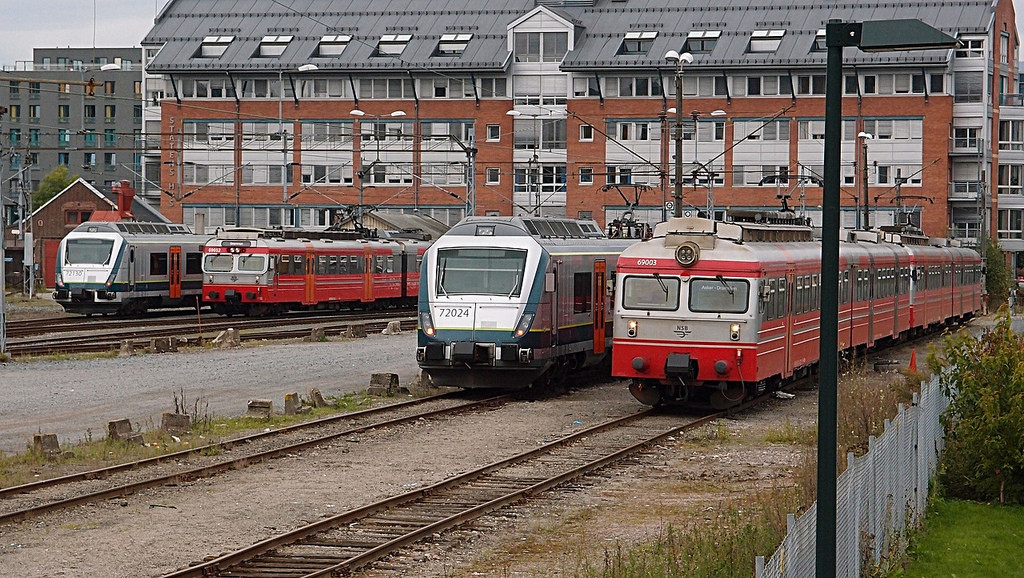
Oslo commuter rail
Every day I also marvel at the infrastructure you have, as a part of what you have invested. I almost never drive in this city. I take the metro, which is 50 meters from my front door, and I can go anywhere. I walk in the city, I cycle. There is really no reason to drive. That kind of infrastructure is great. And Oslo is not a huge city; 650,000 people. My hometown, Ottawa, with one million people doesn’t have near this kind of public transit system, and this kind of supported transport system I think is something we can learn from.
Snow in Norway winter wonder land
What Norway can learn from Canada? I must say this is a bit of a joke, but actually I’m half serious: The way you clear your streets in Oslo during winter time. I love your transport system, but the snow – I don’t. Put salt down! Take better care of the roads in winter. If you take care of the side roads the same way you take care of the cross country ski slopes in Nordmarka, I would be happy. I fell a couple of times, and I have friends and colleagues who have broken bones. I understand the resistance to salt, but I think it is sometimes overstated. I try to figure out what cost more; number of people with broken bones or environment issues.
I think one area where we could share information is how we manage migration and immigration. I myself am a refugee to Canada. I was born in Poland and because of various political issues that were taking place during the communist system, we ended up in Canada. People like me are not particularly exceptional in our system. I have colleagues who have been born in other parts of the world, came to Canada and ended up representing us. We don’t have that same angst, I feel, about our national identity – who we are as result of people coming to Canada. I think that is something we can share.
Diversity of youth in Norway
I was in Bergen in the summer. It is an organization called STL. In English it stands for Religious Minority and Lifestance Communities. It’s a government agency. I met with the leadership of this group. There was Somali community, Bosnians, people from the Mormon community. It was interesting to listen to one man with Somali background. “Can someone who looks like me ever have their children really considered Norwegians?” he asked. “They speak Norwegian. They were born here. They went to school here. Are they Norwegians?” And as a Canadian I find that a strange question. It is in this area I think we can work together, and I see some potential between Canada and Norway.
How do you facilitate the exchange between Canada and Norway?
There are lots of tools at my disposal. One that I have taken to use a lot is social media. Social media has become an increasingly important
part of the diplomatic toolkit. So whether it is on Twitter, Facebook, LinkedIn or others, it has almost turned into a reflex. If I do an event or take a picture, I tweet about it and try to make connections between Canadian and Norwegian experiences. For example at the end of the NHO conference, a big chunk of it was called Remix, about the possibilities within the sharing economy. And we do a lot of that in Canada. So I was tagging social projects in Canada. So during the two nights we actually learned from each other, trying to connect. A lot of it is old fashioned, as when I report back to my colleagues what Norway is doing on issues x or y, or when I meet with Norwegian officials, I explain Canada’s position, and I do as many public speaking engagements as I can handle.
For example at the Oslo Chamber of Commerce I did a presentation on the new Canadian government. So I explained what Canada is like, what the electoral system is like, what the results were and what differences to expect. So it’s a combination of those kinds of issues.
I also talk as much as I can with journalists and media, but then I come back to what I’ve said before, that we take each other for granted. That’s a challenge because unless it is a problem, there isn’t necessarily a high degree of interest. So we’ve got to find new innovative ways to get people’s attention.
I also do YouTube videos. We did a session with the Norwegian Research Council about exchange between our two countries. But when trying to get attention and raise the profile, I did something with my colleagues from the research council. They invited me to go swimming in the fjord. I jumped into the fjord, temperature was four degrees Celsius. I screamed a little bit, but then I used it for social media, because it is somewhat tough to get attention. So sometimes you got to do things that are a little different just to get the message across.
So I am going to a hockey game here in Norway and tweeted about hockey and sports and what’s interesting. I do that because it is a way to raise awareness of the work that the embassy does; some of the political work, sugar it a little and put a little public policy in there.
What kind of misconceptions do Norwegians have of Canada? And vice versa?
Norwegians don’t know a lot about Canada. It’s not that what they know is wrong, but they don’t know a whole lot more than it is north, it’s big, it’s cold and they play hockey. Perhaps what they don’t know is that Canada is an economic powerhouse, that we’ve got a diversity of industries, great services, diverse population with a complicated history, that we’ve got a lot of common with Norway and that we have similar values in the way that we are taking care of each other, and having an active and constructive role in the world and the standard stuff – the sports, the winter. It’s nice that we know that about each other.
But to take the time to know what shared history we have, which is significant, is also important. The first European settlement in North America was a Viking settlement in L’Anse aux Meadows in the province of Newfoundland and Labrador. And having spent time on the west coast of Norway, and having spent time in Newfoundland and Labrador, there are remarkable things that we have in common; the fishing heritage, the North Atlantic, and that should bind us more together. But I think because of the migration and so many Norwegians at the turn of the last century came to the US, means that a lot of Norwegians, when they look across the Atlantic, they’re looking further south, and they should keep in their gaze that there are 400,000 Canadians with Norwegian ancestors. That’s a very big number, and we’ve got Norwegian clubs in British Columbia, through the prairies, in Toronto and in Montreal.
Don’t forget the history from WW2 about Little Norway. After the war many Norwegians settled in Ontario, and Toronto, and a number of Canadian men came back with memories of Norway, so I think there is a deep history, but just a lack of knowledge. And that’s a part of my job to try to get those stories out.
Also Canadians have stereotypical knowledge about Norway and Norwegians. They think of the fjords and the Northern Lights. They don’t have so much understanding of how the society is managed or know the role of sharing that the people here has, the collective sense of responsibility for one another.
The great role that Norway plays internationally in terms of being a bridge builder between peoples; a country with such a small population being able to do so. And I think Norway has leveraged itself in a very interesting way. There’s a lot to be said about good offices, and you have a very skilled and talented group of people, who work in your foreign ministry, and work in public sector here in Norway. The role that they play everywhere from the Middle East to Colombia, Sri Lanka, to South Sudan and lots of different hard places, has been important. It has been good and demonstrates that Norway brings a kind of balanced, fair approach that is essential. And there are so many different actors who trust Norway, for it does not have that colonial history with that baggage that many of the European powers have. And I think Norway has capitalized on it. It’s done good work, but I think also this has helped Norway and Norwegian interests.
How do you feel Canada is represented abroad, and are there any elements of Canadian foreign policy that you would want to change?
It’s not up to me to change Canadian foreign policy. It’s my job to go and implement it. I was appointed by a conservative government and now I will implement the policy of a liberal government. That’s my job. I’ve been in professional public servant for 25 years. It’s my job to provide advice, and that’s between me and my bosses back in Ottawa, whether I am here or there and I give them the benefit of my advice and my experience and knowledge. They make the decisions, and I implement the instructions that they provide.
On entertaining visitors, coming to Norway, what are your best/worse experiences? We haven’t had a lot of visitors so far. My parents came twice. They came when we first arrived, and it was fantastic, because the protocol here was so nice. They included my parents in some events, around my presentation of credentials. They couldn’t come to the Palace, but there was a reception afterwards where my parents were invited to. For me that was so special and meant a lot to me and a lot to my parents. My parents sacrificed a lot for me. They left their country. They took a little boy across the Atlantic and had to put up with me for decades, and to have them to experience that was wonderful.
When you bring people to Norway, you always send them to experience Norway’s nature, but also to experience the culture. I love places like the Vigeland’s Park. I like taking them down to the Opera House, the combination of nature and culture which coexist so nicely here. I live here together with my husband. When people come visit us, and friends come, that is really important. It says a lot about what kind of country Norway is, how accepting it is of human rights and people relations, which is something that doesn’t happen everywhere.
I’ll tell you the places I go regularly to eat. There’s a great restaurant up at Frognerseteren with a view of the city. I love bringing people there. I must say I find it less touristic than going down to Aker Brygge. They have fish, game. It’s a different menu and located so pretty. There’s a good sushi restaurant at Majorstuen, near the Frogner Park. I like Theatercafeen. It’s more and more cosmopolitan in Oslo. Chinese food I haven’t found yet, but Thai is great and Indian is great.
Saint Mary’s University, Halifax, Nova Scotia
Students, consider Canadian universities!
This is my first posting. I am learning to know my colleagues and seeing what that do and how they do it. I am learning from the colleagues at the embassy and I am learning from the people of the foreign ministry and trying to prioritize, because there are lots of different things you can do. So the first year you try to be everywhere all the time. Some things are good – some things are not so good. Now I have met some good friends and have some good connections with local expats living here and Norwegians, who have been remarkably generous about my husband and I. It’s been great!
And to young people, considering where to study, I just want to mention that there are great universities in Canada!
On Being an Ambassador to Norway, Ambassador Artur Wilczynski was interviewed by Tor Kjolberg
All portrait photos of Ambassador Artur Wilcztnski by Tor Kjolberg
The Danish government has according to a government press release a national strategy to be “the first smoke-free generation by 2020”.
The press release states that this will be done in part by putting new restrictions on smoking at educational institutions and “partnerships with the business community” aimed at getting stores to stop selling tobacco products to minors.
“Far too many children and youth take up smoking. We need to do something about that. And if we can reach our goal of having none of the children who are born today smoking in 2030, we will have gone very far in terms of preventing new cancer cases,” Health Minister Sophie Løhde said.
Danish health minister Sophie Lohde
According to Løhde, the government’s plan would “send a clear signal that children and smoking don’t go together”.
The goal of a smoke-free generation was presented as part of Cancer Pack IV (Kræftplan IV), which carries a total price tag of 2.2 billion kroner.
“The government puts a high priority on the fight against cancer and therefore we want to inject a historically large amount of money into the area. With Cancer Pack IV we will ensure that more people survive cancer and that they can live a good life when they complete treatment,” Løhde said.
The head of The Danish Cancer Society (Kræftens Bekæmpelse) called the plans “a breakthrough”.
“This is a clear acknowledgement of the fact that tobacco is the most serious preventable health problem in Denmark,” Leif Vestergaard Pedersen told the venerable Danish newspaper Politiken.
Cancer treatment
According to a study released at the European Cancer Congress in Vienna in September 2015 that was described as the largest ever study of the disease, Denmark’s cancer survival rate of 50.9 percent is near the bottom among all western European countriesand far below the level in Nordic neighbors Sweden (64.7 percent), Finland (61.4), Iceland (61.2) and Norway (58.6).
Løhde said an aim of the plan is for Denmark’s survival rates to “match the other Nordic countries”.
Among the other initiatives in the plan is a “patient-first” strategy which stresses individual decisions about treatment options.
“Cancer treatment should be based on the individual patient’s needs and life situation. Patient involvement is already an integral part of the health care system but we should turn to the patients themselves even more for advice, listen more to them and be better and considering their experiences,” Løhde said.
Although the Danish Health Authority (Sundhedsstyrelsen) reportedly recommended additional measures including increased tobacco levies, plain-label packaging for cigarettes and forcing stores to place tobacco products out of plain view, the Danish Cancer Society (Kræftens Bekæmpelse) said the government “hit the nail on the head” with its new plan.
Dorte Crueger, Chairwoman of the Danish Cancer Society
“There are a lot of good things to say about Cancer Pack IV, but the thing I am most pleased with is the ambition to make future generations smoke-free,” the society’s chairwoman, Dorthe Crüger, said in a press release. “No other initiative could save us from more instances of cancer than if we succeed with that.”
Denmark Aims to Combat Cancer, source: Press releases
Foreign tourists have discovered Norway’s shoreline with its pretty ports and dramatic fjords. The exotic north has long been established as a popular travel destination for people from all over the world.
It was a massive ice sheet, which gouged out these fjords and valleys, and melted 10,000 years ago and thereby revealed this dramatic legacy.
More and more people discover that cruising along the Norwegian coast, or even crossing over to Svalbard or Greenland, is an adventure not to be forgotten.
Arctic Norway. Photo: Baard Loeken
Throughout the year the beauty of Norway comes in many forms. In winter multicolored buildings appear especially radiant during the short Arctic days. Through summer, cities and valleys are filled with green trees. The picturesque scenery along the vibrant Norwegian coast is always inviting.
Torghatten near Brønnøysund. Photo: Baard Loeken
And if you travel to the northern reaches of Norway between November and March, you may witness a spectacle that will imprint itself on your soul, the northern lights.
Northern lights. Photo: Ct. Jan R. Olsen
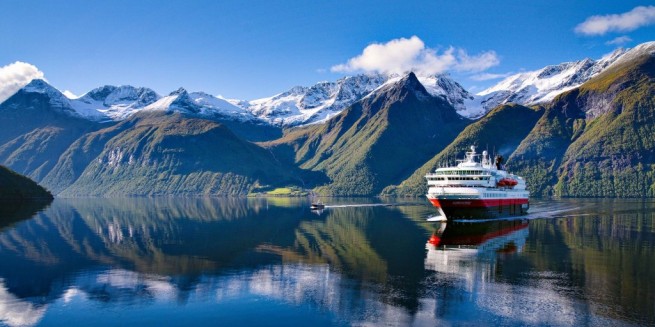
There are in fact more foreigners sailing along the Norwegian coast than natives. “The exotic North” has established itself as a popular destination for sailing enthusiasts from all over the world. A midsummer cruise, on which the sun never sets, along angry cliffs, deep fjords and scattered islands, is a memorable experience.
Lofoten islands
The country’s stunning coastline is best seen from the water, and Hurtigruten is a favorite way to see it. It is part cruise shop, part ferry and part commercial vessel. Hurtigruten offers offshore excursions at ports from Bergen to Kirkenes with activities, educational talks, and other onboard events to liven up a week cruising the Arctic waters.
Midnight sun sailing
Sail Norway has established itself as a popular choice among groups of people who seek maritime experiences in the northern parts of Norway.
Norway is an under-inhabited land, but the nearly 5 million people living there are very serious about preserving their landscape, adhering religiously to their government’s severe building restrictions.
The magic Helgeland coast
Many people believe that the weather is quite rough up north, but the fact is that you may sail inshore all the way north to Tromsoe.
There is little along this coastline that isn’t a visual feast. For example, even the Norwegians themselves talk in awe of their Lofoten Islands – they have a mystical presence in the collective psyche of this nation. Say to a Norwegian that you’re heading there and they’ll nod with approval.
Northern lights in Tromsoe
One of the driving forces to visit the far north is the beguiling wonder of the aurora borealis. September through April are good months to catch sight of them, but the best odds are in January and February. Check out the highly accurate forecasts of NorwayLights.com, which shares specific hour-by-hour predictions for viewing the northern lights from various Norwegian cities.
Tromsoe from above
Many people dream of a drowsy sailing vacation in the Carabbean. But the real sea adventure you’ll find along the beautiful Norwegian coast. Sail north and discover the natural treasures of Helgeland, Lofoten – and Svalbard.
Coastal Norway – Wild and Beautiful, written by Tor Kjolberg
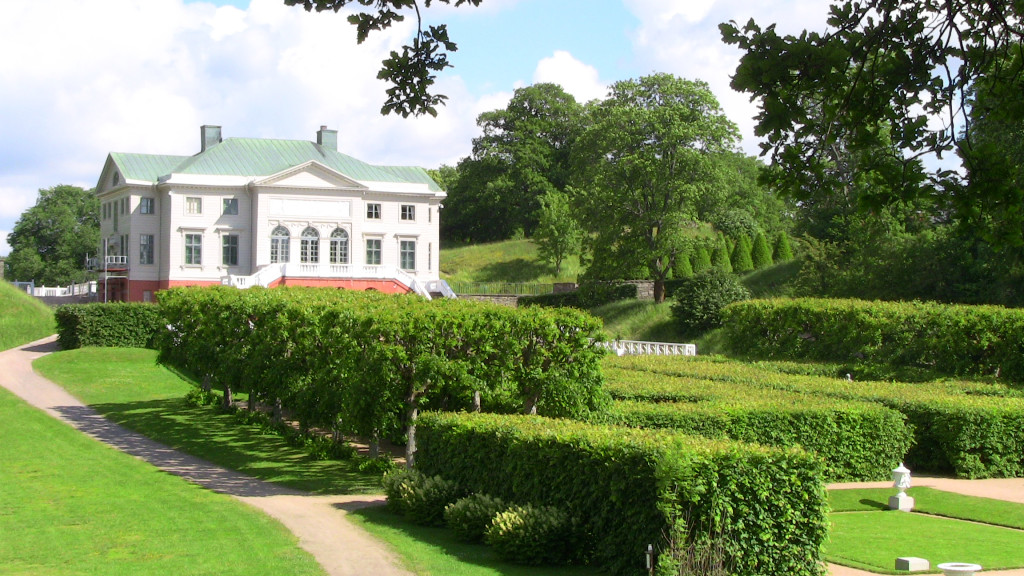
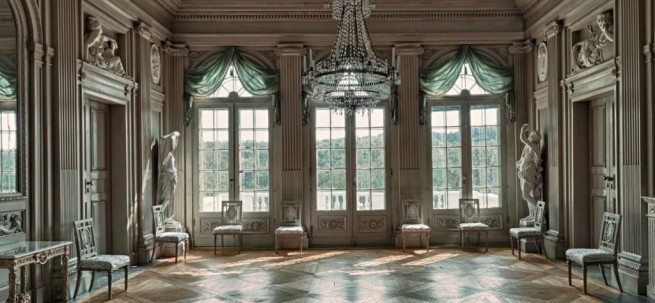
Gunnebo House and Gardens in Gothenburg, Sweden, is one of the finest 1700s establishments in northern Europe. It was built as a summer villa for the wealthy merchant John Hall and his family.
Today, Gunnebo is a living cultural environment with guided tours and events, coffee house and restaurant, a shop and a farm.
This summer Gunnebo was prepared for Gothenburg Green World, and visitors could experience the reconstructed orangery as an exciting part of Gunnebo’s exhibition program.
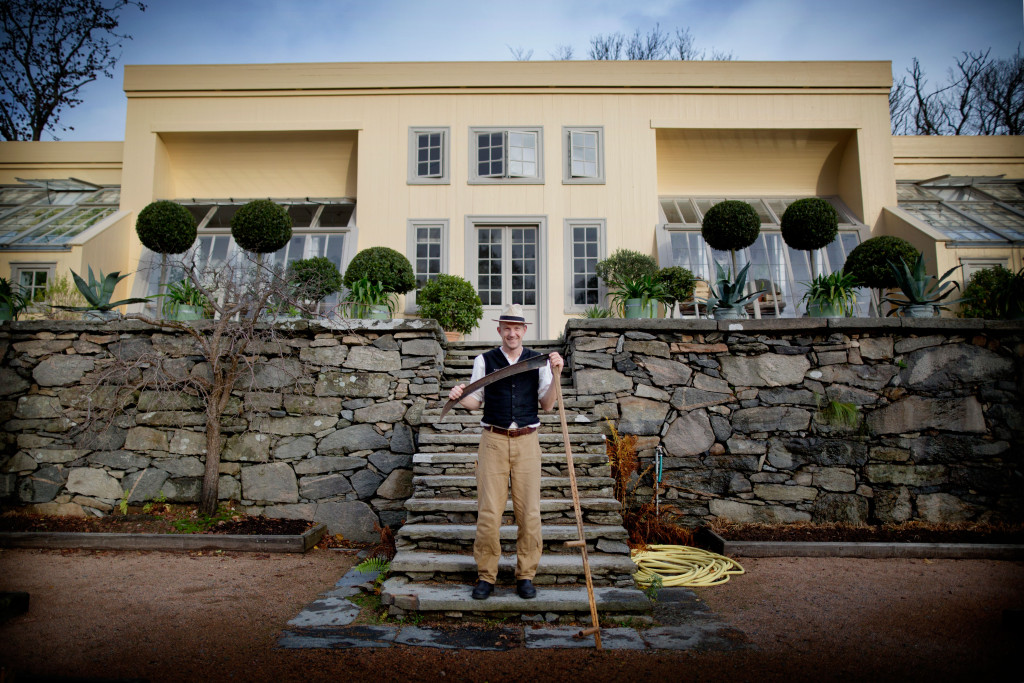
The decoration and fujrnishing of the house, and landscaping was originally designed by the city architect in Gothenburg, Carl Wilhelm Carlberg. It has two stars in the Michelin Green Guide. The area us a cultural heritage since 2003 and the whole park has been organically certified since 2006. It is organically managed, with emphasize on the historical garden crafts. The head gardener is Joakim Seiler.
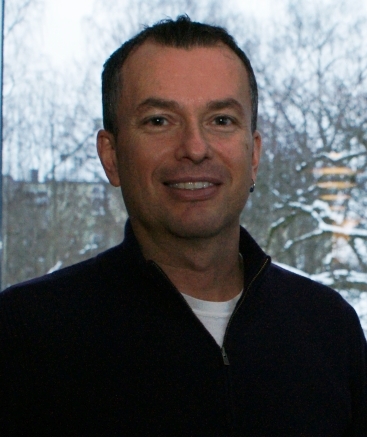
The orangery, which is located in the southern formal garden, was used to over-winter exotic species in the eighteenth century, everything from tulip trees to citrus and laurel. The building will be completed in 2018 and will then be used for the same purpose by Gunnebo’s gardeners.
“The orangery will be a fantastic addition to the gardens, both aesthetically and to enable over-wintering of non-hardy plants,” explains Joakim Seiler. “The orangery will give us unique opportunities to resume the cultivation of exotic plants, which were an important and prestigious part of the gardening activities in many historic gardens.”
In its day, the orangery building was also a first-class attraction for visiting guests, who were treated to a variety of festive occasions. At the northern end of the building the city architect created a spectacular artificial grotto with stalactite formations on the walls and mirrored glass in the roof. The grotto alone demanded extensive expertise from the craftsmen who are recreating it – including specialist masonry skills. The carpenters and craftsmen who are working on the orangery project are collaborating with various educational institutions to preserve knowledge of traditional craft skills.
Head gardener Joakim Seiler
“In preparation for Gothenburg Green World, and in consultation with the estate manager and architect at Gunnebo House, I produced an orangery planter,” adds head gardener Joakim Seiler. The orangery planter, which is inspired by a planter designed by Carlsberg, the city architect, is made using traditional methods at one of Sweden’s three remaining barrel-making companies. Gunnebo will have an orangery parterre, consisting of attractive planters and citrus plants set out in front of the orangery.
For the ninth year in a row head gardener Seiler at Gunnebo welcomes visitors to the harvest market “Food from the soil”
For the ninth year in a row Gunnebo welcomes visitors to the harvest market “Food from the soil”.
Right in the lush kitchen garden, around twenty producers and retailers of organic food and sustainable textiles set out their goods for sale next weekend, 3 and 4 September. Gunnebo’s kitchen and bakery moves out into the yard in front of the coffee house and restaurant to make cooking public. Gunnebo’s chef Patrik Sewerin and this year’s guest of inspiration Markus Junkala will talk about flavors and saving and storing this year’s harvest.
The Gunnebo shop, café and bar are open daily all year around.
The Renaissance Castle in Gothenburg, compiled by Admin.
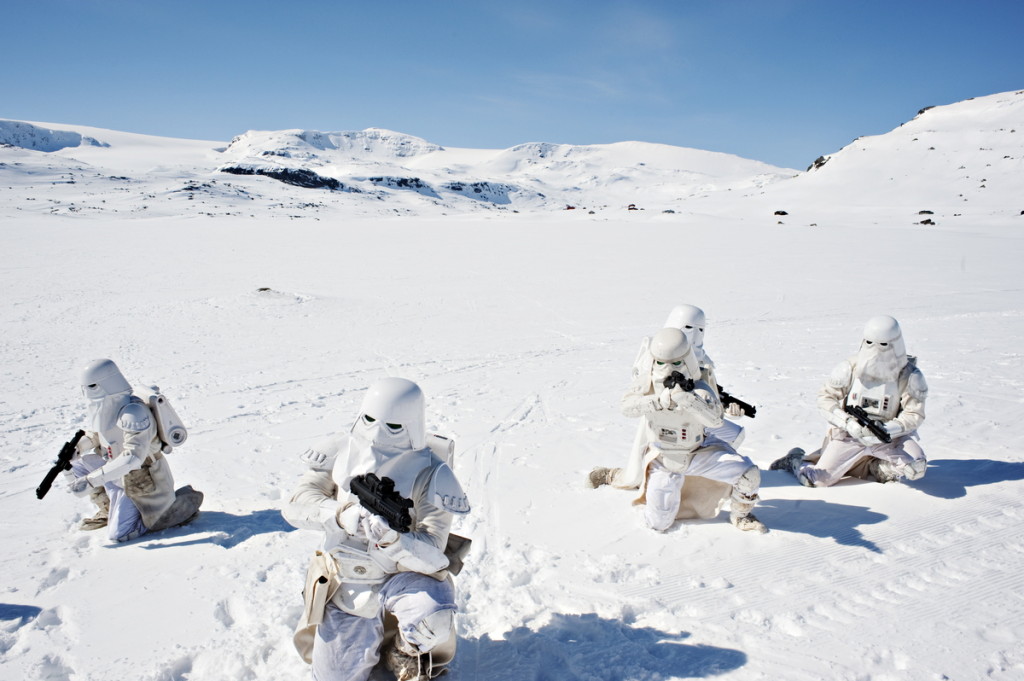
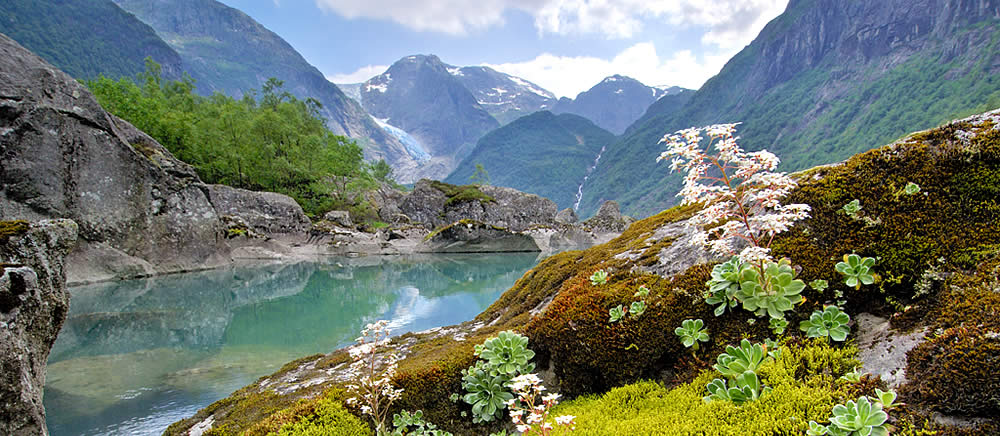
Norwegian landmarks like Pulpit Rock (Prekestolen), Troll’s Tongue (Trolltunga), Folgefonna and Lofoten are being scouted for an upcoming Hollywood production of Star Wars.
According to the Norwegian venerable newspaper Aftenposten, producers Tor Arne Øvrebø and Per-Henry Borch say that Norway is currently high on the list of location scouting international studios.
Pulpit Rock
The country’s beautiful nature is thought to be ideal for certain productions. Will the Norwegian landscape be returning to the GFFA for the first time since The Empire Strikes Back, which was filmed in Finse? As Star Wars fans know, the Hoth scenes in The Empire Strikes Back were filmed in the small town of Finse, Norway and nearby Hardangerjøkulen Glacier in 1979.
Star Wars location in Finse
During the past months Øvrebø and Borch have led tours about the country, scouting locations for upcoming production without mentioning specific titles, but they reveal that Marvel and Lucasd Film are among interested studios. Pulpit Rock, Norway’s most visited tourist attractions, is one of the most attractive settings.
Folgefonna
Having a couple of blockbusters set in Norway would increase tourism, but the limited scope of Norway’s incentive schemes for foreign filmmakers, combined with Norwegian bureaucracy, could be a sticking point for foreign countries looking to film here, warn film producers Per-Henry Borch and Tor Arne Øvrebø. This means that the opportunities for international producers filming in Norway may be lost to more generous countries, albeit with less dramatic scenery.
However, The Norwegian Film Institute is clearly flirting with Lucas Film, currently featuring a picture from The Empire Strikes Back filmed in Norway on its Incentive Scheme page.
Star Waes Batllefront
Star Wars: Episode IX, is scheduled for a December 2019 release.
In 2016 Hollywood films ‘The Snowman’ with Michael Fassbender and ‘Downsizing’ with Matt Damon were filmed at various Norwegian locations, so Norway seems to be a growing location for Hollywood blockbusters.
Feature image (on top): Lofoten
Norwegian Landmarks in the Next Star Wars Production? written by Tor Kjolberg
Endless forests and clear lakes, desolated and varied landscapes make up the nature of the three Scandinavian kingdoms of Sweden, Norway and Denmark. With such an enormous land area and a relatively small number of inhabitants, large parts of Scandinavia are unoccupied by people. They are also home to numerous of game and offer unique and exciting hunts. Every country has its unique and special charm and species of deer.
Roe deer
Roe deer In Denmark, deer are primarily roe deer, the size of a small sheep, which have inhabited Scandinavia for at least 8,000 years. They exist in vast numbers and as many as 100,000 are shot every year, most of them consumed by hunters’ families and restaurants. Their meat is dark and has a pleasant, intensely game taste. They can be treated as other game, or lamb.
Fallow deer in the field
Fallow deer This deer, about the size of a llama, is not indigenous to the Nordic countries, but was imported for hunting game in the Middle Ages and has spread all over southern Scandinavia. The meat has a very mild taste, much like veal. It can be successfully farmed and most of the fallow deer meat today is farmed. It does not have as much flavor as wild deer, but it is still a pleasant change from the other domestic meats.
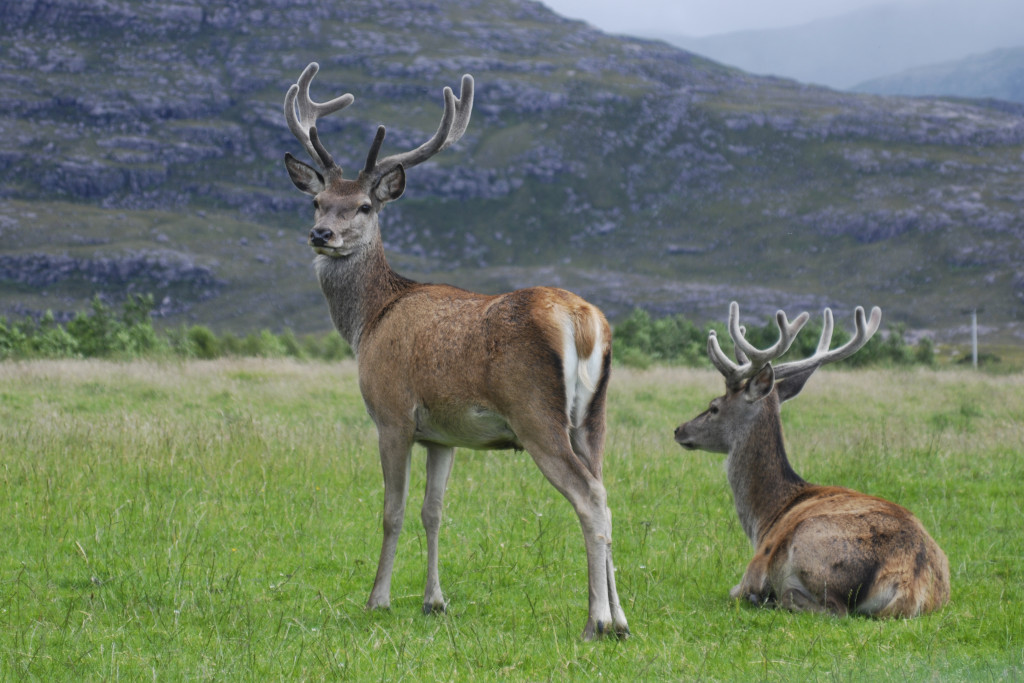
Red deer stags
Red deer The red deer is larger, similar to a small cow in size, and has been in Scandinavia since the last Ice Age. A red deer stag is an impressive sight, and the calves are lovely, if you are lucky enough to see such shy animals. The red deer has been threatened in the past, but the numbers are again on the rise so they can now be hunted legally. The meat is like gamy beef, very lean and tasty.
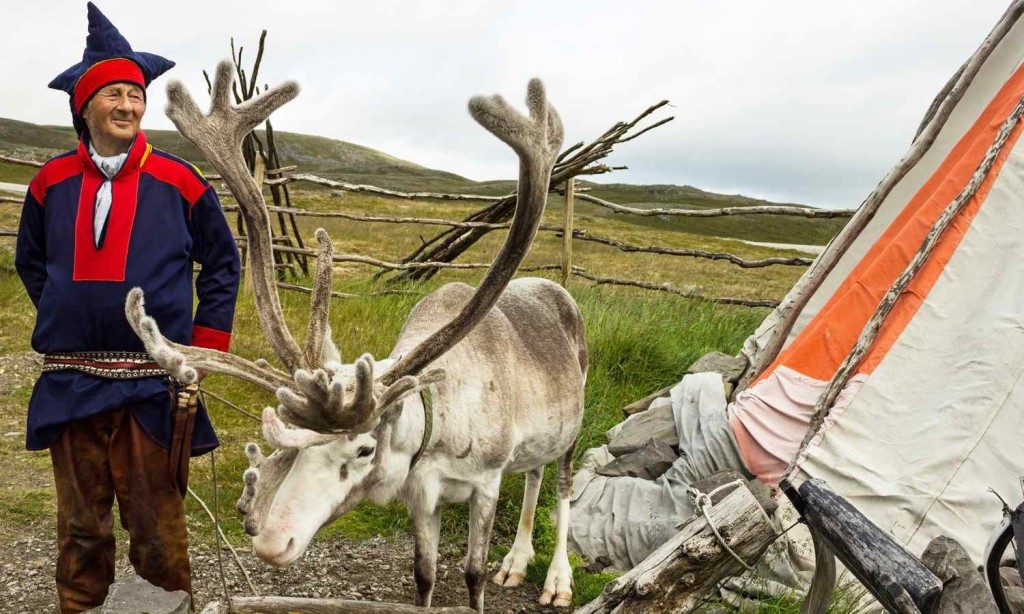
Strolling reindeer
Reindeer In northern Scandinavia the reindeer reigns, roaming over the low-growing Arctic tundra, finding food where there seems to be none. Reindeers are charming, relatively small animals, with spreading hooves designed to work like snow shoes, and a rather strange but very fast stride.
All reindeer have their particular owner, who keeps an eye on them and protects them from wolverines and other predators, but basically they are wild animals. They are not hunted, but butchered in special abattoirs.
Archangel reindeer
Reindeer are more than a livelihood. They are part of a culture much older than the farm culture of the rest of Scandinavia. The Sami now have the exclusive right to reindeer herding in most of the vast area occupied by this ancient people. The Sami live in an expanse stretching across Norway, Sweden, Finland and Russia – an area as big as Sweden, known as Sapmi.
Their traditional culture is flourishing, now finally being supported by the governments after centuries of conflict and ill treatment comparable to apartheid on South Africa. Reindeer have been herded by Sami since the Middle Age; before that they were hunted along with other game.
Sami reindeer herding
Reindeer travel great distances, moving from the lower forests in the winter to the mountains in summer, and back again. The Sami once lived a nomadic existence as the followed the herds, but nowadays reindeer herding is done by helicopter, snowmobile and four-wheel drive; and the Sami are no longer nomads, though some choose to camp with the herd in the mountains in summer.
Reindeer meat us like no other, being extremely tender and with a sweet taste rather like a mildly gamy veal. Many of the various forms of preserved reindeer meat, and many traditional dishes, have their origins in the food eaten by the Sami shepherds on the long seasonal migrations. Every imaginable part of the reindeer is used: you get salted and smoked reindeer tongues, smoked hearts, and sausages in great variety, both smoked and fresh.
Suovas The best-known of the dried reindeer meat, suovas (meaning ‘lightly smoked’), has been dry-salted, smoked and then normally dried. The smoking is traditionally done in a special smoking hut, in the form of a small Sami tent (called a kåte) placed on the ground with a smoking bonfire in the middle; the meat is simply hung up to smoke over the fire. The delicacy comes in different forms, some very dry and salty, others more mildly cured. The best cuts of leg are used.
Souvas
When not excessively dried, suovas can be eaten like fresh meat, and is often cut thinly and eaten like other cold cuts, or cubed and skewered as a kebab. The drier forms of suovas are eaten with a soft flatbread and a topping of pickled mushrooms and lingonberries – it’s simply delicious.
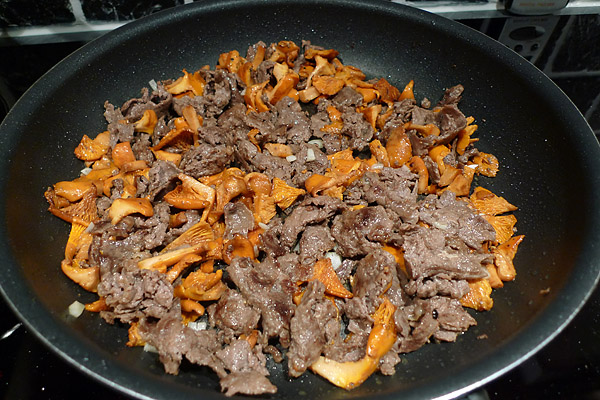
Renskav This is thinly sliced, dried or frozen reindeer meat; as it’s shaved so thinly, it’s a way of using the less tender parts of the animal. Usually, it’s pan-fired with onions and mushrooms and served with mashed potatoes and lingonberries.
Renskav
It is also used for the homely pytt in panna, a much-loved dish often made with leftovers if roast meat, but raised to something beautiful and celebrated when made with fresh renskav, the meat, onions and potatoes are fried separately and the mixed, and often finished with a little cream. It’s served with pickled mushrooms and the ubiquitous lingonberry.

























 The decoration and fujrnishing of the house, and landscaping was originally designed by the city architect in Gothenburg, Carl Wilhelm Carlberg. It has two stars in the Michelin Green Guide. The area us a cultural heritage since 2003 and the whole park has been organically certified since 2006. It is organically managed, with emphasize on the historical garden crafts. The head gardener is Joakim Seiler.